
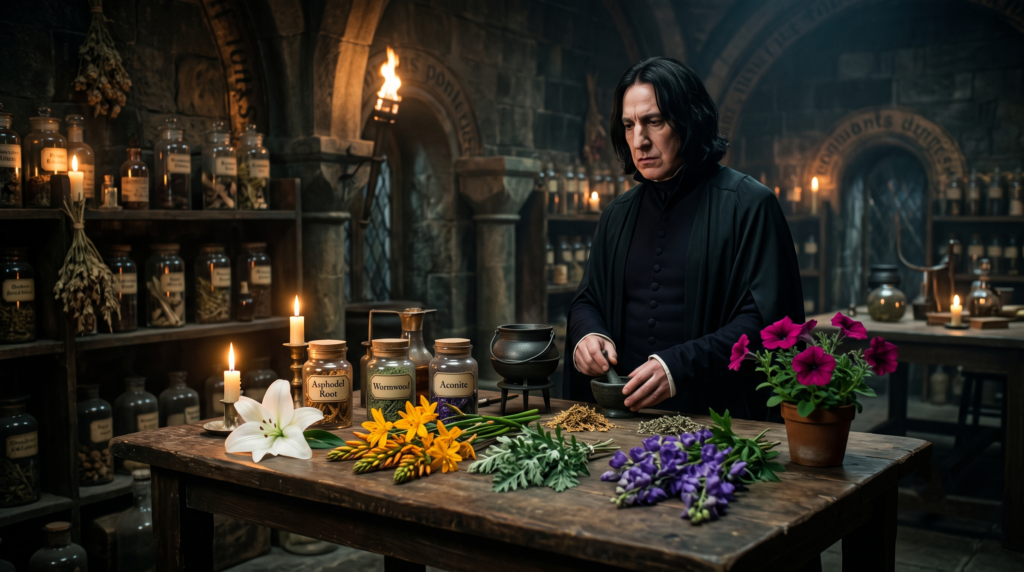
Picture the scene: The year is 1997. The setting is the dreary, subterranean dungeons of Hogwarts Castle. The room is bathed in heavy, dramatic shadows, illuminated only by the flickering, volumetric glow of torchlight reflecting off glass jars. A severe, black-clad Potions Master sweeps into the room and immediately locks eyes with an eleven-year-old boy. He fires off a series of seemingly impossible, complex botanical questions.
To a first-time reader, Severus Snape is merely being cruel. But if you want to truly understand the astonishing depth of this literary universe, you have to look closely at Harry Potter flowers. Snape wasn’t just giving a pop quiz; he was delivering a heartbreaking, coded confession.
J.K. Rowling’s world-building is legendary, but one of her most sophisticated and overlooked narrative devices is her use of floriography—the Victorian language of flowers. During the 19th century, strict societal etiquette largely forbade the open expression of strong emotions. To circumvent these rigid rules, the Victorians developed a highly complex cryptological communication system using floral arrangements. A specific bloom, the way it was handed to someone, or the plants it was bundled with could convey anything from passionate devotion to bitter, lifelong resentment.
By utilizing this historical dictionary of botany, Rowling embedded a masterclass in psychological foreshadowing directly into the names and dialogue of her characters. Understanding the secret Victorian meanings behind these botanical names strips away the surface-level magic and reveals the deeply human, tragic, and beautiful emotional core of the series.
Here is the definitive, deep-dive guide to the secret language of flowers hidden throughout the wizarding world.
The Evans Sisters: A Study in Floral Opposites
Nowhere is the Victorian language of flowers more perfectly executed than in the naming of the Evans sisters. By assigning them specific botanical identities, the narrative establishes their fundamentally opposing natures, their tragic destinies, and their inescapable connection to one another long before their backstory is fully revealed.
Lily Potter (Beauty, Elegance, and Sacrifice)
The character of Lily Potter is the emotional anchor of the entire saga. She is the embodiment of pure, unconditional love, a force so powerful that it physically deflects the most dangerous dark magic in existence.
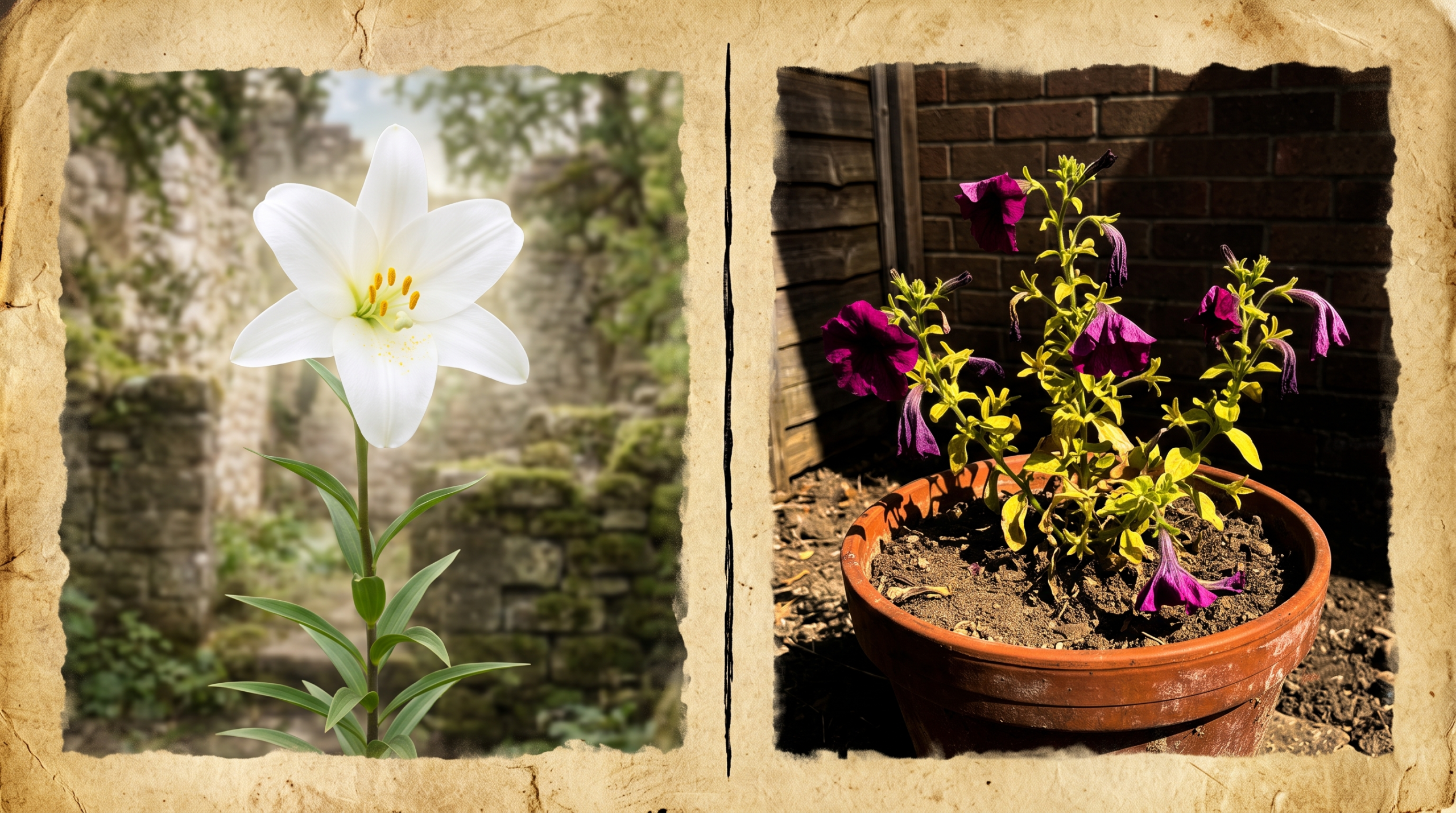
In classical Victorian floriography, the lily (Lilium) holds a profound and ancient significance. Historically, white lilies represent absolute purity, rebirth, and majestic beauty. They are the flowers of the beloved. However, the lily carries a potent dual meaning that perfectly encapsulates her tragic character arc. While they are a symbol of vibrant life and maternal devotion, lilies are also the traditional flower of funerals and mourning.
This duality is not accidental. Lily Potter’s defining moment—the act that sets the entire series into motion—is her death. She is a character who brings life (saving Harry) through the ultimate sacrifice. Furthermore, in ancient mythology, the lily was said to have sprouted from the milk of Hera, the queen of the gods, explicitly tying the flower to the concept of fierce, protective motherhood. Just as the flower bridges the gap between celebration and sorrow, Lily’s sacrifice bridges the gap between devastating loss and ultimate salvation for her son.
Petunia Dursley (Resentment, Anger, and Emotional Tension)
In stark, deliberate contrast to the elegant and universally beloved lily stands the petunia.
From a purely botanical standpoint, petunias (Petunia × atkinsiana) are a fascinating choice. They belong to the nightshade family—a family of plants heavily associated with both medicinal remedies and deadly poisons, quietly hinting at the toxic environment she creates at Number 4, Privet Drive. Petunias are incredibly fragile flowers. They require strict sheltering from harsh winds and heavy rain, wilting easily when exposed to the elements.
In the Victorian language of flowers, to gift someone a petunia was to send a very specific, aggressive message. The flower symbolizes deep resentment, anger, and the sentiment of being deeply irritated by someone’s presence. It represents a fragile ego and suppressed fury.
There is no better botanical metaphor for Harry’s aunt. Petunia Dursley is a woman defined entirely by her bitterness. As the non-magical sister, she was the one left behind, forced to live in the shadow of the spectacular, magical Lily. Her furious resentment toward Harry is not just cruelty for cruelty’s sake; it is the manifestation of a fragile, broken heart masking its jealousy with mundane perfectionism. Every time she looks at Harry, she is looking at the magical world that rejected her, and the sister who outshone her. She is the bitter weed growing in the shadow of the pristine lily.
 Snape’s First Words: The Ultimate Hidden Apology
If the naming of the Evans sisters sets the emotional foundation of the story, Severus Snape’s first interaction with Harry delivers its most devastating hidden payload. This specific interaction is the most famous example of Harry Potter flowers lore, and for good reason. It transforms a moment of apparent classroom bullying into a profound declaration of lifelong grief.
During Harry’s very first Potions class in Harry Potter and the Sorcerer’s Stone, Snape singles out the famous Boy Who Lived and interrogates him. His very first question to the child of the woman he loved is: “What would I get if I added powdered root of asphodel to an infusion of wormwood?”
To a student without a textbook, it is advanced potion-making trivia. To a botanical historian, it is a desperate, coded apology.
Decoding Asphodel and Wormwood
To fully grasp the magnitude of this question, we must break down the two specific flora mentioned:
-
Asphodel: In classical botany and Greek mythology, asphodel is a plant closely related to the lily family. The ancient Greeks believed that asphodel covered the fields of the underworld where the dead wandered. In the Victorian language of flowers, asphodel carries a very specific, mournful translation: “My regrets follow you to the grave.”
-
Wormwood: Wormwood (Artemisia absinthium) is an incredibly bitter herb, historically used in the brewing of absinthe. In floriography, it represents absence, bitter sorrow, and the painful sting of lost love.
When you combine these two botanical meanings, Snape’s seemingly cruel trivia question translates directly into a tragic confession: “I bitterly regret Lily’s death.”
Standing in front of a boy who possesses the exact eyes of the only woman he ever loved, a woman whose death he inadvertently caused, Snape cannot openly express his agony. His role as a double agent, coupled with his own immense emotional severe trauma, prevents him from speaking plainly. Instead, he speaks in the only language where he feels in control—the precise, rigid, and deeply secretive language of potion ingredients.
 The Double Meaning of Monkshood and Wolfsbane
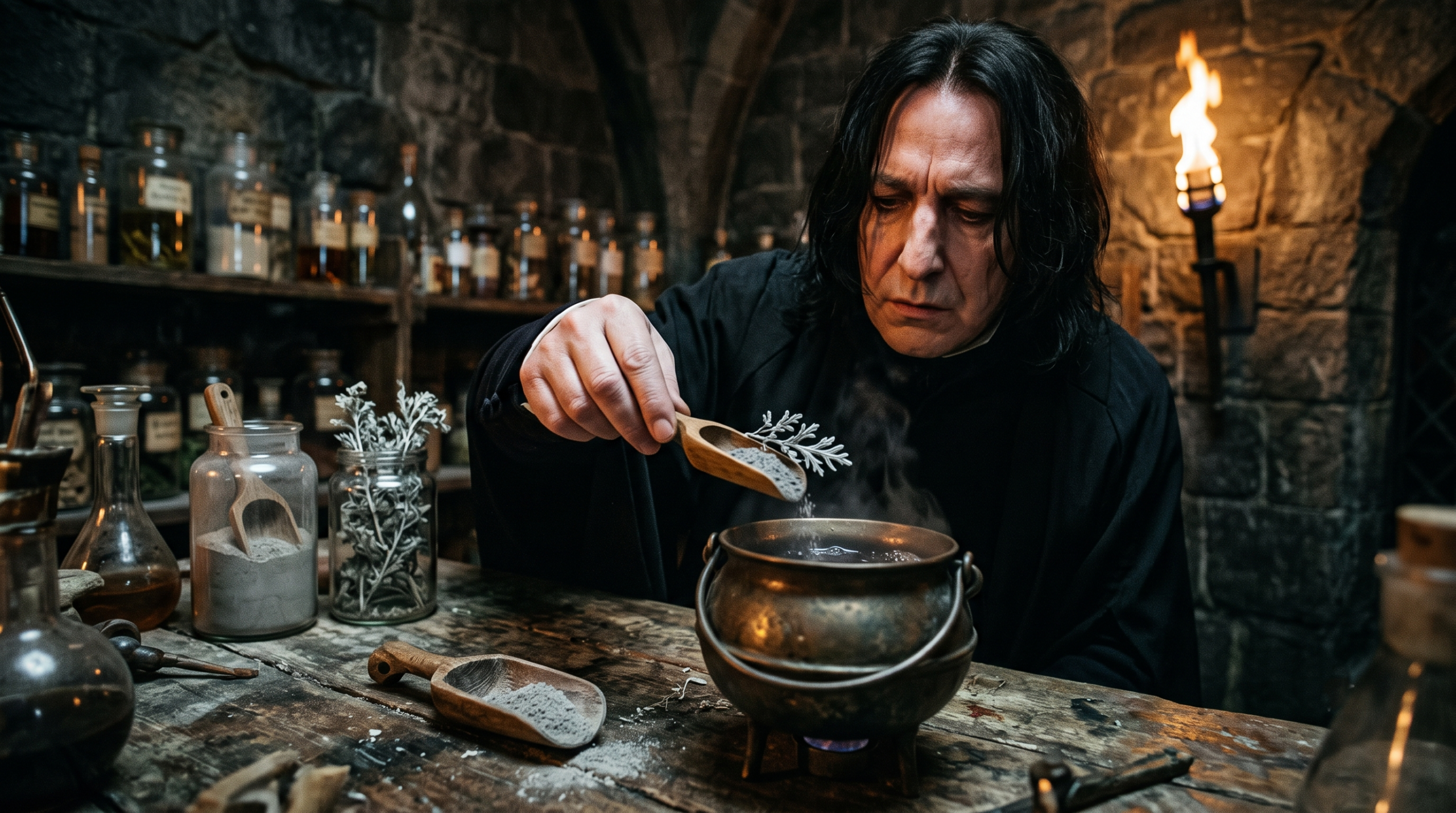
Snape’s coded message does not end with asphodel. After Harry fails to answer the first question, Snape presses him further, eventually telling the class that monkshood and wolfsbane are the same plant, also known as aconite.
This, too, is a masterstroke of character development via flora.
In the language of flowers, aconite (monkshood) is a fascinating paradox. It represents chivalry and knightly bravery, but it also symbolizes misanthropy (a general hatred or distrust of humanity) and deadly danger.
Could there be a more perfect description of Severus Snape? He is a character defined by his misanthropy—he is cruel, deeply unpleasant, and hostile to almost everyone around him. Yet, beneath that venomous exterior lies a remarkably chivalrous knight, a man who dedicates his entire adult life, at constant deadly peril, to protecting the son of his lost love. The duality of aconite perfectly mirrors the duality of the Half-Blood Prince.
Beyond the Golden Trio: Other Floral Easter Eggs
While Lily, Petunia, and Snape represent the core of the series’ floriography, J.K. Rowling wove botanical significance into the very fabric of the wider wizarding world. By analyzing the secondary cast, we can uncover even more brilliant layers of foreshadowing and characterization.
Narcissa Malfoy (Self-Preservation and Vanity)
Narcissa Malfoy’s name is rooted in the Narcissus genus, which includes the daffodil. The name instantly invokes the Greek myth of Narcissus, the hunter who fell in love with his own reflection. On the surface, this aligns perfectly with the Malfoy family’s extreme vanity, their obsession with blood purity, and their egotistical belief in their own superiority.
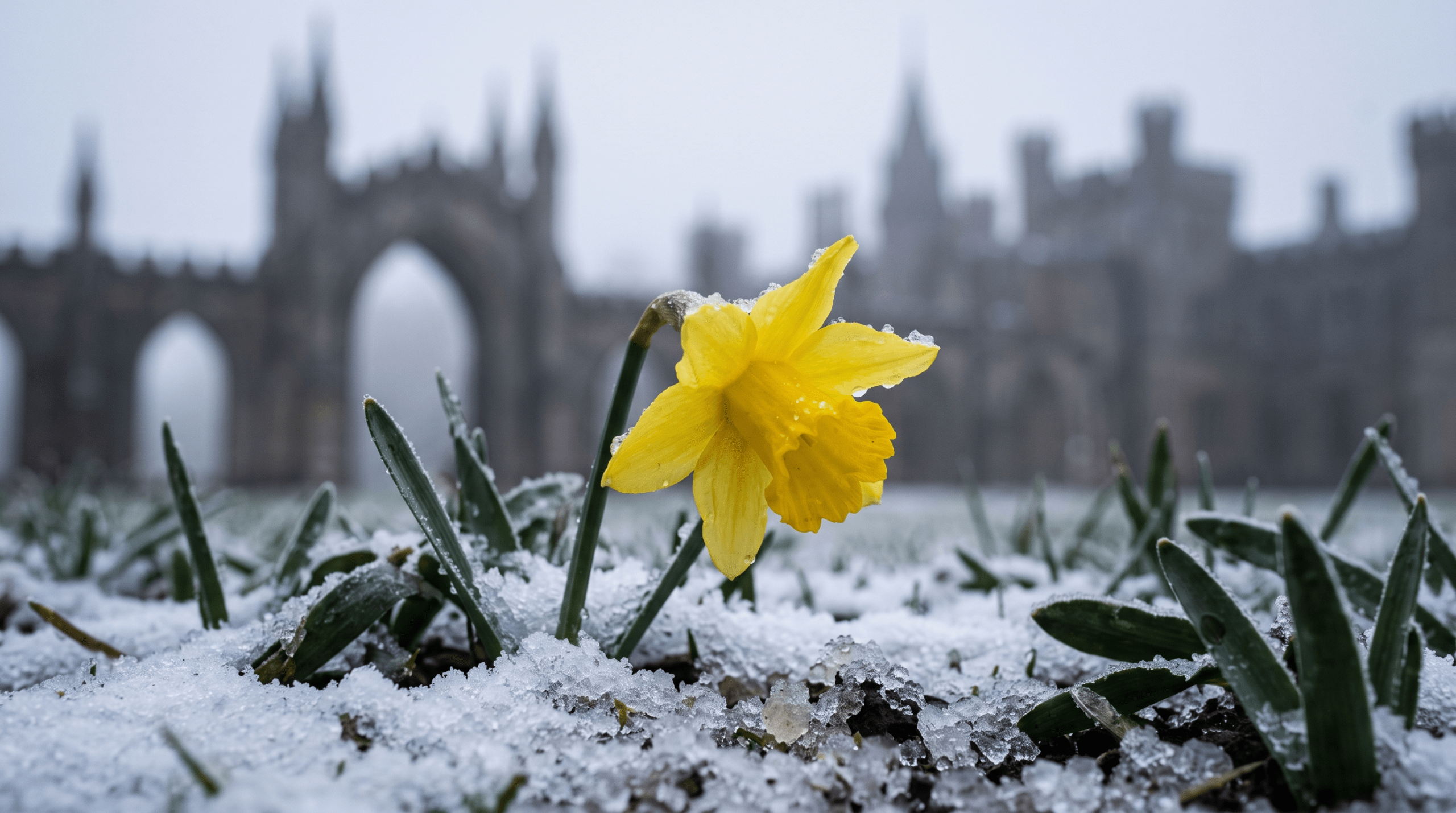
However, daffodils carry another, more resilient meaning: they are among the very first flowers to push through the frozen ground at the end of winter. They symbolize rebirth and the desperate drive to survive harsh conditions. This beautifully foreshadows Narcissa’s ultimate role in the series. She is not a true, loyal Death Eater; she is a survivor. Her defining moment is a lie told directly to Voldemort’s face—an act of extreme self-preservation to ensure her family survives the devastating winter of the Second Wizarding War.
 Lavender Brown (Devotion and Distrust)
Lavender Brown is a character often dismissed as merely a teenage distraction for Ron Weasley, but her botanical namesake provides a fascinating psychological profile.
In Victorian floriography, the lavender flower represents devotion, but it is also heavily associated with distrust and suspicion. This perfectly encapsulates her brief, intense relationship with Ron in Harry Potter and the Half-Blood Prince. Lavender is fiercely devoted to “Won-Won,” displaying an overwhelming, clingy affection. Yet, that devotion is entirely undermined by her constant, paranoid distrust of his friendship with Hermione Granger. Her relationship blooms violently and dies quickly, poisoned by the very distrust her name signifies.
Fleur Delacour (The Flower of the Court)
The name Fleur Delacour literally translates from French to “Flower of the Court.” Initially introduced in Harry Potter and the Goblet of Fire, Fleur is presented as a Veela-descended beauty, a delicate and ethereal presence that enraptures the young men of Hogwarts.
However, her character arc brilliantly subverts the “delicate flower” trope. Despite the superficial assumptions made about her by characters like Ginny and Molly Weasley (who dismissively call her “Phlegm”), Fleur proves to be fiercely loyal, incredibly brave, and deeply committed. When Bill Weasley is brutally scarred by Fenrir Greyback, Fleur does not wilt; she stands her ground, proving that she is far more than just an ornamental flower of the court.
 Moaning Myrtle (Fidelity and Life After Death)
Myrtle Warren, better known as Moaning Myrtle, haunts the second-floor girls’ bathroom at Hogwarts. The myrtle plant is an evergreen shrub with delicate white or star-shaped flowers.
Historically, myrtle is a symbol of fidelity, enduring love, and life after death. It is a profoundly ironic but fitting name for a ghost. In life, Myrtle was bullied and isolated, desperately lacking affection. In death, she stubbornly persists, haunting the plumbing of the castle, frequently expressing intense, undying (if slightly inappropriate) devotion to both Harry Potter and Draco Malfoy. She embodies the concept of “life after death” in the most literal, tragicomic sense.
Botanical Magic: Flora in Wands and Settings
The language of flowers extends beyond character names, subtly influencing the tools and environments of the wizarding world.
Harry’s Holly Wand
Harry Potter’s wand is made of holly wood with a phoenix feather core. In Celtic mythology and traditional botanical symbolism, the holly tree is a powerful symbol of protection, overcoming darkness, and hope. Its evergreen nature and sharp, defensive leaves made it a historical ward against evil spirits. It is the narrative counter-weight to Voldemort’s yew wand, as yew is traditionally associated with death, graveyards, and toxic poison. The clash between holly (protection and life) and yew (death) is the central conflict of the series rendered in wood.
 The Agapanthus at Privet Drive
In the opening chapters of Harry Potter and the Half-Blood Prince, Albus Dumbledore arrives at Number 4, Privet Drive. While waiting for the Dursleys to let him in, he politely admires Petunia’s neat front garden, specifically pointing out her agapanthus.
This is not a throwaway line. The agapanthus is also known as the Lily of the Nile. In floriography, it represents hidden messages, family ties, and enduring bonds. By complimenting the agapanthus, Dumbledore is subtly, powerfully reminding Petunia of the unbreakable blood pact she made to protect the son of her sister, Lily. He is pointing at the literal “Lily” in her carefully manicured, magic-hating garden to remind her of her duty.
Frequently Asked Questions (FAQ)
What did Snape mean by Asphodel and Wormwood?
When Severus Snape asked Harry about adding asphodel to wormwood, he was using the Victorian language of flowers to send a hidden message. Asphodel is a type of lily meaning “regrets follow you to the grave,” and wormwood represents bitter sorrow. Translated, Snape was secretly saying: “I bitterly regret Lily’s death.”
Why are Harry Potter characters named after flowers?
J.K. Rowling frequently used floriography (the language of flowers) to embed deep psychological traits, foreshadowing, and hidden motivations into her characters. Characters like Lily, Petunia, Narcissa, and Lavender all possess personality arcs that perfectly match the historical and mythological meanings of their botanical names.
Is Asphodel a type of lily?
Yes. In classical botany and mythology, asphodel belongs to the lily family (Liliaceae). This makes Snape’s use of the plant in his first question to Harry a direct, undeniable reference to Harry’s mother, Lily Potter.
What does the flower Petunia mean in Victorian language?
In Victorian floriography, the petunia symbolizes deep resentment, anger, and feeling irritated by someone’s presence. This perfectly mirrors Petunia Dursley’s lifelong, bitter resentment toward her magical sister and her nephew, Harry.
The sheer brilliance of the wizarding world lies not just in its spells and fantastical creatures, but in the meticulous, almost obsessive level of detail woven into the very text. The Harry Potter flowers are not just aesthetic choices; they are a subterranean narrative running beneath the main plot. They reveal the hidden grief of a Potions Master, the tragic dichotomy of two sisters, and the unbreakable bonds of blood and sacrifice.
By understanding this secret Victorian language, we gain a much richer appreciation for the profound depth of the series. The magic isn’t just in the wands; it is quite literally planted in the ground.
If this deep dive into the hidden lore of Hogwarts changed the way you view the series, be sure to share this article with your fellow Potterheads who might still think Snape was just giving a pop quiz. And if you are hungry for more hidden histories and complex character studies, don’t miss our comprehensive, skyscraper-level breakdown of other unsung icons in the wizarding world—like our definitive guide to the origins and impact of the Gryffindor student, Bem. The lore goes deeper than you think!