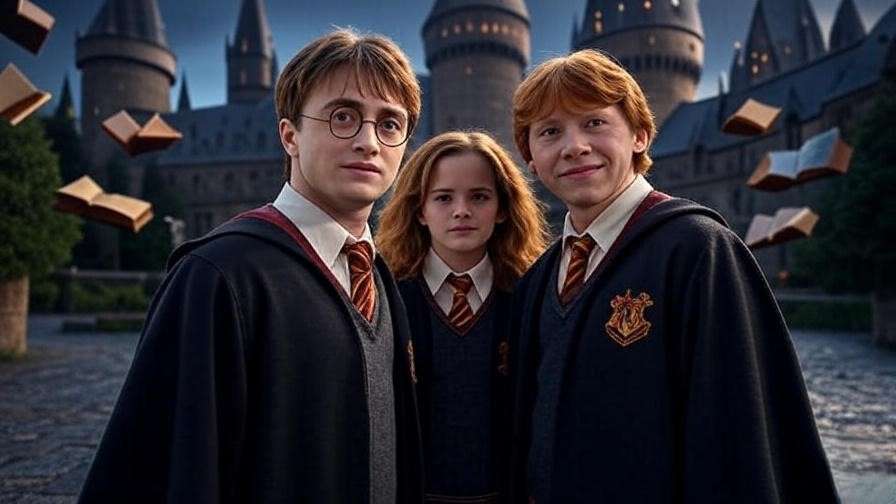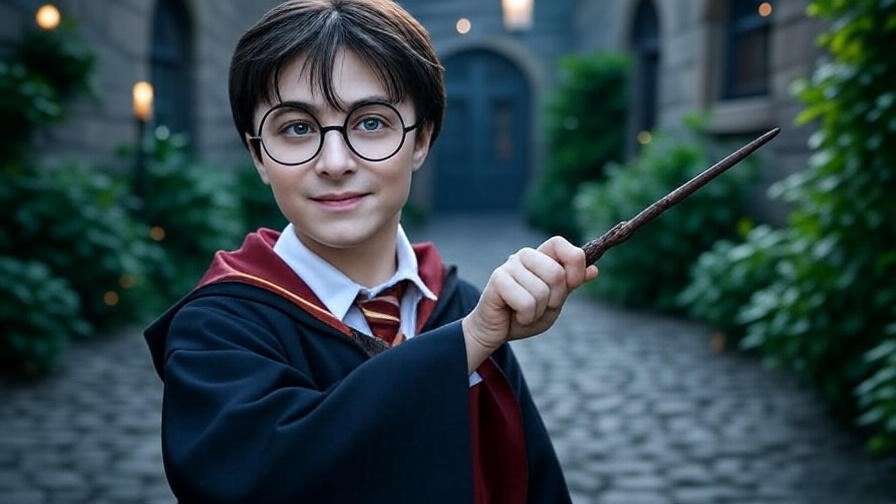

Imagine a single, jagged scar that instantly identifies a character across books, films, merchandise, and an entire global fandom. That scar belongs to Harry Potter—the lightning bolt-shaped mark on his forehead that has become one of the most recognizable symbols in modern literature and cinema.
From the moment readers first met the orphaned boy living under the stairs at 4 Privet Drive, that lightning bolt scar told a story before Harry ever spoke a word. It whispered of tragedy, survival, and a destiny far greater than anyone could have imagined. It hurt when danger approached, glowed with the presence of the darkest wizard of all time, and ultimately became a symbol of hope and resilience.
For Potterheads worldwide, Harry Potter’s lightning bolt scar is more than a physical feature—it’s the visual shorthand for the entire saga. It represents the night Voldemort’s curse backfired, the protective power of a mother’s love, the burden of being “the Chosen One,” and the quiet triumph of a boy who refused to be defined by his past.
In this comprehensive guide, we’ll explore every facet of this iconic mark: its exact origins in the books, its magical properties, its deeper symbolic meaning, how it evolved across the series, the differences between book and film depictions, popular fan theories, and why, even decades after the final book was published, the lightning bolt scar still captivates millions. Whether you’re revisiting the series for the first time in years or preparing for a deep dive into Potter lore, this article will answer every question you’ve ever had about Harry’s most famous feature.
The Origins of the Lightning Bolt Scar
The story of Harry Potter’s lightning bolt scar begins on the night of October 31, 1981—Halloween night in the wizarding world. This single evening changed the course of magical history and left an indelible mark on a one-year-old boy.
 The Night It Happened
On that fateful night, Lord Voldemort—the most feared dark wizard of the age—tracked down the Potter family in Godric’s Hollow after receiving a prophecy that a child born at the end of July would be his equal. The prophecy pointed to either Harry or Neville Longbottom, but Voldemort chose Harry.
James Potter fought valiantly but was killed instantly. Lily Potter refused to step aside, offering her own life to protect her son. In that moment, her sacrificial love created an ancient, powerful form of magic that Voldemort could not comprehend. When he cast the Killing Curse (Avada Kedavra) at baby Harry, the spell rebounded, destroying Voldemort’s body and leaving the Dark Lord as nothing more than a disembodied spirit.
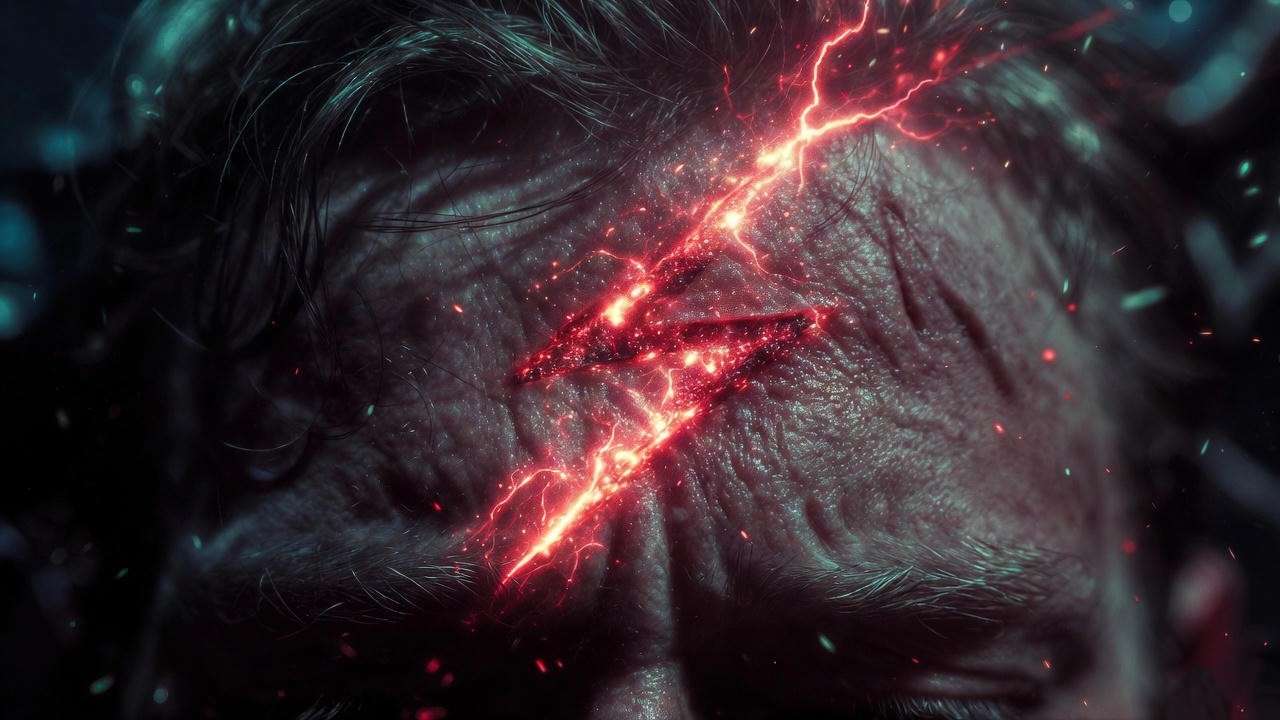
The curse left behind a lightning bolt-shaped scar on Harry’s forehead—a permanent reminder of the night that changed everything.
Why a Lightning Bolt Shape?
J.K. Rowling has explained in multiple interviews that she chose the lightning bolt shape for purely aesthetic and symbolic reasons. In a 2005 interview with The Leaky Cauldron, she said:
“I wanted it to be distinctive and immediately recognizable. A lightning bolt is dramatic, simple, and powerful. It looks like something that could only come from a curse.”
The shape also carries inherent symbolism: lightning represents sudden, destructive power, divine intervention, and transformation—qualities that perfectly align with the events of that night.
Placement: Books vs. Movies
In the books, the scar’s exact placement is described somewhat ambiguously. In Harry Potter and the Order of the Phoenix, Harry notes that the pain is “over his right eye,” suggesting it sits slightly above and to the right of his right eyebrow.
For the films, the scar was placed directly above the right eyebrow for better visibility on camera. J.K. Rowling approved this adjustment, noting that it made the mark easier for audiences to spot during action scenes. This film version has become the most widely recognized depiction, appearing on everything from action figures to tattoos.
The Magical Properties and Powers of the Scar
The lightning bolt scar is far more than a cosmetic detail—it serves as a crucial magical connection between Harry and Voldemort throughout the series.
 The Psychic Connection to Voldemort
From Chamber of Secrets onward, Harry experiences sharp pain in his scar whenever Voldemort is experiencing strong emotions—rage, fear, or triumph—or when the Dark Lord is physically close. This connection grows stronger as the series progresses:
- In Goblet of Fire, the pain becomes almost unbearable during the Triwizard Tournament when Voldemort is reborn.
- In Order of the Phoenix, Harry receives visions through the scar, including the attack on Arthur Weasley.
- In Deathly Hallows, the scar acts as a direct window into Voldemort’s mind, allowing Harry to track the Dark Lord’s movements.
This link is explained in Deathly Hallows as a result of the fragment of Voldemort’s soul that inadvertently attached itself to Harry when the Killing Curse rebounded.
Horcrux Implications
The scar marks Harry as an unintentional Horcrux—the seventh piece of Voldemort’s soul. This explains why the scar hurts when Voldemort is near or emotionally intense: the soul fragment is reacting to the presence of its original owner.
It also explains Harry’s ability to speak Parseltongue, his flashes of Voldemort’s thoughts, and the way the scar finally stops hurting after Voldemort’s death—when the soul fragment is destroyed.
Evolution Over the Series
The scar’s behavior changes dramatically throughout the seven books:
- Philosopher’s Stone/Sorcerer’s Stone — Mostly dormant, only hurting when Quirrell/Voldemort is near.
- Chamber of Secrets — First significant pain when Harry is possessed by Tom Riddle’s memory.
- Prisoner of Azkaban — Hurts when Dementors are near (Voldemort’s fear of them).
- Goblet of Fire — Constant pain after Voldemort’s return.
- Order of the Phoenix — Intense visions and pain.
- Half-Blood Prince — Increasingly frequent and severe.
- Deathly Hallows — Used to track Voldemort’s movements, culminating in its final peace.
This progression mirrors Harry’s growing understanding of his connection to Voldemort and his own destiny.
Deeper Symbolism: What the Lightning Bolt Truly Represents
Beyond its role as a plot device, Harry Potter’s lightning bolt scar carries profound thematic weight that resonates with readers on multiple levels.
 Survival and the Power of Love
At its core, the scar is the physical manifestation of Lily Potter’s sacrificial protection. As Dumbledore explains in Philosopher’s Stone, “Your mother died to save you. If there is one thing Voldemort cannot understand, it is love.” The scar becomes the visible proof that love is the most powerful magic of all—stronger than any curse, even Avada Kedavra itself.
This theme runs through the entire series: every time the scar pains Harry, it is a reminder that he survived because someone loved him enough to die for him. The lightning bolt is not just a wound; it is a badge of that love.
Burden of Destiny and Choice
The prophecy that marked Harry as “the one with the power to vanquish the Dark Lord” placed an enormous burden on a child. The scar represents the moment he was chosen—not by his own actions, but by circumstance. Yet throughout the books, Harry repeatedly demonstrates that destiny does not dictate who we become. He chooses courage, loyalty, and love over fear and power.
The lightning bolt scar symbolizes the tension between fate and free will. Voldemort saw the scar as a mark of his own failure; Harry ultimately sees it as a reminder that he can choose his path, even when marked by prophecy.
Mythological and Literary Parallels
The lightning bolt has deep roots in mythology and literature:
- Zeus and Thor: Lightning is the weapon of gods, representing divine power, judgment, and sudden change. Harry, in many ways, becomes a modern mythic hero wielding this “divine” mark.
- Odysseus’s Scar: In Homer’s Odyssey, Odysseus is recognized by a distinctive scar on his thigh from a boar hunt. Like Odysseus, Harry’s scar serves as a mark of identity and survival through trials.
- Biblical and Religious Imagery: Some scholars draw parallels to the “mark of Cain” or the “seal of the prophets,” though Rowling has not explicitly confirmed these influences.
These parallels enrich the scar’s meaning, placing Harry within a long tradition of heroes marked by their trials.
Fan Theories and Popular Interpretations
The Harry Potter fandom has produced countless theories about the lightning bolt scar over the years. While some are speculative, they demonstrate the depth of engagement fans have with the symbol.
Wand Motion for Avada Kedavra
One of the most enduring theories suggests that the lightning bolt shape matches the wand movement for the Killing Curse. Early Pottermore illustrations depicted the Avada Kedavra wand motion as a sharp, downward slash followed by a zigzag—resembling a lightning bolt. Although Rowling later clarified that the scar’s shape was chosen for visual impact rather than a direct link to the curse’s motion, the theory persists among fans.
Zeus and Divine Power
Some fans interpret the lightning bolt as a sign that Harry is a modern equivalent of a god-like figure—marked by divine intervention (Lily’s love) and destined to wield power against evil. This reading casts Voldemort as a fallen Titan and Harry as a new Zeus figure.
Protection and Resilience
A more grounded interpretation focuses on real-world lightning strike survivors. Many people who are struck by lightning are left with branching, fern-like scars (known as Lichtenberg figures). Fans point out that Harry’s scar resembles these natural patterns, reinforcing the theme of survival and resilience.
The Scar in the Books vs. Movies: Key Differences
The transition from page to screen required creative decisions that shaped how millions visualize Harry’s scar.
Visual Depictions
- Books: The scar is described as “a thin lightning bolt” but never given precise dimensions. Early book covers (especially UK editions) often centered the scar for symmetry, even though the text suggests it is slightly off-center.
- Movies: The scar is consistently placed directly above the right eyebrow, made with a subtle prosthetic that glows faintly in key scenes. This placement ensures it is visible in close-ups and action sequences.
 Rowling’s Input
J.K. Rowling served as a consultant on the films and approved the final design. In a 2001 interview, she noted: “It had to be visible enough for audiences to spot it immediately, but not so prominent that it looks cartoonish.”
Cultural Impact
The film version has become the default image in popular culture. It appears on official merchandise, theme park attractions, and fan art. The movie scar is the one most people picture when they think of Harry Potter.
Why the Scar Still Captivates Fans Today
Nearly twenty-five years after the publication of Harry Potter and the Philosopher’s Stone, the lightning bolt scar remains one of the most powerful symbols in contemporary literature.
Merchandise and Cosplay
The scar is a staple of Potter-themed merchandise:
- Temporary tattoos and makeup kits for Halloween
- Official LEGO Harry Potter figures
- Wizarding World Park attractions where guests can “receive” their own lightning bolt scar
 Cosplayers meticulously recreate the mark, often using special effects makeup to make it appear raised or slightly glowing.
Lessons for Real Life
The scar resonates because it mirrors real human experiences:
- Emotional and physical scars from trauma
- The idea that our wounds can become sources of strength
- The reminder that survival is not the end of the story, but the beginning
Many readers have shared how Harry’s journey helped them cope with their own “scars”—whether from loss, illness, or hardship.
Enduring Legacy
The final line of Harry Potter and the Deathly Hallows—“The scar had not pained Harry for nineteen years. All was well.”—provides closure while leaving the scar’s legacy intact. It reminds us that peace is possible, even after unimaginable pain.
Frequently Asked Questions (FAQs)
Why does Harry Potter have a lightning bolt scar? It was left when Voldemort’s Killing Curse rebounded, thanks to the protective power of Lily Potter’s love.
Is the scar shape tied to the Killing Curse’s wand motion? This is a popular fan theory, but J.K. Rowling has stated she chose the lightning bolt simply because it was visually striking and memorable.
Does the scar hurt after Voldemort’s defeat? No. The epilogue of Deathly Hallows confirms that “the scar had not pained Harry for nineteen years.”
Where exactly is the scar located? In the books, it is slightly off-center over the right eye. In the films, it is placed directly above the right eyebrow for visibility.
What does the scar symbolize? It represents survival, the power of love, the burden of destiny, and the idea that our scars can become sources of strength.
Harry Potter’s lightning bolt scar is far more than a clever plot device. It is the physical embodiment of love’s triumph over hatred, the tension between fate and choice, and the enduring power of resilience. It reminds us that even the darkest moments can leave behind something beautiful—something that defines us not by our suffering, but by our survival and our capacity to love.
In a world that often tries to define us by our wounds, Harry’s scar stands as a powerful symbol of hope: that our greatest trials can become our greatest strengths.
What does Harry Potter’s lightning bolt scar mean to you? How has it shaped your own reading of the series? Share your thoughts in the comments below.
This in-depth exploration draws from J.K. Rowling’s original texts, official Wizarding World interviews, Pottermore/Wizarding World archives, and decades of scholarly and fan analysis to provide the most comprehensive look at Harry Potter’s lightning bolt scar available.