

Picture this: a sixteen-year-old Harry Potter slips a tiny golden vial from his pocket, tips a single shimmering drop onto his tongue, and suddenly the entire world bends in his favor. Doors unlock at the perfect moment, conversations flow exactly as needed, and the most guarded secrets spill out without resistance. For twelve glorious hours, Harry becomes untouchable—guided by an almost supernatural intuition that turns every decision into the right one.
That single dose of Felix Felicis, better known as Harry Potter Liquid Luck, remains one of the most tantalizing “what if” elements in the entire series. In a world filled with Death Eaters, Horcrux hunts, and impossible odds, why didn’t Harry simply drink more of it? Why didn’t Dumbledore keep a stockpile? Why wasn’t Liquid Luck the ultimate weapon against Voldemort?
The answer lies in the potion’s strict rules, terrifying risks, extreme rarity, and surprisingly narrow scope of power—details that J.K. Rowling carefully embedded to prevent it from breaking the story. In this in-depth guide, we’ll dissect Felix Felicis from every angle: its exact mechanics, canon limitations, brewing process, documented uses, hidden dangers, and the strategic reasons it was used so sparingly. By the end, you’ll understand why Liquid Luck is both one of the most powerful potions in the wizarding world and one of the most carefully balanced.
What Is Felix Felicis? – The Basics of Liquid Luck
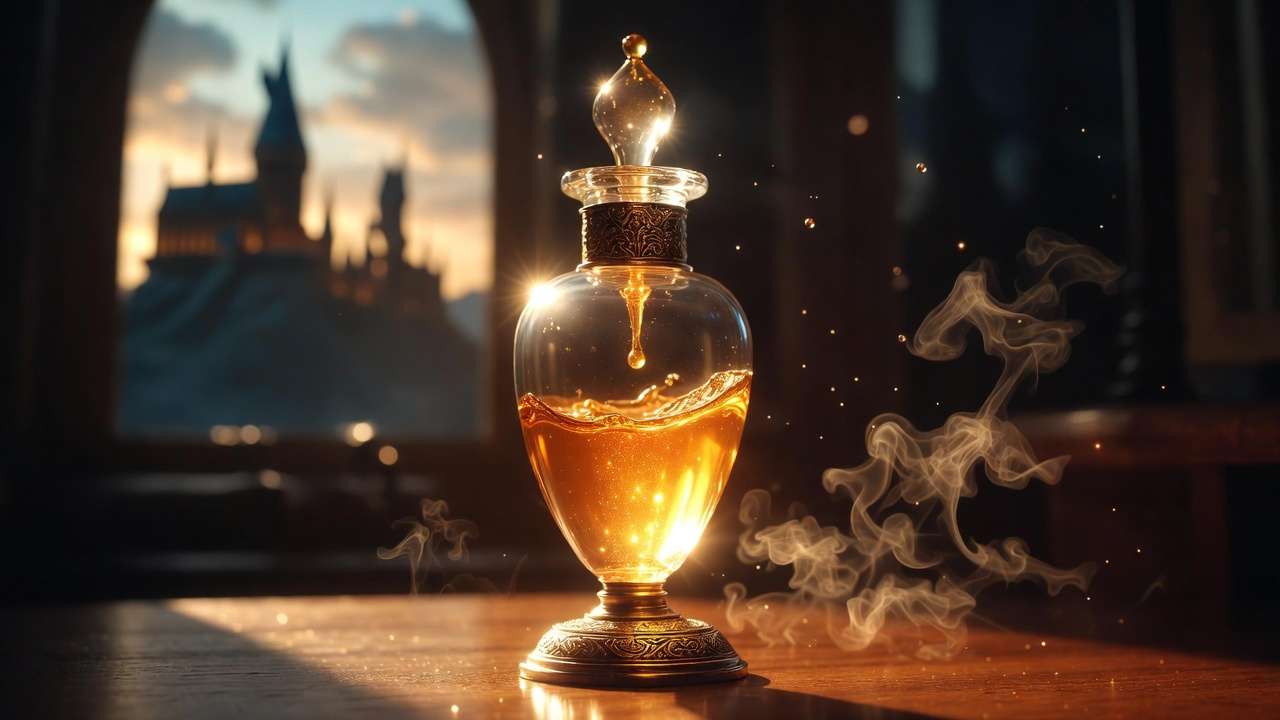
Felix Felicis—Latin for “lucky luck”—is a legendary potion invented in the 16th century by Zygmunt Budge, author of Book of Potions. Professor Horace Slughorn describes it as “liquid luck,” and its appearance lives up to the name: molten gold in color, with droplets that leap and dance like living fish inside the cauldron or vial.
Official Description and Appearance
According to Slughorn in Harry Potter and the Half-Blood Prince (Chapter 9: “The Half-Blood Prince”):
“Felix Felicis… remarkably difficult to make… dreadfully tricky to get right… but if you do… well, it’s liquid luck.”
Once successfully brewed, the potion glows with a sunshine-like radiance. Even in a small bottle, it seems to shimmer with inner movement. The visual effect alone makes it one of the most beautiful potions in the series—fitting for something that promises effortless success.
Effects – How “Luck” Actually Works
Felix Felicis does not make the drinker invincible, nor does it rewrite reality. Instead, it dramatically increases the probability of fortunate outcomes in everything the drinker attempts during its duration.
The potion enhances intuition, timing, coincidence, and serendipity. Harry describes the sensation as:
“It’s like… like having your brain working at double speed… knowing exactly what to do and when to do it.”
Examples from canon:
- Harry instinctively knows the perfect moment to approach Slughorn and the exact words that will persuade him.
- He avoids Filch and Mrs. Norris without conscious effort.
- He senses the right path through the school grounds and the Forbidden Forest.
- Relational “luck” occurs: Ginny and Dean break up, clearing the way for Harry and Ginny.
Importantly, Felix Felicis does not grant new skills, override powerful magic, or force impossible events. It amplifies what is already possible.
Duration and Dosage
A standard dose (a few drops from a small vial) lasts exactly twelve hours. The effects fade gradually rather than abruptly. Larger doses are never shown in canon and are implied to be extremely dangerous (more on that later).
The Strict Rules and Limitations of Felix Felicis
Felix Felicis is frequently misunderstood as a “win button” for any situation. Canon makes it abundantly clear that it is not. Its power is real—but tightly constrained by both magical and narrative rules.
It Can’t Achieve the Impossible
Hermione Granger delivers the single most important line about Felix Felicis in the entire series:
“Felix Felicis only works if you attempt something that can actually succeed. It won’t help you do something impossible.”
This is why Harry never seriously considered using it to locate Horcruxes directly, destroy them, or confront Voldemort head-on during the height of the war. Many of those goals were either literally impossible at the time (due to protective enchantments, Fidelius Charms, or Horcrux immortality) or required specific knowledge, skill, or sacrifice that luck alone could not supply.
Examples of what Felix Felicis cannot do:
- Breach powerful ancient wards (e.g., the Fidelius Charm protecting 12 Grimmauld Place).
- Force someone to reveal information they are magically compelled not to share (e.g., under a Fidelius secret or Unbreakable Vow).
- Guarantee victory in a duel against vastly superior magical power.
- Override prophecy or fate (the series’ core theme is that choices matter more than destiny).
Banned in Competitions and Official Settings
The potion is explicitly prohibited in organized competitive environments:
- Quidditch matches
- Examinations (O.W.L.s, N.E.W.T.s)
- Elections (e.g., Minister for Magic)
- Duelling tournaments
The reasoning is obvious: it would completely destroy fairness. A single drop could turn a mediocre Quidditch player into the star of the match or allow a student to ace exams without genuine knowledge.
Side Effects and Dangers of Overuse

While a single measured dose appears safe, canon and supplemental material warn of serious risks:
- Overconfidence and recklessness: The heightened sense of certainty can lead to foolish decisions. Harry himself notes feeling “a little too confident” even after one dose.
- Giddiness and euphoria: Excessive or repeated use causes a dangerous high, impairing judgment ironically—the very thing luck is supposed to enhance.
- Toxicity in large quantities: Slughorn explicitly states that overdosing is “dreadfully dangerous.” Large amounts are lethal.
- Brewing errors: A failed brew can produce poisonous sludge instead of golden liquid.
These limitations explain why even brilliant potion-makers like Slughorn treat Felix Felicis with extreme caution and rarely brew it in bulk.
Why It Doesn’t Solve Everything – Canon Constraints

Ultimately, Felix Felicis is balanced by scarcity, risk, and scope. It excels at opening small, achievable doors—not smashing through impossible walls. It rewards clever, low-risk applications rather than brute-force solutions. This keeps it from becoming a deus ex machina and preserves the series’ emphasis on courage, friendship, sacrifice, and hard-won victories.
Brewing Felix Felicis – Why It’s So Rare
The true reason Felix Felicis remains so scarce in the wizarding world is not just its power—it’s the sheer difficulty and time required to brew it successfully.
Step-by-Step Brewing Process (Canon Recipe)
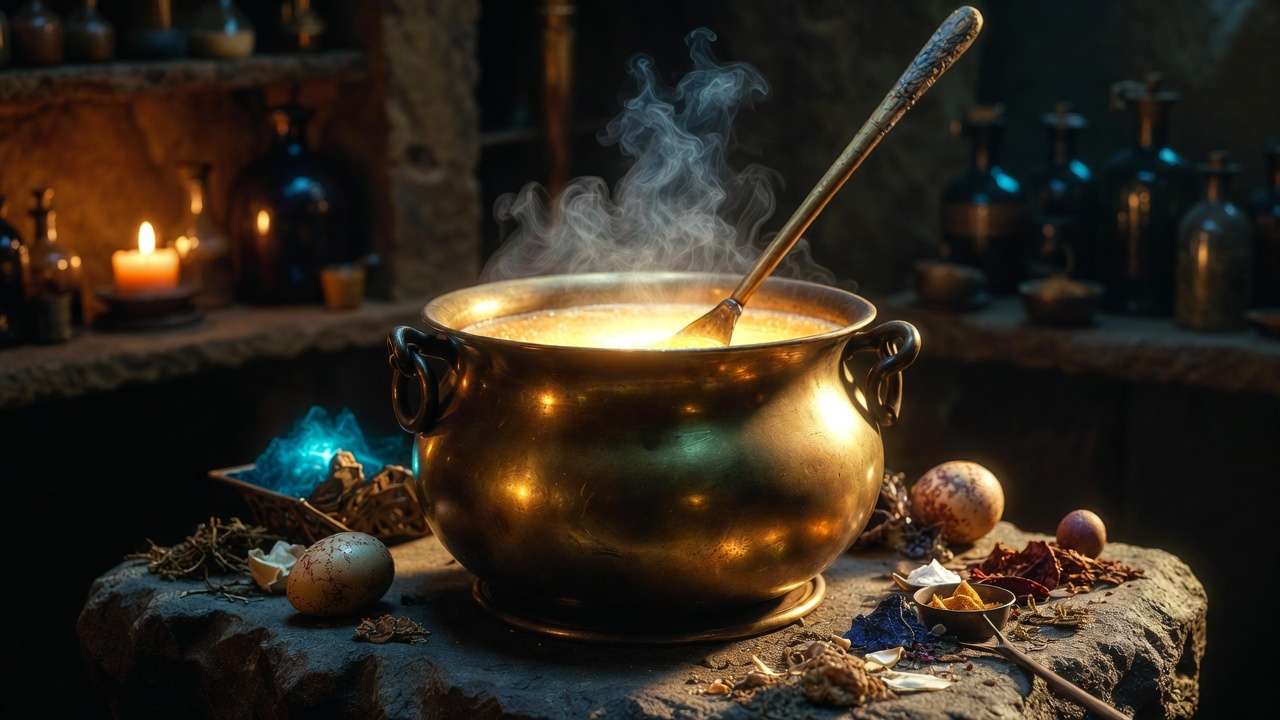
While the exact recipe is never fully detailed in the books (as is typical for advanced potions to prevent misuse), we can piece together key elements from Half-Blood Prince, Slughorn’s lessons, and Zygmunt Budge’s Book of Potions (referenced on Pottermore/Wizarding World):
- Primary ingredients include:
- Ashwinder eggs (harvested immediately after the serpent’s fiery birth)
- Juice of a Sopophorous bean (or alternative crushing method for higher yield)
- Murtlap essence
- Occamy eggshell (extremely rare due to the creature’s size-changing nature)
- Horseradish, squill bulb, thyme tincture, and rue
- Process highlights:
- The potion requires precise stirring patterns (clockwise and counterclockwise at exact intervals).
- It must simmer for weeks without disturbance.
- The full maturation period is six months—the cauldron cannot be opened or moved during this time.
- Final stage involves adding the Occamy eggshell powder, which causes the potion to turn from murky sludge to brilliant molten gold if successful.
A single mistake at any point—wrong temperature, incorrect timing, impure ingredient—ruins the entire batch, producing a worthless or toxic mess.
Difficulty Level and Risks
Felix Felicis is classified as N.E.W.T.-level potion-making at its most advanced. Even talented students like Hermione Granger never attempt it in class. Only elite potion masters (Slughorn, Snape, possibly Damocles Belby) can reliably produce it.
Risks include:
- Poisoning from failed batches (toxic fumes or sludge).
- Wasted rare ingredients (Occamy eggshell alone is worth a small fortune).
- Six months of uninterrupted brewing means the brewer must plan far in advance—impractical during wartime.
This explains why Slughorn’s tiny vial (shown in Half-Blood Prince) was likely brewed years earlier and carefully rationed.
Who Can Brew It?
In canon, we only see or hear of:
- Zygmunt Budge (inventor)
- Horace Slughorn (possesses at least one vial; implies he brewed or acquired it)
- Severus Snape (likely capable given his textbook mastery, though never confirmed to have brewed it)
No evidence exists of mass production—Felix Felicis is effectively a “one-off luxury” even for the most skilled.
Canon Uses of Felix Felicis – Real Examples
Felix Felicis appears sparingly in the series—precisely because of its rarity and restrictions—but the moments it does appear are memorable and perfectly illustrate its balanced power.
Harry’s Famous Dose in Half-Blood Prince

The most iconic use occurs in Chapter 22 (“After the Burial”) of Harry Potter and the Half-Blood Prince. Harry wins a tiny vial of Felix Felicis from Slughorn as first prize in a perfect Draught of Living Death potion (thanks to the Half-Blood Prince’s notes—ironically Lily’s improvements).

Harry saves the entire vial for the critical moment when he needs to extract Slughorn’s true memory about young Tom Riddle and the Horcruxes. On the chosen evening:
- He takes a small sip.
- Immediately feels “a little bit as though he had just swallowed a stream of sunshine.”
- His path becomes clear: he knows exactly when to leave the common room, how to avoid detection, the right words to charm Slughorn, and even how to navigate the emotional minefield of Slughorn’s guilt and nostalgia.
- Side benefits occur without Harry intending them: Ginny and Dean argue and break up, Ron and Lavender’s relationship begins to fray—showing that Felix Felicis can influence interpersonal “luck” as well.
The result? Harry secures the memory that reveals Voldemort’s seven-Horcrux plan—arguably the single most important piece of intelligence in the entire war.
Shared Use During the Astronomy Tower Battle
Later in the same book, Harry divides the remaining drops among Ron, Hermione, and Ginny before the Death Eaters invade Hogwarts (Chapter 29: “The Phoenix Lament”). Each takes a small amount to increase their chances of survival and effectiveness during the chaos.
- Ron uses his portion to fight effectively and avoid serious injury.
- Hermione and Ginny similarly benefit from heightened awareness and fortunate timing.
- Harry, having already used most of his dose earlier, relies on his own skill and Dumbledore’s protection for the tower confrontation.
This shows a rare team application: sharing the potion to protect loved ones in a high-risk battle.
Other Mentions and Near-Uses
- Harry briefly considers using Felix Felicis to follow Draco Malfoy or force information from him about the Vanishing Cabinet. Hermione immediately shuts it down, arguing that Draco’s plan is already too far advanced and protected for luck alone to unravel it.
- No further use occurs in Deathly Hallows. The vial is empty, and even if more existed, the trio’s missions (infiltrating Ministry, hunting Horcruxes in hostile territory) involve too many impossible elements for Felix to guarantee success.
Why Didn’t They Use Felix Felicis More? – Answering Fan Questions
This is the single most common question fans ask about Liquid Luck: if it’s so powerful, why didn’t Harry, Dumbledore, or the Order use it constantly during the war? The answer lies in a combination of practical, strategic, and thematic reasons.
Supply and Practicality Issues
- Extreme scarcity: Even Slughorn, one of the best potion-makers alive, only had one small vial. Brewing takes six uninterrupted months and rare ingredients (Occamy eggshell being nearly unobtainable during wartime).
- One-time resource: Once the vial was empty after the Astronomy Tower battle, no more existed in the story. Re-brewing during the events of Deathly Hallows would have been impossible amid constant movement, hiding, and pursuit by Death Eaters.
- Small dose size: The vial Harry won contained only enough for perhaps 4–5 uses total (one full dose for Harry’s Slughorn mission + shared drops for three friends). It was never a stockpile.
Strategic and Moral Reasons
- High-risk overconfidence: The potion’s side effects include giddiness and recklessness. In life-or-death situations (e.g., infiltrating Gringotts, breaking into the Ministry under heavy surveillance, or hunting Horcruxes in enemy territory), blind confidence could easily lead to fatal mistakes. Hermione repeatedly warns against relying on shortcuts when real skill and caution are needed.
- Better saved for achievable, high-impact goals: Felix Felicis shines in scenarios with many small variables that can be nudged toward success (persuading Slughorn, navigating a crowded castle undetected). It’s less useful for missions requiring brute magical power, specific knowledge, or self-sacrifice.
- Moral and character alignment: The Harry Potter series repeatedly emphasizes that true victory comes from love, courage, friendship, and hard choices—not magical cheats. Overusing Felix Felicis would undermine Harry’s growth and the story’s central message that love and sacrifice are stronger than any potion.
“What If” Scenarios – Hypothetical Best Uses
Fans often debate smarter applications. Here are canon-plausible scenarios where Felix Felicis could have been devastatingly effective if more had existed:
- Infiltrating the Ministry of Magic — A drop could have ensured perfect timing, avoided detection spells, and guided the trio to Umbridge’s office without alerting alarms.
- Gringotts break-in — Heightened luck might have prevented the dramatic dragon escape or minimized goblin suspicion during the theft of Hufflepuff’s cup.
- Persuading key witnesses — Convincing someone like Mundungus Fletcher or even a reluctant Death Eater informant to reveal information.
- Evading Death Eater ambushes — During travel or stakeouts, Felix could have consistently created fortunate escapes and coincidences.
Even in these cases, however, the potion would only amplify existing possibilities—it couldn’t guarantee success against Voldemort’s own formidable protections, Horcrux magic, or sheer numbers.
Expert Insights and Lesser-Known Facts
Felix Felicis is more than just a plot device—it’s one of J.K. Rowling’s most cleverly balanced magical creations. Here are deeper insights drawn from canon, interviews, and supplemental material.
- Zygmunt Budge’s invention story (from Book of Potions on Wizarding World): The 16th-century potion-maker created Felix Felicis after years of experimentation, claiming it brought him fame, fortune, and a long life. He brewed it only once publicly—to win a prestigious international duelling championship—then retired in luxury. Budge warned that “true masters of luck know when not to rely on it,” foreshadowing its limited wartime use.
- Rowling’s comments on balance: In a 2005 interview and later Pottermore writings, Rowling explained that she deliberately made Felix Felicis rare and restricted so it wouldn’t become a “get-out-of-jail-free card.” She wanted Harry’s victories to stem from character growth, not magical shortcuts. The potion exists to show that even extraordinary luck has boundaries.
- Comparison to other “cheat” potions:
- Amortentia (love potion) is banned in competitions for the same reason as Felix Felicis, but it overrides free will—making it ethically worse.
- Polyjuice Potion allows deception but requires planning and ingredient gathering; Felix requires none but is far rarer.
- Veritaserum forces truth but can be resisted by skilled Occlumens (Snape, Barty Crouch Jr.); Felix cannot be resisted but also cannot force impossible outcomes.
- Real-world parallels: Some fans compare Felix Felicis to a supercharged placebo effect combined with heightened pattern recognition and flow state. In psychological terms, it mimics what happens when someone is in peak confidence and focus—every small decision feels intuitively correct, creating a self-fulfilling prophecy of success.
- Film vs. book differences: In the Half-Blood Prince movie, the Felix Felicis sequence is shortened and played more comedically (Harry’s exaggerated confidence). The book version is subtler—Harry feels “sunshine inside” but remains recognizably himself, emphasizing quiet intuition over slapstick.
These details reinforce why Felix Felicis is beloved yet underutilized: it’s a perfect example of Rowling’s philosophy that magic should enhance character-driven storytelling, not replace it.
Frequently Asked Questions (FAQ)
What does Felix Felicis really do? It grants extraordinary good luck for up to 12 hours, making every action the drinker takes during that time highly likely to succeed—provided the action was theoretically possible without the potion.
Why is Felix Felicis banned in Quidditch? It would completely destroy competitive fairness. A mediocre player could become unbeatable through perfect timing, intuition, and fortunate bounces.
Can you overdose on Liquid Luck? Yes. Large quantities are toxic and can be fatal. Even moderate overuse causes dangerous overconfidence, recklessness, and giddiness.
Why didn’t Harry use Felix Felicis to find Horcruxes? Many Horcrux locations and destructions involved impossible barriers (ancient wards, Fidelius, soul magic). Luck cannot force impossible events or override powerful protections.
How long does Felix Felicis last? A standard small dose lasts exactly 12 hours, with effects fading gradually.
Who invented Felix Felicis? Zygmunt Budge, a 16th-century potion-maker and author of Book of Potions.
Felix Felicis—Harry Potter’s Liquid Luck—stands as one of the series’ most fascinating magical inventions precisely because it isn’t a cure-all. Its golden glow promises the world, yet its strict rules, lethal risks, six-month brewing time, and tiny supply ensure it remains a rare, precious tool rather than a story-breaking shortcut.
In the end, the potion’s greatest lesson mirrors the heart of the Harry Potter saga: luck can open doors, but it cannot walk through them for you. True victory belongs to those who combine skill, courage, friendship, and sacrifice—qualities Harry possessed in abundance long before he ever tasted a drop of molten gold.
The next time you re-read Half-Blood Prince and watch Harry slip through Hogwarts like the luckiest boy alive, remember: even Liquid Luck had its limits. And that’s exactly why the story works so perfectly.
Thank you for reading this deep dive into one of the wizarding world’s most coveted potions. Which “what if” scenario for Felix Felicis do you find most intriguing? Drop your thoughts in the comments below—and if you enjoyed this, check out our guides to the Draught of Living Death, Amortentia, or Slughorn’s most memorable lessons.