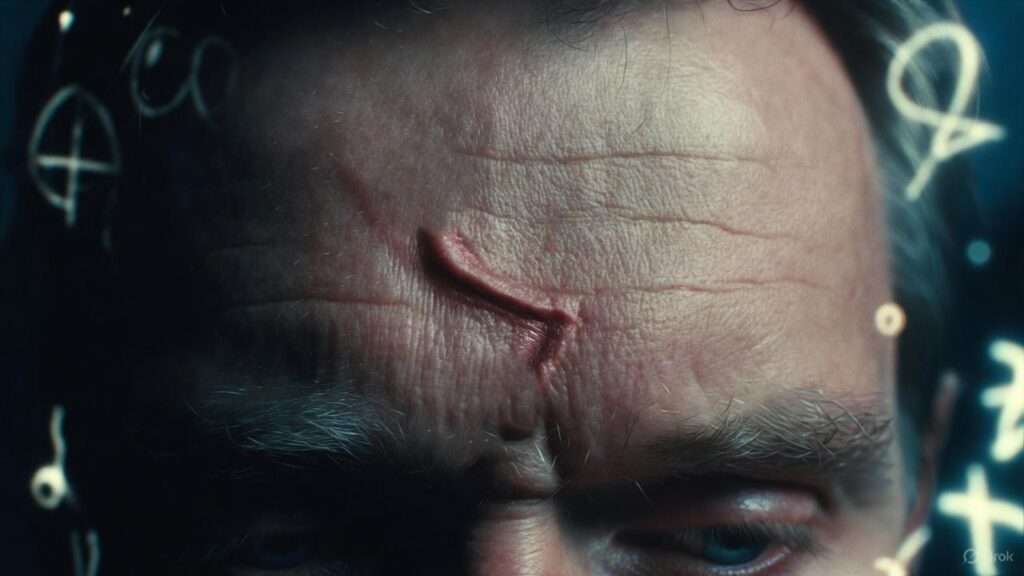
Imagine a single mark on a child’s forehead that instantly identifies him as a survivor of unimaginable evil, a symbol recognized by millions worldwide. That lightning-shaped scar on Harry Potter’s forehead isn’t just a cool design—it’s the key to understanding his destiny, his pain, and his triumph. The Harry Potter scar has captivated fans for decades, sparking endless questions about its origin, magical properties, and deeper symbolism. In this comprehensive exploration, we’ll uncover the layers behind this iconic feature, drawing directly from J.K. Rowling’s canon, interviews, and the rich lore of the Wizarding World.
As a lifelong Harry Potter enthusiast and analyst who’s delved into every book, film, and official source multiple times, I can tell you: the scar is far more than a physical wound. It’s a psychic link to Lord Voldemort, a reminder of sacrificial love, and a profound emblem of resilience. By the end of this article, you’ll see why Harry’s lightning bolt scar remains one of the most powerful symbols in modern literature.
The Origin of Harry Potter’s Lightning Scar
The story of Harry’s scar begins on a fateful night in Godric’s Hollow, forever etching it into wizarding history.
The Night That Changed Everything: Voldemort’s Attack
On October 31, 1981, Lord Voldemort invaded the Potter home, intent on eliminating the infant who threatened his power due to a prophecy. He murdered James Potter first, then confronted Lily Potter, who refused to step aside. Her selfless sacrifice—begging for Harry’s life—invoked ancient magic, causing Voldemort’s Killing Curse, Avada Kedavra, to rebound.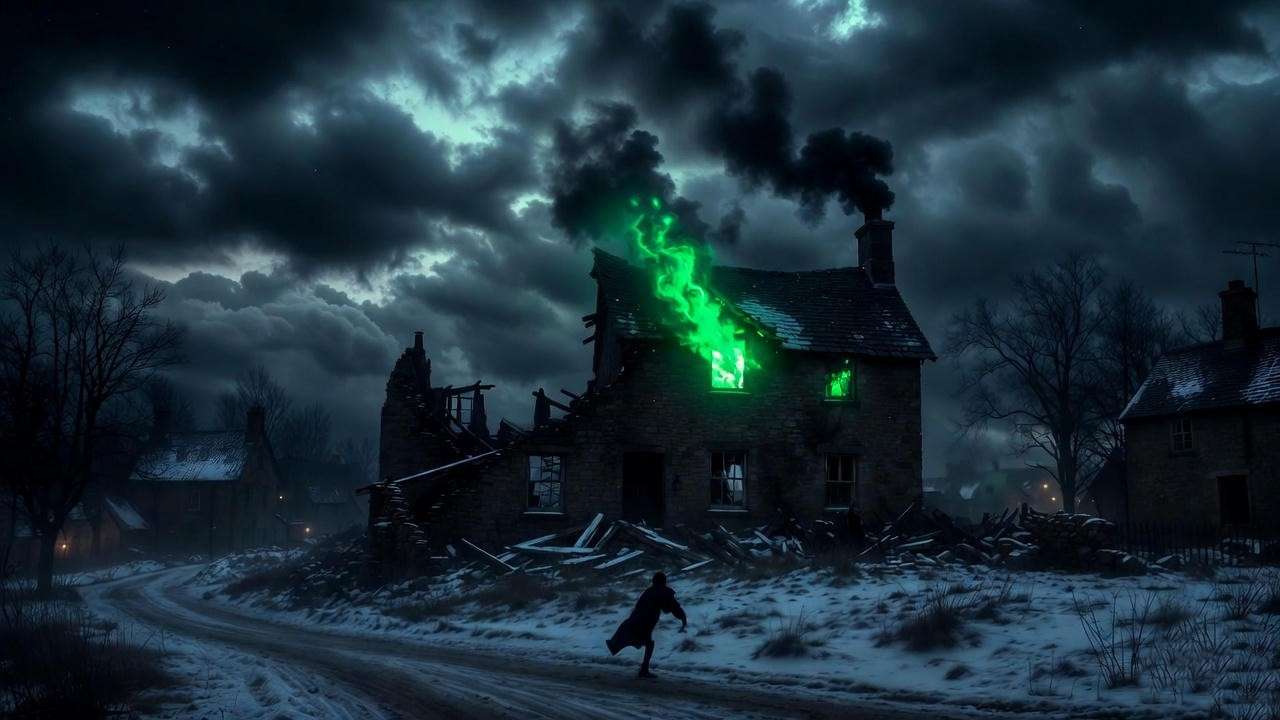
Typically, Avada Kedavra leaves no mark, as it causes instant death without physical damage. But in Harry’s case, the rebounding curse shattered Voldemort’s body and left a distinctive lightning-shaped scar on the baby’s forehead. This event dubbed Harry “The Boy Who Lived,” turning his scar into an instant badge of survival.
As Dumbledore later explains, Lily’s love created a protective charm in Harry’s blood, forcing the curse to fail spectacularly.
Why a Lightning Bolt Shape?
Fans have long speculated about the scar’s shape. Is it tied to the wand movement for Avada Kedavra? Early Pottermore illustrations suggested a lightning-like motion for the curse, fueling theories that the rebounding spell traced this pattern.
However, J.K. Rowling has clarified in multiple interviews: she chose the lightning bolt simply because it’s a “cool shape.” In a MuggleNet interview, she said, “To be honest, because it’s a cool shape. I couldn’t have my hero sport a doughnut-shaped scar.” In another, she noted it was “the most plausible shape for a distinctive scar” that conveys intensity without being absurd.
There’s no in-universe explanation linking it directly to wand movements—Rowling prioritized visual impact and recognizability. The lightning bolt evokes power, suddenness, and danger, perfectly mirroring the curse’s flash of green light.
Books vs. Movies: Placement and Appearance Differences
In the books, the scar is described as “thin” and “shaped like a bolt of lightning,” with hints of its location. In Order of the Phoenix, pain is felt “over his right eye,” suggesting it’s slightly off-center to the right.
Book covers vary: UK editions often show it centered, while US ones by Mary GrandPré place it in the middle for symmetry.
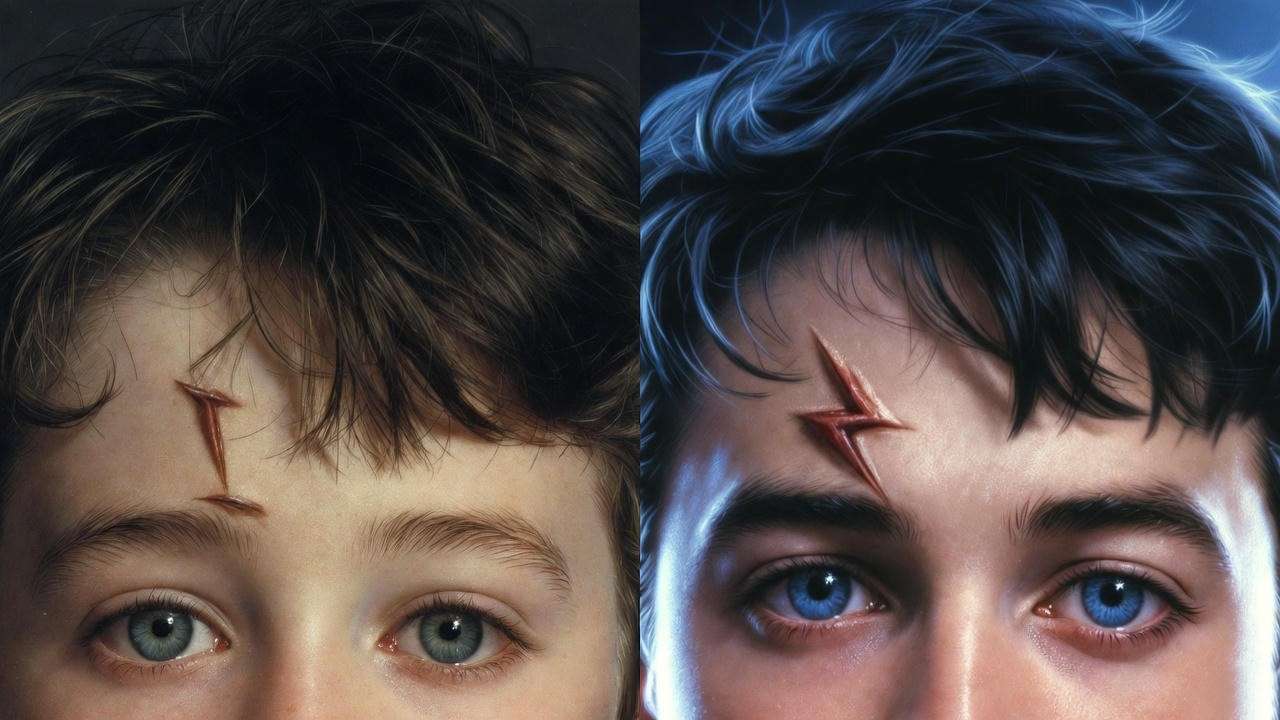 For the films, director Chris Columbus consulted Rowling, who specified the scar should be “razor sharp, just off center”—above the right eyebrow for visibility. This became the definitive movie version, portrayed by Daniel Radcliffe with prosthetic makeup.
These adaptations highlight how the scar’s design evolved for practical and iconic reasons, cementing its cultural image.
The Magical Properties of the Scar
Beyond its physical appearance, Harry’s lightning scar functions as a unique magical artifact—one that connects him directly to the Dark Lord and influences the entire series’ plot.
A Psychic Link to Voldemort
The scar’s most extraordinary property stems from the night of the attack: when the Killing Curse rebounded, it unintentionally turned Harry into a Horcrux. A fragment of Voldemort’s soul latched onto the only living thing in the room—baby Harry—embedding itself in the wound that became the scar.
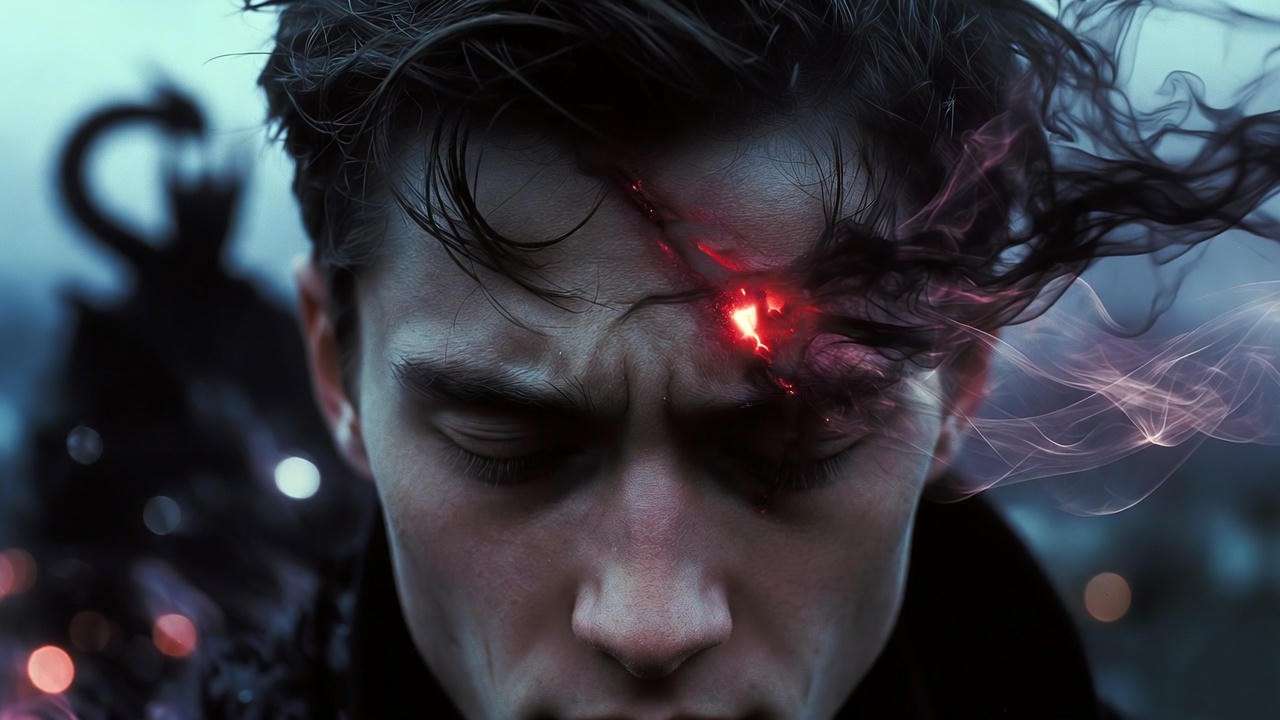 This soul fragment created an involuntary psychic connection. As Dumbledore reveals in Deathly Hallows, Harry and Voldemort share a link that allows emotions, thoughts, and even visions to bleed through. The scar acts as a conduit, burning or throbbing when Voldemort is nearby, experiencing intense rage, or regaining power.
Key examples include:
- In Prisoner of Azkaban, the scar hurts during Dementor encounters because they evoke Voldemort’s presence.
- Throughout Goblet of Fire, increased pain signals Voldemort’s strengthening body.
- The connection peaks in Order of the Phoenix, where Voldemort exploits it to plant false visions, luring Harry to the Department of Mysteries.
This link is parasitic—Voldemort can sometimes sense Harry’s emotions too—but it ultimately backfires, giving Harry insights that help defeat the Dark Lord.
An artistic depiction of the fateful night in Godric’s Hollow, showing Voldemort’s curse rebounding on baby Harry.
Visions, Dreams, and Legilimency Connection
The scar enables involuntary Legilimency—a form of mind-reading. Harry experiences Voldemort’s perspective in dreams and visions, often triggered by scar pain.
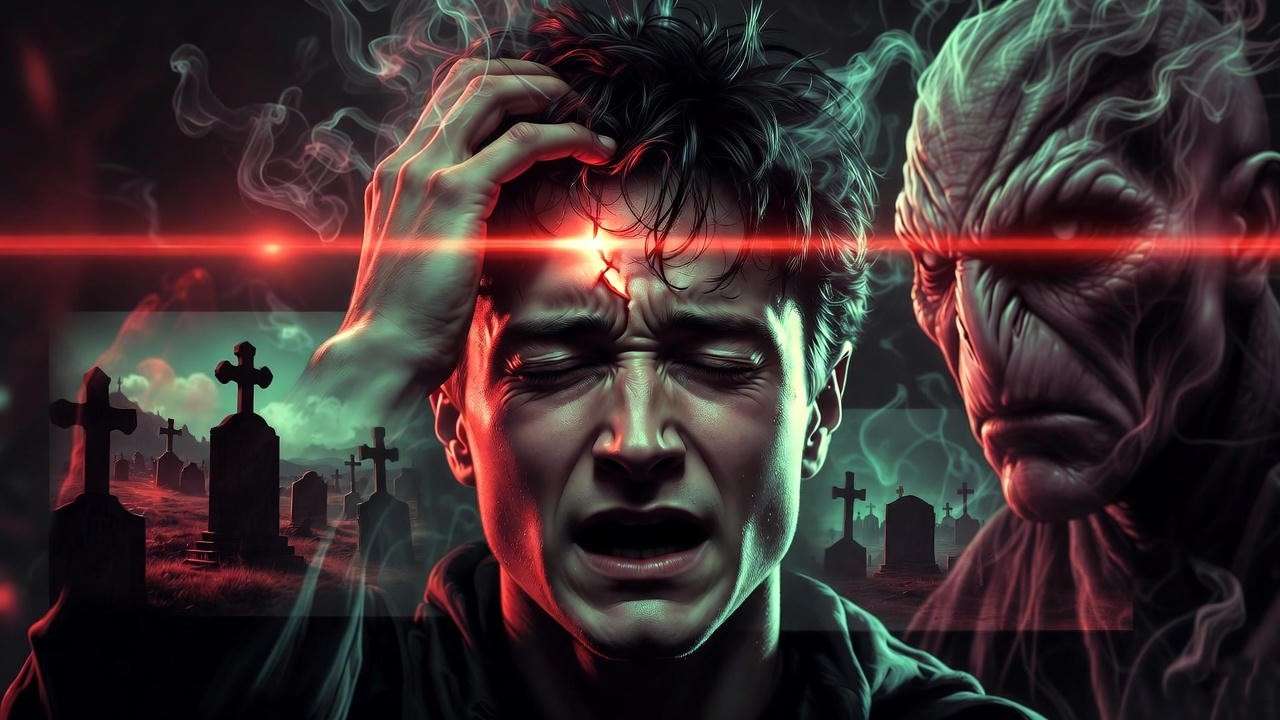 Notable instances:
- The opening of Goblet of Fire: Harry dreams of Frank Bryce’s murder through Voldemort’s eyes.
- The graveyard resurrection scene: Real-time vision as Wormtail restores Voldemort.
- The attack on Arthur Weasley in Order of the Phoenix: Harry’s vision saves Mr. Weasley’s life by alerting the Order.
- Voldemort’s possession attempt at the Ministry: The scar allows Voldemort entry but also exposes him to Harry’s capacity for love, forcing him out.
These visions isolate Harry—he fears he’s going mad or turning evil—but they prove invaluable. Without the scar’s warnings, many lives would have been lost.
The connection fades after Voldemort’s final defeat in Deathly Hallows. The epilogue famously notes: “The scar had not pained Harry for nineteen years. All was well.” This signals true peace and the soul fragment’s destruction.
Why the Scar Couldn’t Be Healed
Madame Pomfrey attempts to treat it in Philosopher’s Stone, but the mark persists. Dumbledore explains that some curses leave permanent effects, and “scars can come in handy.”
Magically, the scar’s permanence ties to the Horcrux fragment and Lily’s protection. No potion or spell can erase a soul-bound wound. This unhealable nature reinforces themes of enduring trauma—Harry must live with his past, turning it into strength.
Symbolic Meanings and Literary Analysis
The lightning scar transcends plot mechanics to embody the series’ core themes.
Survival and the Power of Love
At its heart, the scar represents Lily Potter’s sacrificial love—the “old magic” Voldemort couldn’t understand. It’s the visible proof that love is the ultimate power, protecting Harry and dooming Voldemort.
Unlike Voldemort’s self-inflicted marks (his noseless face from Horcruxes), Harry’s scar comes from selfless protection. It contrasts their paths: one driven by fear of death, the other by bonds of love.
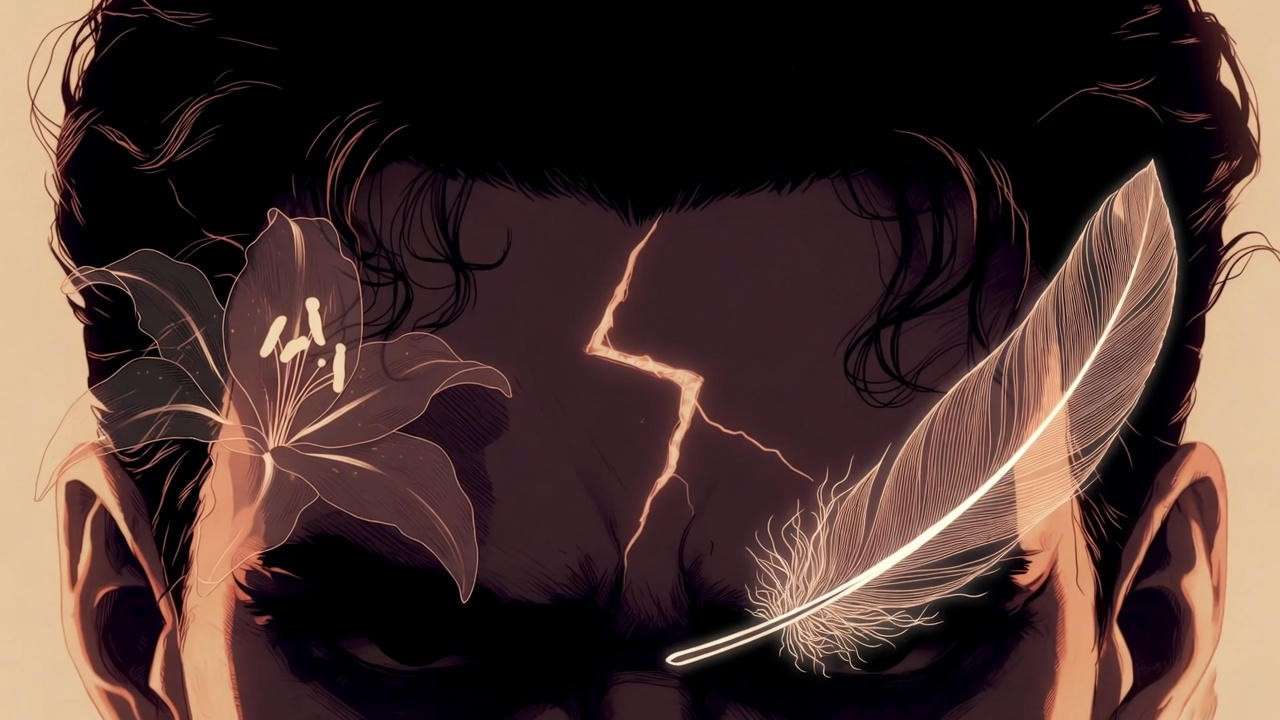 Burden of Fame and Identity
Harry’s relationship with his scar evolves. In Philosopher’s Stone, it’s “the only thing Harry liked about his own appearance”—a link to his parents. But fame turns it into a curse: strangers stare, whisper “The Boy Who Lived,” robbing him of normalcy.
It symbolizes the burden of destiny and the “Chosen One” prophecy. Harry resents being defined by one mark, yet it motivates his fight against evil.
Broader Literary Symbolism
Scars as symbols appear throughout literature:
- Like Odysseus’s boar scar in The Odyssey, it identifies the hero and marks trials overcome.
- Lightning evokes Zeus, god of thunder—suggesting divine intervention or raw power.
- In modern hero’s journeys (Joseph Campbell), visible wounds signify transformation.
The scar embodies resilience: what was meant to kill Harry becomes his greatest asset. It reminds readers that trauma, though permanent, doesn’t define us—we can emerge stronger.
J.K. Rowling’s Insights and Author Intent
J.K. Rowling has shared numerous details about the scar over the years, offering rare glimpses into her creative process and thematic intentions.
In a 2007 Bloomsbury web chat, Rowling revealed that she considered ending the entire series with the single word “scar” instead of the famous epilogue line. She explained: “I did think, for a long time, of ending the series with just ‘scar,’ because that would have been very stark. The scar would have been the only thing left.” Ultimately, she chose the more hopeful “All was well” to give readers closure, but the idea underscores how central the scar was to her vision.
Rowling has also emphasized its role as an outward manifestation of inner turmoil. In interviews, she described Harry’s scar as a physical representation of the emotional and psychological damage inflicted by Voldemort—damage that love ultimately heals. She deliberately made it visible to reflect how trauma can mark us in ways others immediately recognize, forcing Harry into a life of unwanted attention from the moment he enters the wizarding world.
Regarding the lightning shape, Rowling has been consistent: it was an aesthetic choice for distinctiveness and visual power. In a 2004 World Book Day chat, she dismissed deeper in-universe explanations, saying the shape was chosen “because it’s a cool shape and it looks good.” She wanted something instantly memorable that children could draw easily—hence the simple, bold zigzag.
Rowling’s intent also ties the scar to broader themes of destiny versus choice. While the mark brands Harry as “chosen,” his journey proves he defines himself beyond it.
Fan Theories and Deeper Interpretations
The scar’s enigmatic nature has spawned countless fan theories, some of which border on the plausible while others stretch into creative speculation.
Popular Theories Explored
One enduring theory links the lightning shape directly to the wand movement for Avada Kedavra. Early Pottermore content included illustrations showing a sharp, zigzag motion for the curse, leading many to believe the rebounding spell “burned” this pattern into Harry’s skin. While Rowling has never confirmed this, the visual similarity keeps the theory alive among fans.
Another popular idea suggests the scar resembles ancient runes or symbols. Some fans point to Nordic runes for protection or victory, but Rowling has explicitly stated there’s no runic significance—it’s purely a lightning bolt.
A more medical angle compares it to real-world Lichtenberg figures: branching scars left by lightning strikes. These fractal patterns can resemble bolts, and some fans speculate Rowling drew subconscious inspiration from them. In reality, such scars are rare and usually temporary, but the parallel adds a grounded, eerie realism.
Mythological and Cultural Parallels
Lightning scars appear in mythology worldwide. In Greek lore, Zeus’s thunderbolt marks divine power or punishment—paralleling how Harry’s scar signals both his vulnerability and his unique strength against evil.
Norse mythology features scarred heroes like Tyr, while Indigenous cultures sometimes view lightning survivors as touched by spirits. These archetypes position Harry within the classic “marked hero” tradition: think Achilles’ heel or Siegfried’s vulnerable spot.
In modern storytelling, scarred protagonists abound—from Luke Skywalker’s facial marks to Frodo’s lingering wounds. Harry’s scar elevates him to mythic status while keeping him relatably human.
Expert Insights from Literary Analysts
Literary critics often highlight the scar as a masterstroke of symbolism. Professor John Granger, author of several Harry Potter analysis books, calls it “the alchemical sign of the series”—representing the nigredo stage (blackening/suffering) that leads to purification and rebirth.
Academics like Lana Whited note how the scar subverts traditional hero markings: rather than a badge of honor earned through valor, Harry’s is inflicted in infancy, emphasizing innocence and undeserved suffering.
These analyses reinforce that Rowling crafted a symbol rich enough to support multiple layers of interpretation without ever feeling contrived.
The Scar’s Cultural Legacy
Few fictional marks have achieved the instant recognizability of Harry’s lightning scar. It appears on countless merchandise items—wands, glasses, T-shirts, tattoos—and has become shorthand for the entire franchise.
In cosplay and fan art, the scar is non-negotiable; a Harry without it simply isn’t Harry. Its simplicity makes it accessible: a quick red zigzag drawn with eyeliner or makeup instantly transforms anyone into “The Boy Who Lived.”
The scar has influenced other media, inspiring “marked hero” tropes in series like Percy Jackson (prophecy marks) and The Hunger Games (visible trauma). More importantly, it has empowered real people. Many fans with facial differences or visible scars share stories of finding confidence through Harry—seeing their marks not as flaws, but as signs of survival and strength.
In a broader sense, the scar represents how stories can heal. For a generation that grew up with Harry, that lightning bolt is a reminder that pain can leave marks, but those marks can also tell stories of resilience.
Frequently Asked Questions (FAQ)
Why does Harry’s scar hurt? The scar hurts when Voldemort is near, experiencing strong emotions, or when the soul fragment inside Harry reacts to dark magic. It serves as an early-warning system throughout the series.
Can the scar be removed or healed? No. Even advanced magical healing fails because the scar is tied to a piece of Voldemort’s soul and the ancient magic of Lily’s sacrifice. Dumbledore notes that some scars are permanent—and useful.
Is the lightning shape connected to the Killing Curse? Not directly in canon. J.K. Rowling chose the shape for visual impact, though early illustrations of the curse’s wand movement resembled lightning.
Why is the scar in different places in books vs. movies? Books imply it’s slightly off-center; films place it clearly above the right eyebrow for visibility. Rowling approved the movie placement.
What does the scar ultimately represent? Survival through love, the burden of destiny, enduring trauma, and the power of resilience. In the end, its dormancy signifies lasting peace.
Does Harry have any other notable scars? Yes—the words “I must not tell lies” carved into his hand by Umbridge’s blood quill, a basilisk fang wound on his arm, and minor injuries. But none carry the weight of the lightning scar.
Harry Potter’s lightning scar began as a simple plot device—a distinctive mark identifying a survivor—but evolved into one of literature’s most layered symbols. It’s a physical remnant of attempted murder, a magical conduit to evil, a constant reminder of lost parents, and ultimately a testament to the enduring power of love.
From the tragic night in Godric’s Hollow to the quiet peace of the epilogue nineteen years later, the scar traces Harry’s entire arc: from marked infant to triumphant hero who chooses goodness despite pain.
Next time you re-read the series or re-watch the films, pay close attention to those moments when the scar throbs. They’re not just plot points—they’re reminders that our deepest wounds, visible or not, can become sources of extraordinary strength.
What does Harry’s scar mean to you? Share your thoughts in the comments, or revisit those pivotal scar moments on your next Potter marathon. The magic is in the details—and few details are as magical as that iconic lightning bolt.