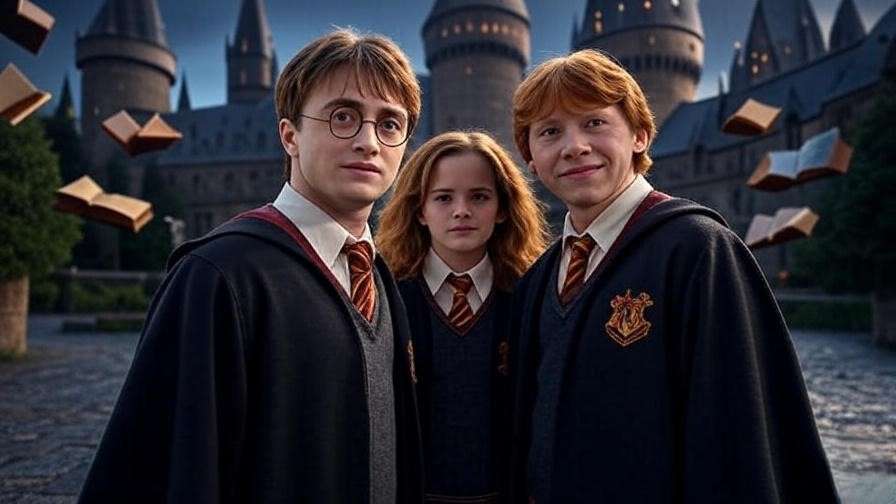
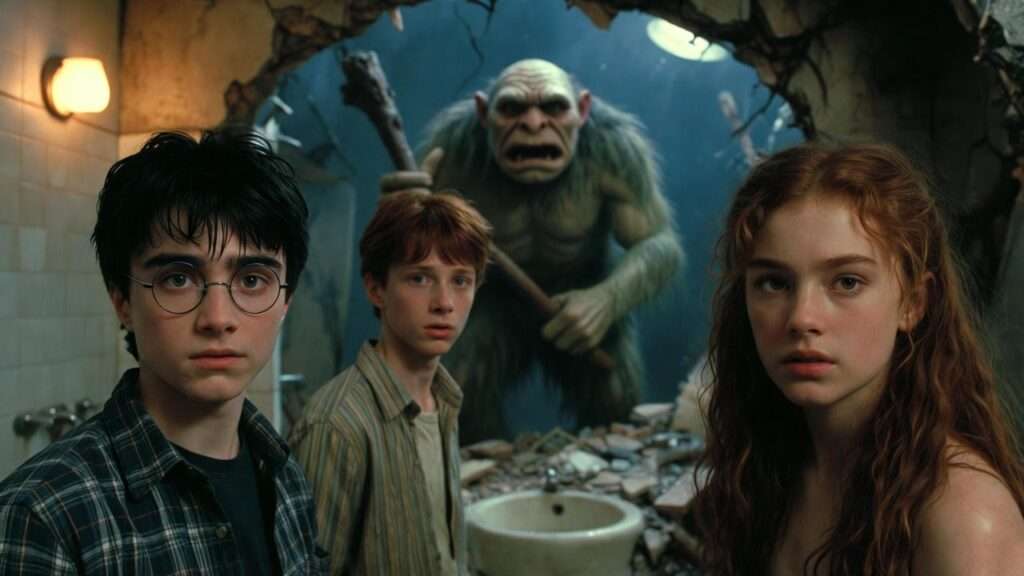
Imagine three eleven-year-olds facing a twelve-foot, club-wielding monster in a wrecked bathroom, armed with nothing but beginner spells and sheer nerve. This heart-stopping moment—the Harry Potter troll incident on Halloween 1991—isn’t just an exciting action sequence. It’s the defining scene that transforms Harry Potter, Ron Weasley, and Hermione Granger from wary classmates into the unbreakable Golden Trio. For millions of fans worldwide, the troll in the bathroom remains one of the most memorable and emotionally resonant moments in J.K. Rowling’s Harry Potter and the Philosopher’s Stone (or Sorcerer’s Stone in some editions). In this ultimate guide, we’ll dive deep into every aspect of this iconic encounter, from the creature’s lore to its lasting impact on the series.
Whether you’re a longtime Potterhead revisiting the magic, a newcomer curious about why this scene is so beloved, or someone researching the deeper themes of friendship and bravery in the wizarding world, this comprehensive breakdown will give you fresh insights, detailed analysis, and answers to lingering questions about the Harry Potter troll.
What Is a Troll in the Harry Potter Universe?
In the wizarding world, trolls are classified by the Ministry of Magic as “beasts” rather than “beings” due to their extremely limited intelligence and propensity for violence. These enormous creatures stand up to twelve feet tall and can weigh over a tonne, making them formidable opponents even for experienced wizards.
Types of Trolls
J.K. Rowling draws heavily from European folklore, particularly Scandinavian myths, when crafting her trolls. The series and companion books like Fantastic Beasts and Where to Find Them mention several distinct varieties:
- Mountain Trolls: The type featured in the famous bathroom scene. They are the largest and most aggressive, with greyish skin, bald heads, and short, powerful legs. Their sheer size and strength make them nearly unstoppable in close combat.
- Forest Trolls: More agile and adapted to wooded environments, these trolls are sometimes described as having hair for camouflage among trees.
- River Trolls: Distinguished by their purple skin and shorter stature, they inhabit waterways and are known for sharp, protruding teeth.
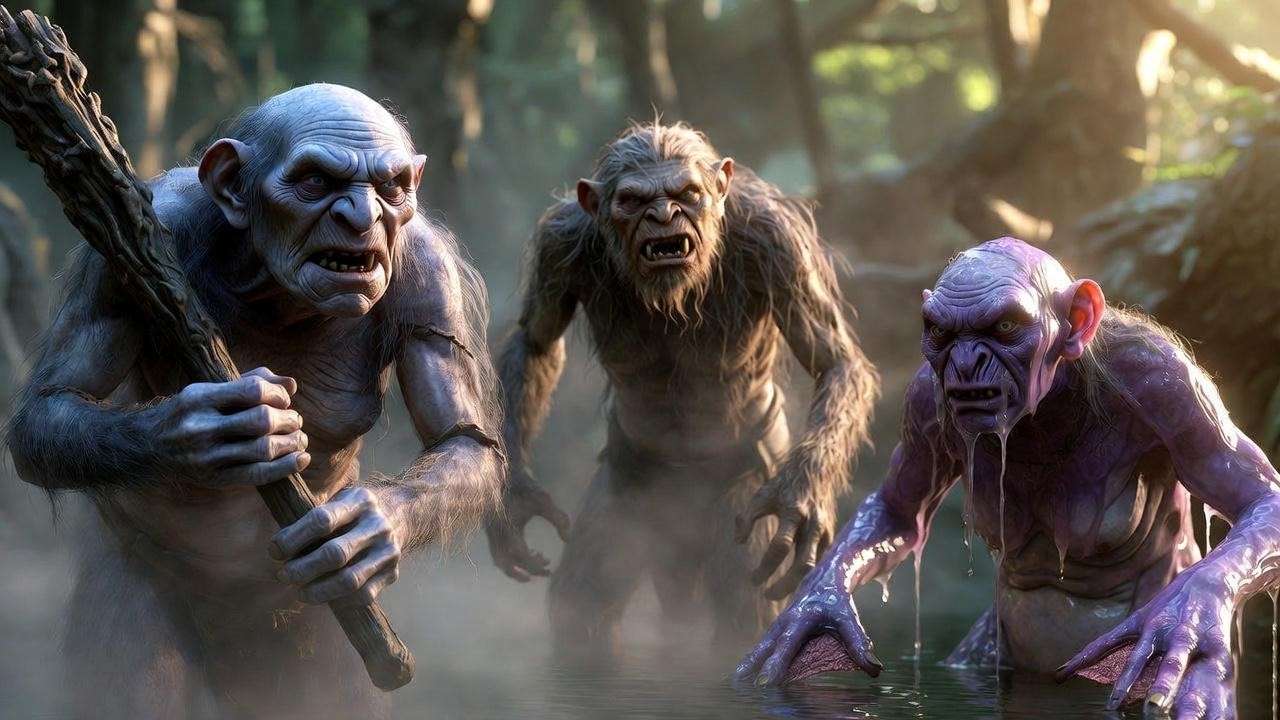 All trolls share common traits: thick hides that resist most spells, immense physical power, and rudimentary language skills at best. They wield crude weapons like tree trunks or massive clubs and are notoriously difficult to subdue without coordinated magic.
Key Characteristics and Lore
Trolls possess what the Ministry calls “very little brainpower.” They can understand simple commands and use basic tools, but complex thought is beyond them. This low intelligence is why the International Confederation of Wizards has historically denied trolls “being” status, despite occasional protests from creature rights advocates.
In wizarding history, trolls have been used as guards (as seen later in the series) or even mercenaries in wizard-troll conflicts. Their resistance to magic makes them valuable to dark wizards willing to control them through brute force or enchantment. Professor Quirrell’s ability to handle a mountain troll in Philosopher’s Stone is an early clue to his extraordinary (and sinister) capabilities.
The Build-Up to the Halloween Troll Incident (Chapter 10: Hallowe’en)
The troll scene doesn’t emerge from nowhere—it’s carefully built through the emotional tensions of the early school year. Chapter 10, titled “Hallowe’en,” masterfully sets the stage for both danger and reconciliation.
Ron’s Insult and Hermione’s Heartbreak
The incident begins with a classic schoolyard misunderstanding. During Charms class, Hermione corrects Ron’s pronunciation of “Wingardium Leviosa,” leading to frustration. After class, Ron complains loudly to Harry: “It’s no wonder no one can stand her… she’s a nightmare, honestly.”
Unbeknownst to Ron, Hermione overhears. Devastated, she skips the Halloween feast and spends hours crying in the girls’ bathroom. This moment humanizes Hermione, showing that beneath her confident, rule-following exterior lies a lonely girl desperate for acceptance.
Quirrell’s Diversion: The Troll Enters Hogwarts
Meanwhile, Professor Quirrell—secretly hosting Lord Voldemort—needs a distraction to access the trapdoor guarding the Philosopher’s Stone. He deliberately lets a fully grown mountain troll into the dungeons.
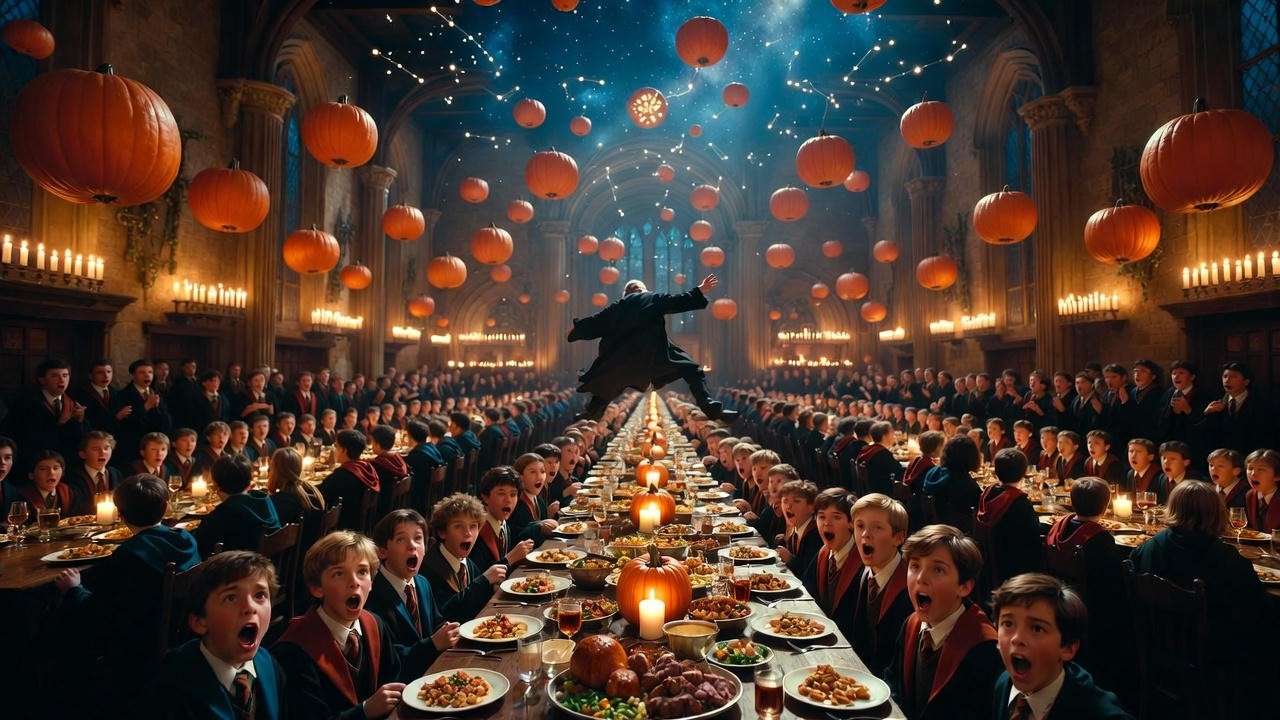 During the Halloween feast, Quirrell bursts into the Great Hall, dramatically announcing, “Troll—in the dungeons—thought you ought to know,” before collapsing in a faint. Panic erupts as Dumbledore directs students back to their dormitories. This diversion allows Quirrell to slip away toward the third-floor corridor.
Harry and Ron’s Realization
As Gryffindors file out, Harry suddenly remembers Hermione doesn’t know about the troll. Guilt washes over Ron, who admits, “She doesn’t know about the troll.” Driven by conscience, the boys break away from the crowd to find her—a decision that marks their first act of deliberate rule-breaking together.
This buildup highlights Rowling’s skill in weaving emotional stakes with plot momentum. The troll isn’t just a random monster; it’s a catalyst that forces characters to confront their flaws and choose bravery over safety.
Detailed Breakdown of the Iconic Bathroom Scene
The confrontation itself is a masterclass in tension, humor, and triumphant teamwork. Locked in the girls’ bathroom with a rampaging mountain troll, three first-years must rely on quick thinking to survive.
The Encounter and Initial Panic
Harry and Ron trace the troll’s foul stench (described in the book as a mix of “old socks and public toilets that no one bothers to clean”) to the girls’ bathroom. They arrive just as the troll smashes through the door, cornering a terrified Hermione against the wall.
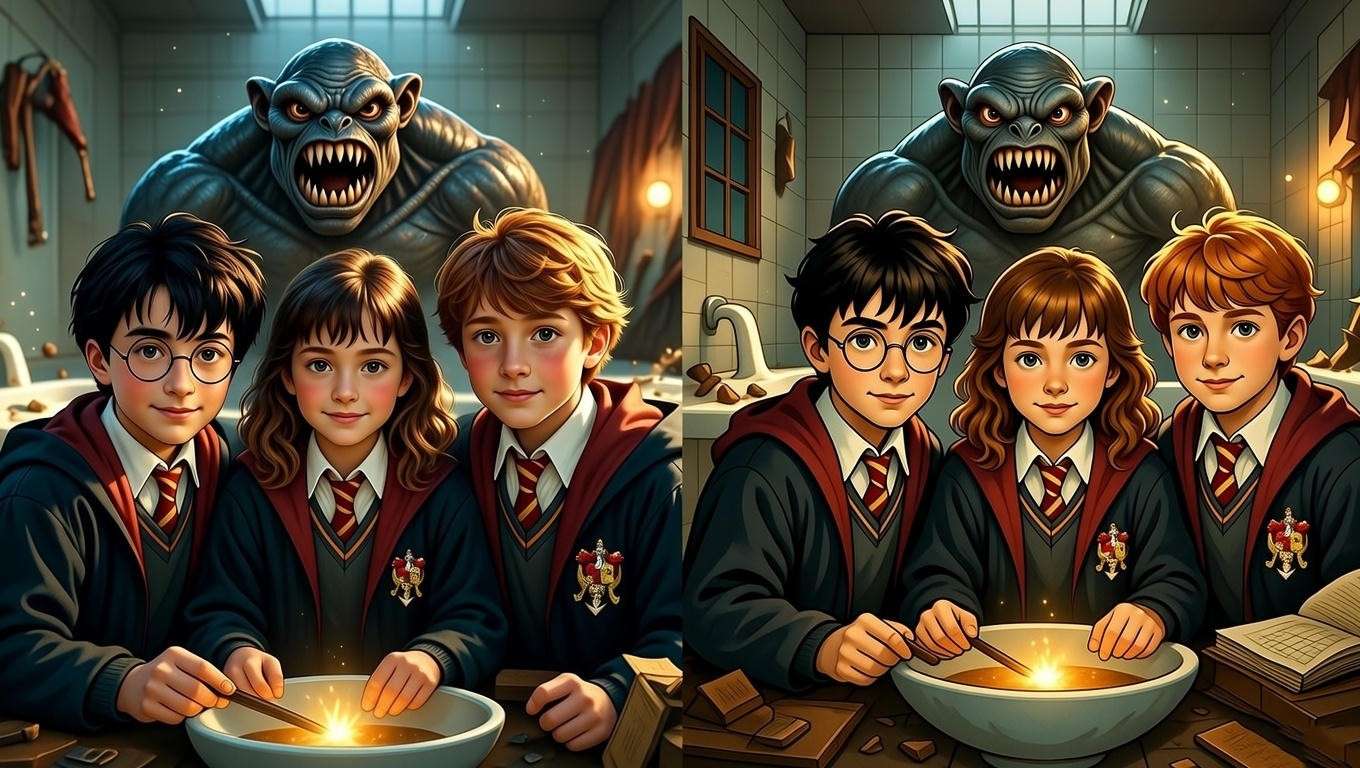
The creature is grotesquely detailed: twelve feet tall, granite-grey skin, a tiny bald head atop a massive body, and tree-trunk legs. It swings its enormous club, shattering sinks and sending porcelain flying. Hermione, paralyzed with fear, can only shrink against the wall.
The Fight: Step-by-Step Analysis
What follows is a chaotic, improvised battle that perfectly showcases each character’s strengths:
- Initial Attempt to Trap the Troll: Harry and Ron try to lock the troll in the bathroom, but inadvertently trap it with Hermione.
- Harry’s Desperate Distraction: With the troll advancing, Harry leaps onto its back and jams his wand up its nose—a disgusting but effective move that enrages the creature.
- Ron’s Moment of Glory: As the troll pries Harry off and prepares to crush him, Ron—shaking with fear—successfully casts “Wingardium Leviosa.” He levitates the troll’s own club high above its head and drops it, knocking the beast unconscious with a sickening thud.
- The Aftermath: Teachers arrive moments later—McGonagall, Snape (with a limp suggesting he was bitten by Fluffy), and Quirrell. To protect the boys from expulsion, Hermione lies for the first time, claiming she went after the troll herself because she thought she could handle it.
 McGonagall awards five points each to Harry and Ron for “sheer dumb luck” but deducts five from Hermione for her supposed recklessness—a net gain that leaves the boys stunned.
Key Spells and Magic Used
This scene beautifully illustrates that magic in Rowling’s world isn’t just about power—it’s about creativity and teamwork. The only successful spell is a first-year levitation charm, perfectly demonstrating how knowledge (Hermione’s earlier correction) can save lives when applied cleverly.
Why This Scene Forged the Golden Trio
J.K. Rowling herself has said: “There are some things you can’t share without ending up liking each other, and knocking out a twelve-foot mountain troll is one of them.”
The bathroom battle is the crucible that forges Harry, Ron, and Hermione’s friendship.
Themes of Friendship and Loyalty
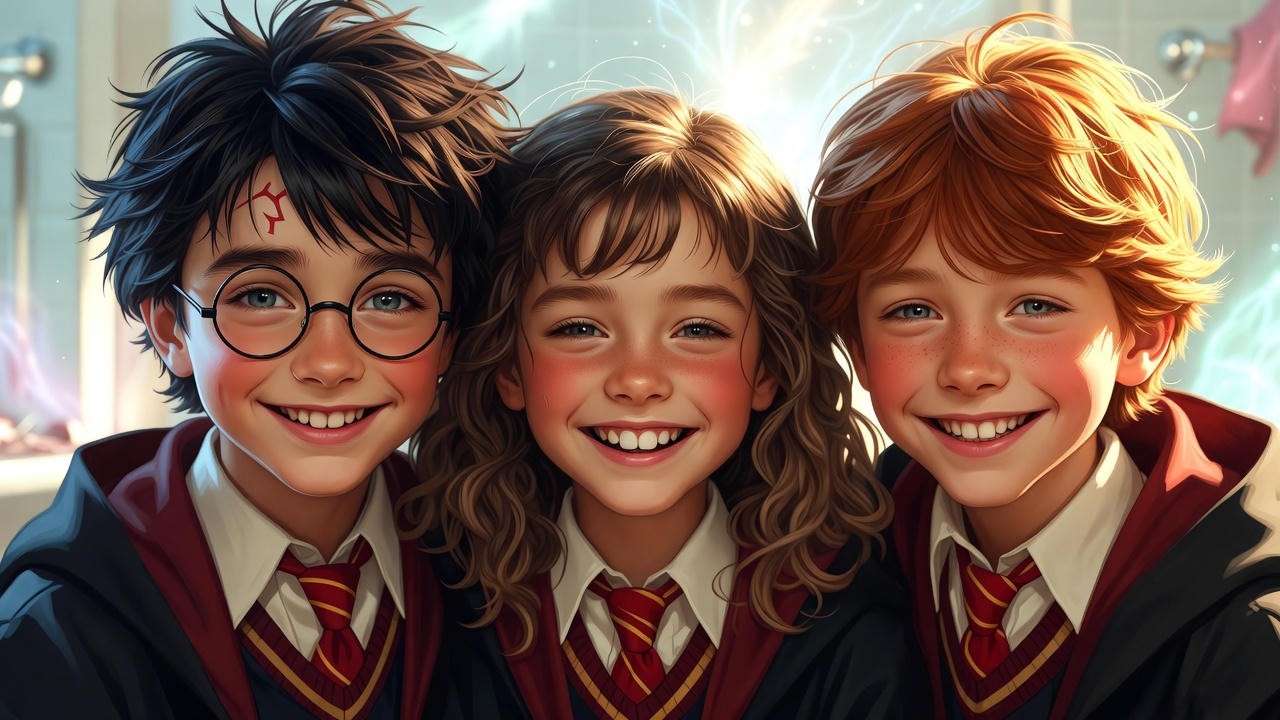
Before Halloween, the three are barely acquaintances. Harry and Ron bond quickly, but Hermione remains an outsider—too bossy, too studious. The troll incident shatters these barriers. Shared mortal danger creates an instant, profound connection. Ron’s guilt leads to heroism; Hermione’s gratitude leads to loyalty; Harry’s courage inspires them both.
From this point forward, the trio operates as a unit: Hermione’s intellect, Ron’s heart and strategic thinking, Harry’s bravery. This dynamic carries through all seven books.
 Character Development Insights
- Hermione Granger: The scene marks her transition from isolated know-it-all to integral friend. Her willingness to lie for the boys shows she’s capable of bending rules for those she cares about—a crucial development.
- Ron Weasley: Overcomes his insecurity and pettiness to perform under pressure, redeeming his earlier cruelty.
- Harry Potter: Acts instinctively to protect others, reinforcing his innate heroism separate from his fame.
Long-Term Impact on the Series
The Golden Trio’s formation sets the emotional core of the entire saga. Every future victory—against basilisks, Dementors, or Voldemort himself—builds on this foundation of mutual trust established in a smelly bathroom.
Book vs. Movie: Key Differences and Adaptations
The troll scene is one of the most faithfully adapted moments in Harry Potter and the Sorcerer’s Stone (2001), directed by Chris Columbus, yet several changes were made to heighten visual drama and fit the film’s runtime. While the emotional core remains intact, the differences offer fascinating insight into how Rowling’s prose translates to screen.
Notable Changes
- Build-Up and Pacing: The book dedicates significant space to Hermione’s isolation and Ron’s guilt. The film condenses this, showing Hermione overhearing Ron in the Charms corridor and cutting straight to her crying in the bathroom. The emotional weight is conveyed visually through Emma Watson’s heartbreaking performance rather than internal monologue.
- The Fight Sequence: In the book, Harry jams his wand up the troll’s nose, causing it to roar in pain. The film alters this dramatically—Harry ends up dangling from the levitating club before Ron drops it on the troll’s head. This change adds suspense and makes the action more cinematic.
- Hermione’s Role in the Fight: Book Hermione is frozen with terror and contributes only by teaching Ron the correct pronunciation earlier. In the movie, she actively helps by shouting “Wingardium Leviosa!” to guide Ron, emphasizing teamwork even more explicitly.
- Omitted Details: The book mentions a second mountain troll guarding the Philosopher’s Stone in the underground chambers (knocked out off-page by Quirrell). This is entirely cut from the film, likely to avoid confusion and streamline the third-act challenges.
- Visual and Sensory Elements: Rowling’s vivid descriptions of the troll’s stench and grotesque appearance are hard to replicate on screen. The film uses practical effects for the club and a CGI body, creating a memorable but slightly less repulsive creature than the book’s “lumpy gray glue” boogers and toilet-like smell.
 Behind-the-Scenes Fun Facts
The mountain troll was one of the first fully CGI creatures created for the film. The production team built a life-sized pneumatic club for actors to interact with, giving the scene physical realism. Daniel Radcliffe, Rupert Grint, and Emma Watson were only 11–12 years old during filming, and their genuine fear added authenticity. Interestingly, the troll’s roar was voiced by a dubbed actor in post-production because the original sound effects were deemed too frightening for a family audience.
Director Chris Columbus has said in interviews that this scene was crucial for establishing the trio’s chemistry on screen. The young actors rehearsed extensively, and their natural camaraderie shines through—much like the characters themselves bonding through shared danger.
Deeper Analysis: Symbolism, Themes, and J.K. Rowling’s Intentions
Beyond the excitement, the Harry Potter troll scene is rich with symbolism and thematic depth that resonates throughout the series.
Symbolism of the Troll
The mountain troll represents overwhelming, mindless adversity—an obstacle too large for any one person to handle alone. Its tiny head atop a massive body symbolizes brute force without intellect, contrasting sharply with the trio’s reliance on wit and cooperation. Defeating it through a simple levitation spell underscores Rowling’s recurring message: intelligence and friendship triumph over raw power.
The bathroom setting itself is symbolic. Bathrooms are private, vulnerable spaces—Hermione is at her most emotionally exposed here. The destruction of the sinks mirrors the shattering of social barriers between the three children.
Broader Wizarding World Connections
Quirrell’s ability to overpower and control a mountain troll is an early red flag. Trolls are notoriously resistant to magic and difficult to subdue, even for skilled wizards. This hints at Voldemort’s influence long before the turban reveal. Later books reference troll-related incidents, such as the controversy over troll hunting rights and Umbridge’s use of troll security in Order of the Phoenix.
Expert Insights and Fan Theories
Many fans have speculated about the troll’s movements. How did a twelve-foot creature wander from the dungeons to a first-floor bathroom without being noticed sooner? Some theories suggest Quirrell magically guided it toward Hermione specifically, either by chance or design, to eliminate a perceived threat (a brilliant Muggle-born student). While Rowling has never confirmed this, she has praised the scene for perfectly encapsulating the series’ core theme: “Friendship is the most powerful magic of all.”
Literary analysts often point to this moment as a classic “found family” trope. Harry, orphaned and isolated, Ron, overshadowed by siblings, and Hermione, an outsider in the wizarding world, find belonging through shared trauma and triumph.
Other Notable Troll Appearances in the Series
Though the Halloween troll is the most famous, these creatures appear elsewhere:
- The Philosopher’s Stone Guard: As mentioned, a second mountain troll protects one of the enchanted chambers beneath the trapdoor. Quirrell dispatches it off-page.
- Troll-Related References: In Goblet of Fire, trolls are mentioned as potential security for the Triwizard셨 Tournament (though giants are chosen instead). In Order of the Phoenix, Ministry employee Dolores Umbridge brings troll-trained security personnel to Hogwarts.
- Fantastic Beasts Era: The companion film series and books reveal that trolls were involved in historical wizard-troll conflicts, including uprisings in the 18th century.
These references reinforce trolls as symbols of brute force often exploited by those in power—a subtle critique of authoritarianism that echoes throughout the series.
Fun Facts, Trivia, and Collectibles
- The troll’s club is described as “enormous” in the book—film props suggest it weighed over 100 pounds in practical form.
- “Troll boogers” became a running joke among fans, referenced in merchandise and even Pottermore writings.
- Popular collectibles include the LEGO Harry Potter “Troll on the Loose” set (set 4712), Funko Pop! figures of the mountain troll, and official Wizarding World replicas of the bathroom scene diorama.
- In the Hogwarts Legacy video game (set in the 1890s), players can encounter trolls in the open world, continuing the creature’s legacy in interactive media.
Frequently Asked Questions (FAQs)
Why did Hermione lie to the teachers about seeking the troll?
Hermione’s lie was a pivotal character moment. By claiming she went after the troll herself (“I thought I could handle it… I’ve read about them”), she protected Harry and Ron from severe punishment and expressed gratitude for their rescue. It marked the first time she prioritized friendship over rules.
How did three first-years possibly defeat a fully grown mountain troll?
Teamwork and cleverness. The troll’s low intelligence made it vulnerable to distraction and its own strength. Ron’s successful Wingardium Leviosa—practiced correctly thanks to Hermione’s earlier correction—turned the creature’s weapon against it. Rowling deliberately showed that knowledge and cooperation outweigh brute force.
Is the bathroom troll scene included in all adaptations?
Yes, though with variations. It appears in the audiobook (brilliantly narrated by Stephen Fry or Jim Dale), the illustrated editions by Jim Kay (with stunning artwork), and video games like LEGO Harry Potter Years 1–4, where players reenact the fight in humorous brick form.
What happened to the troll after it was knocked out?
The book doesn’t specify, but Professor McGonagall mentions staff will handle removal. Given its size and danger, it was likely stunned further and relocated or disposed of by Ministry officials.
Are Harry Potter trolls based on real-world folklore?
Absolutely. Rowling drew heavily from Scandinavian and Norse mythology, where trolls are dim-witted giants who live in mountains or forests, fear sunlight (sometimes turning to stone), and wield clubs. Her versions retain the violence and low intelligence while adding wizarding-specific traits like magical resistance.
More than two decades after Philosopher’s Stone was published, the Halloween troll incident endures as one of the most beloved moments in children’s literature. It’s a perfect encapsulation of everything that makes the Harry Potter series magical: ordinary children achieving extraordinary things through courage, friendship, and quick thinking.
This single chaotic scene in a girls’ bathroom launched a friendship that would topple the darkest wizard of the age. It reminds readers of all ages that true strength lies not in isolation or raw power, but in the bonds we forge when we choose to stand together.
Whether you first experienced it through the pages of the book, the wonder of the film, or retellings with friends, the Harry Potter troll scene continues to inspire. Revisit it the next time you need a reminder that even the most terrifying obstacles can be overcome—especially when you have friends by your side.
What’s your favorite memory of the Golden Trio’s first adventure together?