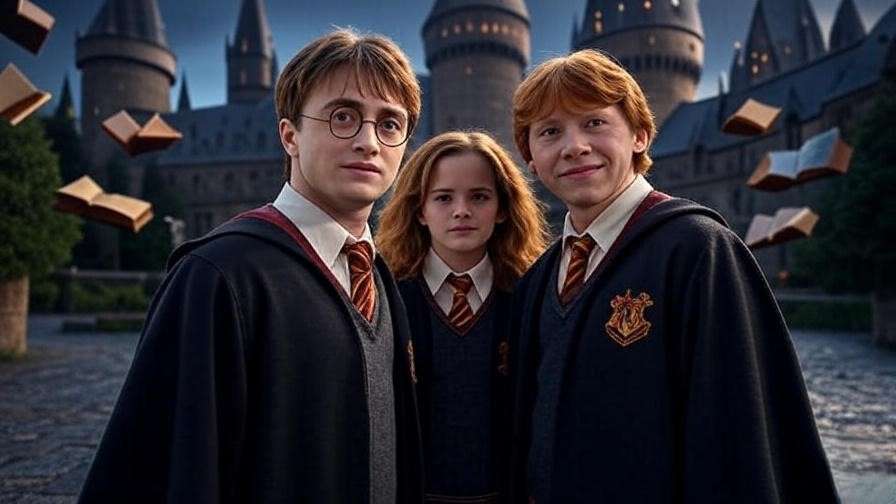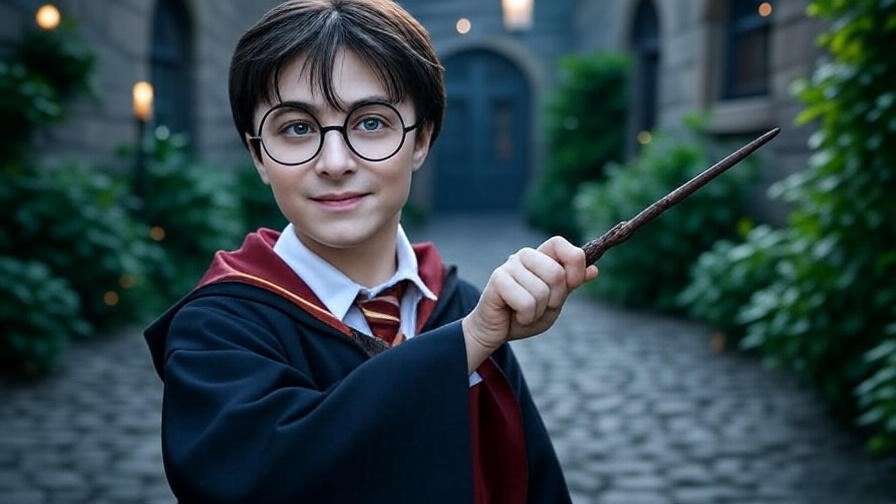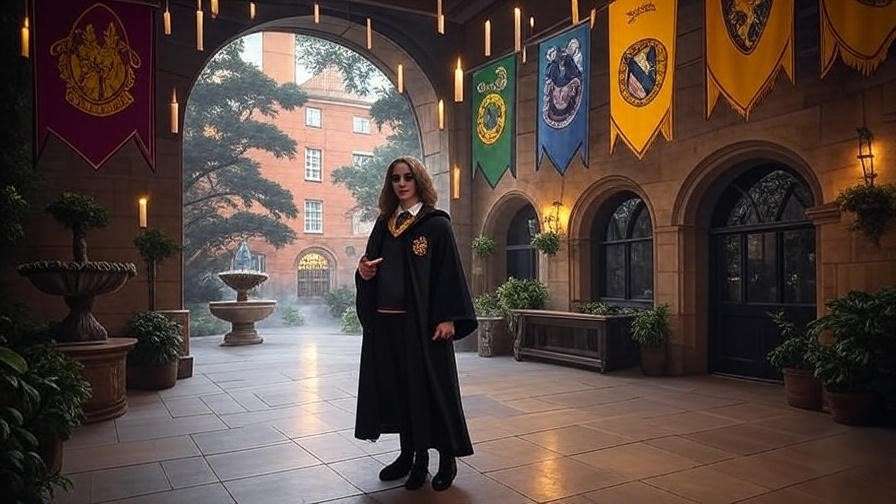
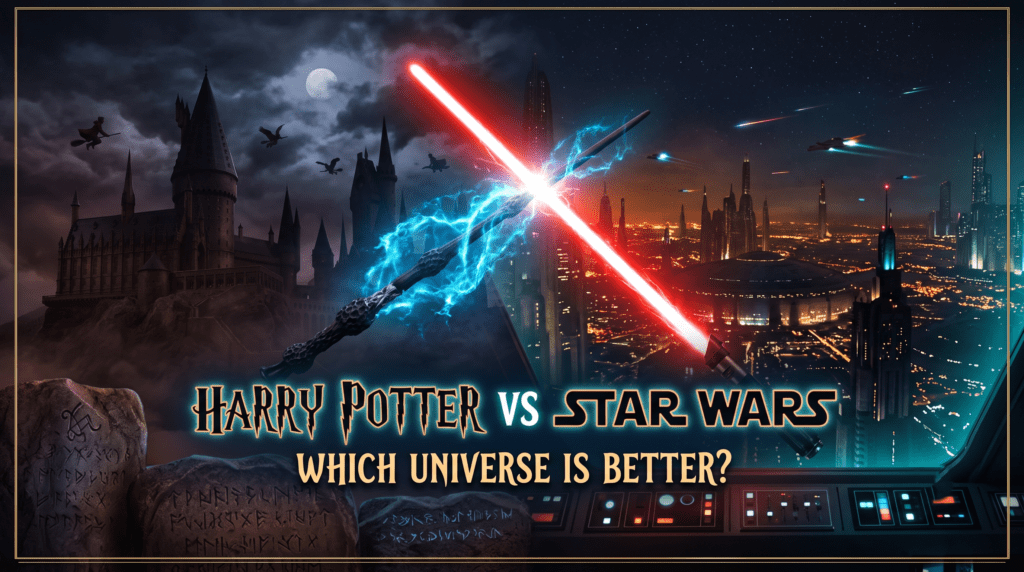
The playground arguments of our childhood have evolved into the internet forum debates of today. If you were handed a golden ticket to leave reality behind, would you rather receive a personalized Hogwarts acceptance letter delivered by an owl, or discover you were unusually strong with the Force? When it comes to Harry Potter vs Star Wars, the ultimate pop-culture standoff isn’t just about which movies grossed more at the box office. It is a fundamental debate about world-building, character depth, and narrative legacy.
Fans constantly argue over which universe is superior, but these discussions often lack a structured, objective breakdown of how these worlds actually function. In this comprehensive analysis, we will dissect the magical mechanics, character arcs, and expansive lore behind both juggernauts to finally determine which franchise built the better fictional universe.
The Foundations of World-Building: Magic vs. The Force
Before comparing lightsabers and wands, we must look at the foundational systems that govern these realities. Every great sci-fi or fantasy universe lives and dies by its internal logic.
The Rules of the Realm (Hard vs. Soft Magic Systems)
In the wizarding world, the magic system leans heavily into structured, almost academic rules. Magic requires immense precision: specific incantations with Latin-rooted etymology, exact wand movements, and deep concentration. A mispronounced “Swish and flick” can result in a buffalo on your chest instead of a floating feather. This structure creates a tangible reality where viewers and readers feel they could study and learn the magic themselves, much like a complex science. Behind-the-scenes production details heavily reflect this, with dedicated choreographers mapping out specific wand combat styles and fencing-inspired postures for different characters to showcase their mastery.
Conversely, the Force was introduced as a softer, more spiritual concept. It is an energy field created by all living things, requiring faith and mindfulness rather than rote memorization. While the prequel era attempted to quantify this with biology, the true appeal of the Force remains its mystical, almost religious nature. The Light and Dark sides operate on philosophical alignment, emotional control, and internal balance rather than strict spellcasting mechanics.
 Accessibility: Who Gets to Wield the Power?
Both universes grapple with the genetic lottery of power, but they handle it quite differently. The wizarding world is rigidly divided by “Blood Status.” The existence of Muggle-borns, Half-bloods, Purebloods, and Squibs (those born to magical parents without magic themselves) forms the bedrock of the franchise’s socio-political conflicts. This hierarchy mirrors real-world historical prejudices, adding layers of sociological depth to the lore.
Star Wars handles accessibility on a galactic scale. While the controversial introduction of Midichlorians implied a genetic component to Force sensitivity, the broader lore maintains that the Force resides in everyone, though only a fraction possess the innate connection required to manipulate it. The Jedi Order scours the galaxy for these rare individuals, pulling them from their families to serve a higher purpose. Unlike the wizarding world, which hides its society parallel to our own, Force users are public, legendary figures—often serving as diplomats, generals, and peacekeepers.
Heroes and Villains: Character Backgrounds & Lore
A universe is only as compelling as the people who inhabit it. Both franchises rely heavily on classic archetypes, but they subvert them in fascinating ways.
The “Chosen One” Trope: Harry vs. Anakin and Luke
The concept of the “Chosen One” is the narrative spine of both series. Harry’s heroism is largely reluctant. Marked from infancy by a prophecy he didn’t ask for, his journey is less about acquiring phenomenal cosmic power and more about the burden of survival, grief, and the choices he makes in the face of inevitable confrontation. His character background is steeped in isolation and neglect, making his ultimate choice to embrace love and sacrifice profoundly moving. He is a hero because of his humanity, not his raw magical output.
Star Wars tackles the prophecy trope through a multi-generational lens. Anakin Skywalker represents the tragic failure of the Chosen One—a prodigy burdened with impossibly high expectations who succumbs to fear and authoritarianism. His son, Luke, must then bear the weight of redeeming his father and restoring balance. Where Harry’s story is an intimate coming-of-age tale, the Skywalker saga is a sprawling space opera about generational trauma and redemption.
The Architecture of Evil: Voldemort vs. Darth Vader and Palpatine
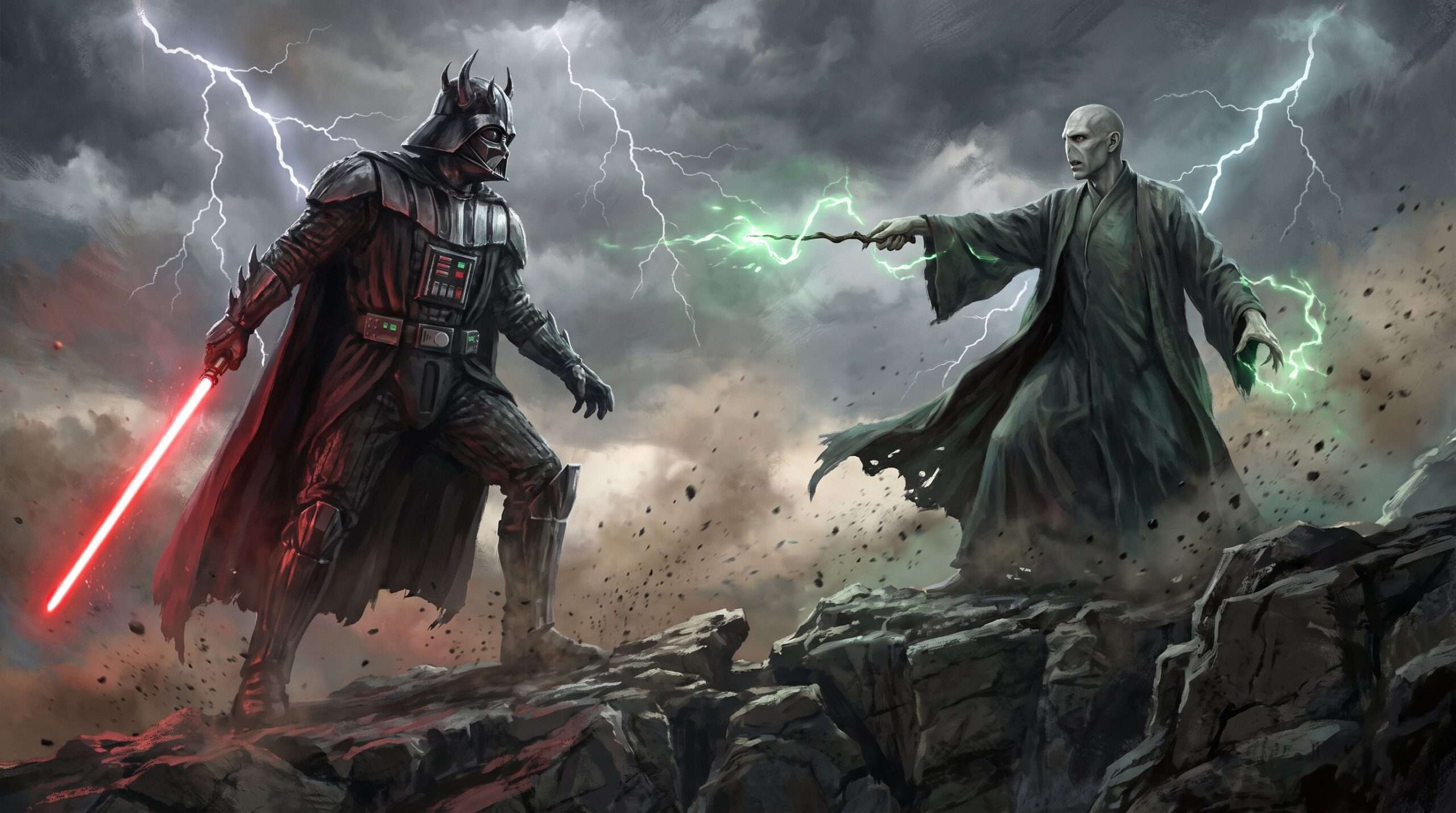
The villains of these franchises are masterclasses in character design, driven by vastly different psychologies. Tom Riddle’s transformation into Lord Voldemort is driven by a terrifyingly human motivation: the absolute fear of death. His creation of Horcruxes—tearing his soul apart to achieve immortality—is a dark, obsessive perversion of magic. His goals are relatively small in scale (dominating a hidden society and purging it of non-magical blood), which makes his brand of evil feel incredibly personal, bigoted, and insidious.
In contrast, Darth Vader and Emperor Palpatine operate on a macro level. Palpatine is the ultimate political manipulator, orchestrating a galactic war to seize absolute control over billions of star systems. Vader serves as his tragic enforcer, a broken man trapped in a cybernetic suit, driven by self-hatred and the loss of everything he loved. While Voldemort is a sociopath entirely incapable of love, Vader’s villainy is rooted almost exclusively in toxic, possessive attachment.
 “What Ifs” and Alternate Realities
One of the greatest markers of a truly robust fictional universe is its community’s ability to endlessly dissect alternative scenarios. “What if” fan theories keep the lore vibrant and constantly evolving decades after the original stories conclude.
In the wizarding world, the most enduring debate centers on Neville Longbottom. Prophecy dictated that the one with the power to vanquish the Dark Lord would be born as the seventh month dies to parents who had thrice defied him. Had Voldemort chosen to target the Longbottoms instead of the Potters, Neville would have been marked as the Chosen One. Analyzing this character background reveals a fascinating alternate timeline: Neville possessed the exact same latent bravery as Harry, but lacked the immediate, forged-in-fire confidence. How would the wizarding war have shifted if its focal point was a boy struggling with profound self-doubt rather than reluctant defiance?
On the other side of the stars, Star Wars fans continuously debate what would have happened if Anakin Skywalker had defeated Obi-Wan Kenobi on the lava banks of Mustafar. Alternate reality theories suggest Anakin, driven by immense dark side power, would have returned to Coruscant, immediately overthrown Emperor Palpatine, and attempted to rule the galaxy to “save” Padmé. These deep-dive lore discussions prove that both universes are structurally sound enough to support endless, logical speculation.
Exploring the Universes: Scope, Settings, and Scale
The sheer physical and societal footprint of a fictional universe dictates how audiences immerse themselves in the world. Here, the two franchises take entirely opposite approaches.
A Hidden Society on Earth vs. A Galaxy Far, Far Away
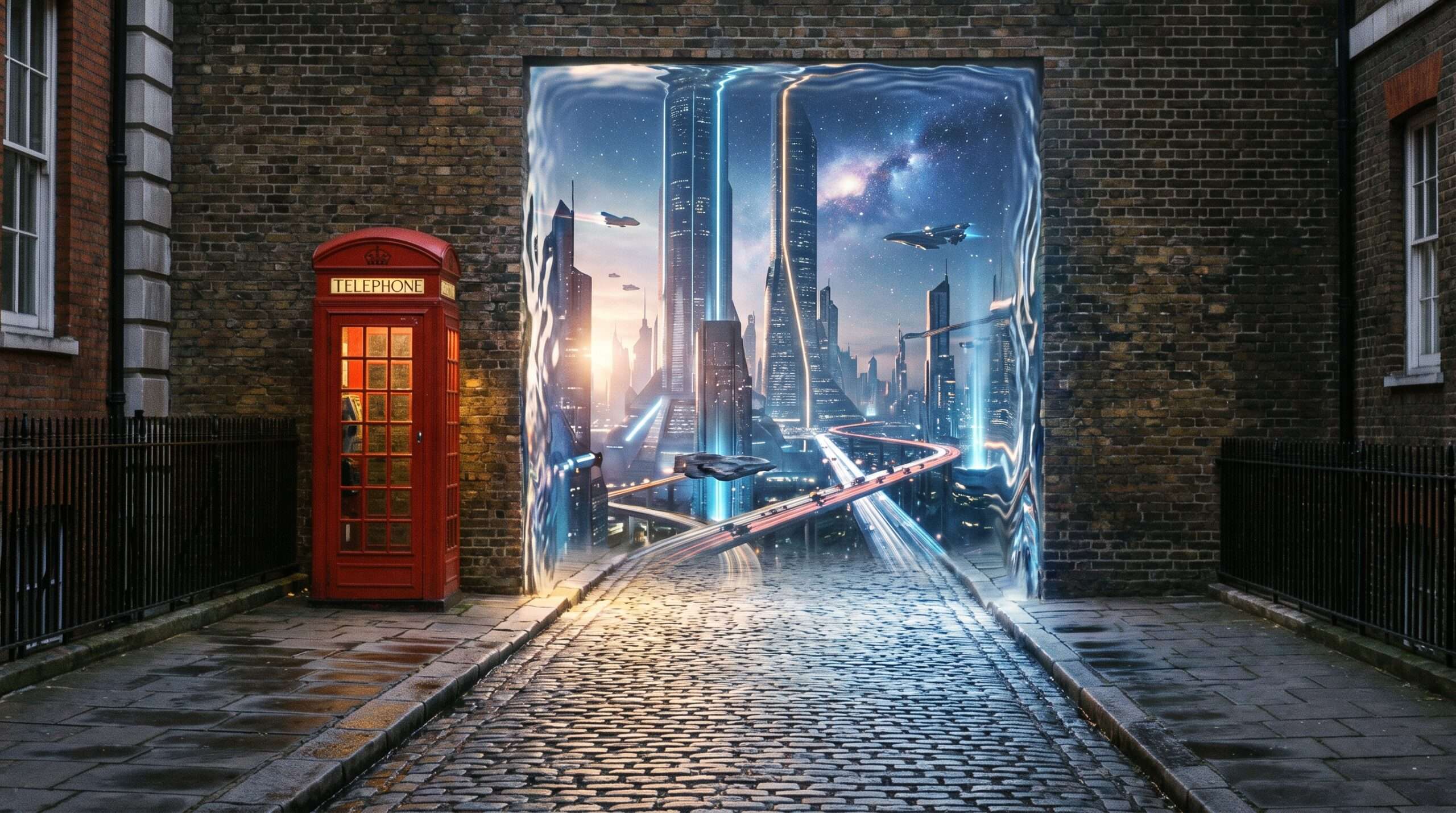
The wizarding world operates on a micro-scale of hidden intimacy. It exists right under our noses, running parallel to the mundane Muggle world. The brilliance of this world-building lies in its proximity. A brick wall in London opens into Diagon Alley; an invisible bus rescues stranded travelers; a red telephone booth serves as the visitor’s entrance to the Ministry of Magic. This creates a deeply relatable fantasy—the idea that magic is just around the corner, waiting to be discovered in our own backyard.
Star Wars, conversely, operates on an unfathomably massive macro-scale. It is a sprawling space opera spanning thousands of star systems, alien species, and complex geopolitical structures. The Galactic Republic and the subsequent Empire are governed by vast senates, enormous military fleets, and intricate trade routes. Where Harry Potter offers the cozy, nostalgic warmth of a secret society, Star Wars offers the limitless, awe-inspiring void of space exploration and planetary conquest.
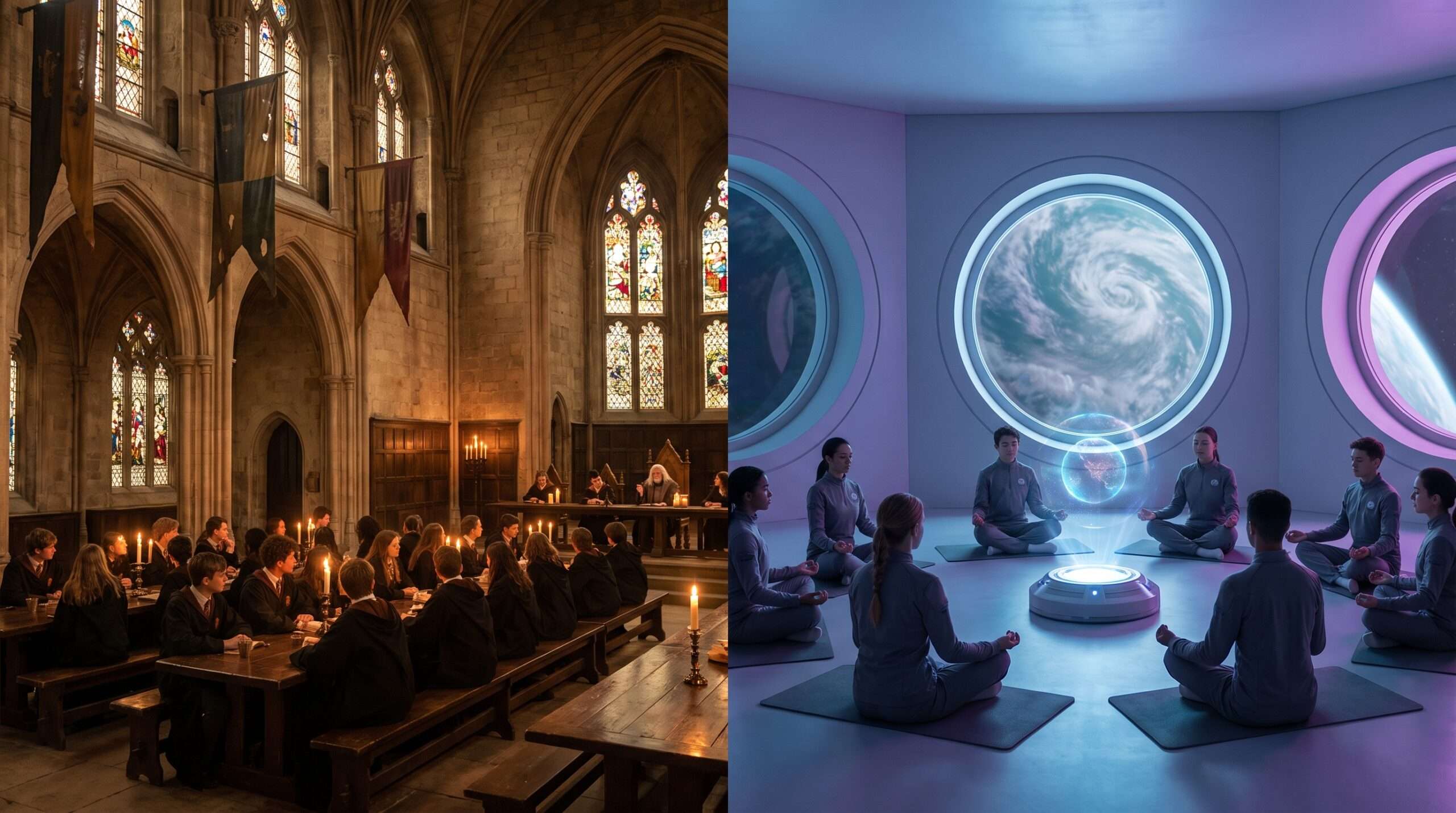
 Hogwarts vs. Jedi Academies: Educational Lore
How a universe educates its youth reveals its core values. Comparing Hogwarts School of Witchcraft and Wizardry with the Jedi Academy highlights a stark contrast in design and philosophy.
Behind-the-scenes production details heavily emphasize this divide. Hogwarts was brought to life using heavy practical effects, meticulous stonework, and tangible props that made the magical curriculum feel ancient, chaotic, and incredibly lived-in. The curriculum itself is highly specialized—Herbology, Transfiguration, Potions—creating a structured, almost whimsical academic environment where teenagers are still allowed to be teenagers, complete with sports, dances, and rule-breaking.
The Jedi Temple, often rendered with expansive digital matte paintings and pristine digital architecture, conveys a sense of overwhelming, sterile grandeur. The educational lore here is distinctly monastic. Younglings are stripped of family attachments at infancy and taught a broad, philosophical lifestyle. The Jedi Order prioritizes emotional suppression, diplomacy, and martial arts over individualized expression, creating a fundamentally different coming-of-age experience.
 Beyond the Screens and Pages: The Legacy & Tangible Lore
A fictional universe’s strength is also measured by how well it expands beyond its core narrative and how fans can bring a piece of that world into their reality.
Spinoffs, Prequels, and the Expanded Universe
Star Wars pioneered the concept of the Expanded Universe. Long before Disney acquired the franchise, countless novels, comic books, and video games fleshed out thousands of years of galactic history. Today, the success of shows like The Mandalorian and the broader animated universe (The Clone Wars, Rebels) proves that the Star Wars galaxy is vast enough to tell compelling stories that have absolutely nothing to do with the Skywalker family.
The Harry Potter universe has faced a steeper challenge in expansion. Because the original lore was so intimately tied to Harry’s specific era and the walls of Hogwarts, expanding outward has been complex. While the Fantastic Beasts cinematic run explored early 20th-century global magic, the franchise often shines brightest when it returns to its roots.
Bringing the Magic Home: Merchandise and Experiences
Collecting and physical immersion are massive parts of fandom identity. For the wizarding world, fans thrive on highly specific franchise merchandise combinations to represent their house pride and personal aesthetics. Pairing a high-quality, weighted replica of the Elder Wand—or an intricately carved character wand—with an authentic, heavyweight wool House robe creates the ultimate display or cosplay setup.
Star Wars collectors gravitate towards high-tech prop replicas. High-end Neopixel lightsabers, which offer incredibly smooth blade-scrolling effects and authentic motion-sensored soundboards, represent the pinnacle of sci-fi collectibles.
When it comes to real-world experiences, both franchises offer unparalleled immersion for United States audiences and international travelers alike. Planning a trip to experience these worlds means choosing between the interactive wand spots, hidden alleys, and butterbeer at Universal’s The Wizarding World of Harry Potter, or building a custom lightsaber and piloting the Millennium Falcon at Disney’s Galaxy’s Edge. Both theme parks set the gold standard for tangible world-building.
The Verdict: Which Universe Wins?
Declaring a definitive winner in the Harry Potter vs Star Wars debate requires looking at what you, as a fan, value most in your storytelling.
Where Harry Potter Triumphs
Harry Potter wins on intimate, relatable character details and immersive nostalgia. Its world-building triumphs because it feels tactile and adjacent to our own reality. The structured magic system, the cozy yet dangerous halls of Hogwarts, and the deeply human motivations of its characters create a universe that feels like a second home to millions. It is a masterpiece of atmospheric, grounded fantasy.
Where Star Wars Triumphs
Star Wars wins on sheer scale, generational storytelling, and pioneering sci-fi world-building. The conceptual divide between the Light and Dark sides of the Force provides a timeless mythological framework. Its ability to support countless distinct eras, planets, and genres—from political thrillers to space westerns—makes it an endlessly expansive sandbox.
Frequently Asked Questions (FAQ)
Could a lightsaber block a spell like Avada Kedavra?
Based on lore logic, it is highly unlikely. A lightsaber blade is composed of superheated plasma (contained energy), while the Killing Curse is pure, unblockable dark magic. Magic bypasses physical and energetic barriers, meaning the spell would likely pass right through the blade.
Who has a bigger fandom, Harry Potter or Star Wars?
Both are titans, but Star Wars generally holds a larger overall footprint due to its multi-generational head start (beginning in 1977). However, Harry Potter often boasts higher engagement in literary circles and merchandise sales regarding specific demographic subsets.
Is the Force just another type of magic?
In literary terms, the Force functions as a “soft magic” system. However, within the sci-fi/fantasy genre divide, it is categorized as a mystical energy field tied to the biological and spiritual fabric of the universe, rather than a system of castable spells.
If you want a universe that makes you feel like you belong to an exclusive, magical secret, Harry Potter is the superior world. If you want a universe that makes you feel like a tiny but crucial part of a grand, cosmic epic, Star Wars claims the crown.
Which universe would you choose to live in? Share your favorite lore details in the comments below, and don’t forget to pin this ultimate breakdown to your favorite Pinterest boards for your next movie marathon!