“I was set free, because my greatest fear had been realised… and I was still alive… so I decided to go for broke and write the story I had always wanted to write.” – J.K. Rowling, Harvard Commencement Address, 2008
Few stories in modern literature are as dramatic as the one behind the world’s most famous wizard. In just thirty-five years, Joanne Rowling went from scribbling ideas on a delayed train to becoming the best-selling living author in history – and then, in the eyes of millions, one of the most controversial. This definitive JK Rowling timeline, fully updated through December 2025, is the single most comprehensive chronological resource available anywhere: every major milestone in her personal life, the birth and expansion of the Harry Potter universe, her philanthropy, and the gender-critical controversy that continues to dominate headlines.
Whether you’re a lifelong Potterhead trying to place events in order, a newcomer curious about how a single mother on benefits created a $25-billion franchise, or someone seeking clarity on the events of the last five years, this timeline gives you the complete, fact-checked story in one place.
Early Life & Pre-Potter Years (1965–1989): The Making of a Writer
1965–1980: Childhood in Winterbourne and Tutshill
- 31 July 1965 – Joanne Rowling is born in Yate, Gloucestershire, to Peter James Rowling (aircraft engineer) and Anne Volant (lab technician of part-French descent).
- 1969 – Younger sister Dianne (“Di”) is born. The sisters invent stories together from a young age.
- 1971–1974 – Family moves to Winterbourne; Rowling attends St Michael’s Primary School. Headmaster Alfred Dunn is later acknowledged as partial inspiration for Albus Dumbledore.
- 1974 – Moves to Tutshill, near Chepstow, Wales. Rowling suffers bullying at school and finds refuge in books and writing.
- 1976 – Mother Anne is diagnosed with multiple sclerosis (age 32), a disease that profoundly shapes Rowling’s life and later appears in characters’ backstories.
 1980–1989: Education and Early Career
- 1983–1986 – Wyedean School and College. A-levels in English, French, and German. Writes her first “novel” at age 11 (Rabbit) and continues producing short stories.
- 1986–1989 – University of Exeter: BA in French and Classics. Spends a year in Paris as part of her degree.
- 1989–1990 – Moves to London; works as a bilingual secretary, then joins Amnesty International as a researcher and translator – an experience that later informs her portrayal of authoritarian regimes and human-rights abuses.
The Edinburgh Years: Birth of Harry Potter (1990–1996)
1990 – The Train That Changed Everything
- 1990 (exact date unknown, traditionally cited as early 1990) – While on a delayed Manchester-to-London train, the idea of a boy wizard who attends a boarding school for magic “comes fully formed” into Rowling’s mind. She begins writing immediately on whatever scraps of paper she has.
 1991–1994: Writing on Benefits, Marriage, and Escape
- 1991 – Moves to Porto, Portugal, to teach English as a foreign language. Continues writing Philosopher’s Stone in the evenings.
- 16 October 1992 – Marries Portuguese journalist Jorge Arantes.
- 27 July 1993 – Daughter Jessica Isabel Rowling Arantes is born.
- Late 1993 – Marriage becomes abusive; Rowling leaves with Jessica in late 1994 and returns to the UK.
- December 1994 – Settles in Edinburgh near her sister Di. Lives on state benefits while finishing the manuscript and caring for Jessica as a single mother.
- 1995 – Completes Harry Potter and the Philosopher’s Stone (working title: Harry Potter and the School of Magic). Types the entire manuscript twice because she cannot afford photocopies.
1995–1996: Rejection to Acceptance
- 1995–1996 – Twelve publishing houses reject the manuscript.
- August 1996 – Christopher Little Literary Agency agrees to represent her.
- 26 June 1997 (backdated to 1996 in many sources) – Bloomsbury offers a £1,500 advance for UK rights after editor Barry Cunningham sees potential. An educational grant from the Scottish Arts Council helps Rowling finish Chamber of Secrets.
Global Phenomenon & Billionaire Status (1997–2011)
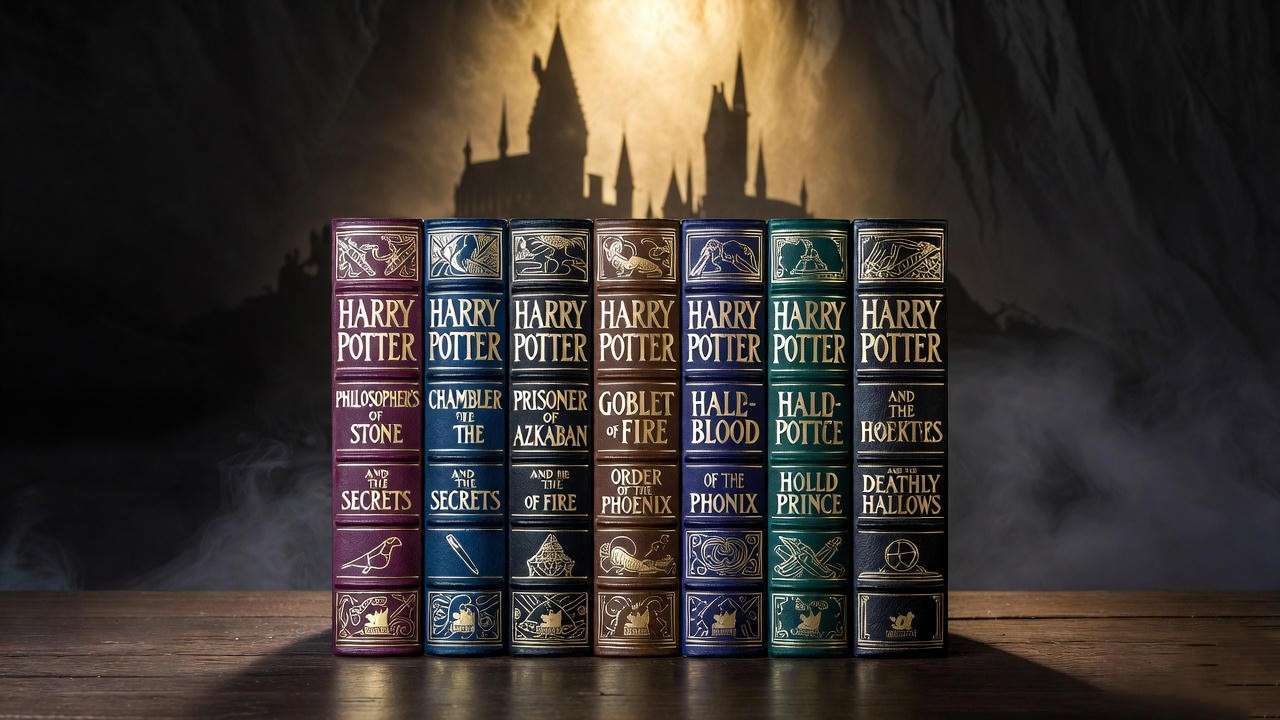
The Harry Potter Publication Timeline (1997–2007)
| Year | Book Title (UK/US) | Release Date (UK) | First Print Run | Global Impact Milestone |
|---|---|---|---|---|
| 1997 | Harry Potter and the Philosopher’s Stone | 26 June 1997 | 500 copies | Wins Nestlé Smarties Book Prize |
| 1998 | Harry Potter and the Chamber of Secrets | 2 July 1998 | 10,500 copies | Scholastic buys US rights for $105,000 (record for children’s book) |
| 1999 | Harry Potter and the Prisoner of Azkaban | 8 July 1999 | 240,000 copies | Wins Whitbread Children’s Book Award |
| 2000 | Harry Potter and the Goblet of Fire | 8 July 2000 | 1 million (UK) | Simultaneous midnight release in UK & US |
| 2003 | Harry Potter and the Order of the Phoenix | 21 June 2003 | 8.5 million (day 1 US) | Largest initial print run in history |
| 2005 | Harry Potter and the Half-Blood Prince | 16 July 2005 | 10.8 million (day 1 US) | Rowling writes final chapter of Book 7 in tears at Balmoral Hotel |
| 2007 | Harry Potter and the Deathly Hallows | 21 July 2007 | 12 million (day 1 US) | Ends the series; midnight release parties worldwide |
Financial & Cultural Milestones (1999–2011)
- 1999 – Warner Bros acquires film rights for reported $1 million + royalties.
- 2001 – First film, Harry Potter and the Philosopher’s Stone, premieres (November).
- 2004 – Forbes names Rowling the first person to become a billionaire solely by writing books.
- 2007 – Forbes removes her from billionaire list after she donates an estimated £160 million+ to charity.
- 2008 – Harvard Commencement speech: “The Fringe Benefits of Failure.”
- 2010 – Opening of The Wizarding World of Harry Potter in Orlando.
- 2011 – Pottermore announced; final film (Deathly Hallows Part 2) becomes highest-grossing in the series.
Post-Potter Career & Expansion of the Wizarding World (2012–2019)
2012–2013: A Casual Vacancy and the Robert Galbraith Revelation
- September 2012 – Publishes her first adult novel, The Casual Vacancy (Little, Brown). Reception is mixed; it sells well but divides critics.
- 14 April 2013 – Releases The Cuckoo’s Calling under the pseudonym Robert Galbraith. Initial sales are modest (~1,500 copies).
- 13 July 2013 – The Sunday Times reveals Rowling as the author after a tip-off. Sales skyrocket 507,000% overnight. Rowling later says the pseudonym gave her “a brief holiday from being me.”
 2014–2019: Cormoran Strike Series & Screen Adaptations
| Year | Robert Galbraith Book | Release Date | Notes |
|---|---|---|---|
| 2014 | The Silkworm | 19 Jun | BBC adapts Strike novels starting 2017 |
| 2015 | Career of Evil | 20 Oct | Dedicated to husband Neil Murray |
| 2018 | Lethal White | 18 Sep | Longest Strike novel at 656 pages |
| 2020 | Troubled Blood (released later) | Sep 2020 | Sparks major controversy (see below) |
Fantastic Beasts and the Return to the Big Screen
- 2016 – Fantastic Beasts and Where to Find Them premieres (script by Rowling, her screenwriting debut). Initially planned as trilogy, later expanded.
- 2018 – Fantastic Beasts: The Crimes of Grindelwald – mixed reviews; first overt Dumbledore–Grindelwald romance confirmation.
- 2022 – Fantastic Beasts: The Secrets of Dumbledore – significantly lower box office; future of series uncertain by 2025.
2016: Harry Potter and the Cursed Child
- 30 July 2016 – Script book of the West End/Broadway play becomes the fastest-selling book in a decade. Officially the “eighth story,” though Rowling insists it is not a novel.
Pottermore → WizardingWorld.com
- 2012–2019 – Pottermore evolves from simple companion site into the official digital hub. Sorting Hat quiz, Ilvermorny reveal (2016), and exclusive new writing from Rowling.
The Gender-Critical Controversy Era (2020–2025)
2020: The Spark
- 6 June 2020 – Rowling responds to an article titled “Creating a more equal post-COVID-19 world for people who menstruate” with the tweet: “People who menstruate.’ I’m sure there used to be a word for those people. Someone help me out. Wumben? Wimpund? Woomud?”
- 10 June 2020 – Publishes 3,600-word essay on her website titled “J.K. Rowling Writes about Her Reasons for Speaking out on Sex and Gender Issues.” Details childhood sexual assault, domestic abuse, and her concerns about women’s and girls’ safety and rights.
- December 2020 – Wins Humanists UK “Humanist of the Year” award, then backlash causes the award to be withdrawn.
2021–2022: Escalation
- May 2021 – Supports Maya Forstater, who won her employment tribunal after being dismissed for gender-critical beliefs.
- March 2022 – Opens Beira’s Place, a women-only (biological-sex-based) sexual-assault crisis centre in Edinburgh.
- 2022–2023 – Daniel Radcliffe, Emma Watson, and Rupert Grint publicly distance themselves from Rowling’s views.
2023: Hogwarts Legacy and the Boycott Campaign
- February 2023 – Hogwarts Legacy becomes the best-selling game of 2023 globally despite organised boycott calls. Rowling has no direct creative involvement but receives royalties via pre-existing licensing agreements.
2024–2025: The Cass Review and Ongoing Legal Battles
- April 2024 – The Cass Review (independent review of NHS gender-identity services for children) is published. Its findings largely align with Rowling’s long-standing concerns about youth medical transition. Rowling tweets “I told you so” in several languages.
- 2024–2025 – Rowling successfully defends multiple defamation and harassment lawsuits in the UK, including cases brought by organisations and individuals who accused her of transphobia.
- 11 December 2024 – Wins landmark defamation case in Scotland; judge rules her statements were protected opinion.
- As of December 2025 – Rowling remains active on X (formerly Twitter) with 14.2 million followers, regularly posting on women’s rights, free speech, and Scottish politics. No new Harry Potter novels announced, but the HBO reboot series (2026–) is in active development with Rowling as executive producer.
Philanthropy & Personal Life: Giving Back and Losing Billionaire Status
Major Charitable Endeavours
- 2005 – Co-founds Children’s High Level Group, renamed Lumos in 2010. Goal: end institutionalisation of children worldwide by 2050.
- 2001–present – Volant Charitable Trust (named after her mother): supports multiple sclerosis research and women/single-parent families.
- Documented donations exceed £160 million by 2025; principal reason Forbes removed her from the billionaire list in 2007 and never reinstated her.
 Personal Milestones
- 26 December 2001 – Marries Dr Neil Murray (anaesthetist) in a private ceremony.
- 2003 – Son David Gordon Rowling Murray born.
- 2005 – Daughter Mackenzie Jean Rowling Murray born.
- Residences: Edinburgh (primary), Killiechassie Estate (Perthshire), London townhouse.
Legacy & Cultural Impact in December 2025
- Total book sales: >600 million copies across 80+ languages.
- Harry Potter franchise valuation: estimated $25–32 billion (books, films, theme parks, merchandise, games).
- HBO Max Harry Potter television series officially green-lit (each season = one book), set to premiere 2026 with Rowling as executive producer.
- Theme parks: Universal Orlando, Hollywood, Beijing, and Tokyo all operational.
- Cultural footprint: Phrases like “Muggle,” “Quidditch,” and “Expecto Patronum” are in the Oxford English Dictionary.
 Yet in 2025, Rowling occupies a uniquely polarised position:
- Beloved by millions who grew up with Harry Potter and credit the books with teaching empathy and courage.
- Criticised by a significant portion of younger internet users and some former stars of the films for her gender-critical views.
Interactive Timeline Summary (1990–2025)
| Year | Personal Life | Harry Potter / Wizarding World | Controversy / Public Stance |
|---|---|---|---|
| 1990 | Idea on train | ||
| 1997 | First book published | Philosopher’s Stone | |
| 2001 | Marries Neil Murray | First film | |
| 2004 | Billionaire status | ||
| 2007 | Final book | Deathly Hallows | |
| 2012 | The Casual Vacancy | ||
| 2013 | Galbraith revealed | ||
| 2016 | Cursed Child | ||
| 2020 | June essay & tweetstorm | ||
| 2023 | Hogwarts Legacy | Boycott campaign fails | |
| 2024 | Cass Review vindication | ||
| 2025 | HBO series in production | Ongoing legal victories |
Frequently Asked Questions (FAQ)
When did JK Rowling first get the idea for Harry Potter? The fully-formed idea arrived in 1990 on a delayed train from Manchester to London.
Is JK Rowling still a billionaire in 2025? No. She lost billionaire status by 2007–2010 due to charitable donations and UK taxes, and has never returned to the Forbes list.
Why was JK Rowling “cancelled”? Primarily due to her public gender-critical views starting in 2020, particularly her belief that biological sex is real and immutable and her concerns about women-only spaces and youth medical transition.
What is JK Rowling doing now in 2025? Executive producer on the HBO Harry Potter series, writing the next Cormoran Strike novel (The Hallmarked Man, expected 2026), running Beira’s Place, and remaining active on women’s rights advocacy.
Full Harry Potter series in order
- Philosopher’s Stone (1997)
- Chamber of Secrets (1998)
- Prisoner of Azkaban (1999)
- Goblet of Fire (2000)
- Order of the Phoenix (2003)
- Half-Blood Prince (2005)
- Deathly Hallows (2007)
- Cursed Child script (2016, canon play)
Thirty-five years after a young woman began scribbling notes about a scar-headed wizard on a delayed train, J.K. Rowling remains one of the most influential—and divisive—cultural figures of our time.
She gave the world a seven-book saga that has sold more than 600 million copies, taught an entire generation to read for pleasure, turned “Muggle” into an Oxford English Dictionary entry, and built a $25–32 billion franchise that spans films, theme parks, video games, and a forthcoming HBO television series. Her personal journey from struggling single mother to the first billionaire author (and then voluntarily off the billionaire list through charity) is the stuff of modern legend.
Yet as of December 2025, Rowling’s name evokes sharply contrasting emotions: profound gratitude from millions who grew up with Harry Potter, and intense criticism from others who believe her gender-critical views harm transgender people. Her refusal to retract or soften those views—coupled with high-profile legal victories and the 2024 Cass Review—has solidified her position as a polarising defender of sex-based rights in the eyes of supporters, and a transphobe in the eyes of detractors.
Whatever side of that debate one falls on, the objective facts remain: Rowling’s literary contribution is permanent, her philanthropic impact is measurable in millions of lives improved, and her willingness to risk reputation for principle has made her a lightning rod in the culture wars.
The JK Rowling timeline is not finished. New Cormoran Strike novels are in progress, the HBO Harry Potter series (with Rowling as executive producer) will debut in 2026 or 2027, and her advocacy—whether celebrated or condemned—shows no sign of quieting.
For Potter fans, scholars, and cultural observers alike, one thing is certain: the story of Joanne Rowling, like the story of the boy who lived, continues to be written.