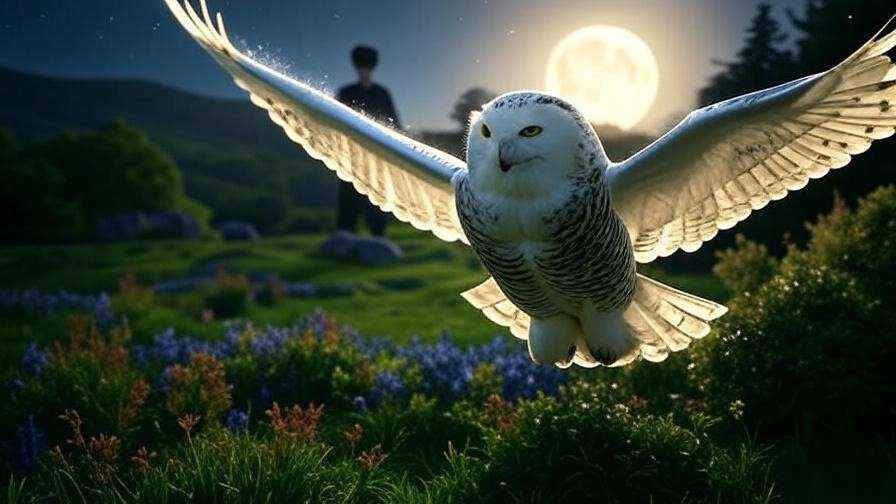
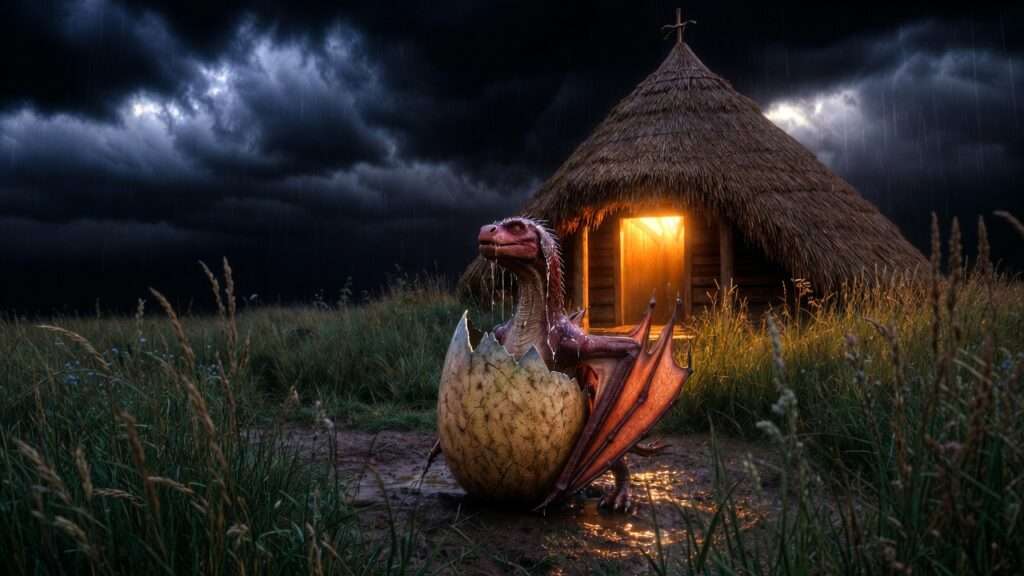
Imagine this: It’s a stormy spring night in 1992, deep in the Forbidden Forest’s shadow at Hogwarts. Inside a small wooden hut, a crackling fire roars. A black, leathery egg trembles on the hearth. Suddenly, with a sharp crack, the shell splits—and out tumbles a tiny, snarling creature that looks exactly like a “crumpled black umbrella” with spiny wings, bulging orange eyes, and a long snout full of sharp teeth. Rubeus Hagrid, the gentle half-giant gamekeeper, beams with tears in his eyes. “Norbert,” he whispers lovingly. “My Norbert.”
This single, unforgettable scene from Harry Potter and the Philosopher’s Stone (known as Sorcerer’s Stone in some editions) introduced readers to Norbert the Norwegian Ridgeback dragon—and captured hearts forever. Norbert (later revealed as Norberta) may only appear briefly, but this baby dragon’s story is packed with magic, mischief, danger, and deep emotional resonance. For fans revisiting the series or discovering it anew, Norbert represents one of J.K. Rowling’s most charming side stories: Hagrid’s boundless love for creatures others fear, the trio’s loyalty in helping a friend, and the bittersweet truth that some dreams must be released for everyone’s safety.
In this comprehensive guide, we’ll dive into every detail of Norbert in Harry Potter—from the egg’s mysterious origin to the dramatic escape, the gender reveal, life at the Romanian sanctuary, and why this minor character remains a fan favorite. Whether you’re searching for “Norbert Harry Potter” to relive the hatching scene, clarify facts, or explore deeper lore connections, this article delivers the full, canon-accurate story with insights you won’t find in basic summaries.
Who Is Norbert? The Basics of Hagrid’s Famous Dragon
At its core, Norbert is a Norwegian Ridgeback, one of the rarer and more distinctive dragon breeds in the wizarding world. According to Fantastic Beasts and Where to Find Them (the in-universe textbook) and official Wizarding World descriptions, Norwegian Ridgebacks are native to the rugged Northern mountains of Norway. They sport jet-black ridges along their backs, distinguishing them from similar breeds like the Hungarian Horntail. These dragons develop fire-breathing abilities earlier than most, possess venomous fangs, and prefer large aquatic mammals as prey—an unusual dietary choice among dragons.
Hagrid’s Norbert hatched in April 1992, right in his wooden hut at Hogwarts. The baby dragon emerged looking fragile yet fierce: a skinny black body, huge spiny wings, stubby horn nubs, wide nostrils flaring, and orange eyes that glowed with primal energy. Hagrid named the hatchling “Norbert,” convinced it was male. He doted on the creature instantly, treating it like a beloved pet despite the obvious dangers.
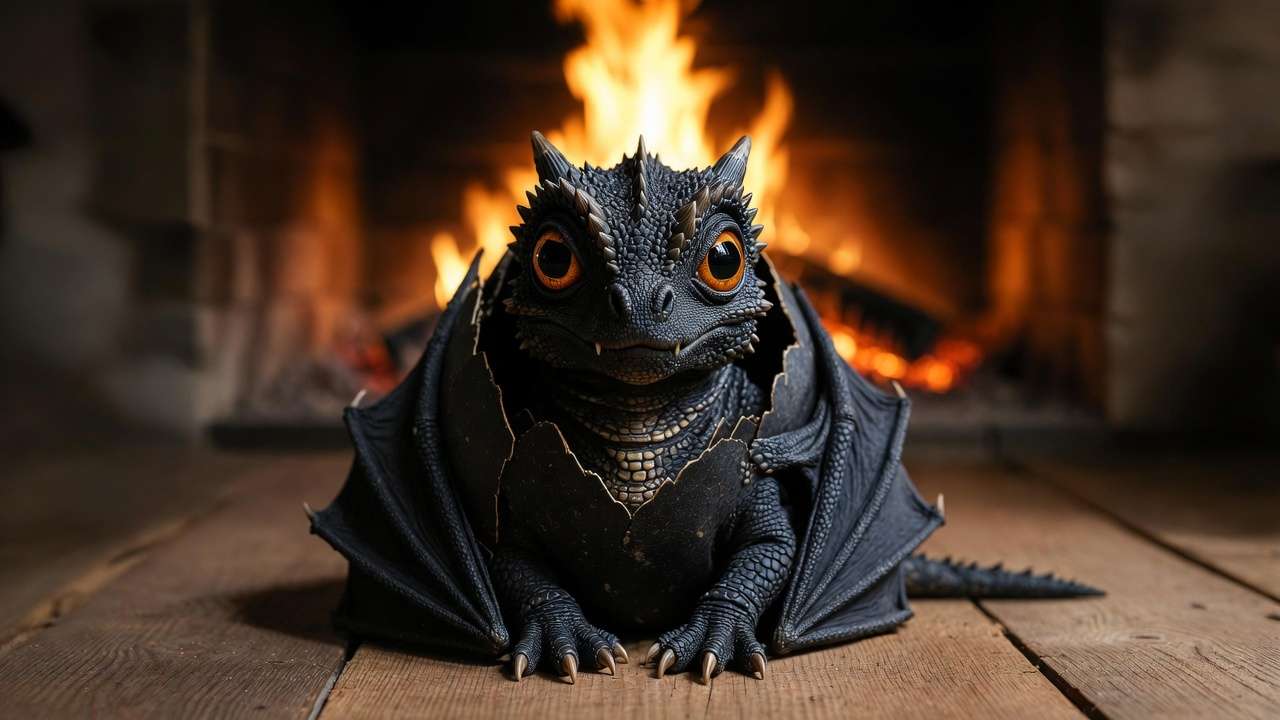 Key physical traits of baby Norbert:
- Resembled a “crumpled black umbrella” when newly hatched.
- Large, spiny wings that unfolded dramatically.
- Long snout with wide nostrils and pointy fangs.
- Sneezed sparks and small flames almost immediately.
- Grew at an astonishing rate—tripling in length within a week.
This rapid growth is typical of dragons, making them impossible to keep as domesticated pets. The Warlocks’ Convention of 1709 banned dragon breeding in Britain precisely because these creatures are wild, destructive, and classified as XXXXX (dangerous/untamable) by the Ministry of Magic.
How Norbert Entered the Harry Potter Story – The Egg Origin
Norbert’s journey begins not with a birth, but with an illegal transaction. In Harry Potter and the Philosopher’s Stone Chapter 14 (“Norbert the Norwegian Ridgeback”), Hagrid wins a dragon egg in a game of cards at the Hog’s Head pub in Hogsmeade. The hooded stranger who loses the egg is later revealed to be Professor Quirinus Quirrell—under Voldemort’s influence—trying to extract information about Fluffy, the three-headed dog guarding the Philosopher’s Stone.
Hagrid, thrilled beyond words, brings the egg back to his hut. He incubates it over an open fire, following advice from his cherished book Dragon Breeding for Pleasure and Profit. Harry, Ron, and Hermione stumble upon the secret when they visit Hagrid and see the egg trembling.
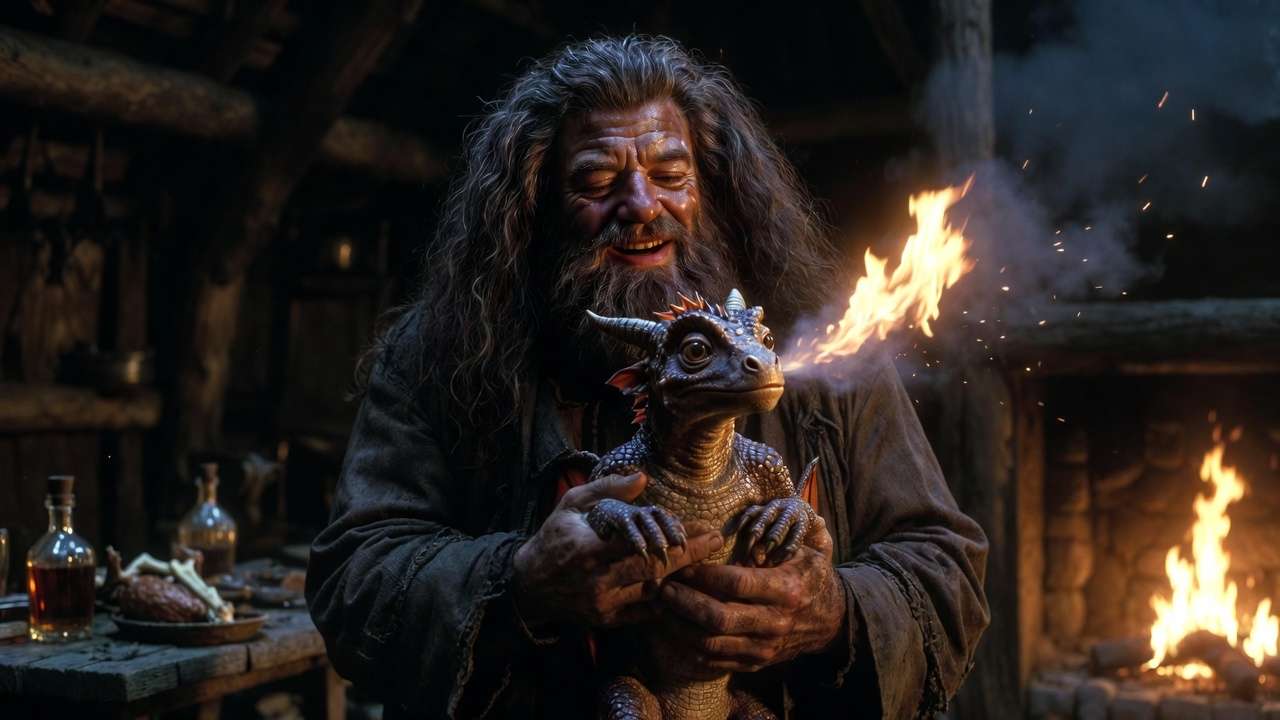 The hatching scene is pure magic:
- The egg cracks with a loud snap.
- A tiny black dragon bursts out, wings flapping weakly.
- It immediately tries to bite Hagrid’s finger—yet Hagrid coos, “Bless him, look, he knows his mummy!”
- Hagrid feeds Norbert a bucket of brandy mixed with chicken blood every half hour, the recommended diet for newborns.
This moment showcases Hagrid’s character perfectly: his heart is bigger than his common sense. He ignores Hermione’s warnings about the illegality and danger, singing lullabies to calm the snarling creature.
As days pass, the problems mount. Norbert grows explosively, setting Hagrid’s beard on fire, knocking over furniture, and becoming impossible to hide. The tipping point comes when Norbert bites Ron’s hand—the venom sends Ron to the Hospital Wing for days, swollen and in pain.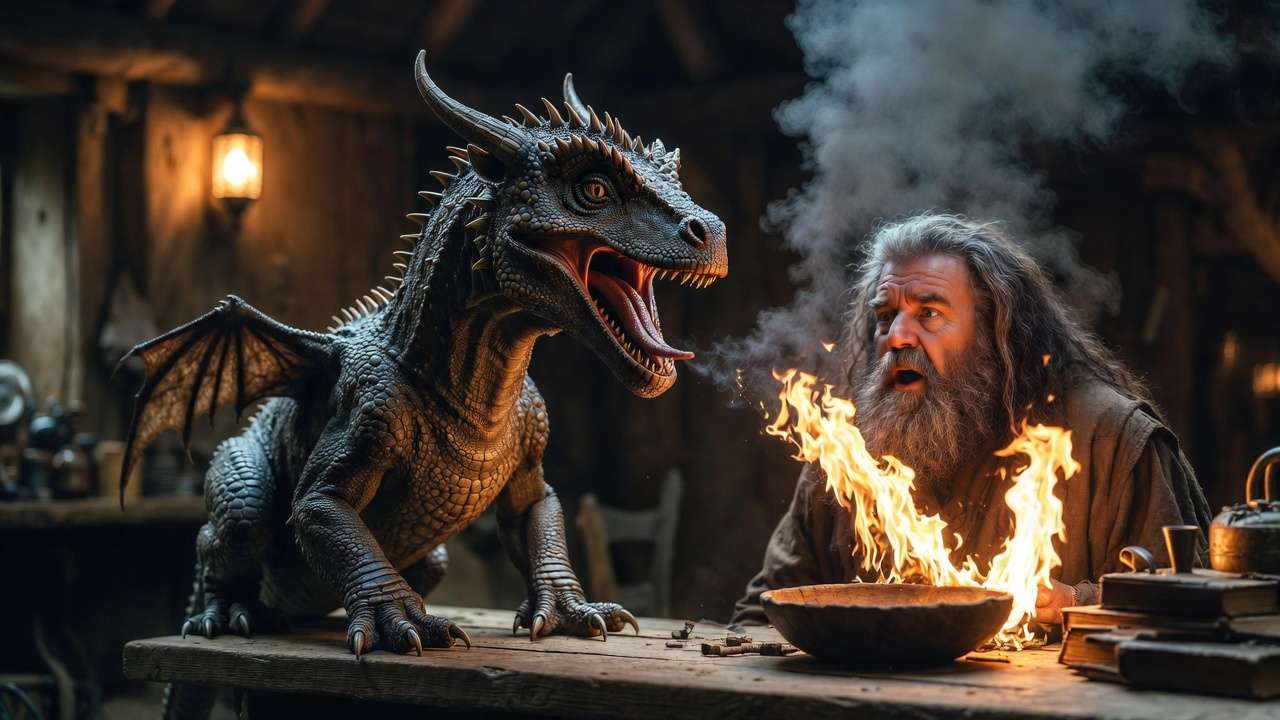
The Great Escape – Getting Norbert to Romania
Realizing they can’t keep Norbert hidden forever, the trio hatches a plan. Ron writes to his brother Charlie Weasley, a dragon expert working at a sanctuary in Romania. Charlie agrees to help: his friends will collect the dragon via broomstick from the Astronomy Tower.
The escape is tense and iconic:
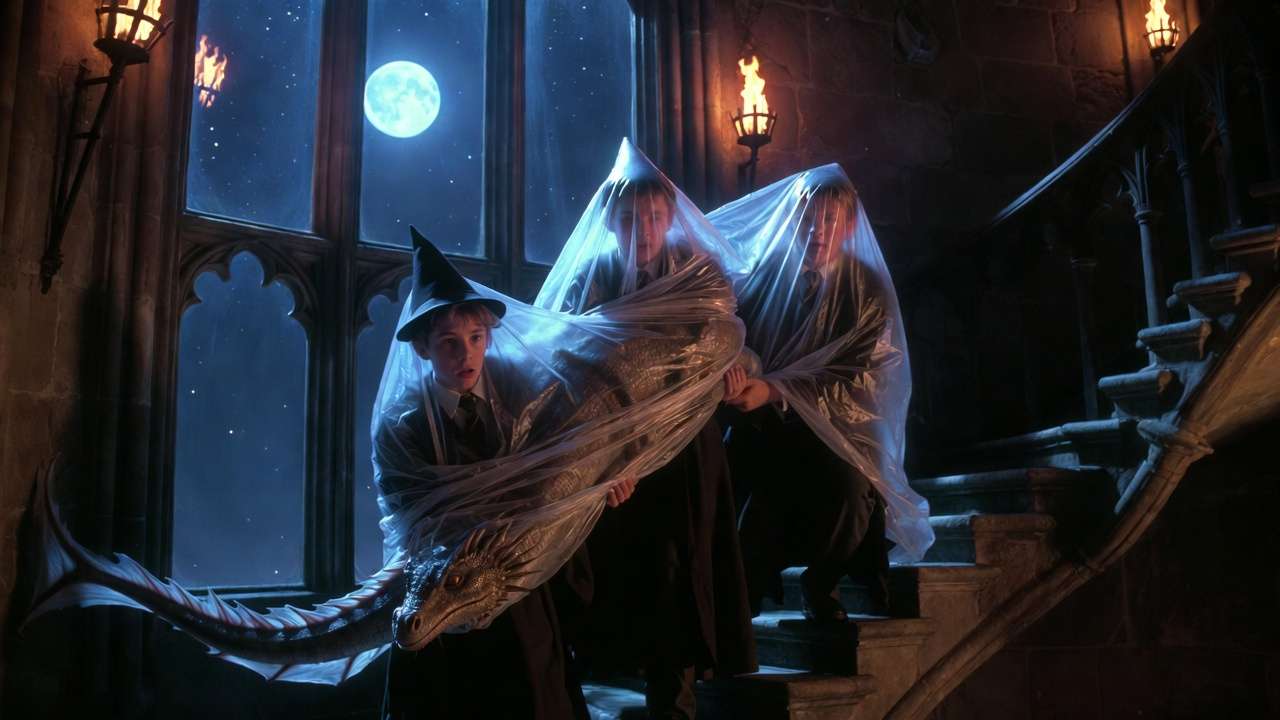
- Harry, Ron, and Hermione smuggle the now-massive Norbert (wrapped in a blanket) up the tower under the Invisibility Cloak.
- Draco Malfoy spies them and alerts Filch, leading to chaos.
- Charlie’s friends arrive on broomsticks, strap Norbert into a harness, and fly off into the night.
- Hagrid weeps openly, waving goodbye to his “little baby.”
Unfortunately, Harry and Hermione are caught by Filch on the way down. They lose 50 House points each (plus more for Ron), but the punishment—detention in the Forbidden Forest—ironically helps Harry discover more about the Philosopher’s Stone plot.
This sequence highlights themes of friendship, sacrifice, and responsibility. The trio risks expulsion to protect Hagrid, while Hagrid learns he must let go for Norbert’s well-being.
 Norbert’s Later Life – From Norbert to Norberta
After the dramatic midnight flight from the Astronomy Tower, Norbert safely reached the Romanian Dragon Sanctuary, a remote and heavily protected reserve where Charlie Weasley and his team study and care for dragons. This sanctuary—mentioned several times across the series—is one of the few places in the world equipped to handle large numbers of these dangerous creatures. Norbert, now free to grow without the constraints of Hagrid’s cramped hut, thrived in an environment suited to his species.
For several years, Norbert remained mostly off-page, living the life of a wild (but monitored) Norwegian Ridgeback. Fans often wonder whether the dragon ever returned to Hogwarts or played a larger role in later books. The answer, based strictly on canon, is no—Norbert does not reappear in person after the events of Philosopher’s Stone.
However, the character receives one significant, heartwarming update in Harry Potter and the Deathly Hallows. During Bill and Fleur’s wedding at the Burrow (Chapter 8), Charlie Weasley arrives and casually drops a bombshell while chatting with the trio:
“Norbert’s doing fine—he’s a she now, by the way. We call her Norberta.”
Charlie explains that female Norwegian Ridgebacks tend to be more vicious than males, which aligns with real-world observations of many reptile and bird species where females can be more territorial. This quiet gender reveal retroactively reframes the entire hatching story: Hagrid’s assumption that his “little Norbert” was male was innocent and endearing, but the correction years later adds a layer of gentle humor and realism to the wizarding world’s magical creatures.
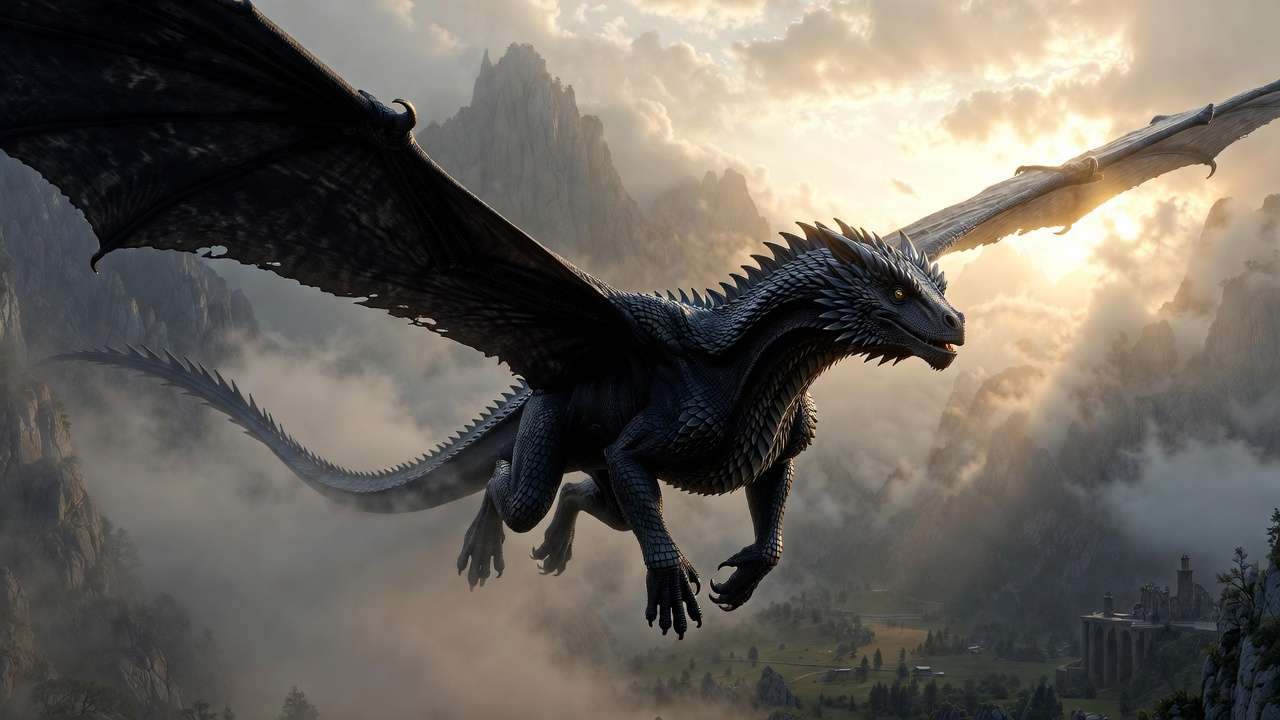 Norberta presumably remains at the sanctuary to this day. There are no further canon mentions of her participating in events like the Triwizard Tournament dragons or the Battle of Hogwarts. Any fan theories suggesting otherwise (e.g., that she was one of the dragons in the First Task) are creative speculation rather than supported by J.K. Rowling’s text or official Wizarding World material.
Fun Facts and Trivia About Norbert Harry Potter Fans Love
Here are some of the most interesting, lesser-known details that keep Norbert alive in fandom discussions, quizzes, and fan art:
- Norbert was the first magical creature Hagrid tried (and failed) to keep as a pet inside his hut—foreshadowing later attempts like Buckbeak, Aragog’s children, and Grawp.
- The hatching chapter title—“Norbert the Norwegian Ridgeback”—is one of the few in the entire series named after a single minor character.
- J.K. Rowling has said in interviews that she deliberately made dragon eggs extremely valuable and rare on the black market to explain why someone would risk trading one.
- In early drafts of Philosopher’s Stone, the dragon was going to be a different breed before Rowling settled on Norwegian Ridgeback for its distinctive black appearance.
- The line “He’s my dragon!” (spoken by Hagrid during the escape planning) became one of the most quoted emotional moments involving the gamekeeper.
- Norwegian Ridgeback dragon models and concept art from the Fantastic Beasts films show slight design variations, but Norbert’s baby form in the 2001 film adaptation closely matches the book description.
- Fans frequently name real-life pets “Norbert” or “Norberta” in tribute—especially bearded dragons, iguanas, and large monitor lizards.
- The brandy-and-chicken-blood diet is a direct nod to outdated (and dangerous) historical practices in exotic animal care.
- Norbert’s story is often used in Harry Potter trivia nights as the classic “which illegal pet did Hagrid try to raise?” question.
- The scene where Ron gets bitten is one of the earliest examples of magical creature venom having delayed, painful effects—setting up later venom references (basilisk, Nagini, etc.).
These tidbits help explain why a character who appears for only one chapter continues to spark joy and discussion decades later.
Why Norbert Matters – Deeper Meaning in the Harry Potter Series
On the surface, Norbert is comic relief—a chaotic, fire-breathing plot device that gets the trio into trouble. But dig deeper and the baby dragon carries significant thematic weight.
First, Norbert is the purest expression of Hagrid’s character. He sees beauty and potential in creatures society labels as monsters. His immediate, unconditional love for Norbert mirrors his affection for every misunderstood being he encounters—Fluffy, Aragog, Grawp, even his own half-giant heritage. In a world full of prejudice, Hagrid’s compassion is radical.
Second, the story explores responsibility and letting go. Hagrid’s dream of raising a dragon is innocent but reckless. The trio’s decision to intervene shows maturity beyond their years—they love Hagrid enough to protect him from his own bad choices. The tearful goodbye on the Astronomy Tower is genuinely moving: sometimes the kindest thing you can do for someone (or something) you love is to set them free.
Finally, Norbert represents nostalgia and innocence. For many readers, the hatching scene is one of the first moments the wizarding world felt truly magical—before the stakes grew darker in later books. Returning to Norbert feels like returning to the wonder of being eleven years old and discovering Hogwarts for the first time.
FAQs About Norbert in Harry Potter
Was Norbert male or female? Initially male (named Norbert by Hagrid), but later revealed to be female (Norberta) by Charlie Weasley in Deathly Hallows.
How did Hagrid get Norbert’s egg? He won it in a card game at the Hog’s Head from a hooded stranger—later revealed to be Quirrell/Voldemort trying to gather information about Fluffy.
Did Norbert ever come back to Hogwarts? No. After being flown to Romania, Norbert/Norberta remains at the dragon sanctuary.
What breed of dragon is Norbert? Norwegian Ridgeback—black-scaled, early fire-breather, venomous fangs, prefers mountainous regions.
Why was Ron hospitalized after being bitten? Norbert’s fangs are venomous. The bite caused painful swelling that required several days in the Hospital Wing.
Is Norbert in any of the Harry Potter movies? Yes—briefly. The hatching and escape scenes appear in Harry Potter and the Sorcerer’s Stone (2001), with a puppet and CGI combination for the baby dragon.
Could Hagrid have legally kept a dragon? No. Dragon breeding and ownership have been outlawed in Britain since the Warlocks’ Convention of 1709.
Did J.K. Rowling ever say anything specific about Norbert after the books? She has occasionally referenced the character fondly in interviews and on Twitter (now X), but no major new canon details have been added.
Norbert’s journey—from a trembling black egg in Hagrid’s fireplace to a thriving (and fiercer) Norberta in the Romanian mountains—is short in page count but enormous in emotional impact. This tiny dragon reminds us why the Harry Potter series endures: it’s not just about epic battles against dark lords, but about loyalty, kindness, mistakes, and the courage to do the right thing even when it hurts.
Hagrid’s tearful wave goodbye on the Astronomy Tower remains one of the most touching farewells in the entire series. In the end, Norbert didn’t need to return for his story to feel complete. Sometimes the greatest magic happens in the moments we’re forced to let go.
What’s your favorite Hagrid-and-creature memory? Have you ever named a pet after Norbert or another magical beast? Share in the comments—I’d love to hear your thoughts. And if you enjoyed this deep dive, subscribe for more comprehensive guides to the characters, creatures, and hidden details that make the wizarding world so unforgettable.