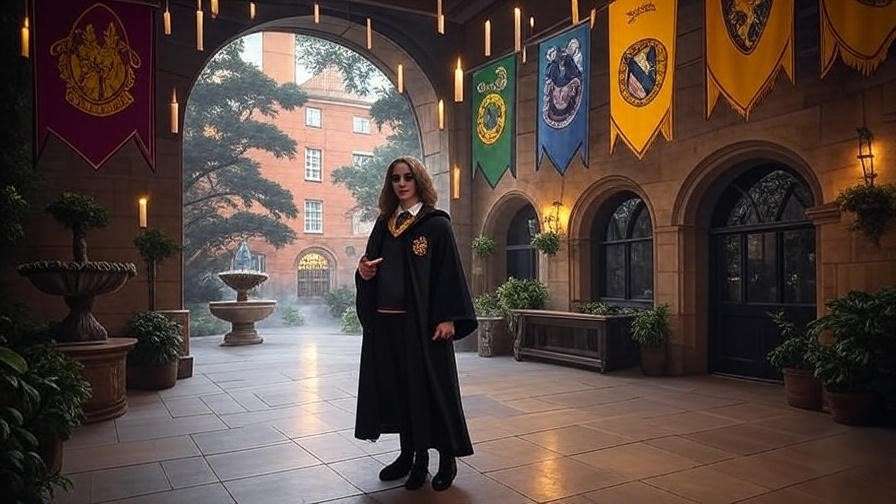
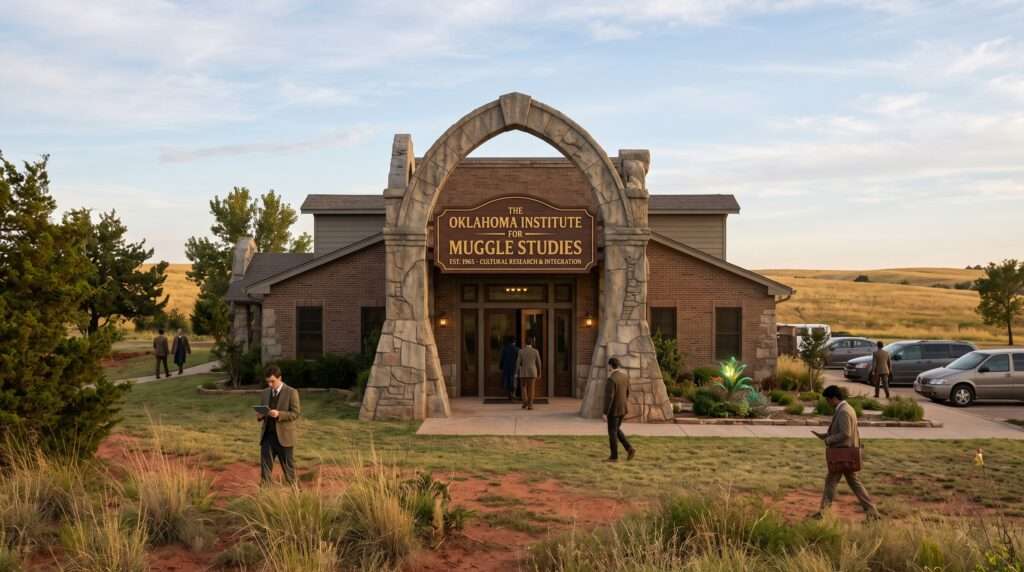
Did you know that not all American witches and wizards are busy casting spells in the halls of Ilvermorny? Some are quietly studying you. As the Harry Potter universe expanded across the Atlantic through the Fantastic Beasts films and Wizarding World lore drops, fans were introduced to a wildly different magical society. In America, non-magical people aren’t called Muggles; they are No-Majs. But how do modern American wizards navigate a society dominated by smartphones, satellites, and digital surveillance? Enter the Oklahoma Institute for Muggle Studies. This highly specialized, hidden academic hub is the premier facility dedicated to understanding non-magical culture, ensuring that the fragile peace between the magical and mundane worlds remains intact.
For the dedicated Potterhead, understanding the intricacies of North American magic means looking beyond the wands and potions. Fans constantly search for answers about how wizarding society adapts to modern technology. This comprehensive guide will unlock the secrets of this obscure institution, exploring its origins, its vital curriculum, and why it holds the key to the survival of the American wizarding community today.
What is the Oklahoma Institute for Muggle Studies (OIMS)?
While British witches and wizards might take a whimsical Muggle Studies class at Hogwarts to learn about rubber ducks and electricity, the American approach to non-magical education is far more rigorous, tactical, and secretive. The Oklahoma Institute for Muggle Studies (OIMS) is not a secondary school; it is a graduate-level research facility and think-tank designed for adult witches and wizards.
Origins and Hidden History
The concept of a formalized “Institute of Muggle Studies” has deep roots in the Harry Potter expanded universe, first teased in J.K. Rowling’s original W.O.M.B.A.T. (Wizards’ Ordinary Magic and Basic Aptitude Test) exams on her early website. However, as the lore expanded into North America, the necessity for a localized branch became apparent.
Why Oklahoma? In the Wizarding World, geography plays a massive role in magical safety. The Magical Congress of the United States of America (MACUSA) is headquartered in the bustling, densely populated heart of New York City—a nightmare for maintaining the International Statute of Secrecy. To conduct large-scale, sometimes volatile research into No-Maj technology and culture, American wizarding authorities needed wide-open spaces far from prying No-Maj eyes.
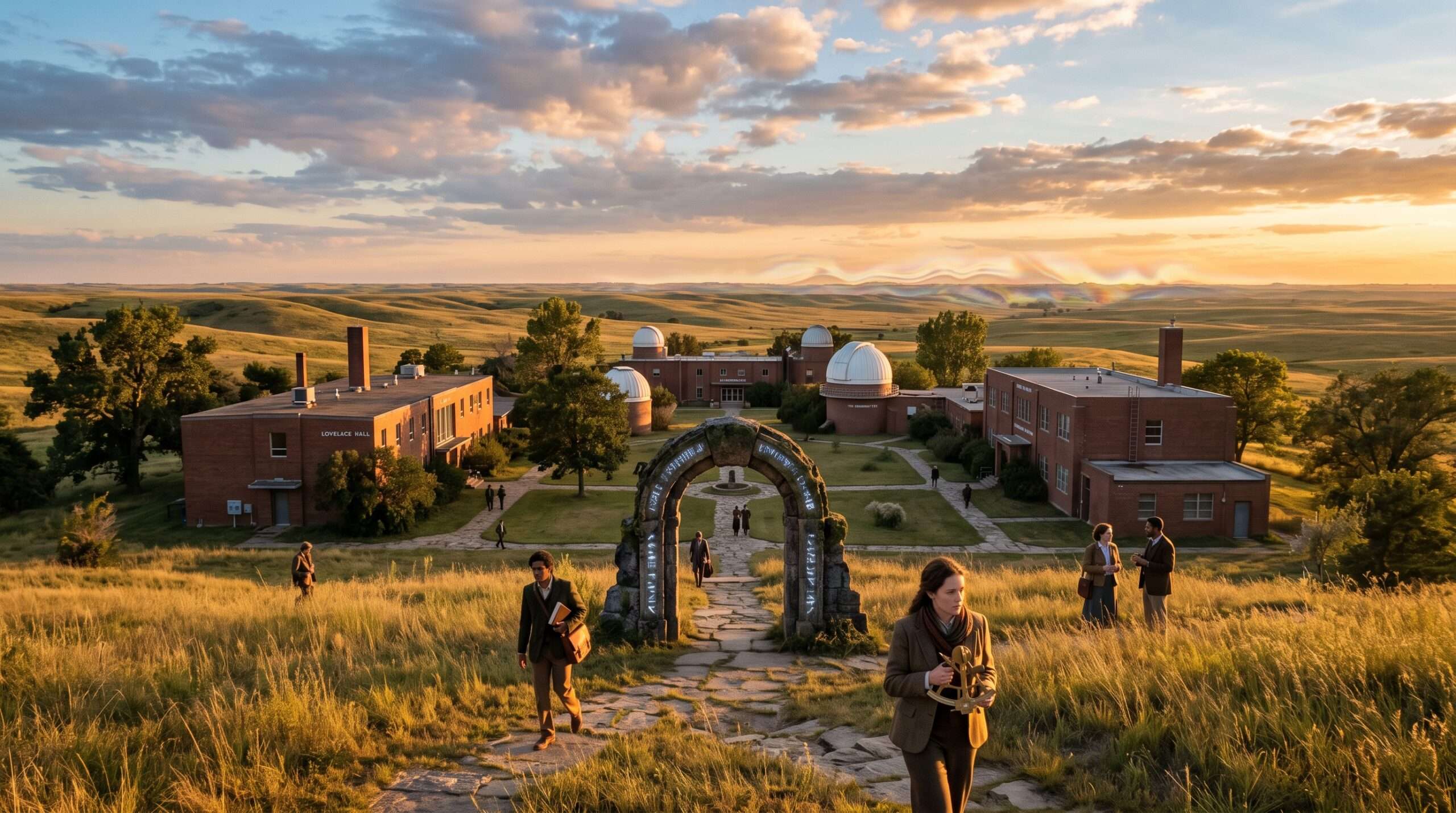
The Great Plains of Oklahoma provided the perfect canvas. Hidden beneath powerful Repelling Charms, unplottable enchantments, and disguised as miles of mundane, untouched prairie, OIMS was established as a safe haven for intellectual and magical research. Its central location allows researchers to monitor No-Maj behavioral trends across both the East and West coasts without the immediate threat of exposure.
 The Core Mission
Unlike Ilvermorny School of Witchcraft and Wizardry in Massachusetts, which focuses on foundational magical education for youths, OIMS is strictly for advanced academics, MACUSA officials, Aurors, and Obliviators. Its core mission is twofold:
-
Cultural Comprehension: To study No-Maj sociology, politics, and daily life through a magical lens.
-
Covert Integration: To develop strategies, enchantments, and protocols that allow witches and wizards to move undetected through a highly advanced, non-magical world.
The institute acts as the ultimate buffer, translating the rapid advancements of No-Maj society into actionable intelligence for MACUSA’s Department of Magical Law Enforcement.
The Shadow of Rappaport’s Law: Why America Needs Muggle Studies
To truly understand the necessity of the Oklahoma Institute for Muggle Studies, one must look at the dark, complicated history of American wizarding law. The relationship between magical and non-magical folk in the United States is vastly different from that in the United Kingdom.
The Legacy of Magical Segregation
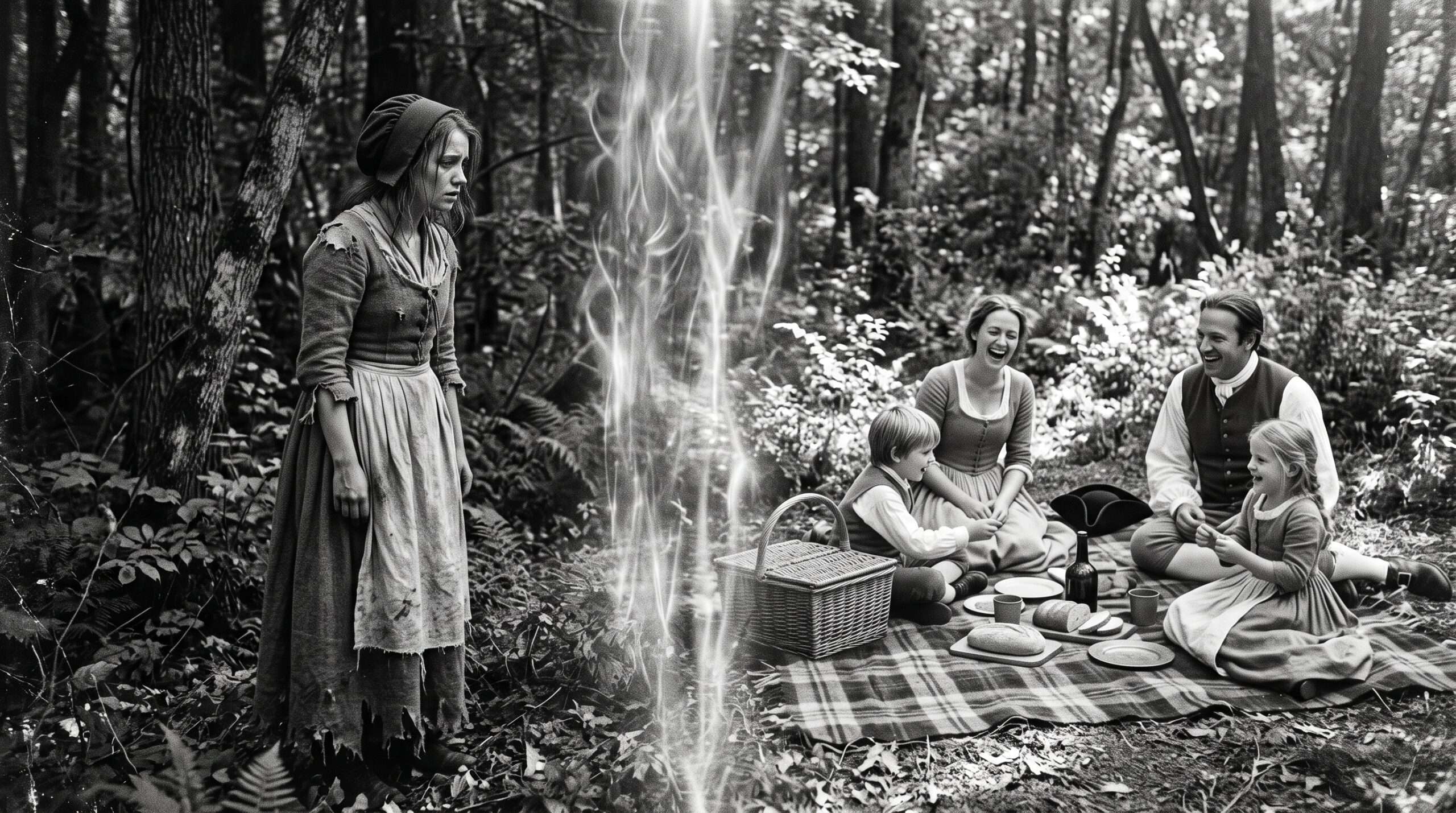
In 1790, MACUSA President Emily Rappaport enacted Rappaport’s Law. This drastic legislation was an absolute, unforgiving statute of segregation. It strictly forbade any fraternization between witches, wizards, and No-Majs. Marriage was illegal; even casual friendships were a punishable offense.
This law was born out of tragedy and near-exposure, following a massive breach of the Statute of Secrecy involving a witch named Dorcus Twelvetrees and a No-Maj descendant of the notorious Scourers (magical mercenaries). Because of Rappaport’s Law, American wizarding culture was forced entirely underground. For over a century, American wizards lived in an insular echo chamber, completely ignorant of the No-Maj world developing around them.
When Rappaport’s Law was finally repealed in 1965, the American magical community faced an unprecedented crisis. They were suddenly thrust into a rapidly modernizing No-Maj society they knew absolutely nothing about. The Oklahoma Institute for Muggle Studies was born out of this urgent, terrifying knowledge gap.
 Navigating the Modern No-Maj World
Today, the stakes are higher than ever. The International Statute of Secrecy was relatively easy to maintain in the 1800s. A quick Memory Charm (Obliviate) and a Disillusionment Charm were enough to handle a stray No-Maj wandering too close to a magical creature.
But welcome to the 21st century. No-Majs have ring cameras on their front doors. They carry pocket-sized computers capable of recording high-definition video and broadcasting it to millions of people globally in seconds. They have satellite imaging mapping every inch of the globe.
How does a MACUSA Auror track a dark wizard through downtown Chicago without being caught on a dozen CCTV cameras? How do wizards explain the sudden electromagnetic interference that happens when a powerful spell is cast near a cell tower? This is why OIMS is crucial. They are the frontline defenders of magical secrecy in the digital age, researching how to counteract modern No-Maj surveillance and teaching American wizards how to blend in without causing a viral TikTok sensation.
Inside the Curriculum: What Do They Actually Teach?
If you were to walk the invisible halls of the Oklahoma Institute for Muggle Studies, you wouldn’t find cauldrons bubbling with Polyjuice Potion or students practicing the Levitation Charm. Instead, you would find highly controlled laboratories where witches and wizards meticulously dissect the mechanics of No-Maj society. The curriculum is divided into incredibly specialized departments, treating the non-magical world not as a curiosity, but as a complex puzzle that must be decoded.
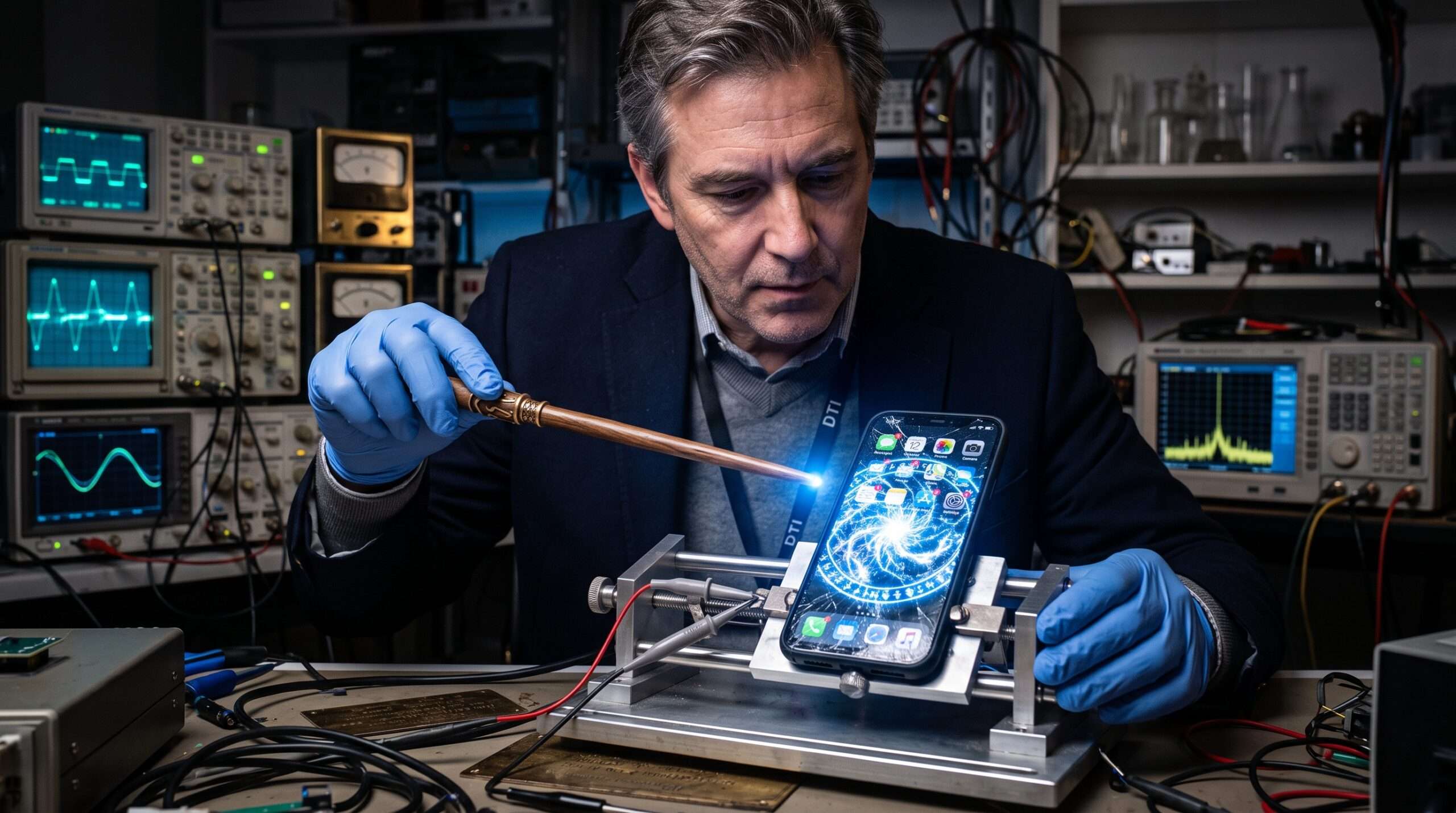 Advanced No-Maj Technology (And Why Magic Fritzes It)
One of the most persistent rules of the Harry Potter universe is that advanced Muggle technology—like computers, radar, and electricity—tends to go haywire in the presence of high ambient magic. At Hogwarts, this is merely an accepted fact, heavily referenced in Hogwarts: A History. In America, it is a critical vulnerability.
The Department of Technological Integration at OIMS is entirely devoted to understanding why magical auras disrupt electronics and, more importantly, how to prevent it. Researchers study everything from the physics of Wi-Fi routers to the architecture of microchips. MACUSA needs to know how to install localized shielding charms so that an Auror can cast a Shield Charm in a subway station without simultaneously short-circuiting every cell phone on the platform. Classes here explore the evolution of No-Maj communication, teaching wizards the difference between a landline, a smartphone, and a satellite connection—vital knowledge for preventing accidental magical interference that could trigger a No-Maj government investigation.
Non-Magical Anthropology and Sociology
To blend into a society, you must understand its people. British wizards often view Muggles with a sense of paternalistic bemusement (think of Arthur Weasley’s genuine, if confused, delight over spark plugs and rubber ducks). The American approach taught in Oklahoma is strictly anthropological and highly analytical.
Researchers analyze No-Maj pop culture, behavioral trends, and even social media algorithms. How do No-Majs consume information? What is a “viral trend,” and how can wizards use it to their advantage? If a rogue wizard is caught flying a broomstick on a smartphone camera, the sociologists at OIMS work with MACUSA’s Obliviation team to design “Digital Obliviation” strategies. This involves creating plausible non-magical explanations—such as CGI hoaxes, drone malfunctions, or marketing stunts—to discredit the footage before it breaches the Statute of Secrecy.
Covert Integration and “Blending In”
The most practical wing of the institute is dedicated to tactical infiltration. When Rappaport’s Law was enforced, wizards never had to dress like No-Majs or use their currency. Today, an Auror tracking a magical beast through downtown Chicago cannot afford to wear velvet robes or attempt to pay for a hot dog with heavy gold Galleons (or Dragots, the American wizarding currency).
Courses on Covert Integration are mandatory for MACUSA field agents. They undergo rigorous training on how to use debit cards, operate subway turnstiles, and navigate public transportation. They are taught modern American slang, fashion history (to avoid showing up in 1920s flapper attire in the year 2026), and how to answer standard No-Maj small talk without arousing suspicion. A failure in Covert Integration isn’t just an embarrassment; it’s a security breach.
 OIMS vs. Ilvermorny: Understanding the Difference
For fans diving deep into North American lore, it is easy to conflate the different magical institutions. However, the Oklahoma Institute for Muggle Studies serves a fundamentally different purpose than Ilvermorny School of Witchcraft and Wizardry.
Education vs. Research
Ilvermorny, perched atop Mount Greylock in Massachusetts, is the American equivalent of Hogwarts. It is a coming-of-age institution. Young witches and wizards go there to be sorted into houses (Horned Serpent, Wampus, Thunderbird, and Pukwudgie), receive their first wands, and learn the foundational principles of spellcasting, Transfiguration, and Potions.
In contrast, OIMS does not accept children. You cannot take your O.W.L.s or N.E.W.T.s (or the American equivalents) in Oklahoma. It is a post-graduate think-tank. Those who walk its halls have already mastered their magic; they are there to master the non-magical world. It operates much more like a real-world university research center, producing papers, advising MACUSA legislative bodies, and developing new magical protocols.
The Global Network of Muggle Studies
While the British Ministry of Magic relies on the chronically underfunded Misuse of Muggle Artefacts Office to deal with enchanted tea sets and biting doorknobs, the American system relies on the robust research output of OIMS.
In the broader expanded canon, the global “Institute of Muggle Studies” was established to create a unified approach to understanding non-magical folks worldwide. The Oklahoma branch, however, is widely considered the leading authority on technological integration, primarily because the United States is home to places like Silicon Valley, making it a hotspot for rapid No-Maj technological advancement.
The Real-World Connection: The “Hogwarts of Oklahoma”
One of the most exciting aspects of Harry Potter fandom is how real-world locations inspire rich, imaginative headcanons. If you are an SEO-savvy fan searching for the Oklahoma Institute for Muggle Studies, you might stumble upon a bizarre and delightful real-world connection.
Fandom Meets Reality in Norman, OK
In recent years, a massive, eccentric estate in Norman, Oklahoma, went viral on real estate websites, quickly earning the nickname the “Hogwarts of Oklahoma.” Featuring sweeping, medieval-style architecture, hidden passageways, gargoyles, and stone turrets sitting oddly in the middle of the American Midwest, the property captured the internet’s imagination.
For lore enthusiasts, this viral oddity provides the perfect real-world anchor. While J.K. Rowling and the official Wizarding World creators haven’t explicitly named Norman as the location, the fandom has enthusiastically embraced this quirky castle as the perfect “hidden in plain sight” disguise for OIMS. It fits the magical trope perfectly: a building so overly bizarre that No-Majs simply assume it’s the eccentric project of a wealthy eccentric, never suspecting that powerful wizards are inside studying Wi-Fi frequencies and analyzing TikTok trends.
 Frequently Asked Questions (FAQs)
To further satisfy your curiosity about American magical lore, we have compiled the most frequently asked questions regarding No-Maj relations and the institute.
Is the Oklahoma Institute for Muggle Studies strictly canon?
The concept of a localized Muggle Studies Institute draws upon a blend of J.K. Rowling’s early web-based W.O.M.B.A.T. lore, the expanded North American history introduced for Fantastic Beasts, and deep fandom world-building. While the explicit daily operations in Oklahoma are extrapolated from canon frameworks regarding MACUSA and Rappaport’s Law, it represents the most logical, lore-compliant explanation for how American wizards survive in the modern era.
Do they use the term “Muggle” or “No-Maj” in Oklahoma?
Within the halls of the institute, the term “No-Maj” (short for No Magic) is exclusively used, aligning with North American magical linguistics. However, because OIMS collaborates with global magical governments, scholars are familiar with “Muggle” (UK), “Can-Char” (France), and “Nomaj” variations across the Americas.
How does Muggle Studies in America differ from Hogwarts?
At Hogwarts, Muggle Studies is an elective course that often feels out of touch, famously taught by Charity Burbage and briefly taken by Hermione Granger. It covers the basics of electricity and non-magical literature. In America, due to the lingering trauma of the Scourers and the strictness of MACUSA laws, “No-Maj Studies” is not a whimsical elective—it is a matter of tactical survival and national security.
The Wizarding World is vast, and the story of magic in America goes far beyond the adventures of Newt Scamander or the classrooms of Ilvermorny. The Oklahoma Institute for Muggle Studies stands as a fascinating testament to the complexities of magical world-building. It highlights the very real challenges witches and wizards would face trying to keep their wands hidden in an era of global connectivity, smartphones, and constant surveillance.
By treating the non-magical world as a serious subject of academic and tactical research, the institute ensures that the magical community can continue to exist safely in the shadows of the United States. It bridges the gap between the ancient traditions of spellcraft and the relentless march of modern technology.
What do you think? If you were a witch or wizard attending the institute, which piece of modern No-Maj technology do you think would be the absolute hardest to explain to a MACUSA official? A virtual reality headset? Cryptocurrency? Let us know in the comments below!
Read Next: The Complete Guide to Ilvermorny Houses: Which One Are You?
Read Next: MACUSA’s Strangest Laws: From Wand Permits to Rappaport’s Legacy