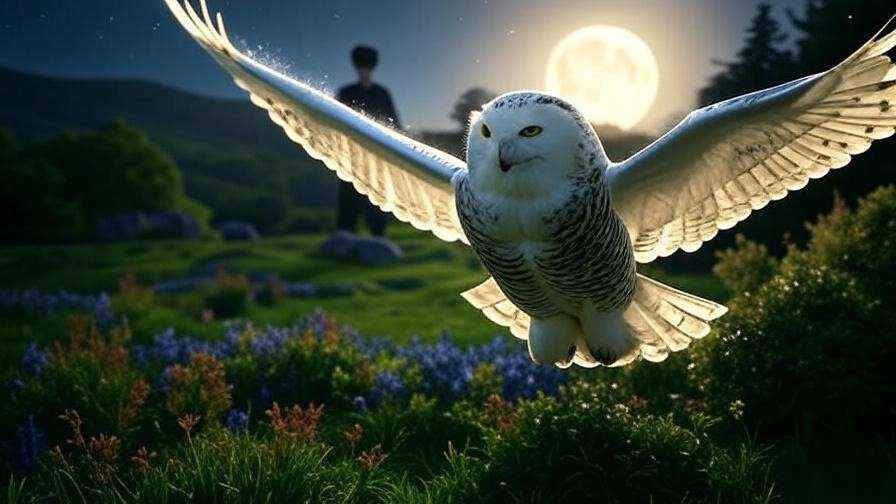
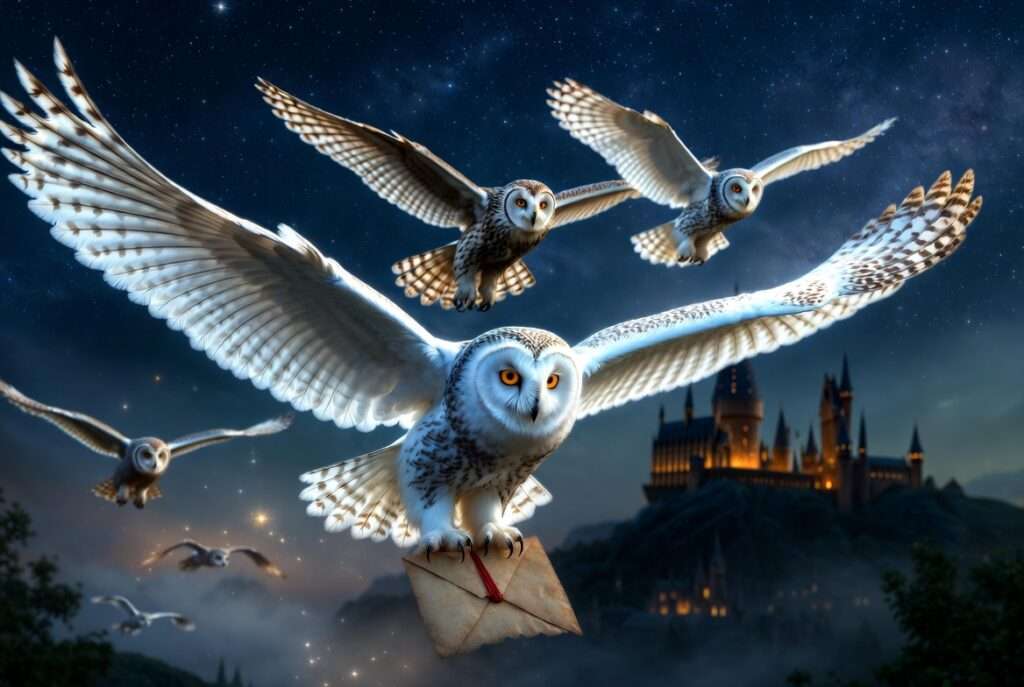
Imagine a snowy owl tapping gently at your bedroom window on your eleventh birthday, delivering not just a letter but the gateway to an entire hidden world of magic, friendship, and destiny. That single moment with Hedwig captured the hearts of millions, turning owls from mysterious nocturnal birds into beloved symbols of the wizarding world.
Owls in Harry Potter are far more than postal workers—they serve as loyal companions, discreet messengers, and subtle reflections of their owners’ personalities. From the elegant Hedwig to the comically clumsy Errol and the hyperactive Pigwidgeon, these feathered friends bridge the magical and Muggle realms with silent wings and uncanny intelligence.
Whether you’re a longtime Potterhead revisiting favorite moments or a new fan curious about the wizarding postal system, this complete guide dives deep into every notable owl, their real-world species, key scenes across the books and films, and the deeper magical symbolism J.K. Rowling wove into the series. We’ll explore how owl post works, book-versus-movie differences, behind-the-scenes trivia, and why these birds remain so iconic more than two decades later. By the end, you’ll have a richer appreciation for one of the most charming elements of the Harry Potter universe.
The Role of Owls in the Wizarding World
Owls hold a unique and essential place in J.K. Rowling’s wizarding society. Unlike Muggles, who rely on phones, emails, or traditional post, witches and wizards depend on the reliable and discreet owl post system for communication. This magical postal network allows letters, packages, newspapers like The Daily Prophet, and even large items (think Harry’s Nimbus 2000 broomstick) to reach recipients anywhere—even when the sender doesn’t know the exact location.
Why Owls? J.K. Rowling’s Inspiration and Wizarding Communication
J.K. Rowling chose owls because they have long been associated with magic and wisdom in folklore and mythology. In ancient Greece, the owl symbolized Athena, the goddess of wisdom. Rowling has noted that owls’ ability to operate under cover of darkness—qualities that make Muggles suspicious—makes them perfect for discreet wizarding deliveries.
Owls possess an innate “bent for magic,” allowing them to learn quickly and find their targets with remarkable precision. A Hogwarts student can simply address a letter to “Harry Potter, Hogwarts” without a full street address, and the owl will locate him. This system includes the official Owl Post Office and individual family owls, with Hogwarts maintaining its own Owlery—a towering stone structure where hundreds of school owls roost and rest between deliveries.
How Owl Post Works
The process is elegantly simple yet deeply magical:
- Wizards tie parchment scrolls or small packages to an owl’s leg with string.
- The owl takes flight, often at night for discretion.
- Upon arrival, the owl waits patiently (or sometimes impatiently) for a reply or a treat.
- Overworked or elderly owls may need help from others, as seen with the Weasley family’s owls.
Hogwarts students use school owls freely, while personal owls like Hedwig offer a more intimate bond. This system underscores themes of connection and reliability in a world full of danger and secrecy.
Real-World Owl Biology vs. Magical Enhancements
Rowling has openly admitted to making “a few elementary mistakes” in her portrayal of owls, particularly Hedwig. Real snowy owls are primarily diurnal (active during the day), largely silent (especially females), and do not typically eat bacon. Hedwig’s nighttime flights, frequent hoots of comfort or approval, and enjoyment of bacon rinds are charming enhancements that highlight her magical nature rather than strict realism.
These liberties make the owls feel more expressive and emotionally connected to their owners. In the wizarding world, owls seem to understand human speech and emotions to a degree far beyond real birds, reflecting generations of domestication and magical influence.
Owls also symbolize the blend of the ordinary and extraordinary—creatures that exist in both Muggle and magical awareness but serve a higher purpose in the latter. Their silent flight and keen senses make them ideal for covert operations, such as delivering messages to fugitives like Sirius Black.
Hedwig: Harry Potter’s Loyal Snowy Owl
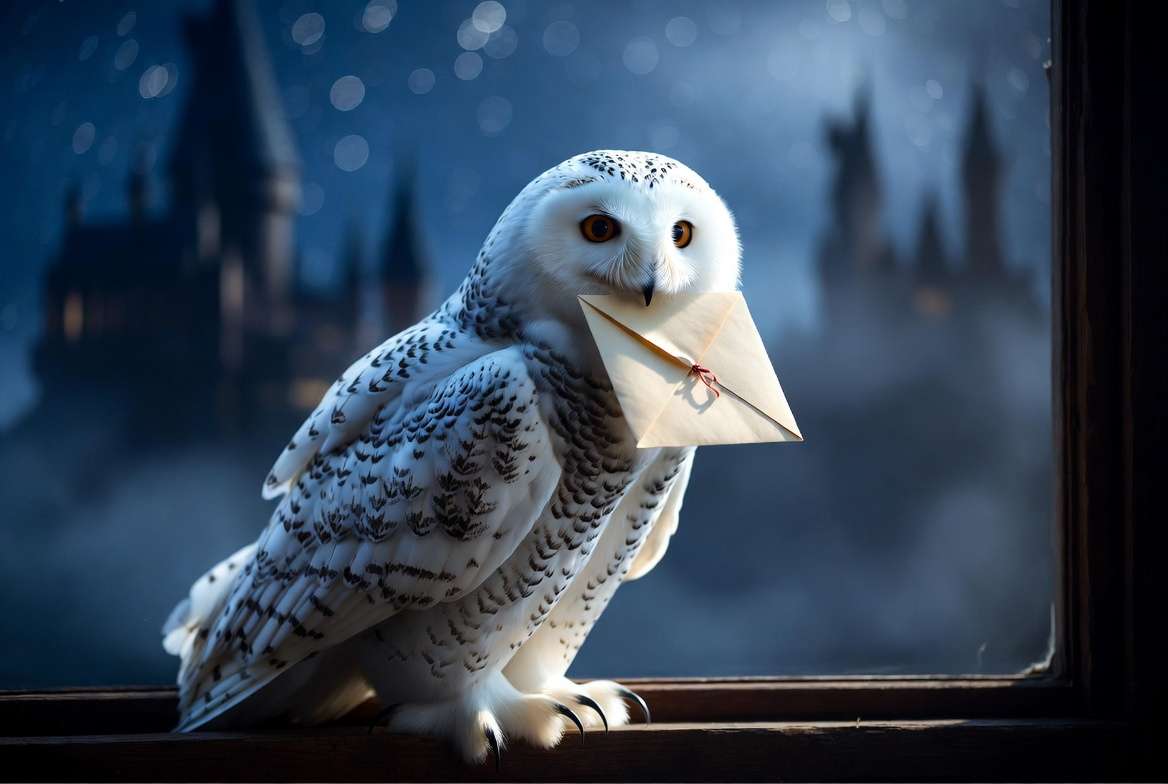
No owl in the series captures hearts quite like Hedwig, Harry Potter’s devoted snowy owl and constant companion from his first day in the wizarding world until her tragic end.
 Origins and Gift from Hagrid
Hagrid purchased Hedwig for Harry as an eleventh-birthday gift in Diagon Alley, right after revealing that Harry was a wizard. The name “Hedwig” comes from Saint Hedwig of Silesia, known for her compassion and generosity—qualities that mirror Hedwig’s loyal, nurturing personality toward Harry. In the books, Hedwig is explicitly female, though the films used mostly male snowy owls for their striking pure-white plumage.
Species Deep Dive: Snowy Owl (Bubo scandiacus)
The snowy owl, also called the “Ghost Owl,” is one of the most visually striking birds, with thick white feathers (males are whiter; females have more dark barring), yellow eyes, and powerful talons capable of taking down prey as large as ducks. In reality, they inhabit Arctic regions, nest on the ground, and are adapted for cold climates rather than Hogwarts’ towers. Females are larger and heavier than males, which is why film trainers often preferred smaller, whiter males for handling.
Hedwig’s depiction takes artistic license: she flies at night, hoots expressively, and forms a deep emotional bond with Harry, nibbling bacon rinds and comforting him during lonely moments at Privet Drive.
Personality and Bond with Harry
Hedwig is intelligent, proud, and fiercely loyal. She delivers mail reliably, even finding Sirius when he is in hiding. She expresses disapproval (pecking Harry’s ear when annoyed) and affection (nuzzling or hooting softly). For an orphan like Harry, Hedwig provides unconditional companionship and a link to the wizarding world during summers with the Dursleys.
Her name and snowy appearance evoke purity, wisdom, and quiet strength—qualities Harry grows into over the series.
Iconic Moments Across the Books and Films
- Philosopher’s Stone: Hedwig’s first delivery and her role in Harry’s early discoveries.
- Chamber of Secrets: Delivering letters despite Dursley interference.
- Prisoner of Azkaban: Helping locate Sirius and carrying messages during the Triwizard Tournament preparations.
- Goblet of Fire and Order of the Phoenix: Emotional support during Harry’s isolation.
- Deathly Hallows: Her heartbreaking sacrifice. In a moment of chaos over Little Whinging, Hedwig is struck by a Killing Curse while trying to protect Harry or return to him. Her death marks the loss of Harry’s last link to his early wizarding life and one of the series’ most emotional blows.
In the films, Hedwig’s final flight and the slow-motion depiction of her fall amplify the tragedy, making it a tear-jerker for audiences worldwide.
Magical Abilities and Symbolism
Hedwig embodies loyalty, freedom, and resilience. Her death symbolizes the cost of war and the personal losses Harry endures. Yet her memory lives on, representing the pure magic of friendship that transcends species.
The Weasley Family Owls
The Weasleys’ owls reflect their large, chaotic, and loving household—practical, hardworking, and often comically imperfect.
 Errol – The Aging Great Grey Owl
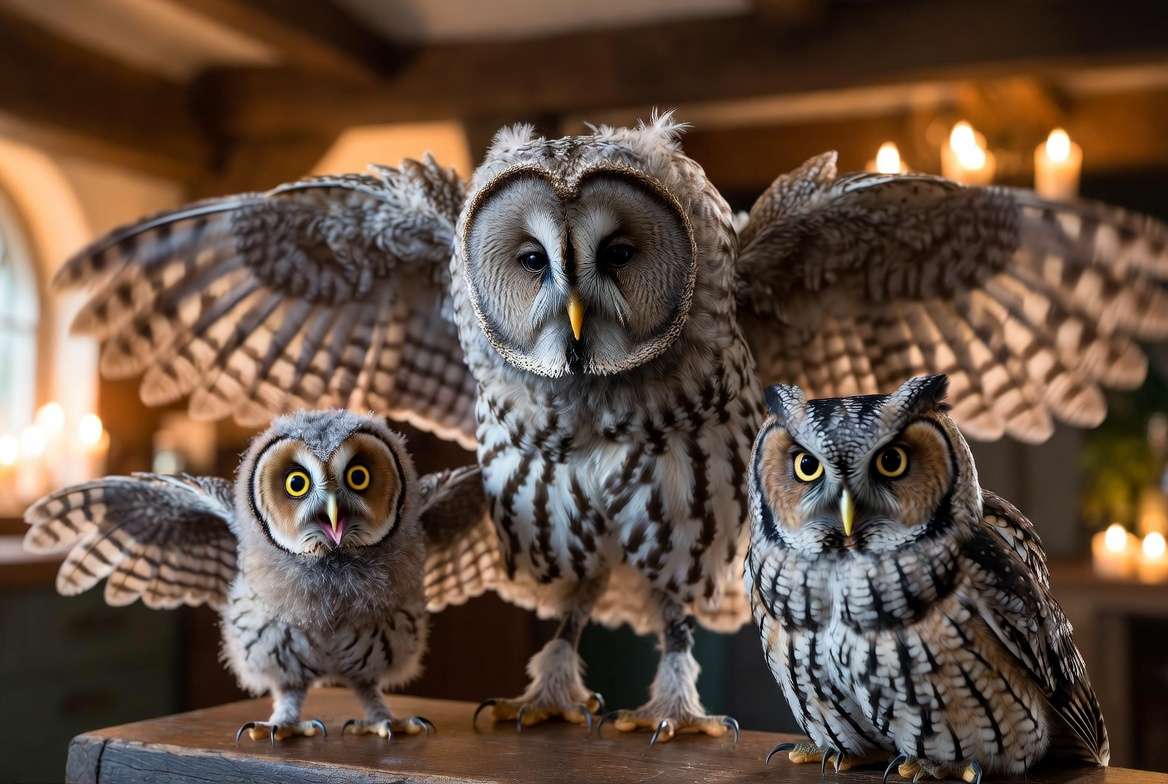
Errol is the Weasley family’s ancient great grey owl (Strix nebulosa), one of the largest owl species by length. He is clumsy due to poor eyesight and old age, frequently crashing into windows or collapsing exhausted after deliveries. Harry once describes him as resembling a “moulting feather duster.” Despite his mishaps, Errol reliably carries heavy loads like The Daily Prophet or multiple letters, highlighting the Weasleys’ resourcefulness and affection for their imperfect pets.
In the films, his dramatic collapses provide comic relief, such as landing in a bowl of food.
Pigwidgeon (Pig) – Ron’s Tiny, Hyperactive Scops Owl
After Scabbers is revealed as Peter Pettigrew, Sirius Black gifts Ron Pigwidgeon, a miniature scops owl (often compared to a little owl in some descriptions). Ginny names him “Pigwidgeon,” which Ron shortens to “Pig” out of embarrassment at the overly grand name.
Pig is tiny, gray-feathered, extremely energetic, and overly enthusiastic—bouncing around, hooting loudly, and struggling with heavy mail. He annoys Errol and Percy’s owl Hermes, forcing Ron to keep him in his own room. Pig contrasts sharply with Hedwig’s calm dignity, mirroring Ron’s own lively, sometimes overlooked personality.
His small size makes him cute but impractical, adding humor and showing that even imperfect owls are cherished.
Hermes – Percy’s Western Screech Owl
Hermes is Percy Weasley’s western screech owl, a gift when Percy becomes a prefect. Named after the Greek messenger god, Hermes reflects Percy’s ambitious, rule-following nature. He is more efficient and less dramatic than the other Weasley owls, suiting Percy’s serious demeanor. Later, as Percy distances himself from the family, Hermes represents his initial pride and separation.
Other Notable Owls and Their Owners
Beyond the main characters, several other owls appear, each reflecting their owners’ status or personality.
 Draco Malfoy’s Eagle Owl
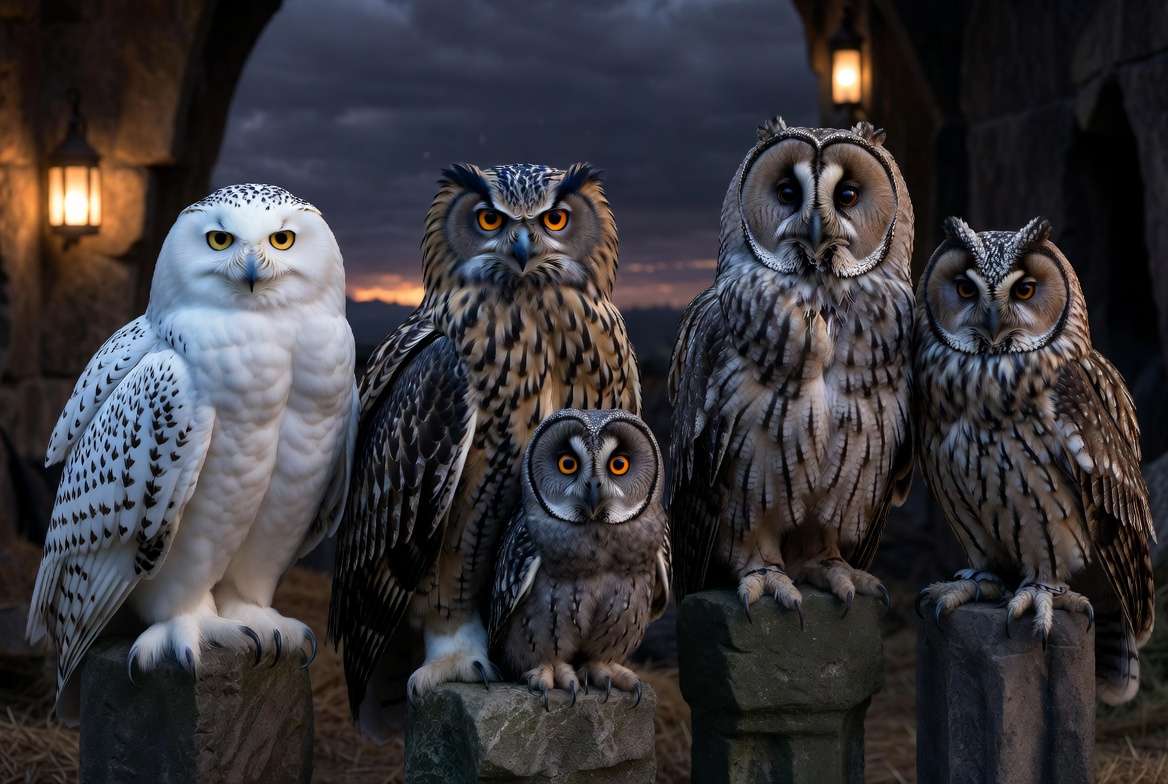
Draco’s unnamed eagle owl (likely a Eurasian eagle-owl, one of the largest and most imposing species) is a status symbol. Large, tufted, and fierce-looking with orange-red eyes, it delivers daily sweets and cakes from Narcissa Malfoy during Draco’s first year. Its intimidating presence matches the Malfoy family’s wealth, arrogance, and desire to project power.
The Lovegoods’ Hawk-Like Owl
The Lovegood family’s owl is described as “hawk-like,” possibly an eagle owl or similar. It delivers The Quibbler and reflects the family’s eccentric, free-spirited nature—less conventional than purebred messenger owls.
Longbottom Family Owls
Augusta Longbottom uses a barn owl and later a tawny owl for communication. These practical choices suit the Longbottoms’ steadfast, no-nonsense character.
School and Ministry Owls
Hogwarts maintains a flock of generic school owls for students without personal ones. Sirius Black uses a barn owl while in hiding. The Ministry employs owls for official notices, underscoring the system’s widespread use.
For a quick overview, here’s a summary table of major owls:
- Hedwig — Harry Potter — Snowy Owl — Loyal, intelligent, emotional support
- Errol — Weasley family — Great Grey Owl — Clumsy, elderly, hardworking
- Pigwidgeon (Pig) — Ron Weasley — Scops / Little Owl — Hyperactive, small, enthusiastic
- Hermes — Percy Weasley — Western Screech Owl — Efficient, formal
- Eagle Owl — Draco Malfoy — Eagle Owl — Fierce, status symbol
- Hawk-like Owl — Lovegood family — Possibly Eagle Owl — Eccentric delivery
Book and film portrayals differ slightly in appearance and behavior due to casting real owls and visual storytelling needs. The films often emphasize dramatic flights and expressions for cinematic impact.
The Deeper Magical Meanings and Symbolism of Owls in Harry Potter
Owls in Harry Potter transcend their practical role as messengers. J.K. Rowling carefully layered cultural, mythological, and character-driven symbolism into these birds, making them quiet but powerful narrative tools.
 Wisdom, Vigilance, and Freedom
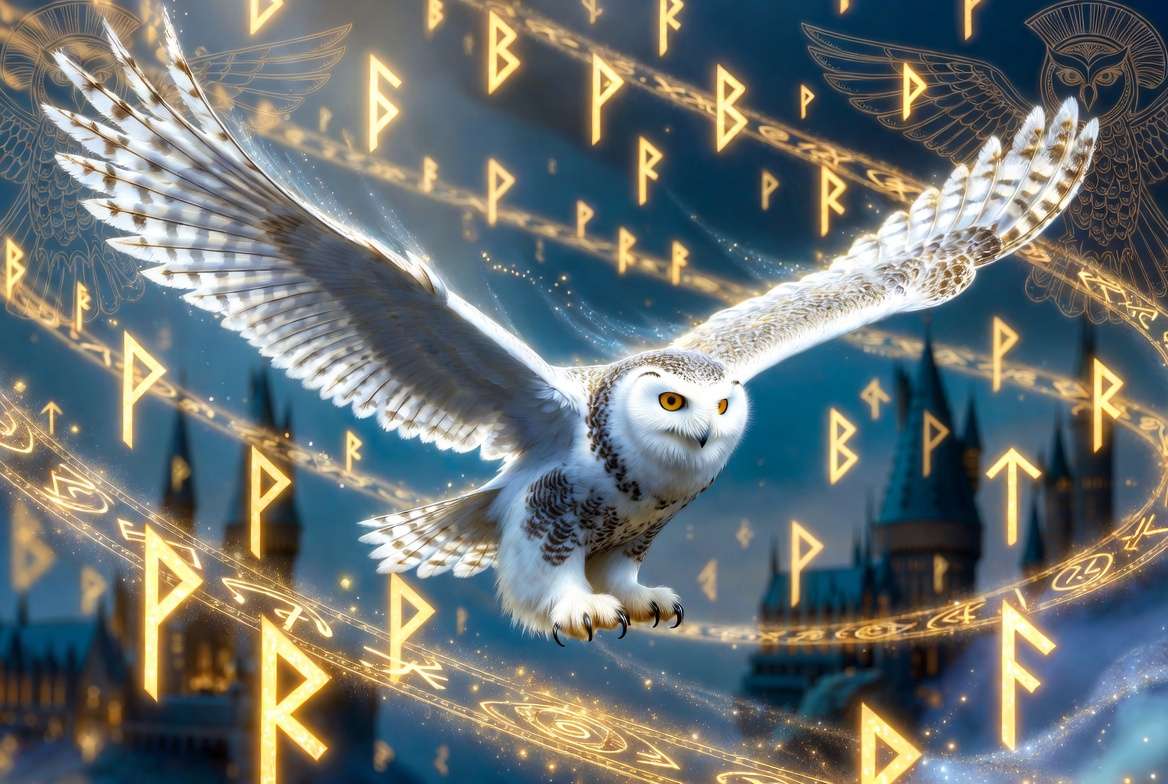
Traditionally, owls represent wisdom—an association dating back to Athena/Minerva. In the wizarding world, this manifests as quiet intelligence and reliability. Hedwig’s calm, observant nature mirrors Harry’s growing wisdom and moral compass. Her ability to find anyone, anywhere, also symbolizes vigilance and protection—qualities Harry desperately needs during his isolated summers at Privet Drive.
Owls further embody freedom. Unlike broomsticks or thestrals, owls move silently and independently, unbound by roads or spells. For Harry, Hedwig represents the freedom he craves: escape from the Dursleys and connection to a world where he belongs. When Hedwig dies in Deathly Hallows, it is not merely the loss of a pet; it marks the end of Harry’s childhood innocence and the final severance of his early ties to the wizarding world.
Cultural Contrasts and Omens
In many Muggle cultures, owls carry dual meanings—wisdom on one hand, death or bad omens on the other (especially in some Asian and African folklore). Rowling subtly plays with this duality. The arrival of Ministry owls often signals trouble (expulsion threats, warnings), while personal owls like Hedwig bring comfort and joy. This contrast reinforces the theme that magic itself is morally neutral; it is the intent and context that matter.
Draco Malfoy’s large, aggressive eagle owl projects power and intimidation rather than gentle wisdom, perfectly reflecting Slytherin house values and the Malfoy family’s emphasis on status over compassion.
How Owls Reflect Their Owners’ Personalities
One of Rowling’s masterful touches is using owls as subtle character mirrors:
- Hedwig → Harry: Loyal, dignified, resilient, sometimes lonely.
- Errol → Weasley family: Overworked, imperfect, yet endlessly devoted and full of heart.
- Pigwidgeon → Ron: Energetic, eager to please, occasionally overwhelming but always lovable.
- Hermes → Percy: Formal, efficient, ambitious—prioritizing duty over warmth.
- Eagle Owl → Draco: Imposing, well-fed, projecting superiority.
These parallels deepen reader understanding without overt explanation, rewarding attentive fans.
J.K. Rowling has confirmed in interviews and Pottermore writings that she deliberately chose owls to evoke both wonder and practicality, creating a system that feels ancient yet functional in a modern magical society.
Fun Facts, Behind-the-Scenes, and Owl Care in the Films
The Harry Potter film franchise brought Rowling’s owls to life with remarkable care, using a combination of real trained owls, animatronics, and CGI.
 Real Owl Actors and Training Challenges
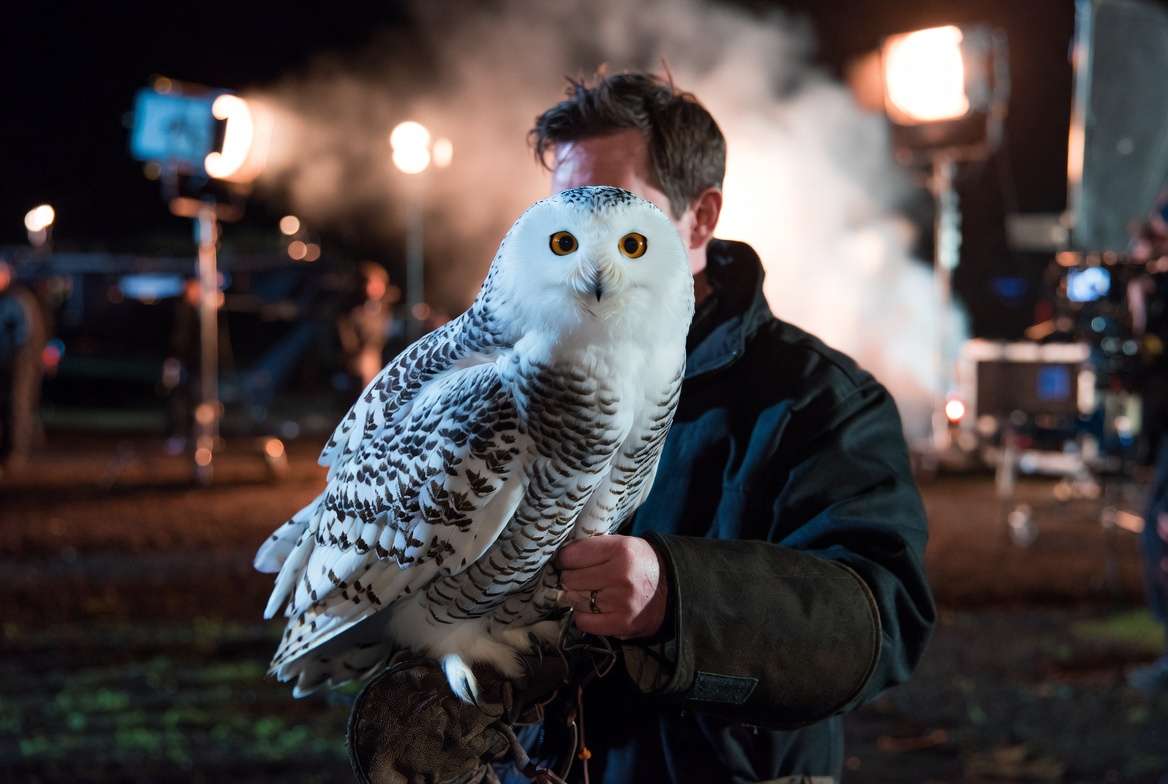
Hedwig was portrayed by seven different snowy owls across the eight films, with the most famous being Gizmo, Kasper, Spartan, Ook, Elmo, Sprout, and Hoodini. Trainers faced unique challenges: snowy owls are naturally mostly silent, so sound effects were added for Hedwig’s expressive hoots. Real owls were trained using positive reinforcement (treats and perches) and could only work limited hours per day for welfare reasons.
In the films, Hedwig’s dramatic rescue flights and the slow-motion sequence of her death in Deathly Hallows – Part 1 were enhanced with CGI to heighten emotional impact while minimizing stress on the live animals.
Errol’s clumsy crashes were often achieved with practical effects and trained great grey owls, while Pigwidgeon’s hyperactivity was accentuated by fast editing and a very energetic little owl performer.
J.K. Rowling’s Corrections on Owl Behavior
Rowling has publicly acknowledged her “elementary mistakes” regarding snowy owls:
- They are largely diurnal, not nocturnal.
- Females are larger and more heavily barred than males.
- They rarely hoot as expressively as Hedwig.
She embraced these as part of the magical license, noting that wizarding owls have been selectively bred and enchanted over centuries, resulting in enhanced intelligence and slightly altered behaviors.
Responsible Owl Ownership Message for Fans
While Hedwig’s snowy beauty makes her tempting, real snowy owls are wild Arctic birds and not suitable as pets. They require vast space, specialized diets, and expert care. Many fans have been inspired to support owl conservation instead. Organizations like the International Owl Center and local wildlife rescues benefit from increased awareness thanks to the series. If you love owls, the best way to honor Hedwig is by supporting habitat protection and never purchasing wild or exotic birds as pets.
Frequently Asked Questions About Owls in Harry Potter
What kind of owl is Hedwig? Hedwig is a snowy owl (Bubo scandiacus). In the books she is female; the films primarily used male snowy owls for their brighter white plumage.
Is Pigwidgeon a real owl species? Yes. Pigwidgeon is a scops owl (specifically resembling the Eurasian scops owl or little owl). His tiny size and energetic personality are faithfully portrayed.
Why do wizards use owls instead of phones? Owls provide discreet, untraceable communication that works even in areas with anti-Muggle charms or when exact addresses are unknown. They also fit the old-world, magical aesthetic Rowling created.
What happened to Hedwig? In Harry Potter and the Deathly Hallows, Hedwig is killed by a Killing Curse (Avada Kedavra) during the Battle of the Seven Potters while trying to protect Harry or return to his side. Her death is one of the series’ most emotional losses.
Are all owls in Harry Potter magical? Not inherently magical in the sense of being able to cast spells, but they possess enhanced intelligence, navigational abilities, and understanding far beyond real-world owls due to centuries of magical breeding and environment.
How many owls are named in the series? There are five prominently named owls: Hedwig, Errol, Pigwidgeon (Pig), Hermes, and (indirectly) the unnamed but frequently mentioned eagle owl belonging to Draco Malfoy.
Did J.K. Rowling make any mistakes about owls? Yes—Rowling has admitted that real snowy owls are mostly diurnal and largely silent, unlike the expressive, night-flying Hedwig. She views these as acceptable magical liberties.
From the moment Hagrid handed Harry a snowy owl in a cage, owls became one of the most enchanting and emotionally resonant elements of the Harry Potter series. They are more than delivery birds—they are companions, symbols of wisdom and freedom, and quiet witnesses to Harry’s entire journey from orphaned boy to the hero who defeated Voldemort.
Hedwig’s loyalty, Errol’s clumsy dedication, Pig’s boundless energy, and even Draco’s haughty eagle owl all add texture and heart to the wizarding world. In a universe filled with spectacular magic—flying brooms, time-turners, and Patronus charms—the simplest magic often arrived on silent white wings.
Whether you first fell in love with Hedwig as a child or are discovering the depth of these characters as an adult reader, owls in Harry Potter remind us that true connection can come in the most unexpected forms. They teach loyalty, resilience, and the importance of small comforts during dark times.
Which owl from the Harry Potter series holds a special place in your heart? Is it the noble Hedwig, the chaotic Pigwidgeon, or perhaps one of the lesser-known school owls? Share your favorite owl moments in the comments below—I’d love to hear which feathered friend you’d want delivering your own Hogwarts letter.
For more magical deep dives, explore our other guides:
- The Complete Weasley Family Tree and Their Stories
- Hedwig’s Death Explained: Why It Still Hurts
- Hogwarts Locations Every Fan Should Know
Thank you for flying through this complete guide to owls in Harry Potter. May your own mail always arrive safely—and with a few extra treats.