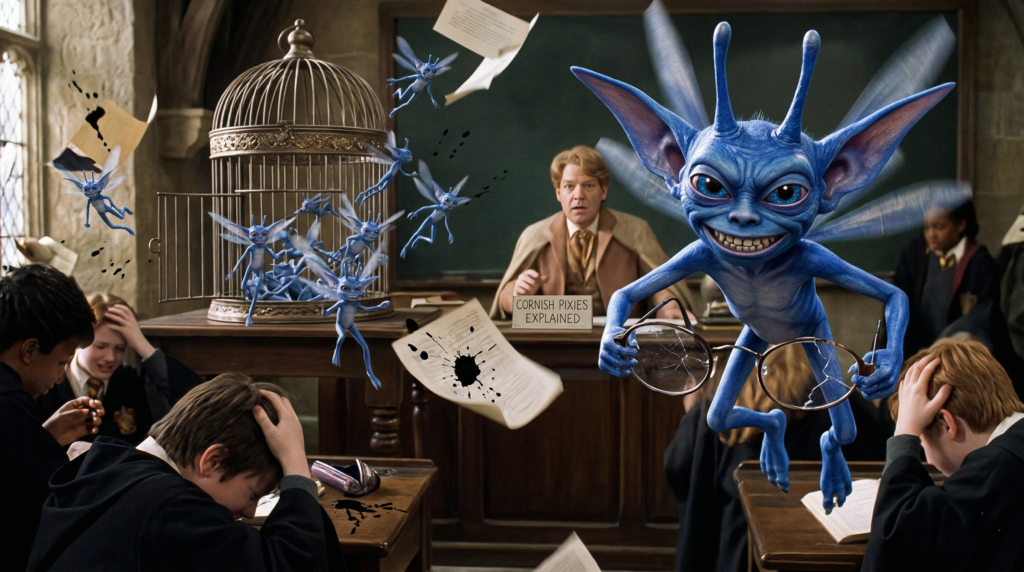
Imagine walking into your second-year Defense Against the Dark Arts class at Hogwarts, expecting to learn how to defend yourself against dark creatures. Instead, the flamboyant Professor Gilderoy Lockhart dramatically unveils a cage and releases a swarm of electric-blue, shrieking creatures that rocket around the room like tiny missiles. They snatch students by the ears, tear books to shreds, smash windows, and leave the classroom in absolute pandemonium. Welcome to one of the most hilarious and memorable moments in the entire Harry Potter series — the unforgettable encounter with the pixie in Harry Potter.
The pixie in Harry Potter, specifically the Cornish pixie, appears in Harry Potter and the Chamber of Secrets. These tiny mischief-makers quickly became fan favorites for their chaotic energy and the perfect way they exposed Lockhart’s incompetence. Whether you’re a longtime Potterhead revisiting the scene or a newer fan wondering what these creatures are all about, this comprehensive guide covers everything: their appearance, abilities, the iconic classroom chaos (book versus movie), deeper lore from J.K. Rowling’s wizarding world, connections to real-world folklore, and why they still captivate readers decades later.
By the end, you’ll have a complete understanding of the pixie in Harry Potter and why even competent wizards treat them with caution. Let’s dive into the delightful devilry of these blue troublemakers.
What Is a Pixie in Harry Potter?
The pixie in Harry Potter — more precisely called the Cornish pixie — is a small, magical beast native to the wizarding world. According to Fantastic Beasts and Where to Find Them (the in-universe textbook written by Newt Scamander), Cornish pixies are classified as XXX by the Ministry of Magic. This rating means they cause “no trouble to competent wizards,” but as the infamous classroom scene proves, they can be absolute nightmares for frauds and beginners alike.
Physical Appearance and Characteristics
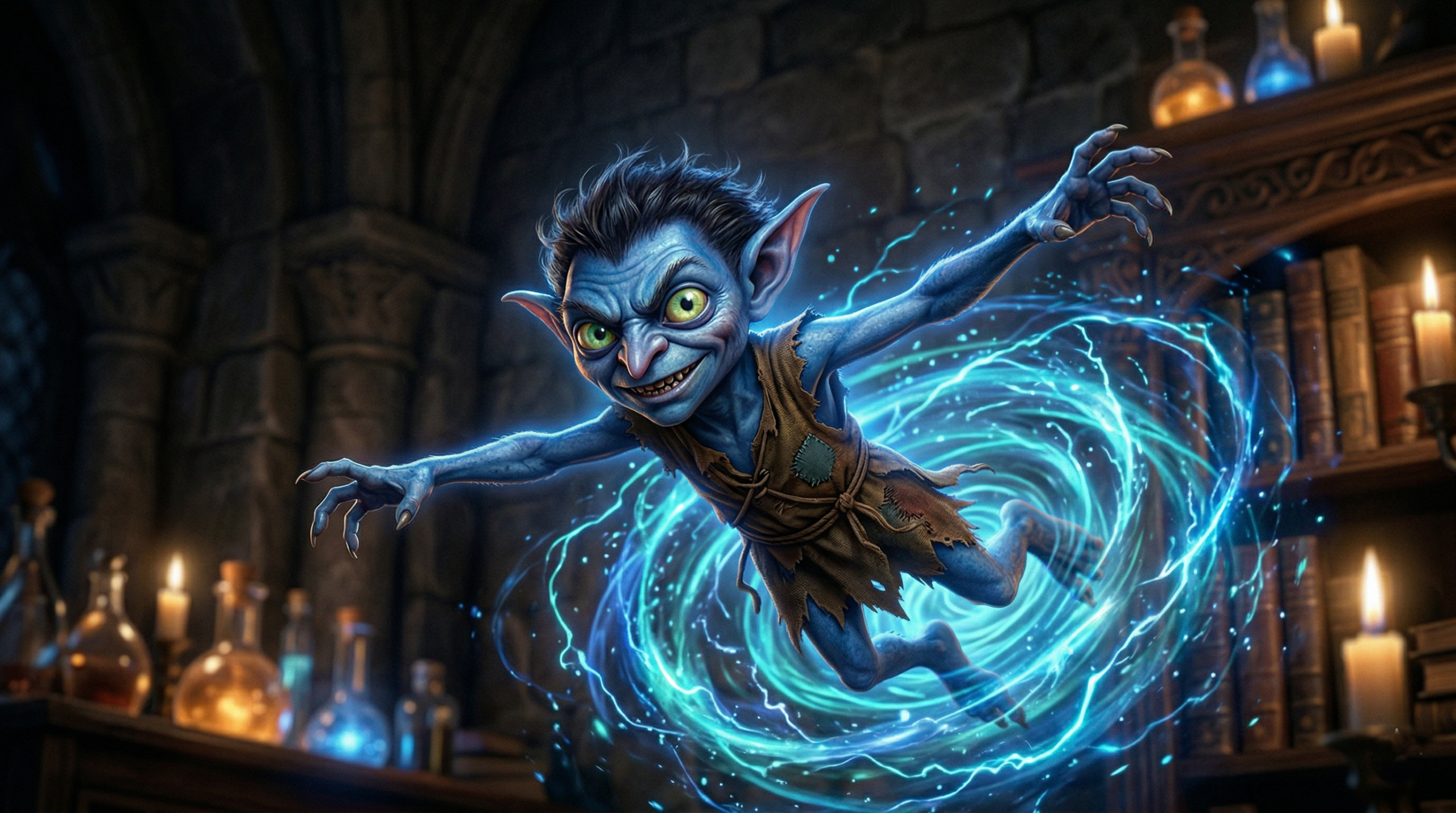
Cornish pixies stand about eight inches tall and sport a vivid electric-blue color that makes them instantly recognizable. They have pointed faces, sharp little features, and voices so shrill and high-pitched that they sound “like listening to a lot of arguing budgies.” Their jabbering is intelligible only to other pixies, leaving wizards and witches completely in the dark about what the creatures are actually saying.
One of the most fascinating details is that pixies are wingless yet possess the remarkable ability to fly with chaotic, rocket-like speed and precision. They demonstrate surprising strength for their size, capable of lifting full-grown humans by the ears and carrying them high into the air — as poor Neville Longbottom discovered the hard way. Pixies bear live young rather than laying eggs, setting them apart from many other small magical creatures.
In the books, their flight is described as wingless and almost supernatural. However, the film adaptation of Chamber of Secrets gave them delicate, insect-like wings for visual appeal — a common creative choice that many fans still debate today.
 Habitat and Origin
As their name suggests, Cornish pixies originate from Cornwall in southwest England. They thrive in rural, misty landscapes and are known for inhabiting hedgerows, woodlands, and remote corners of the British countryside. In the wizarding world, they are considered a classic example of British magical fauna, often found in areas rich with old folklore.
Their Ministry classification of XXX reflects their mischievous but not truly dangerous nature. They delight in tricks and practical jokes rather than outright malice, though their pranks can cause significant chaos and property damage.
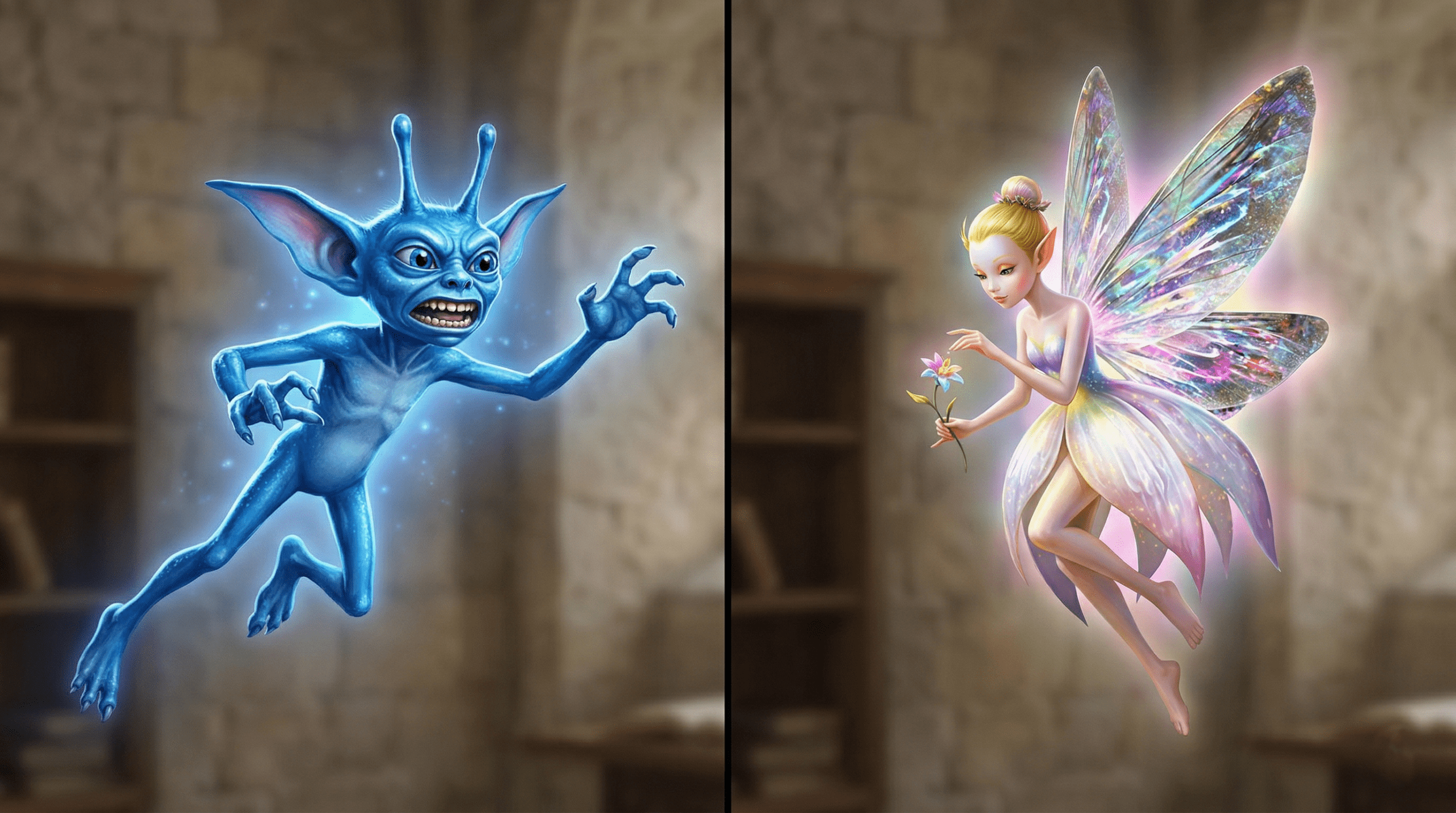
Pixies vs. Fairies in Harry Potter — Clearing Up the Confusion
A frequent question among fans is how the pixie in Harry Potter differs from fairies. J.K. Rowling deliberately distinguishes the two to add depth to her magical ecosystem:
- Pixies: Wingless (in canon), electric blue, about 8 inches tall, bear live young, XXX classification (mischievous but manageable by competent wizards), highly chaotic fliers, focused on pranks and physical mischief like lifting people or stealing objects.
- Fairies: Usually depicted with large, colorful insect-like wings, smaller or similar in size but more delicate, lay eggs, XX classification (harmless and often domesticated), limited intelligence, vain creatures often used as decorative ornaments by wizards. Their magic is weak and primarily helps them evade predators.
Pixies and fairies are sometimes confused in the wizarding world (and by fans) because of their small size and shared love of mischief, but their behaviors and biology set them apart. Imps are another similar creature mentioned in Fantastic Beasts, though pixies stand out for their flight capability and strength.
This clear differentiation shows Rowling’s careful world-building, drawing from folklore while creating distinct rules for her universe.
 The Iconic Cornish Pixies Scene in Chamber of Secrets
The heart of any discussion about the pixie in Harry Potter is the unforgettable Defense Against the Dark Arts lesson in Harry Potter and the Chamber of Secrets. This scene perfectly encapsulates the whimsical chaos of early Hogwarts while subtly revealing character truths.
Book Version: Detailed Scene Breakdown
In Chapter 6 (“Gilderoy Lockhart”), the newly appointed professor begins his first lesson with dramatic flair. He warns students not to scream because it might provoke the creatures, then dramatically removes the cover from a large cage.
“The pixies were electric blue and about eight inches high, with pointed faces and voices so shrill it was like listening to a lot of arguing budgies. The moment the cover had been removed, they had started jabbering and rocketing around, rattling the bars…”
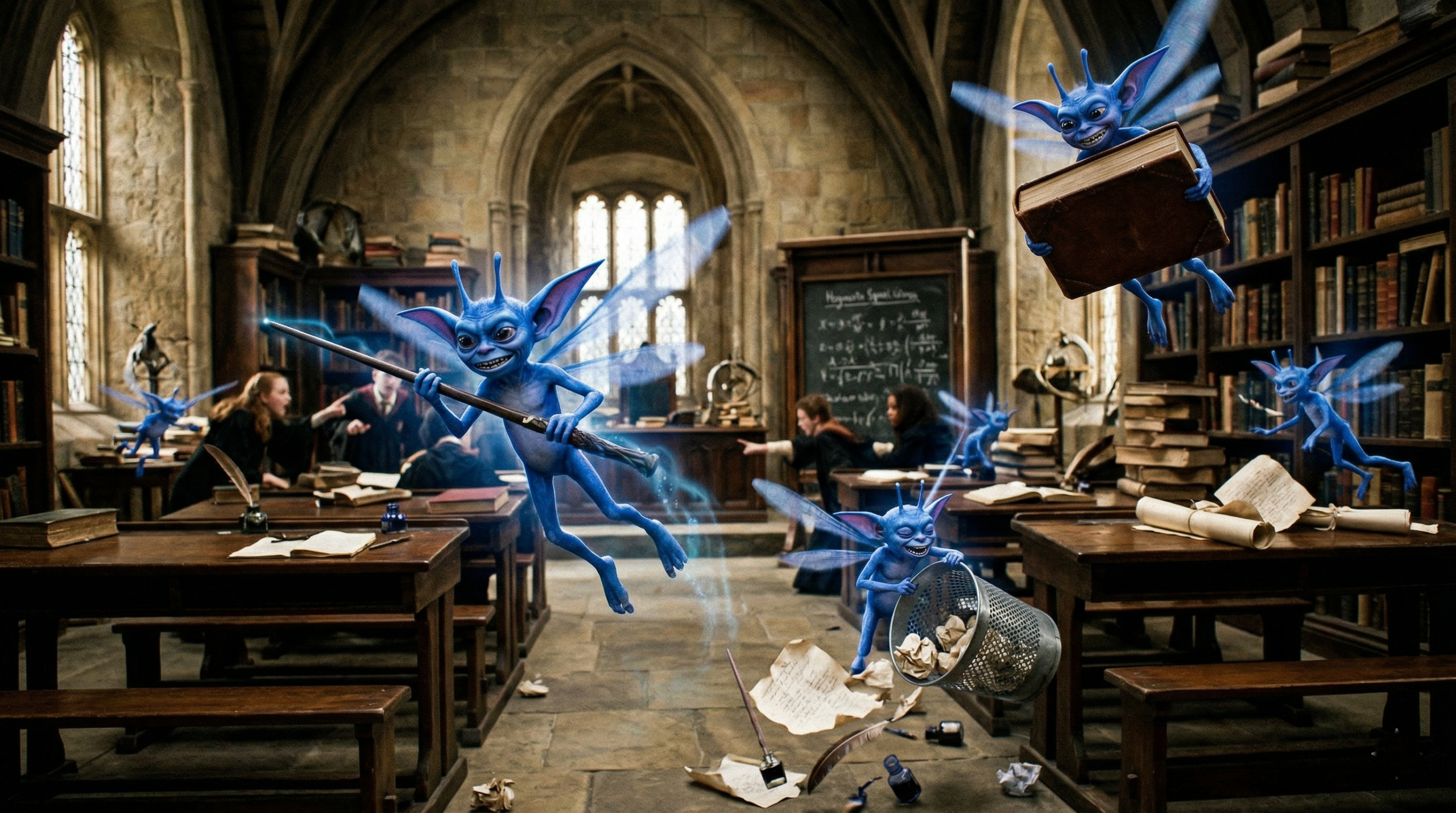
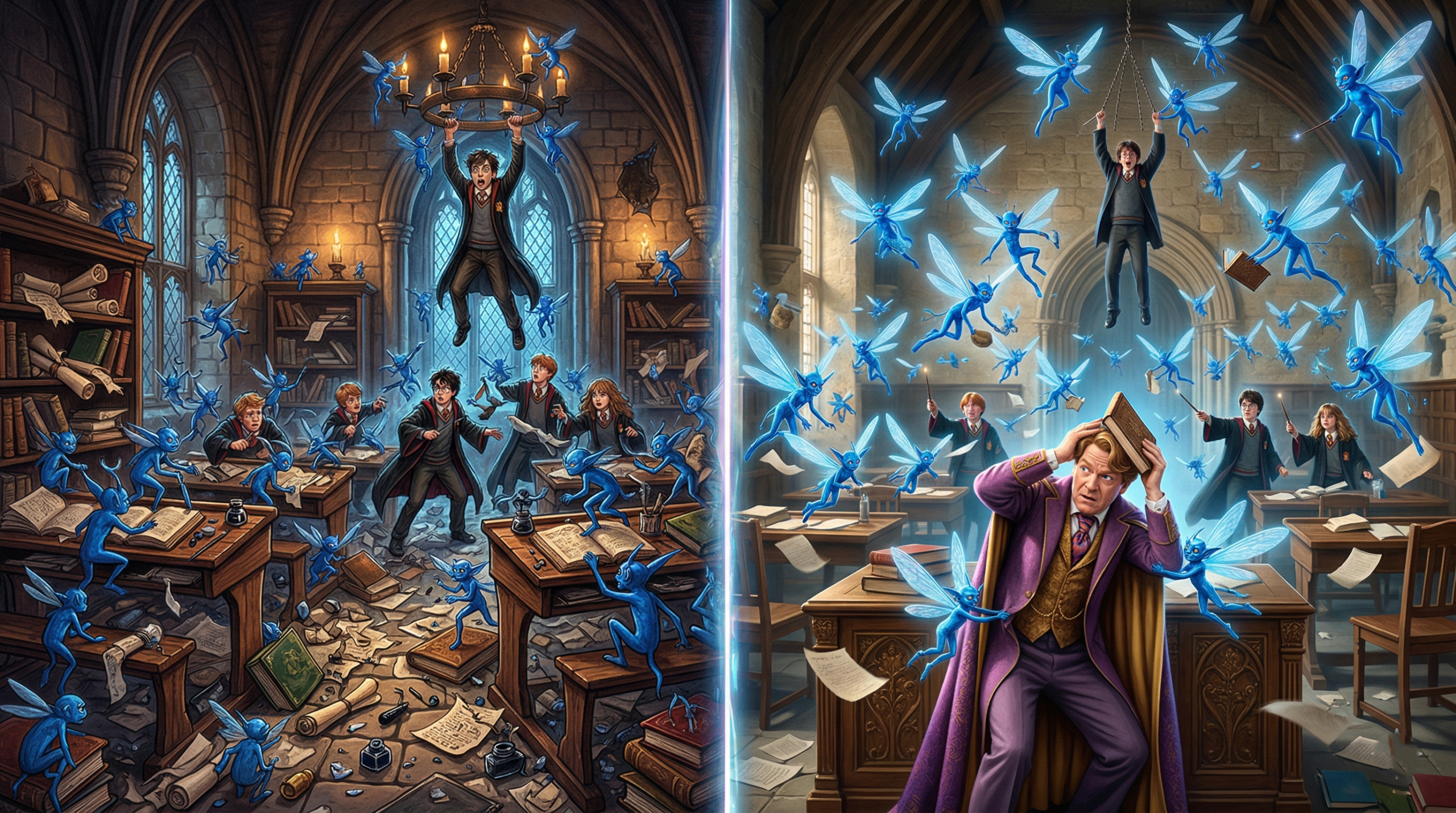
Lockhart opens the cage with a flourish, declaring, “Let’s see what you make of them!” Pandemonium erupts immediately. Two pixies seize Neville Longbottom by the ears and hoist him toward the ceiling. Others shoot through the window, showering students with broken glass. They tear pictures from walls, shred books and papers, spray ink everywhere, and upend the wastebasket. Within minutes, half the class is sheltering under desks while Neville swings helplessly from the iron chandelier.
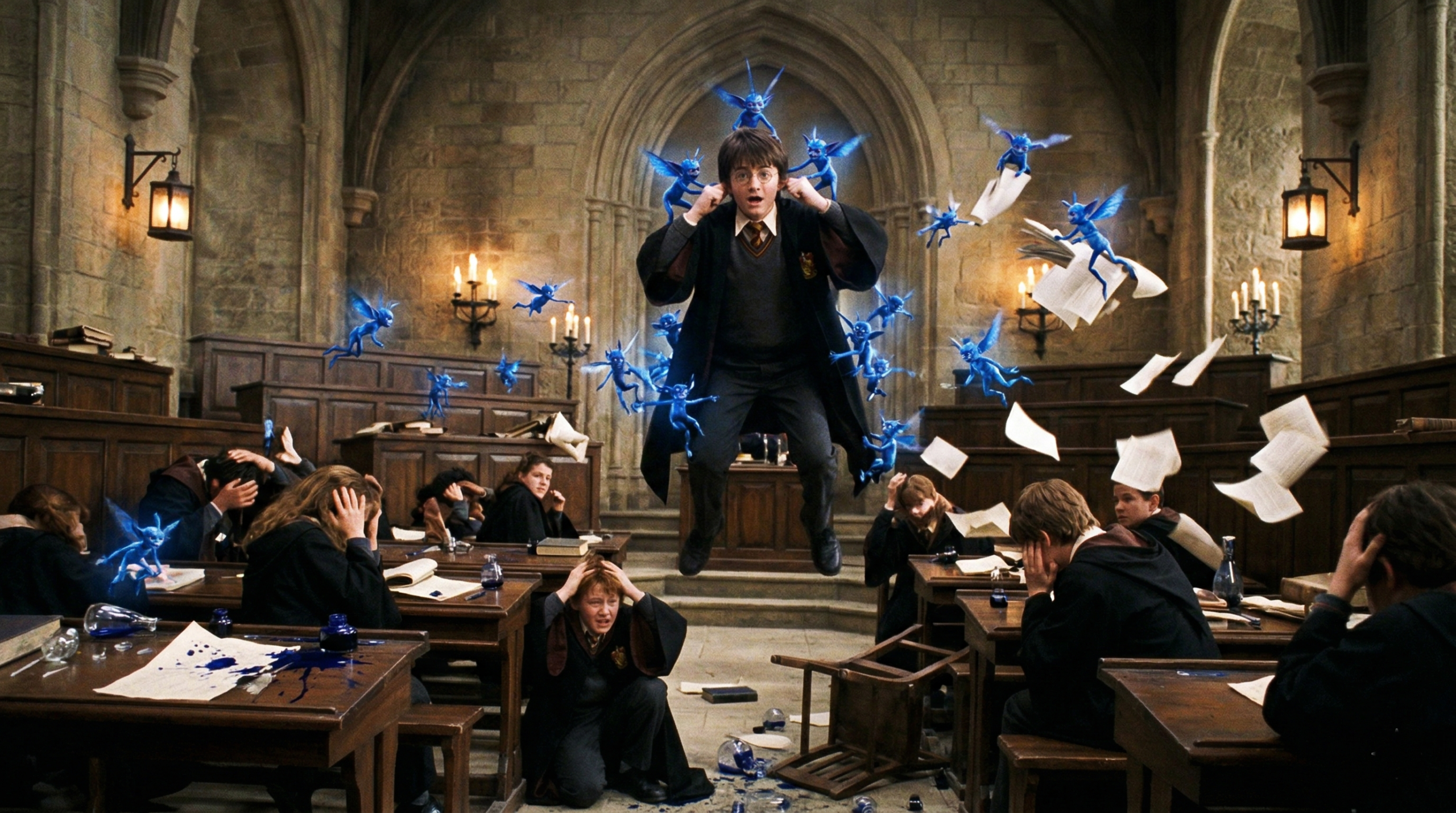 Lockhart attempts to restore order by rolling up his sleeves and bellowing what he claims is a spell: “Peskipiksi Pesternomi!” Nothing happens. The pixies ignore him completely. He then ducks under his desk as the creatures continue their rampage. When the bell finally rings, students make a mad dash for the exit. Lockhart, emerging disheveled, casually asks Harry, Ron, and Hermione to “nip the rest of them back into their cage” before leaving.
The scene brilliantly highlights Lockhart’s fraudulence while showcasing Hermione’s quick thinking — she later uses the Freezing Charm effectively on the remaining pixies.
Movie Version: Visuals, Differences, and Behind-the-Scenes
The 2002 film adaptation, directed by Chris Columbus, turns the scene into a visual spectacle with excellent CGI for the pixies (complete with added wings). Kenneth Branagh’s over-the-top performance as Lockhart amplifies the comedy. The chaos feels more contained visually but retains the core humor: Neville dangling from the chandelier, pixies throwing books and tearing pages, and Lockhart’s useless “Peskipiksi Pesternomi!”
Key differences include:
- In the book, pixies throw Lockhart’s wand out the window and cause more widespread destruction (including the chandelier crashing in some interpretations of the chaos). In the movie, the wand is stolen but the destruction is slightly less extreme.
- Hermione’s role is emphasized more powerfully in the film; her Freezing Charm immobilizes all the pixies at once, whereas in the book it affects only a few.
- The students’ reactions and the classroom’s final state differ slightly, with the movie focusing on visual gags and slapstick.
The film version became iconic for its humor and helped cement the pixie in Harry Potter as a memorable creature for a new generation of fans. The behind-the-scenes work on the pixies’ animation added to the whimsical yet slightly menacing feel of the tiny beasts.
What the Scene Teaches Us About the Characters
Beyond the laughs, the pixie incident serves as early character development:
- Gilderoy Lockhart: His incompetence and vanity are exposed immediately. The failed spell and his quick retreat under the desk reveal him as a fraud long before the later plot twists.
- Hermione Granger: Her knowledge and calm under pressure shine. While others panic, she remembers the right charm and takes action.
- Neville Longbottom: The scene underscores his early vulnerability and clumsiness, setting up his growth arc across the series.
- Harry and Ron: Their teamwork and reluctance to stay behind when Lockhart assigns them cleanup duty hint at their loyal friendship.
This single scene packs humor, character insight, and world-building into a few chaotic minutes, making it one of the strongest early highlights of Chamber of Secrets
Powers, Abilities, and Behavior of Cornish Pixies
The pixie in Harry Potter is far more than just a funny blue nuisance. Their powers and behavior reveal a sophisticated (if chaotic) magical creature that embodies the unpredictable side of the wizarding world.
Cornish pixies are masters of mischief. Their primary “weapon” is not dark magic but pure, unfiltered chaos. They delight in practical jokes: stealing wands, upending furniture, shredding homework, and lifting unsuspecting humans by their ears. Their strength is disproportionate to their tiny eight-inch frames — a single pixie can hoist a teenage boy toward the ceiling with ease. This physical power, combined with their rocket-like flight, makes them incredibly difficult to catch once released.
Despite being wingless in the books, they move with astonishing agility and speed, darting in unpredictable patterns that confuse even skilled witches and wizards. Their shrill voices create a constant, disorienting cacophony, making coordinated defense harder. Pixies appear to communicate in a complex language of their own, jabbering rapidly in tones that sound like excited arguing birds. Wizards have never successfully deciphered this language, adding to their mysterious reputation.
Another notable trait is their resilience. While not dangerous in the sense of causing serious injury, they are persistent and hard to intimidate. Standard stunning spells often prove ineffective against them in large numbers, which is why Lockhart’s dramatic attempts failed so spectacularly. The most reliable counter is the Freezing Charm (Immobulus), which Hermione used to great effect. Once frozen, pixies can be safely collected and returned to their cage.
Behaviorally, pixies are highly social creatures that operate in swarms. A single pixie might cause minor trouble, but a group quickly escalates into full-scale mayhem. They seem to feed on the panic and confusion they create, becoming more energetic as the chaos grows. This herd-like mischief makes them excellent tools for testing a wizard’s composure and quick thinking — something Lockhart clearly lacked.
Real-World Folklore Connections
J.K. Rowling drew inspiration from traditional Cornish and Devonshire folklore, where piskies (or pixies) are well-known trickster spirits. In British mythology, piskies are small, mischievous beings who lead travelers astray (“pixie-led”) or play harmless but annoying pranks. They are often depicted wearing green or ragged clothes and associated with ancient stone circles and remote moors. Rowling adapted these traits — the love of tricks, the rural Cornish origin, and the chaotic energy — while giving them a distinctly magical twist with their electric-blue color and flight ability. This respectful nod to real folklore adds authenticity and depth to the pixie in Harry Potter, making them feel like a natural part of Britain’s hidden magical heritage.
Pixies in the Wider Harry Potter Lore and Canon
While the Cornish pixies make their most memorable appearance in Chamber of Secrets, they are not limited to that single scene. In Fantastic Beasts and Where to Find Them, Newt Scamander provides the official Ministry entry, confirming their XXX classification and describing them as “mischievous” rather than dangerous. He notes that they are “often found in the West Country” and warns that their pranks can become troublesome in large numbers.
Pixies receive only passing mentions in later books, which makes their early appearance even more special. They do not reappear in the main series, likely because the tone shifts toward darker threats as Harry grows older. However, their spirit of whimsical chaos echoes in other small creatures like gnomes (whom Harry and the Weasleys de-gnome in Chamber of Secrets) and the mischievous house-elves.
On Pottermore (now Wizarding World) and in supplementary materials, Rowling has reinforced that pixies remain a staple of magical education in Britain. They are sometimes used in lessons to teach basic defensive charms, precisely because they offer a safe but challenging test of skill. Their absence from the later books cleverly mirrors how early Hogwarts lessons feel light-hearted compared to the growing dangers Harry faces.
This limited but impactful presence demonstrates Rowling’s masterful pacing: introducing the fun, quirky side of magic before escalating to more serious themes. The pixie in Harry Potter serves as a perfect bridge between childhood wonder and the harsher realities of the wizarding world.
Fun Facts and Lesser-Known Details About Pixies
Here are some delightful and lesser-known facts that deepen your appreciation of the pixie in Harry Potter:
- Lockhart claimed the pixies he brought to class were “freshly caught that morning,” yet their behavior suggested they were already quite agitated — perhaps hinting at his poor handling even before the lesson.
- In the books, the pixies cause so much destruction that several students end up with ink-stained robes and torn books for the rest of the day.
- Pixies are one of the few creatures that can make a grown wizard hide under his desk — Lockhart’s reaction became a running joke among fans.
- Their live birth (viviparity) sets them apart from fairies and many other small magical beings, showing Rowling’s attention to biological detail.
- Cornish pixies inspired several fan theories, including the idea that they might be distant relatives of house-elves or imps due to shared mischievous traits.
- In the video game adaptations, players sometimes encounter pixies as minor enemies or obstacles in early levels, recreating the classroom chaos.
- The shrill voices were brought to life brilliantly in the film with layered sound effects that sound both comical and slightly eerie.
- Pixies have never been shown as truly evil — their mischief is playful, aligning with the early books’ lighter tone.
- Some fans speculate that the “Peskipiksi Pesternomi” spell was completely made up by Lockhart, as it never appears again in the series.
- In Harry Potter: Magic Awakened, pixies occasionally appear in certain events, keeping their legacy alive for newer generations of players.
These details highlight how even a seemingly minor creature contributes richly to the tapestry of the wizarding world.
 How to Deal with Pixies: Practical Tips from the Wizarding World
If you ever find yourself facing a swarm of Cornish pixies (or simply want to understand defensive magic better), here are expert-recommended strategies:
- Stay Calm — Panic only excites pixies further. Composure is your best first defense.
- Use the Freezing Charm (Immobulus) — The most effective spell, as demonstrated by Hermione. It works on multiple pixies at once when cast correctly.
- Avoid Broad Area Spells — Lockhart’s dramatic attempts failed because pixies are too fast and numerous for imprecise magic.
- Work as a Team — Coordinating with others makes rounding them up much easier.
- Contain Them Quickly — Once frozen, return pixies to a secure cage immediately, as they recover fast.
Lockhart’s mistake was relying on showmanship instead of solid spellwork. True competence, as Hermione showed, comes from knowledge and precise execution rather than flashy declarations.
Book vs. Movie: Which Version of the Pixies Is Better?
This is a beloved debate among Potter fans. The book offers richer internal details — Lockhart’s exact failed spell wording, more vivid descriptions of the destruction, and deeper insight into students’ thoughts. The movie, however, excels in visual comedy and timing, making the chaos more immediate and cinematic.
Many fans prefer the book for its subtle character moments and canon accuracy (wingless pixies). Others love the film for Kenneth Branagh’s hilarious performance and the memorable CGI pixies that still hold up decades later. Ultimately, both versions complement each other: the book provides depth, while the movie delivers spectacle. Together, they ensure the pixie in Harry Potter remains one of the series’ most entertaining moments.
 Why Cornish Pixies Still Captivate Harry Potter Fans
Even after all these years, the pixie in Harry Potter continues to charm and amuse new generations. They represent the pure joy and unpredictability of early Hogwarts — a time when magic felt wondrous rather than terrifying. Their scene perfectly balances humor with subtle lessons about competence, friendship, and the importance of real skill over empty boasting.
In an increasingly complex world, the simple delight of tiny blue creatures causing massive chaos offers welcome nostalgia. They remind us that even small beings can create big memories, and that laughter is often the best defense against frauds and failures. For fans, the pixies symbolize the whimsical heart of the series that first drew us in.
Frequently Asked Questions (FAQ)
What is a pixie in Harry Potter? The pixie, specifically the Cornish pixie, is an electric-blue, mischievous magical creature native to Cornwall. They are known for their chaotic pranks and appear prominently in Chamber of Secrets.
Are Cornish pixies dangerous? Not truly dangerous to competent wizards (XXX classification), but they can cause significant chaos, property damage, and embarrassment. They are more troublesome than harmful.
What spell works on pixies? The Freezing Charm (Immobulus) is the most effective. Lockhart’s invented “Peskipiksi Pesternomi” does nothing.
Do pixies appear in other Harry Potter books or movies? They feature mainly in Chamber of Secrets and receive a brief entry in Fantastic Beasts and Where to Find Them. They do not return in later main-series books or films.
What’s the difference between pixies and fairies in Harry Potter? Pixies are wingless (in books), stronger, bear live young, and are far more mischievous. Fairies have wings, lay eggs, and are generally harmless and decorative.
Are pixies based on real folklore? Yes. J.K. Rowling drew inspiration from traditional Cornish piskies, trickster spirits known for leading people astray and playing pranks.
Why couldn’t Lockhart control the pixies? Because he was a fraud with limited actual magical skill. His showy approach and lack of real knowledge made him ineffective against even minor creatures like pixies.
Can pixies understand human language? They appear to ignore or not comprehend most human speech and spells, communicating only among themselves in shrill jabbering.
The pixie in Harry Potter — those electric-blue, ear-lifting, classroom-wrecking Cornish pixies — remains one of the most delightful creations in J.K. Rowling’s wizarding world. From their surprising strength and chaotic flight to the iconic Defense Against the Dark Arts disaster that exposed Gilderoy Lockhart, they delivered perfect early-series humor while teaching valuable lessons about competence and quick thinking.
More than just a funny scene, the pixies represent the whimsical, unpredictable magic that first enchanted millions of readers. They remind us that even tiny creatures can leave lasting impressions and that true wizardry lies in knowledge, not bravado.
Whether you’re revisiting Chamber of Secrets or discovering the series for the first time, understanding the pixie in Harry Potter adds richer appreciation to the story. Next time you watch that chaotic classroom scene, you’ll smile knowing exactly why these mischievous little beings continue to fly straight into fans’ hearts.
What’s your favorite pixie moment or memory from the books or films? Share in the comments below — and tell us which magical creature you’d like explained next! From gnomes to hippogriffs, the wizarding world is full of wonders waiting to be explored.