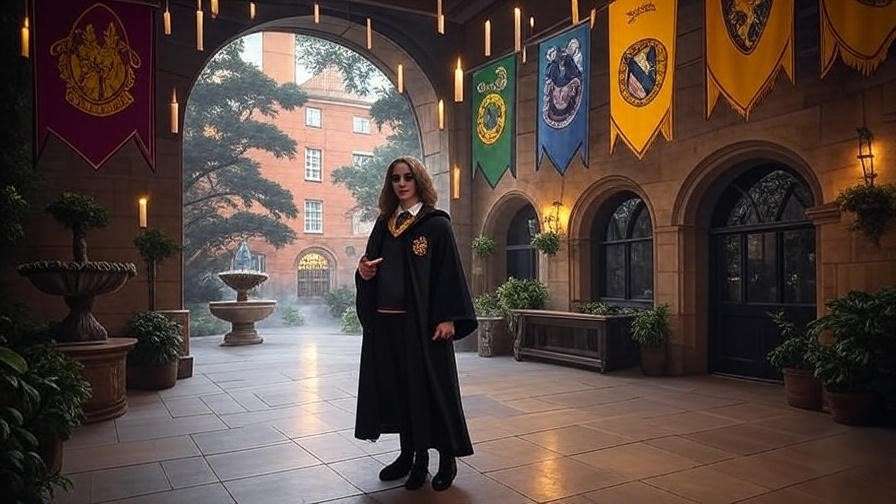
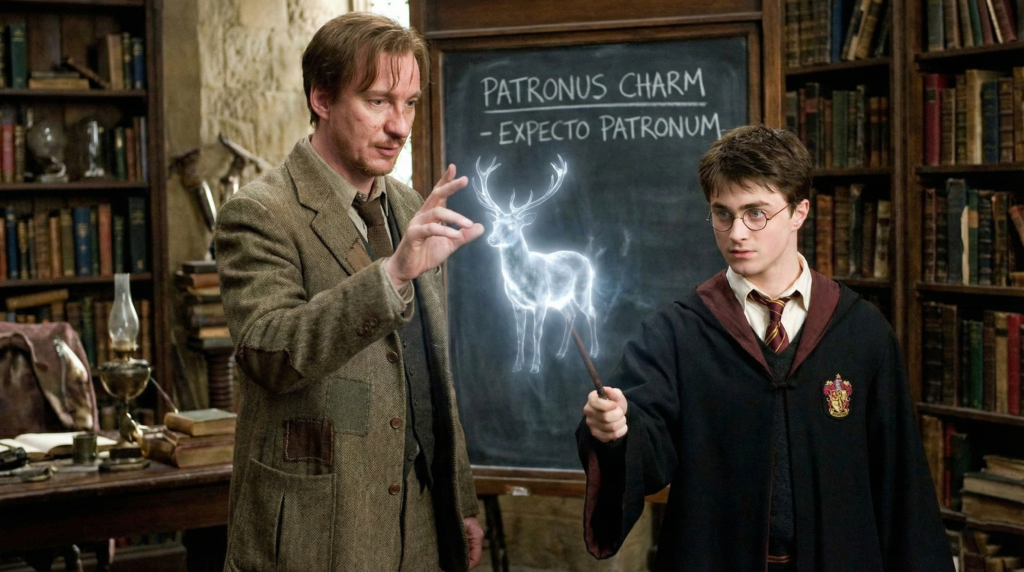
Imagine this: A cold, rattling train carriage filled with terrified students. Dementors glide past the windows, sucking every ounce of warmth and joy from the air. Screams echo. Then, a calm voice cuts through the panic. A shabby, slightly ill-looking man stands, raises his wand, and utters a single spell. Silver light explodes outward. The Dementors flee. Moments later, he’s pressing large bars of chocolate into trembling hands, murmuring, “Eat. It’ll help.”
That man was Remus Lupin — Professor Lupin in Harry Potter — and in that single moment on the Hogwarts Express, he demonstrated everything that made him the greatest Defence Against the Dark Arts teacher Harry Potter (and most fans) ever had.
In a position notoriously cursed by Lord Voldemort himself, where no teacher lasted longer than a single school year during Harry’s time at Hogwarts, Remus Lupin stands alone. Not only did he excel at the job, but he also left behind lessons, skills, and emotional impact that shaped Harry’s journey more profoundly than any other Defence professor. Even today, more than two decades after Harry Potter and the Prisoner of Azkaban was published, fans, rereaders, and Wizarding World polls consistently rank him as the undisputed #1.
In this in-depth guide, we’ll explore exactly why Professor Lupin Harry Potter remains the gold standard for Defence Against the Dark Arts teachers — through his teaching methods, personal bravery, mentorship of Harry, mastery of the Patronus Charm, and the tragic reasons he couldn’t stay. Whether you’re revisiting the series, writing fanfiction, or simply wondering why so many people still say “Lupin was the best,” this article will give you the complete, canon-supported answer.
Who Was Professor Remus Lupin? A Brief But Essential Background
Remus John Lupin was born on March 10, 1960, to Lyall and Hope Lupin. His life changed forever at the age of four when he was viciously attacked by the werewolf Fenrir Greyback — an attack orchestrated partly because his father had spoken out against werewolf prejudice at the Ministry.
Despite the devastating condition of lycanthropy, Remus was accepted into Hogwarts thanks to Albus Dumbledore, who arranged for a secure Whomping Willow tunnel and later the Shrieking Shack so Remus could transform safely each full moon. During his school years (1971–1978), he became one of the Marauders — the tight-knit group of friends consisting of James Potter, Sirius Black, Peter Pettigrew, and himself (Moony). Together, they created the Marauder’s Map, learned to become Animagi (James and Sirius) to keep Remus company, and left a legacy of mischief and deep loyalty.
After leaving Hogwarts, Remus joined the first Order of the Phoenix, fighting Voldemort alongside James, Lily, Sirius, and others. Following the deaths of James and Lily, the imprisonment of Sirius, and the betrayal by Peter, Remus lived in near-total isolation — shunned by wizarding society, unable to hold steady employment, and haunted by guilt.
In the summer of 1993, Dumbledore offered him the Defence Against the Dark Arts post — the first real teaching job he’d ever had — and provided Wolfsbane Potion to allow him to keep his transformations under control and retain his human mind. For the first time in his adult life, Remus Lupin could live with dignity and purpose.
Why the Defence Against the Dark Arts Position Was Cursed — And How Lupin Defied It
Lord Voldemort applied for the Defence Against the Dark Arts teaching position twice: once as Tom Riddle shortly after leaving Hogwarts, and again years later as the Dark Lord. Both times Dumbledore refused him. In revenge, Voldemort placed a powerful curse on the post — ensuring no teacher could hold it for more than one year.
The evidence is stark:
- 1991–1992: Quirinus Quirrell — possessed by Voldemort, died at the end of the year.
- 1992–1993: Gilderoy Lockhart — memory charm backfired, permanent amnesia.
- 1993–1994: Remus Lupin — resigned voluntarily.
- 1994–1995: “Mad-Eye” Moody — actually Barty Crouch Jr., exposed and soul destroyed.
- 1995–1996: Dolores Umbridge — driven from Hogwarts by centaurs and magical rebellion.
- 1996–1997: Severus Snape — left the position to become Headmaster.
- 1997–1998: Amycus Carrow — killed during the Battle of Hogwarts.
Every single professor met a grim fate — except Lupin. He chose to leave. He wasn’t forced out by the curse’s direct consequences; he resigned out of responsibility to protect the students from the prejudice and danger his condition could bring once revealed. In doing so, he became the only DADA teacher in Harry’s era who left on his own terms — and the only one whose departure was not the result of failure, exposure, or death.
Lupin’s Teaching Style: Hands-On, Engaging, and Truly Effective
From the very first lesson, it was clear Remus Lupin approached Defence Against the Dark Arts differently.
Instead of endless theory (Umbridge), self-aggrandizing demonstrations (Lockhart), or terrifying practical drills without emotional support (fake Moody), Lupin combined genuine practical experience with kindness, humor, and accessibility.
His third-year syllabus was ambitious yet perfectly paced:
- Red Caps, Hinkypunks, Kappas, Grindylows, and other dark creatures
- Boggarts — the shape-shifting fear manifestation
- Werewolves (a subject he taught with remarkable objectivity despite personal experience)
- An entire obstacle course final exam filled with creatures and riddles
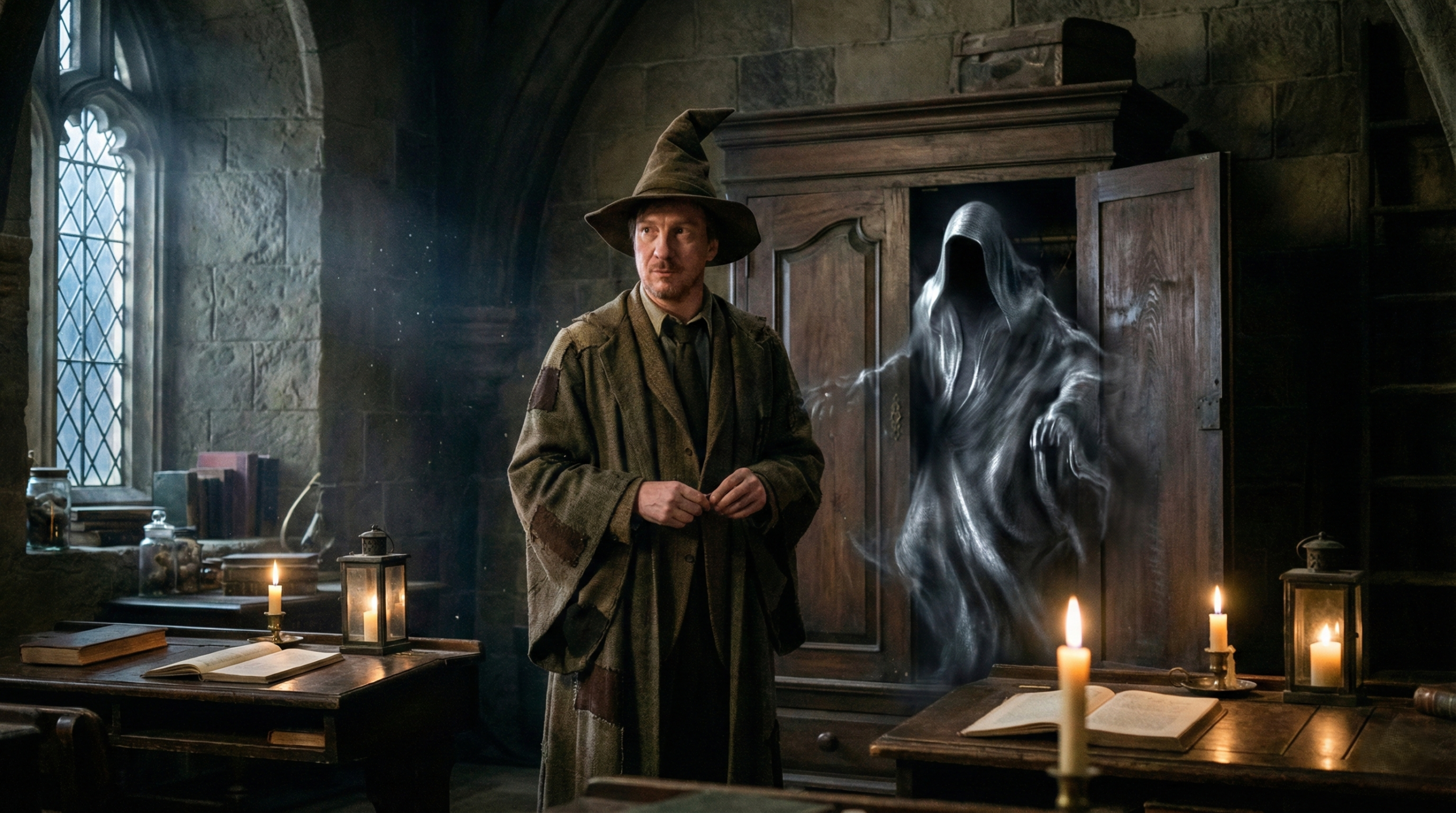 Students were laughing, cheering, and learning simultaneously. Even the normally cynical Draco Malfoy admitted (grudgingly) that the lessons were “not bad.” Harry, Ron, and Hermione repeatedly called him the best teacher they’d ever had.
Perhaps most telling: the Boggart lesson. Lupin didn’t just show students how to cast Riddikulus; he allowed them to confront their deepest fears in a safe, supportive environment. When Ron’s Boggart became a giant spider, Lupin stepped in gently. When Neville’s became Snape, Lupin made it ridiculous (Snape in his grandmother’s clothes). When Harry’s turned into a Dementor, Lupin immediately intervened — protecting his student without shaming him.
This balance of challenge and care is what set Lupin apart. He taught students how to defend themselves, but he also taught them they were worthy of protection and kindness.
The Patronus Charm: Lupin’s Most Iconic Gift to Harry
If there is one single moment that cements Remus Lupin’s place as the greatest Defence Against the Dark Arts teacher Harry ever had, it is the private Patronus lessons he gave Harry during his third year.
Dementors were a constant threat that year — not just on the Hogwarts Express, but patrolling the school grounds after Sirius Black’s escape from Azkaban. Harry, whose worst memories included the murder of his parents, was particularly vulnerable. The Dementor’s Kiss was a real danger, and no amount of group lessons could address Harry’s specific trauma.
Lupin recognized this immediately. Rather than leaving Harry to struggle (as most teachers might have), he offered private tutoring sessions in an empty classroom after dinner. These lessons were intimate, patient, and profoundly personal.
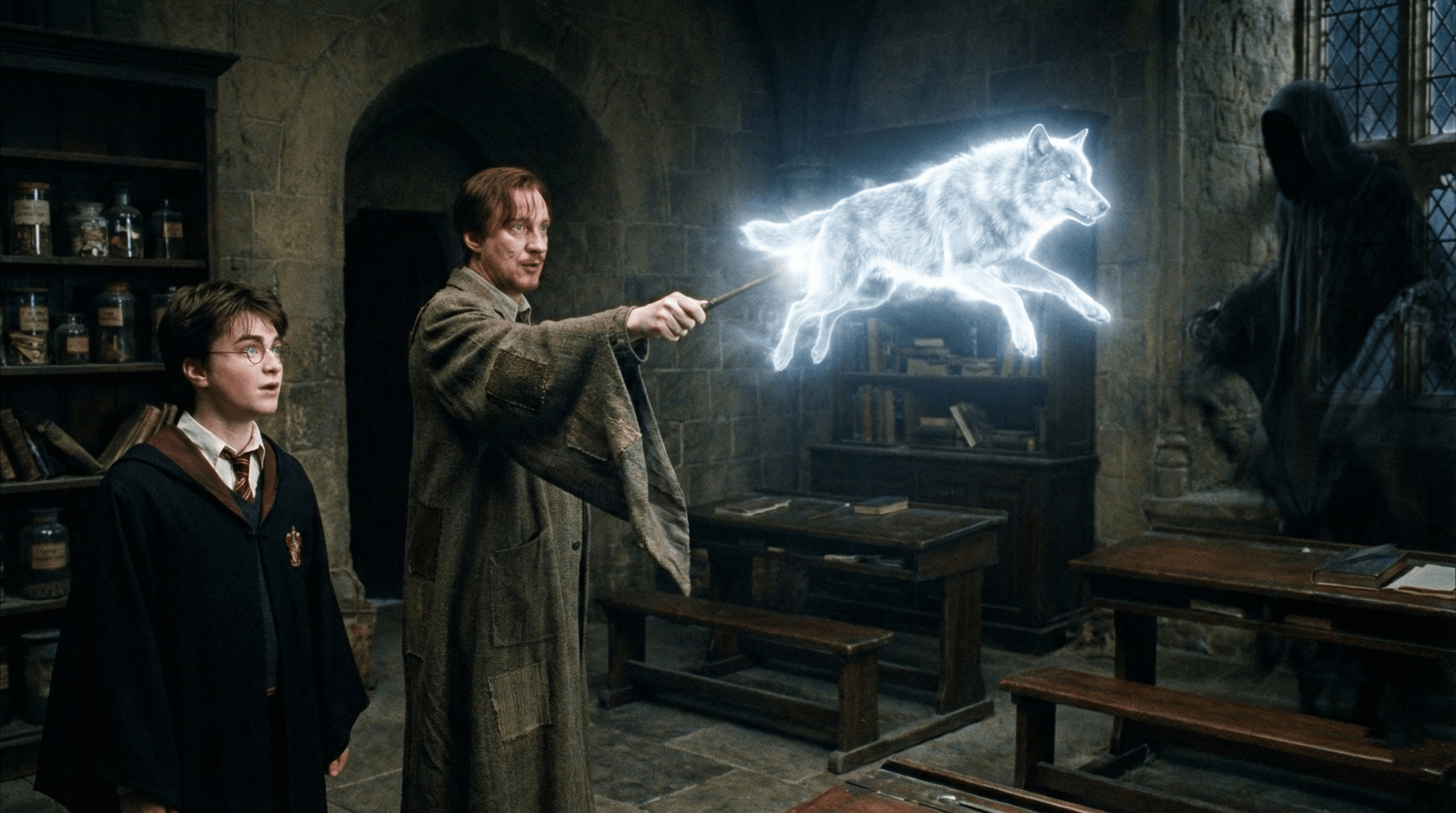 Lupin’s teaching method was masterful:
- He started with theory — explaining that a Patronus is a positive force born from a happy memory, capable of driving away Dementors.
- He used a Boggart (still in the form of a Dementor from the earlier lesson) as a safe proxy, allowing Harry to practice without real danger.
- He guided Harry through the incantation — “Expecto Patronum” — emphasizing the need for a single, powerful happy thought.
- When Harry failed repeatedly, Lupin never once showed frustration. Instead, he offered encouragement, chocolate, and gentle correction.
- After Harry finally produced a thin wisp of silver, Lupin praised him sincerely: “That was quite some Patronus.”
The breakthrough came when Harry recalled the moment he heard his father’s voice through the Time-Turner — James Potter shouting “Lily, take Harry and go! It’s him!” — a memory of love and sacrifice. From that, Harry conjured a full corporeal Patronus: a magnificent stag, the same form as his father’s.
This wasn’t just a spell. It was a bridge between father and son, mediated through Remus Lupin — the last surviving Marauder who had known James intimately. Lupin gave Harry not only a powerful defensive tool but also a tangible connection to the parents he never knew.
The skill proved life-saving multiple times: at the lake during the climax of Prisoner of Azkaban, in Dumbledore’s Army lessons, and during the Battle of Hogwarts. Harry’s Patronus became one of his signature strengths — and it all began with Professor Lupin’s quiet, dedicated mentorship.
Lupin as Harry’s Mentor and Father Figure
Beyond spells and creatures, Remus Lupin offered Harry something no other Defence professor ever could: genuine emotional support and a fatherly presence.
Harry arrived at Hogwarts an orphan raised by people who resented him. By third year, he was grappling with the fresh pain of Sirius Black (believed to be his parents’ betrayer) and the constant reminder of his own vulnerability to Dementors. Most adults in his life — Dumbledore, McGonagall, even Hagrid — were caring but distant, bound by their roles.
Lupin was different.
- He shared stories of James and Lily that no one else could: James’s talent on a broomstick, Lily’s kindness, the mischief of the Marauders.
- He understood Harry’s pain on a visceral level. As a werewolf, Lupin had spent his life feeling like an outsider, marked by something he couldn’t control. He never patronized Harry; he empathized.
- He modeled quiet strength. Despite poverty, prejudice, and loss, Lupin remained kind, principled, and brave.
- He treated Harry as an equal in many ways — calling him “Harry” rather than “Potter,” listening seriously to his concerns.
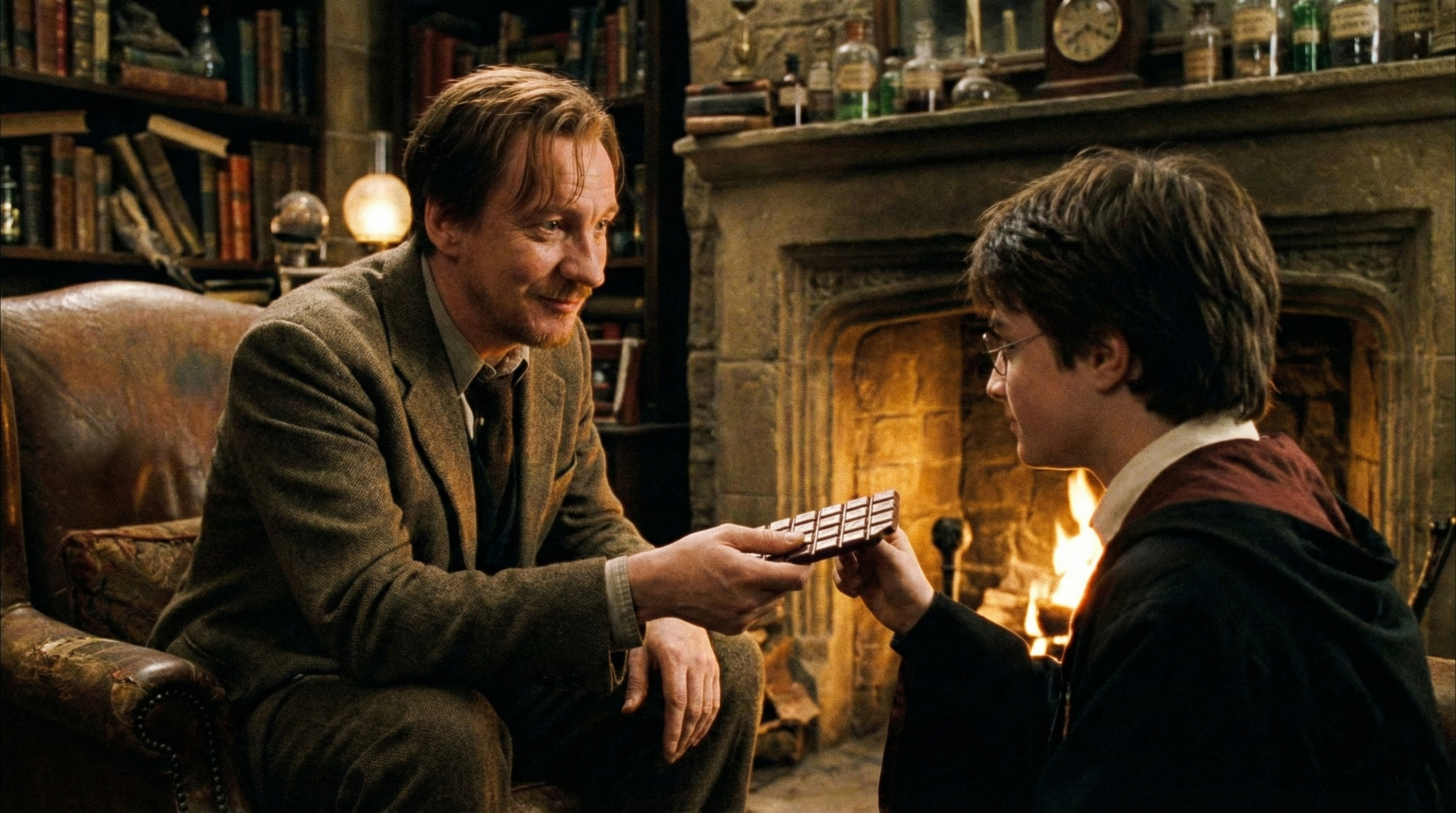 Fans often describe Lupin as the “father Harry deserved but never had.” While Sirius provided chaotic, passionate affection later, Lupin gave Harry steady, thoughtful guidance during a formative year. That emotional safety net mattered more than any spell he taught.
Comparing Lupin to Other DADA Professors: The Definitive Ranking
To truly appreciate why Professor Lupin Harry Potter remains unmatched, let’s examine the full lineup of Harry’s Defence teachers with an objective, canon-based ranking:
- Remus Lupin — Effective teaching, personal investment, kindness, mastery of advanced magic, genuine care for students. Only voluntary departure.
- Alastor “Mad-Eye” Moody (Barty Crouch Jr. in disguise) — Extremely knowledgeable and practical, but his methods were traumatic and his true identity made the entire year a deception.
- Severus Snape — Undeniably skilled and knowledgeable, but his teaching was poisoned by personal bias against Harry and Gryffindor. Students learned despite him, not because of him.
- Quirinus Quirrell — Dangerous and ineffective; possessed by Voldemort and failed to teach anything useful.
- Gilderoy Lockhart — Fraudulent, incompetent, and self-obsessed. Zero real teaching occurred.
- Dolores Umbridge — Actively harmful; refused to teach practical defence, punished students brutally, and represented institutional corruption.
- Amycus Carrow — Sadistic Death Eater who tortured students for sport.
The gap between Lupin and everyone else is vast. Only he combined competence, compassion, and real results.
The Tragic Reasons Lupin Couldn’t Stay — And Why That Makes Him Even Better
Lupin’s resignation came after Severus Snape outed him as a werewolf to the entire school. In a world already rife with prejudice, Lupin knew parents would never tolerate a werewolf teaching their children — even one who had proven himself exemplary.
Rather than fight to stay, he chose to leave. He wrote Harry a heartfelt letter explaining his decision, expressing regret, and thanking him for the year of dignity he’d been granted. That selflessness — putting students’ perceived safety above his own rare chance at happiness — is one of the most heroic acts in the entire series.
Even after leaving Hogwarts, Lupin continued the fight: rejoining the Order of the Phoenix, marrying Nymphadora Tonks, fathering Teddy Lupin, and ultimately dying in the Battle of Hogwarts to protect the next generation.
His story is tragic, yes — but that tragedy only deepens the admiration fans feel. He gave everything he had, asked for little, and left behind a legacy of kindness and courage.
 Lessons from Professor Lupin We Can Apply Today
Remus Lupin’s character transcends the pages of fantasy. His story offers timeless, practical lessons that resonate far beyond the wizarding world — especially in an era when many of us feel like outsiders, carry hidden burdens, or struggle with fear and prejudice.
Here are some of the most powerful takeaways from Professor Lupin that readers of all ages can carry into real life:
- Kindness is a form of courage Lupin was consistently gentle, even when the world had been cruel to him. He never let bitterness define him. In a time when cynicism is easy, choosing empathy — offering a chocolate bar, a listening ear, or quiet support — is an act of bravery.
- Face your fears with happy memories The Patronus Charm isn’t just magic; it’s a powerful metaphor. When life feels overwhelming, deliberately focusing on joy, love, or gratitude can push back against despair. Lupin taught Harry (and us) that the strongest defence isn’t aggression — it’s holding onto light.
- Your struggles do not define your worth Lupin’s lycanthropy made him an outcast, yet he remained one of the most honourable, skilled, and loving people in the series. His story reminds us that our challenges — mental health struggles, chronic illness, stigma, or past trauma — do not diminish our value or our capacity to do good.
- True mentorship means seeing the person, not just the student Lupin didn’t teach Harry to cast spells for grades or glory. He taught him because he cared about Harry as a grieving, frightened boy who needed guidance. In our own lives, the best teachers, coaches, managers, and friends are those who see us fully and invest in our growth as people.
- Self-sacrifice for the greater good can be heroic Lupin resigned from the job he loved to protect others from potential harm and prejudice. Sometimes the most heroic thing we can do isn’t staying and fighting — it’s stepping away so others can be safe.
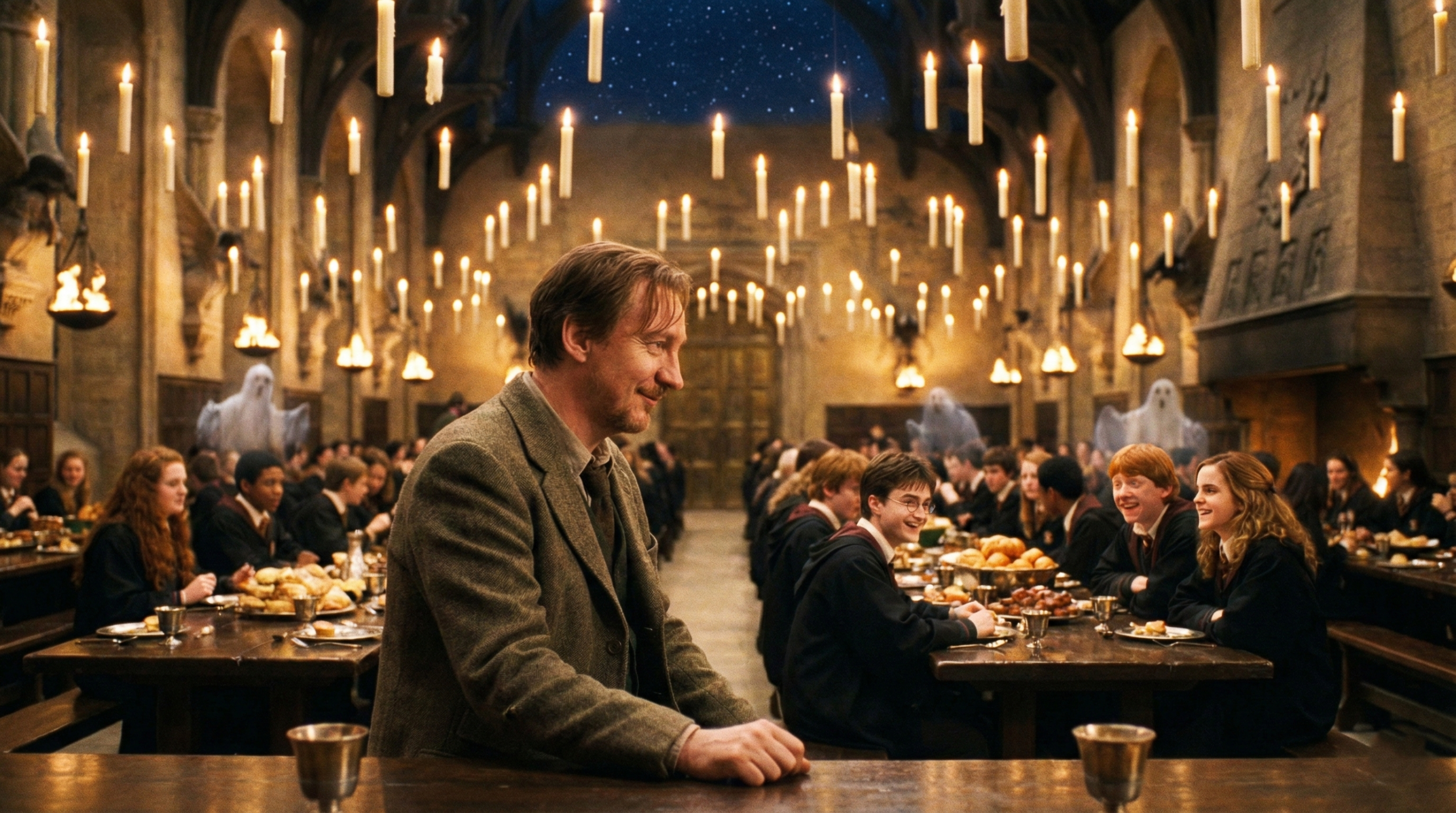 These principles are why Lupin continues to be a fan-favourite character decades later. He represents quiet resilience, compassion under pressure, and the belief that even broken people can help others heal.
Frequently Asked Questions (FAQs)
Why did Remus Lupin resign from Hogwarts? Lupin resigned after Severus Snape revealed his werewolf identity to the school. Knowing that many parents would object to a werewolf teaching their children — regardless of his excellent performance — he chose to step down to avoid causing trouble for Dumbledore and the students.
What was Remus Lupin’s Patronus? Lupin’s Patronus was a wolf — a poignant symbol of the very condition that isolated him. It reflected both his strength and the burden he carried.
Did J.K. Rowling ever confirm Lupin as the best DADA teacher? While Rowling has not explicitly ranked the professors in interviews, she has spoken warmly about Lupin as one of her favourite characters and has described him as an exceptionally good teacher who genuinely cared for his students.
Was Lupin the only DADA teacher who wasn’t forced out by the curse? Yes. Every other Defence professor during Harry’s years at Hogwarts was removed by death, exposure, expulsion, or other curse-related consequences. Lupin left voluntarily out of responsibility and self-sacrifice.
Why do so many fans consider Lupin the best Defence teacher? Fans point to his effective, engaging lessons, his mastery of advanced magic (especially the Patronus Charm), his kindness, his personal connection to Harry, and the fact that he treated students with respect and empathy — qualities sorely lacking in most of the other professors.
Professor Lupin Harry Potter remains the best Defence Against the Dark Arts teacher — not because he was the most powerful, the most flamboyant, or the longest-serving, but because he was the most complete.
He combined extraordinary skill with extraordinary kindness. He taught practical defence while healing emotional wounds. He gave Harry tools to survive Dementors, stories to understand his parents, and the example of a man who lived with dignity despite constant hardship.
In a cursed position filled with frauds, fanatics, and failures, Remus Lupin was the exception — the teacher who actually cared, who actually succeeded, and who left the world better than he found it.
So the next time you reread Prisoner of Azkaban, pay attention to that shabby professor with the tired eyes and the gentle voice. Watch how he stands between Harry and darkness — both literal and emotional. And remember: sometimes the greatest magic isn’t in the wand. It’s in the heart of the person holding it.
Thank you for reading. If you have a favourite Lupin moment — the chocolate on the train, the Patronus lessons, his farewell letter to Harry, or something else — share it in the comments below. Let’s keep the conversation going.