Imagine wandering the dimly lit seventh-floor corridor of Hogwarts Castle late at night, your heart pounding with urgency. You need a safe place to train, a hidden sanctuary from enemies, or perhaps nothing more than a bathroom in a moment of desperation. Suddenly, a door materializes in the stone wall where none existed before. You step inside, and the room has transformed itself perfectly to meet your exact need.
This is the magic of the Harry Potter Room of Requirement, also known as the Come and Go Room — one of the most fascinating and powerful locations in J.K. Rowling’s wizarding world. Whether you’re a die-hard Potterhead revisiting the lore or a new fan curious about Hogwarts’ hidden wonders, this comprehensive guide delves deep into its mechanics, history, key moments across the books and films, secrets, symbolism, and lasting legacy.
Far more than a simple plot device, the Room of Requirement embodies themes of adaptability, resourcefulness, and the idea that genuine need can summon extraordinary solutions. In this skyscraper guide, we’ll explore every layer of its enchantment, offering insights that go beyond surface-level summaries to help you fully appreciate its role in the story and its deeper meaning for readers.
What Is the Room of Requirement? Understanding the Come and Go Room
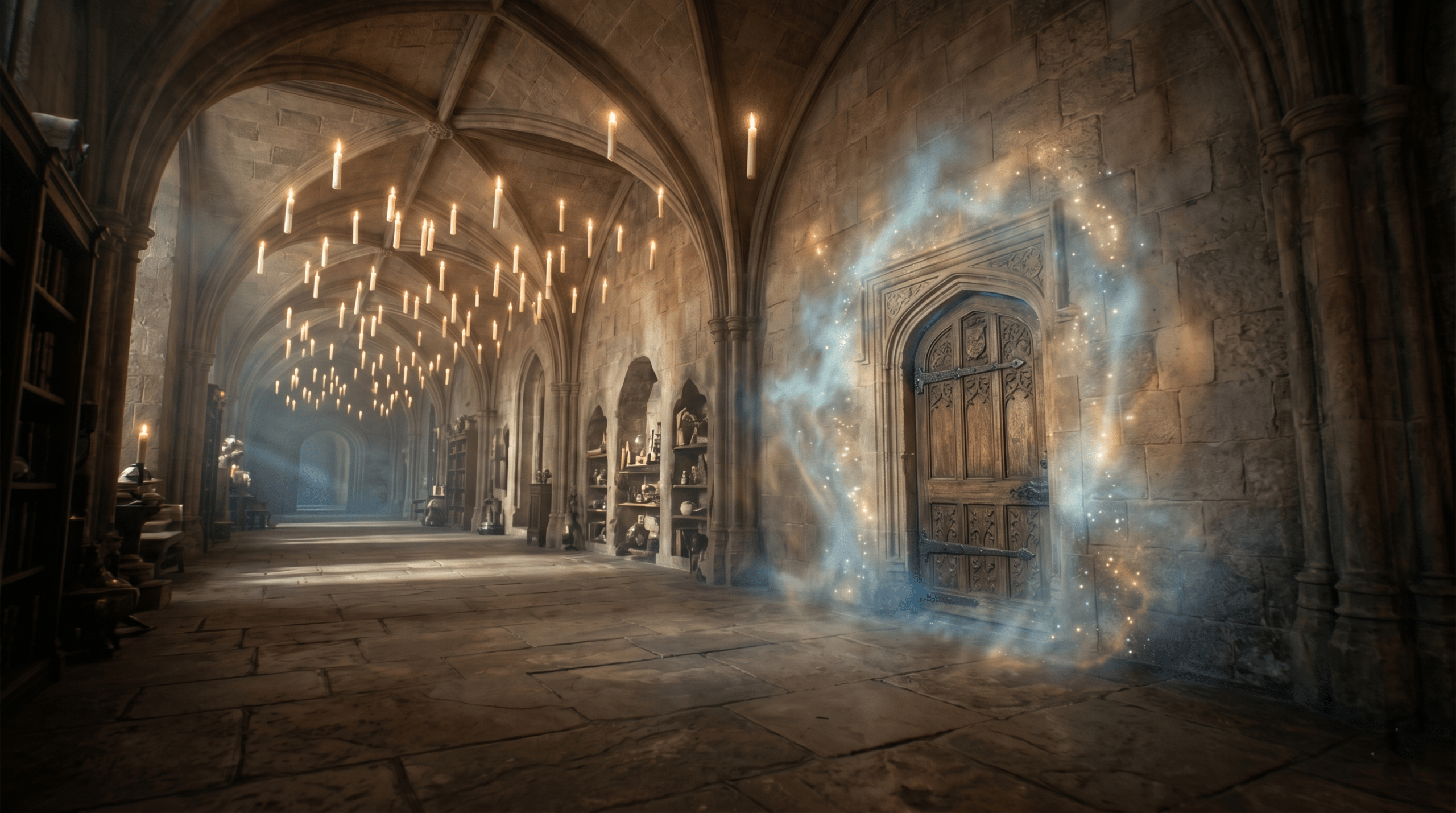
The Room of Requirement is a magical chamber located on the seventh floor of Hogwarts Castle, directly opposite the tapestry depicting Barnabas the Barmy attempting to teach ballet to trolls. It is famously known by several names: the Come and Go Room, the Room of Hidden Things, and simply the Room of Requirement.
Core Definition and Magical Properties
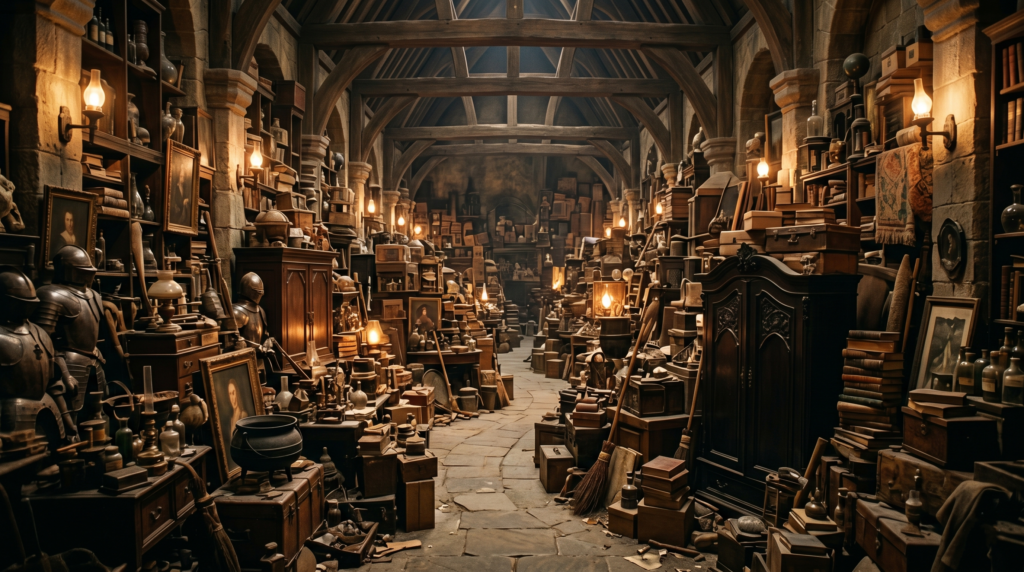
At its heart, the Room only appears when someone is in genuine need of it. It does not respond to casual curiosity or half-hearted wishes. Once accessed, it transforms itself to provide exactly what the seeker requires — whether that’s a training facility stocked with defensive magic books and practice dummies, a cozy hiding place, or even a storage vault for lost and forgotten objects.
Its abilities are impressive but not limitless. The Room cannot violate fundamental magical laws, such as Gamp’s Law of Elemental Transfiguration — most notably, it cannot create food from nothing. This limitation becomes crucial in Harry Potter and the Deathly Hallows, when students use an external tunnel for supplies rather than relying on the Room itself for sustenance.
Many fans and characters speculate that the Room possesses a degree of sentience. It seems to understand intent and adapts intelligently, sometimes even anticipating needs in clever ways. It is also Unplottable, meaning it does not appear on the Marauder’s Map, adding another layer to its mysterious nature.
 Location and How to Access It
Access is elegantly simple yet precise. A witch or wizard must walk past the blank stretch of wall three times while concentrating intently on what they need. The door then materializes. This ritual reinforces the theme that true magic in the Harry Potter series often requires focus, sincerity, and clear intention.
House-elves, like Dobby, appear particularly familiar with the Room, suggesting it may have been known and used by them long before students discovered its potential.
Sentience and Limitations
While the Room is extraordinarily accommodating, it has boundaries. It provides tools and environments but does not perform complex independent magic or create living beings (beyond perhaps temporary constructs for training). Its power seems tied to the castle’s own ancient magic, making it one of Hogwarts’ most sophisticated enchantments.
The History of the Room of Requirement – Origins and Early Discoveries
The exact origins of the Room of Requirement remain one of Hogwarts’ greatest unsolved mysteries. J.K. Rowling has never definitively revealed its creator, leading to rich speculation among fans.
Ancient Origins and Possible Creators
Many believe the Room dates back to the founding of Hogwarts in the 10th century, possibly crafted or enchanted by one (or more) of the four founders. Some theories point to Rowena Ravenclaw due to its emphasis on cleverness, intellect, and problem-solving — qualities she prized. Others suggest it emerged naturally from the castle’s own evolving magic, a living embodiment of the school’s protective spirit.
Its existence was subtly hinted at long before Harry’s time. In Harry Potter and the Goblet of Fire, Albus Dumbledore casually mentions stumbling upon a room filled with chamber pots while desperately needing a bathroom one night. When he tried to find it again, it had vanished — a classic example of the Room responding to urgent need and then disappearing once that need passed.
Early Canon Mentions and House-Elf Knowledge
Dobby the house-elf plays a pivotal role in introducing Harry (and readers) to its full potential in Order of the Phoenix. Dobby had previously used it to help his friend Winky recover from drinking too much Butterbeer, providing a bed and sobering potions. This reveals that house-elves have long utilized the Come and Go Room for their own discreet needs.
In the expanded universe, such as Fantastic Beasts, the Room served as a storage place for powerful artifacts like the Mirror of Erised at certain times, further demonstrating its long and versatile history within the castle.
Key Uses in the Harry Potter Books and Films
The Room of Requirement truly shines through its practical applications across the series, evolving from a curious oddity to a cornerstone of resistance and survival.
Order of the Phoenix – Headquarters of Dumbledore’s Army
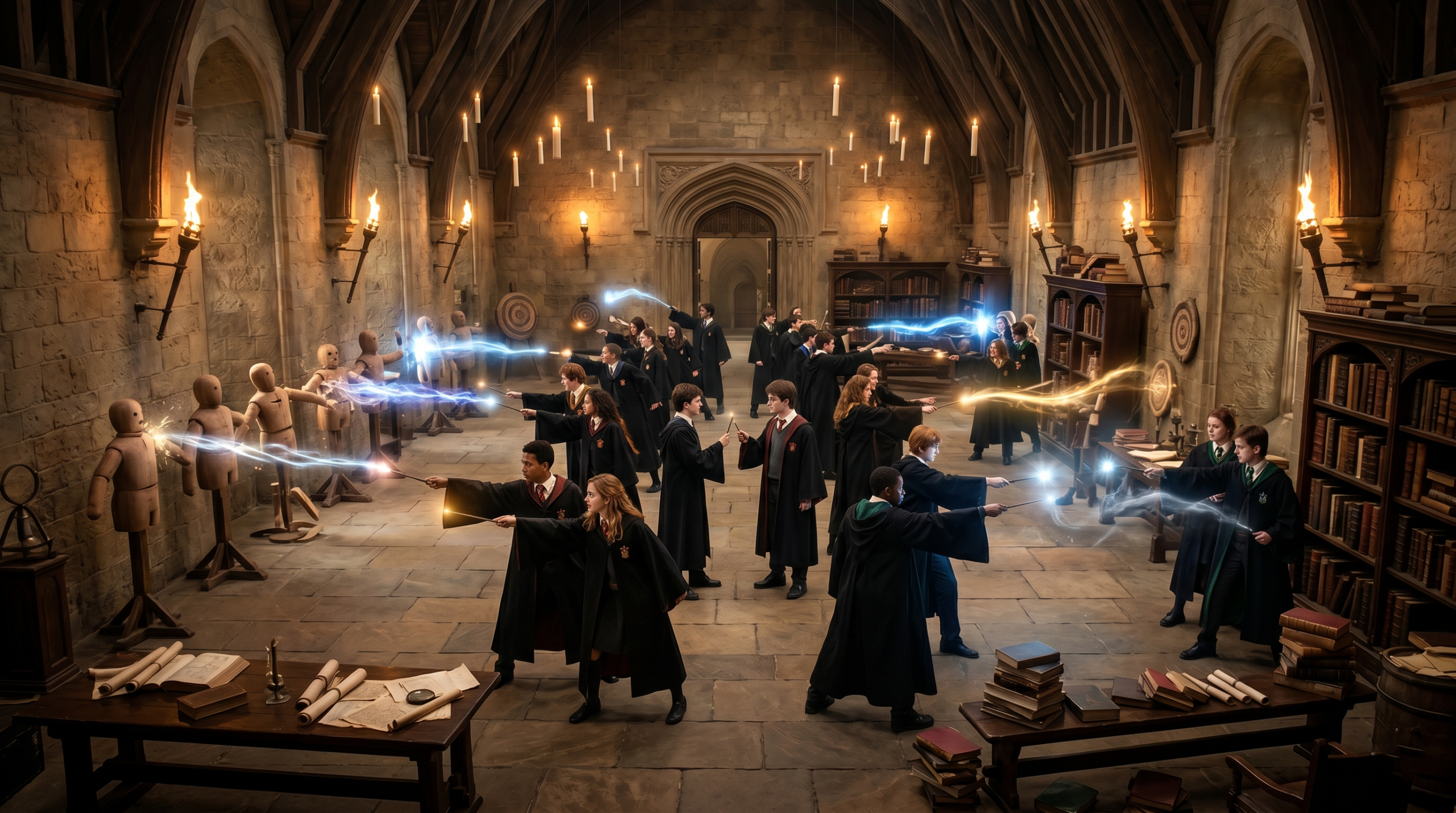
This is perhaps its most iconic use. Facing Dolores Umbridge’s oppressive regime and the banning of practical Defense Against the Dark Arts training, Harry needed a secure location for his secret student group. Dobby’s tip led him to the Room, which transformed into a spacious chamber complete with books, practice dummies, cushions, and everything the young witches and wizards required to master spells like Expelliarmus, Stupefy, and Patronus Charms.
The Room not only provided the physical space but also adapted weekly to their growing needs, symbolizing how collective purpose and genuine need can create safety and empowerment even under tyranny.
 Half-Blood Prince – Hiding Places and Turning Points
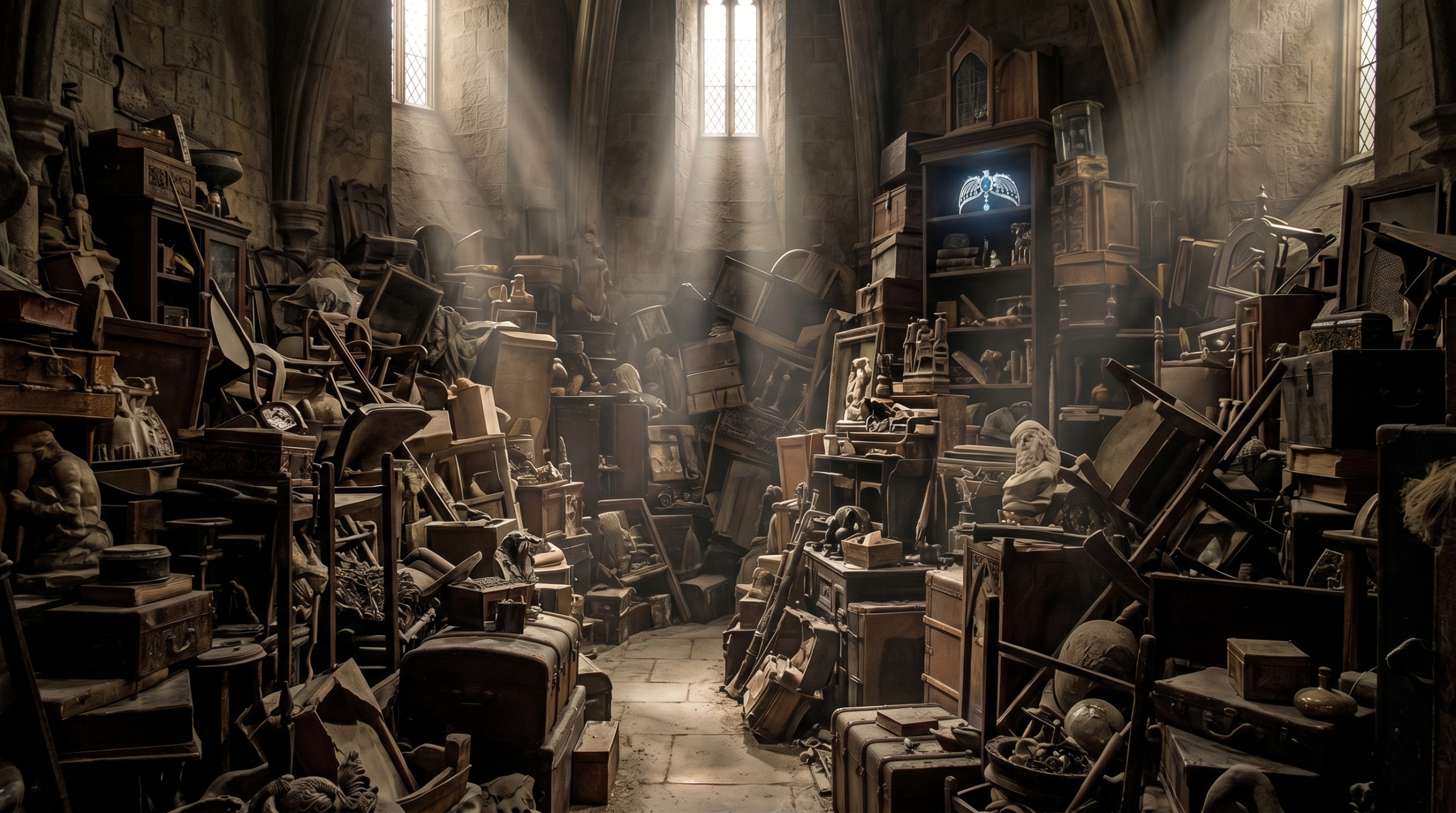
In Half-Blood Prince, Draco Malfoy repeatedly visits the Room to repair a Vanishing Cabinet, eventually creating a dangerous passageway for Death Eaters into Hogwarts. Simultaneously (and unknowingly), Harry hides his copy of the Half-Blood Prince’s Potions textbook in the Room of Hidden Things — a vast junkyard-like version filled with centuries of lost objects. It is here, atop a cupboard, that he glimpses Rowena Ravenclaw’s Diadem without realizing its significance.
Deathly Hallows – Sanctuary and Battle Preparations
During the dark days of Snape’s headmastership and the Carrows’ reign of terror, the Room becomes a vital sanctuary for the revived Dumbledore’s Army under Neville Longbottom’s leadership. It provides sleeping areas, supplies (via external connections), and even a randomizing entrance to evade detection. It serves as the staging ground for the Battle of Hogwarts, offering refuge and resources to students and Order members alike.
Other notable uses include Filch storing cleaning supplies, Professor Trelawney hiding sherry bottles, and even Voldemort himself concealing a Horcrux.
Book vs. Movie Differences – How the Room Was Portrayed on Screen
The Harry Potter Room of Requirement received different treatments in the books and the film adaptations, each emphasizing unique aspects of its magic while making necessary cinematic adjustments.
In the books, the Room feels deeply personal and responsive. Its transformations are described with rich detail — shifting walls, appearing and disappearing furniture, and an almost intuitive understanding of the user’s emotional state. J.K. Rowling paints it as a living space that grows and adapts organically with the characters’ needs.
The films, particularly Order of the Phoenix and Deathly Hallows Part 2, lean into spectacular visual effects. The Room appears grander and more cinematic, with dramatic lighting, sweeping camera movements, and intricate set designs that highlight its vastness. The DA training scenes are more action-oriented, showcasing spell effects and choreography that translate well to the big screen.
Key differences include:
- The Vanishing Cabinet: The book builds tension slowly over months as Draco works in secret. The film condenses this timeline but retains the high stakes.
- Discovery of the Diadem: In the book, Harry stumbles upon Ravenclaw’s lost diadem while hiding his potions book. The movie alters the sequence slightly for pacing, making the moment more visually striking during the battle.
- Scale and Atmosphere: Book readers often imagine a more intimate, ever-changing space. The films amplify its scale to create awe-inspiring shots, especially during the Battle of Hogwarts sequences.
While some fans argue the movies sacrifice subtle magical nuance for spectacle, the on-screen Room of Requirement successfully captured the wonder and utility of the Come and Go Room for millions of viewers worldwide. These adaptations helped cement its status as one of Hogwarts’ most memorable locations.
The Room’s Secrets and Hidden Connections
Beyond its practical uses, the Room of Requirement holds deeper secrets that enrich the Harry Potter lore.
The Ravenclaw Diadem Horcrux
One of its most critical roles involves Rowena Ravenclaw’s Diadem. Voldemort, seeking to hide a Horcrux in a place of great significance, chose the Room of Hidden Things. He arrogantly believed no one else could access or understand the Room as he did. Harry unknowingly places the Half-Blood Prince’s book near the diadem, setting up its eventual destruction by Crabbe’s Fiendfyre during the final battle. This moment beautifully illustrates the Room’s impartial nature — it serves both heroes and villains according to genuine need.
 Accumulated Lost Items and the Room of Hidden Things
When not specifically required for a purpose, the Room often defaults to a vast storage area overflowing with centuries of lost possessions, broken artifacts, and forgotten treasures. This version — sometimes called the Room of Hidden Things — raises fascinating questions about the Room’s memory and organizational intelligence. Does it catalog items? Does it “remember” every user? The sheer volume of junk suggests it has been serving Hogwarts inhabitants for nearly a thousand years.
Unplottable Nature and Advanced Magic
The Room’s resistance to the Marauder’s Map and standard detection spells points to extremely advanced, possibly founder-level enchantments. It shares magical DNA with other Hogwarts mysteries, such as the moving staircases, the protective wards around the castle, and the sentient paintings and statues. Some experts in wizarding lore speculate it functions as a semi-autonomous extension of the castle itself.
Symbolism and Themes – What the Room Teaches Us
The Harry Potter Room of Requirement is far more than a magical convenience. It serves as a powerful metaphor for adaptability, manifestation, and the strength found in genuine need.
Throughout the series, characters succeed when they approach the Room with clear, honest intent. Half-hearted attempts fail. This mirrors broader themes in Harry’s journey: help arrives when it is truly needed, often through friendship, courage, and resourcefulness rather than raw power.
In real life, many readers draw parallels to personal growth. The Room reminds us that solutions often appear when we focus intently on our challenges and remain open to unexpected forms of help. It celebrates resilience — when systems fail (like Umbridge’s regime), creative, community-driven alternatives can emerge.
The Come and Go Room also embodies the idea that environments should serve people, not the other way around. It adapts to human (and elven) needs, reinforcing J.K. Rowling’s recurring message about the importance of empathy, flexibility, and collective strength.
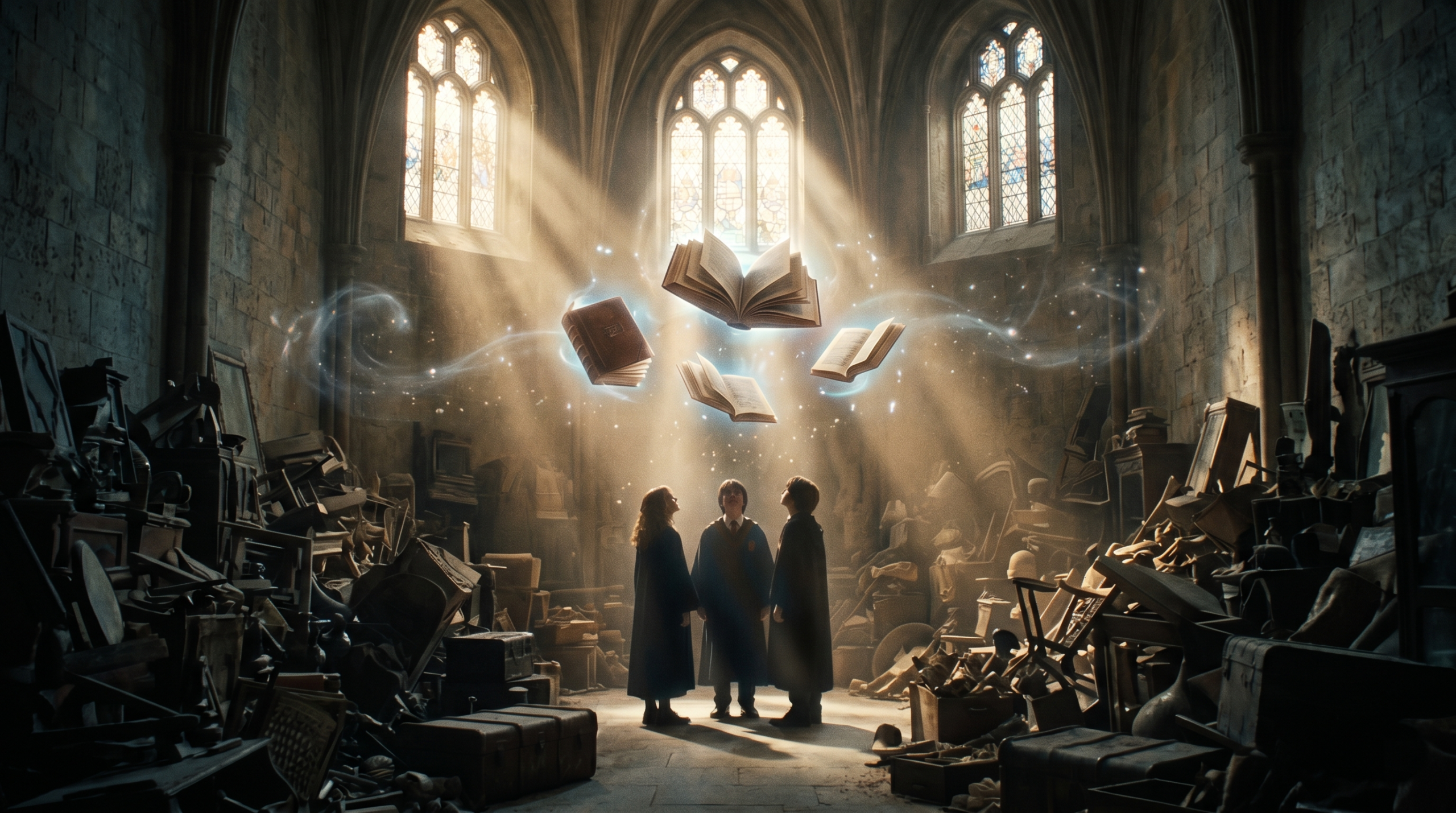 Fan Theories and Unsolved Mysteries
Despite extensive canon material, the Room of Requirement continues to spark debate among Potter enthusiasts:
- Who Created It? Leading theories credit Rowena Ravenclaw or a collaborative effort by all four founders. Some suggest the Room evolved naturally from the castle’s magic rather than being deliberately built.
- The Marauders’ Connection: Did James Potter, Sirius Black, Remus Lupin, or Peter Pettigrew ever discover it? Many believe they did, potentially using it during their school years for mischief or the creation of the Marauder’s Map.
- Limits of Power: Could the Room create a Horcrux? Duplicate living beings? Some theorists argue its sentience might allow limited consciousness, while others believe it is purely reactive.
- Existence Beyond Hogwarts: Could similar rooms exist at Beauxbatons, Durmstrang, or Ilvermorny?
These unsolved questions keep the magic alive and encourage deeper engagement with the wizarding world.
The Room of Requirement in Hogwarts Legacy and Expanded Universe
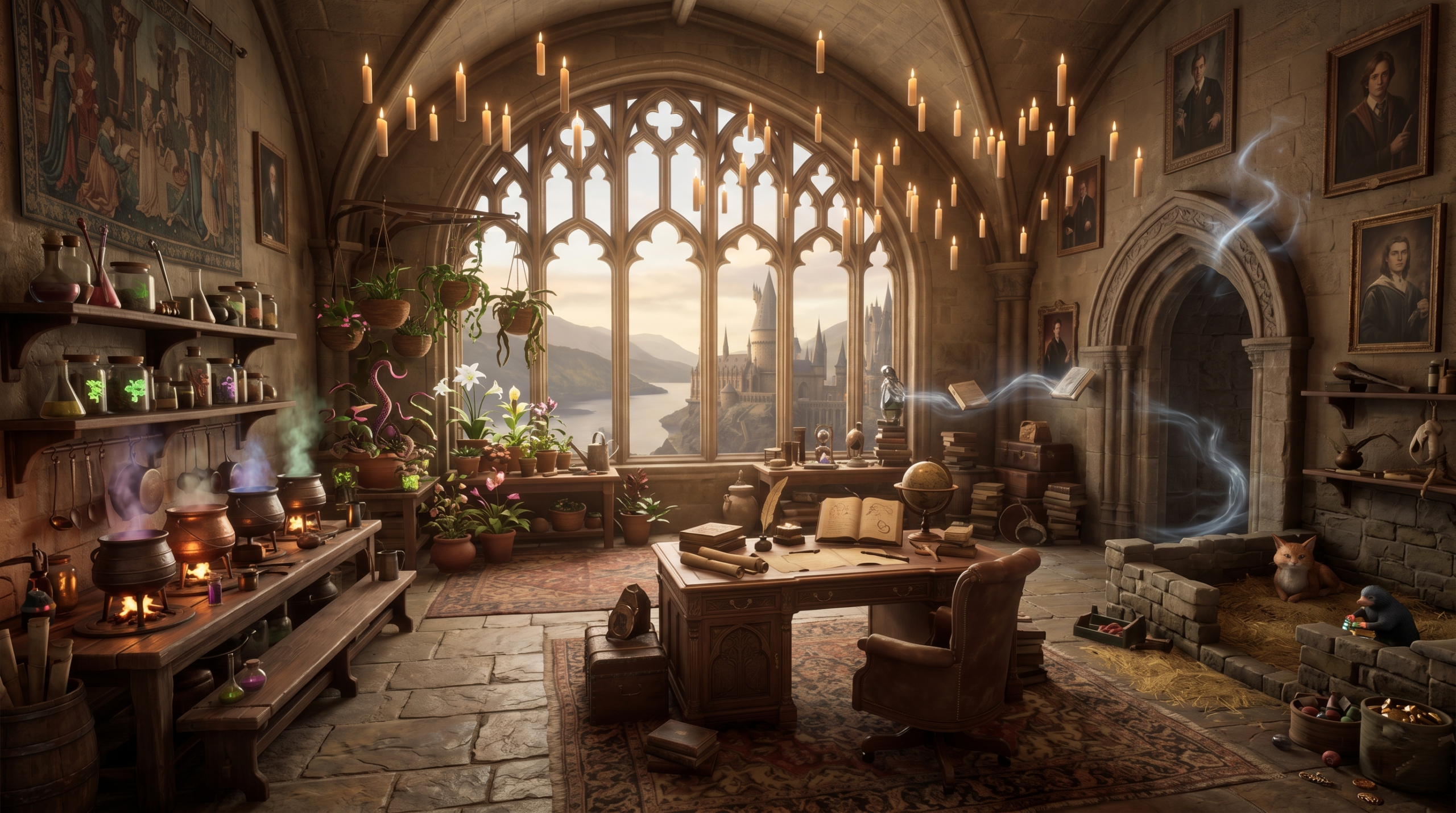
The video game Hogwarts Legacy (set in the 1890s) gives players their own version of the Room of Requirement. Here, it serves as a highly customizable personal space for potion-making stations, herbology tables, magical beast enclosures, and spell practice. This portrayal expands the lore by showing how the Room can be tailored over time to an individual’s evolving journey while remaining consistent with book canon. It offers fans a chance to experience firsthand the wonder of shaping their own magical sanctuary.
Expert Insights and Fun Facts
- J.K. Rowling revealed on Wizarding World that the Room once contained a “chamber pot” version for Dumbledore, highlighting its humorous side.
- House-elves appear to have privileged knowledge of the Room, possibly using it for centuries to navigate Hogwarts discreetly.
- The Room cannot produce food, reinforcing Gamp’s Law and forcing characters to find creative external solutions during the siege of Hogwarts.
- It has been used by everyone from students skipping class to professors hiding personal items, proving its democratic nature.
 Practical Tips for Fans – Visiting, Cosplay, and Bringing the Magic Home
Planning a trip to the Warner Bros. Studio Tour London? The Room of Requirement set is a highlight — look for intricate details in the DA training props and hidden object Easter eggs.
For home inspiration:
- Create a “Room of Requirement” journal: Write down genuine needs and brainstorm creative solutions.
- DIY projects: Design your own customizable study space that adapts to different activities (reading nook by day, gaming station by night).
- Cosplay idea: Dress as a DA member with House robes and “training” accessories.
FAQ – Harry Potter Room of Requirement
How do you find the Room of Requirement? Walk past the wall on the seventh floor three times while concentrating on what you need.
Can the Room create food? No. It respects Gamp’s Law of Elemental Transfiguration and cannot conjure food from nothing.
Did Voldemort know about the Room? Yes. He used it to hide Ravenclaw’s Diadem, underestimating others’ ability to access it.
Is the Room of Requirement sentient? It shows signs of limited sentience or advanced magical awareness, adapting intelligently to users’ needs.
What happened to the Room after the Battle of Hogwarts? It presumably survived and continues to serve the castle’s inhabitants, though its exact post-war state is not detailed in canon.
Can Muggles access the Room? Canon suggests it responds to magical users with genuine need, though its full capabilities with non-magical individuals remain unexplored.
The Harry Potter Room of Requirement stands as one of J.K. Rowling’s most brilliant creations — a magical space that perfectly captures the spirit of Hogwarts and the power of focused intention. From its humble chamber-pot origins to becoming the heart of resistance against dark forces, it has enchanted millions.
In our own lives, we can all benefit from channeling the Room’s lessons: approach challenges with clarity, lean on community, and trust that solutions often emerge when the need is real. The Come and Go Room reminds us that magic exists not just in wands and spells, but in adaptability, courage, and the willingness to ask for — and create — what we truly need.
What would you ask the Room of Requirement to become? Share your thoughts in the comments below. If you enjoyed this deep dive, explore our other guides on Dumbledore’s Army, Hogwarts’ hidden secrets, and the complete Horcrux timeline.