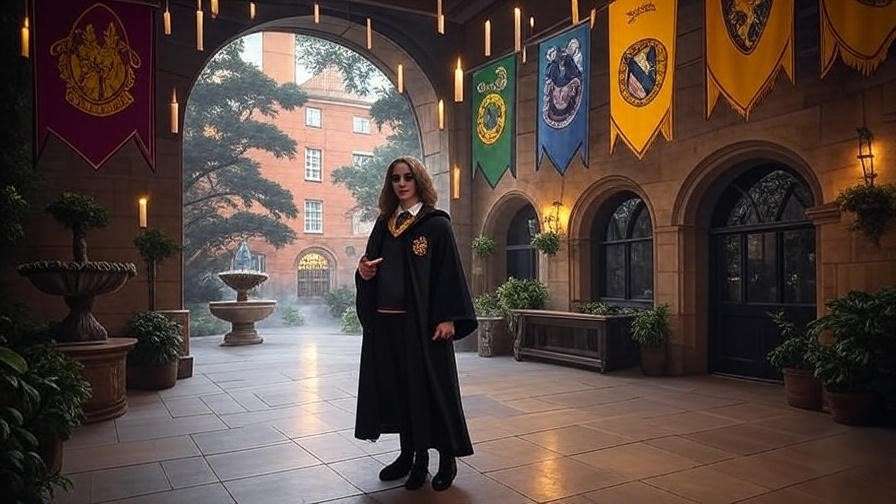
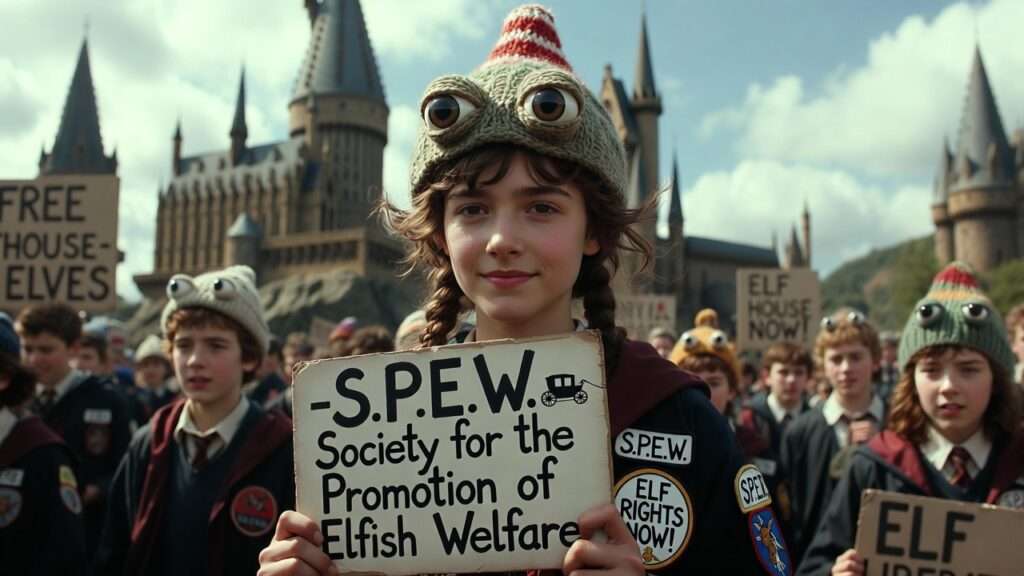
In the chaotic aftermath of the 1994 Quidditch World Cup, as Death Eaters terrorized the campsite and dark magic hung in the air, one moment stood out for its quiet horror: Barty Crouch Sr. berating and punishing his house-elf Winky for a crime she didn’t commit. Hermione Granger, witnessing the elf’s trembling fear and eventual dismissal, couldn’t stay silent. She declared it outright—”It’s slavery, that’s what it is”—and soon launched her one-woman (plus reluctant friends) crusade: the Society for the Promotion of Elfish Welfare, better known by Ron Weasley’s mocking nickname, spew Harry Potter fans still chuckle (or cringe) over today.
Pronounced letter-by-letter to avoid the unfortunate British slang for vomit, “spew” became shorthand for Hermione’s passionate but often ridiculed effort to secure rights, fair wages, and freedom for house-elves. What began as badges, knitted hats hidden in laundry, and fiery arguments in the Gryffindor common room has evolved into one of the most debated subplots in the entire Harry Potter series. Was Hermione a visionary activist ahead of her time, or an outsider imposing her values on a culture that didn’t want change? Did her campaign achieve anything meaningful, or was it doomed by good intentions and poor execution?
This article dives deep into the origins, motivations, strategies, criticisms, canon outcomes, and lasting legacy of S.P.E.W. Drawing from J.K. Rowling’s books, her post-series statements, and decades of fan analysis, we’ll explore why this seemingly minor storyline continues to provoke strong opinions among Potterheads. Whether you’re revisiting Goblet of Fire for the first time or debating house-elf ethics on forums, understanding “spew” reveals much about justice, cultural sensitivity, and the complexities of real-world activism mirrored in fantasy.
What Is S.P.E.W.? The Origins and Meaning Behind “Spew”
The full name—Society for the Promotion of Elfish Welfare—sounds noble enough. Hermione initially wanted something grander: “Stop the Outrageous Abuse of Our Fellow Magical Creatures and Campaign for a Change in Their Legal Status.” Wisely, she shortened it for the homemade badges and posters she distributed around Hogwarts.
The acronym S.P.E.W. quickly became “spew” thanks to Ron Weasley. In Harry Potter and the Goblet of Fire, he teases, “And you think we want to walk around wearing badges saying ‘spew’?” The pronunciation stuck, turning a serious advocacy group into a punchline among students. Ron even parodied it with his own mock organization, S.P.U.G. (Society for the Promotion of Underage Wizards Getting… something ridiculous). This humor underscored how most of the wizarding world viewed house-elf rights: trivial at best, embarrassing at worst.
S.P.E.W. officially launched in late 1994, sparked by two key events. First, the Quidditch World Cup exposed the casual cruelty many wizards inflicted on elves—Winky’s public humiliation and firing being the tipping point. Second, back at Hogwarts, Hermione discovered the kitchens were staffed by hundreds of unpaid house-elves who worked tirelessly without complaint or compensation. For a Muggle-born witch raised with modern notions of labor rights and equality, this was unacceptable.
Key canon quotes highlight the founding moment:
- Hermione: “They get a very raw deal! … It’s slavery, that’s what it is… Why doesn’t anyone do something about it?”
- Her goals, as stated later: Secure fair wages, working conditions, holidays, and long-term changes to elf legislation, including representation in the Ministry.
This wasn’t just teenage idealism; it reflected Hermione’s consistent character arc of fighting injustice, from standing up to bullies in year one to challenging Ministry corruption later.
 Hermione’s Motivations: A Passionate Stand Against Injustice
Hermione’s drive stemmed from empathy and outrage at systemic abuse. House-elves, bound by ancient magic and cultural norms, faced punishments like self-flagellation for perceived failures. Owners like the Malfoys treated them as disposable property, while even “kind” families like the Weasleys relied on their labor without pay.
As a Muggle-born, Hermione brought an outsider’s perspective. She applied real-world standards—fair pay, rest, autonomy—to a magical species conditioned for servitude. Her Muggle upbringing made her acutely aware of historical injustices like slavery, and she saw parallels in the wizarding world’s acceptance of elf subjugation.
Dobby’s story in Chamber of Secrets had already planted seeds: the elf who suffered torture under the Malfoys but cherished freedom after Harry tricked Lucius into giving him a sock. Hermione saw Dobby as proof that elves could thrive when liberated, not as an exception.
Her campaign goals were clear:
- Short-term: Wages, holidays, better conditions.
- Long-term: Legal reforms, wand-use rights, Ministry representation for elves.
This reflected her broader traits: logic-driven, research-heavy, and unwilling to accept “that’s just how it is.”
 The Campaign in Action: Strategies, Allies, and Setbacks
Hermione didn’t go solo. She appointed Harry as secretary and Ron as treasurer (over their protests), recruited a few like Neville Longbottom, and produced S.P.E.W. badges priced at two Sickles each. Posters appeared in the Gryffindor common room, though most were ignored or mocked.
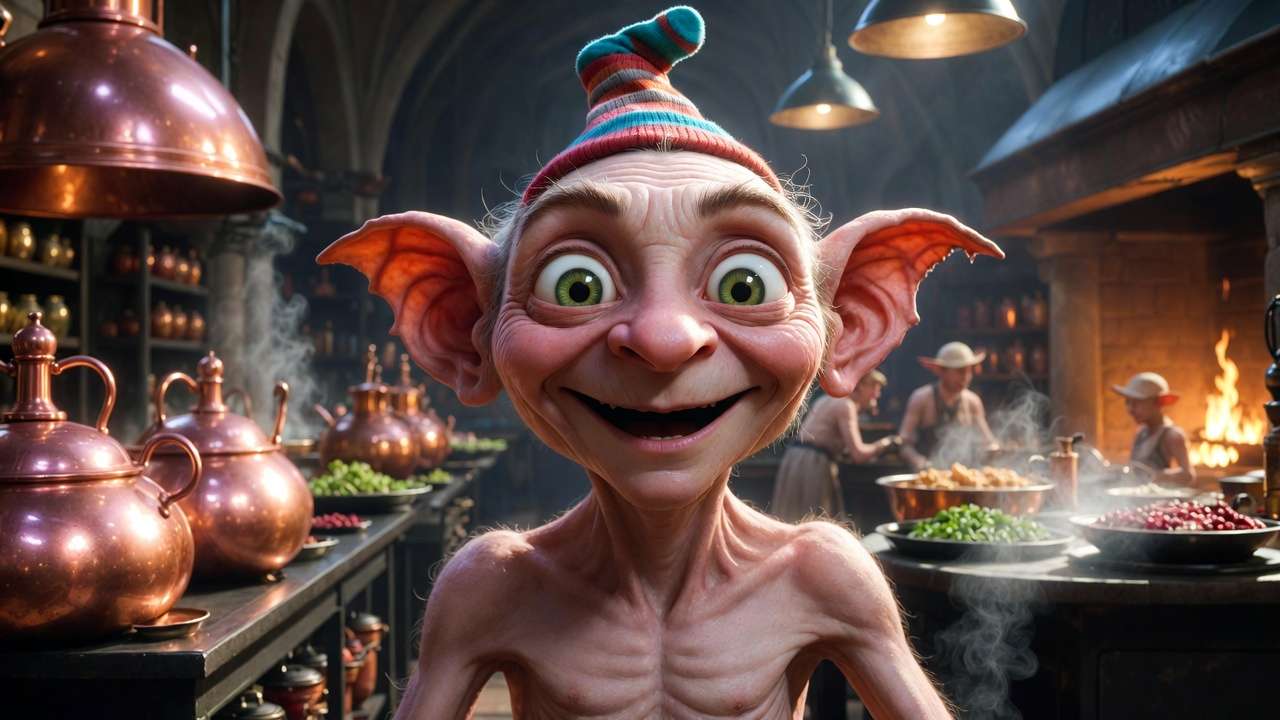
A pivotal scene unfolded in the Hogwarts kitchens. Hermione, Harry, and Ron met Dobby (now paid one Galleon a month and one day off per month) and the heartbroken Winky, who had descended into depression and Butterbeer addiction after her dismissal. The elves’ reactions varied: Dobby supported freedom, but most others were horrified at the idea of pay or holidays, viewing it as dishonor.
In Order of the Phoenix, Hermione escalated with her infamous knitting tactic. She hid hats and scarves in laundry baskets, hoping elves would pick them up and accidentally free themselves (as clothing = freedom). The plan backfired spectacularly. Offended by the implication they needed “tricking” into freedom, the elves boycotted cleaning Gryffindor Tower—except Dobby, who overworked himself to compensate.
Reception was brutal:
- Ron: “They like it. They like being enslaved!”
- Fred and George: Teased her relentlessly.
- Even Hagrid dismissed it as meddling.
Only a handful joined, and momentum faded amid the Triwizard Tournament and rising Voldemort threat.
 The Big Debate: Was Hermione Right or Wrong?
This section lies at the heart of why “spew Harry Potter” endures as a flashpoint.
Arguments Against Hermione’s Approach
Critics argue she imposed human values without understanding elf culture. Most house-elves expressed genuine pride in servitude; freedom caused distress (Winky’s alcoholism, the Hogwarts elves’ offense). By not consulting them first, Hermione came across as condescending—a classic “savior complex.” Fan discussions often label it cultural insensitivity, comparing it to outsiders dictating change without listening to the affected group.
Arguments in Hermione’s Favor
She spotlighted real abuse: unpaid labor, corporal punishment, lack of rights. Dobby thrived post-freedom, proving change was possible. The wizarding world’s normalization of elf treatment mirrored historical justifications for oppression (“they like it”). Hermione’s heart was in the right place; the problem wasn’t her goal but the method.
 Cultural Insensitivity and Real-World Parallels
Modern analyses frequently invoke the “white savior” trope: a privileged outsider “rescuing” a marginalized group that doesn’t seek rescue. House-elves’ conditioning raises questions of brainwashing vs. preference. Rowling herself noted in interviews that Hermione was “somewhat condescending” and failed to account for elves’ perspectives.
Balanced View
Hermione’s intentions were noble, but effective activism requires empathy, dialogue, and respect for agency. Her campaign highlighted injustice and planted seeds, even if immediate results were poor. It teaches that good causes can falter without inclusivity—a timeless lesson.
What Happened to S.P.E.W.? Canon Outcomes and Legacy
Despite the initial mockery, setbacks, and lack of widespread support, S.P.E.W. did not vanish entirely from the wizarding world. Its immediate impact during the main timeline of the series was modest at best—bordering on negligible—but the long-term legacy, as revealed by J.K. Rowling herself, tells a very different story.
Immediate Impact During the Series
Throughout Goblet of Fire and Order of the Phoenix, the campaign remained a fringe effort. Most Hogwarts students either ignored the badges or openly ridiculed them. The knitting hats incident alienated the very group Hermione sought to help, and the house-elves’ boycott of Gryffindor Tower cleaning duties only reinforced the perception that her methods were misguided. By the time the Battle of Hogwarts loomed, the pressing threat of Voldemort overshadowed any discussion of elf rights.
Yet subtle shifts began to appear. Dobby’s unwavering loyalty and pride in his paid (albeit meager) employment stood as a quiet counterpoint to the majority view. More significantly, the character arc of Kreacher—the Black family house-elf—showed that attitudes toward servitude could evolve when elves were treated with basic respect rather than cruelty or condescension. By Deathly Hallows, Kreacher’s transformation from bitter servant to loyal ally (even leading other elves into battle) hinted at the possibility of change without forced liberation.
 Post-Hogwarts Success and J.K. Rowling’s Revelations
The true outcome of Hermione’s campaign emerges in the years after the war. In multiple interviews and statements following the publication of Harry Potter and the Deathly Hallows, J.K. Rowling confirmed that Hermione did not abandon her cause. After the defeat of Voldemort, she joined the Ministry of Magic and eventually rose to a senior position in the Department for the Regulation and Control of Magical Creatures.
Rowling has stated explicitly that Hermione “succeeded” in improving conditions for house-elves “to a large extent.” In a 2007 Bloomsbury online chat, she noted that Hermione’s work led to significant legislative changes, better treatment, and greater rights—though she stopped short of claiming total abolition of the house-elf system. In a later Pottermore entry (now archived on Wizarding World), Rowling elaborated that Hermione’s persistence and influence at the Ministry gradually shifted wizarding society’s attitudes, making overt abuse less acceptable and introducing protections that had previously been absent.
This post-canon success reframes the entire subplot. What appeared during the books as a failed teenage crusade was, in reality, the opening salvo in a decades-long reform effort. Hermione’s early activism—however clumsy—laid the groundwork for systemic progress.
The Role of House-Elves in the Wider War
The Battle of Hogwarts itself provided indirect validation of Hermione’s cause. When Kreacher rallied the Hogwarts elves to fight for Harry Potter rather than for their masters’ ideology, it demonstrated that elves were capable of choosing sides based on loyalty and morality—not just blind obedience. This moment subtly undermined the argument that house-elves are inherently content with enslavement.
In short, while S.P.E.W. achieved little in its original form, it planted seeds that grew into meaningful change once Hermione had the institutional power to effect it.
Why the “Spew” Debate Still Matters Today
More than twenty-five years after Harry Potter and the Goblet of Fire was published, the “spew” controversy remains one of the most discussed ethical subplots in the fandom. Online forums, Reddit threads, TikTok analyses, and academic papers continue to dissect Hermione’s campaign through modern lenses.
Several factors keep the debate alive:
- Social Justice Parallels — Readers today recognize clear allegories to real-world issues of labor exploitation, systemic inequality, and the ethics of activism. Questions about cultural relativism (“should we respect traditions that include servitude?”) and performative allyship (“is awareness without consultation helpful or harmful?”) resonate strongly in contemporary discussions.
- The “Savior Complex” Critique — The rise of discourse around privilege, intersectionality, and listening to marginalized voices has led many fans to view Hermione’s early efforts as well-intentioned but flawed. This critique is not meant to vilify her character but to highlight that even the most brilliant and compassionate people can misstep when acting as outsiders.
- Potential HBO Max Reimagining — With the upcoming Harry Potter television series on Max (formerly HBO Max), fans speculate whether S.P.E.W. will be restored to the narrative (it was entirely cut from the Goblet of Fire film). If included, the subplot could be updated to address some of the criticisms—perhaps by giving house-elves more direct voice or showing Hermione learning from her mistakes earlier.
Ultimately, the “spew” debate endures because it forces readers to confront uncomfortable questions: When is intervention justified? How do we balance moral outrage with cultural respect? And can one person’s persistence truly change an entrenched system?
Frequently Asked Questions
What does S.P.E.W. stand for in Harry Potter?
S.P.E.W. stands for the Society for the Promotion of Elfish Welfare, Hermione Granger’s organization dedicated to improving the rights and treatment of house-elves.
Why did Ron call it “spew”?
Ron Weasley deliberately pronounced the acronym as “spew” because it sounded like the British slang term for vomit, turning Hermione’s serious cause into a running joke among their peers.
Did Hermione succeed with house-elf rights?
In the immediate timeline of the books, no—her campaign met with resistance and limited results. However, J.K. Rowling confirmed that Hermione later succeeded in achieving substantial improvements for house-elves through her work at the Ministry of Magic after the war.
Was S.P.E.W. in the Harry Potter movies?
No. The entire S.P.E.W. subplot was cut from the film adaptation of Harry Potter and the Goblet of Fire (and never referenced in later films), likely to streamline the plot and focus on the Triwizard Tournament and Voldemort’s return.
What did J.K. Rowling say about Hermione and house-elves?
Rowling has stated that Hermione was “somewhat condescending” in her initial approach but ultimately succeeded “to a large extent” in improving house-elf welfare through her later career at the Ministry.
Hermione Granger’s S.P.E.W. campaign—forever immortalized by Ron’s exasperated “spew”—began as an impulsive, imperfect response to undeniable injustice. It stumbled through mockery, missteps, and misunderstanding, yet it refused to die. Behind the badges and hidden hats lay a deeper truth: systemic change rarely arrives quickly or cleanly. It requires persistence, learning from failure, and eventually wielding power responsibly.
Hermione’s story reminds us that being right about an injustice is only the first step. Effective advocacy demands listening, empathy, and respect for the agency of those we seek to help. In the end, “spew” may have been laughed at in Hogwarts corridors, but its ideals quietly reshaped the wizarding world long after the war ended.
Whether you see Hermione as a flawed hero, an overzealous teenager, or both, one thing is undeniable: she refused to look away. And in doing so, she proved that even the smallest, most ridiculed voice can help bend the arc of history toward justice.
What do you think—did Hermione get it wrong, or was she simply ahead of her time? Share your thoughts in the comments below, and be sure to explore more deep dives into Harry Potter lore right here on the blog.