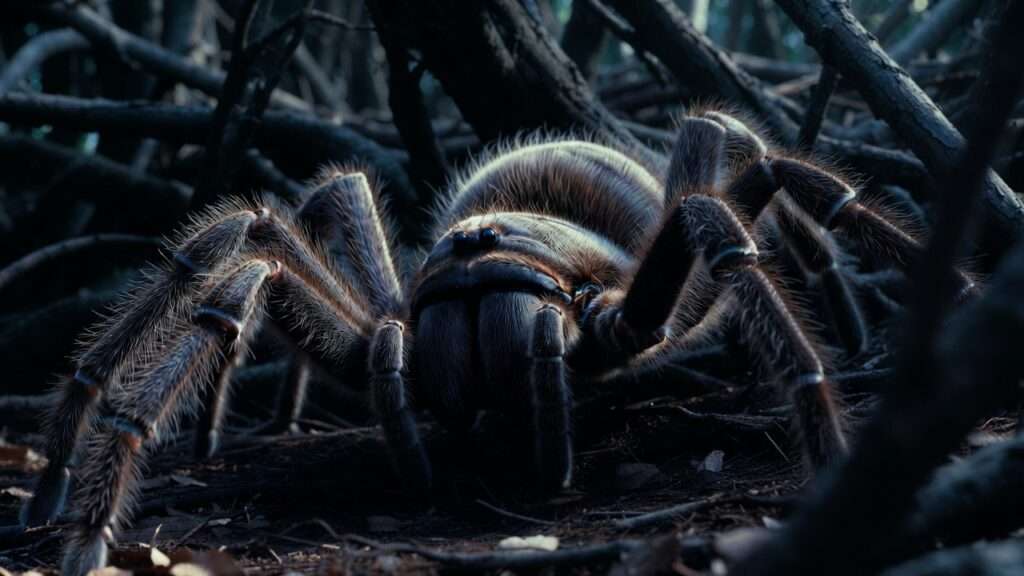
Imagine this: It’s a moonless night in the Forbidden Forest. Two terrified teenage boys, one with a paralyzing fear of spiders, follow a trail of eight-legged creatures deeper into the darkness. Their carthorse-sized companion pants nervously beside them. Suddenly, the trees part to reveal a vast hollow draped in sticky webs, and from the shadows emerges a creature so massive it blocks out the starlight—an enormous, black, hairy spider with eight milky eyes, clicking pincers, and a voice like grinding stones. “I never saw any part of the castle but the box in which Hagrid kept me,” it says calmly. “I was not born in the castle. I come from a distant land.”
This is the unforgettable first encounter with the spider from Harry Potter that haunts many fans’ nightmares: Aragog, the giant Acromantula raised by Rubeus Hagrid. For Potterheads, Aragog isn’t just a monster—he’s a symbol of loyalty, misunderstanding, and the blurred line between beast and friend in the Wizarding World. Whether you’re revisiting Harry Potter and the Chamber of Secrets for the hundredth time, dealing with your own arachnophobia triggered by that infamous “follow the spiders” scene, or simply curious about one of J.K. Rowling’s most chilling creations, this comprehensive guide uncovers everything you need to know about Aragog. We’ll explore his origins, his unbreakable bond with Hagrid, his role in major plot twists, key differences between books and films, and why he remains one of the series’ most complex and memorable creatures.
Who Is Aragog? The Basics of the Giant Spider from Harry Potter
Aragog stands as one of the most distinctive magical creatures in the entire Harry Potter saga. As an Acromantula, he belongs to a rare and dangerous species classified as XXXXX (known wizard killer) by the Ministry of Magic’s classification system. Unlike ordinary spiders, Acromantulas are fully sentient, capable of human speech, and highly social, living in large colonies where they share prey and protect their young.
Aragog’s Species – Understanding Acromantulas
Acromantulas are native to the dense rainforests of Southeast Asia, particularly Borneo, where they weave massive, dome-shaped webs in thick jungle undergrowth. Believed to have been bred by wizards long ago as guards for treasure or homes, they explain the 1965 Ban on Experimental Breeding—their aggression, potent venom (useful in potions), and preference for human flesh make them impossible to domesticate fully.
What sets Aragog apart is his early exposure to humans. While typical Acromantulas fear and avoid wizards (except as food), Aragog’s upbringing by Hagrid instilled a unique loyalty. He never harms Hagrid or, by extension, those Hagrid deems friends—though his children follow their natural instincts more strictly.
Physical Description and Size Evolution
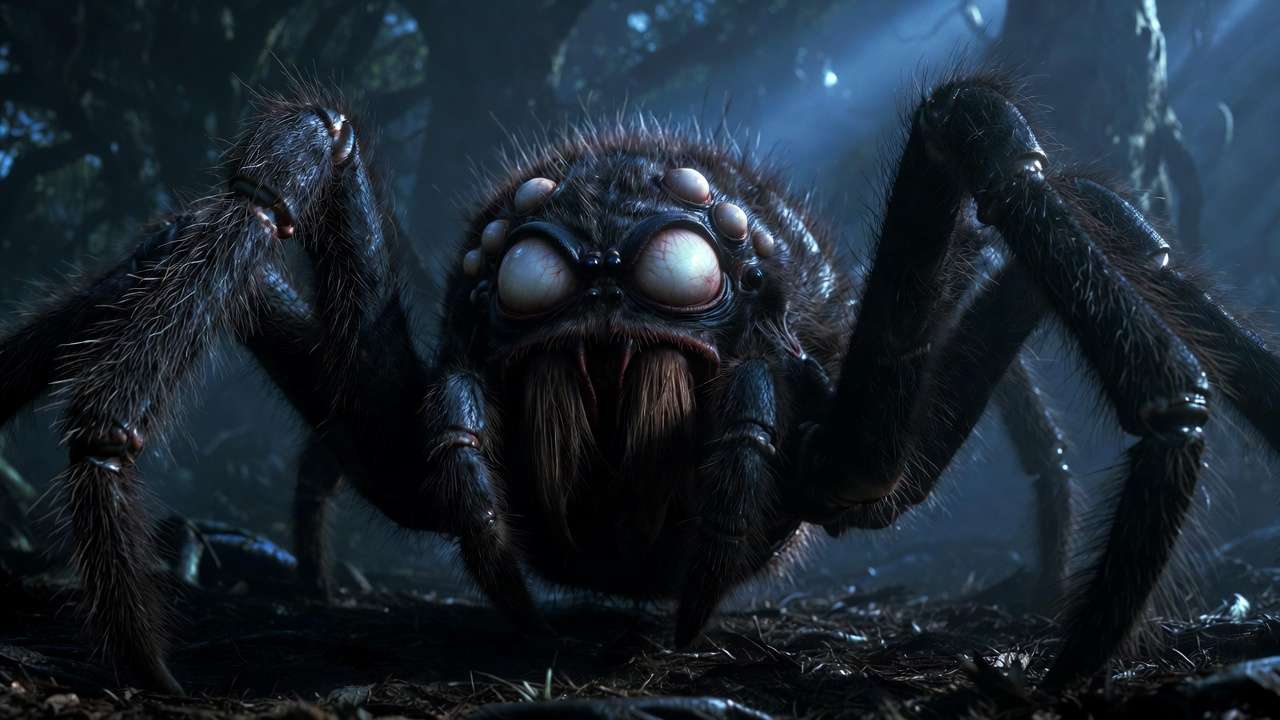
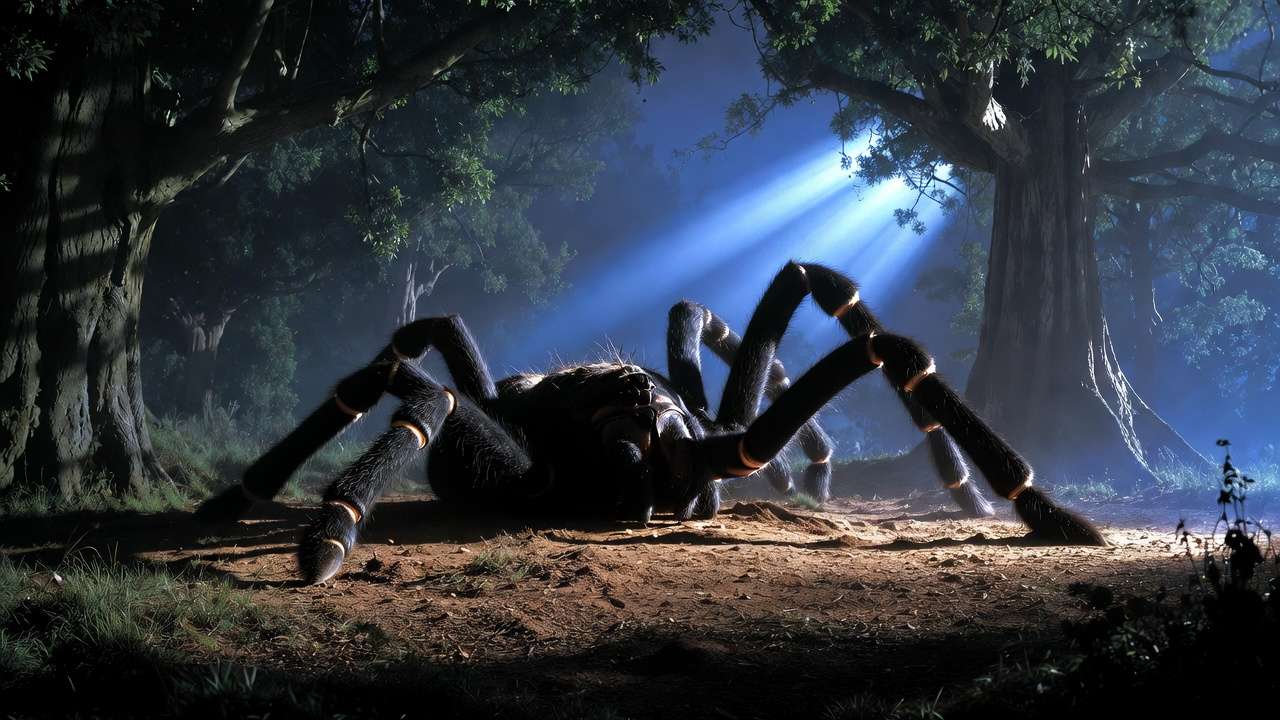
In Harry Potter and the Chamber of Secrets, Harry describes Aragog as “the size of a small elephant,” with thick black hair covering his body, eight enormous milky-white eyes (blind due to cataracts in old age), and legs spanning up to fifteen feet or more. As a hatchling given to Hagrid around 1942, he started no larger than a Pekinese dog or small crab. By his encounter with Harry and Ron in 1993, he’d grown to terrifying proportions—roughly the size of a carthorse or larger.
His blindness develops later in life, forcing him to rely on sound, vibration, and his children’s reports. This adds pathos: the once-formidable guardian becomes frail, yet still commands absolute authority over his vast colony.
 Personality and Voice
Aragog speaks in a calm, dignified, almost aristocratic tone—clicking and grinding, yet measured. Key quotes reveal his character:
- “I was not born in the castle. I come from a distant land. A traveller gave me to Hagrid when I was an egg.”
- “Kill them… I cannot deny them fresh meat when it wanders so willingly into our midst. Goodbye, friend of Hagrid.”
He remains fiercely protective of his family while honoring his debt to Hagrid. This duality—monstrous instincts tempered by gratitude—makes him far more nuanced than a simple villain.
Aragog’s Origins – Where Did the Spider from Harry Potter Come From?
Aragog’s story begins decades before Harry Potter ever set foot at Hogwarts. His existence ties directly into one of the series’ most pivotal mysteries: the original opening of the Chamber of Secrets in 1943.
Arrival at Hogwarts – The Egg and the Traveler
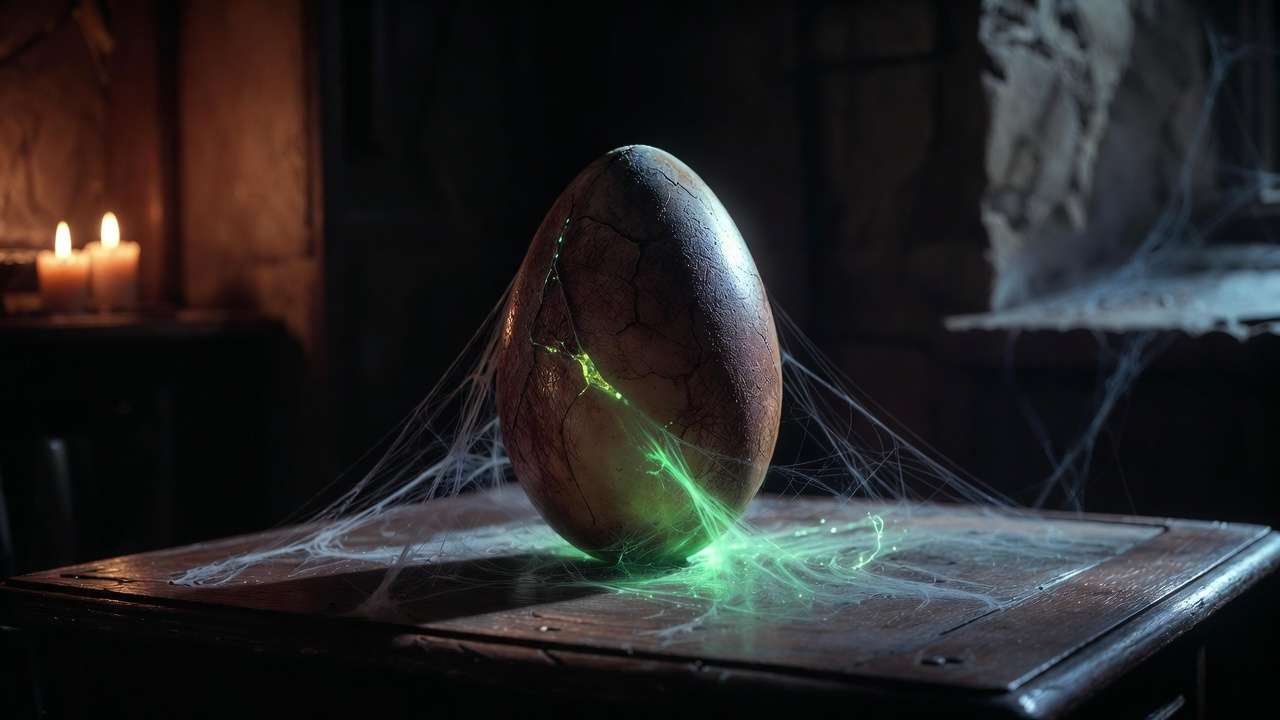
According to Aragog himself in Harry Potter and the Chamber of Secrets, he arrived at Hogwarts as an egg. A mysterious traveler from a distant land (likely Southeast Asia, given the Acromantula’s native habitat in the rainforests of Borneo) gifted the egg to a young Rubeus Hagrid around 1942–1943. Hagrid, already showing his lifelong passion for misunderstood magical creatures, hatched and raised Aragog secretly.
This raises fascinating questions among Potter scholars: Who was this traveler? Some fans speculate connections to early magical beast researchers or even figures from the Fantastic Beasts era, though no canon confirms this. What is certain is that Hagrid’s care transformed an inherently dangerous creature into one capable of deep loyalty.
 Life in the Castle Cupboard
Hagrid kept Aragog hidden in a cupboard in his dorm, feeding him table scraps from the Great Hall. As the spider grew—from Pekinese-sized to much larger—hiding became impossible. Rumors spread about strange noises and missing pets. When the Chamber of Secrets was opened by Tom Riddle in 1943, resulting in the death of Myrtle Warren, suspicion fell on Hagrid and his “monster.” Aragog was blamed as Slytherin’s creature, though he repeatedly insists he was never born in the castle and never attacked anyone.
Hagrid’s expulsion followed, but he smuggled Aragog to safety in the Forbidden Forest, where the Acromantula thrived and eventually founded a massive colony with his mate, Mosag.
This origin story highlights a key Harry Potter theme: prejudice against creatures based on appearance and rumor. Aragog’s innocence in the 1943 attacks mirrors Hagrid’s wrongful blame, underscoring how fear and misunderstanding drive wizarding society’s judgments.
The Chamber of Secrets Scandal – Aragog Accused
The 1943 events remain one of the saga’s darkest chapters, and Aragog plays a central (though innocent) role.
Framed by Tom Riddle
Tom Riddle, seeking to purge Muggle-borns and frame someone else, opened the Chamber and unleashed the Basilisk. When suspicions turned to Hagrid’s illegal pet, Riddle reported Aragog to Headmaster Armando Dippet. Hagrid was expelled, his wand snapped, and Aragog fled to the forest. Aragog later tells Harry and Ron: “They believed that I was the monster that dwells in what they call the Chamber of Secrets. They thought that Hagrid had opened the Chamber and set me free.”
This false accusation cost Hagrid his education and nearly his life, but it also cemented his bond with Aragog.
Clearing Hagrid’s Name
In May 1993, Harry and Ron, following Hagrid’s cryptic advice to “follow the spiders,” entered the Forbidden Forest and met Aragog. The giant spider clarified the truth: he was never the Chamber monster, and the real creature was one spiders fear above all others (the Basilisk, whose deadly gaze spiders instinctively avoid mentioning by name).
Aragog’s revelation provided crucial evidence that Hagrid was innocent both times the Chamber was opened. Harry later uses this to exonerate Hagrid fully when the truth about the Basilisk emerges.
This encounter not only solves a 50-year mystery but also showcases Aragog’s integrity—he honors his debt to Hagrid by speaking truthfully, even as his colony hungers for “fresh meat.”
Life in the Forbidden Forest – Aragog’s Colony and Family
Once released, Aragog didn’t remain alone for long.
Building the Acromantula Colony
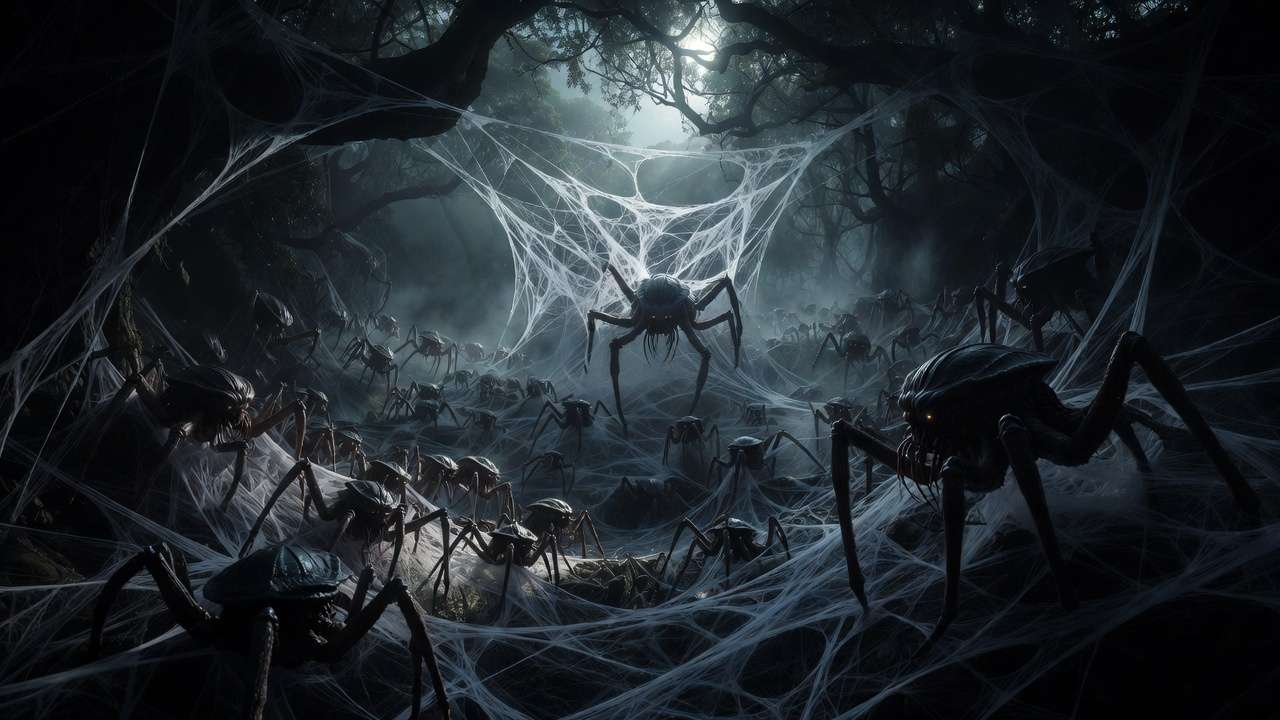
Aragog found a mate named Mosag (mentioned in passing as the source of his growing family) and established a vast colony deep in the Forbidden Forest. By 1993, hundreds—if not thousands—of Acromantulas lived there, weaving a massive domed lair of thick, sticky webs in a hollow surrounded by ancient trees.
The colony operates as a tight-knit, hierarchical society: Aragog rules as patriarch, his children obey his commands, and they share prey communally. While naturally predatory toward humans, the entire colony refrains from harming Hagrid out of respect for their father’s loyalty.
The “Follow the Spiders” Encounter
The infamous scene in Chamber of Secrets remains one of the series’ most tense. Harry, Ron, and Fang are dragged (in the book) or led (in some interpretations) by spiders to the lair. Ron, paralyzed by arachnophobia, can barely speak.
Aragog greets them calmly but orders his offspring to kill the intruders—until Harry explains Hagrid’s trouble. The spider spares them (barely), revealing key information before allowing pursuit. The boys escape thanks to the enchanted Ford Anglia, which had been living wild in the forest.
This moment masterfully blends horror, revelation, and humor (Ron’s terror is played for both fear and comedy), while deepening the lore of the Forbidden Forest as a place of ancient, untamed magic.
 Aragog’s Loyalty to Hagrid – A Touching (and Terrifying) Friendship
Few relationships in the Harry Potter series are as unexpectedly poignant as the one between Rubeus Hagrid and Aragog. In a world where most wizards view Acromantulas as irredeemable monsters, Hagrid sees a friend—and Aragog reciprocates with fierce, lifelong loyalty.
Why Aragog Never Attacked Hagrid
Despite the species’ natural appetite for human flesh, Aragog never once threatened Hagrid. In their 1993 meeting, he explicitly states: “I never would have let any of my own children harm Hagrid.” This restraint extends to anyone Hagrid explicitly protects. When Harry reveals he is a friend of Hagrid’s, Aragog immediately orders his offspring to stand down (though he still permits them to chase the boys once they leave the hollow—honoring the letter rather than the spirit of the protection).
This loyalty stems from gratitude: Hagrid hatched him, fed him, sheltered him, and risked everything to save him from execution in 1943. For an Acromantula—whose instincts are predatory and territorial—such devotion is extraordinary and speaks volumes about the depth of their bond.
Hagrid’s Perspective
Hagrid consistently defends Aragog against prejudice. He calls him “my poor old Aragog” and weeps openly at his death. This mirrors Hagrid’s relationships with other ostracized creatures: Norbert the Norwegian Ridgeback, Buckbeak the Hippogriff, Grawp the giant, and even Fluffy the three-headed dog. Hagrid’s philosophy is clear: most so-called “monsters” are simply misunderstood.
Aragog represents the purest expression of this belief. While Buckbeak and Norbert eventually leave or are relocated, Aragog remains in the Forbidden Forest, thriving under Hagrid’s indirect protection. Their friendship proves that even the most dangerous magical beings can form genuine, reciprocal bonds when treated with kindness rather than fear.
Aragog’s Death and Funeral – A Poignant End
Aragog’s passing marks one of the most emotionally charged creature-related moments in the entire series.
Passing in Half-Blood Prince
By the events of Harry Potter and the Half-Blood Prince (1996–1997), Aragog is very old and frail. His blindness has worsened, and his movements are slow. He dies of natural causes on or around April 20, 1997. Hagrid discovers the body and is devastated.
The text describes Hagrid carrying the enormous corpse out of the forest himself—a Herculean feat that underscores both his physical strength and his emotional attachment. He buries Aragog near the edge of the forest in a clearing.
The Funeral Scene
Hagrid holds a small, private funeral attended only by himself, Harry (who sneaks out under the Invisibility Cloak), and Professor Slughorn (who attends partly out of curiosity and partly to collect Acromantula venom—a rare and valuable potion ingredient).
Hagrid delivers a heartfelt eulogy: “He was a good spider… a good friend.” Slughorn, initially there for professional gain, ends up genuinely moved. He joins Hagrid in toasting Aragog with firewhisky and singing a mournful dirge.
The scene is both tender and darkly humorous—classic Hagrid—while highlighting the series’ recurring theme that even “monsters” deserve dignity in death.
 Aftermath – The Colony’s Role in the Battle of Hogwarts
Aragog’s death creates a power vacuum. Without his restraining influence, the Acromantulas become more aggressive. During the Battle of Hogwarts in 1998, the entire colony—now leaderless and emboldened—joins the side of the Death Eaters, attacking indiscriminately.
This tragic turn underscores Aragog’s unique moderating role: as long as he lived, his personal loyalty to Hagrid extended a fragile shield over Hogwarts students. Once gone, the colony reverts fully to its predatory nature.
Aragog in the Films vs. Books – Key Differences
The cinematic portrayal of Aragog differs in several important ways from J.K. Rowling’s written version.
Visual and Design Choices
In Harry Potter and the Chamber of Secrets (2002), Aragog is voiced by veteran actor Julian Glover with a deep, gravelly, aristocratic tone that perfectly captures the book’s dignified speech. His design emphasizes size and menace: enormous, hairy, with glowing milky eyes and clicking mandibles.
By Harry Potter and the Half-Blood Prince (2009), he appears noticeably smaller and less imposing—likely a practical effects choice to make the funeral scene feasible on screen. Some fans feel this diminishes his gravitas compared to the “small elephant” of the books.
Omitted or Altered Scenes
The film includes the funeral (a rare book-to-screen fidelity for a secondary creature), but omits much of the dialogue and emotional nuance. The “follow the spiders” sequence is more action-oriented, with less emphasis on Aragog’s calm exposition and more on the chase.
These changes make Aragog feel more like a traditional movie monster in the films, whereas the books present him as a complex, tragic figure.
Why Aragog Terrifies Fans – The Psychology of Fear in Harry Potter
Aragog remains one of the most viscerally frightening elements of the series, especially for readers and viewers with arachnophobia.
Tapping into Arachnophobia
Rowling deliberately uses Ron Weasley’s well-established fear of spiders as an audience proxy. The “follow the spiders” line—delivered by a dying Hagrid—is chilling precisely because we know how much it will torment Ron. The scene exploits primal human revulsion toward large, fast-moving, many-legged creatures.
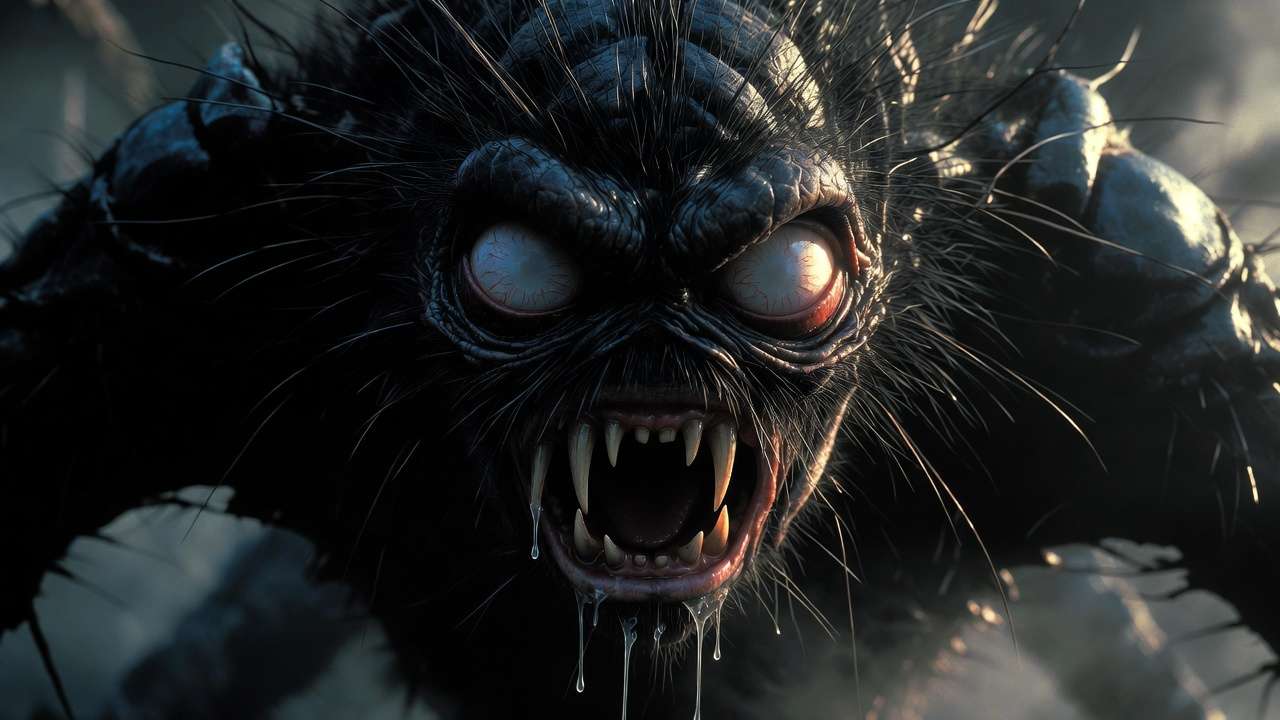
Acromantulas amplify this fear: they are not only huge but intelligent, speaking, and capable of coordinated attacks. The idea of being swarmed by hundreds of sentient, venomous spiders is nightmare fuel.
 Cultural Impact and Legacy
Aragog has inspired countless memes (“follow the spiders” as a relatable horror reference), fan art depicting his lair, and even real-world taxonomy: in 2016, an Iranian wolf spider species was named Lycosa aragogi in his honor.
He also frequently ranks high in “scariest Harry Potter moments” polls, proving that even twenty-five years later, the giant spider from Harry Potter continues to send shivers down spines.
Expert Insights and Lesser-Known Facts
As someone who has spent years re-reading the series, analyzing canon interviews, Pottermore archives (now Wizarding World), and fan scholarship, here are some of the most intriguing, lesser-discussed details about Aragog that deepen appreciation for this character:
- Name Etymology “Aragog” combines “arachnid” (spider) with “agog” (eager/excited), possibly hinting at his curiosity toward humans—or the shock he inspires. Some linguists also note echoes of “Aragog” in ancient words for “leader of the swarm.”
- Venom Potency Acromantula venom is among the rarest and most valuable potion ingredients. Slughorn’s eagerness to harvest it at the funeral implies it commands extremely high prices on the black market—likely used in advanced poisons, antidotes, and truth serums.
- Symbolic Role in Themes of Prejudice Aragog mirrors other “monstrous” beings (house-elves, werewolves, giants) wrongly feared due to appearance or rumor. His innocence in the Chamber scandal parallels Hagrid’s repeated wrongful accusations, reinforcing Rowling’s message that judging by stereotype leads to injustice.
- The Mosag Detail Aragog mentions his wife Mosag only once, yet she is the mother of the entire enormous colony. This implies rapid reproduction—typical of Acromantulas—and raises questions about how many generations existed by 1997.
- Spiders’ Fear of the Basilisk Aragog describes the Basilisk as “the thing that all spiders fear.” This biological aversion explains why no spider would name it aloud and why the colony could never have been the Chamber monster—adding another layer of clever world-building.
- No Mention of Aragog in Earlier Books Despite Hagrid owning him since the 1940s, he is never referenced until Chamber of Secrets. This retroactive introduction is a masterful slow reveal of Hagrid’s hidden past.
- Real-World Spider Named After Him In 2016, Iranian arachnologist Alireza Zamani named a new species of wolf spider Lycosa aragogi. The specimen was collected in southeastern Iran—proof that Aragog’s cultural footprint extends into actual science.
- Aragog’s “Children” Comment He refers to his offspring as “my own children,” yet the colony numbers in the hundreds or thousands. This suggests either literal massive broods or a patriarchal view of the entire species under his protection.
- Potential for More Screen Time Early script drafts for Chamber of Secrets reportedly included a longer conversation with Aragog, but it was trimmed for pacing. Concept art from the production shows even larger, more grotesque designs that were toned down for family audiences.
- Aragog vs. Shelob Comparison Many readers note parallels with Shelob from The Lord of the Rings—both ancient, enormous, intelligent spiders living in dark lairs. Rowling has acknowledged loving Tolkien, making the homage intentional yet distinctly her own (Aragog speaks and reasons; Shelob does not).
These details transform Aragog from a scary set-piece into one of the series’ most layered supporting characters.
Frequently Asked Questions About Aragog
Is Aragog evil or a villain? No. He is not malicious toward humans out of cruelty—his predatory behavior is purely instinctual. He spares Harry and Ron because of loyalty to Hagrid and provides crucial, truthful information that helps solve the Chamber mystery.
How big is Aragog compared to real spiders? The largest real-world spider (the Goliath birdeater tarantula) reaches a leg span of about 30 cm (12 inches) and weighs up to 175 grams. Aragog, described as “the size of a small elephant,” would have a leg span of roughly 4–6 meters (13–20 feet) and weigh several tons—an exaggeration possible only in the magical world.
Did Aragog ever eat humans? Almost certainly yes—his colony survives on “fresh meat,” and he permits attacks on intruders. However, he personally never harms Hagrid or (by extension) Harry and Ron during their meeting.
Who voiced Aragog in the movies? Veteran British actor Julian Glover, famous for roles in Game of Thrones (Grand Maester Pycelle), Indiana Jones and the Last Crusade, and Star Wars: The Empire Strikes Back (General Veers).
Is there any connection between Aragog and Newt Scamander? No direct canon link exists. However, some fans theorize the “traveler” who gave Hagrid the egg could have been someone in Newt’s network of creature experts during the 1920s–1940s. This remains pure speculation.
Why didn’t the Acromantulas attack Hogwarts students more often? Aragog’s personal command restrained them. After his death, the colony immediately becomes more aggressive—evidenced by their participation in the Battle of Hogwarts on the Death Eaters’ side.
Can Acromantulas be tamed or kept as pets? Canon states they are impossible to domesticate fully due to their aggression and venom. Hagrid’s success with Aragog is portrayed as a one-in-a-million exception born of early imprinting and mutual respect.
Did Aragog appear in any other Harry Potter media? He is mentioned briefly in Fantastic Beasts supplementary materials (as part of Acromantula lore), but has no on-screen or direct role outside the main seven books and the two Chamber of Secrets / Half-Blood Prince film appearances.
Aragog, the giant spider from Harry Potter, is far more than a nightmare-inducing set piece. He is a testament to loyalty that transcends species, a victim of wizarding prejudice, a loving (if terrifying) father to thousands, and—most importantly—a cherished friend to one of the series’ kindest souls.
Through his story, J.K. Rowling reminds us that monsters are rarely born; they are often made by fear, misunderstanding, and hasty judgment. Aragog’s quiet dignity in the face of suspicion, his unwavering gratitude toward Hagrid, and his tragic yet peaceful end leave a lasting impression—one that lingers long after the Forbidden Forest scenes fade from memory.
Next time you re-read Chamber of Secrets or watch that heart-stopping carriage ride into the darkness, pause and appreciate the depth behind those eight milky eyes. Aragog wasn’t just Hagrid’s pet—he was proof that even the most fearsome creatures can carry enormous hearts.
Have your own “follow the spiders” memories—or still check under the bed after watching the films? Share in the comments below. And if you enjoyed this deep dive into one of the Wizarding World’s most misunderstood inhabitants, explore our other creature guides—from Buckbeak to the Basilisk—right here on the blog.
Thank you for reading, fellow Potterheads.