In a series overflowing with heroes, dark lords, and chosen ones, some of the bravest characters never received the spotlight they truly deserved. Susan Bones Harry Potter fans may recognize as a quiet name from the Sorting Ceremony — a girl called before Harry, placed into Hufflepuff, and largely forgotten by the time the next chapter begins. But scratch beneath the surface of J.K. Rowling’s carefully constructed wizarding world, and you will find that Susan Bones is far more than a background character filling a seat in Herbology class.
She is a survivor. A fighter. A young woman who lost nearly everything to Voldemort’s reign of terror — and still chose to stand up, join Dumbledore’s Army, and resist.
This article is a complete, expert deep-dive into Susan Bones: her family history, her personal losses, her role in the resistance, and why she represents one of the most quietly powerful characters in the entire Harry Potter series. If you have ever felt that certain characters deserved more than Rowling gave them on the page, Susan Bones is the name that should be at the top of that list.
Who Is Susan Bones in Harry Potter?
Her First Appearance and House Sorting
Susan Bones makes her very first appearance in Harry Potter and the Philosopher’s Stone during one of the most iconic scenes in the entire series — the Hogwarts Sorting Ceremony. As Professor McGonagall reads from her scroll of names, “Bones, Susan” is called near the beginning, placing her alphabetically just before Harry himself is sorted.
The Sorting Hat places her in Hufflepuff, and for many casual readers, that is essentially where her story ends. She becomes part of the scenery — a name associated with the yellow-and-black house, occasionally glimpsed in classes or corridors, rarely commanding attention in a narrative dominated by Gryffindor heroics and Slytherin villainy.
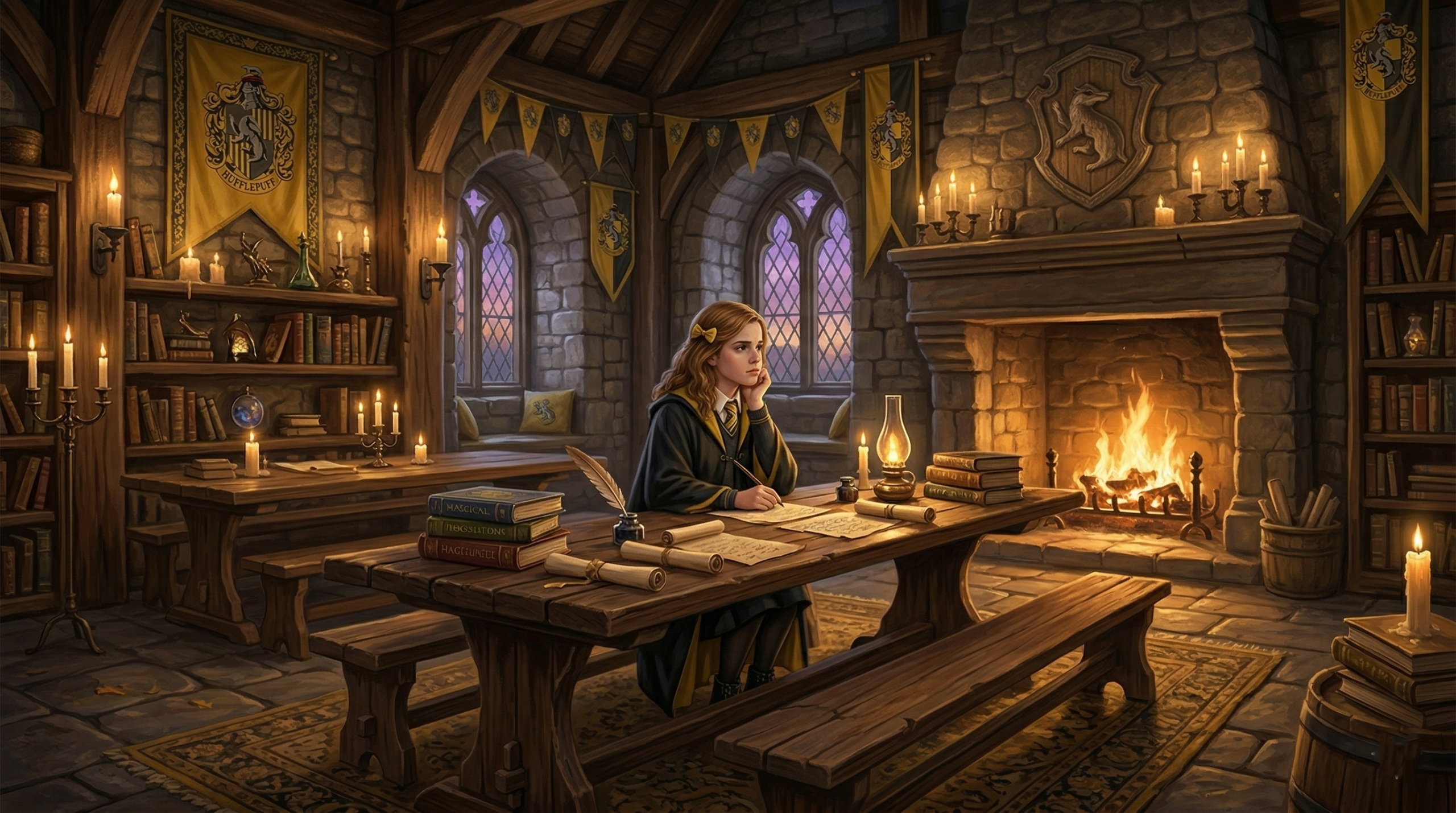 But that first moment — that quiet sorting into Hufflepuff — is deeply meaningful when viewed through the lens of everything that comes after. Hufflepuff is the house of loyalty, patience, hard work, and moral integrity. It is not the house of the flashy hero or the celebrated champion. It is the house of the person who does what is right, quietly, without expectation of reward. Susan Bones, it turns out, embodies every single one of those values.
Susan Bones’ Role Across the Series
Throughout the seven books, Susan Bones appears in a handful of notable moments without ever stepping fully into the foreground. She is present during O.W.L. examination sequences in Order of the Phoenix, is referenced during Defense Against the Dark Arts classes, and crucially, she joins Dumbledore’s Army — a decision that, given her personal history, carries enormous emotional weight.
What makes Susan’s presence interesting from an analytical perspective is precisely her consistency. She is always there. She does not disappear after Book One or get dropped from the narrative entirely the way some minor characters do. Rowling kept Susan in the story, kept her visible, and embedded key pieces of information about her family into the text — almost as though she were quietly building a case for a character she never had the page space to fully explore.
For fans who read attentively, Susan Bones becomes increasingly fascinating with each reread. For those encountering her story for the first time with fresh eyes, the depth of her background is genuinely startling.
The Bones Family — A Legacy Steeped in Tragedy
Who Are the Bones Family in the Wizarding World?
To understand Susan Bones, you must first understand where she comes from — because the Bones family history is one of the most tragic and heroic legacies in the entire wizarding world.
The Bones family is a pure-blood wizarding family, but unlike the Malfoys or the Blacks who wore their pure-blood status as a badge of supremacy, the Bones family used their standing to fight against blood prejudice. They were firmly aligned with the forces of good, connected to the Order of the Phoenix, and deeply embedded within the legitimate institutions of the wizarding world — most notably the Ministry of Magic.
This was not a family of bystanders. This was a family that put itself directly in the line of fire against Voldemort — and paid the ultimate price for it.
The Bones family represents something that the Harry Potter series quietly explores throughout its pages: the idea that the Wizarding Wars were not fought only by the Harrys and the Dumbledores of the world. Entire families — ordinary, decent, brave people — were ground up in the machinery of Voldemort’s campaign of terror. The Bones family is the clearest, most devastating example of that truth.
The Murder of Amelia Bones — A Pivotal Moment in Half-Blood Prince
If there is one moment in the entire series that crystallizes the Bones family’s significance, it is the offhand but chilling announcement in Harry Potter and the Half-Blood Prince that Amelia Bones has been murdered.
Amelia Bones was no minor figure. She served as the Head of the Department of Magical Law Enforcement — one of the most powerful positions within the Ministry of Magic. Readers who paid close attention first encountered her in Order of the Phoenix, during Harry’s disciplinary hearing before the full Wizengamot. Amelia Bones presided over that hearing with scrupulous fairness. Where Cornelius Fudge was petty, political, and clearly angling for a predetermined outcome, Amelia Bones asked sharp, intelligent questions. She listened to the evidence. She was, in that moment, the closest thing to actual justice that the corrupt Ministry could offer.
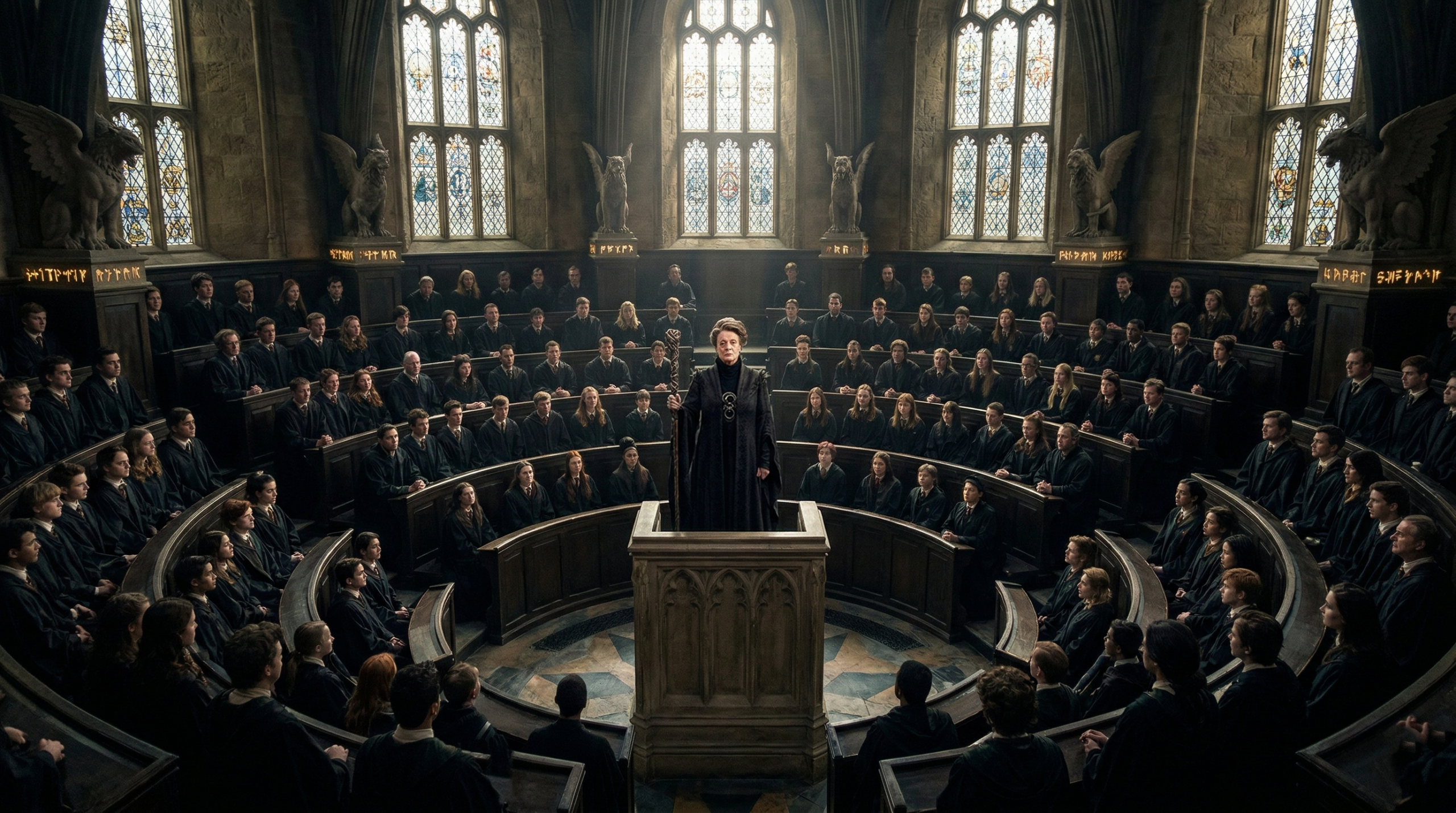 When Dumbledore reads of her death in the newspaper in Half-Blood Prince, he notes something that stops the reader cold: Amelia Bones was considered a great witch, and her murder was thought to have been carried out by Voldemort personally. Not by a Death Eater. Not by a proxy. By Voldemort himself.
Think about what that means. In a war where Voldemort delegated most of his dirty work to his followers, he personally targeted Amelia Bones. That detail alone tells you everything about how powerful, how principled, and how dangerous to his agenda she was. She was not collateral damage. She was a specific, deliberate target — eliminated because she was too formidable to be left alive.
And she was Susan Bones’ aunt.
Expert Insight: Amelia Bones is one of only a handful of named victims in the series confirmed to have been killed by Voldemort directly. The others include James Potter, Lily Potter, and Frank Bryce. The company she keeps in that grim list speaks to the magnitude of her threat to Voldemort’s plans.
Susan’s Entire Family Wiped Out in the First Wizarding War
Here is where the full weight of Susan Bones’ story truly lands — and it is a weight that the books handle with devastating understatement.
In Harry Potter and the Order of the Phoenix, during a conversation that fans often skim past, it is confirmed that Susan Bones lost her entire family — her parents, her grandparents, her uncles and aunts — to Death Eaters during the First Wizarding War. Nearly every member of her immediate family was killed. She was, in terms of blood relatives, almost completely alone by the time she arrived at Hogwarts — with the exception of Aunt Amelia, who then died during the events of Half-Blood Prince.
Let that sink in for a moment.
Susan Bones arrived at Hogwarts as a child who had already inherited a legacy of mass bereavement. She sat in those classrooms, learned those spells, ate in that Great Hall — all while carrying a grief that most of her peers could not begin to imagine. Harry Potter is rightly celebrated throughout the series for the enormity of his losses. But Harry at least had the narrative space to process those losses. He had chapters, conversations, and entire story arcs devoted to his grief.
Susan Bones had a single, quiet revelation buried in a conversation — and then the story moved on.
The parallel between Harry and Susan is one of the most poignant and underexplored elements of the entire series. Both were children defined by Voldemort’s violence. Both lost their families to the same war. Both arrived at Hogwarts carrying wounds that no eleven-year-old should have to carry. The difference is that one of them was the Chosen One, and one of them was sorted into Hufflepuff and largely forgotten.
That difference says something important — not about Susan’s worth, but about the limitations of a first-person-adjacent narrative that could only hold so much pain at once.
Susan Bones and Dumbledore’s Army — Her Finest Hour
Why Susan Joined the D.A.
When Hermione Granger circulates the sign-up list for what will become Dumbledore’s Army in Order of the Phoenix, Susan Bones is among those who put her name down. On the surface, this might seem like a minor detail — dozens of students joined the D.A., after all. But for Susan specifically, the decision to join carries a weight that sets her apart from nearly every other member.
Most Hogwarts students who joined the D.A. were motivated by a combination of frustration with Dolores Umbridge, admiration for Harry Potter, and a general sense of wanting to do something in uncertain times. These are valid, understandable motivations. But Susan Bones did not join because she was fed up with a bad teacher or because she thought Harry was impressive.
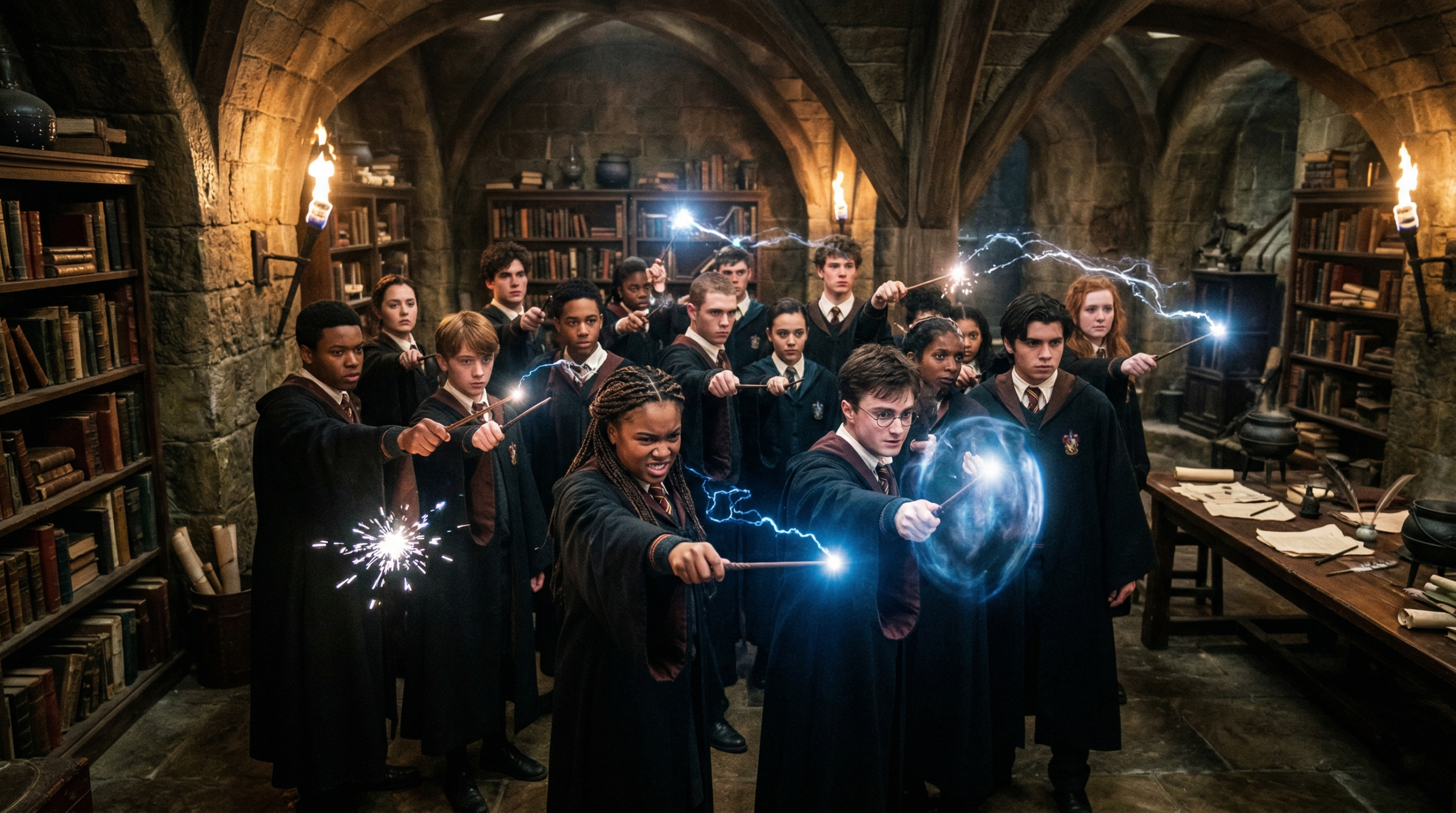 Susan Bones joined because she had already seen what happened when good people stood aside and let Voldemort’s followers operate unchallenged. She had the receipts — written in the names of her dead family members. For Susan, joining the D.A. was not an act of teenage rebellion or house loyalty. It was something much closer to a personal reckoning. A decision to do what her family had always done: stand up, regardless of the cost.
That distinction makes her one of the most morally purposeful members of Dumbledore’s Army, even if the books never explicitly frame it that way.
Susan’s Skills as a D.A. Member
Within D.A. meetings, Susan Bones is depicted as a competent and capable witch. She participates in the training sessions, works on the spells Harry teaches, and holds her own alongside students who would go on to become some of the most capable witches and wizards of their generation.
It is worth noting that Susan comes from a family with deep roots in magical law enforcement and resistance. Magic, in the Bones household, was not merely academic — it was vocational and defensive. It would be entirely reasonable to assume that Susan arrived at Hogwarts with a more serious attitude toward defensive magic than many of her peers, given the context of her upbringing.
While the books do not give us a detailed breakdown of Susan’s spellwork performance, her consistent membership in the D.A. and her presence at Hogwarts during its darkest period speak to a resilience and capability that deserve acknowledgment.
The Overlooked Bravery of Background D.A. Members
Susan Bones belongs to a group of Harry Potter characters who are easy to undervalue precisely because the narrative does not center them: the background members of Dumbledore’s Army. Characters like Justin Finch-Fletchley, Lavender Brown, Seamus Finnigan, and yes, Susan Bones — students who showed up, trained, and committed themselves to the cause without receiving chapters of character development in return.
These characters matter. They are the moral fabric of Hogwarts. They are the proof that courage was not exclusive to Gryffindor tower or the inner circle of the Golden Trio. When the Battle of Hogwarts finally came, it was fought by all of them — the celebrated and the overlooked alike.
Susan Bones standing in that D.A. meeting room, casting spells alongside Harry Potter, is one of the quiet acts of heroism that the series depends upon but rarely stops to honor.
Susan Bones as a Mirror to Harry Potter’s Story
Two Characters Defined by Loss
One of the most intellectually rewarding exercises in reading Harry Potter deeply is identifying the structural mirrors Rowling built into her world — characters who reflect and refract Harry’s story from different angles, illuminating aspects of his experience that the main narrative cannot fully contain.
Susan Bones is one of the most precise and painful of these mirrors.
Both Harry and Susan were orphaned — or effectively orphaned — by Voldemort’s first rise to power. Both grew up in the shadow of a war they did not choose and could not remember. Both arrived at Hogwarts carrying the weight of dead family members whose names they might barely have known. And both, in their own ways, chose to fight back.
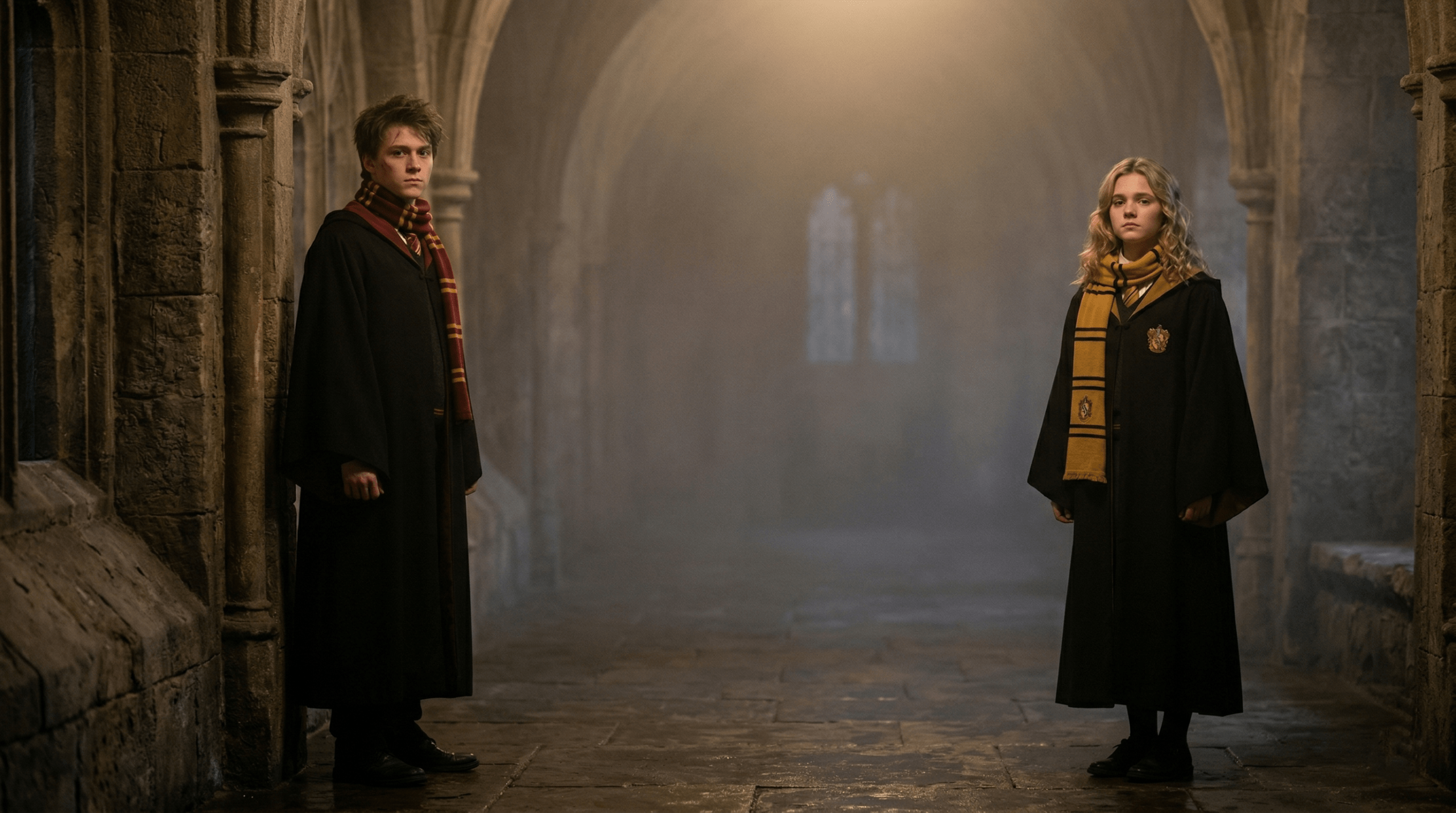 The difference in how their stories are told is not a difference in worth. It is a difference in narrative proximity. Harry is the lens through which we see everything. Susan exists at the edge of that lens — real, present, grieving, brave — but blurred by the necessary limitations of the story’s point of view.
Recognizing this parallel does not diminish Harry’s story. It expands it. It reminds the reader that the wizarding world Rowling created was full of people carrying Harry-sized grief — people who never got a Hogwarts letter of destiny, a scar on their forehead, or a prophecy to give their suffering meaning. They just had their loss, and their choice about what to do with it.
Susan Bones chose to fight. That is enough. That is, in fact, everything.
The Hufflepuff Virtue Susan Embodies
There is a longstanding tendency — both within the Harry Potter fandom and within the text itself — to treat Hufflepuff as the least glamorous of the four houses. No great dark wizards came from Hufflepuff. No Chosen Ones were sorted there. The house’s most famous alumnus prior to the series is Cedric Diggory, who is defined primarily by his death.
Susan Bones quietly dismantles every condescending assumption about Hufflepuff simply by existing.
She is loyal — to her family’s memory, to the cause they died for, to the friends she makes at Hogwarts. She is hardworking — present in her studies, committed in her D.A. training, consistent in her attendance and effort. She is morally grounded — her decision to join the resistance is not impulsive or glory-seeking but principled and deliberate. And she is possessed of a quality that Hufflepuff uniquely prizes above the other houses: endurance. The ability to keep going when the glamour has worn off and only the hard work remains.
In many ways, Susan Bones is not just a good Hufflepuff. She is the argument for why Hufflepuff matters — why a house built on quiet virtue and unflashy courage is not a consolation prize, but a genuine expression of what it means to be good.
What Susan Bones Tells Us About Surviving War
Beyond the wizarding world, Susan Bones’ story resonates as a meditation on what it means to survive intergenerational trauma — to be born into a legacy of violence and loss, and to find a way to live, and even to resist, in spite of it.
Her story is not unique to fiction. Readers who come from families shaped by war, persecution, or systemic violence will recognize something deeply familiar in Susan’s quiet grief and stubborn courage. The child who grows up hearing the names of the dead at family gatherings. The young person who inherits a fight they did not start. The individual who carries history in their bones — quite literally, in Susan’s case — and still chooses to show up.
This is one of the reasons Susan Bones has resonated so powerfully with fans who engage deeply with the Harry Potter series. She is not a power fantasy or a chosen one. She is a witness, a survivor, and a participant — and her story, for all its brevity on the page, speaks to something true about how ordinary people move through extraordinary darkness.
What Happened to Susan Bones After the Battle of Hogwarts?
Canon Information: What J.K. Rowling Actually Confirmed
This is the section where honesty with the reader is essential: the canonical record on Susan Bones’ post-war life is almost entirely silent. J.K. Rowling did not include Susan in the epilogue of Deathly Hallows, did not address her fate in any detailed Pottermore writing, and has not — to date — provided a clear account of what Susan Bones did after Voldemort’s defeat.
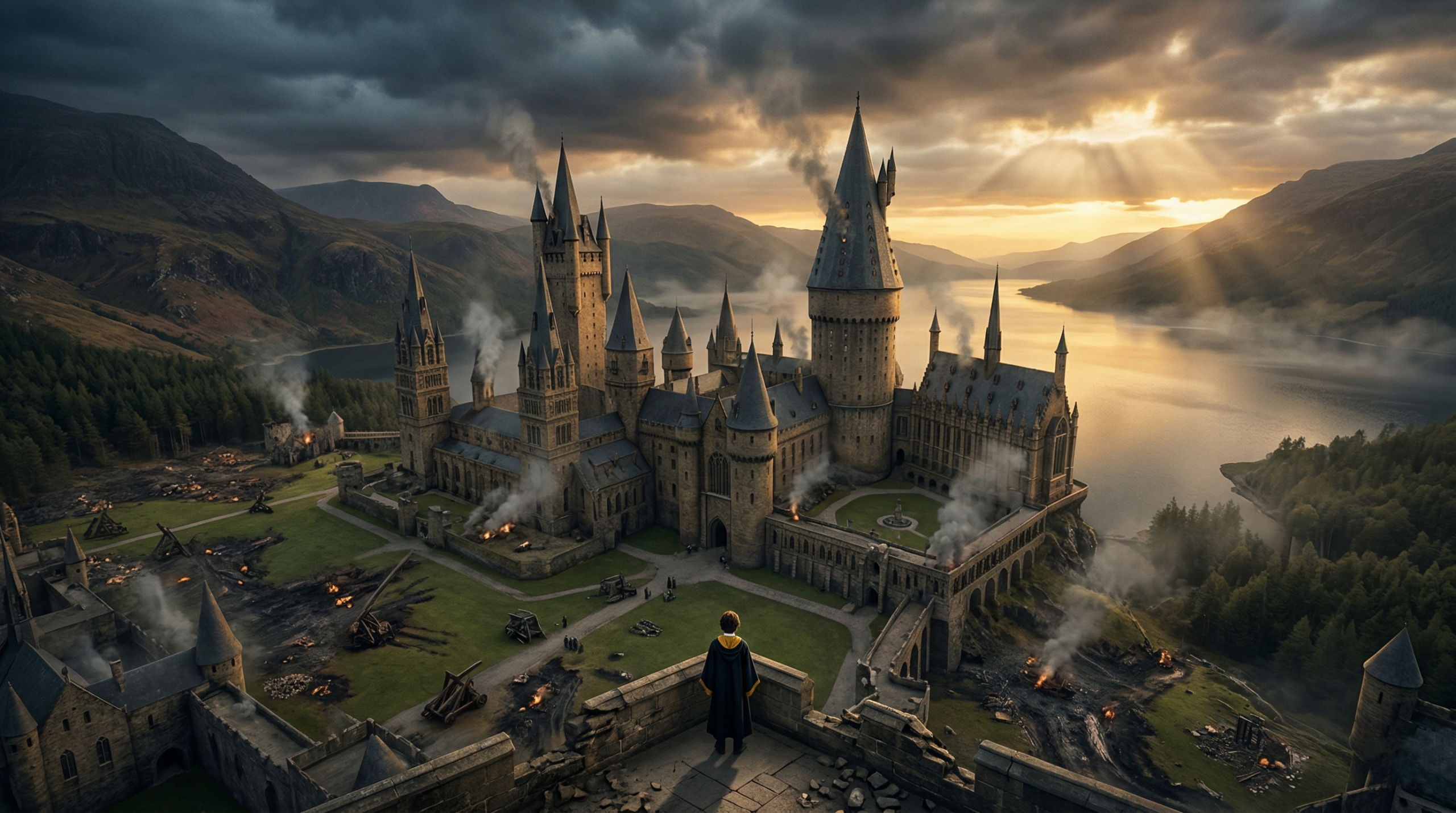
What the canon does confirm is that Susan was at Hogwarts during the events of Deathly Hallows — meaning she would have been present during the period of Death Eater control under Snape’s headmastership and the Carrows’ brutal reign as teachers. Whether she participated in the Battle of Hogwarts directly, evacuated with the younger students, or played some other role is not specified.
Given everything we know about Susan’s character — her family history, her D.A. membership, her demonstrated courage — it strains credibility to imagine her walking away from the final battle. But the text does not confirm her participation explicitly, and responsible analysis requires acknowledging that gap.
 Fan Theories and Expanded Universe Speculation
What the canon lacks, the fandom has more than compensated for — and the range of fan theories about Susan Bones’ post-war life is a testament to how much readers have invested in a character the books themselves underserved.
Popular fan theories place Susan in a range of post-war roles. Given her family’s deep connection to the Department of Magical Law Enforcement, many fans envision her pursuing a career at the Ministry of Magic — perhaps in the very department her Aunt Amelia once led, working to rebuild the institution from the corruption and cowardice that allowed Voldemort’s return to go unchallenged for so long.
Others imagine Susan as an Auror — following in the footsteps of the resistance fighters who shaped her world — or as a Healer, channeling her experience of loss into care for others. A smaller but passionate contingent of fans write Susan as a professor, returning to Hogwarts to teach the next generation of students the defensive magic that Dumbledore’s Army once learned in secret.
In the world of Harry Potter fan fiction, Susan Bones has become something of a beloved protagonist in her own right. She appears as the central character in hundreds of stories — many of them exploring the exact themes this article has examined: grief, resilience, Hufflepuff pride, and the experience of building a life after catastrophic loss.
That so many readers have been moved to give Susan Bones the story that canon denied her is, in itself, a form of literary justice.
Why Susan Bones Deserves More Recognition in the Harry Potter Fandom
The Rise of Susan Bones in Fan Fiction and Fan Culture
Within the Harry Potter fan community — one of the largest and most creatively prolific fandoms in the world — Susan Bones occupies a fascinating niche. She is not a mainstream fan favorite in the way that Neville Longbottom or Luna Lovegood are. She does not appear on the majority of “underrated characters” lists that circulate on social media. And yet, among the readers who do discover her story, the response is consistently passionate.
Part of this is the Hufflepuff renaissance that has taken place within the fandom over the past decade. As the series has aged and its readership has matured, there has been a growing appreciation for Hufflepuff’s values and a corresponding interest in its lesser-known members. Susan Bones benefits from this shift — she becomes, for many fans, the embodiment of everything Hufflepuff represents at its very best.
She is also, frankly, excellent material. Her backstory is rich, her motivations are clear, her parallels with Harry are intellectually stimulating, and her future is an open canvas. For fan fiction writers looking for a character with depth and possibility, Susan Bones is an almost irresistible choice.
Lessons Harry Potter Fans Can Learn from Susan Bones
There is a reason that stories about unsung heroes resonate so deeply — and Susan Bones, perhaps more than any other character in the Harry Potter series, embodies the unsung hero archetype with quiet perfection.
Her story teaches resilience in the face of generational trauma. It demonstrates that courage does not require prophecy or destiny — that the choice to stand up and fight back is meaningful regardless of whether history records your name. It illustrates the particular bravery of the person who has the most reason to give up, and chooses not to.
Susan Bones also teaches something about the nature of grief and continuity. She did not allow the deaths of her family to hollow her out into passivity or bitterness. She allowed them to clarify her purpose. The murdered Bones family did not die in vain because Susan Bones was still standing — still learning, still resisting, still carrying their legacy forward into the next generation.
In a series that is ultimately about the power of love, loyalty, and the refusal to surrender to darkness, Susan Bones is one of its purest expressions. She just never got the chapter she deserved.
Frequently Asked Questions About Susan Bones in Harry Potter
Q1: Who is Susan Bones in Harry Potter? Susan Bones is a Hogwarts student introduced in Harry Potter and the Philosopher’s Stone. She is sorted into Hufflepuff during the same Sorting Ceremony as Harry Potter, and goes on to become a member of Dumbledore’s Army in Order of the Phoenix. Though she is a minor character in the main narrative, her family background and personal losses give her one of the most compelling backstories among the series’ supporting cast.
Q2: Is Susan Bones related to Amelia Bones? Yes. Amelia Bones, the Head of the Department of Magical Law Enforcement who appears in Order of the Phoenix and is murdered in Half-Blood Prince, is Susan’s aunt. Amelia was considered a great witch and was killed personally by Voldemort — a fact that underscores the Bones family’s significance in the wizarding world.
Q3: What house is Susan Bones in? Susan Bones is a member of Hufflepuff house. Her placement in Hufflepuff is deeply appropriate given her demonstrated qualities of loyalty, resilience, and quiet moral courage throughout the series.
Q4: Did Susan Bones fight in the Battle of Hogwarts? The canon does not explicitly confirm Susan’s participation in the Battle of Hogwarts. However, as a member of Dumbledore’s Army and a student with powerful personal reasons to resist Voldemort, it is widely assumed within the fandom that she would have been involved in the final confrontation.
Q5: Why is Susan Bones considered an important character? Susan Bones is important because her story illustrates the broader human cost of the Wizarding Wars in a way that complements Harry’s own narrative. She lost her entire family to Death Eaters, making her one of the characters with the most personal stakes in the fight against Voldemort. Her choice to join Dumbledore’s Army despite — or because of — that loss is one of the series’ quiet acts of heroism.
Q6: What happened to Susan Bones after Voldemort’s defeat? J.K. Rowling has not provided canonical information about Susan’s post-war life. Fan speculation places her in roles connected to the Ministry of Magic or as an Auror, continuing her family’s legacy of opposing dark forces. Her post-war story remains one of the most beloved subjects in Harry Potter fan fiction.
In a story about the extraordinary, Susan Bones is a reminder of what the ordinary is capable of.
She arrived at Hogwarts as a child already defined by loss — her family taken from her by the same war that made Harry Potter the Boy Who Lived. She sat in those classrooms, walked those corridors, and carried that grief without the comfort of a prophecy or the knowledge that her suffering had a predetermined meaning. She had no scar on her forehead and no destiny written in the stars. She just had her loss, her loyalty, and a choice.
And she chose to stand up.
Susan Bones joined Dumbledore’s Army not because she was destined to, but because she understood — more viscerally than most — what the cost of inaction looked like. She embodied every value that Hufflepuff represents at its finest: patience, integrity, endurance, and the willingness to do what is right when no one is watching and no one will remember.
She never needed the spotlight to be a hero. She just needed us to pay attention.
If this deep-dive into Susan Bones has made you want to explore more of Harry Potter’s unsung characters — the ones who held the line in the background while history focused elsewhere — stay with us. There are more stories like hers, waiting to be told.