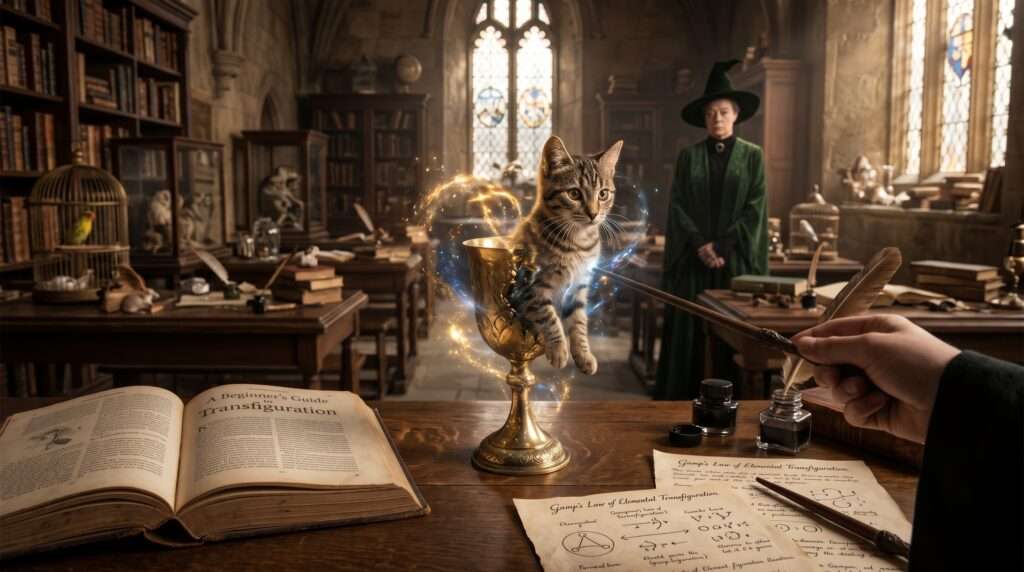
“Transfiguration is some of the most complex and dangerous magic you will learn at Hogwarts.” When Professor Minerva McGonagall delivered this stern warning to her first-year students, she wasn’t merely setting classroom expectations; she was defining an entire scientific discipline of wizardry. For fans and scholars of wizarding lore, understanding Transfiguration in Harry Potter is the key to unlocking the true boundaries of magical power. Why can a wizard turn a teacup into a gerbil, but cannot simply conjure a feast out of thin air? The answers lie in a rigid framework of magical physics, strict elemental laws, and centuries of academic study.
This comprehensive guide breaks down the exact mechanics of Transfiguration, exploring the four primary branches, the unyielding restrictions of Gamp’s Law, and the most notable spells that require this precise wandwork. Whether you are curious about the gruelling process of becoming an Animagus or simply want to understand the difference between a Charm and a Transformation, this deep dive will equip you with N.E.W.T.-level expertise.
What Exactly is Transfiguration in Harry Potter?
At its core, Transfiguration is the magical art of altering the form and appearance of an object or living being. It is highly systematic, requiring absolute wand precision, the correct incantation, and profound mental concentration.
Transfiguration vs. Charms: The Core Difference
To master magical theory, one must understand the fundamental difference between a Charm and a Transfiguration. A Charm adds specific properties to an object or creature without changing its essential nature. For example, the Levitation Charm (Wingardium Leviosa) makes a feather fly, and the Cheering Charm alters a person’s mood, but the feather remains a feather, and the person remains themselves.
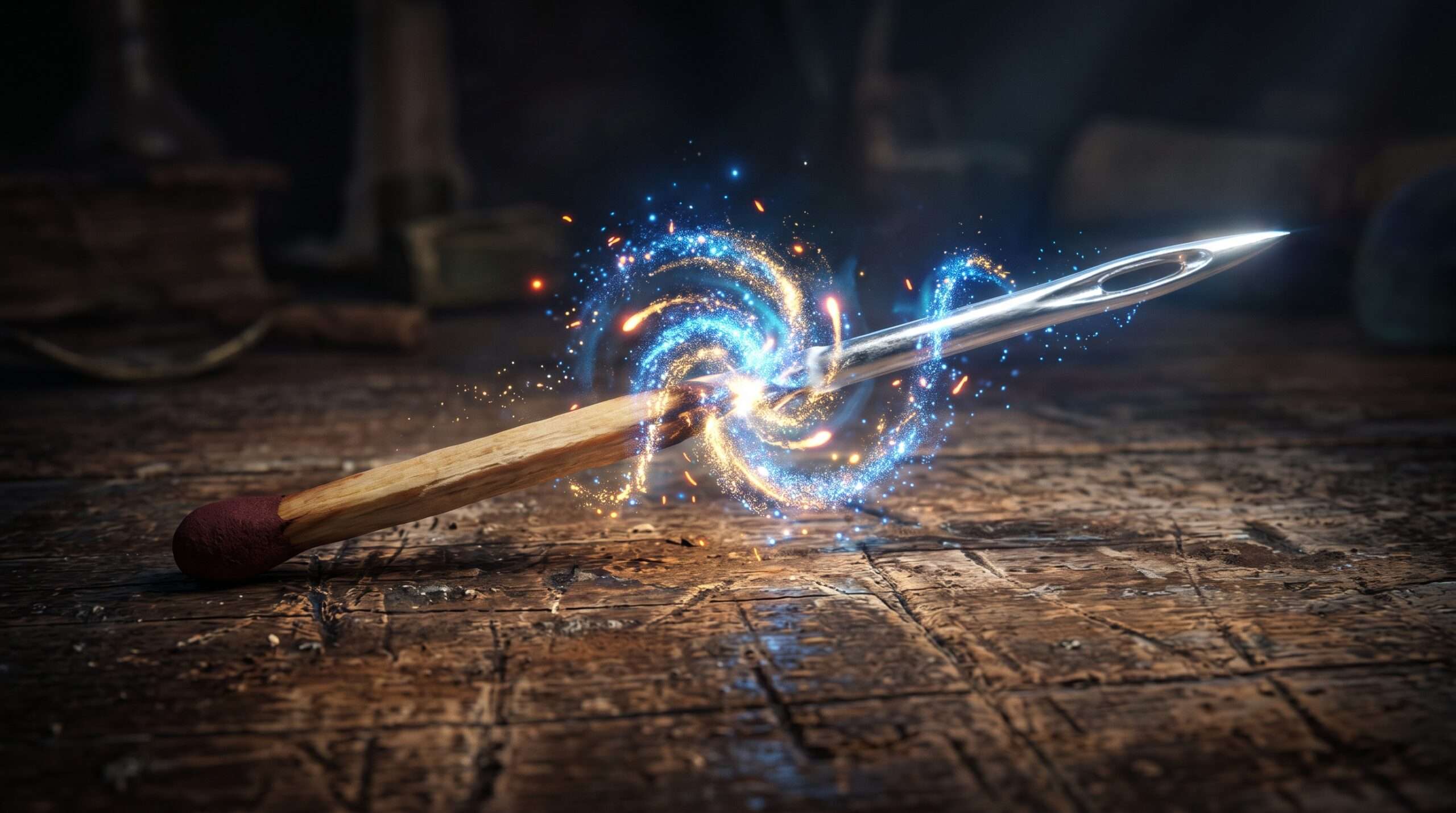
Transfiguration, however, alters the subject’s very molecular structure. When you turn a matchstick into a needle, you are changing wood and phosphorus into steel. The object ceases to be what it was and takes on the physical properties of its new form. This requires an imposition of the caster’s will over reality itself, making it a far more taxing branch of magic.
 The Dangers and Complexity
Because it deals with the literal restructuring of matter, Transfiguration is inherently dangerous. A lack of focus or a sloppy wand movement does not just result in a spell fizzling out; it results in horrific half-transfigurations.
The wizarding world is filled with cautionary tales of botched transfigurations. In Harry Potter and the Chamber of Secrets, Hermione Granger accidentally uses a cat hair in her Polyjuice Potion (a potion heavily reliant on transfigurative properties), resulting in a painful, partial transformation that requires weeks in the hospital wing to reverse. Similarly, splinching during Apparition—while technically a teleportation magic—shares the same risks of physical separation and structural failure seen in advanced human transfiguration. Precision is not optional; it is a matter of survival.
The Four Branches of Transfiguration
The Hogwarts curriculum divides this complex subject into four distinct disciplines, moving logically from the easiest manipulations to the most demanding reality-bending spells.
1. Transformation
Transformation is the act of deforming or altering one object into another, and it is the first branch students learn. It is further divided into specific sub-categories based on difficulty:
-
Inanimate to Inanimate: The simplest form, such as turning a matchstick into a needle.
-
Inanimate to Animate: Breathing life into the lifeless, like turning a desk into a pig.
-
Animate to Inanimate: Turning a living creature into an object, such as the Vera Verto spell which turns an animal into a water goblet.
-
Cross-Species Switches: Altering one living creature into another, which requires a deep understanding of both creatures’ anatomies.
-
Human Transfiguration: The most difficult tier of Transformation, involving altering human body parts or whole bodies.
 2. Vanishment
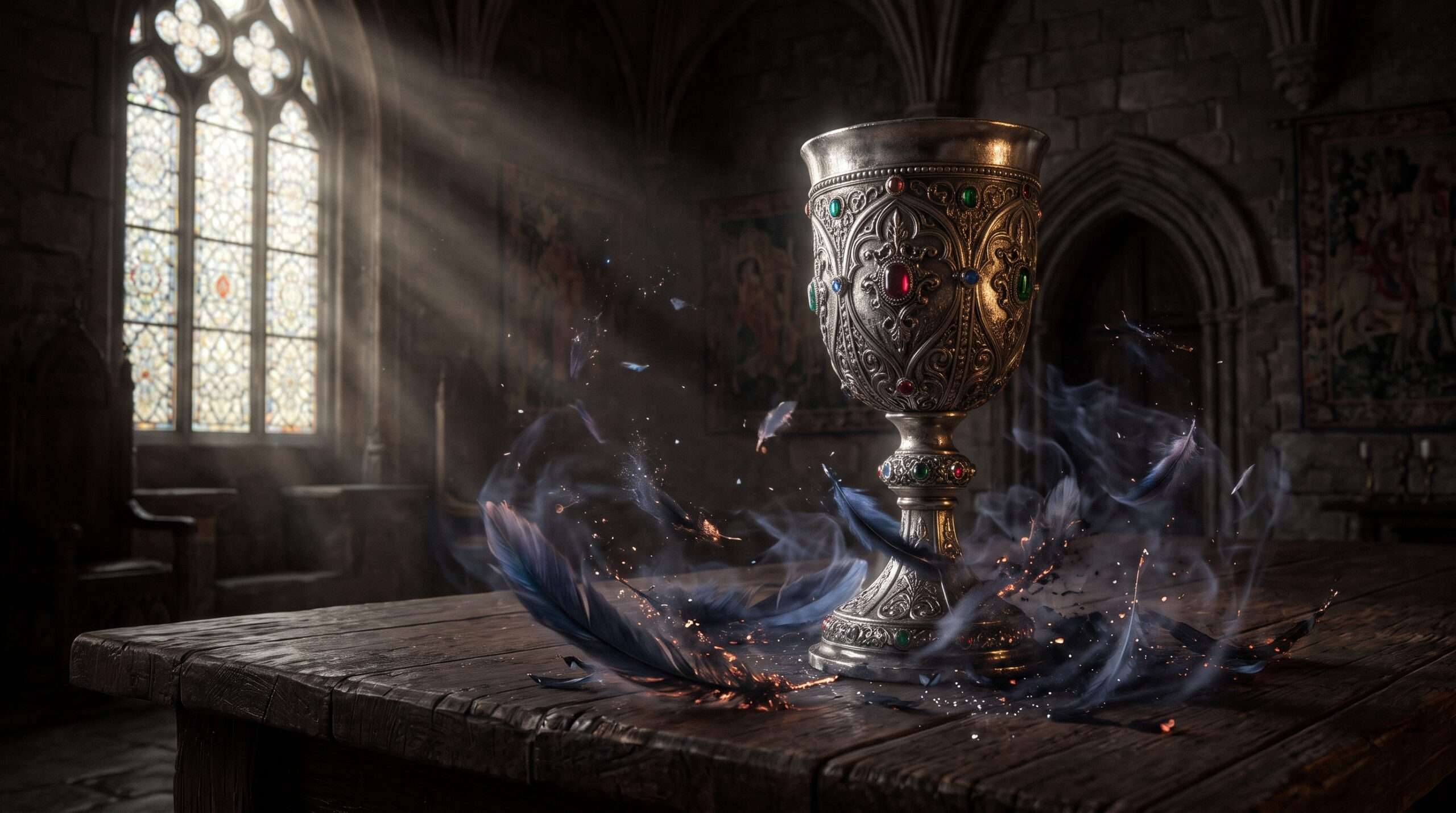
Vanishment is the art of making objects cease to exist. As Professor McGonagall famously explains, vanished objects go “into non-being, which is to say, everything.”
Taught primarily in the fifth year, Vanishment scales in difficulty based on the complexity of the organism. Vanishing an invertebrate, like a snail, is relatively simple for an O.W.L. student. However, vanishing a mammal, like a mouse or a kitten, requires immense skill, as mammals possess a far more complex biological and cellular structure.
3. Conjuration
Conjuration is the direct opposite of Vanishment: it is the magic of bringing things into existence from seemingly nothing. Because creating matter is infinitely harder than displacing or altering it, Conjuration is strictly N.E.W.T.-level magic, taught only to sixth and seventh-year students.
Things conjured out of thin air are rarely permanent. The magic eventually fades, and the object will vanish again. Furthermore, Conjuration is severely restricted by immutable magical laws, preventing wizards from simply conjuring anything they desire.
4. Untransfiguration
Untransfiguration is the necessary art of reversing transfigurations and returning subjects to their original state. This is vital for correcting classroom mistakes or healing those struck by malicious transfigurative curses. Spells like Reparifarge are standard in this branch, allowing a skilled witch or wizard to undo the structural changes imposed by another’s wand.
Gamp’s Law of Elemental Transfiguration (The Golden Rules)
To maintain balance in the magical universe, Transfiguration is governed by Gamp’s Law of Elemental Transfiguration. While the exact wording of the law is never fully written out in the books, Hermione Granger explicitly references its limitations. There are five Principal Exceptions to Gamp’s Law—things that cannot be permanently or authentically conjured out of nothing.
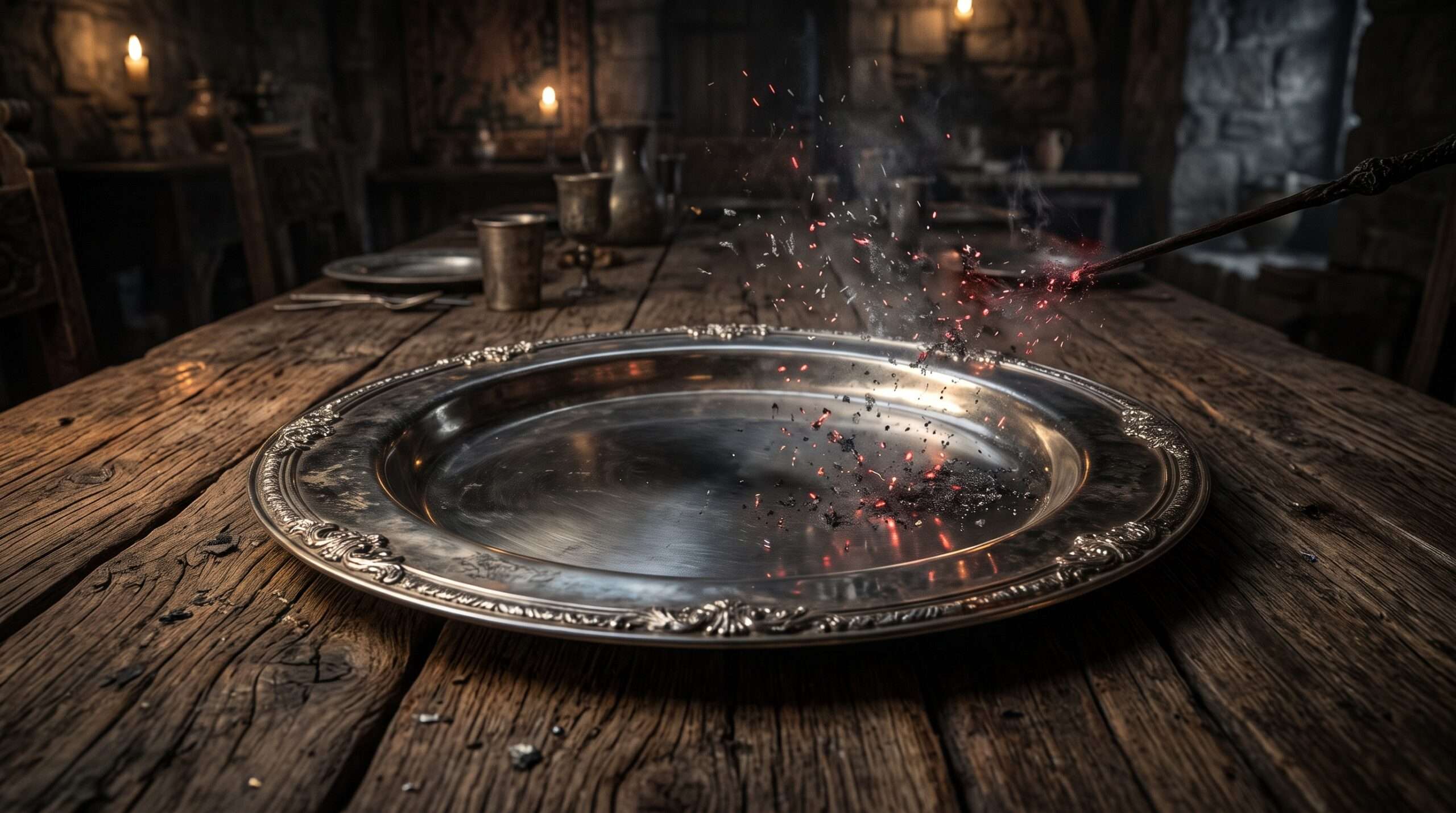 The First Principal Exception: Food
“Your mother can’t produce food out of thin air, no one can,” Hermione explains to Ron in Harry Potter and the Deathly Hallows. “Food is the first of the five Principal Exceptions to Gamp’s Law of Elemental Transfiguration.”
While a wizard can summon food if they know where it is, enlarge food that already exists, or transform one type of food into another, they cannot conjure nutritional, edible food from nothing. If a wizard attempts to conjure food, the resulting substance will offer no real nutritional value and will likely vanish shortly after consumption. This explains why poverty exists in the wizarding world, and why Mrs. Weasley still has to purchase groceries and cook.
The Other Four Exceptions (Theorized and Confirmed)
While J.K. Rowling explicitly named Food as the first exception, lore experts and canonical evidence strongly support the identities of the remaining four limitations:
-
Money and Precious Metals: You cannot conjure permanent, authentic galleons or valuable metals. Leprechaun gold, which vanishes after a few hours, is a prime example of conjured wealth failing. The Philosopher’s Stone is the only known method of genuine alchemical transmutation of base metals into gold, bypassing standard transfiguration rules.
-
Curse Damage (Healing): Magical injuries caused by Dark magic cannot be repaired through standard transfiguration. When George Weasley’s ear is severed by the Sectumsempra curse, it cannot be regrown or transfigured back into existence. Dark magic leaves permanent structural damage.
-
Resurrection/Life: True life cannot be conjured or transfigured back from the dead. While Inferi can be reanimated like puppets, and the Resurrection Stone can recall echoes of the deceased, no transfiguration spell can reverse death.
-
Magical Objects with Innate Power: A wizard cannot conjure a functional wand, a Flying Broomstick, an Invisibility Cloak, or a Prophecy. Objects imbued with deep, complex enchantments must be physically crafted; their magical essence cannot be replicated through simple Conjuration.
Notable Transfiguration Spells and Incantations
Throughout the Harry Potter series, several transfiguration spells are used both in the classroom and in life-or-death duels.
Beginner and O.W.L. Level Spells
-
Vera Verto: First seen in Harry Potter and the Chamber of Secrets, this spell transforms an animal into a water goblet. It requires a precise tap of the wand three times.
-
Evanesco: The Vanishing Spell. It is used to banish objects into non-being. Snape frequently uses it to empty students’ cauldrons when they brew terrible potions.
-
Avifors: A transformation spell that turns inanimate objects into birds.
-
Reparifarge: The untransfiguration incantation used to reverse a botched transformation, restoring the object to its original state.
 Advanced and N.E.W.T. Level Spells
-
Incarcerous: A Conjuration spell that manifests thick ropes or cords out of thin air to bind a target.
-
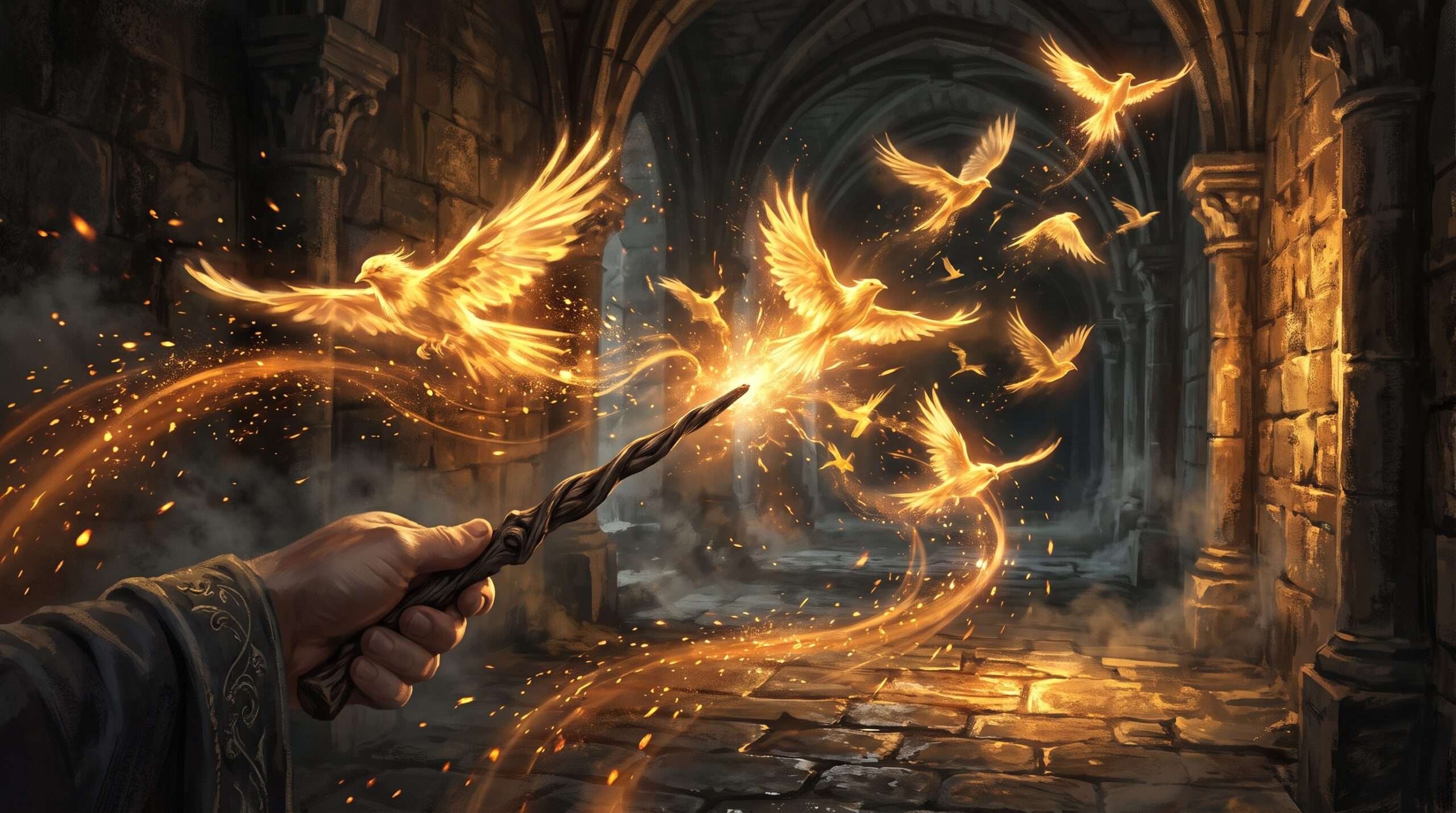
Avis: An advanced Conjuration spell that produces a flock of live birds from the caster’s wand. Hermione famously pairs this with the Oppugno jinx to attack Ron with a flock of conjured canaries.
-
Geminio (The Gemino Curse): A spell used to duplicate an object. While it creates an exact physical replica, the duplicate holds no magical value and will eventually tarnish or break down. Bellatrix Lestrange used this curse in her Gringotts vault to protect Hufflepuff’s cup.
-
Piertotum Locomotor: While bordering on Charms, this highly advanced spell animates inanimate objects with a sense of purpose and duty, as seen when McGonagall brings the Hogwarts statues to life during the Battle of Hogwarts.
Human Transfiguration: Animagi and Metamorphmagi
Human Transfiguration is the most heavily regulated and dangerous form of this magic, largely due to the severe risks it poses to the caster’s mind and body.
The Grueling Process of Becoming an Animagus
An Animagus is a witch or wizard who can willingly transform into a specific animal while retaining their human consciousness and magical lifespan. The Ministry of Magic strictly monitors this, keeping an official registry to prevent Animagi from abusing their powers (though unregistered Animagi like James Potter, Sirius Black, Peter Pettigrew, and Rita Skeeter famously bypassed this).
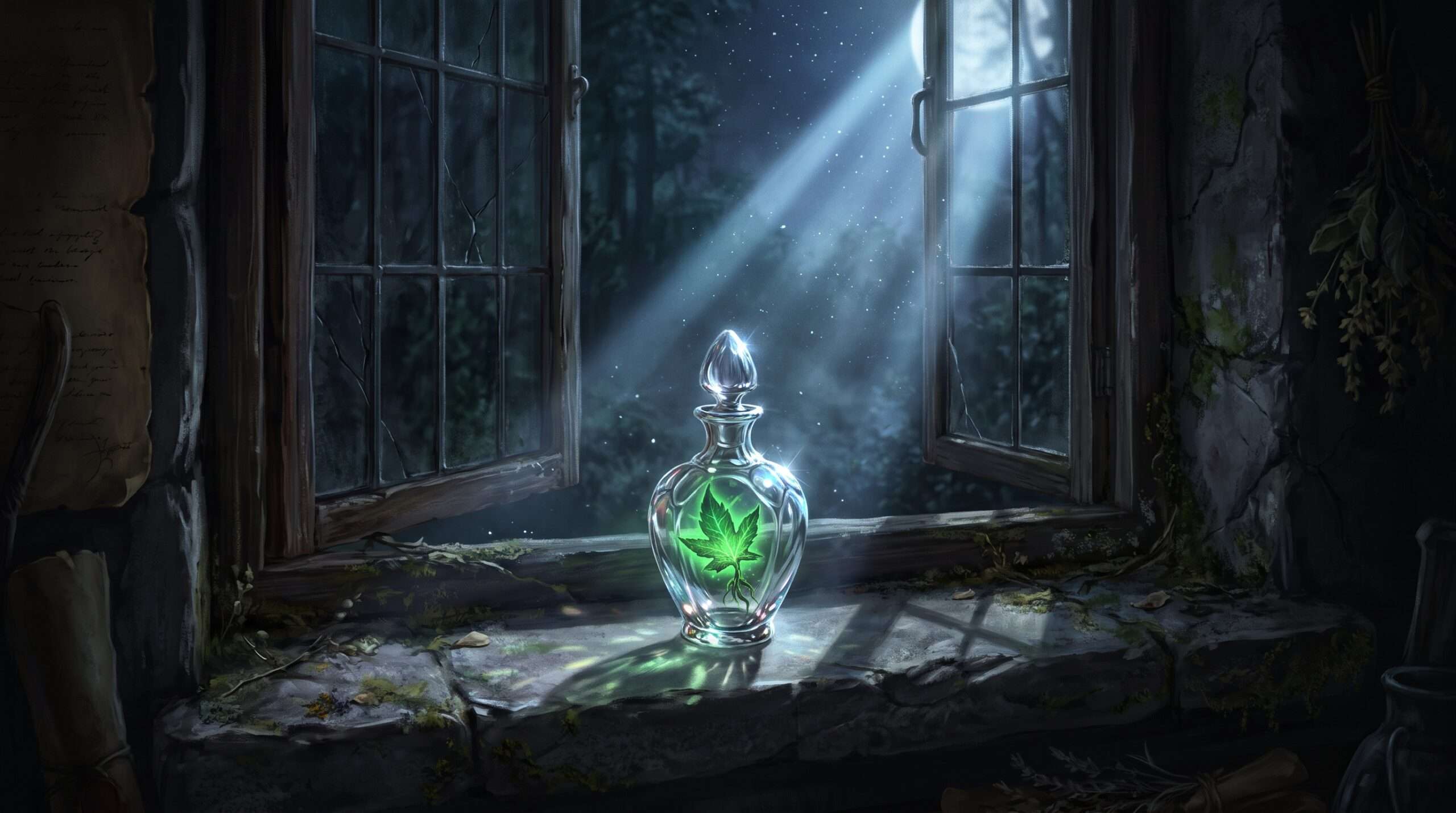
The process of becoming an Animagus is not a simple spell; it is an agonizing, multi-step ritual. A wizard must hold a single Mandrake leaf in their mouth for an entire month (from full moon to full moon). They must then place the leaf in a crystal phial under the pure rays of the moon, add a hair from their head, a silver teaspoon of dew (untouched by sunlight or human feet for seven days), and the chrysalis of a Death’s-head Hawk Moth. This potion must remain hidden until the next electrical storm, at which point the wizard points their wand at their heart, recites the incantation Amato Animo Animato Animagus, and drinks the potion. A single mistake can result in permanent, horrific mutations.
 Metamorphmagi vs. Animagi
It is crucial to distinguish an Animagus from a Metamorphmagus. An Animagus learns their ability through intense transfigurative study and ritual. A Metamorphmagus, like Nymphadora Tonks or her son Teddy Lupin, is born with the innate genetic ability to change their physical appearance at will. They do not require wands or potions to alter their hair color, facial features, or body shape; it is an instinctual, biological form of transfiguration.
Lycanthropy (Werewolves)
A common misconception is that a werewolf transformation is a form of Human Transfiguration. Lycanthropy is actually a blood-borne magical disease classified under Dark magic. Unlike an Animagus, a werewolf (like Remus Lupin) has no choice in their transformation, cannot choose their animal form, and loses their human mind entirely during the full moon unless they consume the Wolfsbane Potion.
The Hogwarts Curriculum: Mastering Transfiguration
At Hogwarts School of Witchcraft and Wizardry, Transfiguration is a core class required for the first five years, with N.E.W.T. level advancement available only to those who achieve an “Exceeds Expectations” or “Outstanding” on their O.W.L. exams.
Professor Minerva McGonagall
For the duration of Harry’s time at Hogwarts, the subject is taught by Minerva McGonagall. A registered Animagus (a tabby cat) and a brilliant witch, McGonagall is uniquely suited to teach the subject. She runs a strict classroom, recognizing that horseplay during a transfiguration lesson can lead to fatal consequences. Her deep understanding of magical theory allows her to seamlessly weave between teaching basic Vanishment and executing highly complex animate-to-inanimate spells in the heat of battle.
Key Textbooks
The curriculum relies on incredibly dense, highly theoretical texts to guide students.
-
A Beginner’s Guide to Transfiguration by Emeric Switch (Years 1-2)
-
Intermediate Transfiguration (Years 3-5)
-
A Guide to Advanced Transfiguration (Years 6-7, for N.E.W.T. students)
These texts do not just list wand movements; they contain complex mathematical and magical formulas detailing mass, molecular density, and the metaphysical weight of the objects being altered.
Frequently Asked Questions (FAQ)
Can Transfiguration be used as a weapon in duels?
Absolutely. Advanced duelists frequently use Transfiguration in combat to alter their environment. During the legendary duel between Albus Dumbledore and Lord Voldemort in the Ministry of Magic Atrium, Dumbledore transfigures the water in the Fountain of Magical Brethren into a glass-like cocoon to trap Voldemort, and animates statues to block killing curses.
Does Transfigured food provide nutritional value?
If you transform a desk into a pig, and then slaughter the pig, the meat will not sustain you. Because the core essence of the object is still a desk, the magic will eventually wear off, or the magical matter will fail to process through a human digestive system. You cannot bypass Gamp’s Law through a loophole.
How long does a Transfiguration spell last?
The duration of a transfiguration depends entirely on the skill and power of the caster. A poorly cast spell might revert in minutes, while a master’s transfiguration could last indefinitely until specifically untransfigured by another spell.
Can you transfigure an object into a Horcrux?
No. Creating a Horcrux involves Dark magic rituals and the tearing of the soul through murder to store a soul fragment inside a receptacle. While the receptacle itself can be an ordinary object, the act of making it a Horcrux is not a Transfiguration spell.
Transfiguration stands as a testament to the highly structured, scientific nature of the Harry Potter universe. It is not merely a vehicle for convenience, but a rigorous discipline bounded by natural laws, severe limitations, and the constant threat of catastrophic failure. To master Transfiguration is to command the very fabric of reality, bending the material world to the will of the wand.
As you prepare to load this content into WordPress, would you like me to write a dedicated meta description and suggest 3-4 internal link anchor texts to tie this into your other Harry Potter lore articles?