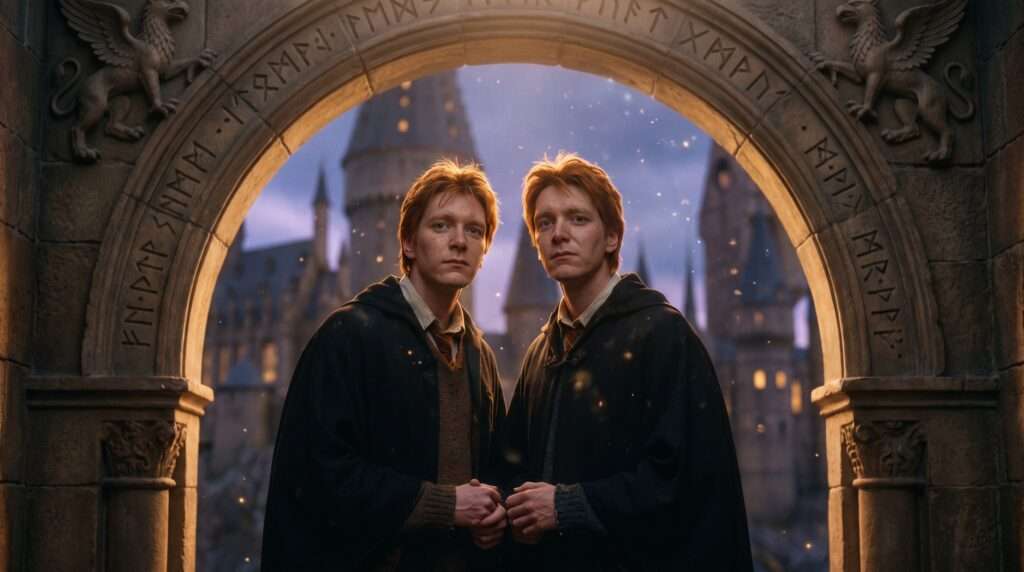
The Weasley twins were the beating heart of humor, rebellion, and joy in the wizarding world, providing light in a narrative that grew progressively darker. Their unparalleled ability to bring laughter to the most desolate of times makes the ultimate tragedy of the Second Wizarding War incredibly difficult to accept. If you find yourself returning to the series and asking, “Which twin died in Harry Potter?”, the devastating answer is Fred Weasley.
Fred’s death remains one of the most shocking and painful losses in modern fantasy literature. As readers and viewers, we watched Fred and George grow from mischievous pranksters to brave resistance fighters. Breaking apart this inseparable duo was a deliberate, agonizing choice by author J.K. Rowling to illustrate the brutal, indiscriminate reality of war.
In this comprehensive guide, we will explore the exact circumstances surrounding Fred Weasley’s tragic death, clarify the common confusion between the twins’ fates, analyze the differences between the book and film adaptations, and dive deep into the heartbreaking aftermath for George Weasley and the rest of the surviving family.
The Direct Answer: Which Weasley Twin Died?
To put it plainly and directly: Fred Weasley is the twin who lost his life during the Battle of Hogwarts on May 2, 1998.
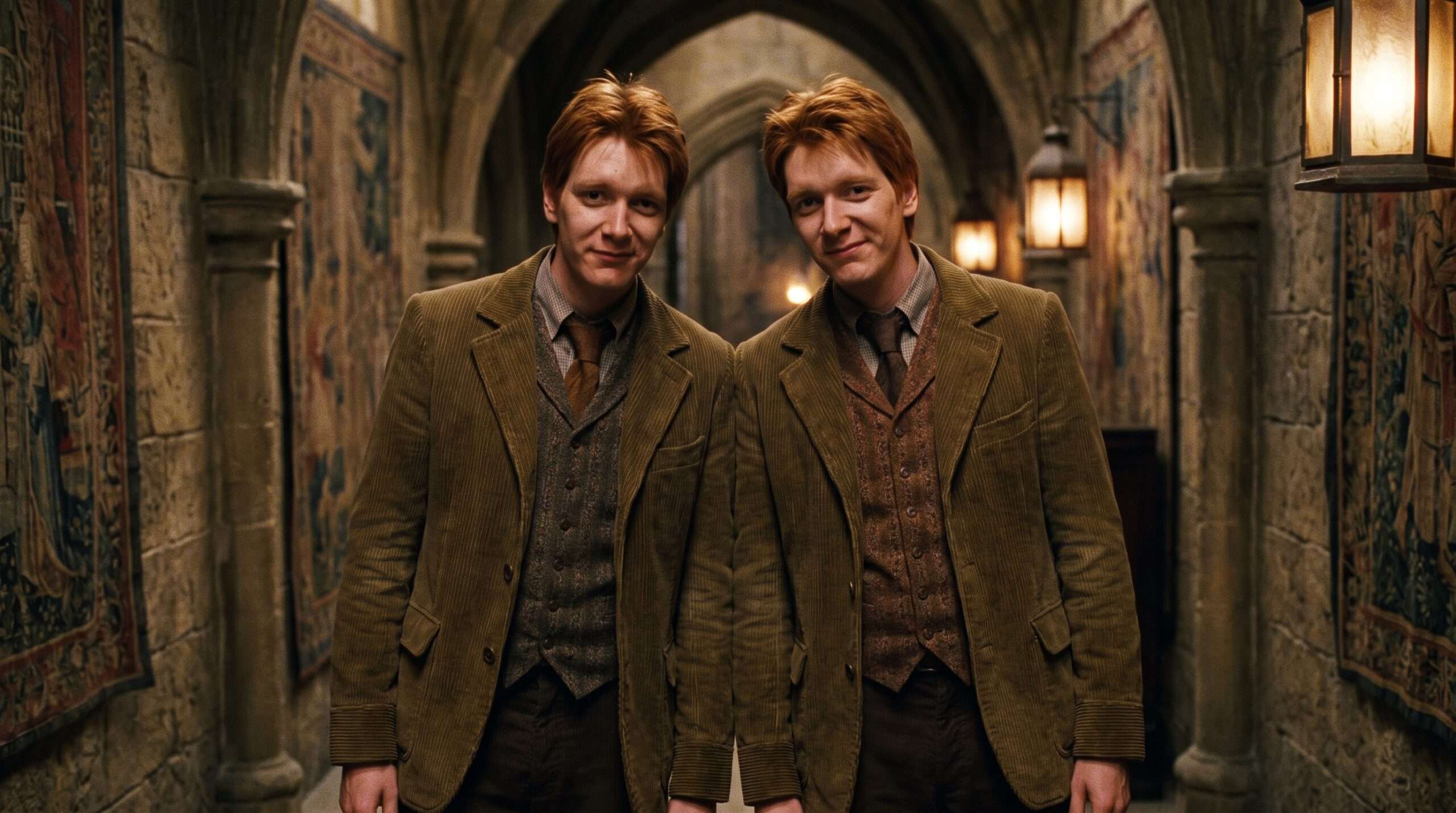
It is entirely common for casual fans and even dedicated readers to experience a moment of confusion regarding which twin met this tragic fate. Throughout the Harry Potter series, Fred and George are virtually indistinguishable. They intentionally swap identities to confuse their mother, Molly Weasley, finish each other’s sentences, and operate as a single chaotic entity lovingly referred to by the fandom as “Gred and Forge.”
Furthermore, in the beloved film adaptations, actors James and Oliver Phelps brought the twins to life with such identical perfection that the line between the characters blurred even further. Because the twins share almost every scene and every major life milestone up until the final installment, keeping track of who is who during the chaotic events of Harry Potter and the Deathly Hallows can be challenging. However, wizarding world canon is absolute: Fred is the one who falls in battle, leaving George to navigate the rest of his life without his other half.
 George’s Ear vs. Fred’s Death: Clearing Up the Mix-Up
One of the primary reasons fans struggle to remember which twin died is because both twins suffer severe, traumatic events in the final book and movie. Before the fatal Battle of Hogwarts, George Weasley experiences a permanent, life-altering injury.
The Battle of the Seven Potters
At the very beginning of Harry Potter and the Deathly Hallows, the Order of the Phoenix orchestrates a mission to transport Harry safely from Privet Drive to the Burrow. To confuse the Death Eaters, six members of the Order take Polyjuice Potion to look identical to Harry. Fred and George both volunteer for this dangerous task.
During the ensuing aerial ambush, George is severely injured. While disguised as Harry, he is struck by the dark Sectumsempra curse, a spell notoriously invented by the Half-Blood Prince, Severus Snape.
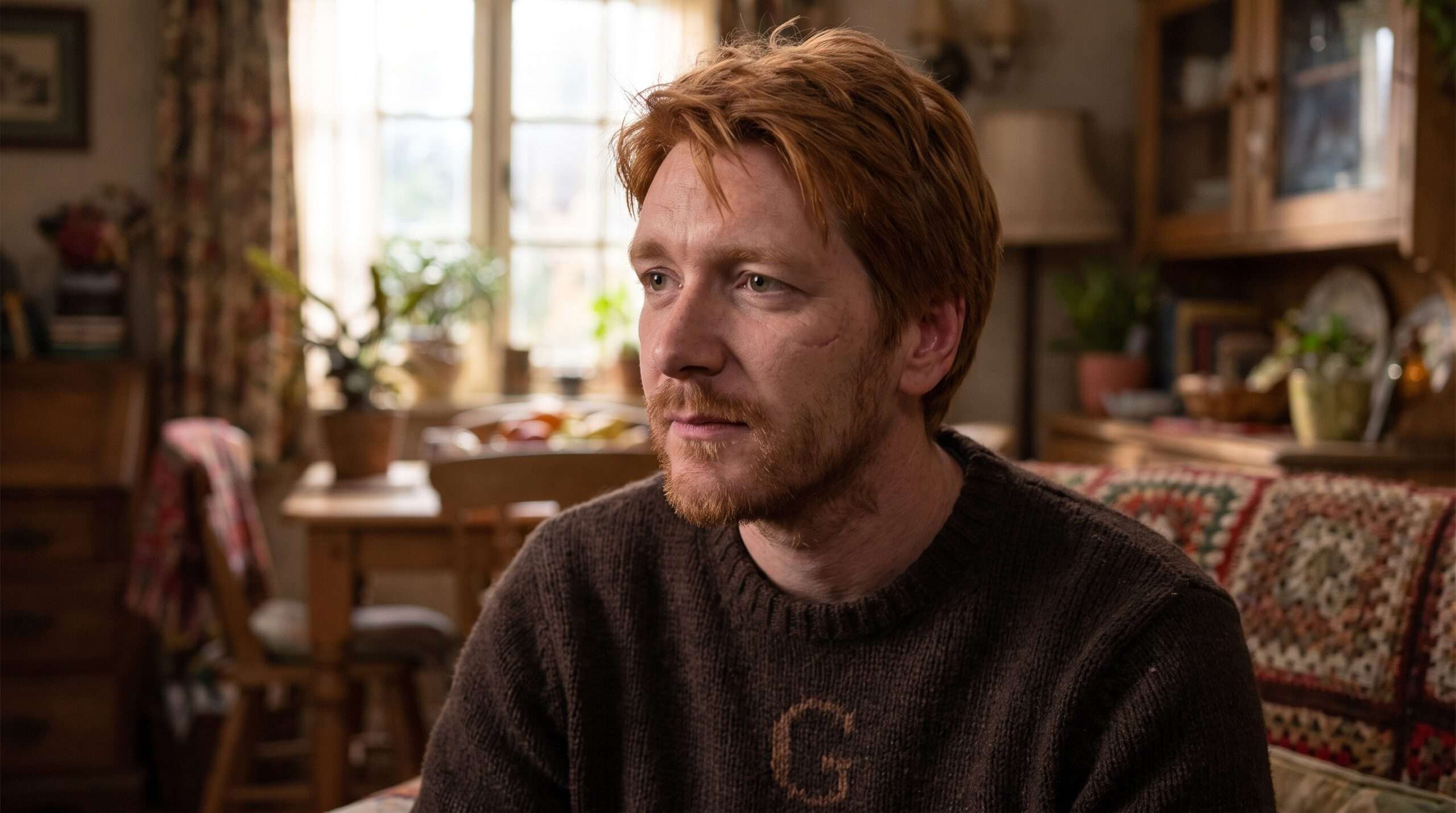
The “Holey” Ear
Because Sectumsempra is a curse of dark magic, the damage it inflicts cannot be healed or reversed by standard magical means. George permanently loses his left ear. In classic Weasley fashion, George immediately diffuses the tension and his mother’s sheer terror upon his safe arrival by making a joke, calling himself “holey.”
 Why This Distinction Matters
From a purely visual and narrative standpoint, George losing his ear is deeply significant. First, it provides a permanent physical distinction between the two boys for the first time in their lives. If you are watching Deathly Hallows: Part 1 or Part 2, you can easily tell them apart: the twin missing an ear is George; the twin with both ears is Fred.
More importantly, George’s injury serves as a grim, haunting foreshadowing. The violent removal of George’s ear is a physical manifestation of the impending ultimate separation. The war first took a piece of George, and then it took his entire other half.
How Did Fred Weasley Die? The Battle of Hogwarts
Fred Weasley’s death occurs during the climax of the series: the historic Battle of Hogwarts. The way his death is depicted varies significantly between J.K. Rowling’s original novel and the Warner Bros. film adaptation. To truly understand the tragedy, we must look at the canon events as they unfolded in the text.
Setting the Scene in the Corridors
The Battle of Hogwarts is absolute chaos. Giants, Acromantulas, Death Eaters, and Dementors have breached the castle walls. Fred is fighting fiercely alongside his older brother, Percy Weasley. This pairing is incredibly poignant because Percy had been estranged from the Weasley family for years, choosing his ambition and the corrupt Ministry of Magic over his own blood.
Percy returns just before the battle begins, apologizing profusely and begging for his family’s forgiveness. Fred, who had been the most vocal critic of Percy’s betrayal, is the first to accept his apology, shaking his hand and fighting side-by-side with him.
The Final Joke
As they duel masked Death Eaters in the corridor outside the Room of Requirement, Percy loudly announces to the Minister for Magic, Pius Thicknesse (who is under the Imperius Curse), that he is resigning.
Fred is absolutely delighted by this. He stops to look at his brother in sheer amazement, saying:
“You actually are joking, Perce… I don’t think I’ve heard you joke since you were—”
These are Fred Weasley’s last words. He dies with a laugh on his face, celebrating the return of his brother and the humor he cherished above all else.
The Cause of Death
Before Fred can finish his sentence, the air explodes. He is not struck by an Avada Kedavra (Killing Curse) from a wand; rather, he is killed in a massive, devastating structural explosion that blows apart the castle corridor.
While the chaos of the moment makes it difficult for the characters to process what is happening, J.K. Rowling later confirmed in wizarding world canon that the explosion was caused by the Death Eater Augustus Rookwood.
The Aftermath in the Book
The immediate aftermath in the novel is agonizing to read. Harry, Ron, and Hermione are thrown by the blast. When the dust settles, they hear Percy screaming. They find Fred staring blindly at the ceiling, the ghost of his last laugh still etched on his face. Percy refuses to leave Fred’s body, throwing himself over his younger brother to shield him from further harm until Harry and Ron help move him to a safe alcove so they can continue fighting.
Book vs. Movie: The Adaptation Differences
If you are primarily a fan of the films, you might not recall this corridor scene. Director David Yates and the production team of Harry Potter and the Deathly Hallows: Part 2 chose to alter the pacing of the battle.
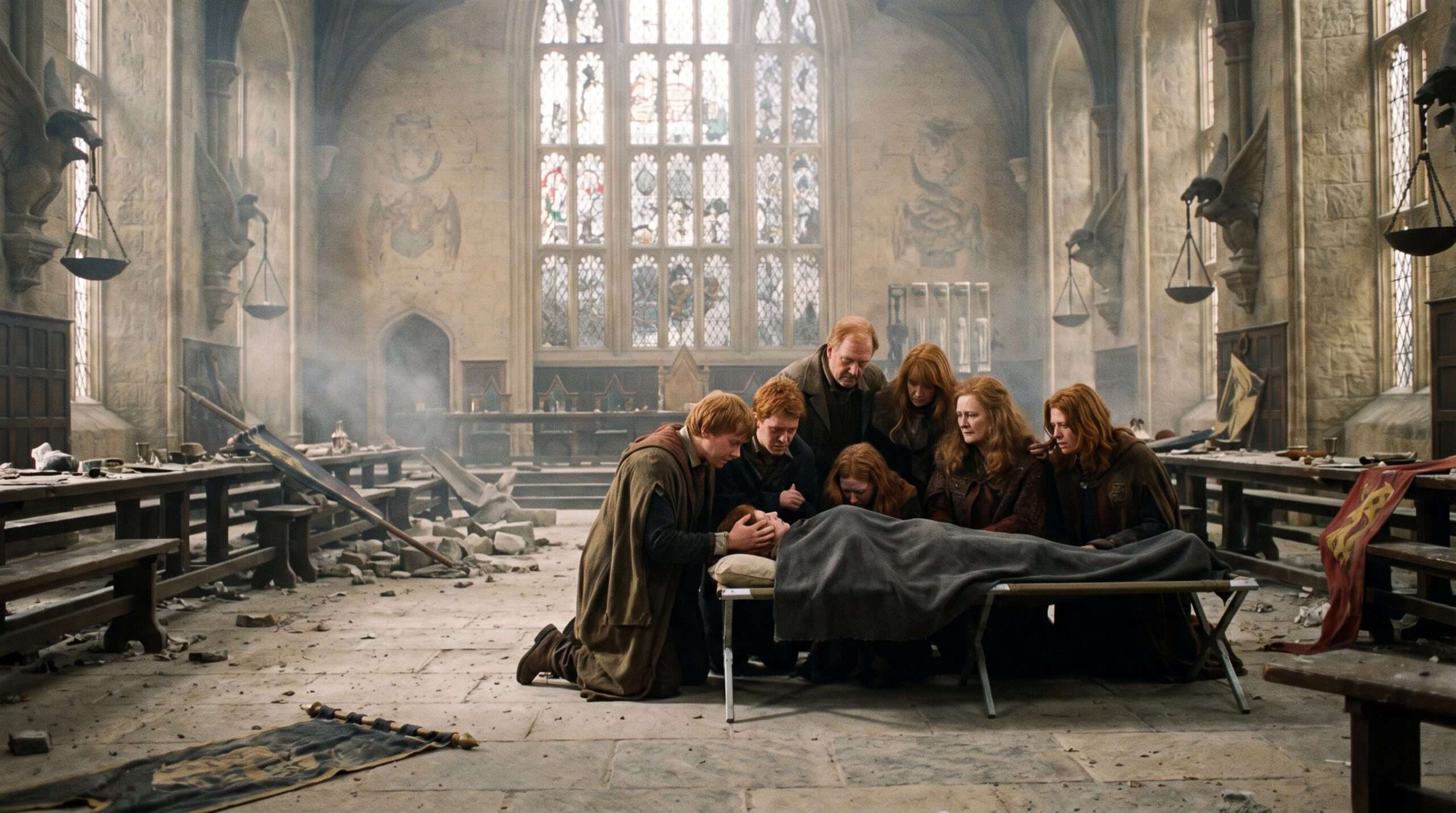
In the film, Fred’s death happens completely off-screen. Viewers see Fred fighting valiantly, and the next time he appears, the battle has paused. Harry walks into the Great Hall, which has been converted into a makeshift triage and morgue. He sees the Weasley family huddled together, sobbing uncontrollably. The camera pans to reveal Fred lying lifeless on a stretcher, with his twin brother George kneeling beside him in absolute despair. While the off-screen death lacks the sudden, visceral shock of the book’s explosion, the emotional weight of seeing the family mourning in the Great Hall remains one of the most tear-jerking scenes in cinematic history.
 Why Did J.K. Rowling Kill Fred? The Author’s Perspective
When an author creates a universe as beloved as Harry Potter, killing off fan-favorite characters often leads to outrage and heartbreak. So, why did J.K. Rowling decide that one of the twins had to die?
The Literary Necessity of Loss
At its core, Harry Potter is a story about the fight against fascism, prejudice, and pure evil. For the stakes of the Second Wizarding War to feel genuinely real and terrifying, the “good guys” could not emerge unscathed. If the entire Weasley family—all nine of them—survived the deadliest conflict in wizarding history, the narrative would have felt cheap and unrealistic. Rowling needed to inflict a wound on the most beloved, pure-hearted family in the series to demonstrate the true cost of war.
Shattering the Comic Relief
Fred and George were the embodiment of joy at Hogwarts. By killing Fred, Rowling effectively murdered the comic relief. It was a deliberate thematic choice to show that war does not just take lives; it destroys innocence, happiness, and laughter. Fred was historically the instigator—the slightly more aggressive, outspoken, and boisterous of the two. Striking him down left a void that could never be filled.
Rowling’s Annual Apologies
J.K. Rowling has acknowledged the pain this death caused the fandom. For several years, she started a tradition on May 2nd (the anniversary of the Battle of Hogwarts) of taking to Twitter to apologize for killing a specific character.
In 2015, she wrote:
“Today I would just like to say: I’m really sorry about Fred. Bows head in acceptance of your reasonable ire.”
She later admitted that Fred’s death was one of the hardest for her to write, alongside the death of Remus Lupin, because of what he represented to the story.
The Tragic Aftermath: What Happened to George Weasley?
The death of Fred Weasley begs the heartbreaking question: How does a twin survive the loss of their other half? For George Weasley, the road to recovery was long, painful, and forever incomplete.
Life Without His Other Half
George was profoundly changed. The series makes it clear that Fred and George were not just brothers; they functioned as a single soul in two bodies. Every scheme, every joke, and every dream they had was built together. Losing Fred meant George lost his mirror, his best friend, and his identity as one-half of “Gred and Forge.”
 The Patronus Fan Lore
One of the most widely accepted and heartbreaking pieces of post-series lore involves the Patronus Charm. The spell, which repels Dementors, requires the caster to focus on their single happiest memory. According to deep fandom lore and expert insights gathered from Rowling’s interviews, George Weasley was never able to cast a Patronus charm again after the Battle of Hogwarts. All of his happiest, most powerful memories involved Fred, and trying to access those memories only brought him overwhelming grief.
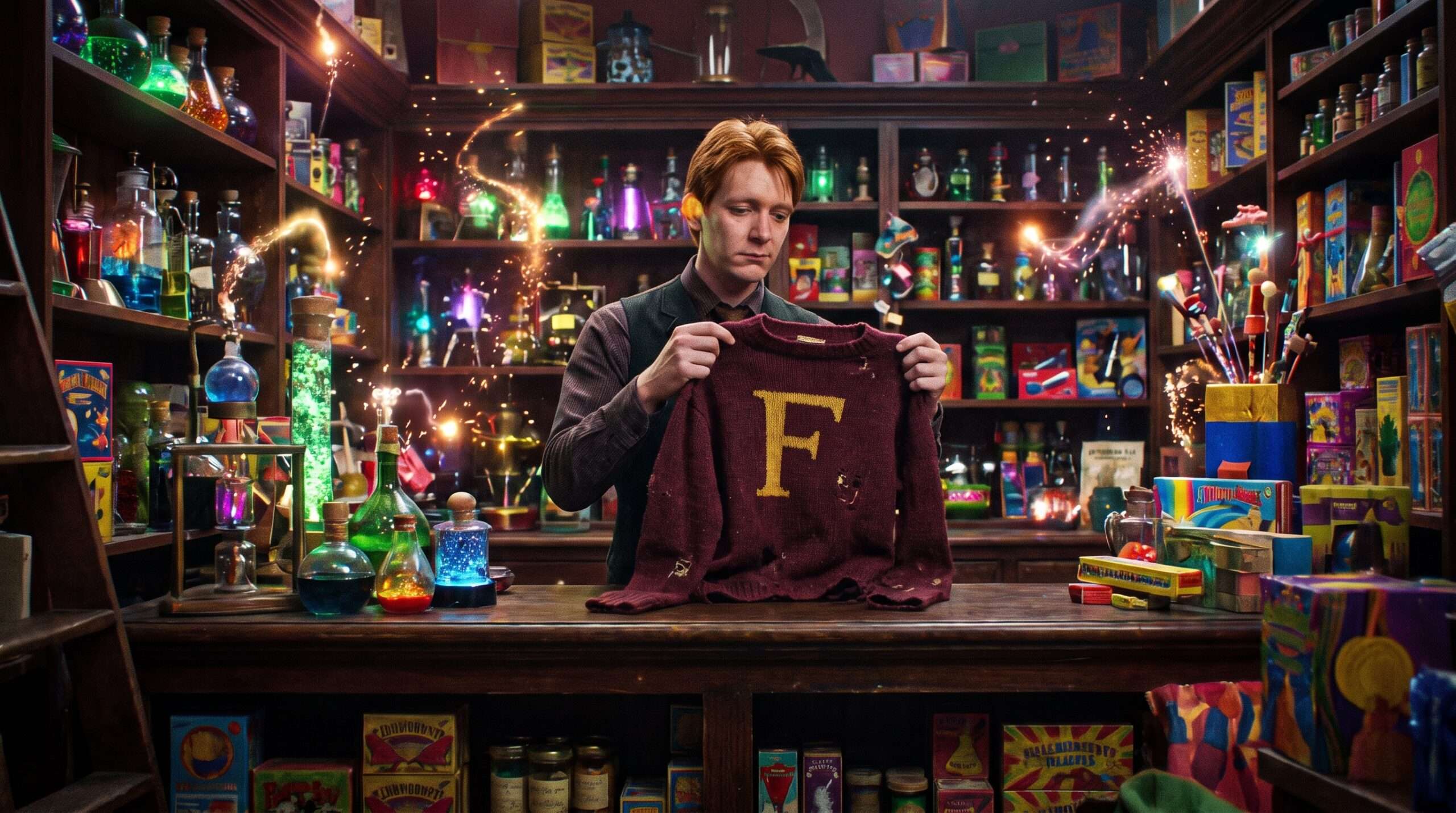
Weasleys’ Wizard Wheezes
Despite his monumental loss, George did not let their shared dream die. Before the war, the twins had successfully opened a joke shop in Diagon Alley, funded by the Triwizard Tournament winnings Harry Potter had given them.
After the war, George returned to Weasleys’ Wizard Wheezes. He continued to run the business, turning it into a massive, lucrative success. He did not have to do it alone, however. His younger brother, Ron Weasley, eventually left his job as an Auror at the Ministry of Magic to join George in running the joke shop. While Ron could never replace Fred, his presence helped George keep the laughter alive in Diagon Alley.
Moving Forward: Angelina Johnson and Fred II
Time eventually allowed George to find happiness again. He went on to marry Angelina Johnson. Angelina was a former Gryffindor Quidditch Chaser, a fierce member of Dumbledore’s Army, and famously, Fred Weasley’s date to the Yule Ball in Harry Potter and the Goblet of Fire.
Because both George and Angelina shared a deep, unwavering love for Fred, they found profound comfort in one another. They had two children together. In a beautiful, bittersweet tribute that ensures his brother’s legacy will live on forever, George named his firstborn son Fred Weasley II.
Remembering Gred and Forge: Their Best Moments
While the end of Fred’s story is steeped in tragedy, the legacy of the Weasley twins is one of boundless joy. To fully appreciate what was lost, we must celebrate what they gave us. Here are some of the most iconic moments that cemented Fred and George as legends of Hogwarts:
-
Passing on the Marauder’s Map (Prisoner of Azkaban): Recognizing that Harry needed the map more than they did, the twins passed down the magical parchment created by Moony, Wormtail, Padfoot, and Prongs. This selfless act of rebellion changed the course of Harry’s life and proved the twins were far more than just bullies with prank products.
-
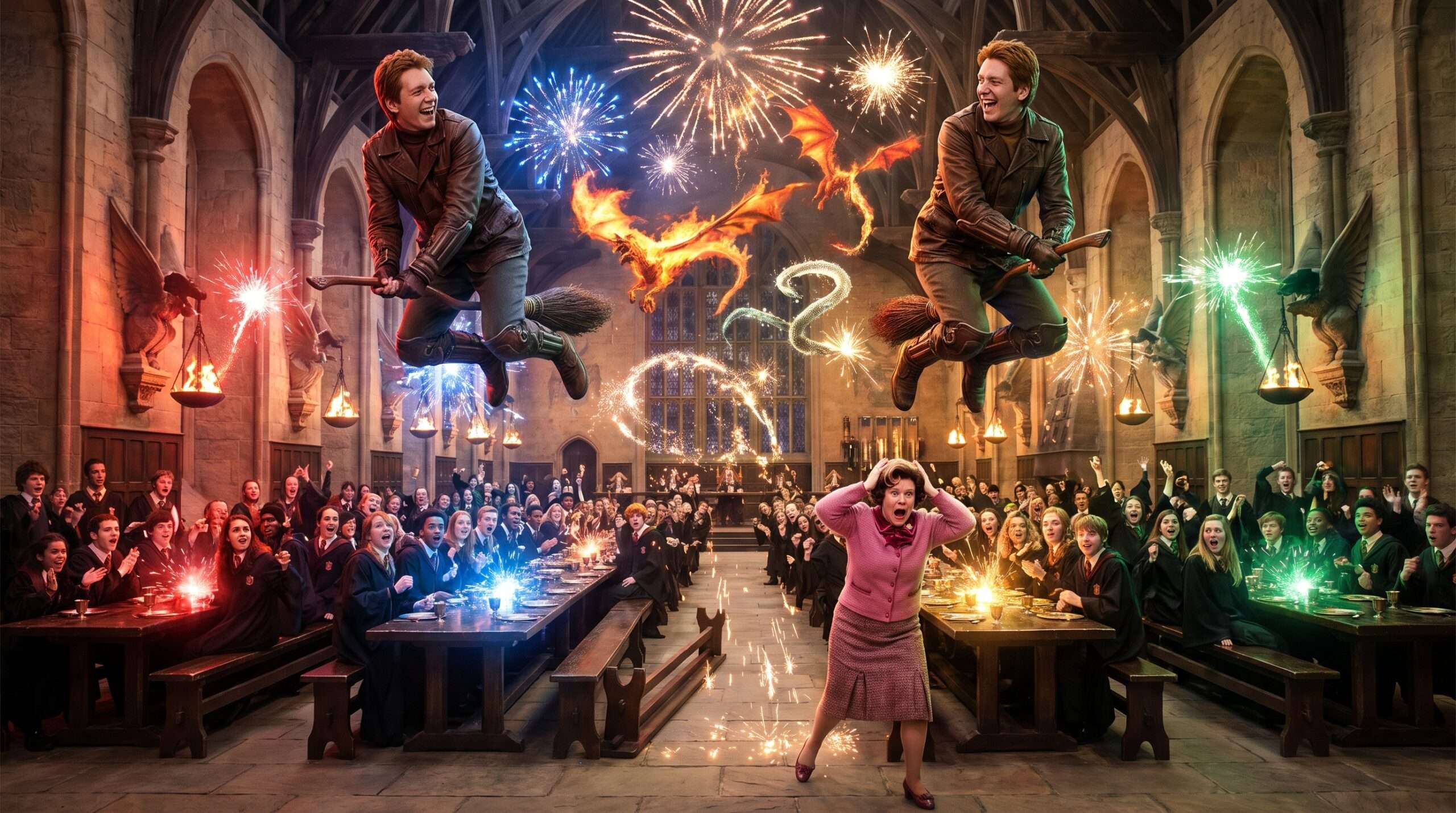
The Fireworks Rebellion (Order of the Phoenix): When the tyrannical Dolores Umbridge turned Hogwarts into a miserable dictatorship, the twins decided their education was over. They unleashed a spectacular, unstoppable barrage of enchanted fireworks in the Great Hall, tormenting Umbridge and flying away on their broomsticks into the sunset. It remains one of the most triumphant moments in the series.
-
The Portable Swamp: Before their grand exit, they left a massive, foul-smelling portable swamp in a Hogwarts corridor just to make Umbridge’s life a nightmare. It was such a brilliant piece of magic that Professor Flitwick secretly roped off a small portion of it to keep as a monument to their unparalleled magical ingenuity.
-
The Ton-Tongue Toffee (Goblet of Fire): Dropping a magically enhanced candy in the Dursleys’ living room specifically to trick Dudley Dursley into eating it, resulting in his tongue growing several feet long. It was petty, hilarious, and classic Weasley behavior.
 Frequently Asked Questions (FAQs)
Q: Did James or Oliver Phelps play the twin who died?
A: James Phelps played the role of Fred Weasley, while Oliver Phelps played George. However, the actors have admitted in interviews that they occasionally pulled pranks on the directors by switching roles on set, much like their fictional counterparts. When it came time to film the tragic death scene in the Great Hall, it was James on the stretcher and Oliver mourning over him.
Q: What were Fred Weasley’s exact last words?
A: In the book Harry Potter and the Deathly Hallows, Fred’s final sentence is interrupted by the explosion. He says: “You actually are joking, Perce… I don’t think I’ve heard you joke since you were—”
Q: Did George die in Harry Potter?
A: No, George Weasley survives the series. He suffers a severe injury (the loss of his ear) earlier in the final book, but he lives through the Battle of Hogwarts, eventually marrying Angelina Johnson and running the family joke shop.
Q: Who killed Fred Weasley?
A: While the movies leave the exact killer ambiguous during the chaotic battle, the books and subsequent lore confirm that a blast caused by the Death Eater Augustus Rookwood is what killed Fred.
Q: Why do fans call them “Gred and Forge”?
A: This is a reference to a joke in the first book, Harry Potter and the Sorcerer’s Stone. When their mother Molly knits them their annual Christmas sweaters with their initials (“F” and “G”) on them, they joke that they know their names are Fred and George, but decide to call themselves “Gred and Forge” to playfully mock the monogramming.
The question of which twin died in Harry Potter is one that brings a heavy heart to any fan of the wizarding world. Fred Weasley’s death was a stark reminder that even the brightest lights can be extinguished by the darkness of war.
While George lost his ear and Fred lost his life, the unbreakable bond between the Weasley twins remains one of the most powerful elements of J.K. Rowling’s universe. They taught a generation of readers that laughter can be a weapon, that authority should be questioned, and that joy is always worth fighting for. Fred’s body may have fallen at the Battle of Hogwarts, but the spirit of “Gred and Forge” lives on in every fan who opens the books and finds comfort in their mischief.
Where were you when you first read or watched the Battle of Hogwarts? Let us know your favorite Fred and George memory in the comments below, and keep the magic alive!