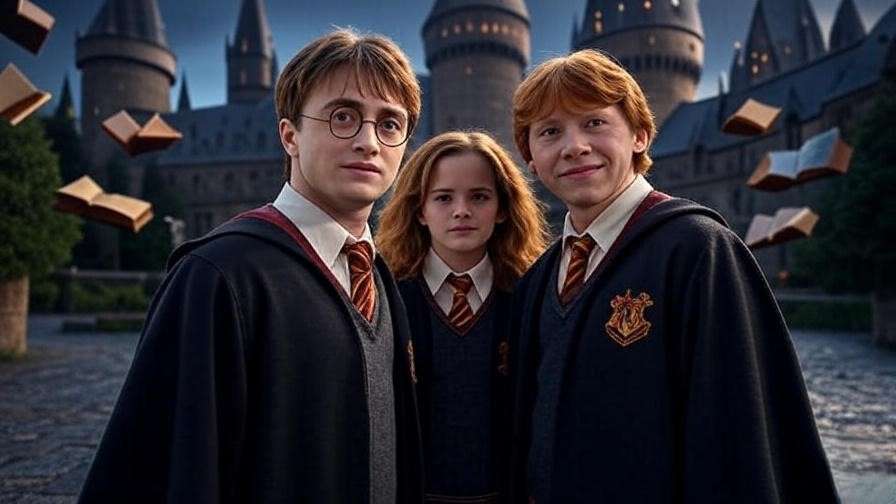
Hogwarts School of Witchcraft and Wizardry may be the most extraordinary educational institution ever imagined — enchanted ceilings, moving staircases, and professors who can transform into animals. But beneath all the magic, it is still a school. And in every school, some students thrive while others struggle. If you have ever wondered who gets bad grades in Harry Potter, you are far from alone. It is one of the most fascinating and surprisingly overlooked corners of the wizarding world.
From the corridors of Gryffindor Tower to the dungeons of the Potions classroom, academic performance at Hogwarts reveals a great deal about each character — their fears, their strengths, their home lives, and their futures. The grading system is unforgiving, career paths depend on exam results, and yet some of the most heroic and beloved characters in the series were anything but model students.
In this deep-dive ranking, we explore every major Hogwarts student who struggled academically, why they fell short, and what their academic journeys tell us about the broader world J.K. Rowling built. Whether you are a dedicated Potterhead or a casual fan brushing up on wizarding lore, this is the definitive guide to Hogwarts’ worst academic performers — ranked, analyzed, and fully backed by canon.
Understanding Grades at Hogwarts — How the System Works
Before we rank the worst students, it is essential to understand what “bad grades” actually means in the wizarding world. Hogwarts does not hand out letter grades the way most Muggle schools do. Instead, students are evaluated through two major examination systems that carry enormous weight for their futures.
The O.W.L. Grading Scale Explained
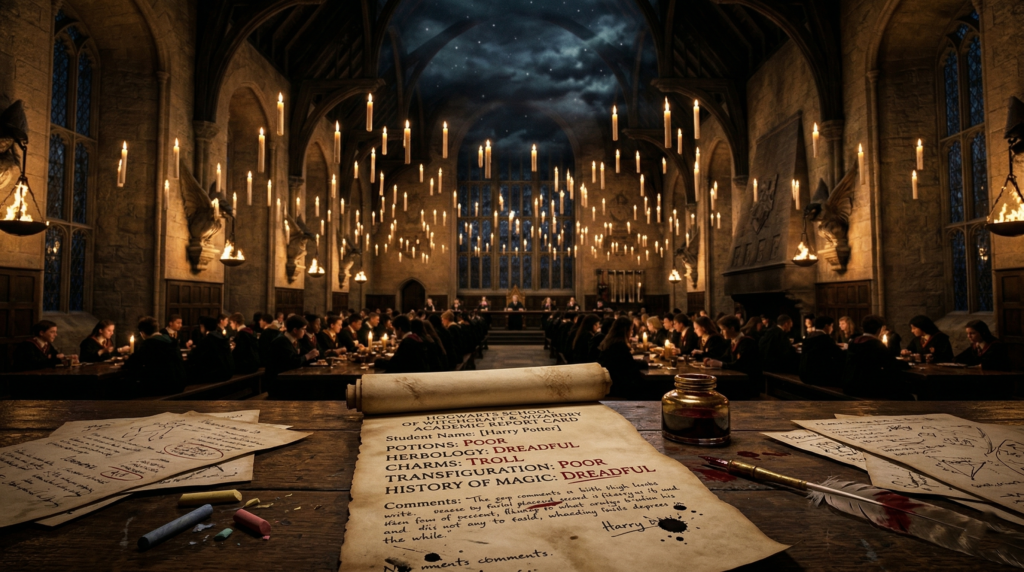
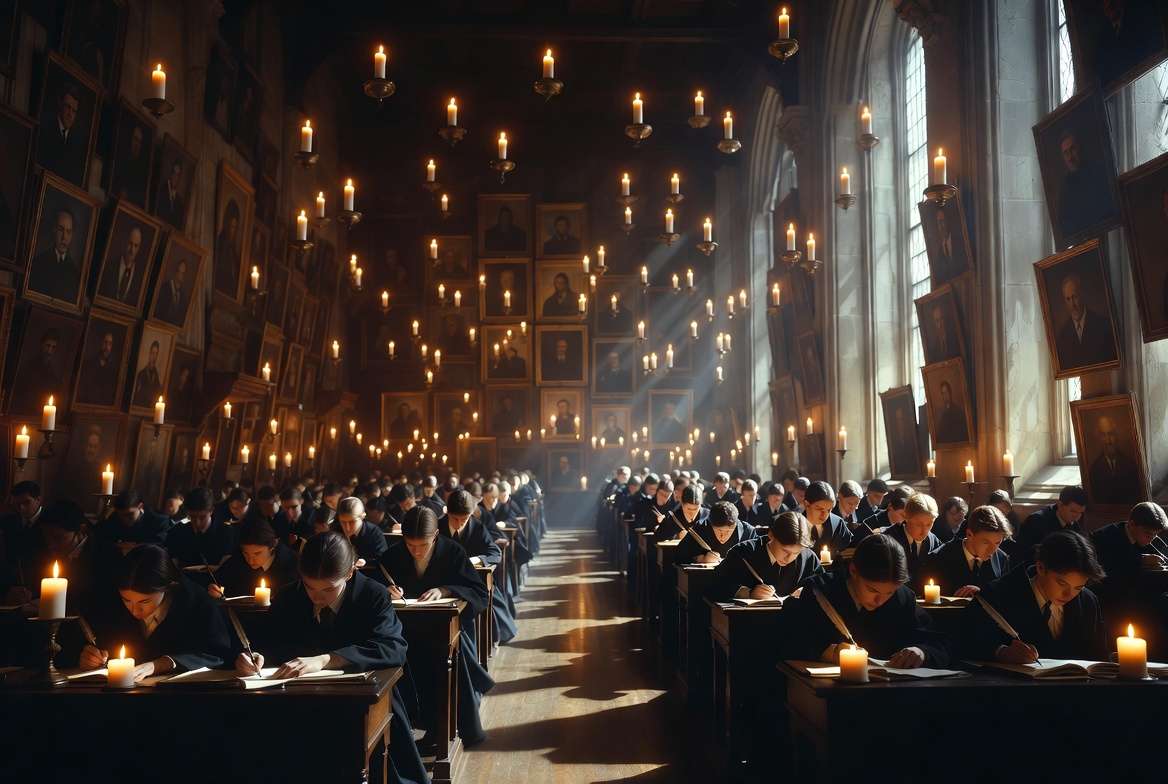
O.W.L.s — Ordinary Wizarding Levels — are standardized examinations taken at the end of a student’s fifth year. They are the wizarding equivalent of major qualifying exams, and the grades awarded fall into two broad categories: passing and failing.
The passing grades, from highest to lowest, are:
- Outstanding (O) — the pinnacle of academic achievement
- Exceeds Expectations (E) — above average performance
- Acceptable (A) — the minimum passing grade
The failing grades, which carry serious consequences, are:
- Poor (P) — just below the passing threshold
- Dreadful (D) — a significant failure
- Troll (T) — the lowest grade possible, considered deeply embarrassing in wizarding society
Anything below “Acceptable” is an official fail. Receiving a “Troll” on an O.W.L. is the wizarding academic equivalent of a catastrophic breakdown — and as we will see, some characters come dangerously close.
 What Are N.E.W.T.s and Why Do They Matter?
N.E.W.T.s — Nastily Exhausting Wizarding Tests — are the advanced examinations taken in the sixth and seventh years, and only students who performed well enough on their O.W.L.s are permitted to continue in a subject at N.E.W.T. level. These results directly determine career options in the wizarding world.
To become an Auror — one of the most prestigious careers in the Ministry of Magic — a student must achieve at least five O.W.L.s at “Exceeds Expectations” or above, followed by strong N.E.W.T. results in specific subjects including Defense Against the Dark Arts, Transfiguration, Charms, and Potions. Healing, law, and other professional careers carry similar requirements.
Poor N.E.W.T. performance does not just mean academic embarrassment. It closes doors. It limits futures. In the wizarding world, as in ours, grades have real consequences.
What Counts as a “Bad Grade” at Hogwarts?
For the purposes of this article, “bad grades” refers to any O.W.L. result below “Acceptable,” consistent classroom struggles documented throughout the book series, expulsion or forced removal from the school, or a pattern of academic underperformance across multiple subjects. With that definition firmly in place, let us get into the ranking.
Who Gets Bad Grades in Harry Potter? The Worst Students at Hogwarts Ranked
1. Ron Weasley — Bright But Chronically Inconsistent
Ron Weasley is, in many ways, the everyman of the Harry Potter series — loyal, funny, occasionally cowardly, and deeply relatable. He is also a textbook example of a student with genuine potential who consistently underperforms due to a combination of poor study habits, low self-confidence, and the crushing psychological weight of growing up in a family of high achievers.
Ron’s O.W.L. results, revealed in Harry Potter and the Order of the Phoenix, were respectable but unspectacular. He passed the majority of his exams with “Acceptable” grades, with a few reaching “Exceeds Expectations.” However, he failed both Divination and History of Magic — the latter because he fell asleep during the examination, which is among the more memorable academic disasters in the entire series.
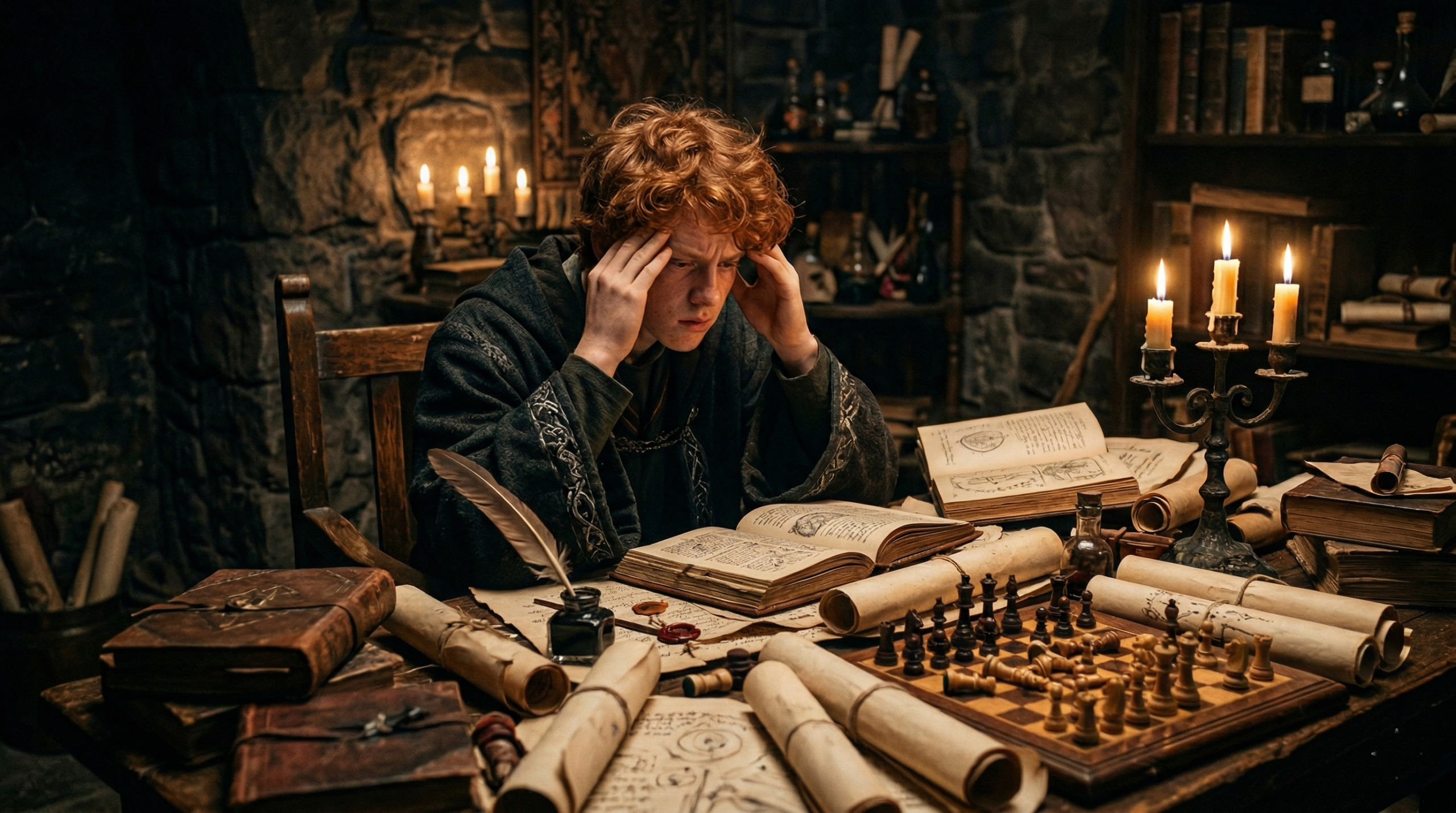 What makes Ron’s academic struggles particularly interesting is that they are clearly not the result of low intelligence. He is a gifted chess player with strategic brilliance that Harry openly admires. He demonstrates sharp emotional intuition and real bravery under pressure. The problem is motivation and consistency. Without Hermione’s relentless encouragement — and often her direct assistance — Ron tends to coast.
There is also a psychological dimension that the books handle quietly but meaningfully. Ron grows up in the shadow of five older brothers, several of whom were prefects, Quidditch players, or academic standouts. Bill Weasley was Head Boy. Percy was a prefect and later a Ministry official. Even Fred and George, for all their deliberate underachievement, were clever and capable. Ron internalized the belief that he could never measure up, and that belief followed him into every classroom.
His academic record, while not disastrous, places him firmly among Hogwarts’ inconsistent performers — a student who could have achieved far more than his grades reflected.
2. Harry Potter — The Underachieving Chosen One
Here is a truth the fandom does not always confront directly: Harry Potter is not a good student. He is an extraordinary wizard, a natural flier, a gifted Defense Against the Dark Arts practitioner, and an instinctively brave leader. But as a classroom learner, he is decidedly average — and in several subjects, he is outright poor.
Harry’s O.W.L. results paint a revealing picture. He earned seven O.W.L.s in total — a decent number, but significantly lower than Hermione’s ten. His strongest result was, predictably, a grade of “Outstanding” in Defense Against the Dark Arts. He passed Transfiguration, Charms, Care of Magical Creatures, Herbology, and Astronomy with acceptable or better marks. However, he failed Divination and History of Magic, receiving “Poor” in both.
Perhaps most telling is the Potions situation. Harry scraped an “Exceeds Expectations” in Potions — a result that shocked even him — largely because he had assumed he would fail. Professor Snape had made it his mission throughout Harry’s school years to belittle, undermine, and academically sabotage him at every opportunity, which almost certainly suppressed Harry’s actual performance in that subject.
What explains Harry’s broader academic mediocrity? Several factors converge. For most of his Hogwarts career, Harry is not simply a student — he is a target. He is dealing with Voldemort’s repeated attempts to kill him, traumatic losses, Ministry persecution, and the crushing burden of a prophecy that marks him for either murder or martyrdom. Expecting him to also submit polished Transfiguration essays on time is, in retrospect, somewhat unreasonable.
There is also the question of study habits. Harry frequently leaves assignments until the last moment, relies heavily on Hermione’s notes and guidance, and prioritizes Quidditch practice over academic preparation. In a purely academic assessment, the Boy Who Lived would not have graduated near the top of his class.
And yet, Harry’s practical magical abilities are extraordinary. His performance in actual combat, his casting under pressure, and his leadership of Dumbledore’s Army all demonstrate a form of intelligence and skill that O.W.L. grades were never designed to capture. The distinction between theoretical knowledge and applied ability is one of the most quietly profound academic commentaries in the entire series.
3. Neville Longbottom — The Most Misunderstood Student at Hogwarts
If there is one student at Hogwarts whose academic record demands the most careful and empathetic analysis, it is Neville Longbottom. On the surface, Neville appears to be Hogwarts’ most consistent failure — fumbling spells, melting cauldrons, and dreading almost every class. But scratch beneath that surface and you find one of the most heartbreaking and ultimately triumphant academic stories in the entire series.
Neville struggles in nearly every subject during his early years. His Potions results under Snape are particularly catastrophic — a fact that J.K. Rowling makes directly relevant by revealing that Neville’s greatest fear, conjured by the Boggart in Prisoner of Azkaban, is Snape himself. When a student’s greatest fear is their teacher, academic failure is not a mystery. It is an inevitable outcome of a psychologically unsafe learning environment.
 The cruelty of Snape’s treatment of Neville is one of the more disturbing threads woven through the series. Snape deducts points from Neville for breathing incorrectly, mocks his every error in front of classmates, and at one point threatens to poison Neville’s toad, Trevor, if a potion is brewed incorrectly. For a child already burdened by deep-seated confidence issues — stemming from years of his family doubting whether he had inherited any magical ability at all — this kind of systematic humiliation is academically devastating.
But here is what makes Neville’s story remarkable: the moment the environmental conditions change, so does his performance. In Herbology — taught by the warm, encouraging Professor Sprout — Neville excels. He is among the best in his year, demonstrating genuine expertise and passion. This single data point exposes the truth that Neville’s grades were never really about his ability. They were about his circumstances.
His arc across the full series is one of the most satisfying in all of fiction. By Deathly Hallows, Neville is leading Dumbledore’s Army inside a hostile Hogwarts, defying the Carrows, and ultimately wielding the sword of Gryffindor to destroy Nagini — Voldemort’s final Horcrux. The boy who could not brew a simple potion under Snape’s glare became one of the most courageous figures of the Second Wizarding War.
No student in Harry Potter better illustrates the gap between grades and true potential.
4. Seamus Finnigan — The Accident-Prone Learner
Seamus Finnigan occupies a unique category among Hogwarts underperformers: he is not academically lazy, not emotionally burdened in the way Neville is, and not coasting on talent like Ron. Seamus simply has a recurring and somewhat spectacular problem with magical control — specifically, things tend to explode around him.
Throughout the series, Seamus is associated with small magical disasters. Feathers catch fire. Potions bubble incorrectly. Spells misfire with singed results. He is portrayed less as academically hopeless and more as a student whose practical magical execution consistently fails to match his intentions.
The books provide limited detail on Seamus’s formal O.W.L. results, but his consistent classroom mishaps paint a picture of a student who struggles with precision and control — qualities that Hogwarts examiners almost certainly reward. He is a warm, humorous, and loyal character whose academic reputation is defined more by his accidents than by any genuine intellectual failing.
In a real-world educational context, Seamus might be a student who understands the theory but struggles with practical application under exam conditions — a distinction that standardized testing has never handled particularly well.
5. Crabbe and Goyle — Hogwarts’ Most Notorious Academic Failures
Vincent Crabbe and Gregory Goyle are perhaps the easiest characters to place in a ranking of Hogwarts’ worst students, because the series offers little evidence that they ever engaged meaningfully with their education at all. Throughout seven books and eight films, their academic contributions are essentially nonexistent. They follow Draco Malfoy, intimidate smaller students, and occupy space. That is the breadth of their Hogwarts career.
Neither character is shown completing homework, contributing to class discussions, or demonstrating competence in any magical discipline. Their O.W.L. results are never mentioned in canon — which is itself suggestive. When J.K. Rowling details a character’s exam results, it is usually because there is something worth noting. The silence around Crabbe and Goyle implies there is nothing academically noteworthy to report.
What is worth analyzing, however, is the reason behind their underperformance. Crabbe and Goyle are not portrayed as students who tried and failed. They are portrayed as students who were never expected to try. As sons of Death Eaters whose futures were presumably mapped out through connections and intimidation rather than merit, academic achievement held little practical value in the world they were raised to inhabit. Their failure is less personal and more systemic — a product of an environment that never asked anything of them intellectually.
Goyle’s fate in Deathly Hallows — inadvertently setting Fiendfyre in the Room of Requirement and perishing in the resulting blaze — is a grim conclusion to a character who was, in many ways, failed by every institution that should have guided him, Hogwarts included.
6. Rubeus Hagrid — Expelled Before He Could Finish
No discussion of academic failure at Hogwarts is complete without Rubeus Hagrid — and his case is the most tragic of all, because his failure was not his fault.
Hagrid was a Hogwarts student in the 1940s, during the era when a young Tom Riddle walked the same corridors. In his third year, Hagrid was accused of opening the Chamber of Secrets and unleashing the monster within — a crime that Riddle had actually committed. Hagrid was expelled on the basis of fabricated evidence, his wand was snapped, and his formal magical education ended before he reached the age of fourteen.
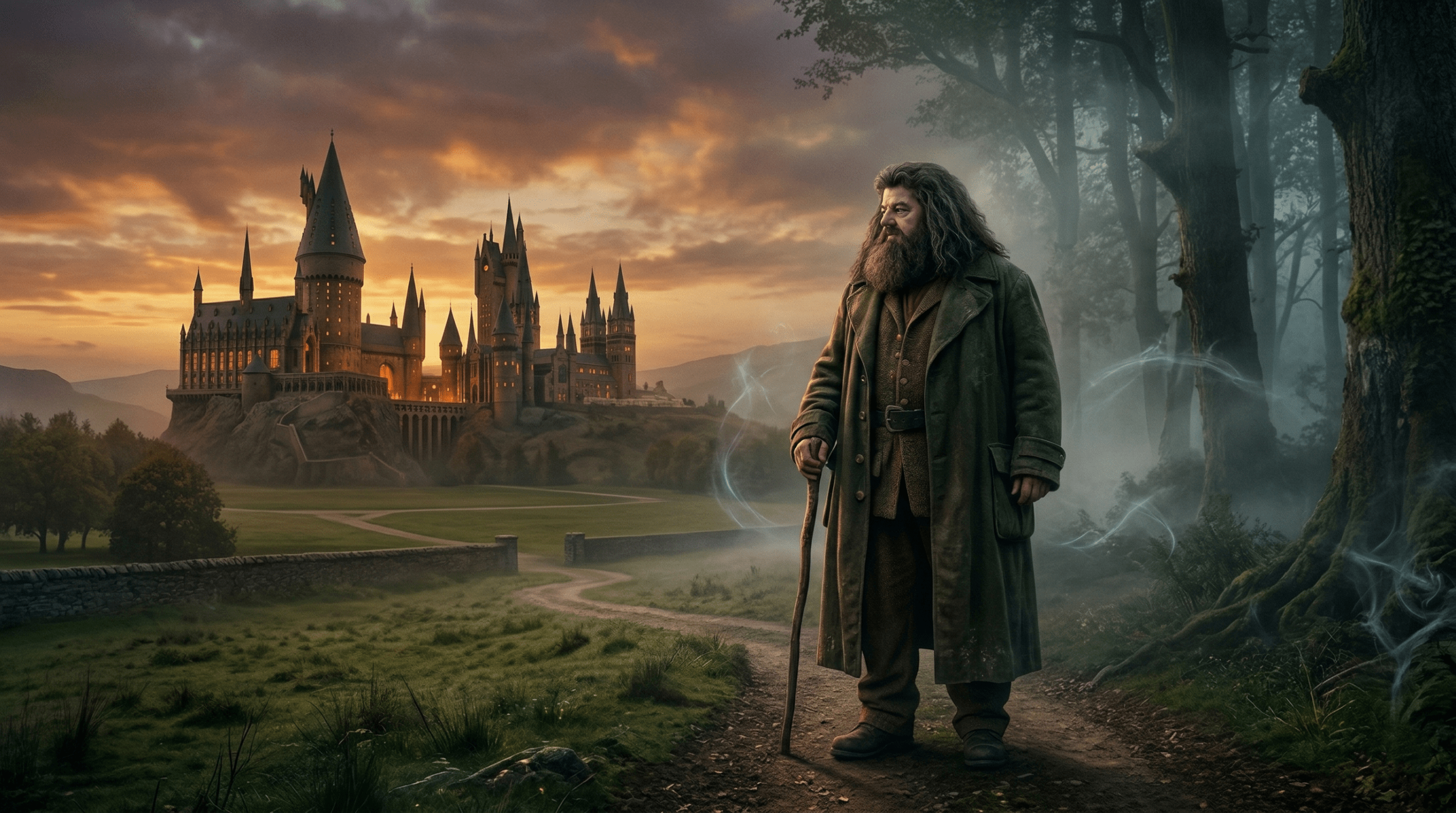 The consequences of that expulsion echo through Hagrid’s entire life. He never sat his O.W.L.s. He never developed the full theoretical foundation that a completed Hogwarts education would have provided. He was legally prohibited from performing magic for decades, forced to conceal the broken pieces of his wand inside an umbrella to perform even minor spells in secret.
What makes Hagrid’s academic story uniquely poignant is the evidence scattered throughout the series that he possessed genuine magical aptitude. His ability to perform complex tasks — breeding magical creatures, carrying out Dumbledore’s most trusted missions, eventually being appointed Care of Magical Creatures professor — suggests a wizard of real capability who was robbed of the opportunity to develop that capability through legitimate education.
In academic terms, Hagrid is Hogwarts’ greatest injustice — a student who did not fail, but was failed.
7. Fred and George Weasley — Rebels Who Could Have Been Top Students
Fred and George Weasley require a category of their own, because they defy the usual definition of a bad student entirely. They are not academically weak. They are academically indifferent — and the distinction matters enormously.
The twins sat their O.W.L.s and passed enough of them to demonstrate clear intellectual capability. They achieved three O.W.L.s each — not a spectacular number, but obtained without significant effort or revision, which speaks to their underlying ability. Mrs. Weasley’s reaction to their results in Order of the Phoenix is one of exasperated frustration rather than genuine surprise, suggesting that everyone around them knew they were capable of more and simply chose not to pursue it.
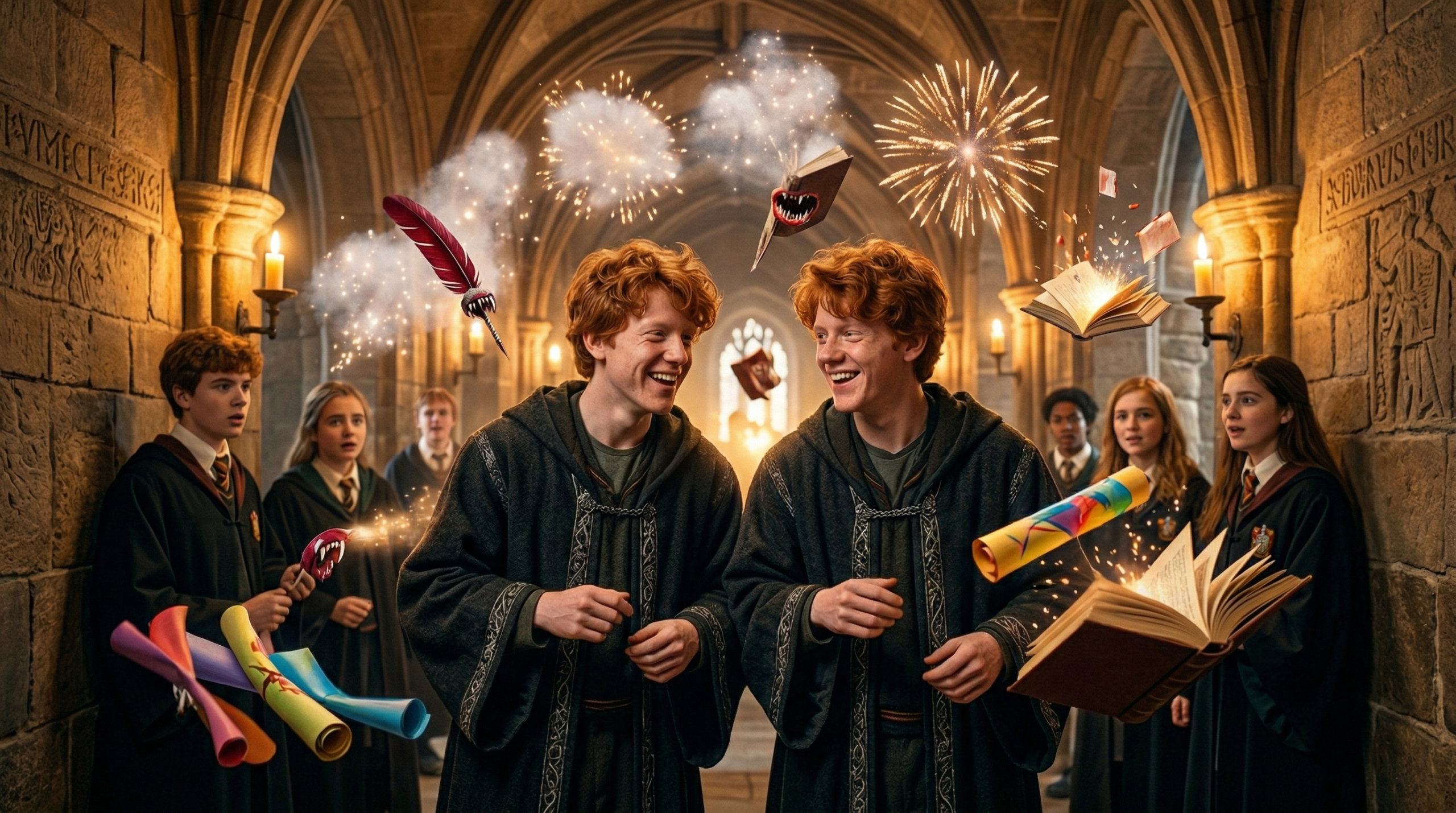 Their choice is deliberate and, in retrospect, arguably wise. Fred and George channeled every ounce of their considerable intelligence into Weasleys’ Wizard Wheezes — developing original magical products that required an understanding of charms, transfiguration, potions, and magical theory that would have impressed most professors, had it appeared in an exam booklet rather than a Skiving Snackbox.
They are, in the truest sense, entrepreneurs who were misaligned with the educational system they were placed in. Their story is a quiet argument that academic grades measure only one very specific kind of intelligence — and that Hogwarts, like many institutions, was poorly equipped to recognize or reward the kind of creative, inventive brilliance that Fred and George possessed in abundance.
Their academic record, such as it is, places them among Hogwarts’ underperformers by conventional metrics. Their life’s work suggests the metrics were insufficient.
Honorable Mentions — Other Characters Who Struggled Academically
Several other Hogwarts students deserve brief acknowledgment in any comprehensive ranking of academic underperformers.
Lavender Brown was a warm and enthusiastic student whose academic focus tended toward the social rather than the scholarly. Her particular devotion to Divination — one of Hogwarts’ less rigorous academic disciplines — suggests her strongest subject was also her least intellectually demanding. Her performance in core subjects like Transfiguration and Charms is never highlighted positively in the text.
Parvati Patil, Lavender’s closest friend and fellow Gryffindor, follows a similar pattern. She is portrayed as an average performer who found her niche in Divination and little else. Her twin sister Padma, sorted into Ravenclaw, is implied to be the stronger academic of the two — a detail that adds a quietly poignant layer to Parvati’s characterization.
Draco Malfoy presents a more complex case. He is clearly intelligent, and his performance in Potions under Snape’s blatant favoritism was consistently strong. However, there are strong suggestions throughout the series that Draco’s academic success was partly the product of an unfair advantage rather than genuine excellence. When stripped of that advantage — and burdened by his impossible mission in Half-Blood Prince — his performance deteriorates visibly. He is a student whose results were never entirely his own.
Why Do Some Hogwarts Students Get Bad Grades? Key Reasons Explored
Understanding who gets bad grades in Harry Potter is only half the picture. The more valuable question — both for fans and for anyone who has ever sat in a classroom and felt inadequate — is why.
Lack of Consistent Study Habits
The most straightforward explanation for academic underperformance at Hogwarts is the same one that applies in every school in the real world: inconsistent effort. Harry and Ron are the clearest examples of students who possess enough natural ability to scrape through exams but never develop the disciplined study habits that would allow them to genuinely excel.
Hermione Granger serves as the series’ most explicit counter-example. Her extraordinary academic success is not portrayed as purely innate talent — it is the product of obsessive preparation, thorough note-taking, and a willingness to prioritize revision over recreation. The contrast between Hermione’s approach and that of Harry and Ron is one of the series’ most consistent academic observations.
Emotional Trauma and Mental Health
Perhaps the most important and underappreciated reason for poor academic performance at Hogwarts is the emotional and psychological burden carried by many of its students. Neville’s story is the starkest example, but Harry’s is arguably even more extreme.
Harry enters Hogwarts as a traumatized child who has spent a decade being told he is worthless by the Dursleys. He witnesses death, experiences repeated near-fatal encounters, loses mentors and loved ones, and carries the weight of a world-saving prophecy. That he manages to pass seven O.W.L.s under these conditions is less an indictment of his academic ability and more a testament to his resilience.
The series, perhaps unintentionally, makes a powerful argument that you cannot separate a student’s emotional wellbeing from their academic performance. Neville’s confidence, Harry’s trauma, Ron’s anxiety — all of it shows up in their grades.
Teacher Bias and Favoritism
Hogwarts has a significant institutional problem that the series treats with more candor than many readers initially notice: several of its teachers are demonstrably biased in ways that directly affect student outcomes.
Snape’s favoritism toward Slytherin students and his targeting of Harry, Neville, and others in Gryffindor is the most egregious example. But Professor Trelawney awards high marks to students who flatter her predictions while dismissing Hermione’s rational skepticism entirely. Professor Binns — who has been dead for decades and continues teaching as a ghost — delivers History of Magic lectures so soporific that virtually every student in the series struggles to stay awake, let alone absorb the material.
The lesson here is institutional as much as individual: bad grades are not always a reflection of a student’s ability. Sometimes they are a reflection of the system in which that student is trying to learn.
Natural Aptitude vs. Hard Work
The Harry Potter series engages, quietly but consistently, with the question of whether magical ability is innate or developed. Hermione — a Muggle-born witch with no magical family background — outperforms nearly every pureblood student at Hogwarts through sheer effort and intellectual rigor. Meanwhile, Harry — who carries the magical bloodline of an exceptionally gifted family — coasts on instinct and practical ability while neglecting theoretical foundations.
The implication is clear: talent without effort produces inconsistent results, while effort applied intelligently can overcome almost any natural disadvantage. It is one of the more democratic and genuinely encouraging messages in a series that is sometimes criticized for its emphasis on birthright and chosen-one mythology.
What Bad Grades in Harry Potter Teach Us — Life Lessons from Hogwarts
Beyond the rankings and the canon analysis, the stories of Hogwarts’ worst academic performers carry real and meaningful lessons that extend far beyond the wizarding world.
Neville Longbottom’s arc is perhaps the most powerful: it demonstrates that a person’s potential cannot be accurately measured during the most difficult period of their life. The boy who failed Potions became the man who defied Voldemort. Late bloomers, in fiction and in life, often bloom most spectacularly.
Fred and George’s story is a quiet validation of unconventional intelligence. The educational system they inhabited had no metric for measuring what they were capable of. Their grades said little about them. Their lives said everything.
Harry’s journey makes the case that practical wisdom and theoretical knowledge are different things — and that the world needs both. A student who struggles in every classroom but can lead people through the darkest of circumstances has a kind of intelligence that no O.W.L. examiner was ever qualified to grade.
And perhaps most broadly, J.K. Rowling’s treatment of academic performance across the series functions as a subtle but persistent critique of standardized educational systems — systems that measure a narrow band of human ability and too often mistake that narrow measurement for a comprehensive verdict on a person’s worth.
Frequently Asked Questions
Q1: Who has the worst grades in Harry Potter? Among the characters with the most documented academic struggles, Crabbe and Goyle represent consistent underperformance, while Hagrid — expelled before completing his education — is arguably the greatest academic casualty in the series. Neville Longbottom’s early record is also among the poorest, though his trajectory makes him the most remarkable academic comeback story in wizarding history.
Q2: What grades did Harry Potter get on his O.W.L.s? Harry received seven O.W.L.s. His highest result was “Outstanding” in Defense Against the Dark Arts. He passed Transfiguration, Charms, Herbology, Care of Magical Creatures, Astronomy, and Potions, while receiving “Poor” grades in both Divination and History of Magic.
Q3: Did Ron Weasley fail any classes? Yes. Ron failed Divination and History of Magic at O.W.L. level — the latter because he fell asleep during the written examination. He passed the majority of his other O.W.L.s with “Acceptable” grades, with some reaching “Exceeds Expectations.”
Q4: Why did Neville struggle so much in school? Neville’s academic difficulties were primarily rooted in severe confidence issues exacerbated by Snape’s deliberate and sustained bullying. In subjects taught by supportive professors — most notably Herbology under Professor Sprout — Neville excelled, demonstrating that his struggles were environmental rather than innate.
Q5: Did Fred and George Weasley fail their O.W.L.s? They did not fail entirely — each earned three O.W.L.s, demonstrating that they possessed genuine academic capability. However, they deliberately chose not to pursue N.E.W.T. level study, prioritizing the development of Weasleys’ Wizard Wheezes over conventional academic achievement.
Q6: What is the lowest possible grade at Hogwarts? “Troll” is the lowest grade on the O.W.L. grading scale, falling below “Dreadful” and representing a complete failure in the examined subject. It is considered deeply shameful in wizarding academic culture.
The question of who gets bad grades in Harry Potter opens a window into one of the richest and most human aspects of the wizarding world. Behind every failed O.W.L., every melted cauldron, and every classroom disaster is a character whose academic struggles tell us something meaningful — about their fears, their circumstances, the people who taught them, and the systems that were supposed to support them.
Ron shows us what anxiety and comparison can do to genuine potential. Harry reminds us that a person can be extraordinary in ways that exams will never capture. Neville teaches us that the cruelest thing you can do to a student is make them afraid to try. Fred and George challenge us to question what intelligence really looks like. And Hagrid stands as a permanent reminder that injustice — not inability — is sometimes the only reason a student fails.
At Hogwarts, as in every school that has ever existed, grades tell part of the story. The rest of it is written in everything that happens outside the examination hall.
Which Hogwarts student do you think was most unfairly judged by their academic record? Share your thoughts in the comments below — and if you enjoyed this deep dive into wizarding academia, explore our full collection of Harry Potter character analyses and lore breakdowns.