Here is a statement that might stop you mid-scroll: Harry Potter died. Not metaphorically. Not in a dream sequence. He walked into the Forbidden Forest, faced Lord Voldemort, and was struck down by the most powerful killing curse in the wizarding world. So the question — who killed Harry Potter — has an answer that is both simpler and far more complicated than most fans realize. The surface answer is Voldemort. But the deeper truth, the one that changes how you see the entire series, is something else entirely. Buckle in, because this is the analysis you never knew you needed.
Did Harry Potter Actually Die? Setting the Record Straight
Before we can answer who killed Harry Potter, we need to settle something that casual fans often gloss over: did Harry Potter actually die?
The answer, supported by J.K. Rowling herself across multiple interviews and her writings on Wizarding World, is yes — in a meaningful, magical sense, he did.
What Happened in the Forbidden Forest
In Harry Potter and the Deathly Hallows, Harry learns the most devastating truth of his life: he is not just the boy who survived Voldemort. He is a Horcrux — an unintentional vessel for a fragment of Voldemort’s soul, created on the night Voldemort murdered his parents in Godric’s Hollow.
Dumbledore’s portrait reveals the plan through Snape’s memories in the Pensieve. For Harry to truly defeat Voldemort, that fragment of Voldemort’s soul living inside him must be destroyed. And there is only one known way to destroy a Horcrux — it must be killed.
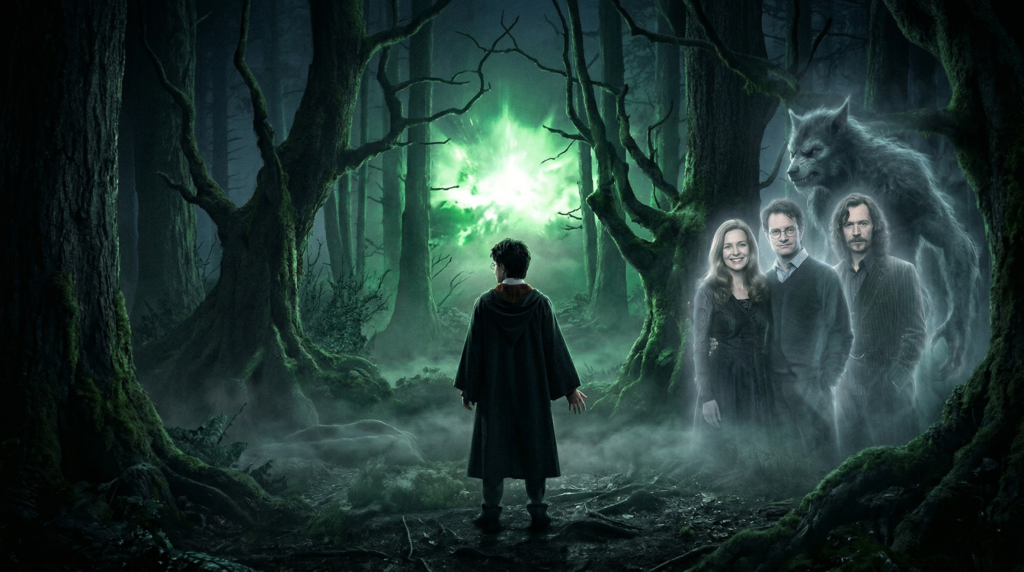
Harry walks into the Forbidden Forest alone, armed with the Resurrection Stone, accompanied only by the echoes of his dead loved ones. He does not raise his wand. He does not fight. When Voldemort casts Avada Kedavra, Harry lets it hit him.
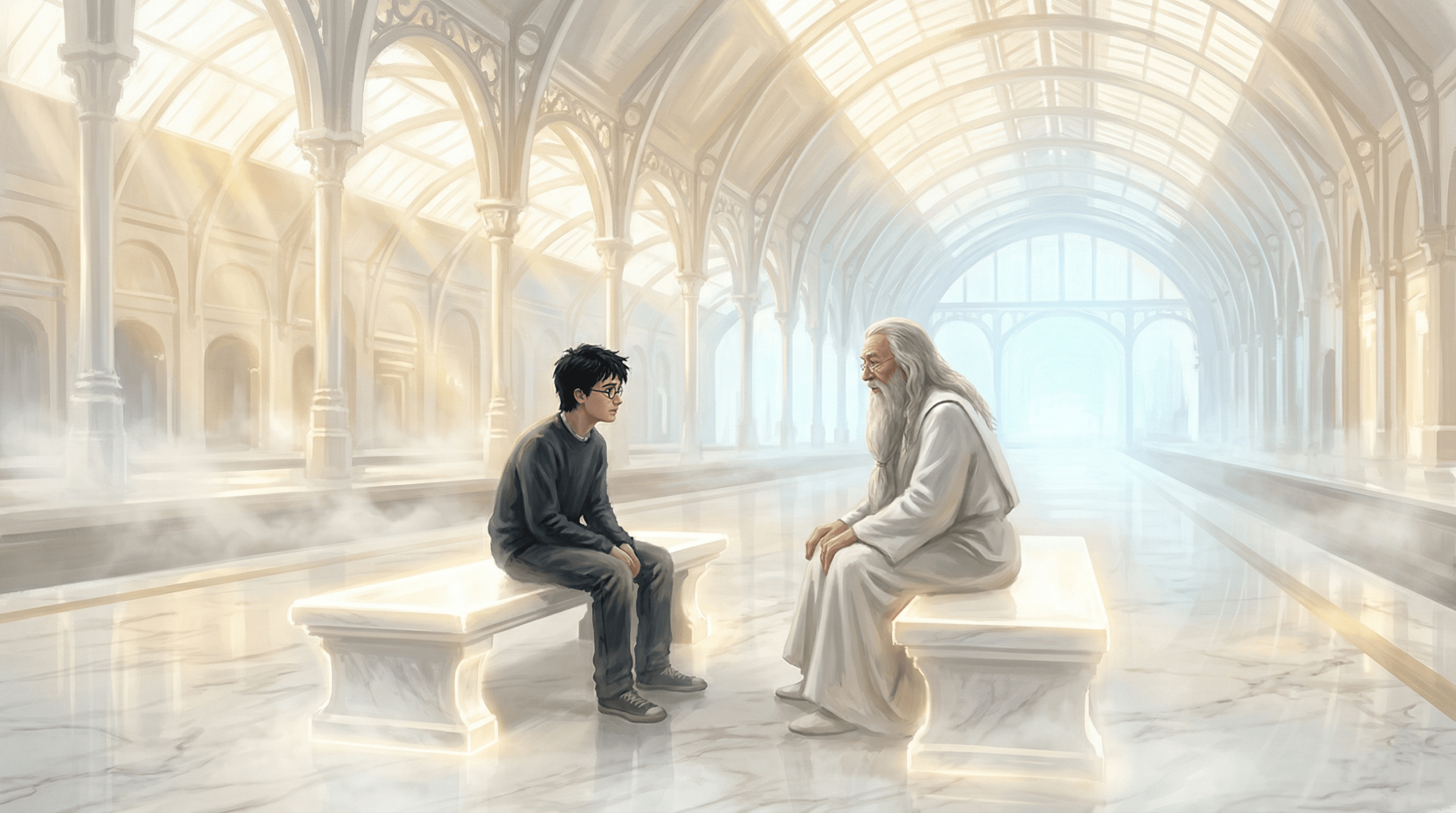
He dies. His body falls. And then he finds himself in a strange, liminal space that resembles a white, ethereal version of King’s Cross Station.
The Difference Between Death and Destruction
This is where the magical logic becomes critical — and where most casual analyses fall short.
In the King’s Cross vision, Dumbledore explains the distinction that changes everything. When Voldemort used Harry’s blood to rebuild his body in the Goblet of Fire graveyard ritual, he inadvertently tethered Harry’s life force to his own. As long as Voldemort lived, a part of Lily Potter’s protective sacrificial magic lived on inside Voldemort’s veins — and that magic kept Harry anchored to life.
So when Voldemort cast the Killing Curse in the forest, it destroyed the Horcrux — the fragment of Voldemort’s soul — but could not fully extinguish Harry. The curse killed what was Voldemort’s within Harry. Harry’s own soul remained intact.
Expert Insight: J.K. Rowling confirmed in a 2007 post-publication interview that Harry “did die” in the Forbidden Forest but that the enchantments surrounding him gave him the choice to return. It was not a loophole. It was a choice — and that distinction is the thematic heartbeat of the entire series.
 Who Killed Harry Potter? The Most Direct Answer
Now that we understand the context, let us answer the question directly.
Voldemort’s Role — The Obvious Answer
Lord Voldemort — born Tom Marvolo Riddle — cast the Killing Curse that struck Harry in the Forbidden Forest in the final act of Deathly Hallows. This is the factual, literal answer to who killed Harry Potter. Voldemort raised his wand, spoke Avada Kedavra, and Harry fell.
But the mechanics of what happened next reveal why this answer is incomplete.
Why Voldemort Didn’t “Truly” Kill Harry
Three layers of protection conspired against Voldemort even in that moment of apparent triumph.
Layer One: Lily’s Sacrifice. When Lily Potter chose to die for Harry rather than step aside as Voldemort demanded, she created an ancient counter-magic rooted in love and self-sacrifice — magic so powerful that Voldemort, who had never understood or valued love, could not fully comprehend or overcome it.
Layer Two: Voldemort’s Blood Resurrection. In a catastrophic miscalculation in Goblet of Fire, Voldemort used Harry’s blood to rebuild his body. In doing so, he absorbed Lily’s protective charm into himself. This meant that while Voldemort lived, the enchantment protecting Harry lived too — even inside Voldemort’s own veins.
Layer Three: The Elder Wand’s True Allegiance. Voldemort believed he had mastered the Elder Wand by stealing it from Dumbledore’s tomb. He had not. The Elder Wand’s allegiance had passed to Draco Malfoy when Draco disarmed Dumbledore on the Astronomy Tower — and then passed to Harry when Harry physically disarmed Draco at Malfoy Manor. The wand Voldemort used in the Forbidden Forest was being directed against its true master. It could destroy the Horcrux within Harry, but it could not kill Harry himself.
The Irony — Voldemort Killed Himself
Here is the extraordinary, poetic irony at the center of the series’ climax.
In the final duel in the Great Hall, Voldemort casts Avada Kedavra at Harry one last time. Harry simultaneously casts Expelliarmus. Because the Elder Wand refuses to act against its master, Voldemort’s own Killing Curse rebounds and strikes him down.
Voldemort was killed by his own curse. Harry never cast a single lethal spell. The most feared Dark wizard in history was ultimately destroyed by his own hatred, his own ignorance of love, and his own desperate choices.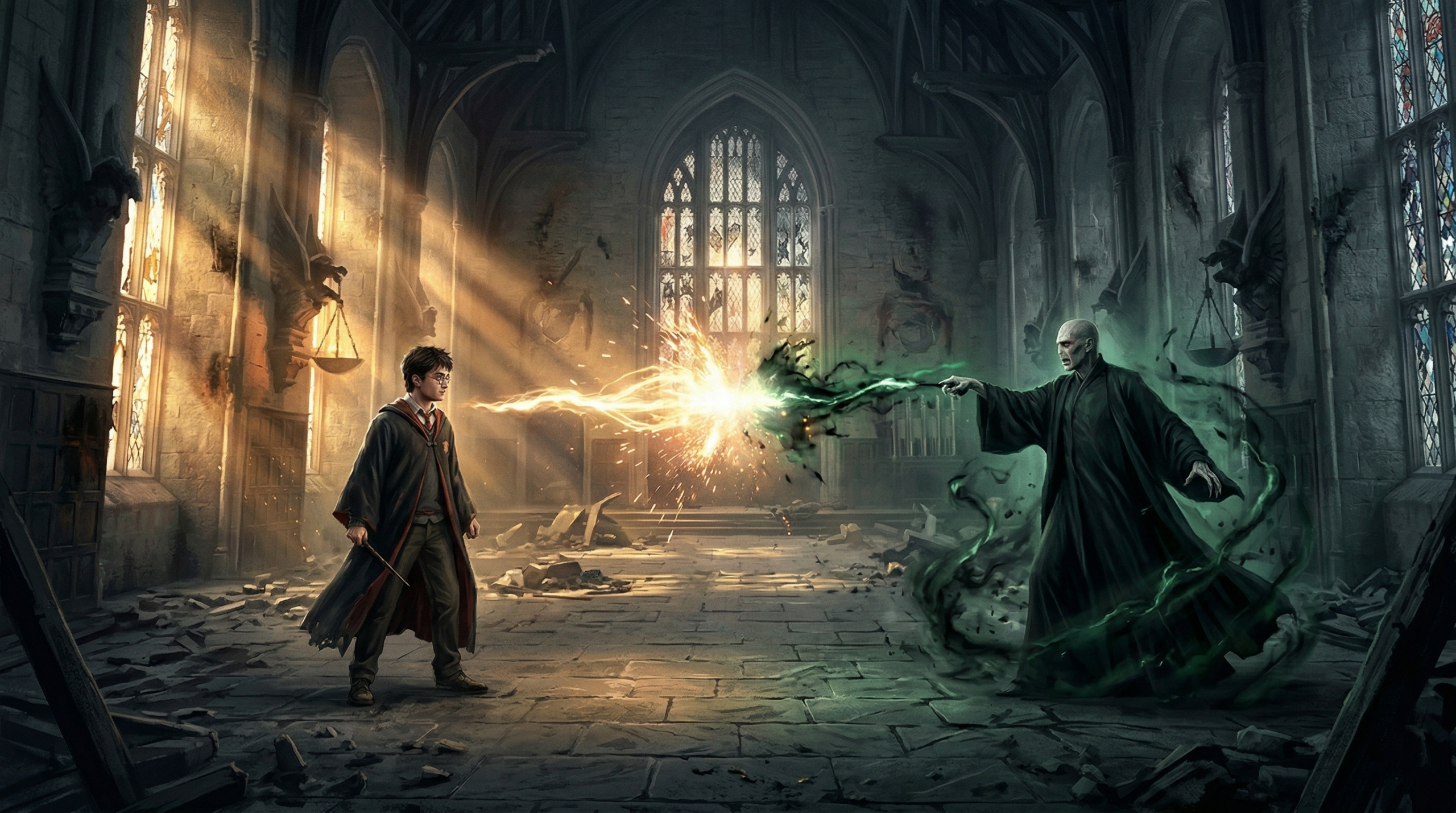
Every Time Harry Potter Almost Died — A Complete Timeline
One of the most remarkable things about Harry Potter’s story is not that he died once — it is how many times death reached for him and missed. Understanding each close call deepens our grasp of just how dangerous his journey was and how many forces were conspiring both to kill and protect him.
Year 1 — The Philosopher’s Stone
Harry’s very first year at Hogwarts was nearly his last. Professor Quirrell, possessed by Voldemort’s wraith-like form, spent the year trying to reach the Philosopher’s Stone and use it to restore Voldemort to full power. In the dungeons beneath Hogwarts, Quirrell attempted to kill Harry directly — only to find that touching Harry caused his own flesh to burn and crumble.
Lily’s protective magic made Harry literally untouchable to Voldemort and those fully in his service. It was protection Harry didn’t even know he carried.
Year 2 — The Chamber of Secrets
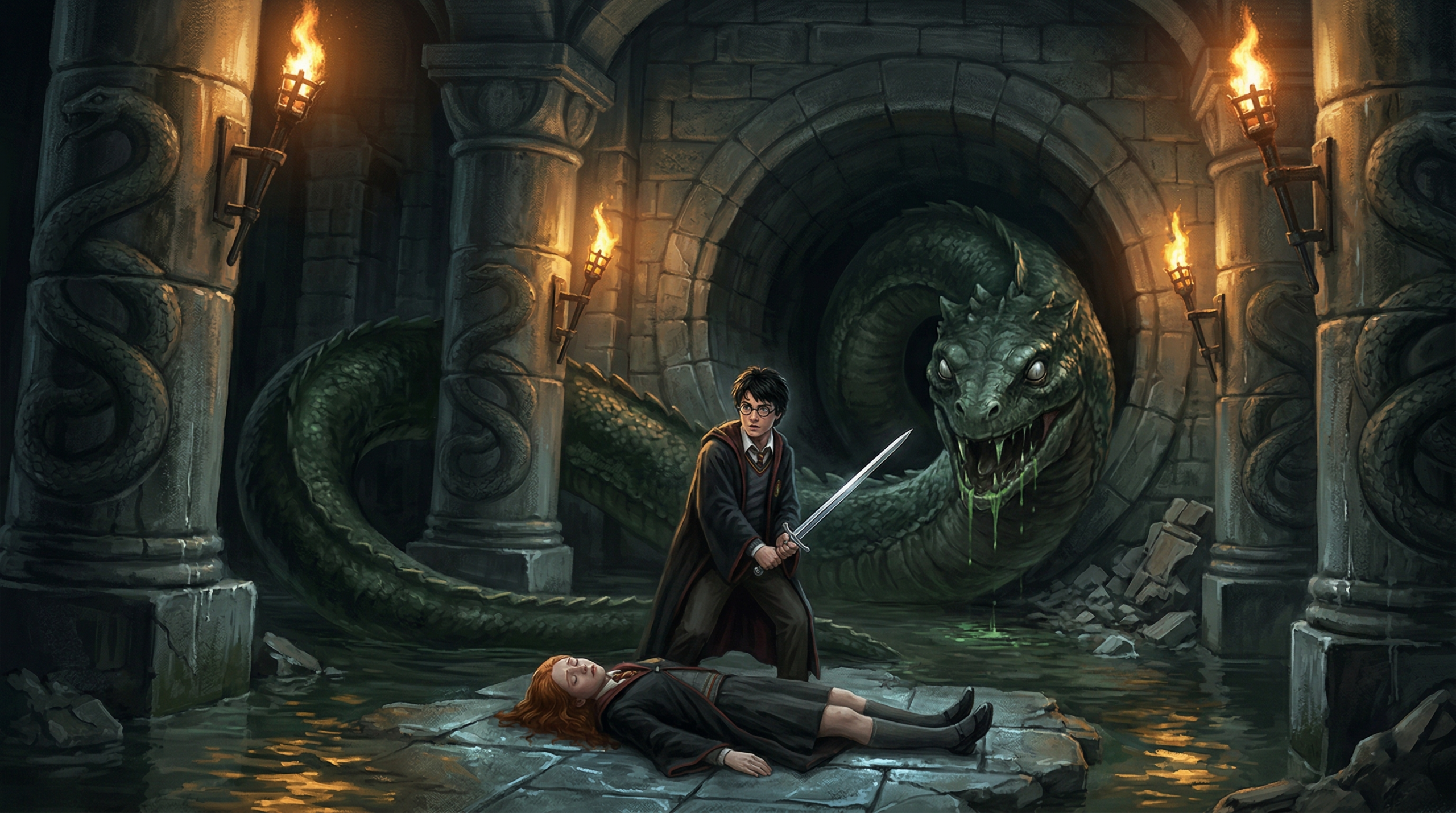
Tom Riddle’s enchanted diary had been slowly draining Ginny Weasley’s life force, feeding her memories and emotions into itself to grow stronger. By extension, Riddle’s shade had been directing the Basilisk — a monstrous serpent capable of killing with a single glance — throughout Hogwarts.
In the Chamber of Secrets, Harry faced the Basilisk directly and was fatally wounded by its venom-soaked fang. He would have died — agonizingly and certainly — had Fawkes the phoenix not appeared with the Sorting Hat, providing both the Sword of Gryffindor and healing tears that neutralized the venom in time.
This moment is often underappreciated. Harry came extraordinarily close to death in his second year, saved by loyalty and love made manifest in Dumbledore’s phoenix.
 Year 3 — The Prisoner of Azkaban
The Dementor attack near the lake during the Quidditch match very nearly claimed Harry’s soul rather than his life — arguably the more terrifying outcome. Dementors do not kill their victims immediately; they perform the Kiss, sucking out the soul and leaving behind a living shell. Harry collapsed and fell from his broomstick at considerable height.
Later, at the end of the year, Harry and Hermione came within moments of being struck down by the transformed Remus Lupin in full werewolf form — saved only by Sirius Black’s intervention.
Year 4 — The Goblet of Fire
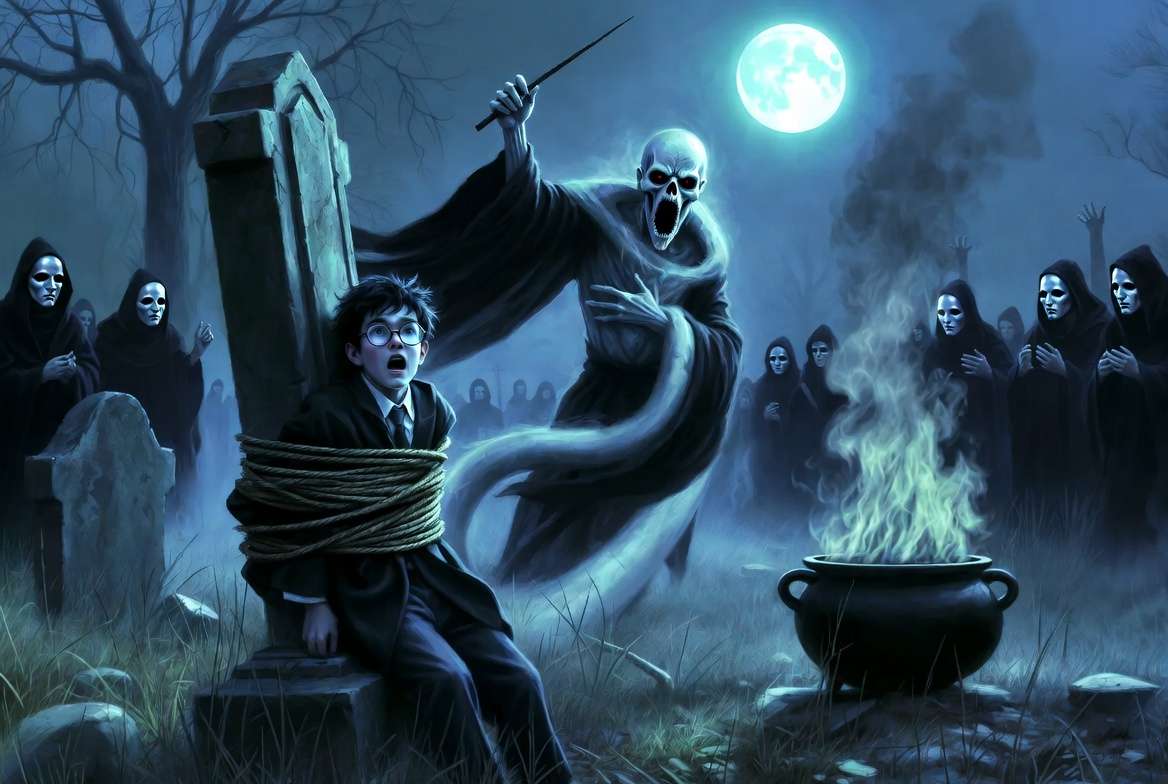
The graveyard scene in Goblet of Fire represents Voldemort’s first direct, face-to-face attempt to murder Harry since the night he killed his parents. Freshly resurrected, Voldemort tortured Harry with Crucio, dueled him, and prepared to execute him publicly in front of his assembled Death Eaters.
It was the phenomenon of Priori Incantatem — the connection between Harry and Voldemort’s twin-core wands — that gave Harry the seconds he needed to escape. The echoes of Voldemort’s victims, including Cedric Diggory and Harry’s own parents, emerged from Voldemort’s wand and held him at bay.
Harry’s survival here was razor-thin. Without that wand connection — a detail even Voldemort had not anticipated — Harry would have died in that graveyard.
 Year 5 — The Order of the Phoenix
Voldemort’s possession of Harry’s mind at the Ministry of Magic was perhaps the most psychologically harrowing near-death experience in the series. Rather than killing Harry’s body, Voldemort attempted to inhabit it — to use Harry as a vessel. The pain was so profound that Harry momentarily wished for death.
It was the power of Harry’s grief over Sirius, the overwhelming surge of love and loss, that expelled Voldemort from his mind. Once again, love — that ancient magic Voldemort could not touch — proved to be Harry’s most powerful shield.
Year 6 — The Half-Blood Prince
The cave mission with Dumbledore — retrieving what they believed to be a Horcrux — nearly killed Harry through indirect means. Watching Dumbledore deteriorate from the curse in the locket’s basin, fighting off Inferi in the black lake, and escaping the island tested Harry to his limits.
Then came the Astronomy Tower, where Dumbledore was murdered by Snape and Harry was left exposed, leaderless, and more vulnerable than ever before.
Year 7 — The Deathly Hallows
The final book is, in essence, a sustained near-death experience for Harry across hundreds of pages.
The Seven Potters’ escape from Privet Drive resulted in George Weasley losing an ear and Mad-Eye Moody being killed — and Harry only barely survived aerial combat with Voldemort himself.
The visit to Godric’s Hollow became a trap laid by Voldemort and Nagini, where Harry’s wand was destroyed and he and Hermione barely escaped with their lives.
And then came the Forbidden Forest — the death that counts. The moment Harry stopped running and walked willingly toward Voldemort. The moment the question of who killed Harry Potter became most complex.
The One Truth Every Harry Potter Fan Overlooks
We have covered the timeline. We have broken down the mechanics. We have established that Voldemort cast the curse. But now we arrive at the section of this analysis that separates a surface-level reading of the series from a genuinely deep understanding of what J.K. Rowling built over seven books and seventeen years.
This is the truth most fans overlook — and once you see it, you cannot unsee it.
Harry Chose to Die — He Wasn’t Killed
Read that again slowly. Harry Potter was not killed. Harry Potter chose to die.
There is a monumental difference between those two statements, and it is the difference that makes the ending of the series not just satisfying, but philosophically profound.
When Harry walks into the Forbidden Forest in the final act of Deathly Hallows, he is not ambushed. He is not cornered. He is not tricked. He has just learned, through Snape’s memories in the Pensieve, that Dumbledore always intended for him to die — that he had been, in Dumbledore’s own devastating words, raised “like a pig for slaughter.” He absorbs this information. He grieves it. And then, alone, without telling anyone, he makes a decision.
 He goes anyway.
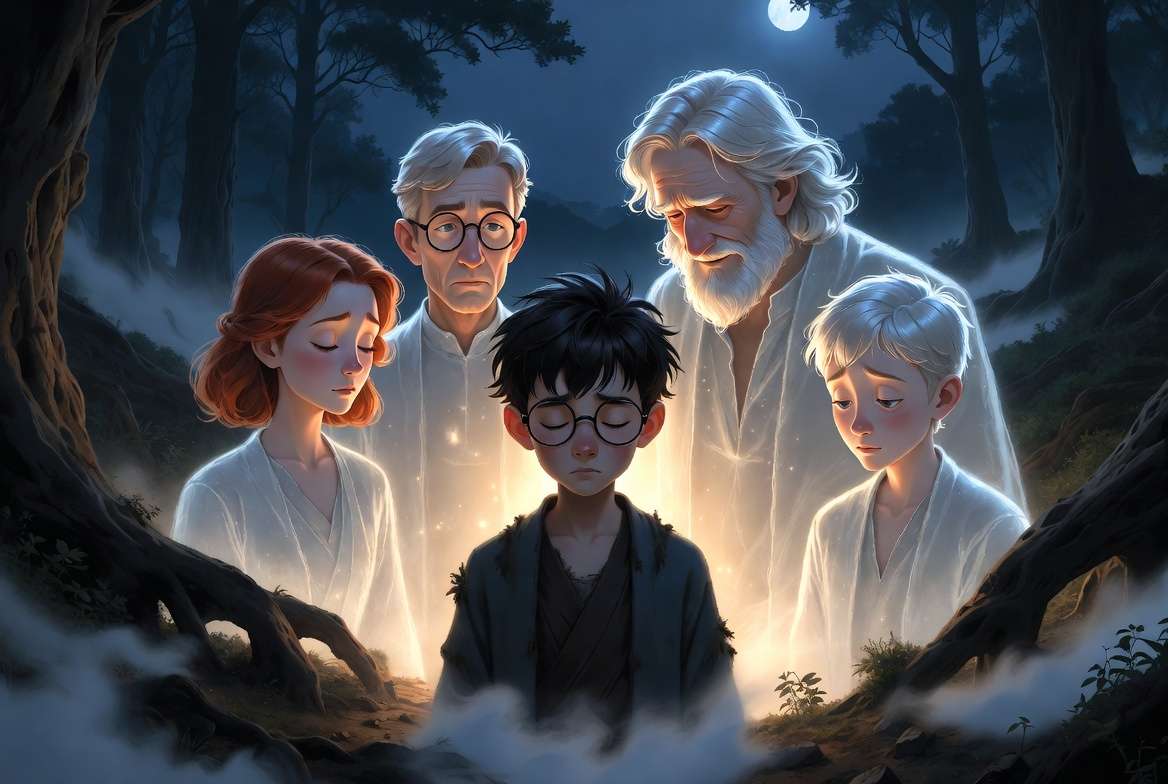
He uses the Resurrection Stone to summon the echoes of his parents, Sirius, and Lupin — not for rescue, but for comfort. He walks forward with his arms at his sides and his wand undrawn. When Voldemort raises his wand, Harry does not even attempt to defend himself.
This is not passivity. This is not resignation. This is a conscious, deliberate act of self-sacrifice — the most powerful magic in the Potterverse, as the series has told us since the very first book.
Harry’s willing death in the forest is a direct echo of his mother’s death sixteen years earlier. Lily Potter was given a choice by Voldemort — step aside and live. She refused. Her voluntary sacrifice created the ancient protective enchantment that saved Harry as an infant. Harry, in the forest, makes the same choice in reverse — he steps forward rather than aside, offering his life to protect every person fighting in Hogwarts Castle behind him.
And it works. In the same way that Lily’s sacrifice shielded Harry from Voldemort’s curse, Harry’s sacrifice shields every defender of Hogwarts. Voldemort’s curses, after Harry’s willing death and return, begin to rebound off the students and fighters rather than landing. Neville is struck and unharmed. Mrs. Weasley duels Bellatrix Lestrange with terrifying power. The tide turns — not because of any spell Harry casts, but because he died for them.
The answer to who killed Harry Potter, then, is not simply Voldemort. The truest answer is: Harry Potter chose to be killed — and in doing so, he became unkillable.
Love Was the Real Weapon — Not Avada Kedavra
The series telegraphs its central thesis in its very first act. Voldemort is defeated in Godric’s Hollow not by superior magic or weaponry, but by the one force he has always dismissed as weakness and sentiment: love.
Rowling constructs the entire Wizarding World around this inversion. The most powerful wizards — Voldemort, Grindelwald, even the young Dumbledore at his most ambitious — are drawn to power, dominance, and the conquest of death. They accumulate magical knowledge, rare artifacts, and political control.
Harry, by contrast, accumulates people. Relationships. Loyalty. Loss. His power is not technical mastery of spells — Hermione is a far superior technical witch. His power is the depth of his connections and his capacity to sacrifice himself for them.
When Harry dies in the forest and creates a new sacrificial enchantment over Hogwarts, he completes the thematic circle Rowling has been drawing since page one. The weapon that defeats Voldemort is not the Elder Wand. It is not Avada Kedavra reflected back. It is love made action — the willingness to die for others, demonstrated twice in the same family, one generation apart.
This is why the series is not, at its core, a fantasy adventure. It is a meditation on mortality, sacrifice, and what makes a human life meaningful. Rowling has cited the influence of her Christian faith and her experience of grief — her mother died of multiple sclerosis while Rowling was writing the early books — as central to the themes of death and love woven throughout the series.
The two quotations engraved on the Potter family tomb in Godric’s Hollow — one from The Libation Bearers by Aeschylus, one from First Corinthians in the New Testament — are not decorative. They are the thematic keys to the entire series, placed there in the penultimate book for readers perceptive enough to notice.
Dumbledore’s Role — The Most Uncomfortable Truth
No honest analysis of who killed Harry Potter can avoid the most morally uncomfortable figure in the series: Albus Dumbledore.
Dumbledore knew, from the moment he understood the nature of Voldemort’s Horcruxes, that Harry would need to die. He did not tell Harry. He did not warn Harry’s friends or guardians. He constructed an elaborate, years-long plan in which Harry was guided, protected, and prepared — but never informed of the destination.
Snape articulates this with devastating bluntness in the Pensieve memory: “You’ve been raising him like a pig for slaughter.” Even Dumbledore does not deny it. He sits in silence, and then asks: “And if someone asked me if I cared about Harry… what would I say?”
The answer, Rowling suggests, is that Dumbledore cared — deeply, genuinely, and with tremendous guilt. But caring did not stop him from using Harry as an instrument of a larger plan. Dumbledore believed — correctly, as it turned out — that if Harry knew he was meant to die, he might not be capable of walking willingly to his death. So Dumbledore withheld the truth until the last possible moment, ensuring it would be revealed only after Dumbledore himself was gone and Harry had no one to turn to.
This has generated significant debate among fans and literary analysts. Some argue that Dumbledore’s manipulation, however well-intentioned, represents a profound ethical failure — that he denied Harry the right to make a truly informed choice. Others argue that Dumbledore understood Harry well enough to know that Harry would make the same choice regardless, and that the timing of the revelation was an act of mercy rather than control.
Rowling herself has been characteristically layered in her responses to this debate, acknowledging Dumbledore’s moral complexity while affirming that his love for Harry was genuine. She has described Dumbledore as a man who “had flaws to spare” — brilliant, visionary, and capable of great warmth, but also capable of the kind of cold strategic thinking that treats individuals as pieces on a board.
What is undeniable is this: without Dumbledore’s decades-long orchestration, Harry would never have been in the position to make his sacrifice. Dumbledore did not cast the curse. But he designed the situation in which the curse would be cast, and he did so deliberately.
So if Voldemort pulled the trigger, Dumbledore built the gun and loaded it — and trusted that Harry would be the kind of person who would stand in front of it willingly.
Fascinating Fan Theories About Who Really Killed Harry Potter
The richness of Rowling’s world-building means that fans have spent decades generating alternative readings of Harry’s death and survival. Here are the three most compelling theories that circulate in the Harry Potter fan community and academic discussion spaces.
Theory 1 — Harry Was Never Truly Alive (The Horcrux Theory)
This theory, popular in deeper fandom circles, argues that Harry’s existence was never entirely his own from the moment Voldemort’s curse struck him as an infant. From that night in Godric’s Hollow, a fragment of Voldemort’s soul was anchored inside Harry — meaning that Harry walked through his entire life with a piece of someone else’s death inside him.
The implication is that Harry’s “death” in the Forbidden Forest was not a singular event but the conclusion of a process that began before he could walk. He did not die in the forest — the last piece of his unliving burden was finally extinguished.
This reading adds a layer of tragedy to Harry’s childhood and school years. Every moment of joy, every friendship, every victory was experienced by a boy who, in a deeply real magical sense, was always partially a dead thing kept animate.
Theory 2 — Snape Set the Whole Thing in Motion
This theory focuses not on the moment of Harry’s death but on the long chain of causation that made it inevitable — and places Severus Snape at the origin point.
The argument goes as follows: Snape reported the partial prophecy to Voldemort. Voldemort chose to interpret it as referring to Harry. Voldemort went to Godric’s Hollow. Lily died. The Horcrux was created inside Harry. The prophecy became self-fulfilling. And from that moment, Harry was on a path that would always end with him dying in that forest.
Without Snape’s initial act of reporting the prophecy — motivated by his obsessive attachment to Lily and his loyalty to Voldemort at the time — none of the subsequent events occur in the same way. Snape spent the rest of his life atoning for that originating act, protecting Harry not only out of love for Lily but perhaps out of guilt for having set Harry’s suffering in motion.
Under this reading, the answer to who killed Harry Potter begins with a young Death Eater whispering half a prophecy into Voldemort’s ear in a darkened corridor of the Hog’s Head Inn.
Theory 3 — Harry Killed Himself by Accepting Death (The Deathly Hallows Master Theory)
This is the most philosophically ambitious fan theory and arguably the most rewarding. It draws directly from the legend of the Deathly Hallows — the three objects created, according to The Tale of Beedle the Bard, by Death itself for three brothers who had cheated it.
The legend ends with the youngest brother, who asked Death for a Cloak of Invisibility to hide from Death until he was ready. When the time came, the youngest brother took off the cloak, greeted Death as an old friend, and went with him willingly.
Harry, by the end of Deathly Hallows, has united all three Hallows: he possesses the Elder Wand, the Resurrection Stone, and the Invisibility Cloak. Dumbledore tells him in the King’s Cross vision that this makes him the true Master of Death — not someone who conquers death, but someone who accepts it.
Harry walking into the forest is Harry taking off the cloak. He has stopped hiding. He has accepted death as neither a punishment nor a defeat but as a natural, voluntary part of his journey. In this reading, Harry does not die because Voldemort kills him — he dies because he finally stops running from the one thing that had been chasing him since he was fifteen months old.
He kills himself — not in a destructive sense, but in the deepest, most empowered sense. He chooses the moment and the manner. He takes death on his own terms. And that act of mastery is precisely what ensures death cannot hold him.
Frequently Asked Questions — Who Killed Harry Potter?
Did Voldemort Successfully Kill Harry Potter?
Not entirely. Voldemort’s Killing Curse in the Forbidden Forest destroyed the Horcrux — the fragment of Voldemort’s own soul — that had been living inside Harry since infancy. However, Harry’s own soul was protected by a combination of Lily’s ancient sacrificial magic and the blood resurrection ritual Voldemort performed in Goblet of Fire, which had tethered Harry’s life force to Voldemort’s own continued existence. Harry passed through a form of death but retained the choice to return — a choice he made consciously in the King’s Cross vision.
Why Didn’t Harry Potter Stay Dead?
Three interlocking enchantments prevented Harry from remaining dead. First, Lily’s sacrificial protection — created when she chose to die for Harry — continued to shield him as long as Voldemort lived. Second, when Voldemort used Harry’s blood in the Goblet of Fire resurrection ritual, he absorbed that protective charm into his own body, meaning that while Voldemort survived, something of Lily’s protection survived with him, and by extension so did Harry. Third, the Elder Wand’s true allegiance lay with Harry rather than Voldemort, limiting the lethality of the curse even as it destroyed the Horcrux within him.
Who Killed Harry Potter in the Book vs. the Movie?
In both the book and film adaptations, it is Voldemort who casts the Killing Curse in the Forbidden Forest. However, the book handles the aftermath with significantly greater depth. The King’s Cross scene — Harry’s liminal conversation with Dumbledore — is lengthy, philosophical, and rich with explanation in the novel. In the film, it is condensed considerably, which has led many viewers to have a less complete understanding of why Harry survived. The core facts are the same; the depth of exploration differs substantially.
Did Dumbledore Plan for Harry to Die?
Yes — and this is one of the most morally complex elements of the entire series. Dumbledore understood from his research into Voldemort’s Horcruxes that the fragment of soul inside Harry would need to be destroyed, and that the only way to destroy it was for Harry to die — specifically, to be killed by Voldemort himself, since Voldemort’s curse had created the Horcrux in the first place. Dumbledore orchestrated Harry’s education, protection, and emotional development over years with this endpoint in mind, while deliberately withholding the final truth until the last possible moment. Whether this constitutes wise leadership or profound manipulation remains one of the series’ great open questions.
Could Harry Have Survived Without Walking Into the Forest Willingly?
Technically, yes — Harry could have attempted to destroy the Horcrux within himself through other means, or tried to avoid death. But magically and thematically, the willing nature of his sacrifice was essential. Had Harry been ambushed or killed without his consent, there is no indication that the same protective enchantment would have formed over Hogwarts. The power of self-sacrifice in Rowling’s magical system is specifically rooted in choice — love made action, not love imposed by circumstance. A reluctant or accidental death would likely not have created the shield that turned the tide of the Battle of Hogwarts.
Is Harry Potter a Horcrux?
Harry is sometimes called an “accidental Horcrux” — though Rowling has noted that he does not technically meet the definition of a true Horcrux because Voldemort did not intentionally create him as one. When Voldemort’s soul was shattered by the rebounding Killing Curse in Godric’s Hollow, a fragment latched onto the only living thing in the room — Harry — in an act of magical desperation rather than deliberate Dark Arts. The distinction matters because true Horcruxes require a specific ritual murder to create. Harry was a vessel for a soul fragment but was never a deliberate receptacle in the way that the diary, the locket, or the ring were.
After more than two thousand words of analysis, timeline reconstruction, magical mechanics, moral philosophy, and fan theory, we can finally answer the question fully.
Voldemort cast the curse. That is the factual answer, and it is true as far as it goes.
But the complete answer is richer and stranger and more beautiful than that.
Snape set the events in motion — inadvertently, agonizingly — when he reported a half-heard prophecy to a Dark Lord he would spend the rest of his life trying to defeat. Dumbledore designed the long game, knowing its endpoint, bearing that knowledge with guilt and love in equal measure. Voldemort swung the wand, certain of his victory, blind as always to the magic he had never understood.
And Harry — Harry chose it. He took off the cloak. He walked into the forest with his arms at his sides and greeted death like the old friend the legend always promised it could be. He was not a victim. He was not a martyr in the passive sense. He was the Master of Death in the only way that word has ever meant anything — not someone who defeats death, but someone who accepts it freely, on their own terms, for love of others.
The series was never truly about defeating Voldemort. It was about learning to die well — and in doing so, choosing to live fully.
That is who killed Harry Potter. That is why he could not stay dead. And that is the truth, sitting quietly in the pages of the final book, that most fans walk past on their way to the next plot point.
Now that you have seen it, go back and read the series again. It is an entirely different story the second time.