There is a moment every Harry Potter fan experiences — usually somewhere between their second and third reread — where a quiet, devastating question forms in the back of their mind: If ghosts exist at Hogwarts, why can’t Harry just talk to his parents? It is such a simple question on the surface, and yet it cuts straight to the emotional core of the entire series. The fact that why aren’t Harry Potter‘s parents ghosts has become one of the most searched and debated topics on Reddit — with threads spanning thousands of comments — tells you everything about how deeply this detail resonates with fans. And here is the thing: the answer is not simple. It is not just a matter of lore or magical rules. It is one of the most quietly heartbreaking, emotionally intelligent storytelling decisions J.K. Rowling ever made. By the end of this article, you will understand not just the canon explanation — but why this single detail is one of the most powerful threads woven through the entire Wizarding World.
How Do Ghosts Actually Work in the Harry Potter Universe?
Before we can answer why James and Lily Potter are not roaming the halls of Hogwarts, we need to establish exactly what ghosts are within Rowling’s carefully constructed world. Because the rules matter — and they matter in ways that most casual fans never fully appreciate.
What Are Hogwarts Ghosts, Really?
In the Harry Potter universe, ghosts are not the tragic, involuntary spirits you might know from other fantasy or horror traditions. They are not souls trapped against their will, condemned to wander for eternity as punishment for unfinished earthly business. In Rowling’s world, becoming a ghost is a choice — a deliberate decision made by a witch or wizard at the moment of death.
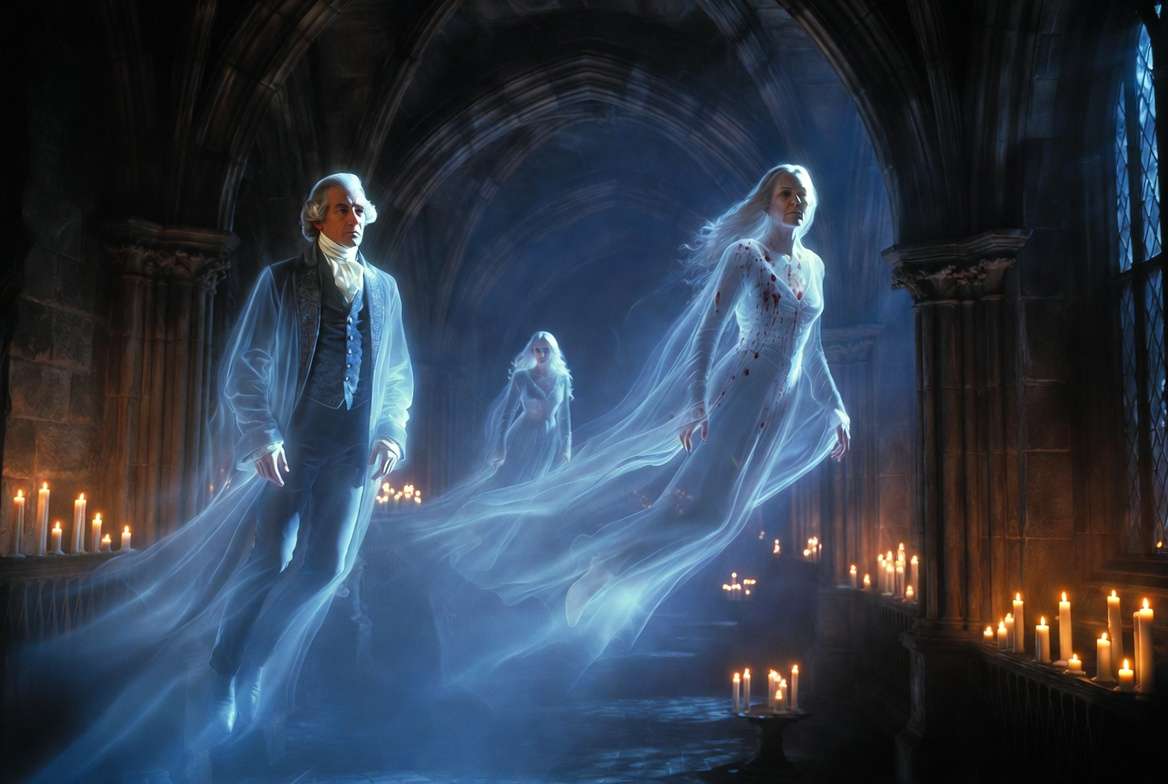 The Hogwarts ghosts are among the most recognizable figures in the series. Nearly Headless Nick, the polite and perpetually put-upon ghost of Gryffindor Tower, is perhaps the most important to this discussion. Then there is the Bloody Baron, the intimidating Slytherin ghost with his mysterious silver bloodstains. Moaning Myrtle haunts the second-floor girls’ bathroom, still consumed by the trauma of her death decades after it occurred. The Grey Lady, the melancholy ghost of Ravenclaw Tower, carries her own painful history tied to the founder’s diadem.
Each of these figures, as different as they are in personality and history, shares one defining characteristic: they chose to stay. Whether driven by fear, regret, unresolved emotion, or simple reluctance to face the unknown, each one made the conscious decision to remain in the world of the living rather than pass on to whatever lies beyond.
This is not speculation or fan theory. It is embedded directly into the canon of the series, confirmed through one of its most emotionally significant conversations.
What J.K. Rowling Has Said About Ghost Lore
Rowling has addressed the nature of ghosts in the Wizarding World on multiple occasions, both in interviews and through the Pottermore platform (now Wizarding World). Her position has been remarkably consistent: ghosts are described as imprints of the soul rather than the complete person. They are echoes — a fragment of what once was, preserved in a form that can interact with the living world, but fundamentally incomplete.
In interviews, Rowling has characterized the choice to become a ghost as one born out of fear — specifically, the fear of death and what comes after. She has drawn a clear distinction between those who face death with courage and acceptance, and those who recoil from it and choose the pale half-life of ghosthood instead. This moral dimension is not accidental. In Rowling’s world, the relationship a person has with death is one of the clearest windows into their character.
This foundational understanding is what makes the question of James and Lily’s absence as ghosts so deeply meaningful — and so deliberately constructed.
So Why Aren’t James and Lily Potter Ghosts? The Canon Answer Explained
Now we arrive at the heart of the matter. With the rules of ghosthood established, the answer to why Harry’s parents never appear as Hogwarts ghosts becomes both clearer and more emotionally weighted than most fans initially expect.
 The Official In-Universe Reason
The canon answer is straightforward, even if its implications are profound: James and Lily Potter chose not to become ghosts. They chose, at the moment of their deaths, to move on to whatever exists beyond the veil — the afterlife, the next great adventure, the unknown. They did not linger. They did not remain as imprints in the world of the living.
And here is where the emotional intelligence of Rowling’s world-building truly reveals itself: within the moral framework of the Harry Potter universe, this choice is not a tragedy. It is a testament to their courage. Moving on — truly, completely moving on — is framed throughout the series as the braver act. Ghosthood, by contrast, is subtly but unmistakably portrayed as a form of spiritual cowardice. Not a cruel or unforgivable one, but a failure of nerve at the final moment.
James and Lily Potter, who gave their lives willingly to protect their son, who embodied sacrifice in its purest form, were simply not the kind of people who would flinch at the threshold of death. They walked through it — together, in their way — with the same love and courage that defined everything they did in life.
Nearly Headless Nick’s Conversation With Harry — The Key Scene
The single most important piece of canon evidence for all of this comes in Harry Potter and the Order of the Phoenix, in Chapter 38, following the death of Sirius Black. Harry, devastated and desperate, seeks out Nearly Headless Nick in the aftermath of the battle at the Department of Mysteries. He wants to know, with a kind of raw, aching hope, whether Sirius might come back as a ghost.
Nick’s response is one of the most quietly powerful exchanges in the entire series. He admits — with what reads as genuine sadness and self-awareness — that he himself chose to become a ghost out of fear. He was not brave enough to face the unknown of death, and so he remained, trading the wholeness of whatever came next for the pale comfort of continued existence in the world he knew. He calls it, in essence, a mistake born from weakness.
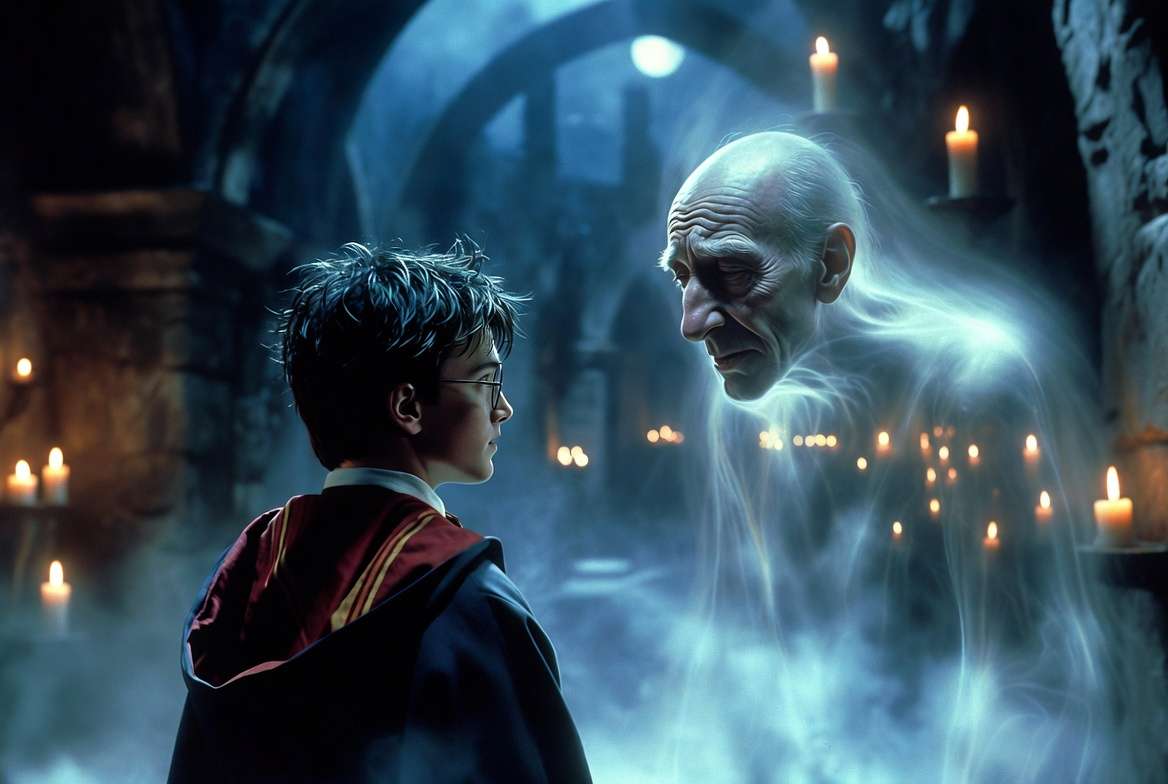 Then Nick tells Harry, with a gentleness that makes the moment even harder to read, that he does not believe Sirius would have chosen to return as a ghost. The implication is unmistakable and extends directly to Harry’s parents: the brave ones move on. The ones who love fully, who live without the corrosive grip of fear, do not remain as imprints. They go forward.
This scene is not a throwaway piece of dialogue. It is Rowling doing something extraordinarily subtle and emotionally sophisticated — using a relatively minor character’s tragedy to illuminate the nobility of the characters who are absent from the story precisely because they were too good, too brave, too complete in their love to stay behind.
What “Moving On” Means in Rowling’s World
To fully appreciate the weight of this, it is worth stepping back and looking at death as a theme across the entire Harry Potter series. It is, arguably, the series’ most central preoccupation. From the very first pages — where we learn that Harry is famous because his parents died for him — to the final confrontation with Voldemort, death is everywhere. It is the shadow that falls across every chapter.
Dumbledore articulates the series’ philosophy on death perhaps most memorably when he tells Harry, in The Philosopher’s Stone, that to the well-organized mind, death is simply the next great adventure. This is not presented as mere comfort or platitude. It is the thematic spine of the entire narrative. The characters who have made peace with death — who understand and accept it — are the ones who live most fully, love most completely, and face their final moments with grace.
The Deathly Hallows allegory, embedded in the fairy tale of the Three Brothers, makes this framework explicit. The third brother, who greets Death as a friend and departs willingly when the time comes, is the one who achieves true victory over mortality. Not by conquering death, but by accepting it. James and Lily, in choosing to move on, embody this same wisdom. They are, in the moral geography of Rowling’s world, third brothers — and third sisters.
What Reddit Actually Says — The Fan Debate Breakdown
If you have spent any time on Reddit’s Harry Potter communities — particularly r/harrypotter and r/HPfantheories — you know that this question generates some of the platform’s most emotionally resonant and intellectually engaged discussions. The threads on this topic are remarkable not just for their length, but for the quality of the thinking and the depth of feeling they reveal.
The Most Upvoted Theories From Reddit Threads
The Reddit debates on why Harry’s parents are not ghosts have produced several recurring theories that go beyond the simple canon answer and into genuinely fascinating fan interpretation.
Theory One: Complete Love Leaves No Residue
One of the most consistently upvoted ideas across multiple threads is that James and Lily’s love for Harry was so total, so unconditional and freely given, that it left no emotional residue capable of anchoring them to the living world. Ghosts, in this reading, are created by incompleteness — by love interrupted, by fear unresolved, by business left undone. James and Lily, in dying for their son, completed something rather than leaving it unfinished. Their sacrifice was whole. Their love was whole. There was nothing left undone that could hold them here.
This theory resonates so strongly with fans because it reframes their deaths not as a tragedy of interruption, but as an act of completion. They did not have unfinished business because the most important thing they would ever do — protect Harry — they had already done.
Theory Two: Sacrificial Magic and the Nature of Ghosthood Are Incompatible
Another widely discussed theory suggests that the very nature of Lily’s sacrificial protection magic — the ancient, love-based magic that shielded Harry from Voldemort’s killing curse — is fundamentally incompatible with the fear-based choice that leads to ghosthood. To perform a sacrificial act of that magnitude, fans argue, requires a level of acceptance and surrender that precludes the flinching retreat from death that ghosthood represents.
In other words: you cannot simultaneously give yourself up completely and refuse to let go. The magic and the mindset that produces ghosthood are mutually exclusive with the magic and the mindset of genuine self-sacrifice.
Theory Three: Lily Would Have Stayed If She Could
This is the theory that generates the most debate — and the most pain — in Reddit threads. A significant number of fans argue that Lily, in particular, would have chosen to remain as a ghost if she had truly understood what Harry’s life without her would look like. The idea that she would have accepted ghosthood — even the pale, incomplete existence Nick describes — if it meant being present for her son’s grief is deeply compelling to many readers.
The counterargument, which tends to win out in most threads, is that staying would have been the selfish choice, not the loving one. A ghostly mother cannot hold her child. Cannot grow with him. Cannot be the full, complete presence that Harry needed. The most loving thing Lily could do was move on and trust that her son would find his way — and that trust, painful as it is, is its own form of love.
The “Unfinished Business” Fan Theory — Does It Hold Up?
One of the most widespread pieces of ghost mythology in popular culture — the idea that spirits remain because they have unfinished business — maps surprisingly well onto the Harry Potter universe, even though Rowling never uses that exact terminology.
Look at the ghosts we know. Moaning Myrtle is consumed by the trauma and humiliation of her death, still picking apart the events of that day in the girls’ bathroom. Nearly Headless Nick was afraid of what came next. The Bloody Baron carries guilt — literal and figurative blood — from actions he cannot undo. Each of them is held in place by something unresolved, something incomplete, something they could not release.
By this logic, the question becomes: did James and Lily have unfinished business? And the answer the series provides — through its themes, its structure, and Nick’s pivotal conversation with Harry — is that they did not. Or more precisely: the business they left unfinished in the literal sense (raising their son, living their lives) was not the kind of emotional incompleteness that produces a ghost. Grief does not create ghosts in Rowling’s world. Fear does. Regret does. The inability to let go does.
James and Lily let go. Completely and courageously. And the empty space they left behind became the engine of the entire story.
The Most Heartbreaking Dimension of the Reddit Debate
What strikes any reader who spends time in these Reddit threads is how quickly the conversation moves from lore analysis to something much more personal. Fans return, again and again, to a single devastating observation: Rowling made the right narrative choice, and it is almost unbearable.
If Harry could have spoken to his parents as ghosts — really spoken to them, gotten their advice, felt their presence — his entire emotional journey would have been different. The loneliness that defines his childhood. The desperate yearning that makes the Mirror of Erised scene so gutting. The way he clings to every fragment of information about James and Lily that anyone gives him. All of it exists because they are truly, completely gone from his world.
Their absence is not a gap in the story. It is the story, in many ways. And Rowling understood that giving Harry a ghost-parent would have been a kindness that destroyed everything.
The Deeper Emotional Truth — Why This Was Intentional Storytelling
At this point, it should be clear that the absence of James and Lily Potter as ghosts is not an oversight, not a plot hole, and not an unexplained quirk of the magical world. It is a precise, deliberate, masterfully executed narrative decision.
Rowling’s Deliberate Choice as a Storyteller
Consider what Harry’s story would look like if his parents haunted Hogwarts. Every time he needed guidance, he could visit them in the Gryffindor common room. Every time he doubted himself, Lily’s ghost could reassure him. Every time Voldemort grew more threatening, James could offer strategic advice from beyond the grave. The stakes of their deaths — the wound at the center of Harry’s identity — would be continuously softened, continuously negotiated.
The grief that makes Harry Harry — that makes him empathetic, resilient, hungry for connection, fiercely protective of the people he loves — is grief with no outlet. It is the grief of true loss, the kind where the person is simply and completely gone. That grief is what shapes him. And Rowling, to her enormous credit as a storyteller, understood that taking it away would have taken everything with it.
Grief, Love, and Letting Go — The Real Theme
Look at the pattern across the series. Sirius Black dies and does not return as a ghost. Albus Dumbledore — perhaps the most powerful wizard of his age, someone who spent his entire life thinking about death — does not return as a ghost. Fred Weasley does not return as a ghost. Dobby does not return as a ghost. Lupin and Tonks do not return as ghosts.
The characters who are most fully themselves — who love the most completely and live the most courageously — are the ones who move on. Ghosthood, in the moral architecture of the Wizarding World, is reserved for those who could not quite manage that final act of courage. It is not a judgment. Nick is a sympathetic figure, not a condemned one. But the distinction is real, and it is consistent.
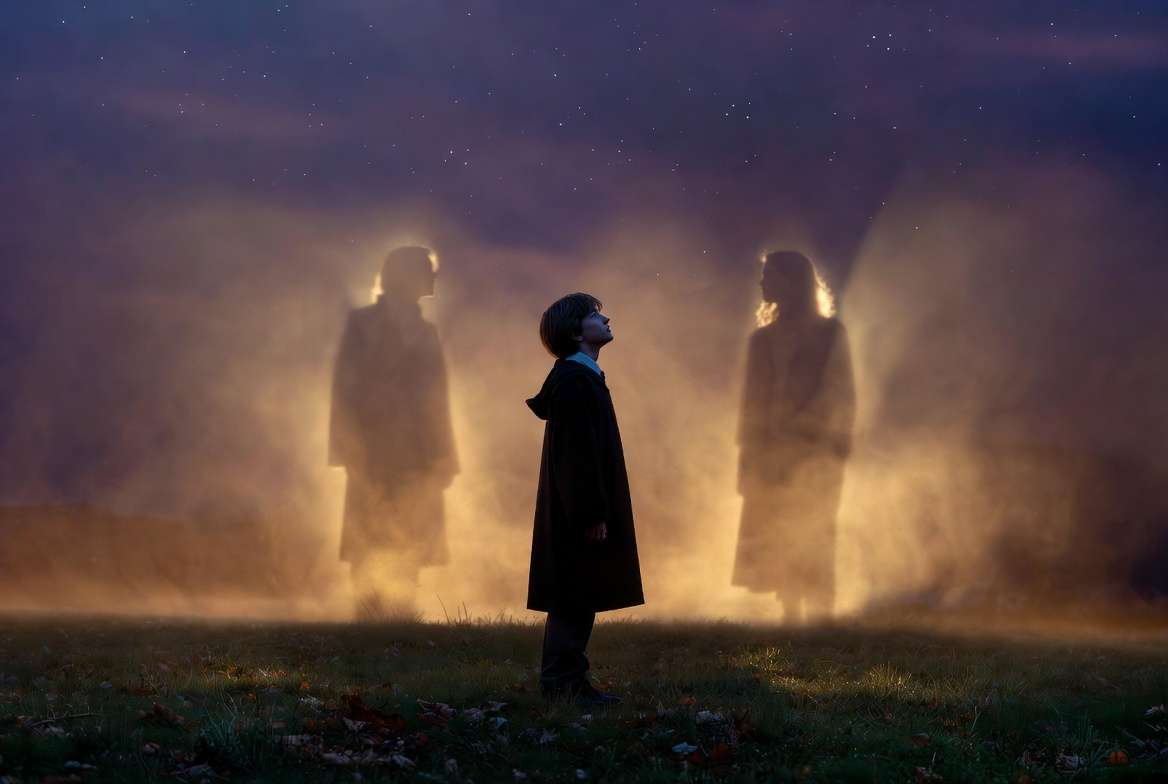 The brave ones go. James and Lily went. And in going, they gave Harry the only thing they had left to give him: the truth that death, faced with love and without fear, is not the end of everything. It is, as Dumbledore always insisted, simply the next great adventure.
The Resurrection Stone Scene — A Glimpse of What Could Have Been
There is one moment in the series where Harry does see his parents — and it is worth examining carefully, because it is precisely not a ghost encounter, and the distinction matters enormously.
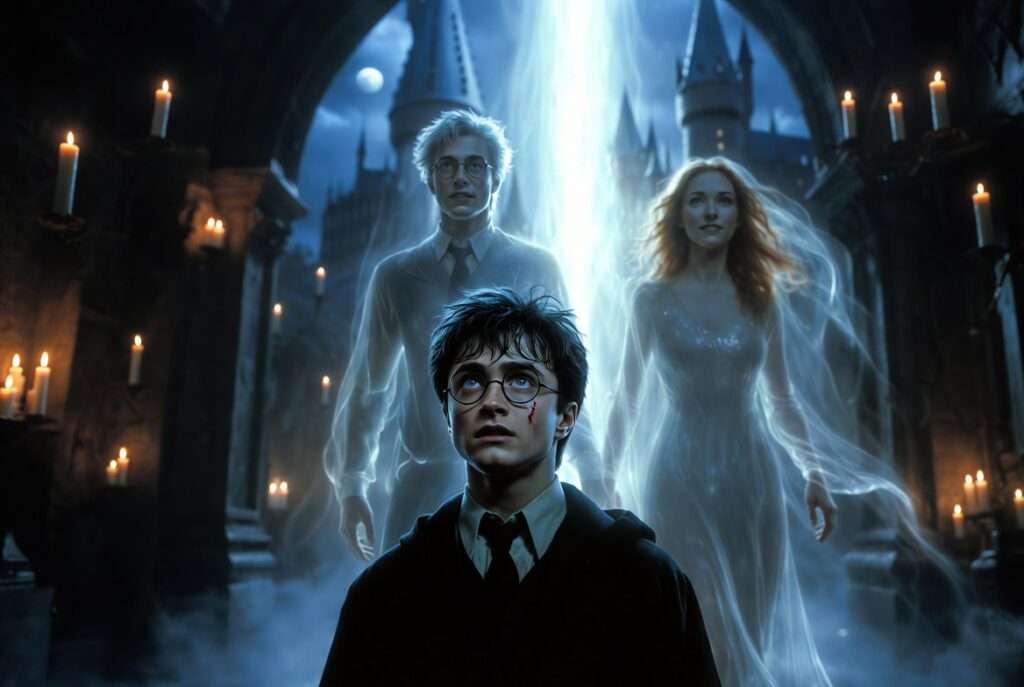
In Harry Potter and the Deathly Hallows, as Harry walks into the Forbidden Forest to face his own death, he uses the Resurrection Stone. James, Lily, Sirius, and Lupin appear to him — not as ghosts, but as something else entirely. They are shadows, or echoes, or perhaps something that has no exact name in any magical taxonomy. They are present enough to speak, to comfort, to accompany him through the most terrifying walk of his life. But they are not fully there. They do not belong to his world anymore.
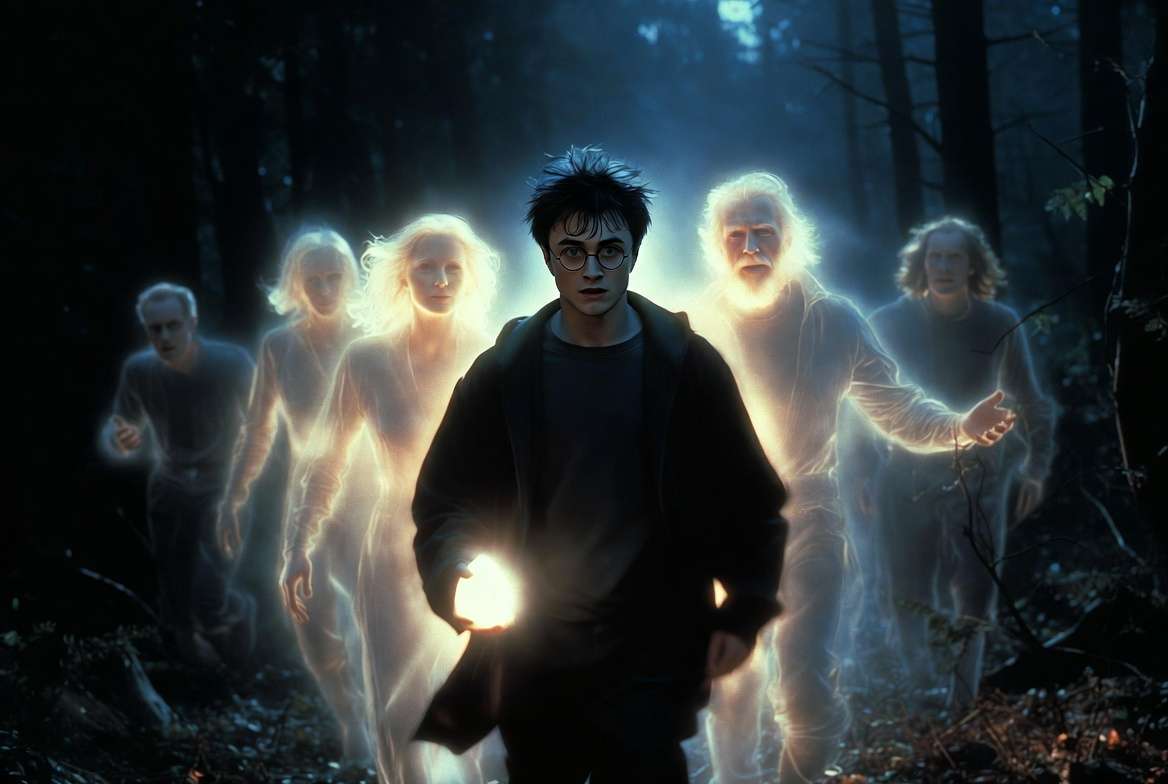 This scene is Rowling giving her readers — and Harry — exactly as much as the story can bear. It is a moment of connection across the divide of death, profound and devastating and tender. But it is not ghosthood. The people Harry sees through the Resurrection Stone are not imprints choosing to remain in the world of the living. They are visitors from somewhere else, briefly, mercifully present for the moment he needs them most.
The difference matters. Ghosts are defined by their inability to let go. What Harry sees in the forest is the opposite: people who let go completely, and can therefore return briefly, freely, without the diminishment that permanent ghosthood involves.
It is, in its way, the most precise encapsulation of the series’ entire philosophy of death. To truly let go is not to disappear. It is to become free.
Could James and Lily Have Become Ghosts? Addressing Fan Loopholes
No discussion of this topic is complete without addressing the loopholes fans have identified over the years — the places where the canon rules around ghosthood become murky or complicated.
Were They Powerful Enough to Choose Ghosthood?
One question that surfaces periodically in fan discussions is whether becoming a ghost requires a certain threshold of magical ability. The canon does not suggest any such restriction — the choice appears to be available to any witch or wizard, regardless of their power level. Moaning Myrtle, after all, was not known for exceptional magical talent. The determining factor is the choice itself, not the magical ability of the person making it.
This matters because it closes one potential loophole: there is no suggestion that James and Lily wanted to stay but lacked the magical wherewithal to do so. If they are not ghosts, it is because they chose not to be. Full stop.
Does the Killing Curse Affect Ghost Eligibility?
This is perhaps the most genuinely interesting loophole in the canon, and it has generated some of the most sophisticated discussion in Harry Potter fan communities. The question is this: does Avada Kedavra — the killing curse — affect the soul in a way that alters or removes the option of ghosthood?
We know from the Horcrux storyline that Voldemort’s soul was progressively damaged and fragmented by the act of creating Horcruxes, which involves committing murder. The killing curse, in that context, is associated with a kind of spiritual violence that goes beyond ordinary death. Some fans have argued that being killed by Avada Kedavra might remove or complicate the choice of ghosthood, since the curse’s mechanism of death is different from natural causes or other magical deaths.
This theory is never explicitly confirmed or denied in canon. Rowling has not addressed it directly. However, it runs somewhat against the grain of what we do know: the series presents ghosthood as a choice made at the moment of death, and there is no suggestion anywhere in the text that the method of death affects this choice. The more consistent reading remains that James and Lily simply chose to move on.
What About Voldemort — Why Isn’t He a Ghost?
Since we are examining the edges of ghost lore, it is worth addressing a question that frequently accompanies the James-and-Lily debate on Reddit: why does Voldemort not become a ghost after his final death?
The answer here is rooted in the Horcrux storyline. By the time Voldemort dies for the last time at the end of Deathly Hallows, his soul has been so extensively fragmented — split into seven pieces through the creation of his Horcruxes — that there is essentially nothing whole enough left to make an imprint. The self that might have chosen ghosthood has been destroyed by decades of soul-splitting. What remains of Voldemort after his death is shown, in the King’s Cross chapter, as a small, flayed, whimpering thing — pitiable and irreparable.
The contrast with James and Lily could not be more stark. Where Voldemort fragmented his soul in pursuit of immortality and ended up with nothing coherent enough to persist, James and Lily kept their souls whole through love and sacrifice — and chose, from that wholeness, to let go. The ghost system, in this light, becomes almost a philosophical test: only those with enough of a self remaining can choose ghosthood. Voldemort destroyed that possibility through his own choices long before his final death.
Expert Fan Analysis — What This Tells Us About Harry Potter’s World-Building
Zooming out from the specifics of James and Lily’s situation, the ghost system in Harry Potter reveals something important about the kind of fantasy world Rowling constructed. This is not a world where the rules of magic are arbitrary or merely decorative. The magical systems in Harry Potter — at their best — are moral systems. They reflect and reinforce the values the series is built on.
The ghost rules are a perfect example of this. In a lesser fantasy world, ghosts would simply be dead people who stuck around for whatever reason the plot required. In Rowling’s world, who becomes a ghost and who does not is a window into character. It tells you, without being told, what kind of person someone was — how they related to fear, to love, to the unknown. Nearly Headless Nick’s ghosthood is not just a whimsical detail. It is a quiet tragedy. And James and Lily’s absence as ghosts is not just an absence. It is a tribute.
This is world-building operating at the level of theme, not just mechanics. And it is one of the reasons the Harry Potter series continues to generate the kind of passionate, intelligent fan engagement that fills Reddit threads years and decades after its completion.
Frequently Asked Questions
Why didn’t Lily Potter become a ghost to stay with Harry?
According to the canon established in Harry Potter and the Order of the Phoenix, becoming a ghost requires a deliberate choice to remain in the living world rather than move on to the afterlife. Lily Potter, like James, chose to move on — a choice the series frames as an act of courage and love rather than abandonment. Staying as a ghost, in Rowling’s moral framework, is associated with fear and incompleteness, qualities that fundamentally contradict everything Lily’s sacrifice represented.
Can Muggle-borns become ghosts in Harry Potter?
Yes. Moaning Myrtle is a Muggle-born witch, and she is one of the most prominent ghosts in the series. Her ghosthood confirms that magical heritage plays no role in the ability to become a ghost. The determining factor is the choice made at the moment of death, available to any witch or wizard regardless of background.
What determines whether a wizard becomes a ghost?
Based on the canon information provided primarily through Nearly Headless Nick’s conversation with Harry in Order of the Phoenix, as well as Rowling’s interviews and Pottermore writings, ghosthood is determined entirely by the choice of the dying witch or wizard. Those who fear death and cannot face the unknown of the afterlife may choose to remain as imprints — echoes of their former selves — in the living world. Those who accept death, however reluctantly or courageously, move on.
Did J.K. Rowling ever directly explain why James and Lily aren’t ghosts?
Rowling has addressed this question in interviews and through the Wizarding World platform, though never with a single, definitive statement specifically about James and Lily. Her comments on ghost lore in general — particularly her characterization of ghosthood as a choice born of fear, and her framing of “moving on” as the braver option — make the implication clear. The scene between Harry and Nearly Headless Nick in Order of the Phoenix is the closest the canon comes to a direct answer, and most fans and scholars treat it as authoritative.
Is the Resurrection Stone scene the same as seeing a ghost?
No, and the distinction is important. The figures Harry sees when he uses the Resurrection Stone in Deathly Hallows are explicitly described as something different from ghosts. They are echoes or shadows, temporarily present because of the Stone’s magic, but not imprints choosing to remain in the living world. Ghosts are defined by their permanent, ongoing presence in the world of the living. The Resurrection Stone creates a temporary, partial connection across the boundary of death — meaningful and real, but fundamentally different in nature.
Why are there no ghost versions of major characters like Dumbledore or Sirius?
This is entirely consistent with the moral framework of ghost lore in the series. Dumbledore and Sirius, like James and Lily, are characters defined by courage, love, and acceptance — qualities that the series associates with the willingness to move on at death. The pattern across the series is clear: the characters who face death with the most courage and the most complete love are precisely the ones who do not return as ghosts. Their absence from the ghostly population of Hogwarts is, in its way, the highest possible tribute.
Return, for a moment, to that quiet question every fan eventually asks: If ghosts exist at Hogwarts, why can’t Harry just talk to his parents?
The answer, as we have seen, operates on three levels simultaneously. There is the canon answer: James and Lily chose to move on, because in Rowling’s world, the brave ones always do. There is the emotional storytelling answer: their absence is the wound that gives Harry’s story its power, its stakes, its aching human heart. And there is the community answer, discovered and refined across thousands of Reddit threads by fans who love this world enough to think about it this carefully: the absence of James and Lily as ghosts is not a gap in the story. It is a statement about who they were.
They loved Harry completely. They died for him willingly. And then, in the final act of courage and love they had left to give, they let go — fully, irreversibly, without flinching — so that their son could face his destiny without the comfort of their presence as a crutch, and find within himself the strength he never knew he had.
Rowling did not keep James and Lily from Harry out of cruelty. She kept them from him because their absence was the most important thing they could give him. And if that does not make you want to go back and reread the entire series with new eyes, nothing will.
If you could ask James or Lily one question — anything at all — what would it be? Share it in the comments below.