
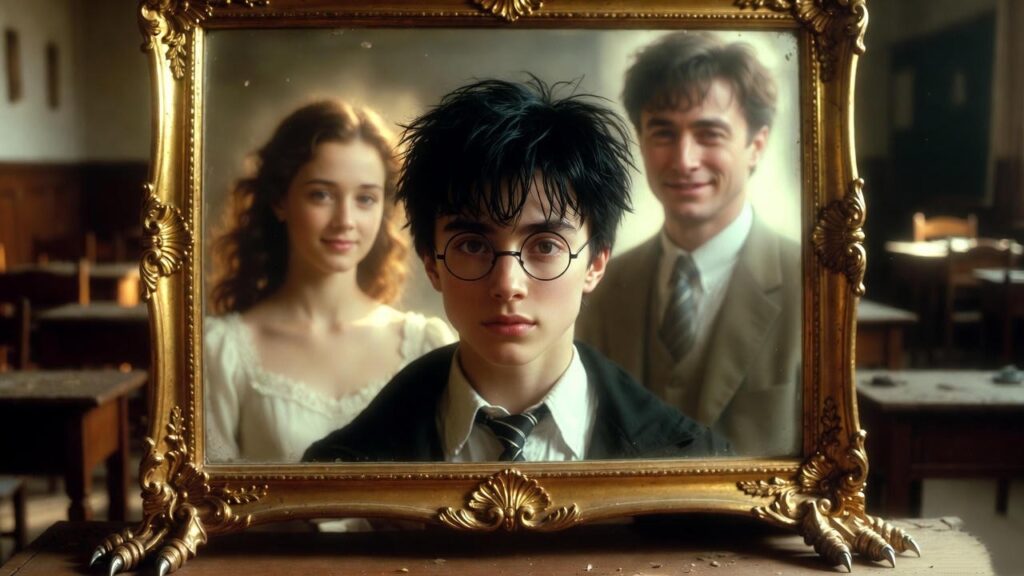
Imagine standing alone in a dimly lit room at Hogwarts, gazing into a mirror that doesn’t reflect your face—but the one thing your heart yearns for most. For Harry Potter, that mirror showed his parents alive and smiling at him, a vision so powerful it nearly consumed him. The Harry Potter Mirror of Erised is one of the most emotionally charged and philosophically profound objects in J.K. Rowling’s wizarding world. Introduced early in Harry Potter and the Philosopher’s Stone, it has captivated millions of readers and viewers for decades with its bittersweet magic and haunting message.
More than just a magical artifact, the Mirror of Erised serves as a mirror to the soul—revealing deepest desires while warning against the danger of living in dreams instead of reality. Whether you’re a lifelong fan revisiting the series, a newcomer discovering the wizarding world, or simply curious about the symbolism behind this iconic object, this in-depth guide will explore every facet of the Mirror of Erised: its origins, mechanics, key scenes, character revelations, deeper symbolism, and enduring lessons. By the end, you’ll understand not only what the mirror shows, but why it remains one of the most powerful and moving elements in the entire Harry Potter saga.
What Is the Mirror of Erised? Origins and Description
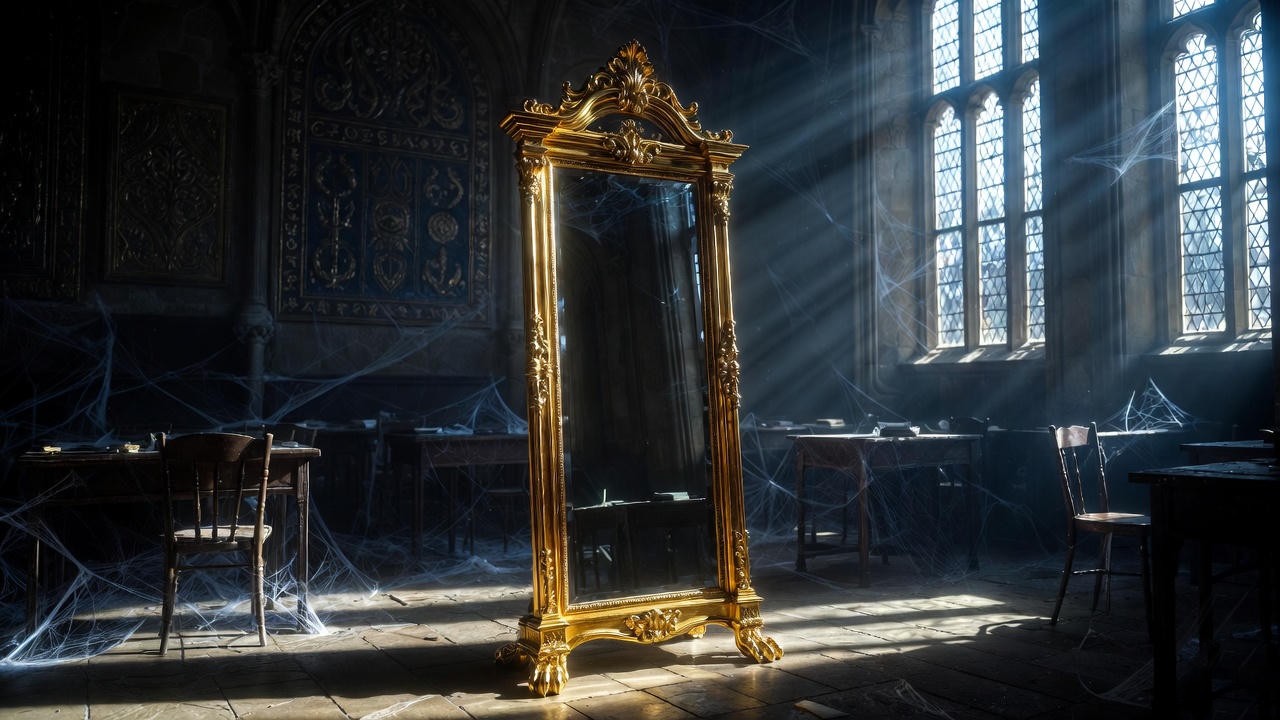
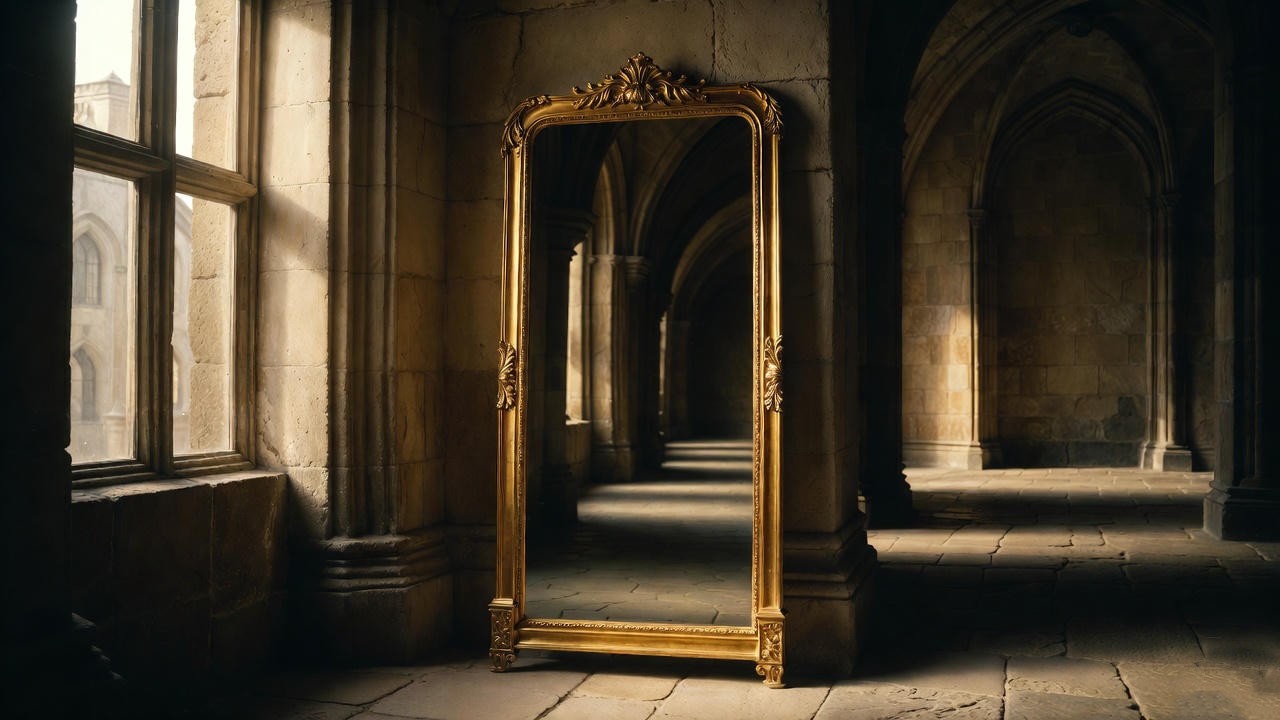
The Mirror of Erised is an ancient, ornate magical mirror that stands as tall as a classroom ceiling. It has clawed feet and an elaborate golden frame, giving it an almost regal appearance. But its most striking feature is the inscription etched across the top in an old-fashioned script:
“Erised stra ehru oyt ube cafru oyt on wohsi”
Read backwards and with the spaces properly rearranged, the inscription reveals its true meaning: “I show not your face but your heart’s desire.” The name “Erised” itself is simply “desire” spelled backwards—a clever linguistic clue from J.K. Rowling that hints at the mirror’s true purpose.
 Origins of the Mirror
Unlike many magical objects in the series whose creators are known (such as the Deathly Hallows or the Marauder’s Map), the Mirror of Erised has no confirmed creator. It is believed to be extremely old—possibly centuries old—predating even the 19th century. Some scholars of the wizarding world speculate that it was created for amusement, to inspire imagination, or perhaps as a cautionary object to demonstrate the dangers of unchecked desire.
For nearly a century before the events of Harry Potter and the Philosopher’s Stone, the mirror resided in the Room of Requirement at Hogwarts, hidden away until someone truly needed it. Albus Dumbledore later moved it to an abandoned classroom on the seventh floor, where Harry first discovered it during his first year.
How Does the Mirror of Erised Work?
The Mirror of Erised does not show your reflection in the usual sense. Instead, it reads the deepest, most desperate desire of your heart and projects a vivid illusion of that desire fulfilled. This vision is intensely personal—only the person looking into the mirror can see their own unique image, while anyone standing beside them sees nothing extraordinary.
Key Mechanics of the Mirror
- Personalized visions: The mirror shows what the heart wants most, even if that desire is impossible or tragic.
- No future prediction: The images are illusions, not prophecies. They represent longing, not destiny.
- The happiest person: According to Albus Dumbledore, the happiest person on Earth would see only their own reflection, perfectly content with their reality.
- Danger of obsession: Prolonged staring at the mirror has driven people to madness or even starvation, as they become unable to tear themselves away from the comforting illusion.
Dumbledore’s Famous Warning
One of the most quoted lines in the entire series comes from Dumbledore when he explains the mirror to Harry:
“It does not do to dwell on dreams and forget to live.”
This simple yet profound statement encapsulates the mirror’s true danger: it offers comfort but at the cost of reality. It is a lesson that resonates far beyond the pages of the books.
Differences Between the Books and the Movies
| Aspect | Books (Philosopher’s Stone) | Movies (Sorcerer’s Stone) |
|---|---|---|
| Harry’s vision | Extended family standing behind his parents | Only Lily and James Potter |
| Number of visits | Multiple nights over Christmas holidays | Condensed to fewer, more dramatic scenes |
| Inscription explanation | Fully revealed by Dumbledore | Briefly mentioned |
| Emotional exploration | Deeper grief and introspection | More visual and cinematic |
| Ron’s reaction | Detailed jealousy and insecurity | Brief, less emphasized |
The films streamline the mirror’s role for pacing, while the books use it to explore grief, longing, and psychological depth more thoroughly.
What Do Key Characters See in the Mirror of Erised?
The mirror provides some of the most revealing character moments in the series, offering insights into the deepest desires and vulnerabilities of those who gaze into it.
 Harry Potter
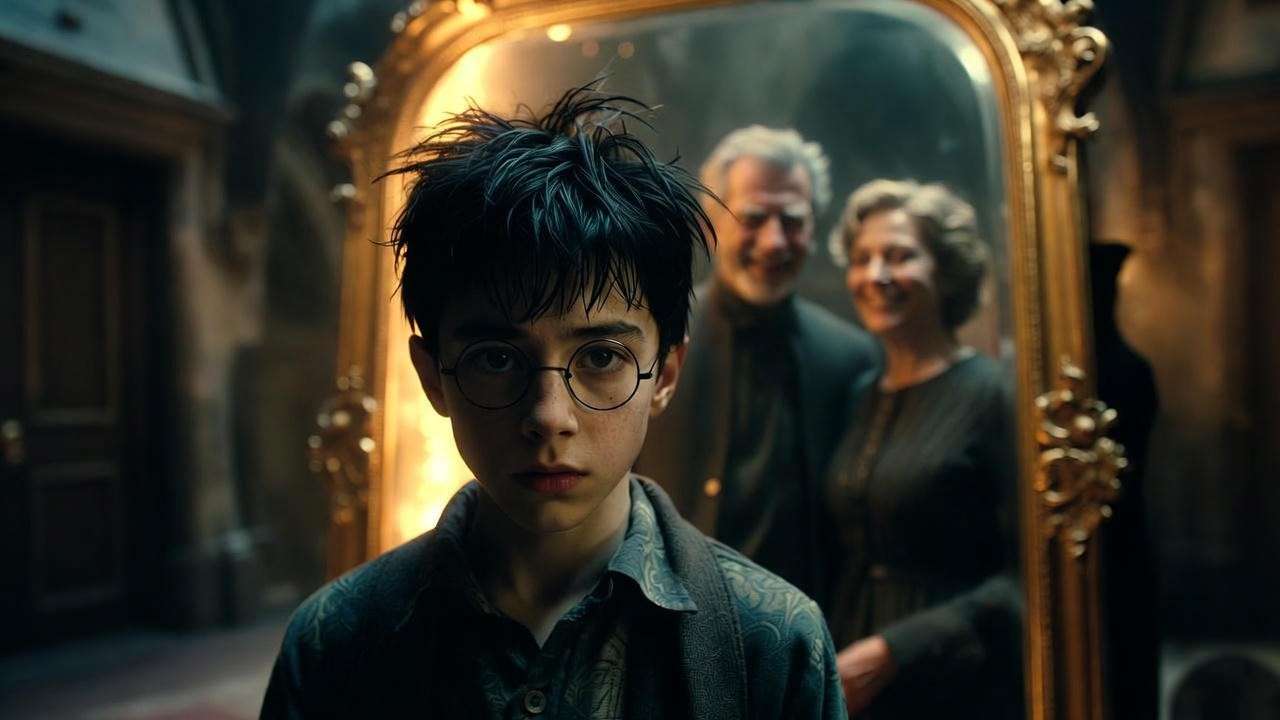
- What Harry sees: His parents, Lily and James Potter, alive and smiling, surrounded by an extended family he never knew.
- Why: Orphaned at just one year old, Harry’s deepest desire is to have a family—to experience the love and belonging that others take for granted.
- Impact: Harry becomes obsessed with the mirror, visiting it night after night during the Christmas holidays, desperate to stay in the presence of the parents he lost.
Ron Weasley
- What Ron sees: Himself as Head Boy and Quidditch champion, standing out among his brothers.
- Why: As the youngest of seven siblings and often overshadowed, Ron craves individual recognition and success.
- Impact: Ron’s vision highlights his insecurity and jealousy, adding depth to his character beyond comic relief.
Albus Dumbledore
- What Dumbledore claims: A pair of thick woolen socks.
- What he likely sees: His family reunited—parents Percival and Kendra, brother Aberforth, and sister Ariana—all alive and happy.
- Why: Dumbledore is haunted by guilt over the death of his sister Ariana and the family’s disintegration. His true desire is reconciliation and redemption.
- Why the lie: By claiming something trivial, Dumbledore protects his vulnerability and discourages Harry from becoming fixated on the mirror.
Other Speculated Visions
While not confirmed in canon, fans and scholars have theorized about what other characters might see:
- Hermione Granger: Voldemort defeated, her friends safe, and perhaps her parents proud of her achievements.
- Severus Snape: Lily Potter alive or himself fully redeemed.
- Lord Voldemort: Himself immortal, all-powerful, and feared by all (per J.K. Rowling’s own comments).
These speculations highlight how the mirror reveals not just what characters want, but who they truly are beneath the surface.
The Mirror’s Role in the Plot of Philosopher’s Stone
The Mirror of Erised is not merely a poignant side moment in the first book—it is the linchpin of the entire plot of Harry Potter and the Philosopher’s Stone. Albus Dumbledore deliberately places the Philosopher’s Stone inside the mirror as the final safeguard in the series of protections guarding the Stone from Voldemort.
 How Dumbledore Uses the Mirror
Dumbledore enchants the mirror so that only a person who wants to find the Stone—but not use it—can retrieve it. Anyone who looks into the mirror and sees themselves pulling the Stone from their pocket will find it actually appears in their real pocket. This ingenious safeguard ensures that only someone pure of heart and selfless enough to protect the Stone (rather than exploit its power) can claim it.
When Harry looks into the mirror during his confrontation with Quirrell/Voldemort:
- Harry sees himself triumphantly putting the Stone into his pocket.
- The Stone immediately appears in his real pocket.
Quirrell, consumed by ambition and greed, sees only himself becoming immortal and powerful—but he cannot obtain the Stone because his desire is selfish.
This moment perfectly illustrates the mirror’s deeper wisdom: true strength lies in selflessness, not in power or possession.
Why This Twist Works So Well
The mirror’s role transforms what could have been a simple treasure hunt into a profound moral test. It forces Harry to confront his own desires while simultaneously protecting the wizarding world from Voldemort’s return. Few plot devices in children’s literature manage to blend emotional depth, philosophical weight, and narrative tension as effectively as this.
Symbolism and Deeper Meaning of the Mirror of Erised
The Mirror of Erised is one of the most richly symbolic elements in the Harry Potter series. It serves as a powerful metaphor for several universal human experiences and themes.
 Grief and Loss
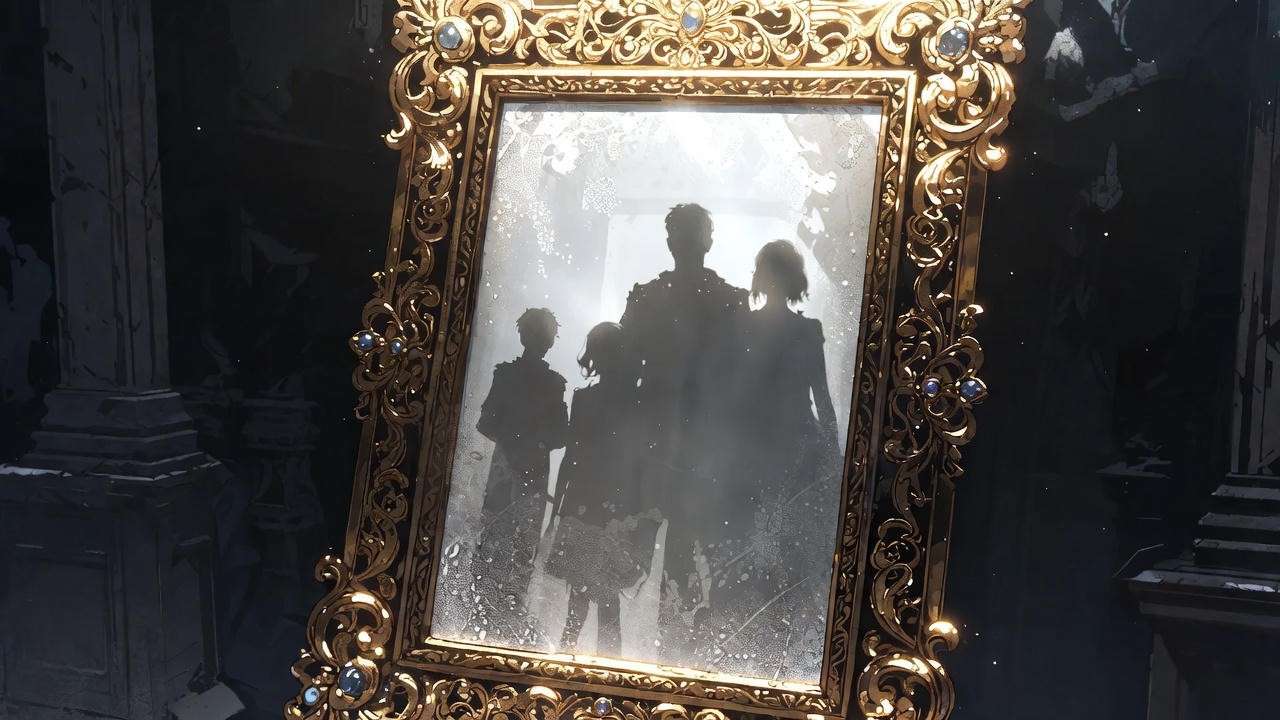
Harry’s obsession with the mirror is a raw portrayal of grief. He is not just seeing his parents—he is seeing the life he was denied. This moment captures the universal pain of longing for what can never be restored. Rowling herself has said that the mirror is about “the pain of loss” and the temptation to escape into fantasy rather than face reality.
Temptation and Illusion
The mirror parallels classic literary temptations:
- Like the One Ring in The Lord of the Rings, it offers an alluring but ultimately destructive illusion.
- Like the enchanted fruit in fairy tales, it promises fulfillment but delivers only longing.
Dumbledore’s warning echoes ancient wisdom: desire can be a trap when it blinds us to the present.
Ambition and Self-Reflection
Ron’s vision of personal glory and Dumbledore’s hidden longing for family reunion reveal how ambition and guilt can shape our deepest desires. The mirror forces characters to confront their insecurities and vulnerabilities.
Parallels with Other Magical Objects
| Object | What It Represents | Contrast with Mirror of Erised |
|---|---|---|
| Resurrection Stone | Desire to bring back the dead | Illusion vs. actual (painful) return |
| Boggart | Fear | Mirror shows desire, Boggart shows fear |
| Pensieve | Memory and reflection | Externalizes thoughts; mirror internalizes desire |
The mirror stands out because it deals not with fear or memory, but with the quiet, aching pull of what we wish could be.
Real-World Lessons from the Mirror of Erised
The Mirror of Erised offers timeless lessons that apply far beyond the wizarding world.
Escapism in the Modern Age
In today’s world of social media, curated “highlight reels,” and virtual realities, the mirror serves as a warning against escapism. Scrolling endlessly through idealized lives can mirror Harry’s nights spent staring into the glass—comforting, yet ultimately unfulfilling.
Balancing Dreams and Reality
The mirror teaches that dreams are powerful motivators, but obsession with unattainable ones can paralyze us. This is a crucial lesson for anyone chasing goals—whether career ambitions, relationships, or personal growth.
 Mental Health and Grief
Harry’s experience reflects real-world stages of grief. The mirror shows how unresolved loss can manifest as fixation on the past. Dumbledore’s advice to live fully is a reminder of the importance of acceptance and moving forward.
Practical Application
Many readers have shared how the mirror’s lesson helped them:
- Let go of toxic relationships.
- Stop comparing themselves to others online.
- Focus on gratitude for what they already have.
FAQs About the Mirror of Erised
Q: Is the Mirror of Erised destroyed? A: It is heavily implied that the mirror was destroyed during the Battle of Hogwarts when the Room of Requirement was set ablaze. However, some fan theories suggest it could have survived or been hidden elsewhere.
Q: What would Voldemort see in the Mirror of Erised? A: J.K. Rowling has stated that Voldemort would see himself immortal, all-powerful, and ruling the wizarding world unchallenged.
Q: Does the mirror show the future? A: No. The images are illusions of desire, not predictions of what will happen.
Q: Why did Dumbledore lie about what he saw? A: By claiming he saw socks, Dumbledore deflected attention from his own painful desire and discouraged Harry from fixating on the mirror.
Q: What would Hermione see? A: While never confirmed, many believe she would see Voldemort defeated and her friends safe, or perhaps her parents proud and happy.
Q: What would you see in the Mirror of Erised? A: That’s the beauty of it—only you know. Reflecting on this question can be a powerful exercise in self-awareness.
The Mirror of Erised is far more than a clever plot device or a moment of emotional catharsis. It is one of the most profound and human elements in the entire Harry Potter series. Through its simple yet devastating magic, it forces characters—and readers—to confront the tension between desire and reality, loss and acceptance, dreams and living.
In a story filled with wands, spells, and battles, the Mirror of Erised reminds us that the most powerful magic is often the quiet, internal kind: the courage to face what we truly want and the wisdom to let go when necessary.
What would you see if you stood before the Mirror of Erised? Share your thoughts in the comments below—we’d love to hear from you.