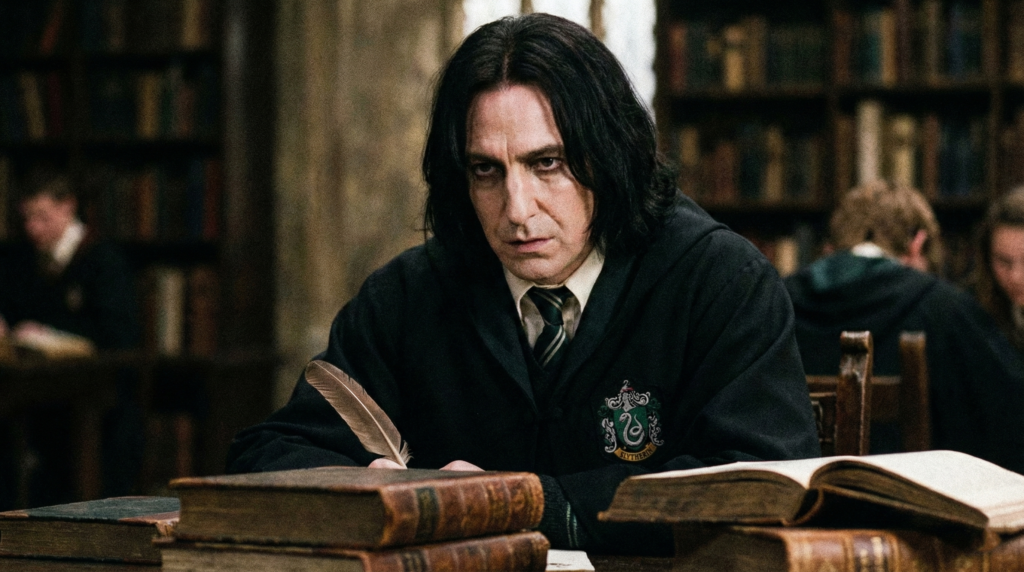
Few moments in the Harry Potter series hit as hard as Severus Snape’s final words: “Look… at… me.” In that desperate plea, as life faded from his eyes, the cold, sneering Potions Master revealed the truth hidden for years — his undying love for Lily Potter, and the boy he once was. Harry Potter young Severus Snape emerges not as the villain many first perceived, but as a deeply tragic figure forged in neglect, abuse, and unfulfilled longing.
harry potter young severus snape is more than a backstory; it’s the key to understanding one of literature’s most complex characters. Through the memories in “The Prince’s Tale” (Harry Potter and the Deathly Hallows, Chapter 33), J.K. Rowling unveils a childhood marked by poverty, family dysfunction, and the glimmer of hope that arrived in the form of a red-haired girl next door. This comprehensive exploration draws directly from canon sources — the books, Rowling’s statements, and Wizarding World insights — to provide the depth fans crave: why a gifted, lonely boy became the Half-Blood Prince, the man who protected Harry “Always,” and one of the bravest figures in the wizarding world.
Who Was Young Severus Snape? Basic Facts and Origins
Severus Snape was born on January 9, 1960, in the grim industrial town of Cokeworth, England. As a half-blood wizard — son of a pure-blood witch and a Muggle — his very identity carried irony from the start, later self-adopted as his alias, the “Half-Blood Prince.”
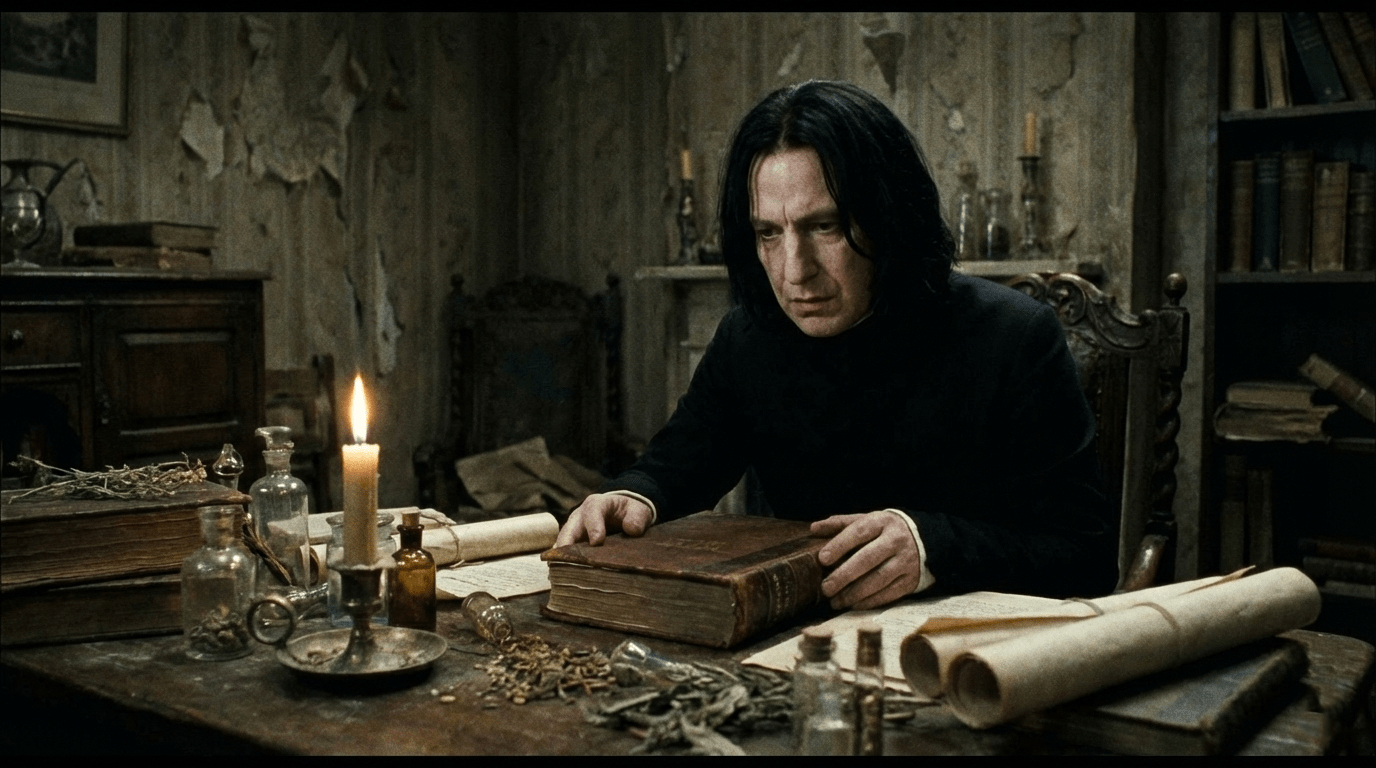
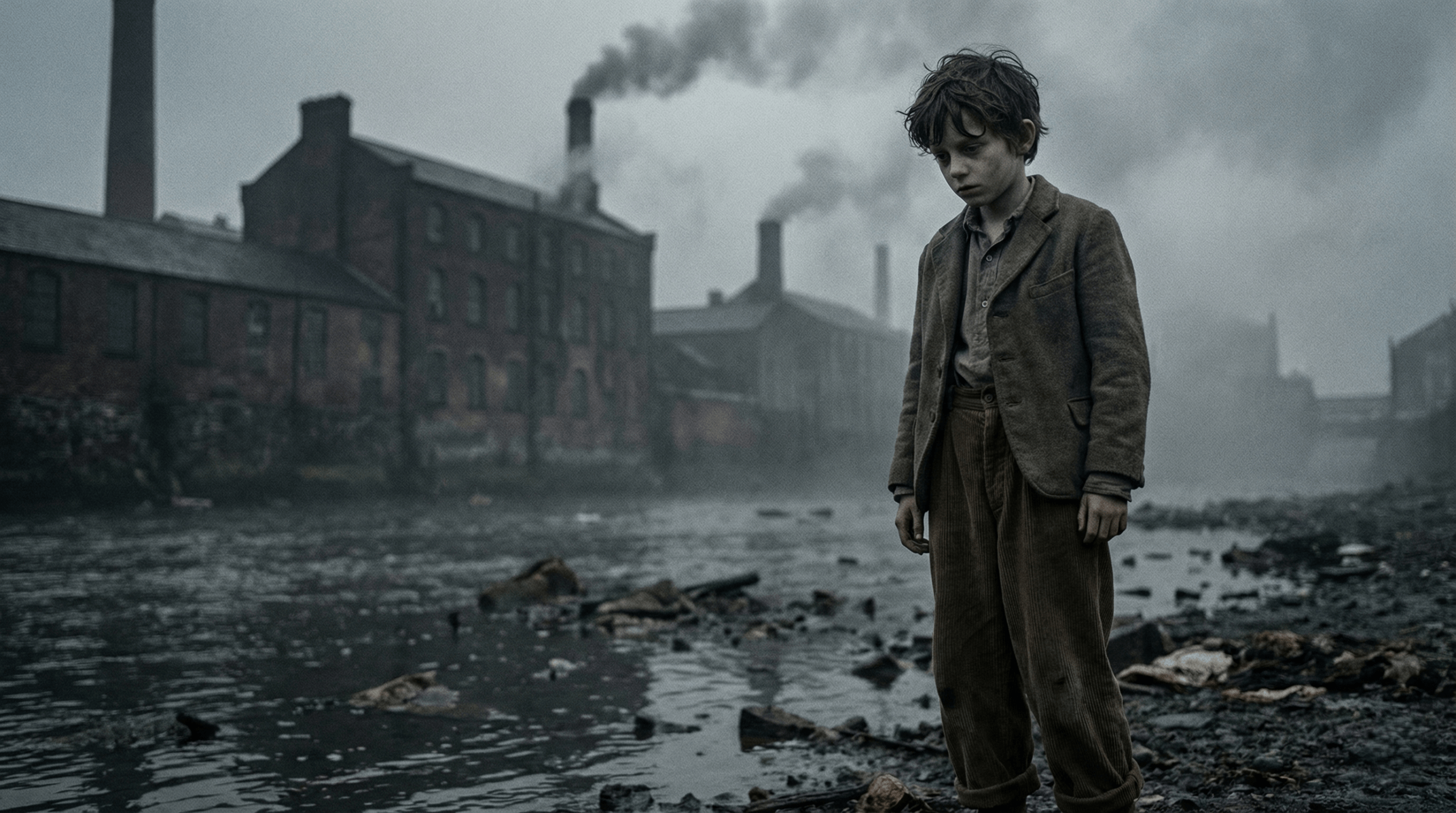 His family home stood at Spinner’s End, a dilapidated terrace house in a rundown working-class district. The area featured a polluted river, towering factory chimneys, broken street lamps, and rows of identical, shabby homes. This bleak environment symbolized entrapment and despair — a far cry from the magical wonder young Severus would discover. The house itself was cramped, dark, and neglected, reflecting the emotional atmosphere inside.
Severus’s half-blood heritage came from his mother, Eileen Prince (née Prince), a witch from the wizarding Prince family, possibly fallen in status. His father, Tobias Snape, was a Muggle, and their mismatched union set the stage for lifelong tension.
A Home Filled with Shadows – The Snape Family Dynamics
The Snape household was defined by conflict, neglect, and implied abuse — elements that left lasting scars on young Severus.
Tobias Snape – The Abusive Muggle Father
Canon strongly suggests Tobias was verbally, and possibly physically, abusive toward both his wife and son. In a memory Harry glimpses during Occlumency lessons (Order of the Phoenix), Tobias shouts at a cowering Eileen while young Severus huddles in a corner, crying. Severus himself describes his father dismissively: when Lily asks if his dad likes magic, he replies, “He doesn’t like anything, much.”
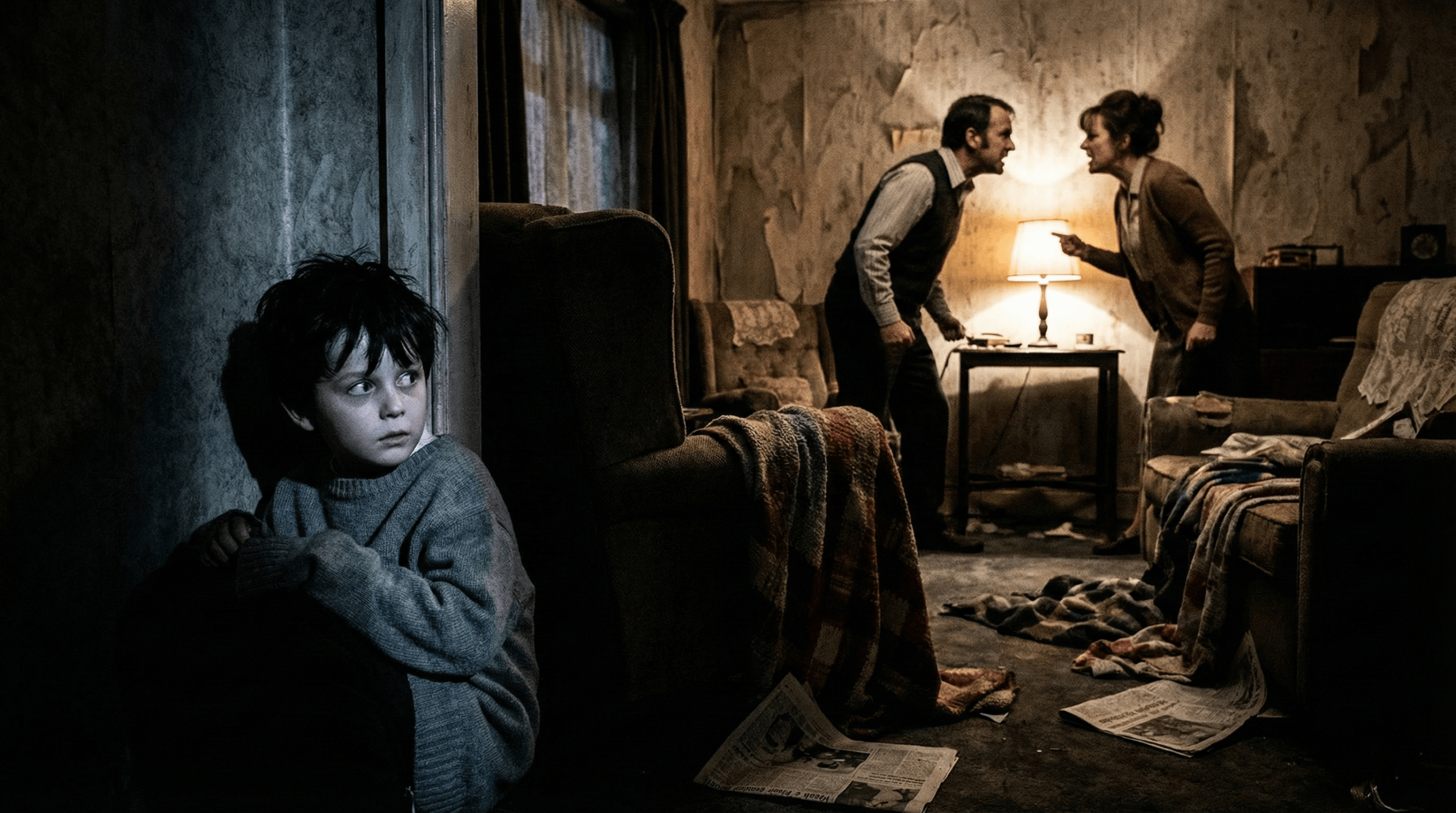 This disdain extended to the wizarding world Eileen represented. Tobias’s anger, possibly fueled by resentment over his wife’s magical abilities or the family’s poverty, created an environment of fear and instability. Severus learned early to hide his magic, associating it with conflict rather than joy at home.
Eileen Prince – The Neglectful Witch Mother
Eileen, once a Hogwarts student (captain of the Gobstones team), appeared worn down by life. In memories, she is described as thin, sallow-faced, and sour-looking — traits Severus inherited. She waited with him on Platform 9¾ looking exhausted and distant.
While she likely taught Severus about the wizarding world (he arrived at Hogwarts knowing advanced spells and Dark Arts lore), her relationship with her son lacked warmth. Neglect — whether from depression, fear of Tobias, or her own disappointments — left Severus emotionally starved. Unlike Lily’s loving Muggle family, Severus had no safe parental figure to nurture his talents or self-worth.
The Day Magic Entered His Life – Meeting Lily Evans
Around age nine, Severus’s world changed when he spotted Lily Evans performing accidental magic in a park — making a flower bloom from its bud. Recognizing her as a witch, he approached her boldly, introducing himself and sharing his knowledge of Hogwarts.
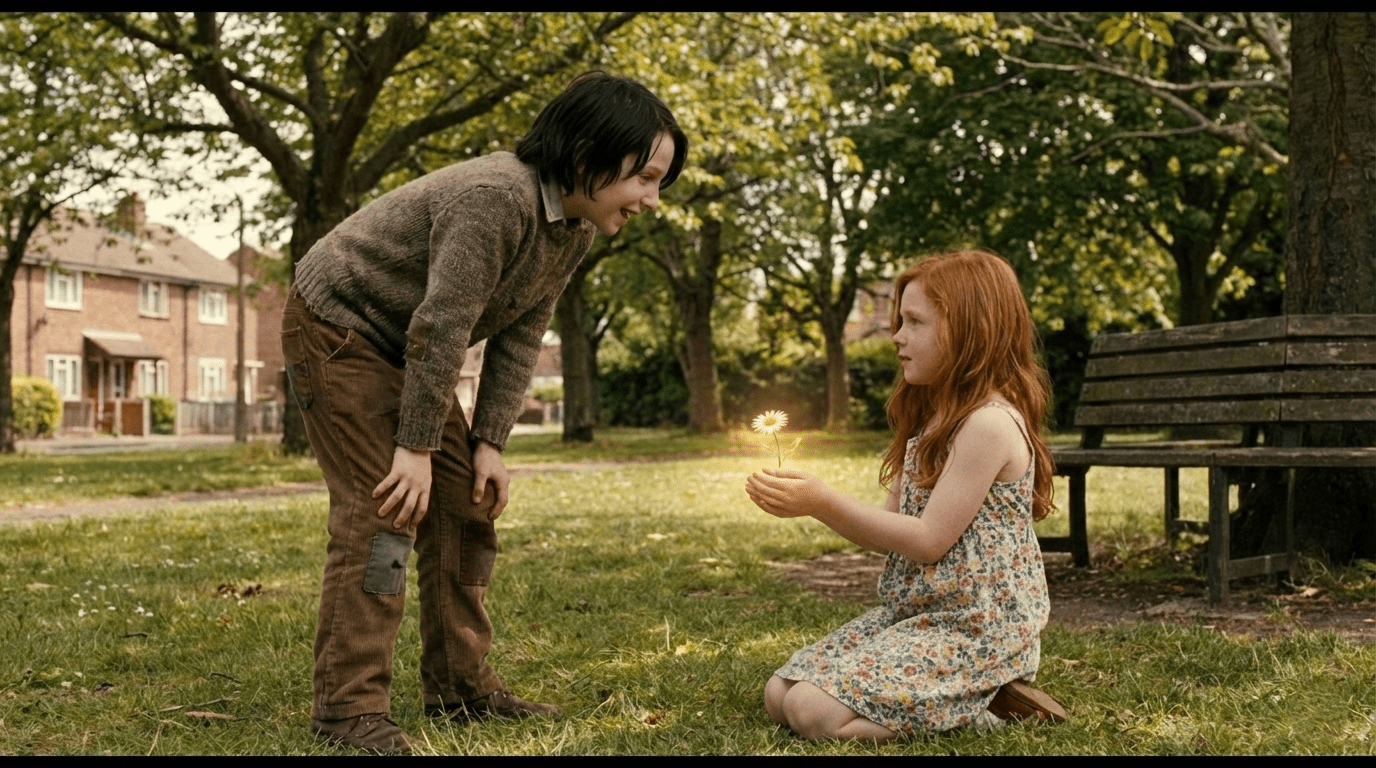 This encounter sparked an instant, profound friendship. Lily, a Muggle-born, and Severus, a neglected half-blood, bonded as outsiders. They spent summers exploring Cokeworth, discussing magic, and dreaming of Hogwarts. For Severus, Lily became his first true friend — a beacon of light in darkness.
He fell deeply in love with her almost immediately, assuring her that her blood status didn’t matter. Their conversations revealed his early brilliance: he knew about the wizarding world, houses (hoping for Slytherin), and even Dark creatures. Yet his awkwardness shone through — oversized, mismatched clothes, poor hygiene — earning Petunia’s scorn as “that awful boy” from down by the river.
Pre-Hogwarts Years – Signs of Darkness and Brilliance
Even before his Hogwarts letter, Severus displayed extraordinary talent. He self-taught spells, experimented with potions, and delved into Dark Arts knowledge — perhaps from Eileen’s old books or innate curiosity. Sirius Black later claimed Severus “knew more curses than half the seventh years” upon arrival.
Socially isolated, he hung around future Death Eaters’ circles, drawn to power as compensation for his powerless home life. Trauma bred a need for control: magic offered escape and superiority over his Muggle father and ordinary surroundings. Yet this fascination with darkness foreshadowed future choices.
Psychologically, young Severus exhibited classic signs of childhood trauma — insecurity, vulnerability, craving belonging, and a tendency toward cruelty as defense.
 Hogwarts and the Turning Point – From Hope to Heartbreak
In 1971, Severus arrived at Hogwarts and was Sorted into Slytherin — separating him from Lily (Gryffindor). Initial friendship endured, but cracks formed.
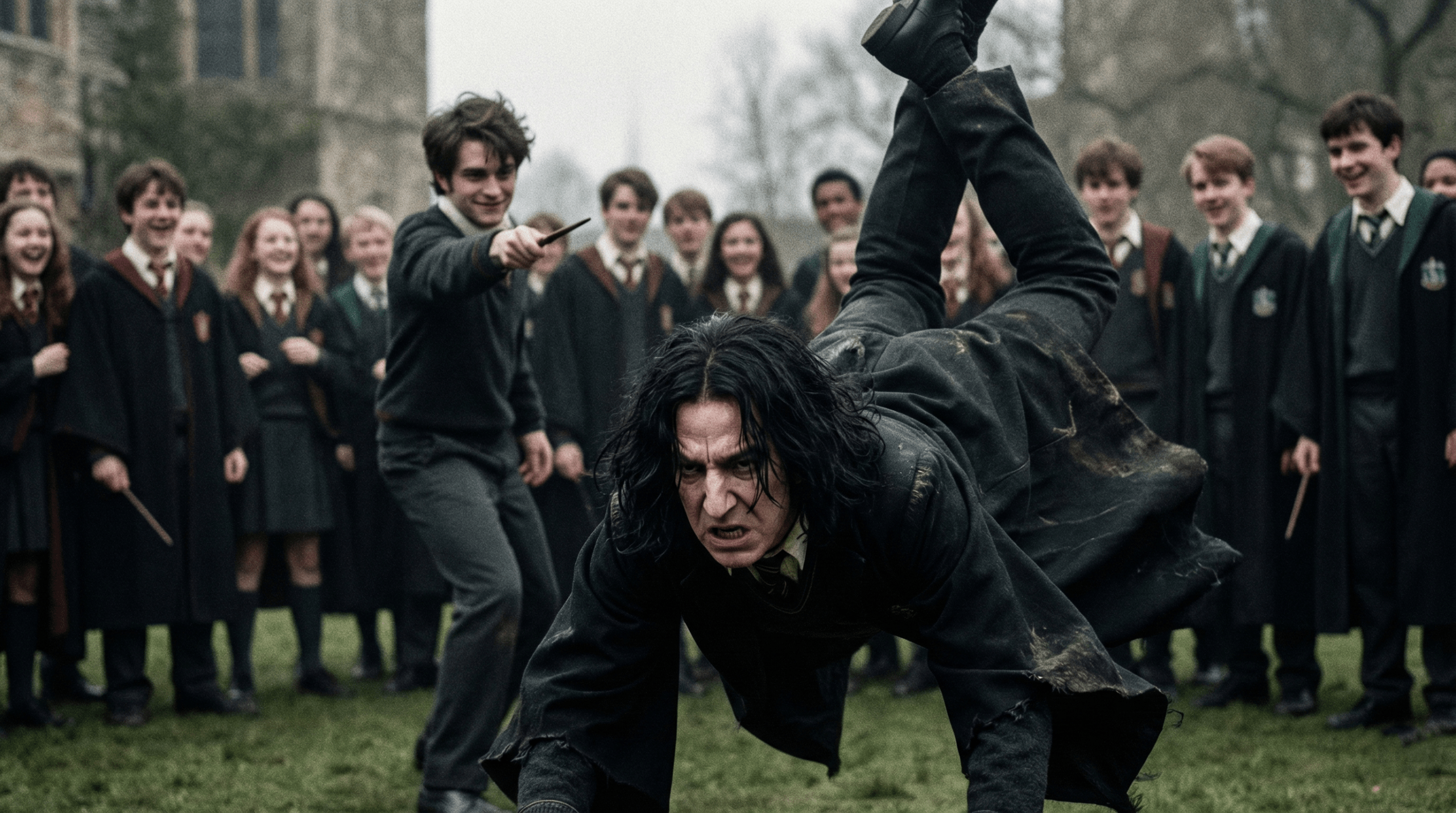
He faced relentless bullying from the Marauders (James Potter, Sirius Black, Remus Lupin, Peter Pettigrew), who saw him as an easy target. The infamous “Worst Memory” (Order of the Phoenix) shows James humiliating him mid-air, leading to Severus’s outburst: calling Lily a “filthy little Mudblood” in rage and shame.
That word shattered everything. Lily ended the friendship, and Severus descended further into dark-leaning groups (Avery, Mulciber). His path to becoming a Death Eater began — seeking power and acceptance he never found at home.
How Childhood Trauma Shaped the Half-Blood Prince
Young Severus’s experiences directly molded the man he became:
- Bitterness toward James Potter transferred to Harry, whom he saw as arrogant like his father.
- Unhealed love for Lily drove his lifelong vow to protect her son — “Always.”
- Abuse cycles fueled his sarcasm, control issues, and moral complexity.
Parallels with Harry’s abusive childhood at the Dursleys highlight contrasts: Harry found friends and love; Severus found isolation and darkness. Yet both showed resilience.
Rowling portrays Snape as a tragedy of unhealed wounds: a boy who craved power because he had none, who chose wrong paths, but redeemed himself through love.
 Hogwarts and the Turning Point – From Hope to Heartbreak (continued)
The bullying Severus endured at Hogwarts was relentless and humiliating. James Potter and Sirius Black, in particular, targeted him from the very first year, mocking his appearance, his house, his background, and his interest in the Dark Arts. What began as schoolboy rivalry quickly escalated into systematic cruelty.
The breaking point came during their fifth year in the infamous scene known as “Snape’s Worst Memory” (Harry Potter and the Order of the Phoenix, Chapter 28). After an exam, James and Sirius attacked Severus outside, lifted him upside down by the ankle with Levicorpus, exposed his underwear to a crowd of students, and threatened to remove his trousers — all while he struggled helplessly.
In a moment of absolute humiliation and rage, Severus lashed out at the one person trying to defend him: Lily Evans. The word that escaped his lips — “Mudblood” — was the single most devastating thing he could have said to her. Lily, who had been his closest friend for nearly a decade, walked away forever.
This single word, born of pain, shame, and the pressure of the Slytherin environment he had immersed himself in, marked the irreversible fracture. Severus’s descent accelerated. He grew closer to aspiring Death Eaters such as Lucius Malfoy (who had already left school), Avery, Mulciber, and Wilkes. His fascination with the Dark Arts, once a private interest, became a dangerous obsession.
By the end of his Hogwarts years, Severus Snape had made the fateful choice to join Voldemort’s ranks — a decision rooted in the same childhood need for power, control, and belonging that he had never found at home or among his peers.
How Childhood Trauma Shaped the Half-Blood Prince (expanded)
The psychological through-line from Spinner’s End to the dungeons of Hogwarts is painfully clear:
- Abandonment and rejection at home taught Severus that love is conditional and unreliable → he clung desperately to Lily as his only source of unconditional acceptance.
- Powerlessness in the face of his father’s anger and the Marauders’ cruelty → he sought power through forbidden knowledge and eventually through Voldemort’s cause.
- Shame about his background (poor clothes, greasy hair, working-class accent) → he internalized a need to prove his superiority, often expressed through cruelty and sarcasm.
- Unhealed grief over losing Lily → became the driving force behind his double-agent life, his protection of Harry, and his final, heartbreaking revelation.
Many readers draw parallels between young Severus and young Harry Potter. Both grew up in abusive households. Both were neglected and emotionally starved. Both found magic as an escape. Yet the outcomes diverged dramatically:
- Harry was saved by friendship, love, and the moral example of people like Dumbledore, Ron, and Hermione.
- Severus was saved only after it was too late — by the memory of Lily’s goodness, and by the opportunity for belated redemption.
This contrast underscores one of J.K. Rowling’s most powerful themes: that childhood trauma shapes us, but it does not have to define our final choices.
Young Severus on Screen – Film Portrayals and Fan Reactions
The films brought young Severus Snape to visual life in two key portrayals:
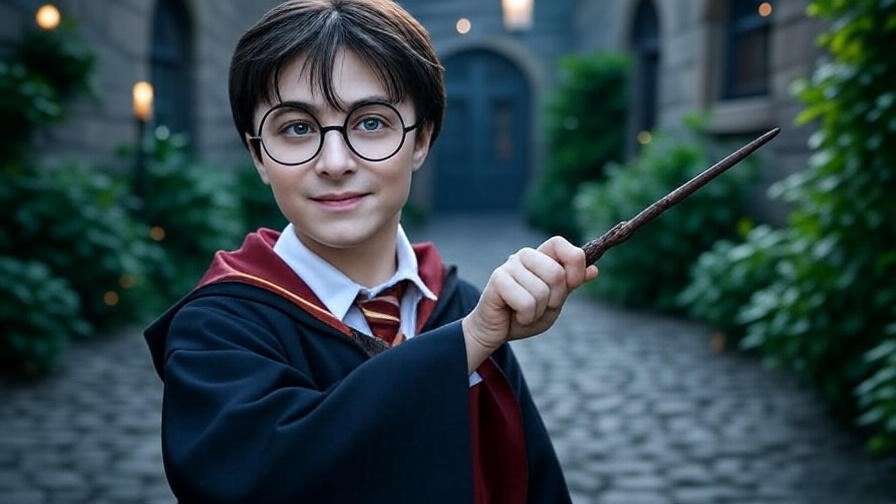
- Benedict Clarke as child Severus (Harry Potter and the Deathly Hallows – Part 2, 2011) In the flashback sequences, Clarke’s young Severus appears small, pale, malnourished, with unkempt black hair and oversized clothing — perfectly capturing the neglected boy from Spinner’s End. His wide-eyed wonder when he first meets Lily, and the fear in his eyes when he sees his arguing parents, added heartbreaking layers to the character.
- Alec Hopkins as teenage Severus (also Deathly Hallows – Part 2) Hopkins portrayed the sullen, awkward fifth-year boy during the “Worst Memory” scene — greasy-haired, defensive, and utterly humiliated.
These portrayals resonated deeply with fans. Many noted how the visual medium amplified the tragedy: seeing a child so clearly unloved and out of place made Snape’s adult bitterness feel inevitable rather than gratuitous.
Fan communities have since produced countless pieces of art depicting young Severus — often showing him sitting alone by the river, watching Lily from afar, or reading under the dim light of Spinner’s End. These images have become iconic symbols of his lost potential.
Why Young Severus Snape Still Captivates Fans Today
More than twenty-five years after the publication of Harry Potter and the Deathly Hallows, Severus Snape remains one of the most debated and beloved characters in modern literature. Young Severus, in particular, continues to inspire empathy, fanfiction, essays, and psychological analyses.
Several reasons explain this enduring fascination:
- Moral complexity — He is neither hero nor villain but a deeply flawed human being shaped by suffering.
- The redemption arc — His lifetime of atonement for one terrible mistake speaks to the possibility of change even after grave errors.
- The tragedy of unrequited love — “Always” is one of the most quoted lines in the series because it captures something universal: the pain of loving someone who can never love you back.
- Real-world resonance — Many readers recognize elements of childhood neglect, bullying, social ostracism, and the search for belonging in Severus’s story.
J.K. Rowling herself has said that Snape was partly inspired by a difficult teacher she once had — someone she disliked intensely, only to later learn he had suffered greatly. This real-life parallel adds another layer of authenticity to the character.
5 Ways Young Snape’s Story Mirrors Real Childhood Trauma
- Emotional neglect from caregivers creates a desperate need for any form of connection.
- Witnessing domestic conflict teaches children that relationships are dangerous and unstable.
- Chronic bullying erodes self-worth and can lead to identification with aggressive power structures.
- Lack of positive role models leaves children to self-teach morality — sometimes with disastrous results.
- One catastrophic mistake made in pain can define someone’s life path if they never receive forgiveness or healing.
Frequently Asked Questions
Was Severus Snape physically abused by his father? Canon strongly implies emotional and verbal abuse, with at least one scene showing Tobias shouting angrily at Eileen while Severus cowers. Physical abuse is never explicitly confirmed, but many readers interpret the level of fear and neglect as consistent with physical violence.
How old was Snape when he met Lily Evans? Approximately nine years old. They were both around the same age and met shortly before they received their Hogwarts letters.
Did Snape’s childhood make him a villain? No — it heavily influenced him, created deep insecurities, and pushed him toward dark ideologies, but his choices (joining the Death Eaters, calling Lily a slur, failing to leave Voldemort sooner) were his own. His eventual redemption proves that background shapes, but does not completely determine, character.
Why do so many fans defend young Severus Snape? Because his story is one of profound tragedy: a gifted child starved of love, bullied relentlessly, and finally broken by his own terrible mistake — yet still capable of the greatest act of love and sacrifice in the entire series.
Harry Potter young Severus Snape was not born to be cruel. He was a gifted, sensitive boy who grew up in a house filled with shouting, a town that smelled of factory smoke and despair, and a heart that learned too early that love could be snatched away in an instant.
Every bitter word he spoke to Harry, every cutting remark, every act of covert protection — they all trace back to that small, pale child who once believed that knowing the right spells might make him worthy of friendship, of safety, of love.
In the end, Severus Snape became the bravest man Harry Potter ever knew not in spite of his tragic childhood, but because of it. He took the broken pieces of a lonely boy from Spinner’s End and forged them into a shield that protected the son of the woman he loved — even when no one would ever know.
And that, perhaps, is the greatest magic of all.
Thank you for reading this in-depth look at one of Harry Potter’s most heartbreaking characters. If young Severus’s story moved you, feel free to share your thoughts in the comments below — we’d love to hear your perspective on his journey from Spinner’s End to “Always.”