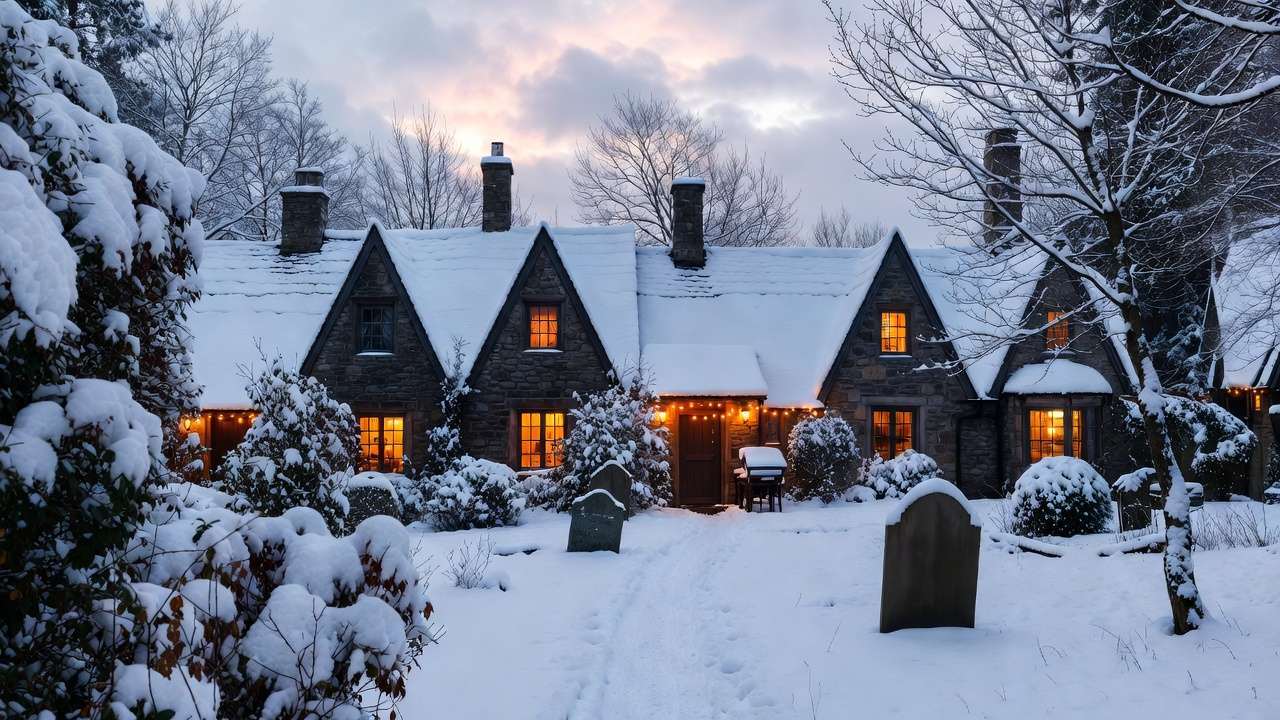
Imagine stepping through the snow-dusted streets of Godric’s Hollow on Christmas Eve, the air thick with nostalgia and quiet grief. Harry Potter, cloaked in his Invisibility Cloak, approaches the old cottage where his parents once lived—only to be drawn toward another house nearby. There, an elderly witch peers through the curtains, beckoning him inside with trembling hands.
What follows is one of the most chilling and unforgettable sequences in the entire Harry Potter series.
The frail woman is Bathilda Bagshot. The house belongs to her. And the body Harry and Hermione follow upstairs… is no longer truly hers.
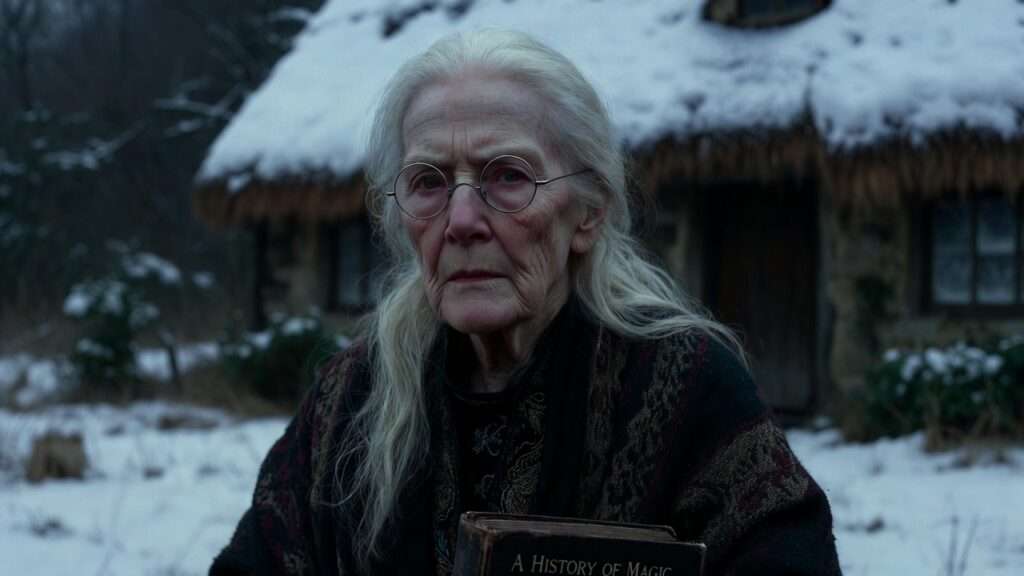
Bathilda Bagshot—whose name graces the cover of every Hogwarts student’s copy of A History of Magic—is far more than a background name in dusty textbooks. She is a bridge between generations, a witness to wizarding history’s most pivotal moments, and ultimately, one of Voldemort’s most tragic and horrifying victims.
In this in-depth guide, we’ll uncover the full story of Bathilda Bagshot: her extraordinary life as the 20th century’s most celebrated magical historian, her intimate connections to the Dumbledore, Grindelwald, and Potter families, the devastating revelations she unwittingly helped expose, and the gruesome fate that still haunts readers years after Deathly Hallows was published.
Whether you’re revisiting the books, preparing for a deep-dive reread, or simply trying to make sense of that terrifying Godric’s Hollow scene, this article will give you the complete picture—one far more detailed and contextualized than most summaries provide.
Who Is Bathilda Bagshot? A Complete Profile
Basic Biography and Origins
Bathilda Bagshot was born sometime before 1873 (exact date unknown), making her well over 124 years old at the time of her death in late 1997. She belonged to the old wizarding Bagshot family, a lineage with deep roots in British magical society.
For most of her long life, Bathilda made her home in the picturesque village of Godric’s Hollow—the same West Country settlement that would later become famous (and infamous) as the final home of James and Lily Potter, the birthplace of Harry Potter, and the site of Albus Dumbledore’s childhood.
Godric’s Hollow has long held special significance in wizarding history. It is one of the few places in Britain where wizards and Muggles have coexisted peacefully for centuries, and it has produced or sheltered several legendary figures, including Godric Gryffindor himself (for whom the village is named).
Bathilda lived in the cottage next door to the Dumbledore family after they moved there following Percival Dumbledore’s imprisonment in Azkaban around 1890–1891. She remained in the same house for the rest of her life—more than a century of quiet observation, scholarship, and, toward the end, terrible tragedy.
Physical Description and Personality in Later Years
In her youth, Bathilda was described by those who knew her as warm, generous, and deeply curious about the world. Even in old age, traces of that personality remained.
However, by the 1990s, time and possibly the cumulative strain of a very long life had taken their toll. Aunt Muriel (Molly Weasley’s great-aunt) dismisses her as “gaga” during Bill and Fleur’s wedding, while Elphias Doge, Dumbledore’s oldest friend, remembers her fondly as a kind neighbor who once tried (unsuccessfully) to befriend Kendra Dumbledore with homemade Cauldron Cakes.
Lily Potter’s surviving letter to Sirius Black, discovered years later by Harry, paints the warmest portrait: Bathilda was a daily visitor to the Potter cottage, bringing stories, treats, and grandmotherly affection during Harry’s first year of life.
Yet by December 1997, the once-vibrant historian could barely speak coherently. Whether this was simple old age, magical exhaustion, or the early effects of whatever dark magic Voldemort would later employ remains one of the series’ lingering ambiguities.
Bathilda’s Legendary Career as a Magical Historian
The Masterpiece – A History of Magic Explained
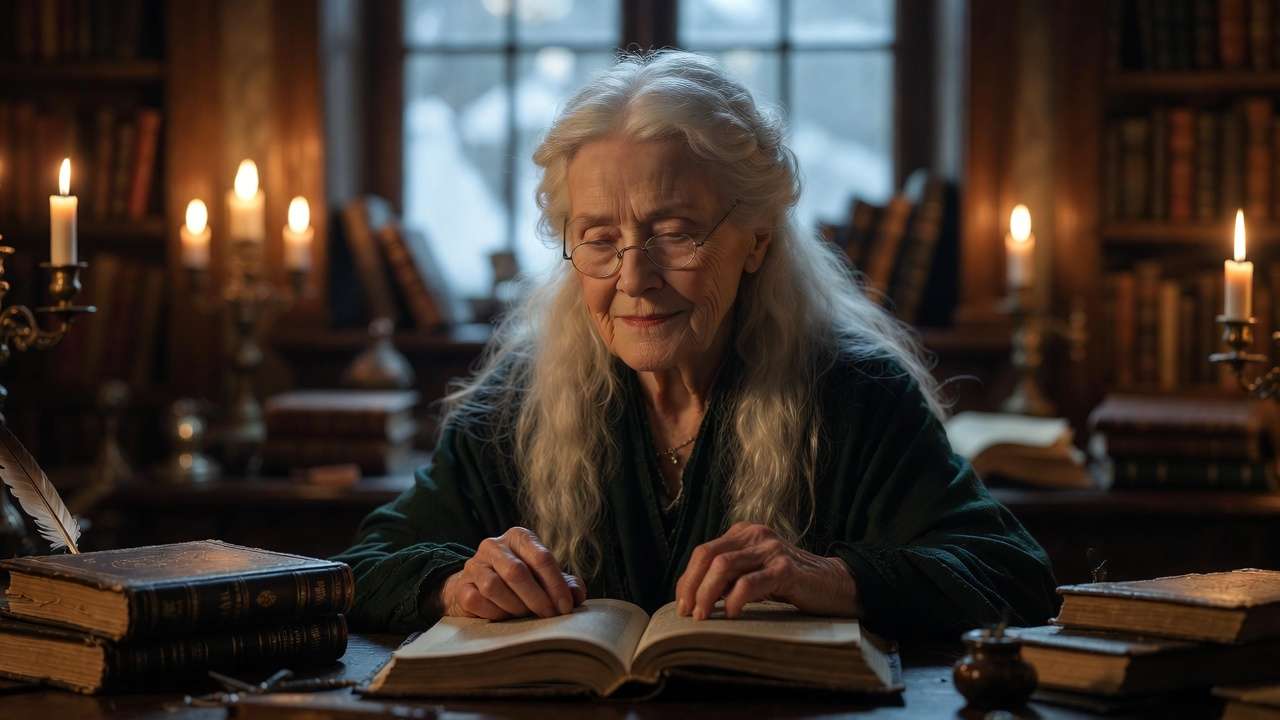
Bathilda Bagshot’s crowning achievement—and the reason most readers first encounter her name—is A History of Magic, first published in 1947.
This comprehensive volume became the standard textbook for History of Magic at Hogwarts School of Witchcraft and Wizardry, taught (rather sleepily) by Professor Cuthbert Binns. It covers:
- The origins of the wizarding world
- Major goblin rebellions
- The International Confederation of Wizards
- The Statute of Secrecy and wizard–Muggle relations
- The rise of influential families and institutions
Despite Harry’s frequent complaints about the subject being “the most boring” at Hogwarts, A History of Magic is anything but dull when read outside the classroom. It provides essential context for understanding the political, social, and cultural forces that shaped the conflicts of the 20th century—including Voldemort’s rise.
Hermione Granger, the character most associated with scholarship, relies heavily on Bathilda’s work throughout the series, quoting it directly in Chamber of Secrets, Prisoner of Azkaban, and beyond.
 Other Works and Contributions
Bathilda was not a one-book wonder.
She authored or co-authored at least ten published works, including several volumes on the ancient art of Divination (such as The Oracle of Palombo) and treatises on magical creatures, customs, and law.
Other wizarding authors openly praised her scholarship. For example, Kennilworthy Whisp, in the foreword to Quidditch Through the Ages, credits Bathilda Bagshot as one of the foremost authorities whose research helped shape his own.
Some fans speculate she may have held the informal title of “Professor Bagshot” at some point, perhaps as a guest lecturer or external examiner—though no canonical source confirms this.
What is clear is that she was considered an expert not only in history but in related disciplines such as Transfiguration, Charms, and Herbology, demonstrating the kind of broad intellectual range that characterized the greatest minds of her generation.
Legacy in the Wizarding World
By the late 20th century, Bathilda Bagshot was widely regarded as the most celebrated magical historian of her era.
Her name became synonymous with authoritative, meticulously researched wizarding history. Generations of students grew up associating the story of their world with her calm, measured prose—even if they rarely appreciated it at the time.
In many ways, Bathilda represents the quiet backbone of magical academia: tireless, unassuming, and profoundly influential.
Bathilda’s Deep Connections to Key Harry Potter Characters
Bathilda Bagshot was never merely an academic living in quiet retirement. Her long life placed her at the very center of some of the wizarding world’s most consequential personal and historical relationships.
 The Dumbledore Family – Neighbor, Friend, and Witness
When Kendra Dumbledore moved to Godric’s Hollow with her three young children around 1890–1891 (following Percival Dumbledore’s imprisonment in Azkaban for attacking Muggle boys), Bathilda was already an established resident.
She made repeated, warm attempts to befriend the reclusive Kendra, once bringing homemade Cauldron Cakes as a welcoming gift. Kendra, still deeply traumatized and protective of her daughter Ariana’s condition, politely but firmly declined the overtures. Bathilda never pushed, respecting the family’s privacy.
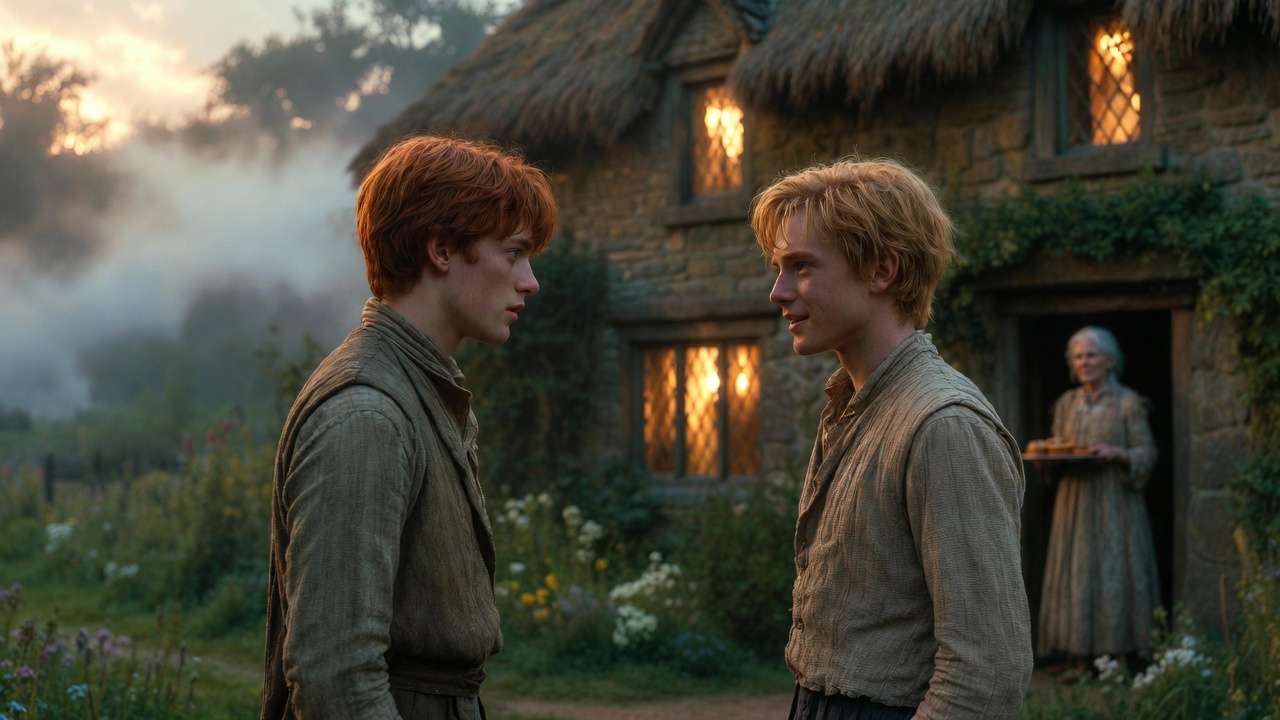
Years later, in the fateful summer of 1899, young Albus Dumbledore returned home after his brilliant first year at Hogwarts. It was Bathilda who introduced him to her great-nephew, Gellert Grindelwald, who had recently been expelled from Durmstrang and was staying with her while he “considered his options.”
This seemingly small act of matchmaking between two extraordinarily gifted teenage wizards would have world-altering consequences.
Bathilda was also present at Ariana Dumbledore’s funeral in 1899. She witnessed the violent fist-fight that erupted between Albus, Aberforth, and Grindelwald beside the grave—a moment of raw grief and betrayal that would haunt all three men for the rest of their lives.
Great-Aunt to Gellert Grindelwald – The Family Tie That Shaped History
The revelation that Bathilda Bagshot was Gellert Grindelwald’s great-aunt (confirmed in The Life and Lies of Albus Dumbledore) is one of the most startling family connections in the entire series.
This blood tie explains how Grindelwald, a foreign wizard recently expelled from Durmstrang, came to be living in the quiet English village of Godric’s Hollow in the first place. It also raises intriguing questions:
- How much did Bathilda know about Grindelwald’s increasingly dangerous ideas during that summer?
- Did she ever suspect the depth of the bond forming between her great-nephew and Albus?
- Was she aware of the blood pact they would eventually swear?
While the books offer no definitive answers, Bathilda’s position as both a respected historian and a close relative places her in a uniquely conflicted position in the formative events leading to the global wizarding war of the 1940s.
Friendship with the Potters – Personal Ties to Harry
Decades later, Bathilda formed a warm and genuine friendship with James and Lily Potter during their time in hiding under the Fidelius Charm (1981).
Lily’s surviving letter to Sirius Black (found by Harry in Order of the Phoenix) reveals that Bathilda visited the Potter cottage almost daily during Harry’s infancy. She brought gifts, told stories about Dumbledore’s youth, and clearly doted on the baby Harry.
The letter also notes that Bathilda attended Harry’s first birthday tea party on 31 July 1981—just four months before the attack that would end the Potters’ lives.
This personal connection adds heartbreaking emotional weight to Harry’s return to Godric’s Hollow in 1997: he is not only visiting his parents’ grave and childhood home, but also the house of the elderly neighbor who had once been a living link to his mother’s happiness.
The Dark Twist – Bathilda’s Interview with Rita Skeeter
In the months following Albus Dumbledore’s death in June 1997, Rita Skeeter published her explosive biography The Life and Lies of Albus Dumbledore. The book contained previously unknown details about Dumbledore’s youth, his relationship with Grindelwald, the tragedy of Ariana, and hints about the Deathly Hallows.
Rita later boasted (in conversation with Harry in Deathly Hallows) that she had extracted much of this information directly from Bathilda Bagshot—by dosing the elderly historian with Veritaserum.
By 1997, Bathilda’s mental faculties had deteriorated significantly. Rita exploited this vulnerability ruthlessly, mocking the old woman in private correspondence as “Dear Batty.”
The revelations in The Life and Lies shocked the wizarding world. They forced the public to confront uncomfortable truths about their greatest hero, and they forever altered how history—Bathilda’s own lifelong field of study—would be perceived.
Ironically, the very historian who had spent a century carefully documenting and preserving wizarding truth became an unwitting instrument in its distortion and sensationalization.
The Tragic Fate – Murder, Nagini, and the Godric’s Hollow Trap
How and Why Voldemort Targeted Bathilda
Bathilda Bagshot was murdered sometime in late 1997, almost certainly by Voldemort himself or on his direct orders.
The exact date is unknown, but the injuries to her body (confirmed later by Order of the Phoenix members) were consistent with the use of the Dark Arts. The motive was twofold:
- Bathilda’s intimate knowledge of Dumbledore’s early life made her a valuable source of information.
- Voldemort correctly anticipated that Harry would eventually return to Godric’s Hollow to visit his parents’ grave—especially around Christmas. Bathilda’s house was the perfect place to set a trap.
 The Nagini Possession Explained – One of the Series’ Creepiest Moments
The Christmas Eve encounter in 1997 remains one of the most viscerally disturbing scenes in the entire series.
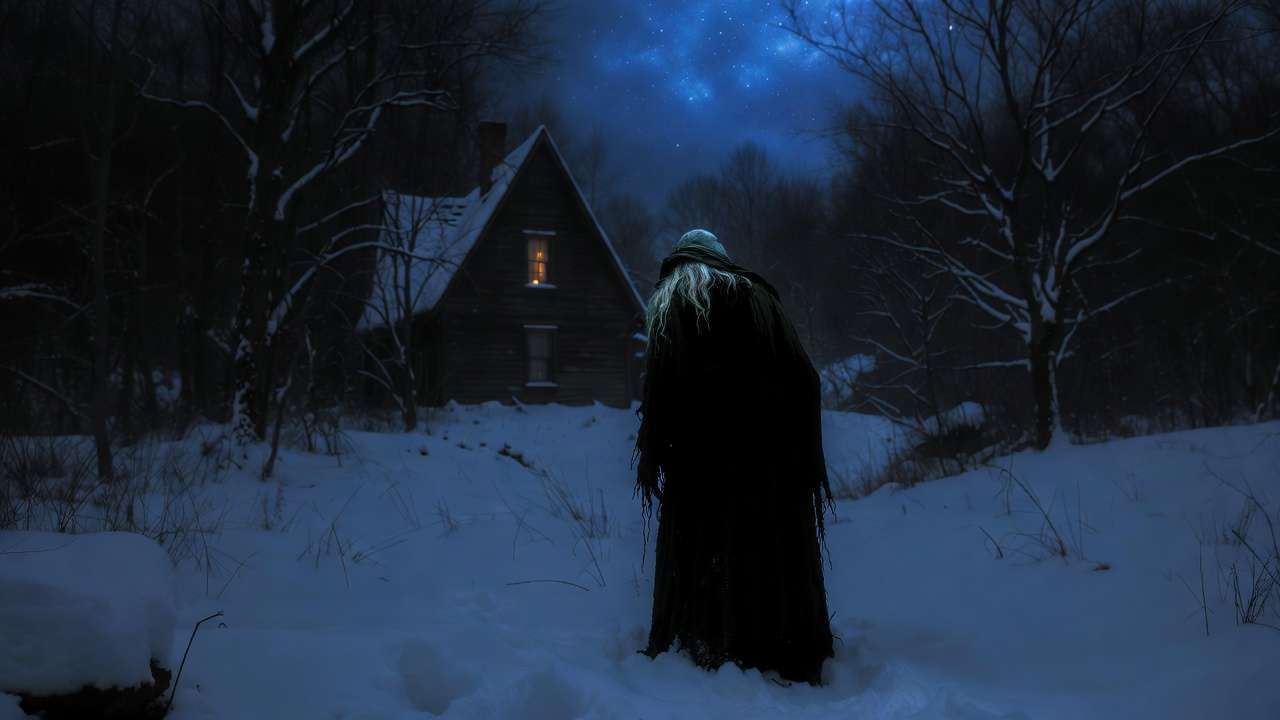
Voldemort used extraordinarily dark magic to animate Bathilda’s corpse and allow his snake Horcrux, Nagini, to inhabit and control it. This was not mere possession in the traditional sense (like the diary possessing Ginny); it was closer to an Inferius-like reanimation, with Nagini physically moving inside the dead body and speaking through it in Parseltongue.
Step-by-step breakdown of the scene:
- Harry and Hermione, guided by the mysterious silver doe Patronus, arrive in Godric’s Hollow.
- An apparently living Bathilda beckons Harry inside her cottage.
- She leads him upstairs in eerie silence.
- Once alone with Harry, the “Bathilda” figure collapses—and Nagini bursts from the corpse’s mouth.
- Harry barely escapes as the house collapses around him, saved only by Hermione’s timely apparition.
This moment is terrifying not only because of the body horror, but because it represents Voldemort’s ultimate desecration: turning a woman who devoted her life to preserving history into a grotesque puppet for his own ends.
Bathilda Bagshot in the Movies vs. Books – Key Differences
The 2010 film Harry Potter and the Deathly Hallows – Part 1 brought Bathilda Bagshot’s final, horrifying appearance to life in a way that remains one of the most visually shocking moments in the entire film franchise.
Bathilda is portrayed by British actress Hazel Douglas, who imbues the elderly witch with an unsettling, almost doll-like fragility before the transformation.
Key differences between book and film:
- The Build-Up In the book, the encounter feels slow and dreamlike—Harry is drawn in by subtle cues (Bathilda’s odd silence, the way she beckons). The film amplifies the dread with cinematography: dim candlelight, creaking floorboards, extreme close-ups on Hazel Douglas’s face, and a haunting, minimalist score.
- The Nagini Reveal The book describes Nagini bursting from Bathilda’s mouth in a burst of grotesque motion. The film takes this further—showing the corpse’s neck elongating unnaturally, skin splitting like a shed snake, and Nagini emerging in a fluid, horrifying sequence. It is widely regarded as one of the most effective horror moments in the series, leaning into body horror in a way the book (restrained by its prose medium) cannot.
- Tone and Pacing The book maintains a sense of tragic pity alongside the terror—Harry feels sorrow for the woman who once knew his mother. The film prioritizes visceral shock, making the scene more immediately frightening but slightly less emotionally layered.
Despite these differences, both versions succeed in conveying the same core truth: Voldemort’s cruelty knows no bounds, even in death.
 Expert Insights and Hidden Details Fans Often Miss
Bathilda Bagshot is one of those characters whose importance grows the more you reread the series. Here are some of the subtler layers that dedicated fans and lore enthusiasts frequently point out:
- Name Etymology “Bathilda” derives from Old German elements meaning “bold battle” or “heroine of the battle.” “Bagshot” may be a playful nod to the badger (symbol of Hufflepuff house) or simply a quintessentially English-sounding surname. Together, the name suggests someone quietly heroic—someone who fought her battles with ink and parchment rather than wands.
- Timeline of a Century-Long Life (Key Milestones)
- Pre-1873: Birth
- ~1890: Welcomes Dumbledore family to Godric’s Hollow
- 1899: Introduces Albus Dumbledore to Gellert Grindelwald
- 1899: Witnesses Ariana’s funeral and the three-way fight
- 1947: Publishes A History of Magic
- 1981: Befriends James & Lily Potter; attends Harry’s first birthday
- 1997 (early): Interviewed (and dosed) by Rita Skeeter
- Late 1997: Murdered; body possessed by Nagini
- 25 Dec 1997: Final encounter with Harry and Hermione
- Connection to the Fantastic Beasts Era As Gellert Grindelwald’s great-aunt, Bathilda provides a living link between the 1920s–1940s era of the Fantastic Beasts films and the main Harry Potter timeline. She would have been in her 40s–50s during the height of Grindelwald’s first rise to power—raising fascinating (though unanswered) questions about whether she ever spoke out against him or tried to reach her troubled great-nephew.
- Why She’s Underrated Bathilda serves as a narrative bridge between the ancient history she chronicled and the modern conflicts Harry faces. She embodies the theme that history is never truly past—it lives in people, in families, in houses, and sometimes in the most terrible ways.
 FAQs About Bathilda Bagshot
How old was Bathilda Bagshot when she died? She was at least 124 years old (born sometime before 1873 and murdered in late 1997). Her exact birth year is never stated, but her longevity places her among the oldest characters in the series.
Was Bathilda Bagshot related to Gellert Grindelwald? Yes—she was his great-aunt (confirmed in The Life and Lies of Albus Dumbledore).
How did Nagini impersonate Bathilda? Voldemort used extraordinarily advanced Dark magic to reanimate Bathilda’s corpse after her murder and allow Nagini (a Horcrux) to inhabit and control the body, speaking through it in Parseltongue.
Did Bathilda know about the Deathly Hallows? It’s possible but unconfirmed. As a historian and someone close to both Dumbledore and Grindelwald in 1899, she may have heard rumors or theories. However, the books never state that she knew about the Hallows specifically.
Who played Bathilda Bagshot in the Harry Potter films? British actress Hazel Douglas portrayed her in Harry Potter and the Deathly Hallows – Part 1 (2010).
Bathilda Bagshot began her life as a brilliant scholar dedicated to preserving and illuminating wizarding history. She ended it as one of Voldemort’s most tragic casualties—a woman whose body was turned into a grotesque instrument of deception and violence.
Yet even in death, her true legacy endures.
Every time a Hogwarts student opens A History of Magic, every time Hermione cites her work, every time a fan revisits the story of the Dumbledore–Grindelwald summer or the quiet heroism of Godric’s Hollow, Bathilda lives on.
She reminds us that history is not just dates and events—it is people. People who love, who witness, who write, who suffer, and who, sometimes, pay the highest price for standing too close to greatness and darkness.
If you ever find yourself back in Godric’s Hollow—whether in your imagination, on a reread, or (one day, perhaps) walking the real-life village that inspired it—pause for a moment outside the little cottage next to the Potters’. Think of the elderly witch who once lived there. The one who knew Dumbledore as a boy, Grindelwald as a nephew, Lily as a young mother, and Harry as a baby. The one who wrote the story of her world… and whose own story became one of its darkest chapters.
Thank you for reading this deep dive into one of the Harry Potter series’ most poignant and overlooked characters.
If you enjoyed this, consider exploring our other in-depth guides to Godric’s Hollow, the Dumbledore family tragedies, or the full timeline of Gellert Grindelwald’s life and influence.
Happy reading—and may your own history always be written in light, never in shadow.