Imagine walking into Flourish and Blotts on a bustling Diagon Alley day, only to witness a book literally attacking the shop manager. Pages snap like jaws, fur bristles, and teeth gleam as the textbook scuttles across the floor like a deranged crab. This isn’t some cursed artifact from the Restricted Section—it’s the required reading for third-year Care of Magical Creatures. Harry Potter: the Monster Book of Monsters isn’t just a textbook; it’s one of the wizarding world’s most bizarre and memorable creations.
In Harry Potter and the Prisoner of Azkaban, this vicious, sentient book introduces readers to Hagrid’s unconventional teaching style and sets the tone for a year filled with unpredictable magical creatures. Fans often ask: Why would Hogwarts approve such an aggressive book for thirteen-year-olds? What makes it bite? And how exactly do you tame it without losing a finger?
As a longtime Harry Potter enthusiast and deep diver into J.K. Rowling’s lore—from the original books and films to extended canon on Wizarding World and Pottermore—this guide delivers the definitive explanation. We’ll cover its origins, purpose, the creatures inside, iconic scenes, fan theories, and even today’s collectibles. Whether you’re revisiting the series, prepping for a re-read, or hunting for replicas, this comprehensive breakdown solves the mystery and celebrates why the Monster Book of Monsters remains a fan-favorite oddity.
What Is The Monster Book of Monsters? (Overview and Description)
The Monster Book of Monsters is a particularly vicious sentient textbook authored by Edwardus Lima. Published sometime before 1932, it serves as a comprehensive guide to dangerous and “monstrous” magical creatures. Unlike standard textbooks like Fantastic Beasts and Where to Find Newt Scamander, this one comes alive—literally.
Physically, the book features a thick, shaggy fur cover in shades of mottled brown and green, with sharp yellow teeth lining its “mouth” (the opening edge) and small, clawed appendages that allow it to scuttle sideways like a crab. When agitated, it snaps shut with ferocious force, growls, and even attempts to bite anyone who approaches without proper respect. In the book, Harry receives his copy as a birthday gift from Hagrid, only to discover it hidden under his bed, snarling and ready to attack. The film adaptation amplifies the chaos, showing it leaping at shoppers in Flourish and Blotts and requiring belts or chains to keep it contained.
This aggression isn’t random. The book is enchanted to be protective of its contents, making it one of the few animated objects in the series that responds to physical touch rather than spells. It’s a perfect example of whimsical yet practical magic in Rowling’s world—where even education can be as wild as the creatures it describes.
The Origins and Purpose of The Monster Book of Monsters
Who Wrote It and Why the Aggression?
Edwardus Lima, the author, remains a mysterious figure in canon. Little is known about him beyond his name and the fact that he penned this “vicious guide to monstrous creatures” decades before Harry’s time at Hogwarts. The book’s aggressive enchantment likely stems from its subject matter: a compendium of truly dangerous beasts demands protection. In a world where knowledge of creatures like the Basilisk or Chimaera could be misused, an anti-theft or defensive mechanism makes sense.
Some speculate the biting feature was a publisher’s gimmick or a magizoologist’s way to ensure only serious students accessed the information. After all, handling dangerous creatures requires caution—why not start with the textbook itself?
Hagrid’s Choice – Why Assign Such a Ferocious Book?
Rubeus Hagrid selected this textbook for his first year teaching Care of Magical Creatures, finding its aggression “amusing.” Hagrid’s love for “monstrous” beings shines here—he sees beauty in what others fear. The book aligns with his philosophy: respect and patience are key to handling unpredictable creatures. By forcing students to tame the book first, Hagrid subtly teaches empathy and gentle handling before introducing Hippogriffs or Blast-Ended Skrewts.
This choice also reflects Hagrid’s inexperience as a teacher. He underestimates how intimidating the book would be for young students, leading to comedic (and painful) moments in class.
Fan Theories on Its Deeper Meaning
Fans have proposed intriguing theories. One popular dark take suggests the book’s ferocity trains wizards in subtle, non-verbal magic and patience—skills vital against real threats like dark creatures or Death Eaters. Another views it as a lesson in respecting the “monstrous”: just as Hagrid champions misunderstood beings, the book demands kindness to reveal its secrets.
Comparisons to other animated objects—like the self-shuffling cards in Goblet of Fire or portraits—highlight how the wizarding world infuses everyday items with personality. The Monster Book stands out for its hostility, perhaps symbolizing the dangers of unchecked curiosity about forbidden knowledge.
How to Tame (and Open) The Monster Book of Monsters – Step-by-Step Guide
The canon method is simple yet precise: stroke or tickle the spine gently. In Hagrid’s first lesson, he demonstrates by flattening the book on a table and running his large fingers along its furry spine. The book immediately relaxes, its teeth retract, and it opens placidly.
Key tips from the scene:
- Approach calmly—sudden movements provoke snapping.
- Use a firm but kind touch, mimicking affection toward a wary animal.
- Avoid gripping too hard; the book responds to respect, not force.
Why does this work? It mirrors the series’ theme of creature care: many magical beasts (Hippogriffs bow for respect, Thestrals require gentle handling) respond to empathy. The book, as a “monster” itself, tests whether the reader has the patience and kindness needed for the class.
Speculation on spells? No canon counter-curse exists—likely because brute force (like blasting spells) would damage the book or its contents. Physical taming reinforces Hagrid’s hands-on approach.
Inside The Monster Book of Monsters – Known Creatures and Content
The book covers a range of dangerous and exotic magical creatures, focusing on those classified as “monstrous.” Confirmed entries from canon and extended lore include:
- Hippogriff (central to Buckbeak’s introduction)
- Sphinx
- Troll of Nadroj
- Alizor of Westacottus
- Daraliznof Freaazer
- Limax
- Gringwart Goff
- Coco Rumsey Catcher
- Shelliferous Drogodflikerous
Many overlap with creatures in Fantastic Beasts and Where to Find Them, but the Monster Book emphasizes aggressive or hard-to-handle species. Its vicious nature may defend this sensitive knowledge—after all, details on Chimaeras or Yetis could be weaponized.
Spotlight on Key Creatures Featured
The Hippogriff section ties directly to plot: students learn proper bowing etiquette, leading to Buckbeak’s dramatic arc. Other entries provide lore on rare beasts, enriching the wizarding world’s biodiversity.
The book’s ferocity protects its “monstrous” secrets, ensuring only dedicated readers access the information.
Iconic Scenes Featuring The Monster Book of Monsters
The Monster Book of Monsters delivers some of the most memorable comedic and chaotic moments in Harry Potter and the Prisoner of Azkaban, both in book and film form. These scenes showcase its personality and cement its place in Potter lore.
Flourish and Blotts Chaos (Book and Film)
In the book, Harry’s first encounter with the Monster Book of Monsters occurs when he tries to purchase his third-year textbooks. The shop manager struggles to contain it, eventually resorting to tying it shut with thick rope and chains. The book continues to growl and snap even while restrained, foreshadowing the trouble ahead.
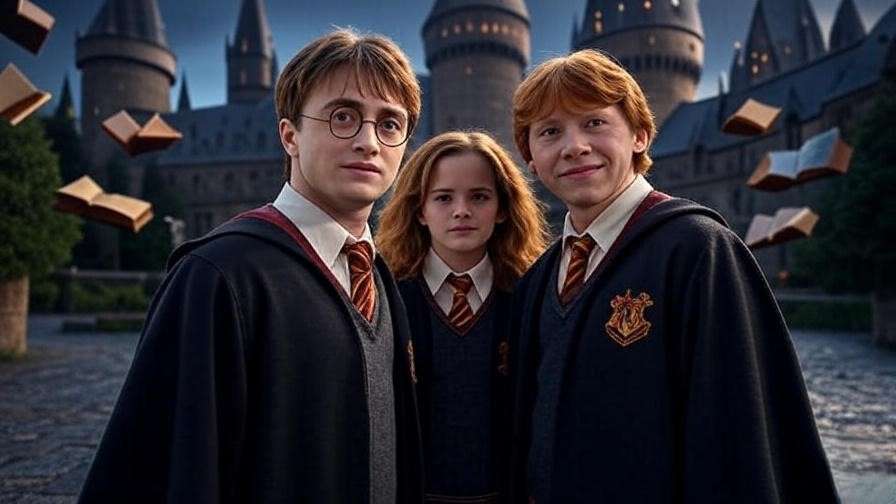
The 2004 film adaptation turns this into a full-blown slapstick sequence. As Harry, Ron, and Hermione browse, the Monster Book suddenly bursts free from its cage, attacks the manager, and scuttles wildly around the shop. Hermione quickly grabs it, earning scratches in the process, while the book snarls and bites at anything in reach. The scene perfectly captures the book’s crab-like movement and relentless aggression, providing early visual comedy in an otherwise darker film.
Hagrid’s First Care of Magical Creatures Lesson
The book’s most famous appearance comes during Hagrid’s inaugural lesson. Students gather nervously around a stack of snapping textbooks. Hagrid calmly instructs them to stroke the spine. Most students fail spectacularly—Neville’s attempt results in the book chasing him across the grounds, while Draco Malfoy mocks the process until his own copy nearly takes his hand off.
Hagrid’s demonstration is textbook (pun intended): he flattens the book on a table, runs his massive fingers along the spine, and coos gently until it relaxes and opens. The contrast between Hagrid’s gentle giant demeanor and the book’s ferocity highlights his unique approach to teaching.
Under Harry’s Bed and Other Humorous Moments
Later in the book, Harry discovers his copy has escaped its cage and hidden under his four-poster bed in Gryffindor Tower. When he reaches for it, the book snaps at his fingers, forcing him to wrestle it back into submission. These smaller moments keep the book’s menace alive throughout the story, turning an ordinary object into a recurring character.
The film condenses many of these interactions but retains the core humor, ensuring the Monster Book remains one of the most quotable and visually striking elements of Prisoner of Azkaban.
The Monster Book of Monsters in Pop Culture and Merchandise Today
More than thirty years after its debut, the Monster Book of Monsters enjoys enduring popularity among Harry Potter fans. Its combination of menace, humor, and uniqueness makes it perfect for memes, fan art, cosplay props, and high-quality collectibles.
Social media is filled with videos of fans “taming” replicas, recreating Hagrid’s lesson, or staging mock Flourish and Blotts attacks. It’s frequently ranked among the top “weirdest magical objects” in fan polls and appears regularly in “best Hagrid moments” compilations.
Official Collectibles and Replicas
Several high-quality replicas exist for collectors:
- Insight Editions Film-Accurate Prop Replica This premium version features real faux fur, functioning teeth and claws, realistic scuttling motion when wound, and authentic detailing from the Warner Bros. archives. It’s heavy, detailed, and often sells out quickly among serious collectors.
- Running/Chomping Plush Versions Smaller plush toys (often marketed as “RP Minis” or similar) include sound chips that growl and chomp when squeezed. These are popular gifts for younger fans and casual collectors.
- LEGO Sets LEGO has released multiple versions: – Set 30628 (2022 Gift with Purchase) – a small, displayable Monster Book. – Set 76449 (2025 release) – a larger, buildable “Chomping Monster Book of Monsters” with moving jaws, scuttling legs, and interactive play features. These sets appeal to both LEGO and Harry Potter enthusiasts, blending nostalgia with modern building mechanics.
Where to Buy and What Fans Love
Official replicas are available through the Wizarding World Shop, LEGO.com, Amazon (authorized sellers), and specialty retailers like Entertainment Earth. Prices range from $20–$40 for plush/mini versions to $100–$300+ for premium prop replicas.
Fans particularly praise:
- Accurate fur texture and teeth design
- Working mechanisms (chomping, scuttling)
- Display stands or cages that mimic Flourish and Blotts
- Sound features that capture the book’s signature growls
For collectors, authenticity and durability are top priorities—many recommend buying directly from licensed manufacturers to avoid low-quality knockoffs.
Expert Insights – Why The Monster Book of Monsters Matters in the Harry Potter Universe
Beyond its comedic value, the Monster Book of Monsters serves several important narrative and thematic purposes.
First, it perfectly encapsulates Hagrid’s teaching philosophy. Where other professors rely on theory and rote learning, Hagrid believes in hands-on experience—even if that experience starts with a textbook that tries to eat your fingers. The book forces students to practice patience, gentleness, and respect before they ever meet a Hippogriff or Niffler.
Second, it reinforces one of the series’ central messages: things (and beings) that appear monstrous often deserve empathy and understanding. Just as Hagrid champions misunderstood creatures like Aragog, Buckbeak, and Grawp, the Monster Book rewards kindness with cooperation.
Third, it adds texture to the wizarding world’s everyday magic. In a universe filled with self-stirring cauldrons, talking portraits, and flying broomsticks, the Monster Book stands out for its sheer personality and hostility. It reminds readers that magic isn’t always convenient or safe—even something as mundane as a schoolbook can be dangerous.
Finally, from a storytelling perspective, the book provides early comic relief in Prisoner of Azkaban—a darker installment—while subtly foreshadowing the year’s themes of danger, misunderstanding, and redemption.
In short, the Monster Book isn’t just a funny prop. It’s a microcosm of J.K. Rowling’s world-building genius: whimsical, practical, and deeply tied to character and theme.
Frequently Asked Questions
How do you open The Monster Book of Monsters? Gently stroke or tickle the spine. Sudden movements or rough handling will make it snap shut and attack.
Why is the Monster Book of Monsters so aggressive? Its enchantment likely protects its dangerous contents. It may also serve as an early lesson in patience and gentle handling—qualities essential for Care of Magical Creatures.
Is there a real-life replica available? Yes—Insight Editions offers a high-end film-accurate prop replica, LEGO has buildable versions, and various plush toys feature chomping and sound effects.
What creatures are inside the Monster Book of Monsters? Confirmed entries include Hippogriffs, Sphinxes, Troll of Nadroj, Alizor of Westacottus, Daraliznof Freaazer, Limax, Gringwart Goff, Coco Rumsey Catcher, Shelliferous Drogodflikerous, and others.
Did the Monster Book of Monsters appear in other Harry Potter books or films? It appears primarily in Prisoner of Azkaban (book and film). It receives brief mentions or background appearances in later books but never plays a major role again.
The Monster Book of Monsters is far more than a biting textbook. It’s a clever narrative device, a lesson in creature care, a showcase of Hagrid’s unique charm, and one of the most iconic magical objects in the Harry Potter series.
Whether you’re laughing at its Flourish and Blotts rampage, marveling at how accurately it mirrors real animal behavior, or proudly displaying a replica on your shelf, this snarling, furry book continues to capture imaginations decades later.
Next time you pick up a textbook, take a moment to appreciate that it doesn’t snap at your fingers. And if you ever find yourself in possession of a Monster Book of Monsters, remember Hagrid’s advice: a gentle stroke along the spine goes a long way.
Have you ever tried “taming” a replica? Which scene featuring the book is your favorite? Share in the comments below—I’d love to hear your stories!