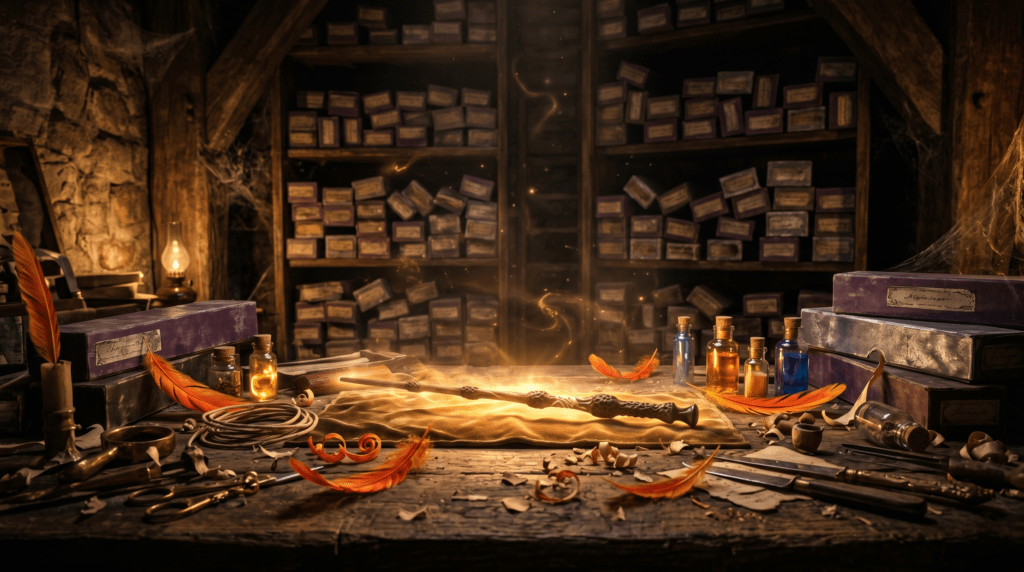
There is a moment every Harry Potter fan remembers — not just from reading the books or watching the films, but from feeling it. It is the moment Ollivander’s shop falls quiet, boxes tumble from shelves, and a wand finds its wizard. A warm glow. A rush of gold and silver sparks. And those seven words that changed fantasy literature forever: “The wand chooses the wizard, Mr. Potter.”
That single sentence is not just a charming bit of world-building. It is the doorway into one of the most sophisticated and layered magical systems ever constructed in fiction. The relationship between wizards and wands in J.K. Rowling’s wizarding world is governed by an ancient, mysterious discipline called wandlore — and most fans have only scratched the surface of what it truly means.
Whether you want to understand why Harry’s wand acted on its own against Voldemort, what your Pottermore wand core actually says about your personality, or how the Elder Wand’s allegiance shifted without a single killing curse, this guide covers it all. From wand wood symbolism and core meanings to the deeper mechanics of wand loyalty and the wandlore logic behind the Deathly Hallows — this is the most complete breakdown of wizards and wands you will find anywhere.
What Is Wandlore? Understanding the Ancient Science Behind Wizards & Wands
The Origins of Wandlore
Wandlore is, at its core, the study of wands — their creation, their properties, their behavior, and their relationship with the witches and wizards who wield them. It is a discipline that sits at the intersection of craftsmanship, magic theory, and something far harder to define: intuition, destiny, and soul.
Wand use in the wizarding world is not universal across all magical cultures. In some traditions, wizards cast magic without wands entirely, relying on staffs, hands, or spoken incantation alone. But in the Western European magical tradition — the tradition most prominently depicted in the Harry Potter series — the wand became the primary magical instrument over many centuries, refined and perfected to the point where a wizard without a wand is considered seriously disadvantaged.
The craft of wandmaking stretches back to ancient times, with wandmakers experimenting across generations with different woods, magical cores, lengths, and flexibilities to understand what makes a wand truly effective. Unlike potion-making or Transfiguration, wandlore is not formally taught at Hogwarts. It is a specialty discipline, passed down between master wandmakers, and very few wizards in any given era truly understand it at a deep level.
Why Wandlore Is Taken Seriously in the Wizarding World
That relative obscurity is precisely what makes wandlore so fascinating. Most wizards use their wands every day without ever questioning why they work, why they sometimes refuse, or why a borrowed wand feels slightly off. It is a bit like driving a car without knowing anything about engines — functional, but incomplete.
Garrick Ollivander, the most celebrated wandmaker in Britain and arguably the world, spent his entire life devoted to the study of wandlore. His family had been making wands for centuries, but Ollivander brought a new level of obsessive precision to the discipline. He remembered every wand he ever sold — the wood, the core, the length, the flexibility, and the wizard who received it. He did not see this as unusual. He saw it as the bare minimum required to understand the relationship between a wand and its owner.
Ollivander also broke from earlier wandmaking traditions by standardizing his three core materials — phoenix feather, dragon heartstring, and unicorn hair — believing these to be the most powerful and reliable magical cores available. That decision alone shaped the wandlore of an entire generation of British witches and wizards.
The Three Components of Every Wand — and Why They Matter
Every wand crafted by Ollivander consists of three defining elements: the wood, the core, and the physical characteristics of length and flexibility. Together, these four variables create a wand that is, in wandlore terms, as individual as a fingerprint. No two wands are exactly alike — and no two wizards are, either.
Wand Wood — The Outer Personality
The wood of a wand is often described as reflecting the outer nature of its wizard — their visible traits, their social presence, the qualities they project into the world. Ollivander’s notes on wand woods, later published on Pottermore and now archived on the Wizarding World platform, give detailed personality profiles for each wood type. These are not vague horoscopes. They are surprisingly specific character assessments, and many fans find them unnervingly accurate.
A few of the most significant wand woods in canon include:
Holly: One of the rarer wand woods, holly is associated with those who face danger and inner conflict on their life path. It is particularly suited to those engaged in dangerous quests and is said to have a talent for protection magic. Harry Potter’s holly wand is one of the most perfect examples of wand-wizard alignment in the series — a wand suited to a boy who would spend his entire magical life in mortal danger.
Yew: Yew wands are associated with transformation and the boundary between life and death. Yew is a tree that is genuinely toxic, that lives for thousands of years, and that is historically associated with graveyards across Britain. Lord Voldemort’s yew wand is, again, a near-perfect match — a wizard obsessed with conquering death, wielding a wood that has always stood at death’s threshold.
Elder: The rarest and most powerful wand wood of all, elder is said to be almost impossible to master and is associated with wizards who have already achieved an exceptional level of skill. It is widely considered unlucky to use elder wood, and many wandmakers refuse to work with it. The Elder Wand — the most powerful wand in existence — is made of elder wood, and its history is one of unbroken violence.
Vine: Vine wands seek out wizards with a great purpose beyond themselves, those who conceal a vision of the world that differs from those around them. Hermione Granger’s vine wand reflects her deep-seated desire to change the world, to fight for what is right, and to seek truth above comfort.
Willow: Willow wands are linked to healing, intuition, and hidden depths. Ron Weasley’s replacement wand (willow, unicorn hair, fourteen inches) suits a wizard who is often underestimated but possesses far more emotional depth and loyalty than the world tends to credit him with.
 Wand Core — The Inner Power
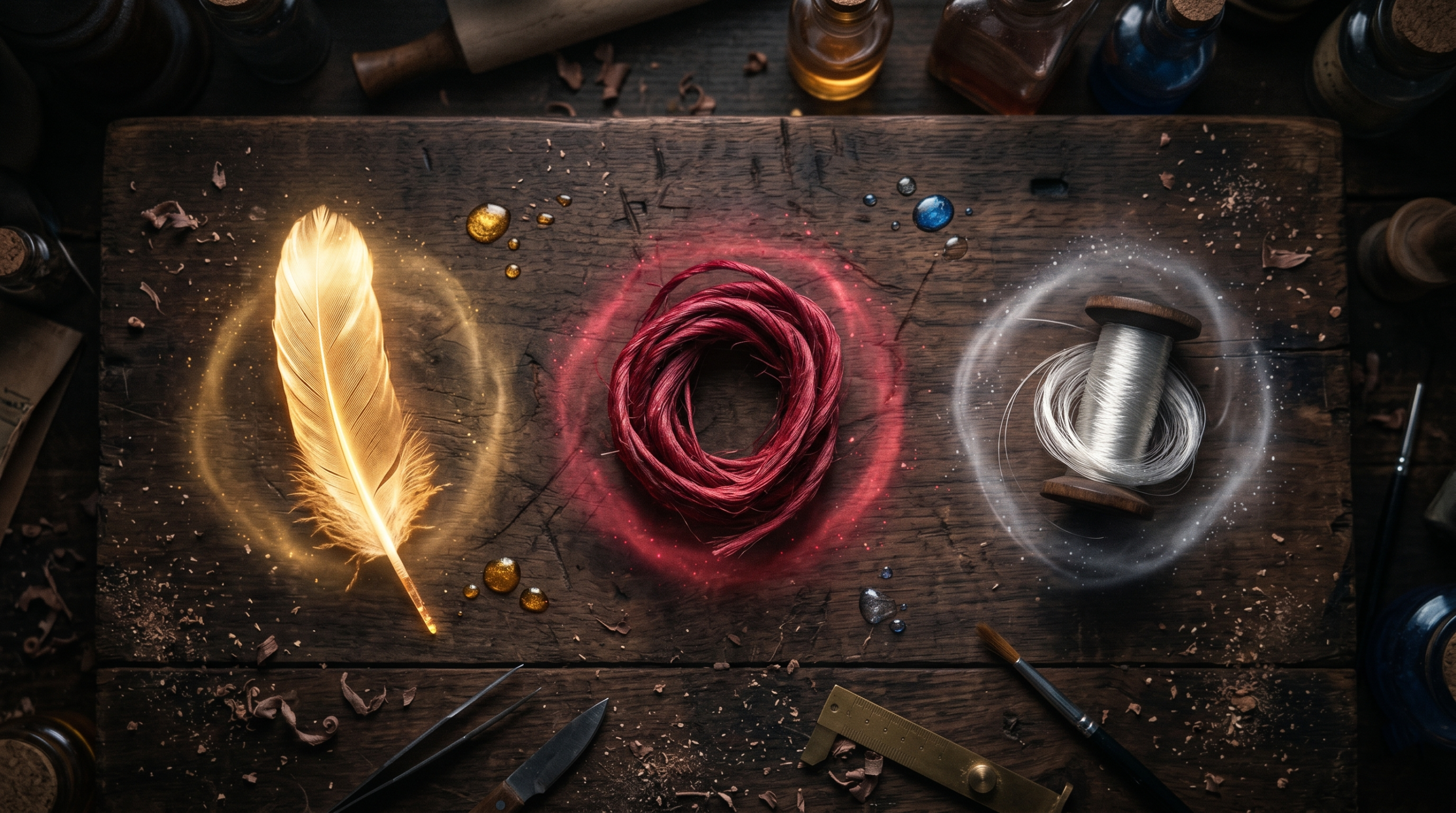
If wand wood reflects the outer personality, the core reflects the inner magical nature — the deepest source of a wizard’s power and the kind of magic they are most naturally drawn to. Ollivander’s three preferred cores each carry distinct magical properties, and the choice of core tells you something fundamental about the wizard it chose.
Phoenix Feather: The rarest of Ollivander’s three standard cores, phoenix feather wands are capable of the greatest range of magic. They are the most independent of all wand cores, sometimes acting of their own accord, and they take longer than other cores to form a true bond with their wizard. Once that bond is forged, however, a phoenix feather wand is extraordinarily loyal and powerful. Both Harry Potter and Lord Voldemort carry phoenix feather cores — feathers donated by the same phoenix, Fawkes — making their wands brothers, their magic fundamentally connected in a way that shapes the entire arc of the series.
Dragon Heartstring: Dragon heartstring wands are the most powerful in terms of raw magical output and are the quickest to learn new spells. They bond strongly with their current owner — sometimes too strongly, showing a tendency toward the dramatic. They can be prone to accidents in the hands of young or inexperienced wizards, and are more willing than other cores to perform dark magic, though they do not of themselves incline toward darkness. Hermione Granger’s dragon heartstring core perfectly suits a witch of fierce intelligence and prodigious magical ability who learned spells at a rate that astonished even her professors.
Unicorn Hair: Unicorn hair produces the most consistent and faithful wands of all three cores. They are the least susceptible to dark magic, the most difficult to turn toward the Dark Arts, and the most loyal to their original owner — rarely, if ever, switching allegiance. The trade-off is that they do not reach the same heights of raw power as dragon heartstring or phoenix feather. Neville Longbottom’s original wand (passed down from his father) had a unicorn hair core, and the fact that Neville struggled to perform at his best was partly attributed to using a wand that had bonded to his father, not to him.
Wand Length and Flexibility — The Overlooked Details
Length and flexibility are the most frequently overlooked aspects of wandlore, but Ollivander was insistent that they mattered. Longer wands tend to suit wizards with larger personalities, those who are expansive in their thinking, dramatic in their gestures, or drawn to powerful, broad-stroke magic. Shorter wands suit those with more precise, controlled magical styles.
Flexibility — from rigid and unyielding to whippy and highly flexible — reflects a wizard’s adaptability and willingness to change. A rigid wand suits a wizard with fixed convictions and a strong, uncompromising nature. A supple wand is more comfortable in the hands of a witch or wizard who learns quickly, adapts to new challenges, and is open to shifting perspectives.
How the Wand-Wizard Bond Actually Works
The Choosing Moment — Magic or Coincidence?
Ollivander’s belief that the wand chooses the wizard is not simply a charming tradition or a sales pitch. It reflects a genuine magical reality in the wizarding world. When a young witch or wizard enters a wand shop for the first time, the wandmaker assesses them — measuring arm length, yes, but also reading the subtler signs of magical personality, aura, and nature. Then begins the process of trial and error: wand after wand is tried until one produces the unmistakable response of a true match.
That response is not random. It is the result of a deep compatibility between the magical properties encoded in the wand’s wood and core and the specific magical signature of the wizard holding it. Think of it less like a tool being handed to a craftsman and more like a resonance — two frequencies finding harmony.
The process can sometimes be frustratingly slow. Some wizards try dozens of wands before finding their match. Others, like Harry, find theirs almost immediately but through an unexpected combination. The “right” wand does not always make obvious sense on paper. But wandlore is not a paper science.
 Loyalty, Allegiance, and Wand Ownership
One of the most sophisticated and dramatically important aspects of wandlore is the concept of wand allegiance — the idea that a wand’s loyalty is not fixed permanently to the wizard who first claimed it, but can shift under certain conditions.
The most common way a wand changes allegiance is through conquest. When one wizard defeats another in a duel — specifically through disarming, overpowering, or otherwise demonstrating clear magical dominance — the defeated wizard’s wand may switch its primary loyalty to the victor. This does not necessarily mean the wand physically changes hands. A wand can shift allegiance even if it remains with its original owner afterward.
This principle is absolutely central to the resolution of Harry Potter and the Deathly Hallows. The Elder Wand — the most powerful wand ever made — had passed through the hands of countless wizards over the centuries, each of them gaining its allegiance by defeating or killing the previous owner. Voldemort believed that killing Snape, whom he mistakenly believed had won the Elder Wand from Dumbledore, would transfer its allegiance to him. He was wrong, and fatally so. The actual chain of allegiance had passed to Draco Malfoy — who had disarmed Dumbledore on the Astronomy Tower — and then from Draco to Harry, who had disarmed Draco at Malfoy Manor. Voldemort never grasped this because he fundamentally misunderstood wandlore. He thought only in terms of killing.
Ordinary wands are less dramatic in their allegiance shifts, but the principle holds. A wizard using another person’s wand will often find it performs adequately but never ideally. The wand works, but there is a subtle resistance — a lack of complete trust between wand and wielder. This is why Harry frequently struggles when using other wands throughout the series, and why Ron’s borrowed wand from his brother Bill works but never perfectly.
What Happens When a Wand Is Broken or Lost
The breaking of a wand is treated with near-mourning in the wizarding world, and for good reason. A wand is not simply a stick with magic inside it. After years of use, it becomes attuned to its wizard at a deep level — absorbing traces of their magical signature, learning their casting style, anticipating their intent. To break that wand is to sever a bond that took years to build.
Ron Weasley’s broken wand in Chamber of Secrets is the series’ most instructive example. A wand held together by Spellotape is not truly repaired — the magical channel inside is fractured, and the results are predictably disastrous. Spells backfire. Magic goes sideways. The connection between wizard and wand is corrupted.
In almost every case, a broken wand cannot be permanently repaired by ordinary magic. The single exception in canon is the Elder Wand, which Harry uses to repair his own holly and phoenix feather wand at the end of Deathly Hallows before snapping the Elder Wand and dropping it into the ravine below Hogwarts. It is a deeply meaningful choice — using the most powerful wand in history for one small act of personal restoration, then choosing to relinquish that power entirely.
Famous Wizards & Wands — What Their Wands Reveal About Them
Harry Potter — Holly and Phoenix Feather, 11 Inches, Supple
Holly wood. Phoenix feather core. Eleven inches. Supple. This is one of the most analyzed wands in wizarding history, and for good reason — every element of it tells the story of the boy who wielded it before he ever picked it up.
Holly, as established, is the wood of those who face danger and pursue a perilous life path. The phoenix feather core — specifically donated by Fawkes, the same phoenix whose other feather sits in Voldemort’s wand — connects Harry to his enemy at the deepest possible magical level, creating the Priori Incantatem effect during their graveyard duel. The eleven-inch length suggests a focused, deliberate magical style rather than an overtly showy one. And the supple flexibility reflects Harry’s defining quality: adaptability. He is not the most talented wizard in his year. He is the one who survives by learning, improvising, and refusing to quit.
The wand’s behavior throughout the series repeatedly defies expectation in ways that pure wandlore cannot fully explain. It acts on its own in the forest, protecting Harry from Voldemort. It casts a spell without Harry consciously choosing to. Ollivander himself describes it as curious — and in the world of wandlore, curious is the highest form of praise.
Hermione Granger — Vine Wood and Dragon Heartstring, 10¾ Inches
Hermione’s wand is, in many ways, the most textbook-perfect match in the series. Vine wood for a witch driven by purpose, vision, and a hunger to improve the world. Dragon heartstring for a witch of ferocious magical talent who masters spells faster than anyone in her year. The slightly shorter length reflects her precise, controlled casting style — there is very little wasted motion in Hermione’s magic.
What is fascinating about Hermione’s wand is how clearly it reflects the tension at the heart of her character: a witch of tremendous power who channels that power through discipline, ethics, and intellectual rigor. The dragon heartstring could have made her reckless. The vine wood prevented that.
Lord Voldemort — Yew and Phoenix Feather, 13½ Inches
Every element of Voldemort’s wand is loaded with meaning. Yew wood, historically associated with death, immortality, and transformation — the perfect material for a wizard whose entire life was a war against mortality. The thirteen-and-a-half-inch length suggests a wizard of commanding, imposing presence whose magic fills the room. And the phoenix feather core — the twin of Harry’s — is the most profound irony in the entire series. The most feared Dark wizard in history carries a wand that is, at its core, the brother of his enemy’s.
This is not coincidence in the world of wandlore. It is destiny shaped into wood and feather.
Albus Dumbledore — The Elder Wand (15 Inches, Elder Wood, Thestral Hair Core)
Dumbledore carried his own wand for most of his life before acquiring the Elder Wand from Grindelwald in their legendary 1945 duel. But it is the Elder Wand that defines his place in wandlore history. Fifteen inches of elder wood, with a core of thestral tail hair — a material that can only be mastered by someone who has faced death and accepted it.
Dumbledore was arguably the only wizard in the twentieth century truly worthy of the Elder Wand — not because he was the most powerful (though he was), but because he was the least corrupted by it. He understood its history, feared its influence, and ultimately chose to be buried with it rather than pass it on, hoping to end its cycle of violence. That plan would have worked, had Draco not disarmed him first.
The Deathly Hallows Connection — When Wandlore Reaches Its Peak
The Elder Wand — Myth, Legend, and Reality
Of all the intersections between wandlore and the broader wizarding world, none is more dramatic, more consequential, or more brilliantly constructed than the story of the Elder Wand. It is simultaneously the most powerful wand ever created and the most dangerous object in the wizarding world — not because of what it can do, but because of what it makes people want to do.
The Elder Wand’s origins are told in “The Tale of the Three Brothers,” a wizarding fairy tale recorded in The Tales of Beedle the Bard. In the story, three brothers encounter Death at a river crossing, and the eldest brother — arrogant and power-hungry — requests the most powerful wand in existence. Death carves one from an elder tree standing nearby and presents it to him. The eldest brother uses it to kill an enemy, boasts of his unbeatable wand, and is murdered in his sleep by a thief who steals it. The wand passes on. The violence begins.
Whether the story is literal truth or allegorical legend within the wizarding world is left deliberately ambiguous, but the wand itself is entirely real, and its history is exactly as brutal as the fairy tale suggests. Over the centuries, the Elder Wand passed through dozens of hands — each owner defeating the last, each new wielder believing they had finally mastered it, each eventually falling to someone more ruthless or more clever. Its trail through history is a trail of bodies.
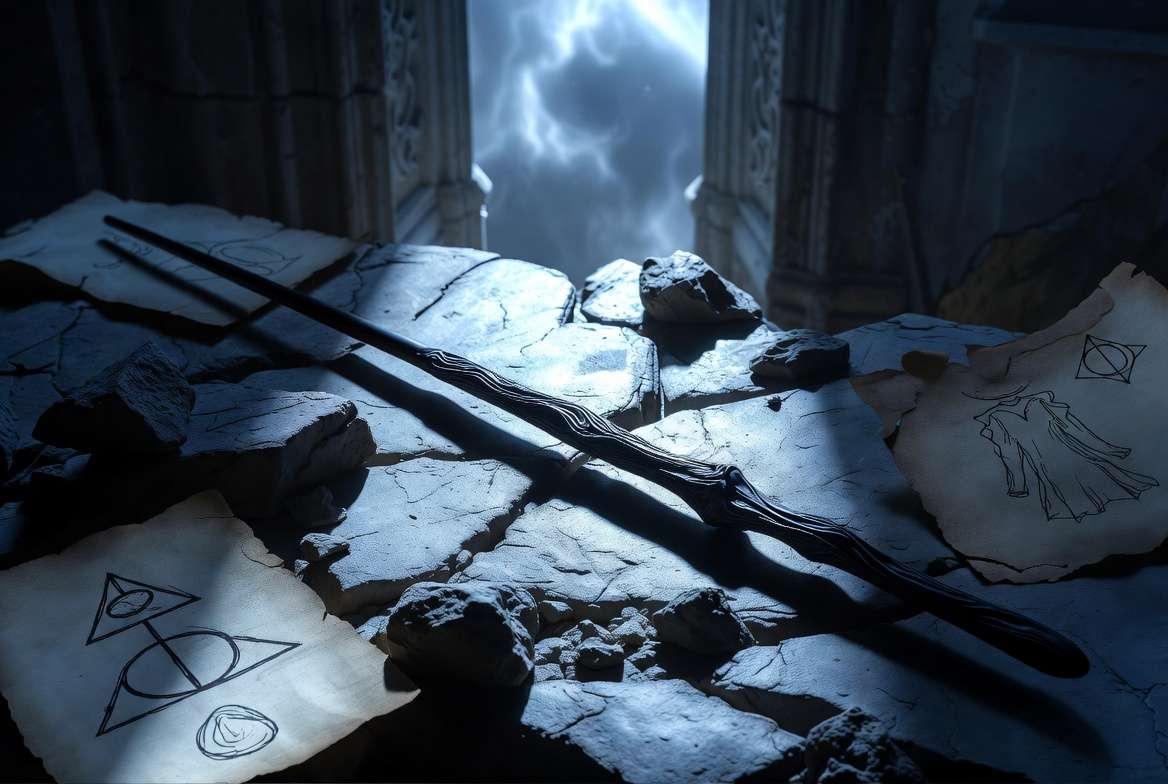 Known historical owners include Antioch Peverell (the eldest brother, if the legend is taken literally), the wandmaker Gregorovitch, Gellert Grindelwald, and Albus Dumbledore. Each acquisition involved an act of conquest. Gregorovitch had the wand stolen from him by the young Grindelwald. Grindelwald was defeated in a legendary duel by Dumbledore in 1945. And Dumbledore, as discussed, was disarmed by Draco Malfoy in the tower — the moment that, unknown to almost everyone, transferred the wand’s allegiance away from the greatest wizard of the age and toward a frightened sixteen-year-old boy.
Why the Elder Wand’s Allegiance Shifted to Harry
This is the wandlore mystery at the heart of Deathly Hallows, and it is the one that Voldemort — for all his power and ambition — completely failed to understand.
Voldemort’s reasoning was logical on its surface. Dumbledore had possessed the Elder Wand. Snape had killed Dumbledore. Therefore, Snape was the Elder Wand’s true master, and killing Snape would transfer that mastery to Voldemort. It was a clean, linear chain of ownership — except it was built on a false premise.
Snape did not defeat Dumbledore. He killed him, yes — but as part of a plan Dumbledore himself had arranged. Dumbledore was dying already, his hand blackened and destroyed by the Horcrux curse. He had asked Snape to end his life, both to spare him a more painful death and to protect Draco Malfoy from having to commit murder. The killing curse Snape cast on the Astronomy Tower was an act of mercy and strategy, not conquest. The Elder Wand, operating on the logic of wandlore rather than the logic of violence alone, did not register it as a true defeat.
The true defeat had happened moments earlier, when Draco Malfoy used Expelliarmus to disarm Dumbledore — catching him off guard, rendering him wandless and vulnerable. That act of magical domination, however unintentional, transferred the Elder Wand’s allegiance to Draco. Not because Draco killed anyone. Not because he was worthy in any grand sense. Simply because he had overpowered the previous master.
Then Harry, during the desperate escape from Malfoy Manor, physically wrested wands from Draco’s grasp — disarming him in the most literal sense possible. In that moment, the Elder Wand’s allegiance passed to Harry Potter. A wand that Harry had never touched, had not even known was involved, chose him as its master because he had overcome its previous master in a moment of magical struggle.
When Voldemort cast the killing curse at Harry with the Elder Wand in the Great Hall, the wand refused to kill its true master. It turned the curse back. Voldemort fell — not because Harry overpowered him in raw magical terms, but because he understood wandlore and Voldemort did not. Knowledge defeated power. That is perhaps the most important lesson wandlore has to teach.
Wandlore Beyond Ollivander — Other Wandmaking Traditions
Gregorovitch and Eastern European Wandmaking
Garrick Ollivander is the most famous wandmaker in the series, but he is not the only one — and his philosophy, while influential, is not universal. The wizarding world contains several distinct wandmaking traditions, each shaped by the magical culture and natural resources of its region.
Mykew Gregorovitch was the most celebrated wandmaker on the European continent, with a reputation that rivaled Ollivander’s among wizards from Eastern and Central Europe. Viktor Krum, the Bulgarian Seeker, carried a Gregorovitch wand — described as slightly thicker than typical Ollivander wands and with a noticeably different balance and feel.
Gregorovitch’s approach to wandmaking differed from Ollivander’s in several important respects. Where Ollivander standardized his core materials to his three preferred choices, Gregorovitch worked with a wider range of materials native to Central and Eastern European magical traditions. His philosophy was more experimental, more willing to incorporate unusual cores and regional wood types that Ollivander might have dismissed as insufficiently tested.
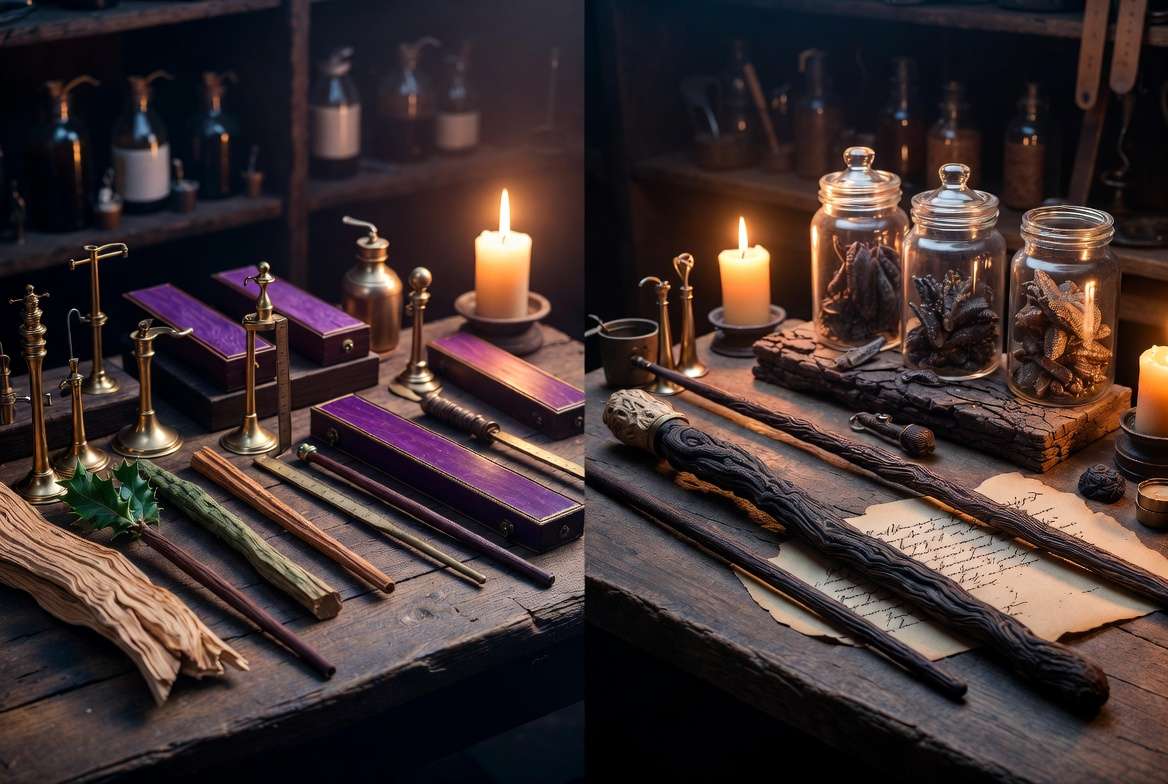 The existence of different wandmaking schools raises fascinating questions about wandlore that the series only touches on. If a wand’s properties are shaped by the wandmaker’s philosophy as well as the raw materials, does that mean two wands made from identical materials by different makers would perform differently? Most wandlore scholars in the wizarding world would say yes — and that the wandmaker’s own magical understanding is woven into every wand they produce.
Non-Wand Magic — Wandless and Freeform Casting
Wandlore, for all its depth and complexity, is ultimately a study of one tool — and the most advanced witches and wizards in the series regularly demonstrate that the tool is not always necessary.
Wandless magic — casting spells without a wand — is one of the clearest markers of exceptional magical ability in the wizarding world. It requires the witch or wizard to channel their magical power directly, without the focusing and amplifying assistance a wand provides. The results are typically less precise and less powerful than wanded magic, but in the hands of a truly accomplished practitioner, wandless casting is devastatingly effective.
Lord Voldemort is the most frequently cited example of a wandless magic user in the series. He uses it casually in ways that visibly shock other characters — levitating objects without speaking, casting non-verbal spells without a wand, exerting magical pressure on the environment around him through sheer will. Dumbledore demonstrates similar ability on multiple occasions, most dramatically in the battle at the Ministry of Magic in Order of the Phoenix, where his command over elemental magic goes far beyond what most wizards could achieve even with their finest wand.
Young Harry Potter’s accidental magic before he received his wand — regrowing his hair, ending up on a school roof, causing the glass to vanish at the zoo — is another form of wandless magic, though uncontrolled and emotional in nature. Most witches and wizards produce accidental wandless magic in childhood, driven by extreme emotion, before they learn to channel and focus their power through a wand. The truly exceptional ones never entirely lose the ability to cast without one.
The existence of wandless magic raises a profound question in wandlore: if magic ultimately resides within the witch or wizard, what is the wand truly for? The best answer wandlore offers is this — the wand is a partner, not a source. It does not create magic. It refines it, focuses it, extends its range, and makes it reliable and repeatable. A wizard without a wand is like a musician without an instrument. The music is still inside them. But the instrument is what allows them to share it with the world.
Top 10 Most Iconic Wands in the Wizarding World (Ranked)
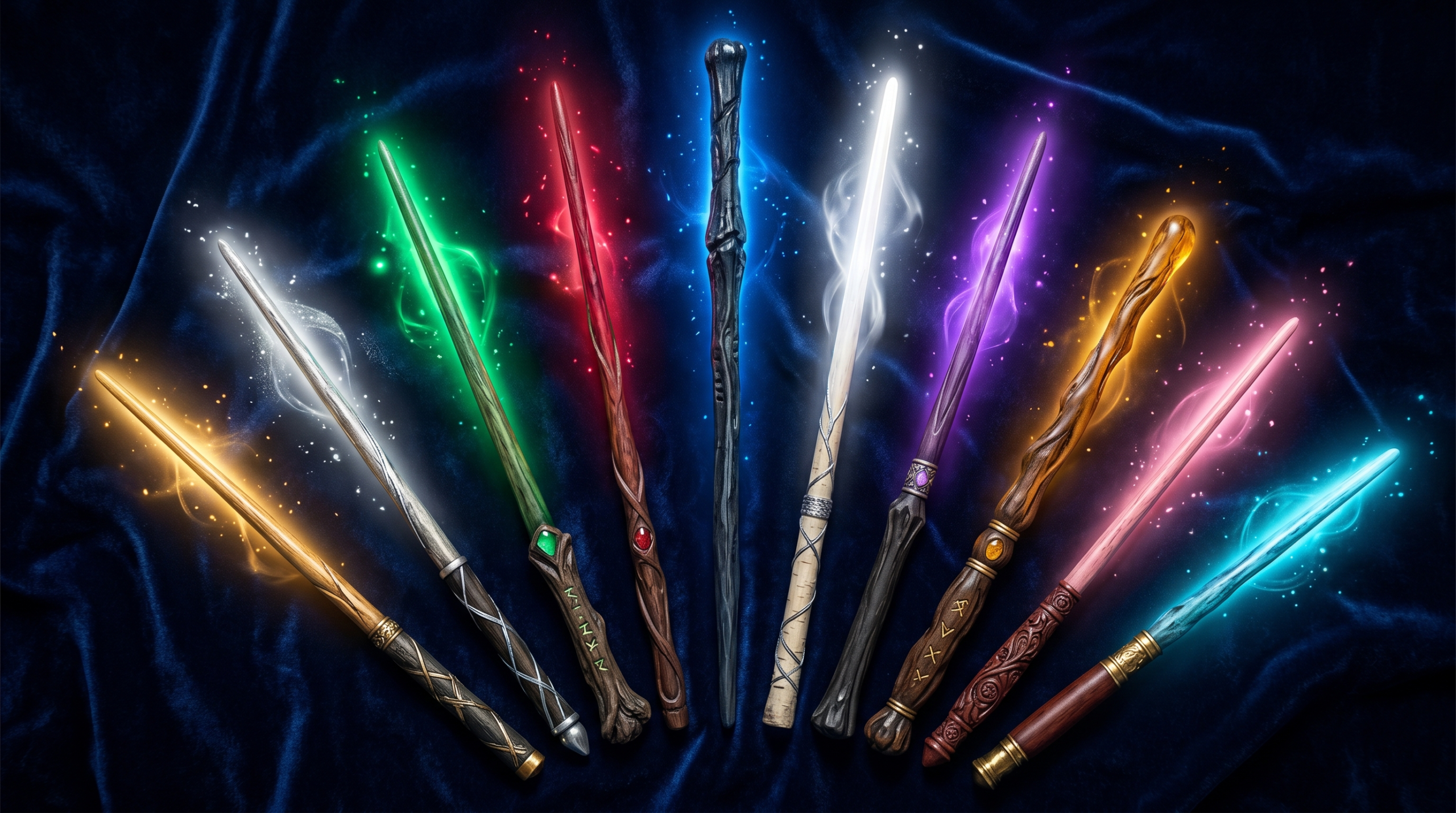
Not all wands are created equal — and within the lore of the wizarding world, certain wands have achieved an almost legendary status. Whether through their historical significance, the power of their wielders, or the pivotal role they played in the great conflicts of magical history, these ten wands stand above the rest.
1. The Elder Wand — Elder Wood, Thestral Hair Core, 15 Inches The most powerful wand ever created needs no further justification for the top spot. Its history spans centuries, its allegiance has been won by some of the greatest — and most terrible — wizards who ever lived, and its role in the final defeat of Voldemort makes it the single most consequential wand in the entire series. It is the only wand capable of repairing another wand as powerful as Harry’s.
2. Harry Potter’s Wand — Holly, Phoenix Feather, 11 Inches, Supple The wand that chose the Boy Who Lived. Linked to Voldemort through their shared phoenix feather cores, this wand demonstrated behaviors that puzzled even Ollivander — acting autonomously to protect its master, producing Priori Incantatem in the graveyard, and ultimately outlasting the most powerful dark wizard of the age. Its destruction and later repair bookend Harry’s entire journey.
3. Lord Voldemort’s Wand — Yew, Phoenix Feather, 13½ Inches The twin of Harry’s wand, wielded by the greatest Dark wizard of the twentieth century. This wand cast some of the most devastating curses in wizarding history, including the killing curse that killed Harry’s parents and the curse that failed to kill Harry himself. Its yew wood and phoenix feather composition make it one of the most symbolically rich wands in the series.
 4. Albus Dumbledore’s Original Wand — Elder Wood (prior to acquiring the Elder Wand) Though largely overshadowed by the Elder Wand in fan discussion, Dumbledore’s original wand — details of which are less precisely documented — served him through decades of extraordinary magical accomplishment, including his early mastery of Transfiguration and his career at Hogwarts. A reminder that the wizard makes the wand as much as the wand makes the wizard.
5. Hermione Granger’s Wand — Vine Wood, Dragon Heartstring, 10¾ Inches The wand of arguably the most academically gifted witch of her generation. Hermione’s vine and dragon heartstring combination produced magic of remarkable precision and power — from the bluebell flames she conjured in her first year to the complex protective enchantments she cast around the trio’s campsites throughout Deathly Hallows. When her wand was taken by Snatchers and later recovered, the reunion felt like exactly that — a reunion.
6. Bellatrix Lestrange’s Wand — Walnut, Dragon Heartstring, 12¾ Inches, Unyielding Walnut wands, according to Ollivander’s notes, suit brilliant witches and wizards with nimble, adaptable minds — but also those capable of great ruthlessness when their intellect is not matched by moral restraint. Bellatrix’s wand is perfectly suited to a witch of devastating power and total moral abandonment. Unyielding flexibility reflects her absolute, uncompromising devotion to Voldemort. Notably, Harry finds her wand deeply uncomfortable to use during the Gringotts break-in — a physical manifestation of the wand’s dark character.
7. Luna Lovegood’s Wand — Unknown Wood, Unknown Core The specific materials of Luna’s wand are never officially confirmed in canon, but its design — as seen in the films and described in supplementary materials — is one of the most distinctive in the series, with a smoky, almost dreamlike quality. What makes Luna’s wand iconic is less its specifications and more what it represents: a wand perfectly suited to a witch who sees the world entirely differently from everyone around her, and who is more powerful and more perceptive for it.
8. Severus Snape’s Wand — Unknown Wood and Core Like Luna’s, Snape’s wand specifications are not fully confirmed in canon. What is known is that it served one of the most complex and morally layered wizards in the series across decades of dangerous double-agent work — producing the Shield Charm he taught Harry, the Dark Arts mastery he demonstrated throughout Half-Blood Prince, and ultimately the act of mercy-killing that was, in its way, the bravest thing anyone did in the entire war.
9. Draco Malfoy’s Wand — Hawthorn, Unicorn Hair, 10 Inches, Reasonably Springy Hawthorn wands are associated with witches and wizards going through a period of internal conflict — a remarkably apt description of Draco throughout Half-Blood Prince and Deathly Hallows. His wand became one of the most consequential in the series not through dramatic magical feats but through the pivotal moment on the Astronomy Tower when he disarmed Dumbledore — unknowingly setting in motion the chain of Elder Wand allegiance that would ultimately destroy Voldemort.
10. Newt Scamander’s Wand — Unknown Wood, Unknown Core Newt Scamander’s wand, featured prominently in the Fantastic Beasts film series, represents a different kind of magical mastery — one rooted in care, patience, and deep respect for magical creatures rather than combat or academic power. His wand suits a wizard who is equally at home in a Welsh dragon enclosure or a New York speakeasy, and whose magic is defined by creativity and gentleness rather than force.
Frequently Asked Questions About Wizards & Wands
Q1: Why does the wand choose the wizard and not the other way around?
According to wandlore, a wand is not an inert object but a semi-sentient magical instrument that has been imbued with properties through its wood and core. These properties resonate with certain magical signatures and personalities more than others. When the right witch or wizard picks up a compatible wand, the wand recognizes that resonance and responds — producing sparks, warmth, or a sense of rightness that the wandmaker can identify. The wizard does not choose so much as recognize their match.
Q2: Can a wizard use another person’s wand effectively?
Yes, but with limitations. Any wizard can perform magic with any functional wand — the wand will work. However, a wand bonded to another wizard will typically underperform for a new user, producing less precise or less powerful results than it would for its true owner. The exception is when allegiance has been genuinely transferred through conquest, in which case the wand may perform as well or even better for the new master.
Q3: What is the most powerful wand core according to wandlore?
This is genuinely debated in wandlore, and the answer depends on how you define power. Dragon heartstring produces the most raw magical output and learns spells the fastest. Phoenix feather achieves the greatest range of magic types and shows the most independent behavior. Unicorn hair is the most consistent and reliable. In terms of peak power in the right hands, most wandlore scholars would give the edge to phoenix feather — but dragon heartstring would be a close second.
Q4: Why did Harry’s wand act on its own against Voldemort?
During the aerial battle in Deathly Hallows, Harry’s wand cast a spell on its own when Voldemort attempted to use a wand borrowed from Lucius Malfoy. The explanation lies in the twin core connection — Harry’s wand recognized the magical signature of its brother wand and acted instinctively to protect its master. Ollivander, when told about this, was genuinely astonished. Even by the standards of wandlore, wands acting entirely autonomously in combat is extraordinarily rare and speaks to the depth of the bond between Harry and his wand.
Q5: What happens to a wand when its wizard dies?
Wands do not simply stop working when their owner dies. They retain their magical properties and can be used by others, though the bonding process would need to begin again. In some cases, wizarding families pass wands down through generations as heirlooms. However, a wand that has bonded deeply with its owner over many years will often feel noticeably different to a new user — subtly resistant, slightly off in balance or response — as though it is still waiting for someone it recognizes.
Q6: Are there wands made from materials other than Ollivander’s three cores?
Absolutely. Ollivander’s three cores — phoenix feather, dragon heartstring, and unicorn hair — are his personal preferences, which he considered the most powerful and reliable. Other wandmakers, particularly those outside Britain, use a wide range of alternative cores. These include Veela hair (common in some European traditions but considered temperamental by Ollivander), kneazle whisker, and various other magical creature materials. Different woods are also used by different wandmakers, particularly those working in regions where the traditional British wand woods are not native.
What wandlore ultimately teaches — and what makes it one of the most intellectually rich systems in all of fantasy literature — is that magic is not arbitrary. The wand that chooses you is not a coincidence. It is a reflection. It sees something in you that perhaps you have not yet fully seen in yourself: your strengths, your contradictions, your destiny, and your deepest nature.
Harry Potter’s holly and phoenix feather wand did not simply work well in combat. It told his story before he knew what his story was. Voldemort’s yew wand did not merely cast powerful curses. It embodied the obsession with death that defined and ultimately destroyed him. Hermione’s vine and dragon heartstring wand did not just master every spell in the curriculum. It reflected a witch who would change the world through the sheer force of her conviction and her mind.
And the Elder Wand — the most powerful wand ever created, the object that every dark wizard in history has hunted and killed for — was ultimately defeated not by a more powerful wizard, but by a seventeen-year-old boy who understood something his enemy did not: that wandlore is not about violence. It is about connection. The wand that refused to kill Harry Potter did so because Harry was its true master — and the truest masters of wands, as Ollivander knew better than anyone, are not those who seek to dominate them, but those who earn their trust.
In the wizarding world, the relationship between wizards and wands is the relationship between who you are and what you are capable of becoming. The wand chooses the wizard. But what the wizard does with that choice — that is where the real magic begins.