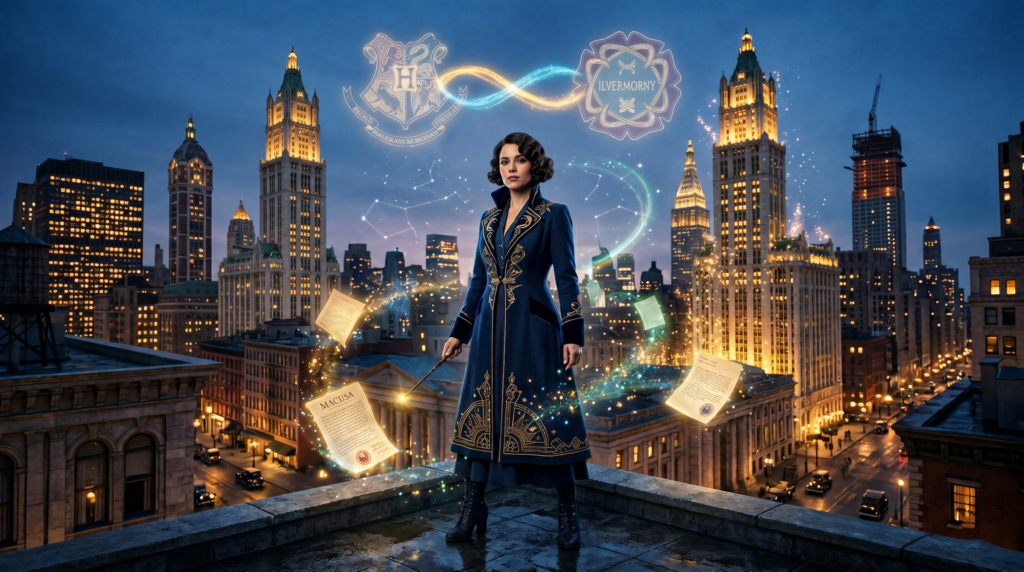
Picture this: you’re deep into your fifth Harry Potter reread, butterbeer in hand, when a thought suddenly stops you cold — wait, are there ANY American characters in this entire universe? If you’ve ever asked that question, you’re not alone. The search for an american girl in harry potter is one of the most common curiosities among fans who grew up on the other side of the Atlantic, wondering where they fit into a world dominated by British accents, Scottish castles, and London’s hidden Diagon Alley.
The truth is both surprising and deeply satisfying once you know where to look.
The original seven Harry Potter books are, by deliberate design, a very British story. Rowling built her world around the rhythms of British boarding school life, British folklore, and British institutional culture. For millions of American fans who fell in love with the series, that magic translated perfectly — but representation was thin. No American students at Hogwarts. No mention of a wizarding school across the Atlantic. No U.S.-born witches or wizards playing any meaningful role in Harry’s journey.
That changed dramatically with the expansion of the Wizarding World.
Through J.K. Rowling’s Pottermore writings, the Fantastic Beasts film series, and the officially developed lore around Ilvermorny School of Witchcraft and Wizardry, the American side of the magical world has been richly — if sometimes controversially — developed. And at the center of that expansion are several remarkable American witches whose stories deserve far more attention than they typically receive.
This article pulls from every corner of official canon — the original books, the Fantastic Beasts films, Rowling’s Pottermore essays, and verified Wizarding World sources — to give you the most complete guide available to every American girl, woman, and character in Harry Potter lore. Whether you’re a trivia enthusiast, a Fantastic Beasts newcomer, or a longtime fan finally seeking answers, this is the definitive resource you’ve been looking for.
The American Wizarding World — Setting the Stage
Before diving into individual characters, it’s worth understanding the world they inhabit. Because the American wizarding community isn’t just a copy of its British counterpart — it has its own government, its own school, its own cultural tensions, and its own unique magical history.
 Why the Original Harry Potter Series Had No American Characters
Rowling has spoken in interviews about how deliberately contained the original Harry Potter series was meant to be. Harry’s world begins and ends in Britain because that is Harry’s world. The story was never designed as a global survey of wizarding civilization — it was a deeply personal coming-of-age narrative rooted in one boy’s experience at one school in one country.
This was a conscious artistic choice, not an oversight. Rowling wanted readers to feel the texture of British wizarding society completely before expanding outward. As a result, American witches and wizards existed in the background of canon — implied but never seen, present but never named.
The closest the original series comes to acknowledging international wizarding diversity is the Triwizard Tournament in Goblet of Fire, which brings students from Beauxbatons (France) and Durmstrang (Eastern Europe) to Hogwarts. Notably absent: any North American school or student.
What We Know About American Wizarding Society
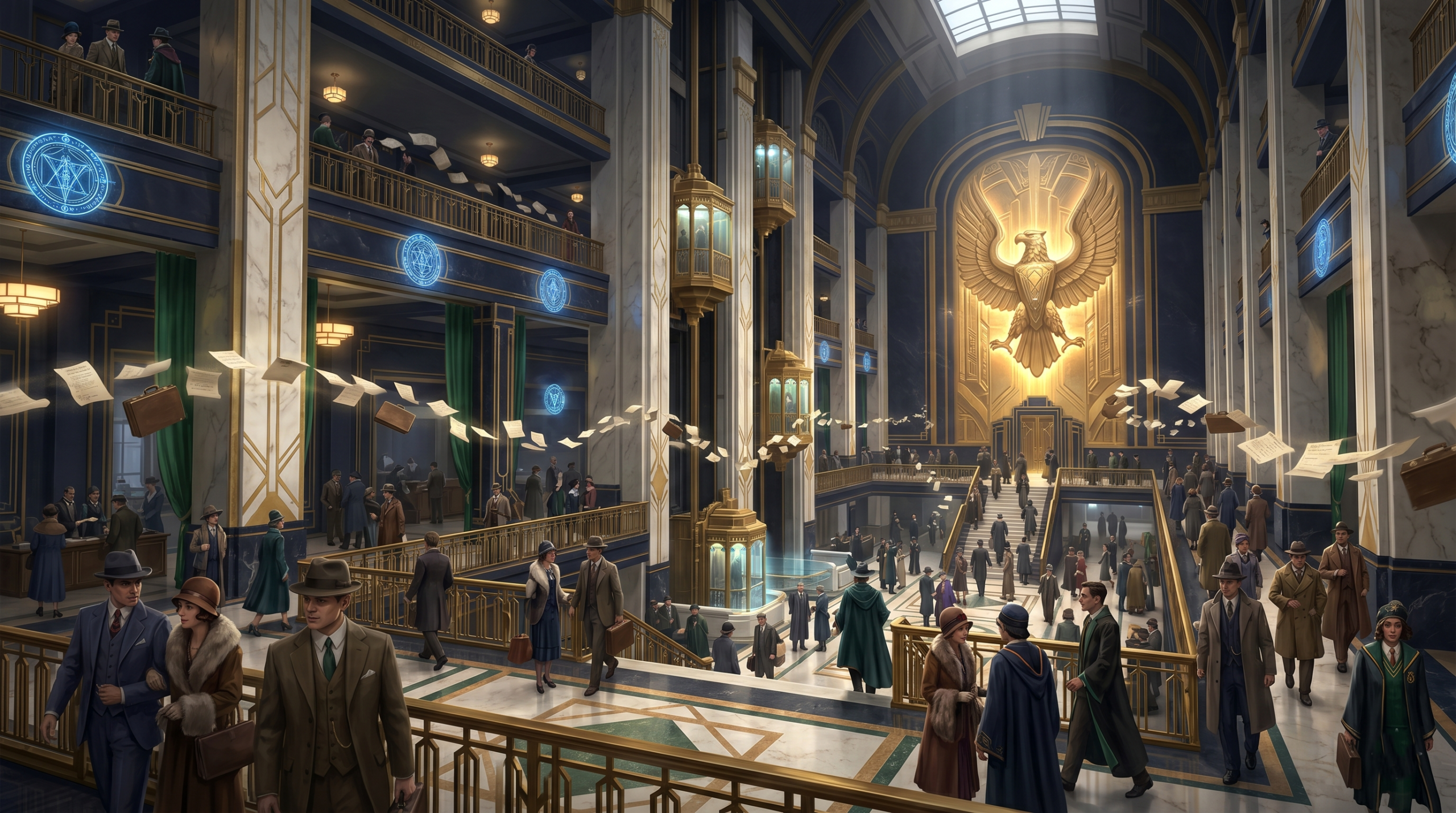
The American magical community operates under the jurisdiction of MACUSA — the Magical Congress of the United States of America — which was founded in 1693, predating the non-magical United States government by nearly a century. MACUSA functions as the American equivalent of Britain’s Ministry of Magic, though with some significant structural and philosophical differences.
Where the British Ministry of Magic operates in uneasy proximity to Muggle government, MACUSA historically maintained a much stricter policy of separation between the magical and non-magical worlds. The term used in America is No-Maj (rather than the British “Muggle”), and for much of early American wizarding history, interaction between wizards and No-Majs was not just frowned upon — it was legislated against.
This stricter separation reflects a uniquely American historical context. The Salem Witch Trials of the 1690s left deep scars on the American wizarding community, driving magical folk further underground and making the relationship between wizard and non-wizard far more fraught in the U.S. than in Britain.
American witches and wizards attend Ilvermorny School of Witchcraft and Wizardry, located atop Mount Greylock in Massachusetts. Like Hogwarts, Ilvermorny sorts its students into four houses: Horned Serpent, Pukwudgie, Thunderbird, and Wampus — each representing a different aspect of a witch or wizard’s nature. Unlike Hogwarts’ houses, which are broadly associated with personality traits, Ilvermorny’s houses are said to represent the mind, the heart, the soul, and the body respectively.
Understanding this world makes the American characters who populate it far more meaningful. They aren’t simply “American versions” of British characters — they are products of a distinct magical civilization with its own triumphs, traumas, and traditions.
Every American Girl in Harry Potter — Characters, Backstories & Significance
Now to the heart of the matter. Here are the American girls and women of the Wizarding World, explored in full detail.
Queenie Goldstein — The Most Iconic American Witch in the Wizarding World
If there is one character who has come to define the phrase “american girl in harry potter” for an entire generation of fans, it is Queenie Goldstein.
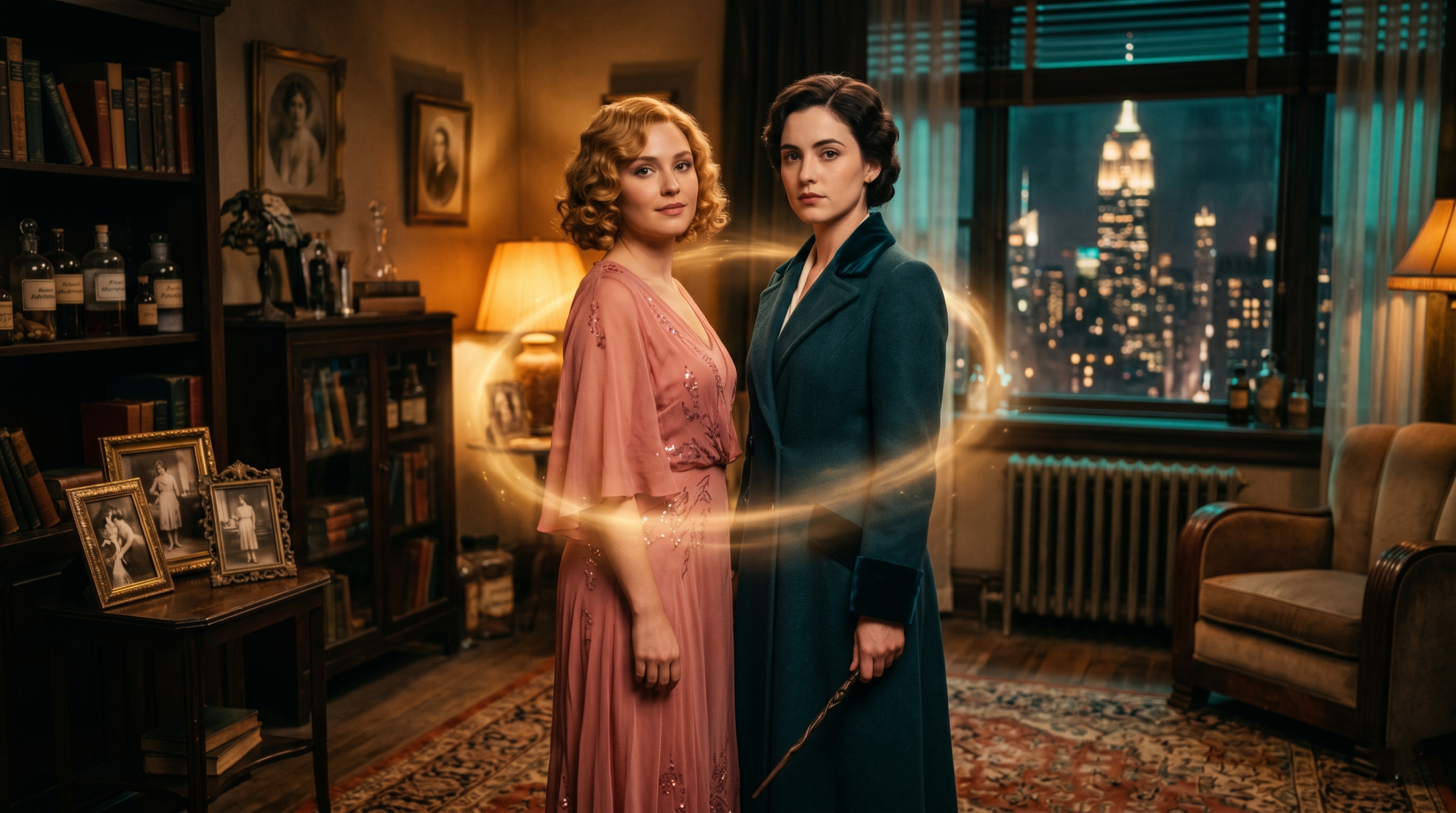
Introduced in Fantastic Beasts and Where to Find Them (2016) and portrayed by Alison Sudol, Queenie is at first glance a warm, vivacious, impossibly glamorous young woman living in 1920s New York. She works as a wand permit clerk at MACUSA — a job far beneath her abilities — and shares a cramped but cheerful apartment in the Bronx with her older sister, Porpentina.
What makes Queenie extraordinary, however, is immediately apparent: she is a natural Legilimens. In the Wizarding World, Legilimency — the ability to read the thoughts and emotions of others — is an extraordinarily rare and difficult skill. It requires years of training for most wizards. Queenie was simply born with it. She reads minds the way most people read facial expressions: effortlessly, constantly, and without meaning to.
This gift is both a superpower and a burden. Queenie knows what everyone around her is thinking and feeling at all times. She has never experienced the comfortable privacy of not knowing. As a result, she has developed a kind of radiant empathy — she understands people at their core — but she also carries a loneliness that her bubbly exterior carefully conceals.
Her character arc across the Fantastic Beasts series is one of the most emotionally complex in the Wizarding World. In the first film, she is immediately magnetic — funny, flirtatious, warm-hearted, and fiercely protective of her sister. Her relationship with Jacob Kowalski, a No-Maj baker, is one of the most genuinely touching romances in the franchise, built on the radical premise that love doesn’t recognize the boundary between magical and non-magical.
In The Crimes of Grindelwald (2018), Queenie’s arc takes a turn that divided fans sharply. Frustrated by MACUSA’s laws prohibiting marriage between wizards and No-Majs, and frightened for Jacob’s safety, Queenie makes a devastating choice — she crosses over to Grindelwald’s side, seduced by his promise of a world where witches and wizards can love freely without persecution.
This narrative decision remains controversial. Some fans felt it was inconsistent with her character; others argued it was psychologically coherent — a deeply empathetic person, suffering and afraid, manipulated by a master manipulator who spoke directly to her pain. What is not in dispute is that Queenie Goldstein is one of the most fully realized American female characters in the Wizarding World, and her story is far from over.
Key Facts:
- Attended Ilvermorny School of Witchcraft and Wizardry
- Natural Legilimens — an exceptionally rare ability
- First appears in Fantastic Beasts and Where to Find Them (2016)
- Her relationship with Jacob Kowalski challenges American wizarding law
- Joins Grindelwald’s movement in The Crimes of Grindelwald
 Porpentina “Tina” Goldstein — The American Auror Who Changed Everything
Where Queenie is warmth and instinct, her older sister Porpentina “Tina” Goldstein is discipline and determination. Portrayed by Katherine Waterston, Tina is arguably the most professionally significant American witch introduced in the Fantastic Beasts series — and one of the most important American female characters in the entire Wizarding World canon.
Tina works as an Auror for MACUSA — or rather, she did. When we first meet her in 1926 New York, she has been demoted to a paper-pushing role after an unauthorized magical intervention to protect a child from an abusive No-Maj. It’s a small but telling detail: Tina broke the rules not out of recklessness, but out of conscience.
This is the core of Tina’s character. She is principled to a fault, occasionally rigid, deeply committed to doing what is right even when the institutional structures around her fail. In a 1920s setting, a career-driven American woman in a position of magical law enforcement is quietly radical — she doesn’t define herself by relationship or domesticity, but by vocation and moral conviction.
Her relationship with Newt Scamander — awkward, slow-burning, and grounded in mutual respect rather than instant attraction — gives the Fantastic Beasts series its emotional anchor. Tina doesn’t fall for Newt because he’s dashing or powerful. She comes to love him because she recognizes in him the same stubborn commitment to protecting the vulnerable that drives her own choices.
Within the lore, Tina’s significance extends beyond her individual story. She is the bridge between MACUSA and the British Ministry of Magic, between the American and European wizarding worlds, and — through her eventual marriage to Newt Scamander — she becomes part of the wider magical history that connects to the original Harry Potter timeline.
Key Facts:
- Senior Auror at MACUSA (demoted, then reinstated)
- Attended Ilvermorny School of Witchcraft and Wizardry
- Older sister of Queenie Goldstein
- Love interest and eventual wife of Newt Scamander
- Represents American wizarding law enforcement at its most idealistic
Seraphina Picquery — President of MACUSA
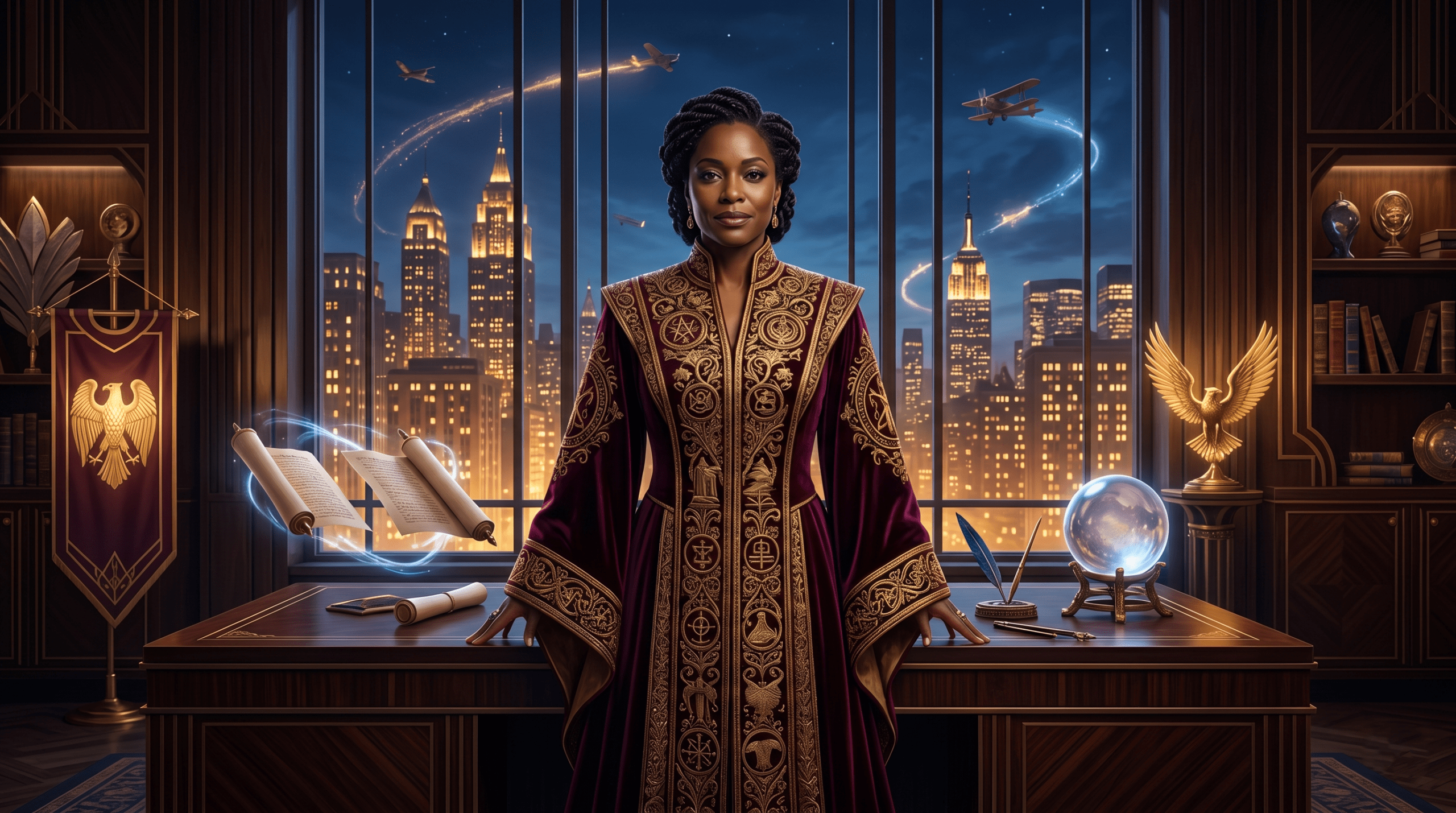
Seraphina Picquery occupies a unique position in Wizarding World history: she is the most powerful American witch we see in action on screen. As the sitting President of MACUSA during the events of the first Fantastic Beasts film, Picquery wields authority equivalent to — and in some ways greater than — Britain’s Minister for Magic.
Portrayed by Carmen Ejogo, Picquery carries herself with the measured authority of someone accustomed to bearing enormous responsibility. She presides over MACUSA during one of its most dangerous moments — the emergence of an Obscurial in New York City, which threatens to expose the entire wizarding community to the No-Maj world and potentially ignite a war.
 Her decisions in the film are not always sympathetic from the audience’s perspective. She is willing to execute Newt and Tina, she prioritizes the secrecy of the wizarding world above individual justice, and her institutional instincts sometimes override her moral ones. But Rowling’s world has always been careful to distinguish between flawed institutions and evil ones — Picquery is neither a villain nor a hero, but something far more realistic: a politician doing an impossible job under impossible conditions.
What makes Picquery historically significant within the lore is her background. She is a Black American witch in a position of supreme magical authority in 1920s America — a period of intense racial segregation and systemic inequality in the non-magical world. The Fantastic Beasts films do not explicitly address this contrast, which has drawn some criticism. But her presence as MACUSA President is quietly remarkable, suggesting that the American wizarding world organized its power structures along very different lines than the non-magical society surrounding it.
Key Facts:
- President of MACUSA during the events of Fantastic Beasts (1926)
- One of the most powerful witches in American wizarding history
- Attended Ilvermorny (implied by canon)
- Represents American wizarding political authority on the world stage
- A historically significant character given her race, gender, and era
Isolt Sayre — The Founder of Ilvermorny
No discussion of American girls in the Harry Potter universe is complete without Isolt Sayre — and yet she is perhaps the least known of the major American female figures in the lore, despite her foundational importance.
Isolt Sayre’s story is told in Rowling’s original Pottermore essay “Ilvermorny School of Witchcraft and Wizardry,” published in 2016. It reads less like a school history and more like a myth — because in many ways, it is one.
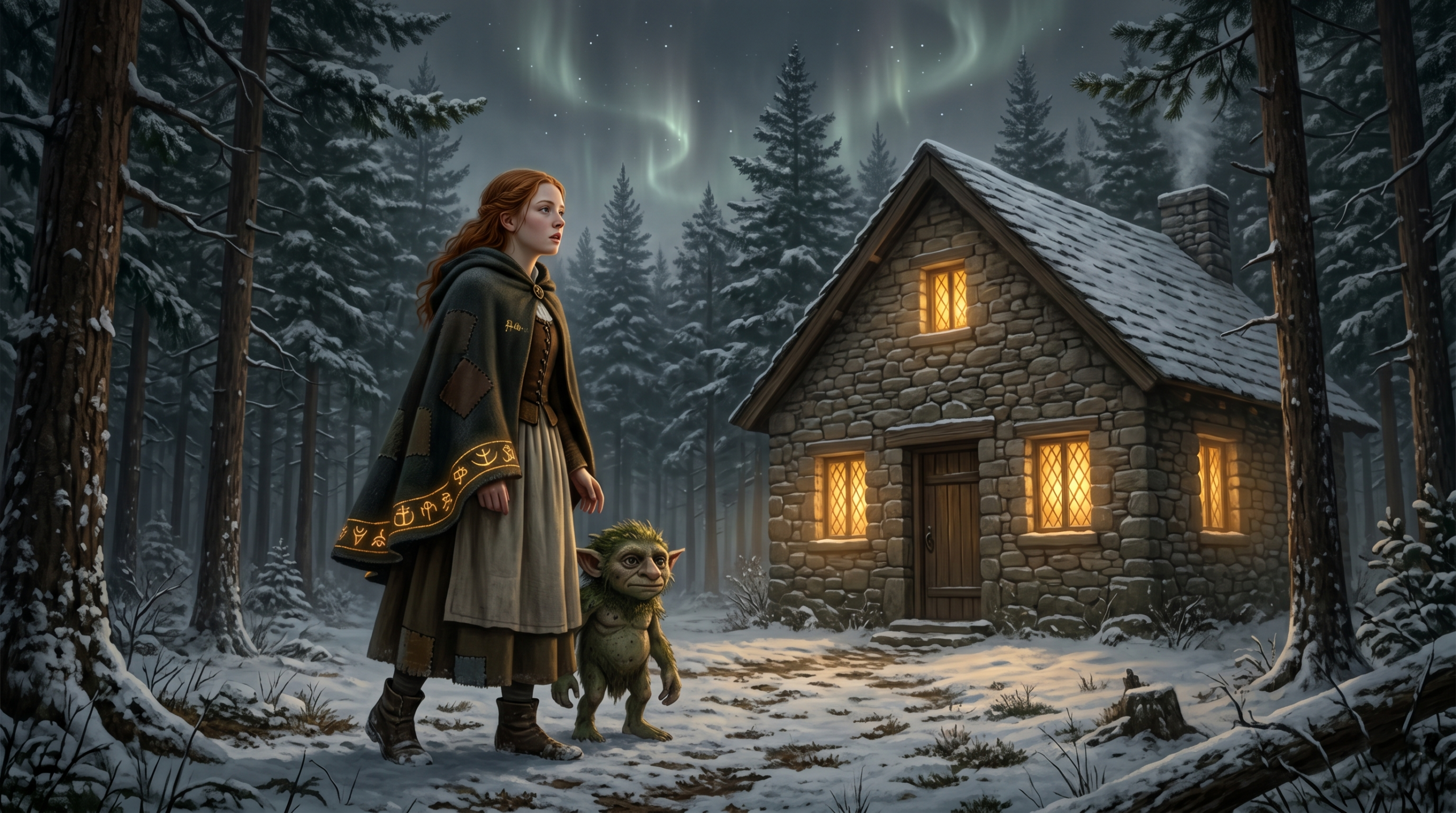
Born in early 17th-century Ireland, Isolt was orphaned when her parents were killed by her dark-magic-practicing aunt, Gormlaith Gaunt (a name that will be immediately familiar to students of Harry Potter lore — the Gaunts are the wizarding family from which Voldemort himself descended). Isolt escaped her aunt’s influence and eventually found her way to America aboard the Mayflower, disguised as a boy.
In the wilderness of early colonial Massachusetts, Isolt built a life. She befriended magical creatures, including a Pukwudgie named William who became a loyal protector. She married a No-Maj named James Steward — a radical act for the era. Together, they adopted two Muggle-born boys, Chadwick and Webster Boot, and eventually founded Ilvermorny to give magical children in the New World a place to learn and belong.
Isolt is not, strictly speaking, an American by birth — she is Irish. But she is wholly American by choice, by circumstance, and by legacy. She built America’s magical educational institution from nothing, in exile, out of love for children who had no other home. In that sense, she embodies something deeply resonant in the American founding mythology: the immigrant who arrives with nothing and builds something lasting.
 Her connection to the Gaunt family also ties Ilvermorny — and American wizarding history — directly to Voldemort’s bloodline, a detail that gives the American wizarding world an unexpected and chilling link to the darkest chapter of European magical history.
Key Facts:
- Irish-born founder of Ilvermorny School of Witchcraft and Wizardry
- Descendant of Salazar Slytherin through the Gaunt family line
- Arrived in America aboard the Mayflower in the early 1600s
- Married a No-Maj — extremely unusual for the era
- Founded Ilvermorny in colonial Massachusetts
Other Notable American Female Characters in the Extended Lore
Beyond the four major figures above, the American wizarding world is populated by a supporting cast of witches who — while less prominently featured — add important texture and depth to the lore.
MACUSA Witches and Female Aurors Throughout the Fantastic Beasts films, the halls of MACUSA are filled with female Aurors, administrators, and officials operating at every level of American magical government. While most are unnamed, their presence is significant. Unlike the British Ministry of Magic — which in the original Harry Potter era is depicted as overwhelmingly male in its senior ranks — MACUSA appears to have integrated women into positions of genuine authority far more completely. With a female President at its head and female Aurors on active duty, the American wizarding government of the 1920s presents a striking contrast to the non-magical American society of the same period.
Dorcus Twelvetrees Mentioned in Rowling’s official History of Magic in North America writings, Dorcus Twelvetrees is a cautionary figure in American wizarding history. A MACUSA employee in the early twentieth century, she was romantically deceived by a No-Maj named Bartholomew Barebone — a fanatical Second Salemer — and inadvertently revealed critical wizarding secrets to him. The resulting scandal, known as the Dorcus Twelvetrees Affair, had significant political consequences for MACUSA and tightened restrictions on wizard-No-Maj relations. She is not a villain — she was manipulated and betrayed — but her story shaped American wizarding law in ways that are still felt during the events of Fantastic Beasts.
Ilvermorny Students and Alumni The Wizarding World’s official Ilvermorny Sorting experience — available on the Wizarding World digital platform — implies a rich, centuries-long history of American witches educated at the school. While few are named in published canon, the four houses of Ilvermorny (Horned Serpent, Pukwudgie, Thunderbird, and Wampus) each have female founders or female associations within Isolt Sayre’s founding story, reinforcing a tradition of female significance at the school from its very inception.
Quick Reference: American Female Characters in the Wizarding World
| Character | Appears In | Role | American Connection | Significance |
|---|---|---|---|---|
| Queenie Goldstein | Fantastic Beasts 1 & 2 | Legilimens / MACUSA clerk | Born and raised in the U.S. | Most recognizable American witch |
| Tina Goldstein | Fantastic Beasts 1 & 2 | MACUSA Auror | Born and raised in the U.S. | Bridges American and European wizarding worlds |
| Seraphina Picquery | Fantastic Beasts 1 | MACUSA President | American-born witch | Most powerful American witch in canon |
| Isolt Sayre | Pottermore lore | Founder of Ilvermorny | Irish-born, American by choice | Founded America’s wizarding school |
| Dorcus Twelvetrees | Pottermore lore | MACUSA employee | American-born | Shaped American wizarding law |
Beyond the Girls — The Full American Cast of the Wizarding World
Understanding the American female characters is richer when you see them alongside the broader American wizarding cast. Context matters — these women did not exist in isolation. They inhabited a world populated by equally vivid male counterparts, and the relationships between those characters are part of what makes the American side of the Wizarding World so compelling.
Percival Graves — And the Shadow of Grindelwald
Percival Graves is introduced in Fantastic Beasts and Where to Find Them as the Director of Magical Security at MACUSA — one of the most senior law enforcement positions in the American wizarding world. Portrayed by Colin Farrell, Graves is authoritative, morally ambiguous, and deeply interested in a troubled young boy named Credence Barebone.
The revelation that Graves is actually Gellert Grindelwald in disguise reframes everything we thought we knew about MACUSA’s internal security. If the most powerful dark wizard in the world could impersonate MACUSA’s Director of Magical Security without detection, what does that say about the vulnerabilities of American wizarding institutions? The Graves storyline is essential context for understanding why Tina, Queenie, and Picquery operate under such pressure — they are working inside an institution that has already been compromised from within.
Jacob Kowalski — The American No-Maj Who Stole Our Hearts
In a story about witches and wizards, Jacob Kowalski is something genuinely rare: an ordinary person who becomes extraordinary through nothing more than decency, courage, and warmth. A Polish-American No-Maj and World War One veteran who dreams of owning a bakery, Jacob stumbles into Newt Scamander’s world entirely by accident — and never quite stumbles back out.
Jacob’s significance to the American wizarding narrative is underappreciated. He represents the No-Maj perspective on the American magical world — a perspective that is simultaneously awed, confused, frightened, and ultimately accepting. His relationship with Queenie, a witch who can literally read his every thought and loves him anyway, is the franchise’s most direct argument against MACUSA’s rigid separation policies. If the wizarding world’s greatest empathy comes from a No-Maj baker and a mind-reading witch, perhaps the laws keeping them apart say more about institutional fear than genuine wisdom.
Jacob’s arc also asks a question the Fantastic Beasts series never fully answers: what does it mean to know about magic and then have that knowledge taken away? After having his memory wiped at the end of the first film — only for fragments to return — Jacob occupies a liminal space between the magical and non-magical worlds that mirrors the experience of many American fans of Harry Potter: drawn to a world that wasn’t built with them in mind, but in love with it anyway.
Ilvermorny School — America’s Hogwarts, Fully Explained
No exploration of American characters in the Wizarding World is complete without a thorough look at the institution that shaped most of them.
Ilvermorny School of Witchcraft and Wizardry sits atop Mount Greylock in Massachusetts — a location that carries its own quiet symbolism. Mount Greylock is the highest peak in Massachusetts, remote and fog-wrapped, a place that has inspired writers from Herman Melville to Henry David Thoreau. It is, in other words, exactly the kind of place where a magical school would hide.
Founded by Isolt Sayre in the early 1600s, Ilvermorny began as a simple stone cottage where Isolt and her husband James taught their adopted sons. It grew organically — students arrived, the building expanded, traditions developed — until it became the great school it is today. Unlike Hogwarts, which was founded by four powerful medieval wizards with a grand founding vision, Ilvermorny grew from something humbler: a mother’s desire to give children a safe place to learn.
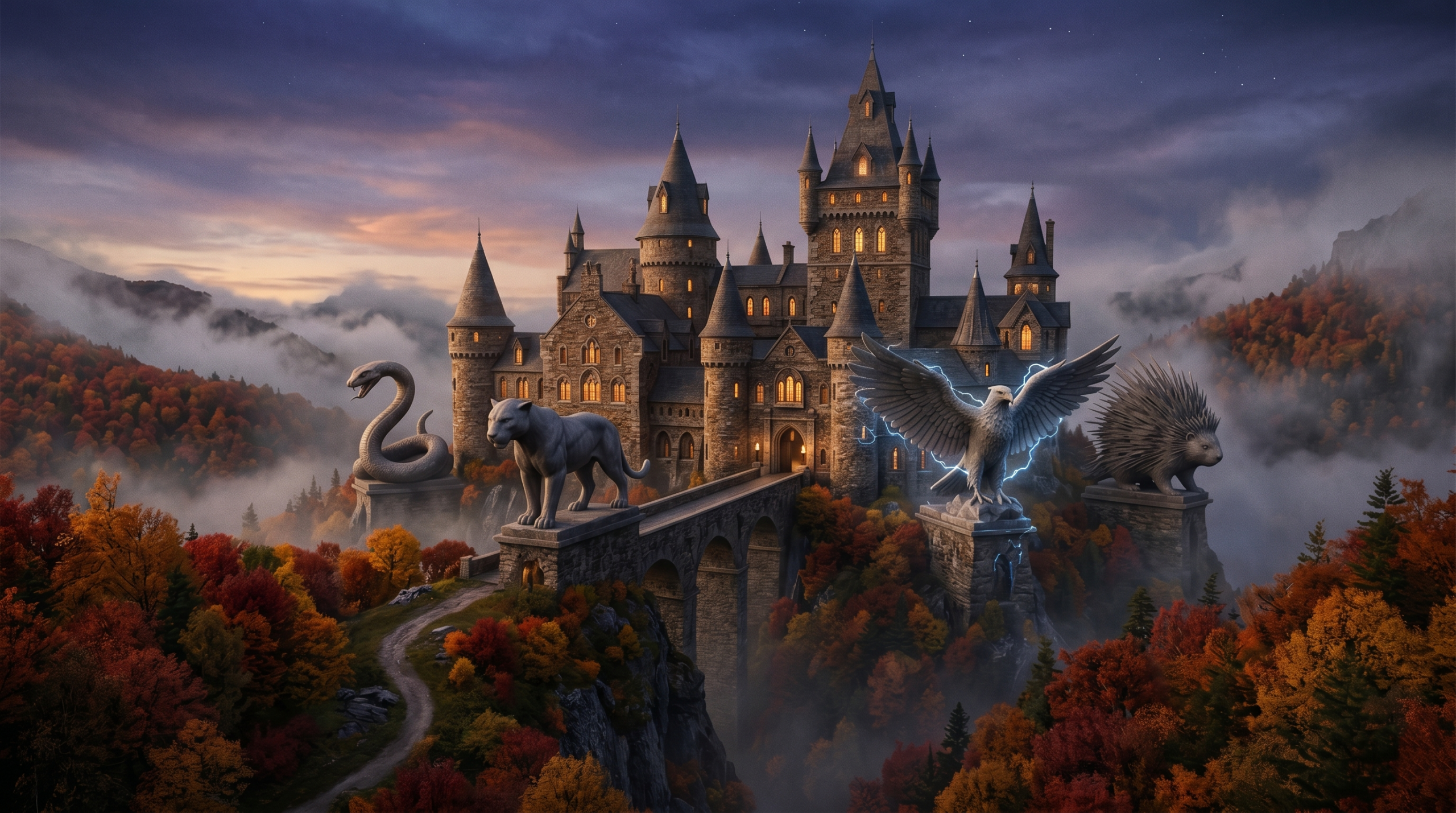 The four houses of Ilvermorny each have a distinct identity:
Horned Serpent — Said to represent the mind, and to favor scholars. The Horned Serpent is a creature of deep significance in many Native American traditions, and its inclusion in Ilvermorny’s founding lore reflects Isolt Sayre’s respectful relationships with the indigenous magical peoples of North America — particularly the Pukwudgies, small but powerful creatures from Wampanoag tradition.
Pukwudgie — Said to represent the heart, and to favor healers. Named for the creature William, the Pukwudgie who became Isolt’s loyal protector and co-founder of sorts. The Pukwudgie house is associated with emotional intelligence and care.
Thunderbird — Said to represent the soul, and to favor adventurers. The Thunderbird is one of the most powerful and widespread figures in North American indigenous mythology, associated with storms, power, and transformation. It is also the creature that gives the third Fantastic Beasts film its title.
Wampus — Said to represent the body, and to favor warriors. The Wampus is a fearsome creature from Appalachian folklore — a magical panther-like beast of extraordinary speed and cunning.
The Ilvermorny Sorting experience differs interestingly from the Hogwarts equivalent. At Hogwarts, the Sorting Hat makes the decision (with occasional student input). At Ilvermorny, the student stands in the center of a hall and all four house statues are given the chance to claim them — some students are claimed by multiple houses, and must then choose. This difference is philosophically meaningful: the American school gives the student more agency in their own sorting, reflecting perhaps a cultural value of individual self-determination.
What Harry Potter Books and Films Never Told You About American Witches
The original seven Harry Potter novels are remarkably self-contained. For all their richness, they gesture at a wider wizarding world without ever fully opening the door. American witches and wizards exist in the margins of that world — hinted at, never seen. Understanding what the books deliberately left out helps clarify how remarkable the Fantastic Beasts expansion truly was.
Rowling’s Expanded Writings on American Wizarding History
In March 2016, ahead of the release of Fantastic Beasts and Where to Find Them, J.K. Rowling published a four-part essay series on Pottermore titled “History of Magic in North America.” These essays were the first official, detailed window into American wizarding civilization — covering everything from the relationship between early Native American magical practitioners and European settler-wizards to the founding of MACUSA and the long shadow of the Salem Witch Trials.
The essays were significant and, in some respects, controversial. On the positive side, they established a rich historical framework for American wizarding society that gave the Fantastic Beasts films a genuine foundation. The Salem Witch Trials section was particularly well-handled — acknowledging that the victims of the trials were almost entirely non-magical people, and that the historical trauma drove American wizarding society into deeper secrecy than its European counterparts.
The controversy centered on Rowling’s treatment of Native American magical traditions. The essays describe “skin-walkers” and medicine men/women as part of the American magical tradition in ways that many Native American writers and scholars found reductive and appropriative — flattening rich, diverse, and sacred traditions into generalized “magical folklore.” This criticism is worth acknowledging honestly, particularly in any serious discussion of American representation in the Wizarding World.
The Fantastic Beasts Series as America’s Harry Potter
For American fans who grew up loving Harry Potter but always felt like visitors to someone else’s world, the Fantastic Beasts series offered something genuinely new: a wizarding story set on their soil, in their cultural landscape, with American characters at its center.
The 1920s New York setting of the first film is one of the most visually and culturally distinctive environments in the entire Wizarding World. The Art Deco grandeur of MACUSA headquarters, the speakeasy hidden beneath a department store where witches and wizards gathered illegally during Prohibition, the tenement apartments of the Goldstein sisters — all of it grounds the magical world in a specifically American historical moment with a specificity the original series rarely attempted outside of Britain.
The Fantastic Beasts series also introduced a distinctly American set of social tensions. Where Harry Potter dealt primarily with blood purity prejudice within the wizarding world, Fantastic Beasts grapples with the relationship between magical and non-magical people — a conflict that resonates differently in the American context, where the Salem Trials left a specific historical scar.
For American girls who wanted to see themselves in the Wizarding World, Tina and Queenie Goldstein represented something meaningful: capable, complex, fully realized American witches who weren’t sidekicks or supporting characters in someone else’s British adventure. They were the protagonists of their own American magical story.
Fan Theories and Expanded Universe Takes
The Harry Potter fan community — one of the largest and most creative in the world — has never waited for official canon to fill in its gaps. Theories about American characters in the Wizarding World have circulated since the early days of the fandom.
Among the most persistent: could there be American exchange students at Hogwarts? The books make no mention of any, but fans have noted that the Triwizard Tournament — which does involve international cooperation — might logically create relationships between Hogwarts and Ilvermorny. Others have speculated about what happened to the descendants of Tina and Newt Scamander, and whether any of their children might have had connections to the events of the original Harry Potter timeline.
The Wizarding World video game and the Hogwarts Legacy game (set in the 1800s) have both introduced original characters with various international backgrounds, keeping the question of global wizarding representation alive in the fan conversation.
Frequently Asked Questions About the American Girl in Harry Potter
Q: Is there an American girl in the original Harry Potter books?
No American girl is explicitly named or featured in the original seven Harry Potter novels. The series focuses entirely on British wizarding society. American characters enter the Wizarding World canon through the Fantastic Beasts film series and Rowling’s official Pottermore writings.
Q: Who is the most famous American witch in Harry Potter?
Queenie Goldstein, introduced in Fantastic Beasts and Where to Find Them (2016) and portrayed by Alison Sudol, is widely considered the most iconic American witch in the Wizarding World. Her natural Legilimency, her romance with Jacob Kowalski, and her morally complex arc across the Fantastic Beasts series make her the standout American female character in the franchise.
Q: What school do American witches and wizards attend?
American witches and wizards attend Ilvermorny School of Witchcraft and Wizardry, located atop Mount Greylock in Massachusetts. Founded in the early 1600s by Isolt Sayre, Ilvermorny sorts students into four houses: Horned Serpent, Pukwudgie, Thunderbird, and Wampus.
Q: Does Harry Potter ever go to America?
In the original seven books and eight films, Harry never travels to the United States. The Fantastic Beasts films, however, are set partly in 1920s New York, bringing the American wizarding world fully into the Wizarding World narrative for the first time.
Q: Who founded Ilvermorny?
Ilvermorny was founded by Isolt Sayre, an Irish-born witch who fled an abusive aunt and made her way to America aboard the Mayflower in the early 1600s. A descendant of Salazar Slytherin through the Gaunt family line, Isolt built Ilvermorny from a simple stone cottage into one of the great wizarding schools of the world.
Q: Are there any American students at Hogwarts?
No American students at Hogwarts are mentioned in canon. The Triwizard Tournament of Goblet of Fire brings French and Eastern European students to Hogwarts, but no North American representatives. Fan fiction and certain Wizarding World games explore the possibility, but it remains outside official canon.
Q: What is MACUSA?
MACUSA stands for the Magical Congress of the United States of America — the American equivalent of Britain’s Ministry of Magic. Founded in 1693, MACUSA governs the American wizarding community, enforces magical law, and manages relations (or the deliberate lack thereof) between wizards and No-Majs.
Q: How is the American wizarding world different from the British one?
Several key differences define the two communities. Americans use the term “No-Maj” instead of “Muggle.” MACUSA historically enforced a much stricter separation between magical and non-magical people, making wizard-No-Maj relationships illegal. American wizarding culture was also shaped differently by its founding trauma — the Salem Witch Trials — compared to British wizarding history.
American Girls in Harry Potter — Why Representation in the Wizarding World Matters
It would be easy to treat the question of American characters in Harry Potter as purely a matter of trivia. But for millions of American fans — and particularly for American girls who grew up with the series — it is something more than that.
Harry Potter is one of the most globally beloved fictional universes ever created. Children and young adults around the world didn’t just read the books — they inhabited them. They sorted themselves into houses, chose their wands, and imagined their Hogwarts letters. For British readers, this act of imagination was seamless — the world was built from their cultural landscape, their folklore, their institutional rhythms. For American readers, it required a small but real act of translation: learning to see yourself in a world that wasn’t quite built for you.
The introduction of Tina and Queenie Goldstein, of Seraphina Picquery, of Ilvermorny and MACUSA, addressed something real. American girls finally had American witches to look to — women who navigated specifically American magical challenges, who spoke with American voices, who carried the weight of American wizarding history.
The fact that these characters were introduced in the Fantastic Beasts series — which has had a more complicated critical and commercial journey than the original films — means they are sometimes overlooked in broader conversations about the Wizarding World. That is a loss worth correcting. Queenie Goldstein alone is one of the most psychologically rich characters in the entire franchise. Tina’s arc as a career-driven, principled, emotionally restrained woman in a 1920s setting is quietly ahead of its time. Seraphina Picquery as MACUSA President challenges assumptions about power and representation in ways the films themselves only partially explore.
The American wizarding world also opens the Wizarding World to important conversations about cultural ownership and representation more broadly. Rowling’s use of Native American magical traditions in her Pottermore essays was criticized by many indigenous scholars and writers for flattening and appropriating sacred traditions without sufficient depth or consultation. These criticisms are legitimate and worth engaging seriously — acknowledging them is part of treating the American wizarding world with the same intellectual rigor we’d want applied to any cultural narrative.
Representation matters not because fiction must tick demographic boxes, but because the stories we tell about who belongs in magical worlds reflect our beliefs about who belongs in the real one. When American girls can find themselves in the Wizarding World — not as visitors to someone else’s British adventure, but as central figures in their own American magical story — the world Rowling built becomes genuinely bigger, richer, and more worthy of the love its readers have always given it.
The American Girl in Harry Potter — A Small But Mighty Presence
The search for an american girl in harry potter begins, for most fans, as a question of simple curiosity. It ends somewhere far more interesting.
The American side of the Wizarding World is not a footnote. It is a fully developed civilization with its own school, its own government, its own historical traumas, and — most importantly — its own remarkable women. Queenie Goldstein, with her heartbreaking empathy and her impossible choices. Tina Goldstein, with her stubborn principled courage and her slow-burning heart. Seraphina Picquery, bearing the weight of the most powerful magical office in the United States with unflinching authority. Isolt Sayre, building a school out of love and exile and the stubborn belief that every magical child deserves a home.
These are not minor characters. They are the architects of an American magical world that has been waiting, for twenty-five years of Harry Potter fandom, to be fully seen.
If you’ve never explored the Fantastic Beasts films, Rowling’s official Pottermore writings on American wizarding history, or the lore of Ilvermorny School, consider this your invitation. The Wizarding World is larger than Hogwarts, richer than Diagon Alley, and more American than it sometimes gets credit for.
And at the center of its American chapter — as is so often true of the best stories — you’ll find women worth knowing.