Picture the crowded, chaotic, and heartwarming dinner table at The Burrow. Every cinematic fan of the Wizarding World knows the red-haired, hand-me-down-robe-wearing family that took the Boy Who Lived under their wing. But when looking at that iconic table on screen, one crucial seat was always left conspicuously empty. For those who only watched the films, Charlie Weasley Harry Potter lore remains a massive blind spot, raising endless questions about why the second-eldest brother was seemingly erased from existence.
It is one of the most enduring mysteries for casual fans of the franchise: where was he? If he was so important to the books, why did Hollywood leave him on the cutting room floor?
The truth is, Charlie Weasley was much more than just another sibling in a large family. In the original text, he is a legendary Gryffindor Quidditch Captain, a fearless dragonologist living a rugged life in Romania, and a vital, international operative for the Order of the Phoenix during the Second Wizarding War. His absence from the cinematic adaptations didn’t just rob fans of a beloved character; it removed a crucial layer of world-building that showed just how vast and dangerous the magical universe truly was.
In this comprehensive deep-dive, we are breaking down everything the movies left out. From his legendary status in the halls of Hogwarts to his dangerous career wrangling Hungarian Horntails, here is the ultimate guide to the Dragon Rider of the Weasley family—and the real, behind-the-scenes reasons why screenwriters decided to cut him.
Who is Charlie Weasley? The Gryffindor Legend
Before he was wrestling fire-breathing beasts on the continent, Charlie Weasley was leaving an indelible mark on Hogwarts School of Witchcraft and Wizardry. To truly understand what the movies missed, we have to look at the massive shadow he cast over his younger brothers, particularly Ron.
The Second Eldest Weasley Brother
Born exactly in the middle of the older, successful Weasley children and the younger, chaotic trio, Charlie occupied a unique space in the family dynamic. He was the second son of Arthur and Molly Weasley, wedged between the fiercely cool, curse-breaking Bill Weasley and the rigid, rule-abiding Percy.
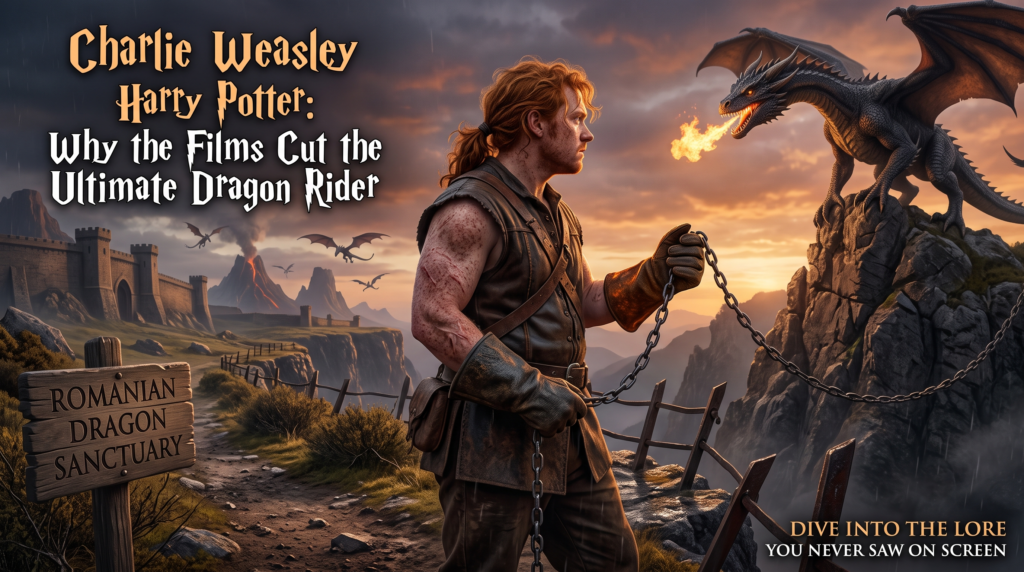
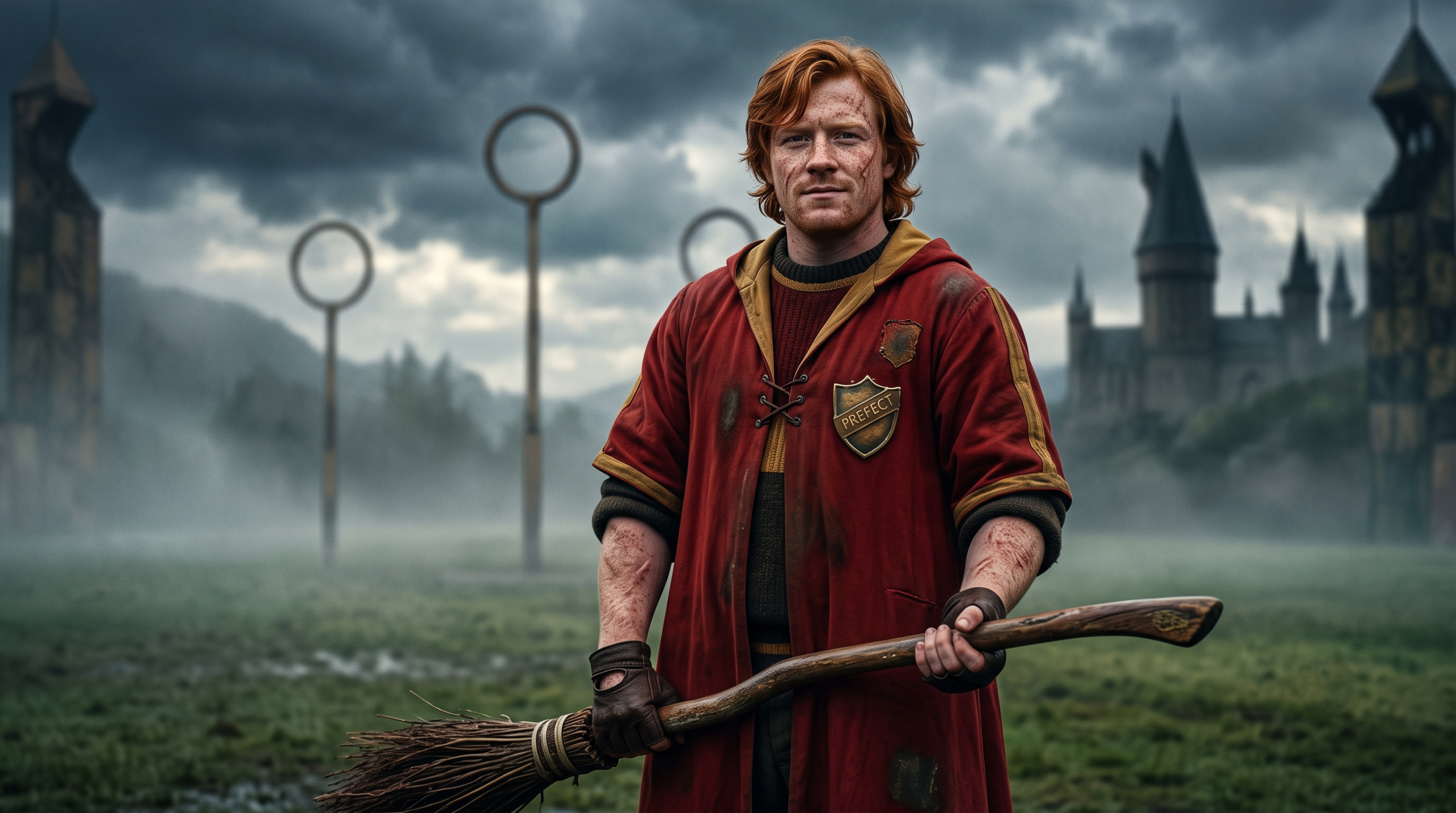
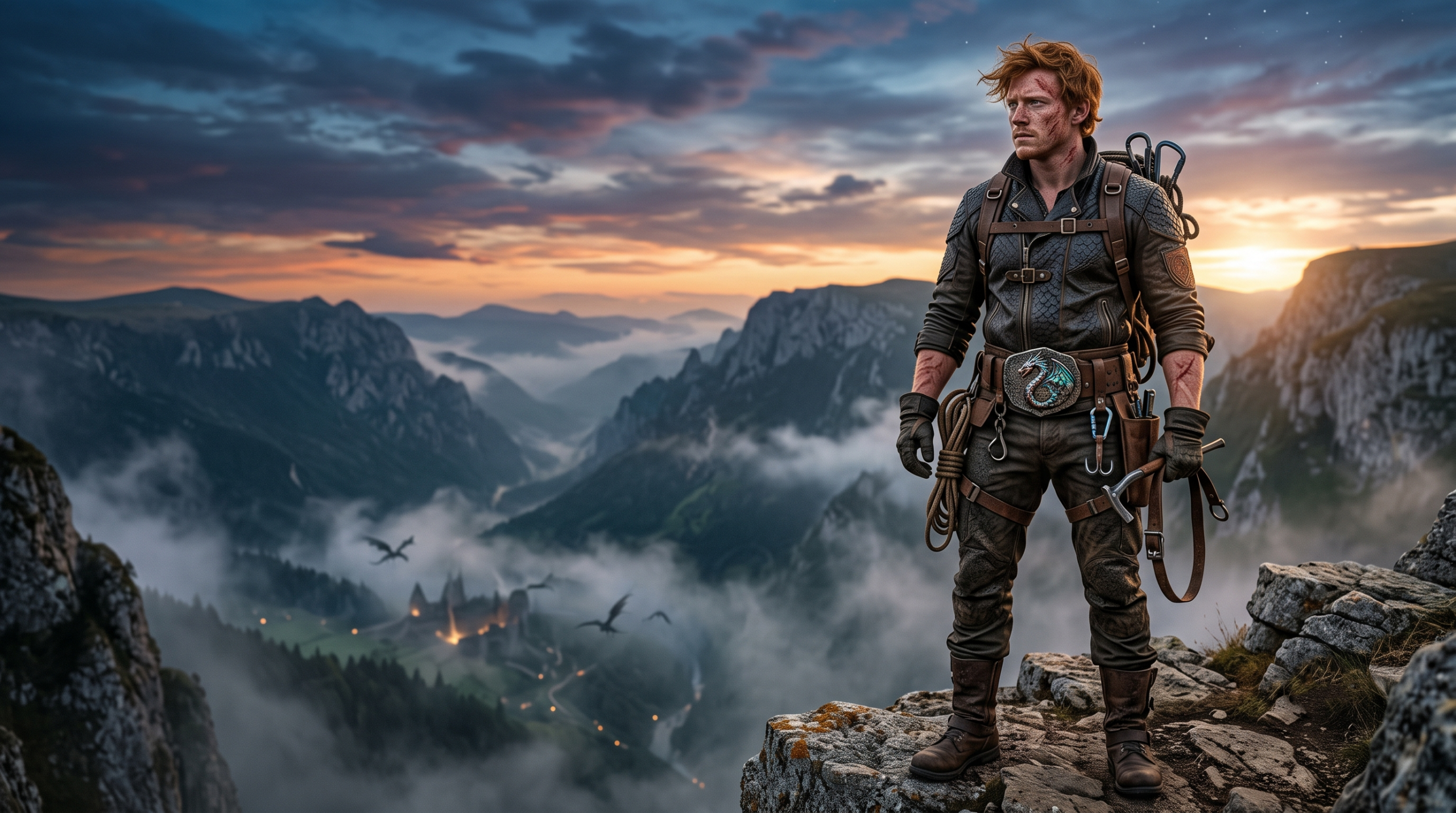
Physically, the books paint a picture of a man who looks wildly different from the actors cast to play his siblings. Unlike the tall, lanky frames of Ron, Percy, and Arthur, Charlie was built like his brothers the twins (Fred and George) and his mother: stocky, broad, and muscular. Because he spent his life working outside in harsh conditions, his physical description in Harry Potter and the Goblet of Fire is incredibly distinct. He is described as having a face so heavily freckled it looked permanently tanned, with arms that were muscular and dotted with shiny burn marks and calluses from his dangerous line of work. He was rugged, outdoorsy, and physically imposing—a stark contrast to the academic or bureaucratic paths chosen by Percy and Arthur.
The Golden Age of Gryffindor Quidditch
If you ever wondered why Gryffindor was in such a massive championship drought before Harry arrived in The Sorcerer’s Stone, the answer is directly tied to Charlie’s graduation. During his time at Hogwarts, Charlie was nothing short of a sporting legend.
He served as both a Prefect and the Gryffindor Quidditch Captain, but it was his skill as a Seeker that made him a Hogwarts icon. Oliver Wood, the intensely competitive Quidditch Captain who recruits Harry, speaks of Charlie with borderline reverence. Under Charlie’s leadership, Gryffindor dominated the pitch, winning the Quidditch Cup and cementing a golden age for the house team.
Expert Lore Note: The books establish that Charlie was so incredibly talented on a broomstick that he could have easily played for the English National Quidditch Team. He had a guaranteed, comfortable path to fame and fortune—something the impoverished Weasley family desperately needed. Instead, he chose a wilder, grittier, and infinitely more dangerous path. This decision alone tells you exactly who Charlie is: a man driven by passion and adventure, not glory or gold.
 The Dragonologist of Romania: Expanding the Wizarding World
Charlie’s career choice is one of the most fascinating aspects of his character, primarily because it opens up the scope of J.K. Rowling’s universe far beyond the borders of Gre at Britain.
Why Romania?
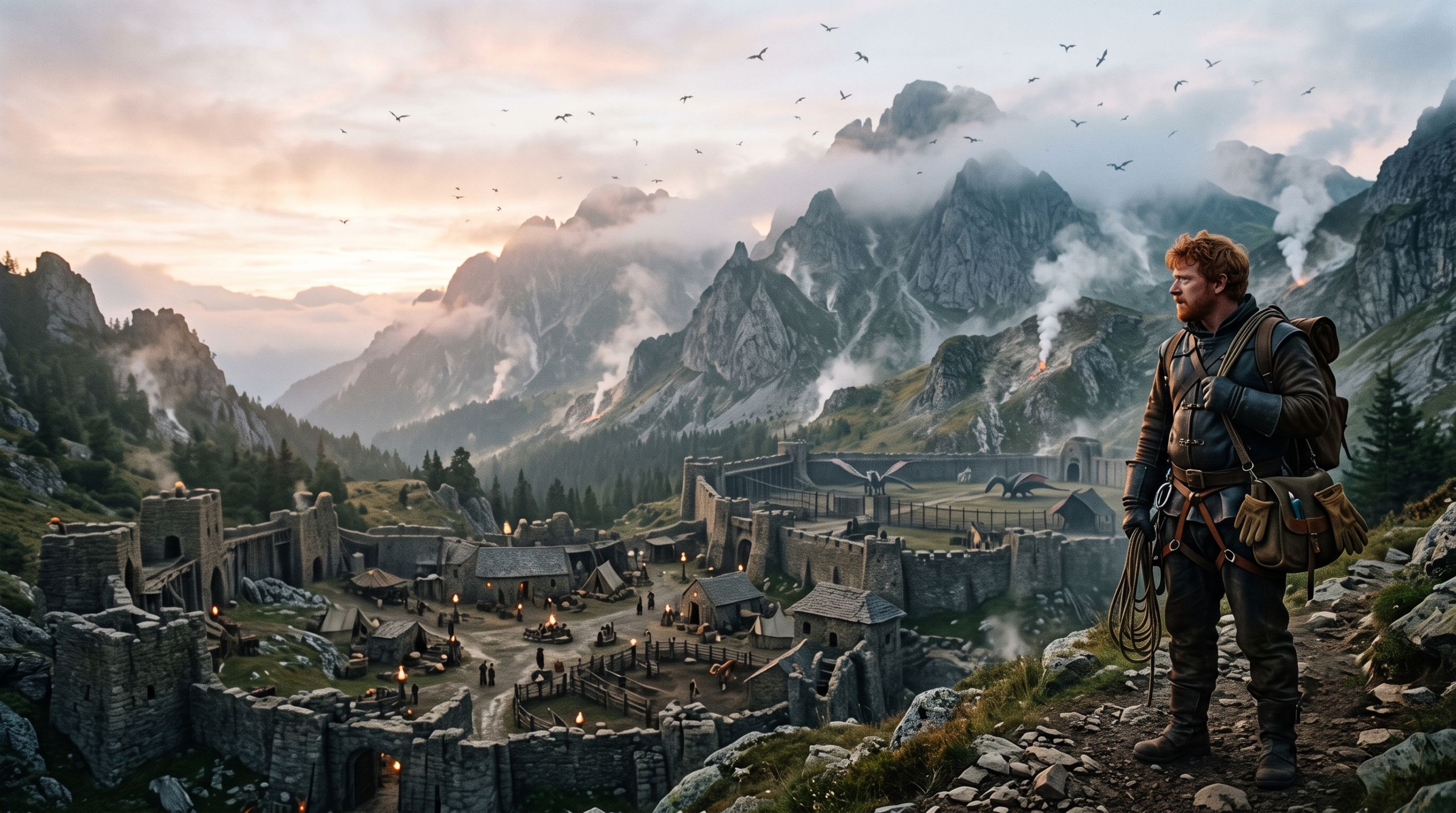
After graduating from Hogwarts, Charlie packed his bags and moved to the Romanian Dragon Sanctuary to become a Dragonologist. This wasn’t just a quirky job title; it was highly dangerous, frontline conservation work involving the world’s most lethal magical creatures.
By placing Charlie in Romania, the narrative subtly establishes that the Wizarding World is a massive, interconnected global society. Before the Fantastic Beasts franchise took audiences to New York or Paris, Charlie Weasley was the reader’s primary proof that major magical institutions and incredible dangers existed across the European continent. His life in Romania was gritty, untamed, and perfectly suited his rebellious, outdoorsy nature.
 The Norbert Rescue Mission (The Sorcerer’s Stone)
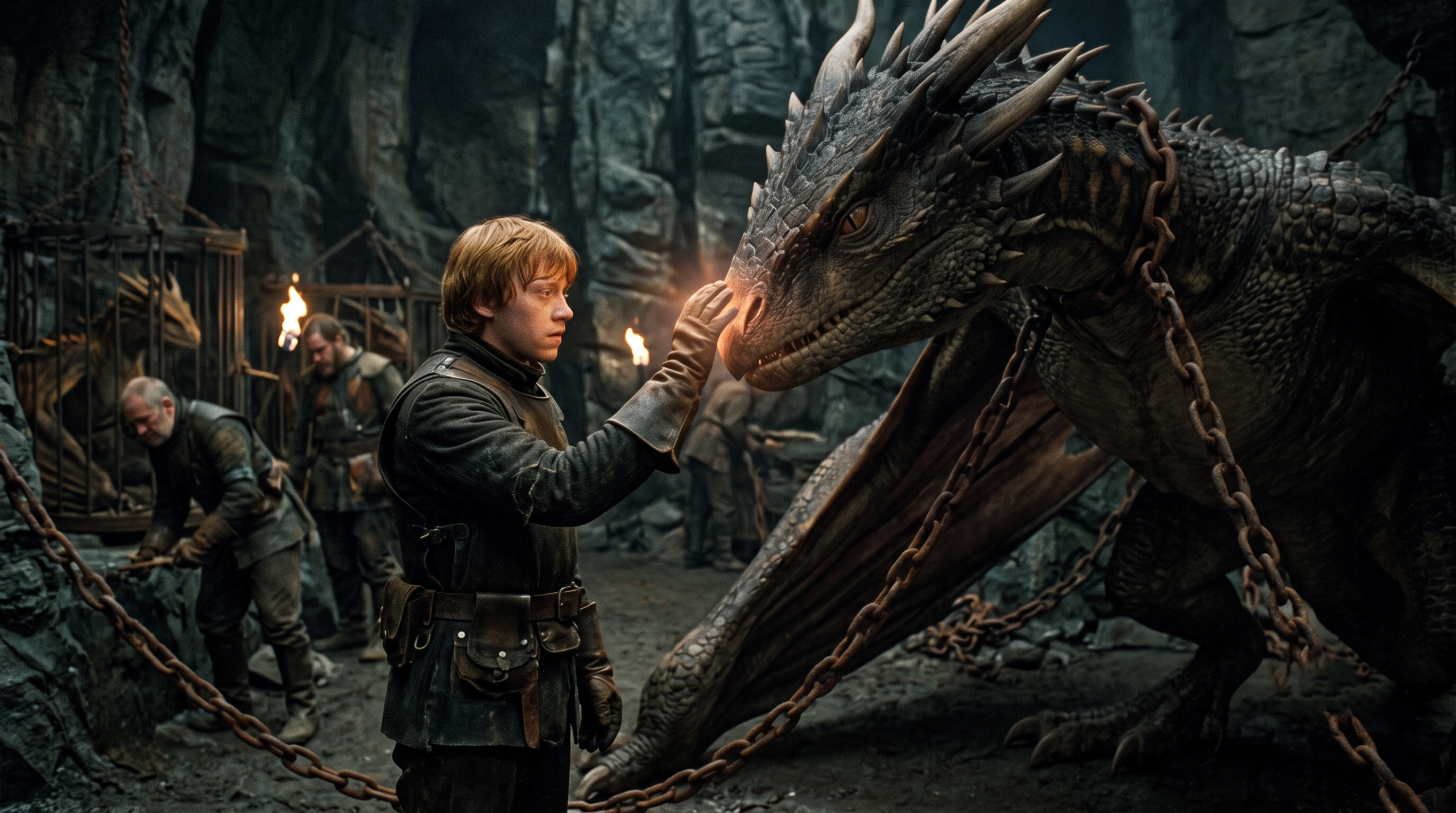
Charlie’s impact on the main plot begins almost immediately in the first book, though the movie completely alters how it happens. When Rubeus Hagrid illegally hatches a baby Norwegian Ridgeback named Norbert in his wooden hut, the golden trio (Harry, Ron, and Hermione) are thrown into a massive panic. Keeping a dragon is highly illegal, and Norbert is growing at an alarming rate.
It is Ron who comes up with the solution: send a letter to his brother Charlie.
In the novel, Charlie orchestrates a high-stakes, stealth rescue mission. He coordinates a time for his friends to fly over to Hogwarts under the cover of darkness. Harry and Hermione are forced to smuggle the crated baby dragon up to the highest point of the castle—the Astronomy Tower—at midnight to hand Norbert off to Charlie’s crew. This sequence is thrilling, dangerous, and results in Harry and Hermione getting caught by Argus Filch, leading to a massive loss of house points and their subsequent detention in the Forbidden Forest.
In the film adaptation, this entire sequence is erased. Instead, Dumbledore simply finds out about the dragon and quietly sends Norbert to Romania off-screen, completely cutting Charlie’s heroics out of the narrative.
Wrangling the Horntail (The Goblet of Fire)
Charlie’s physical presence becomes crucial during the events of The Goblet of Fire. When the Triwizard Tournament comes to Hogwarts, the First Task requires the champions to face fully grown nesting mother dragons.
Who do you call when you need to safely transport and manage a Hungarian Horntail, a Chinese Fireball, a Swedish Short-Snout, and a Welsh Green? You call the Romanian Dragon Sanctuary.
Charlie is on the ground at Hogwarts, actively wrangling the beasts. He serves as a vital source of information, pulling Hagrid aside to show him the dragons, which Hagrid then secretly shows to Harry. Charlie’s presence during this book grounds the fantastical elements of the tournament; these aren’t just movie monsters, they are living, breathing creatures managed by exhausted, highly skilled wizards trying to keep them under control. His anxious pacing and sheer relief when Harry successfully outflies the Horntail shows the deep, protective love he has for his family and their closest friends.
 Charlie Weasley’s Crucial Role in the Second Wizarding War
When Lord Voldemort returned to power, the wizarding community was fractured. The Ministry of Magic spent an entire year in denial, forcing Albus Dumbledore to secretly reform the Order of the Phoenix. While the movies portray the Order as a purely British resistance force operating out of 12 Grimmauld Place, the books reveal a much wider strategic effort—one spearheaded by Charlie Weasley.
The Order of the Phoenix’s Foreign Envoy
During the events of Harry Potter and the Order of the Phoenix, Charlie is given a highly classified, critical mission by Dumbledore. Instead of returning to London to fight alongside his parents, Sirius Black, and Remus Lupin, Charlie is ordered to remain at the dragon sanctuary in Romania.
His objective? To act as a foreign envoy and secretly recruit overseas wizards to the Order’s cause.
Voldemort was gathering dark creatures and foreign allies, and Dumbledore knew the resistance needed international support to survive. Charlie’s deep connections abroad made him the perfect diplomat. This subplot highlighted his maturity and immense trustworthiness; Dumbledore trusted him with a solo mission on foreign soil, proving that Charlie’s contribution to the war effort was just as vital as those fighting in the Department of Mysteries.
The Battle of Hogwarts Reinforcements
Perhaps the most egregious omission in the cinematic adaptations is Charlie’s role in the climactic Battle of Hogwarts.
In Harry Potter and the Deathly Hallows Part 2, the cinematic battle feels like a desperate final stand by the students, teachers, and remaining Order members inside the castle walls. However, the book delivers a massive, sweeping “cavalry arrival” moment that was completely cut from the screen.
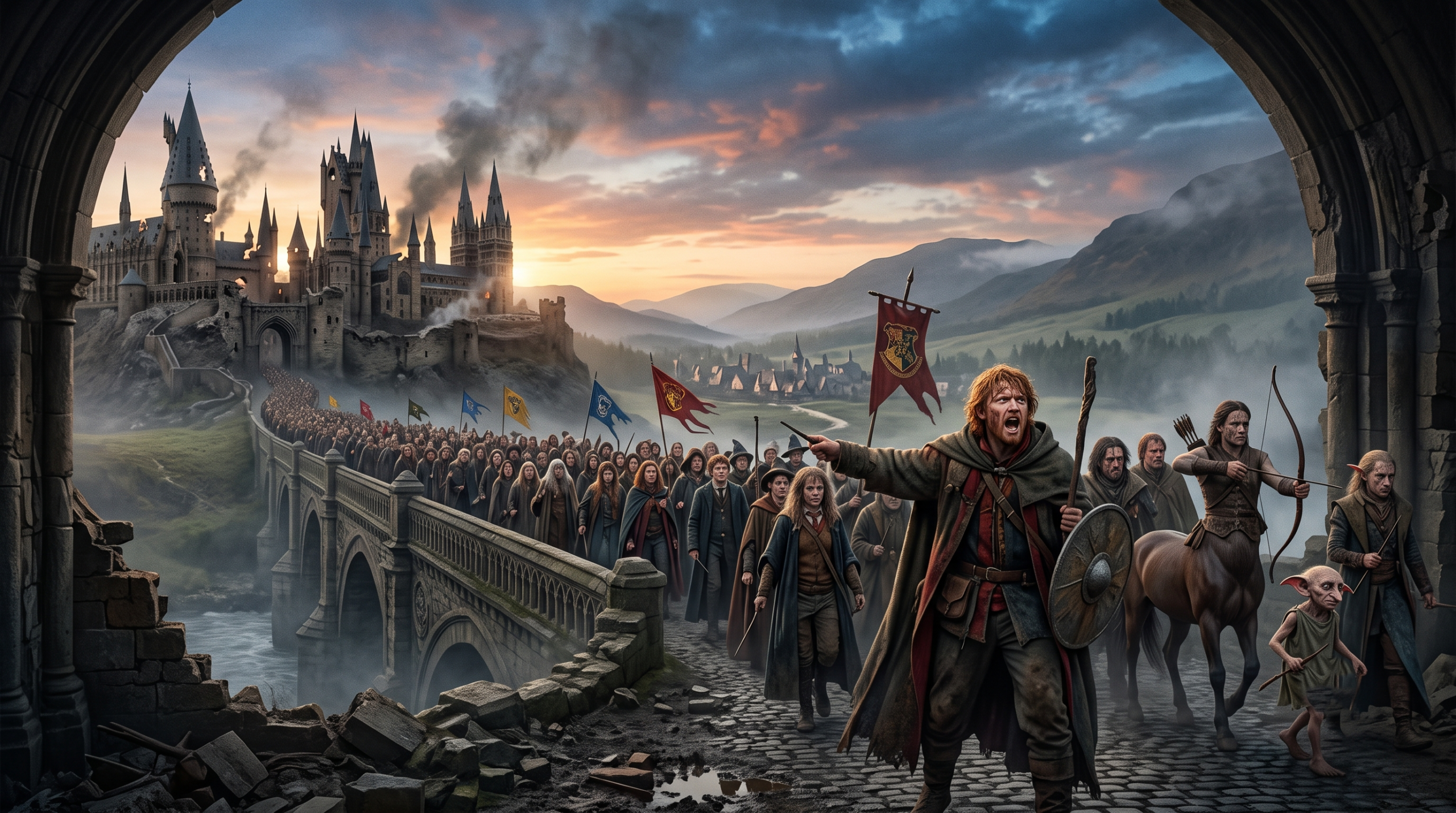
Just as the defenders of Hogwarts are being overwhelmed by Death Eaters and all hope seems lost, reinforcements arrive. Charlie Weasley, alongside Potions Master Horace Slughorn, leads a massive charge into the Great Hall. They bring with them hundreds of fighters: the families and friends of the students who stayed to fight, the shopkeepers of Hogsmeade, and various magical allies. Charlie physically leads this vanguard, turning the tide of the entire Second Wizarding War. Erasing this triumphant, cinematic arrival robbed the character of his ultimate heroic payoff and denied fans one of the most emotionally resonant moments in the final book.
 Why the Films Cut Charlie Weasley (The Cinematic Reality)
Understanding the deep lore only makes his absence from the silver screen more baffling. If he was this important to the overarching narrative, why did the directors and screenwriters of the Harry Potter franchise leave him out? The answer lies in the brutal logistics of Hollywood adaptations.
Streamlining a Massive Narrative
Adapting sprawling, 700-page fantasy novels into two-and-a-half-hour films requires ruthless editing. Screenwriter Steve Kloves, who penned the majority of the Potter scripts, was forced to trim any subplot that did not directly and immediately serve Harry Potter’s central survival against Voldemort.
Charlie’s adventures, while incredibly cool and world-expanding, often occurred off-page or on the periphery of Harry’s immediate line of sight. Including his subplot in Romania or dedicating screen time to his arrival with dragons would have required expensive CGI budgets and precious minutes of runtime that the directors felt were better spent developing the core Golden Trio.
Role Consolidation
In cinematic storytelling, when a secondary character is cut, their narrative functions are usually absorbed by other established characters. This “role consolidation” is exactly what happened to Charlie.
In the books, Charlie is the ultimate magical creature expert and the “cool, adventurous older brother.” In the films, these traits were distributed elsewhere. Rubeus Hagrid absorbed almost the entirety of the creature-lore exposition. Meanwhile, Bill Weasley—who was retained for the films (played by Domhnall Gleeson) due to his direct ties to the Gringotts break-in and his marriage to Fleur Delacour—absorbed the entirety of the “cool older brother” archetype. Splitting the limited runtime between Bill and Charlie would have been redundant for a general movie-going audience.
 Did Charlie Weasley Appear in the Movies at All?
Technically, yes—but only as a blink-and-you-miss-it easter egg.
Charlie makes a fleeting, non-speaking appearance in the cinematic universe. In Harry Potter and the Prisoner of Azkaban, the Weasley family wins the Daily Prophet Grand Prize Galleon Draw and uses the gold to visit their eldest son, Bill, in Egypt. A photograph of the entire family in Egypt is featured on the front page of the Daily Prophet. In this moving photograph, you can briefly see Charlie Weasley, portrayed by actor Alex Crockford.
Additionally, eagle-eyed fans have spotted an uncredited extra with red hair standing in the background during Bill and Fleur’s wedding in Deathly Hallows Part 1, which production notes suggest was meant to represent Charlie. However, he is never introduced, never speaks a line, and serves merely as background dressing.
What the Movies Lost by Erasing the Dragon Rider
While the screenwriters’ decision to cut him makes logical sense from a pacing perspective, the artistic and world-building losses were profound.
The Missing Global Perspective
By cutting Charlie, the cinematic universe dramatically shrank. The Harry Potter films often feel highly localized to the Scottish Highlands (Hogwarts) and London (The Ministry of Magic). Charlie’s presence was J.K. Rowling’s primary vehicle for showing that the magical world was a vast, complex geopolitical landscape. Losing his Romanian subplot meant losing the opportunity to showcase international magic and heavy dragon lore long before the Fantastic Beasts movies attempted to expand the timeline.
A Different Kind of Rebel
Charlie brought a highly unique flavor to the Weasley family dynamic. Percy was ambitious, the twins were entrepreneurial pranksters, and Bill was a traditionally successful curse-breaker for Gringotts. Charlie was a different breed of rebel. He was an outdoorsman who actively eschewed traditional, safe Ministry jobs for pure, untamed passion. He proved that success in the Wizarding World didn’t have to look like a desk job at the Ministry; it could look like dirt, dragon fire, and answering the call of the wild.
Frequently Asked Questions (FAQ)
Who played Charlie Weasley in the Harry Potter movies?
Actor Alex Crockford portrayed Charlie Weasley in a very brief, non-speaking cameo. He appears in the magical Daily Prophet photograph taken during the Weasley family’s trip to Egypt, which is shown early in the Harry Potter and the Prisoner of Azkaban film.
Who did Charlie Weasley marry?
Unlike his siblings, who almost all married and had children by the time of the series’ epilogue, Charlie Weasley never married. Following the conclusion of the books, author J.K. Rowling confirmed in interviews that Charlie remained single, stating that he was simply “more interested in dragons than women.” This has sparked vast fandom discussions and headcanons regarding his deep devotion to his work and his independent lifestyle.
What is Charlie Weasley’s Patronus?
While J.K. Rowling has never explicitly confirmed Charlie Weasley’s Patronus in the official canon, his deep affinity for magical creatures makes for fascinating theories. The overwhelming consensus within the Harry Potter fandom is that his Patronus would take the form of a dragon, perfectly reflecting his fearless nature, protective spirit, and lifelong dedication to the Romanian Dragon Sanctuary.
The erasure of Charlie Weasley from the Harry Potter film franchise remains a sore spot for book purists, and for good reason. He wasn’t just a background sibling; he was a Gryffindor Quidditch legend, a fearless dragonologist, a vital international diplomat for the Order of the Phoenix, and a frontline hero at the Battle of Hogwarts. While Hollywood’s runtime limits forced him out of the spotlight, his legacy in the original text remains untarnished.
For fans who want to dive deeper into the lore, Charlie stands as a testament to the sheer depth of J.K. Rowling’s world-building—a reminder that some of the greatest magical adventures happened just off the edge of the movie screen.
If you found Charlie’s cinematic erasure fascinating, check out our complete breakdown on who Bem is and why his Hogwarts house swapped mid-franchise to uncover more hidden secrets the movies tried to bury!