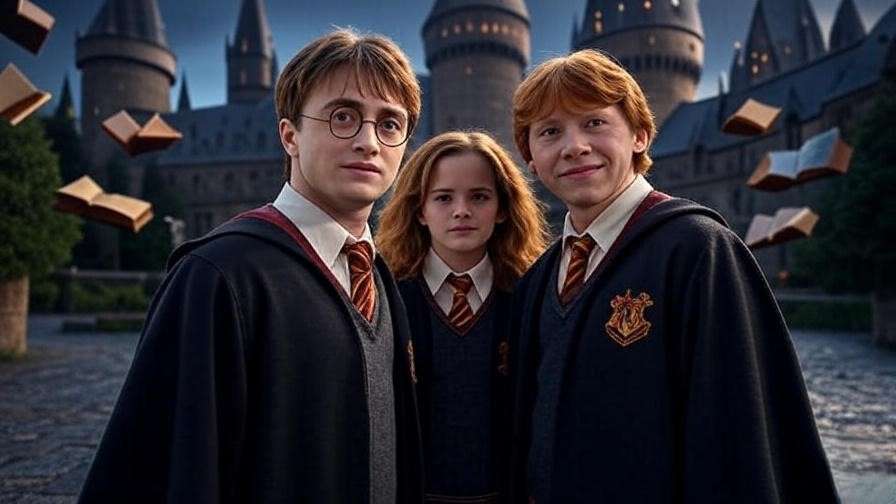
Watching the cinematic adaptations of J.K. Rowling’s Wizarding World is a visually stunning experience, but for dedicated fans, it often feels like reading a beloved book with a few crucial pages ripped out. Due to strict theatrical runtimes and the challenges of pacing, directors had to make agonizing decisions in the editing room. Unfortunately, this meant sacrificing essential character development and narrative logic. If you have ever been baffled by a sudden leap in the story, you are not alone. Buried deep within the Warner Bros. archives are several Harry Potter deleted scenes that actually hold the answers to the fandom’s most enduring questions.
By restoring these lost moments, we can repair the fragmented cinematic timeline, explain baffling character motivations, and bridge the gap between the theatrical cut and the original books. Here are the seven most important cut scenes that fundamentally fix major movie plot holes.
1. Draco Malfoy’s Dungeon Jailbreak (Harry Potter and the Deathly Hallows – Part 2)
The Cinematic Plot Hole
During the tense buildup to the Battle of Hogwarts, Professor McGonagall makes a decisive move to secure the castle. After Pansy Parkinson suggests handing Harry over to Lord Voldemort, McGonagall commands Argus Filch to escort the entire Slytherin house to the dungeons. It is a defining, crowd-pleasing moment. However, just minutes of screen time later, viewers are presented with a glaring continuity error. As Harry searches the Room of Requirement for the diadem Horcrux, he is suddenly ambushed by Draco Malfoy, who is flanked by his cronies, Blaise Zabini and Gregory Goyle.
If all the Slytherins were locked in the dungeons, how did these three manage to stage an ambush on the seventh floor of the castle?
 How the Deleted Scene Fixes It
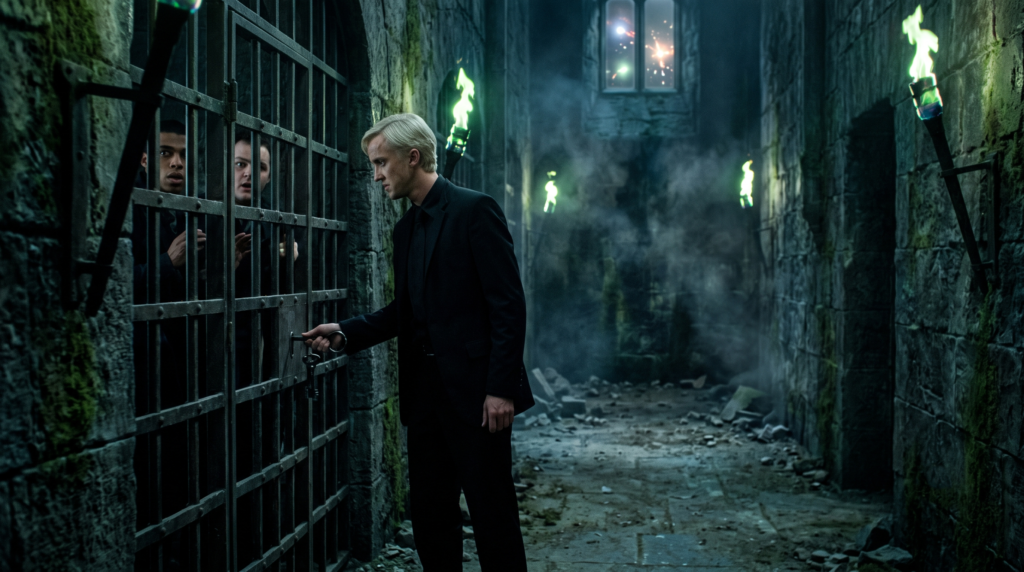
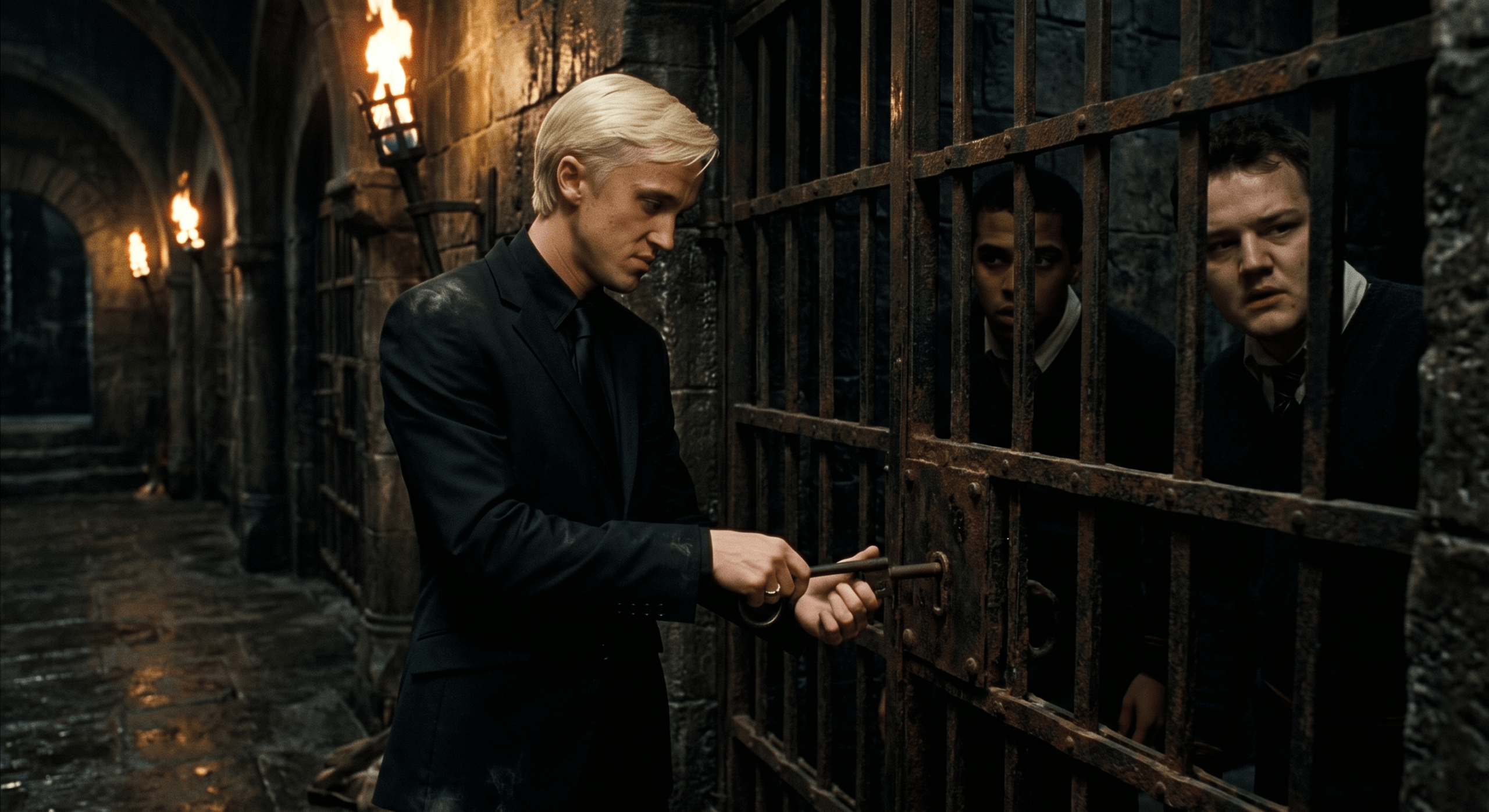
A crucial deleted scene perfectly bridges this narrative gap. The footage reveals that Draco Malfoy, acting with desperate loyalty to his family and the Dark Lord, sneaks back into the castle corridors. He stealthily makes his way to the dungeons, overpowers the guards or bypasses the locks, and purposefully breaks his friends out of their holding cell. He then leads them directly to the Room of Requirement to hunt down Potter.
This scene does more than just fix a continuity error; it demonstrates Draco’s agency and cunning during the final battle.
Trivia Note: You might wonder why Blaise Zabini was in this scene instead of Vincent Crabbe, as it was written in the book. This was due to real-world complications: actor Jamie Waylett, who played Crabbe, faced serious legal troubles and was removed from the final film, forcing the filmmakers to swap his character for Zabini.
2. Dudley Dursley’s Unseen Redemption (Harry Potter and the Deathly Hallows – Part 1)
The Cinematic Plot Hole
The Dursleys are a staple of Harry’s early life, serving as the primary antagonists before he discovers the magical world. However, their departure in The Deathly Hallows – Part 1 feels incredibly abrupt and emotionally hollow. In the theatrical release, Uncle Vernon frantically packs the car, and the family simply drives away from Privet Drive forever. There is a lingering, awkward shot of Dudley looking back at Harry, but without dialogue, the moment feels confusing rather than poignant.
This rapid exit ignores the traumatic events of Order of the Phoenix, where Harry saved Dudley’s soul from a Dementor attack—an event that profoundly shifted their dynamic.
 How the Deleted Scene Fixes It
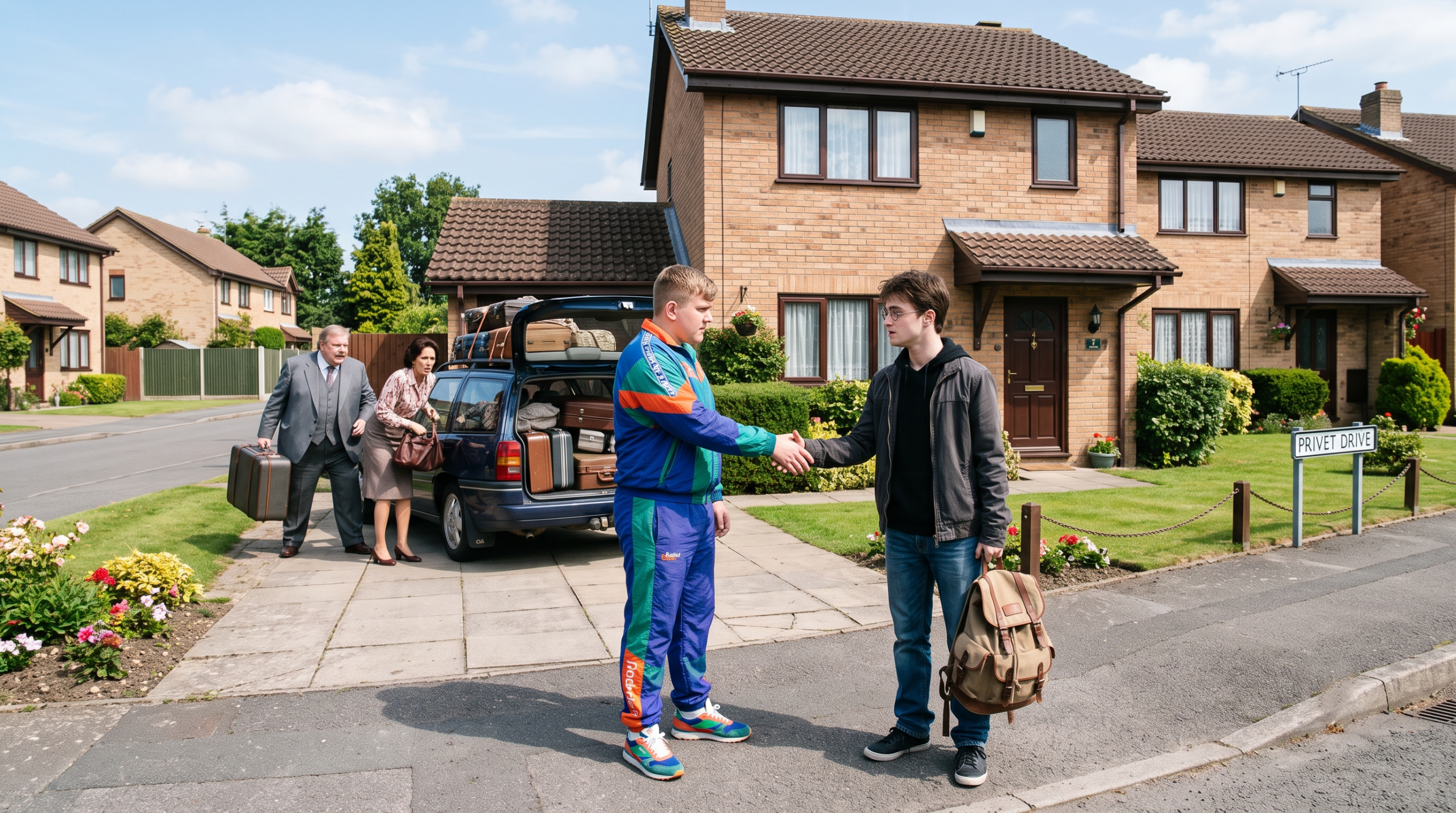
The deleted scene provides one of the most heartwarming character resolutions in the entire franchise. As Vernon rushes to leave, Dudley refuses to get in the car. He walks up to Harry, extends his hand, and delivers a line pulled straight from the emotional core of the novel: “I don’t think you’re a waste of space.” Harry, clearly moved, shakes his hand and replies, “Thanks, Big D.”
Including this exchange justifies the lingering camera shots and provides essential closure. It proves that Dudley, unlike his parents, possessed the capacity to grow and break the cycle of prejudice and abuse he was raised in. Cutting this scene robbed movie-only fans of Dudley’s redemption arc.
3. Aunt Petunia’s Moment of Grief (Harry Potter and the Deathly Hallows – Part 1)
The Cinematic Plot Hole
For a decade, the Harry Potter films portrayed Aunt Petunia as a purely one-dimensional, malicious caricature. While the books provide glimpses into her deep-seated jealousy of her magical sister, Lily, the movies rarely offer such nuance. She is simply the evil stepmother archetype. When the Dursleys leave their home to go into hiding, Petunia’s final on-screen moments in the cinematic cut offer no explanation for her lifetime of cruelty, leaving her character arc entirely flat.
 How the Deleted Scene Fixes It
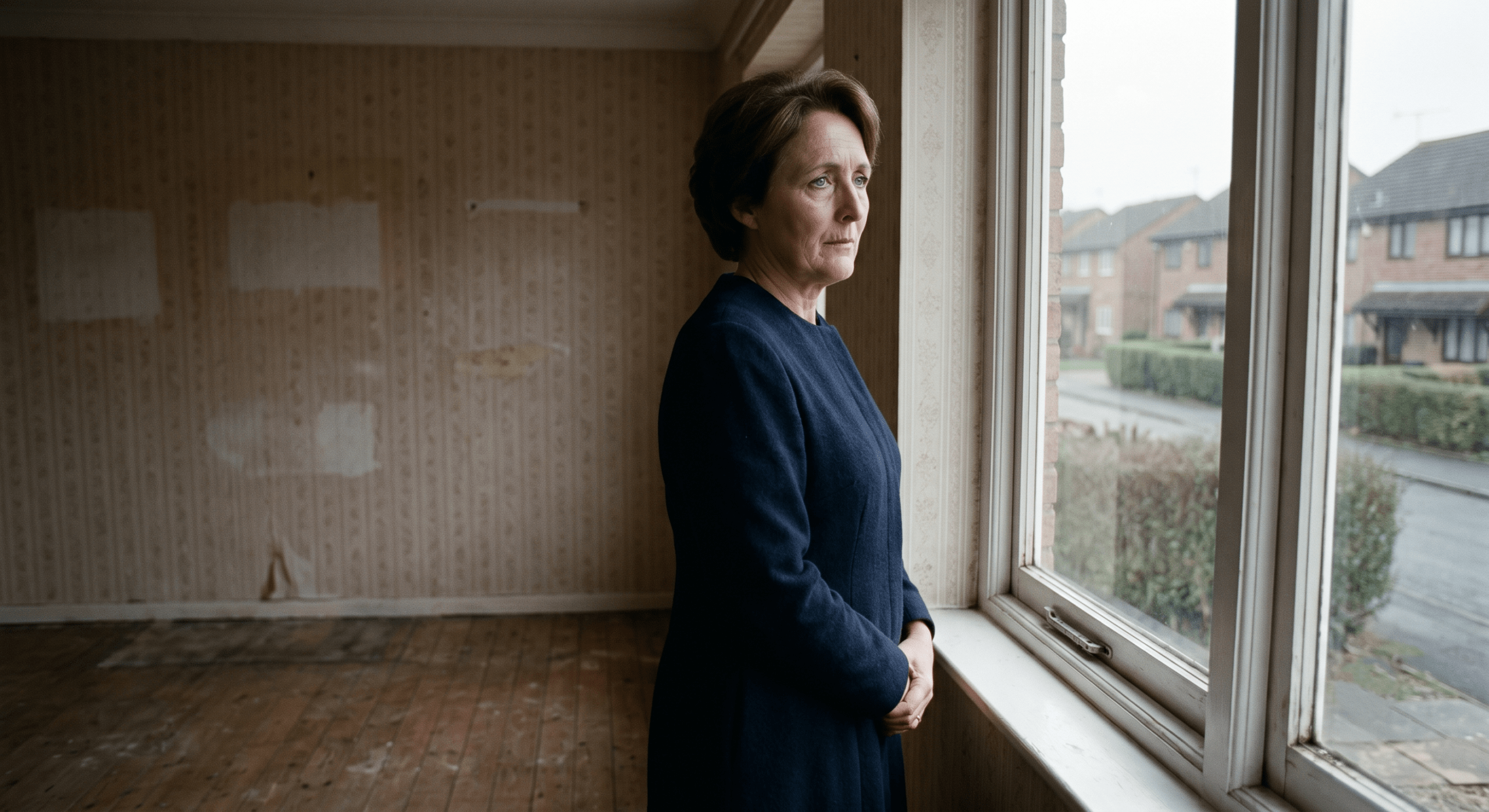
There is a heartbreaking, quiet moment left on the cutting room floor that completely recontextualizes Petunia Dursley. Before walking out the door of Number 4 Privet Drive, Petunia stands alone in the empty living room. Harry enters, and she turns to him, dropping her bitter facade.
She looks at her nephew and softly says, “You didn’t just lose a mother that night in Godric’s Hollow, you know. I lost a sister.”
This singular line of dialogue is a masterclass in character depth. It reframes her decade of abuse not as pure, cartoonish evil, but as a deeply flawed, traumatized reaction to the magical world. It reveals that her hatred of magic was intrinsically tied to the unresolved grief of losing her only sister to a war she could neither see nor understand.
4. Snape and Karkaroff’s Dark Mark Warning (Harry Potter and the Goblet of Fire)
The Cinematic Plot Hole
Harry Potter and the Goblet of Fire operates primarily as a mystery, building up to the terrifying return of Lord Voldemort. However, in the theatrical cut, Dumbledore and the Order of the Phoenix seem almost psychic, reacting to Voldemort’s return with very little on-screen evidence prior to the Third Task. The movie skips over the physical, mounting dread that was so prevalent in the book, particularly the physical toll the Dark Mark was taking on former Death Eaters.
 How the Deleted Scene Fixes It
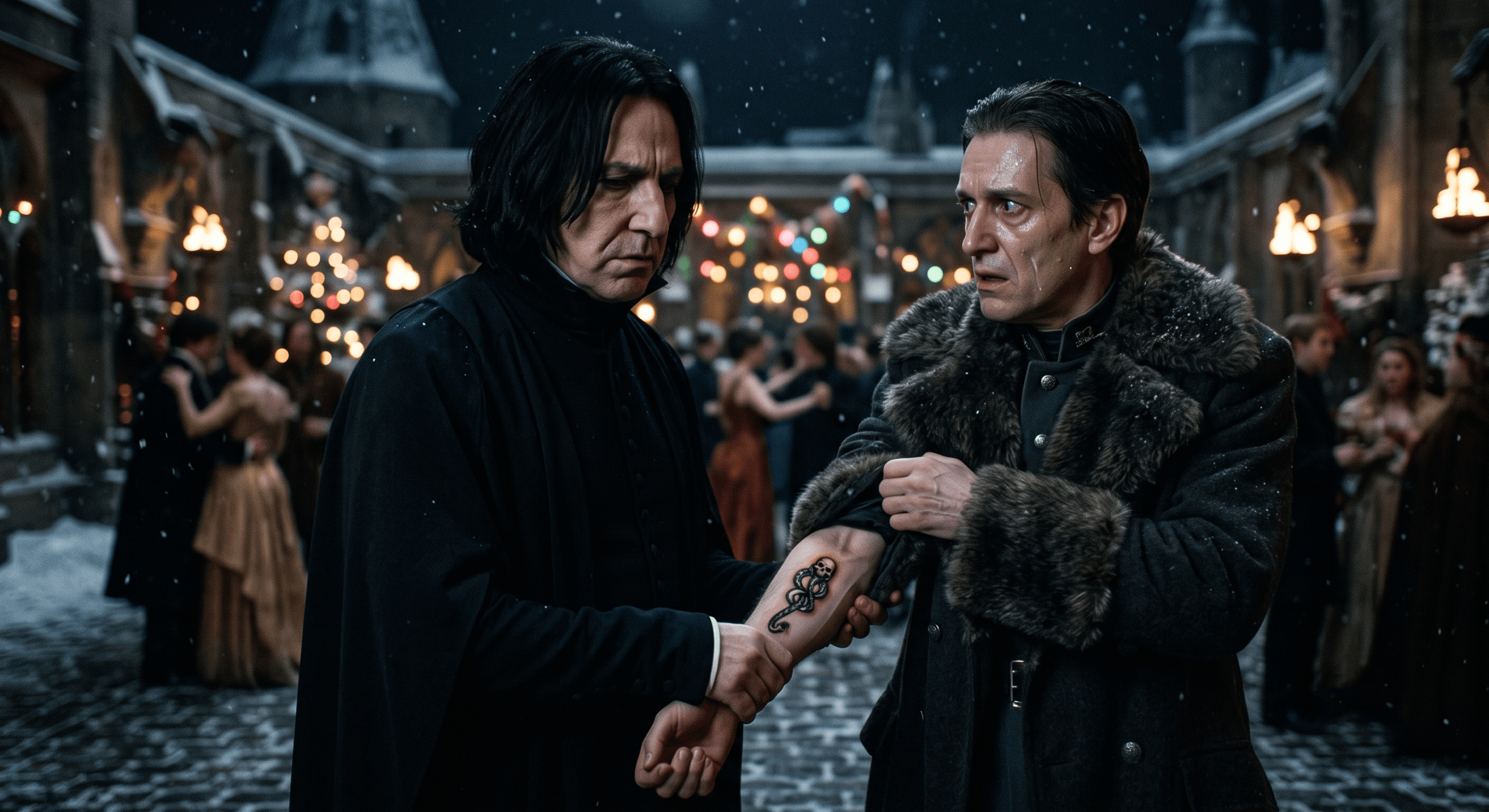
A vital deleted scene takes place outside the Great Hall during the Yule Ball. Igor Karkaroff, the headmaster of Durmstrang and a known former Death Eater, corners Severus Snape in the courtyard. Panicked and desperate, Karkaroff rips up his sleeve to show Snape his forearm, revealing the Dark Mark burning vividly against his skin. He ominously warns Snape, “It’s happening again.” Snape, maintaining his cold composure, brushes him off and ignores the warning.
This scene is critical for several reasons. First, it establishes Snape’s status as a former Death Eater far earlier in the cinematic timeline, adding layers of suspicion to his character. Second, it provides tangible evidence that Voldemort is gaining strength long before the Triwizard Tournament concludes, explaining why Dumbledore was already on high alert.
5. Harry Tracking Draco on the Marauder’s Map (Harry Potter and the Half-Blood Prince)
The Cinematic Plot Hole
In The Half-Blood Prince, Harry spends the entire school year convinced that Draco Malfoy has taken the Dark Mark and is plotting something sinister inside Hogwarts. In the theatrical cut, Harry’s obsession feels impulsive, erratic, and based on little more than a “gut feeling.” He wanders the halls seemingly hoping to bump into Draco, making his investigation look more like a lucky coincidence than actual detective work.
 How the Deleted Scene Fixes It
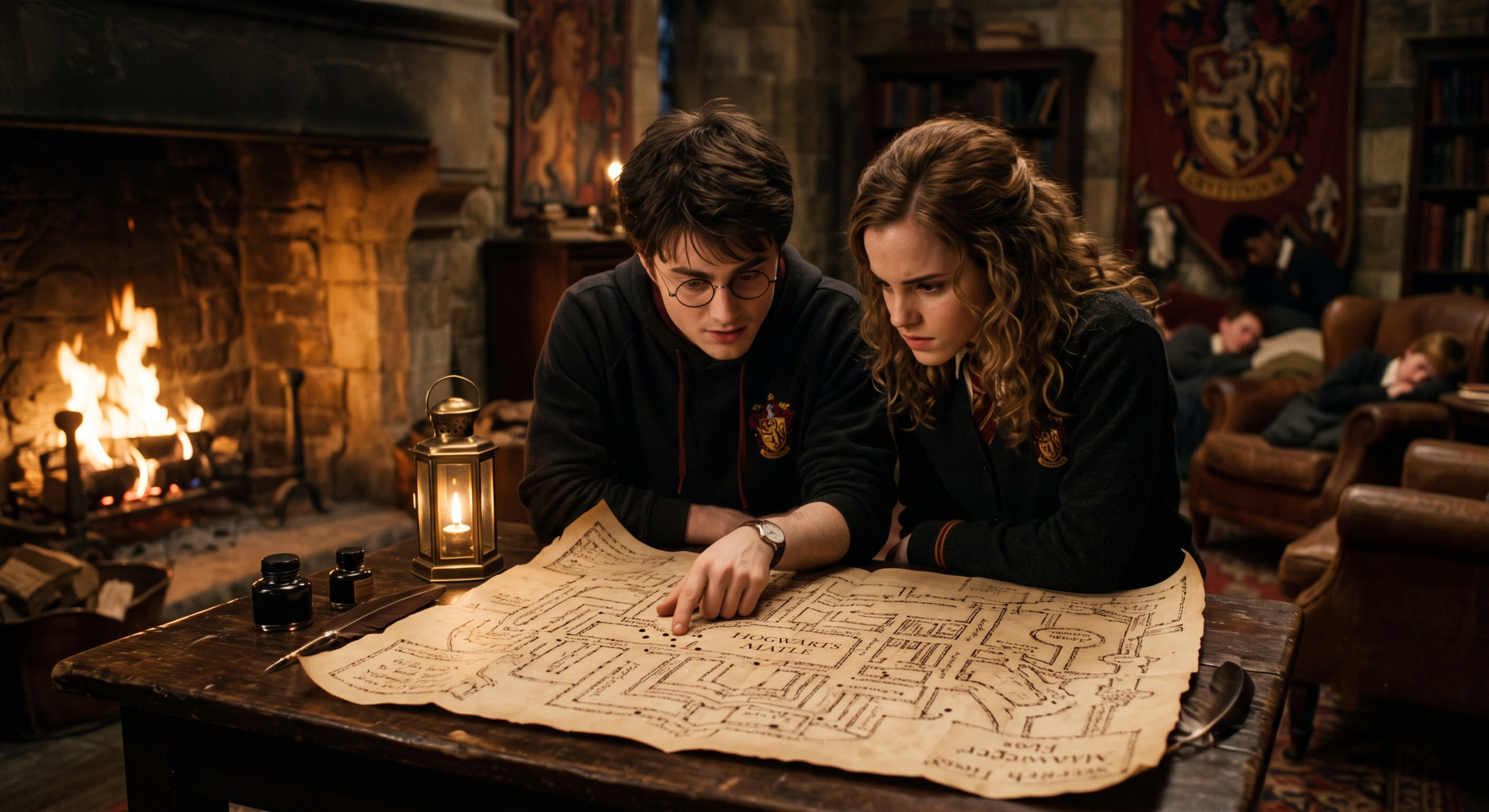
The narrative pacing is instantly fixed by a deleted scene showing Harry and Hermione huddled over the Marauder’s Map in the Gryffindor common room. Harry meticulously tracks Draco’s dot on the parchment, pointing out a terrifying anomaly to Hermione: Draco keeps vanishing from the map entirely. Hermione, ever the skeptic, dismisses it as a glitch or an error in Harry’s reading of the map.
This scene proves that Harry was conducting a focused, logical investigation. Furthermore, it seamlessly explains the magical mechanics of the Room of Requirement for movie audiences—establishing that the room is unplottable and does not show up on the Marauder’s Map. It validates Harry’s suspicions and makes the eventual reveal of Draco’s Vanishing Cabinet plot feel earned rather than accidental.
6. The “In Noctem” Sequence & The Hogwarts Breach (Harry Potter and the Half-Blood Prince)
The Cinematic Plot Hole
The climax of The Half-Blood Prince suffers from severe pacing issues in the theatrical release. The Death Eaters, led by Bellatrix Lestrange and Fenrir Greyback, essentially waltz into Hogwarts with zero buildup. They appear in the castle corridors almost instantly, making the legendary security enchantments of Hogwarts look laughable. The transition from a quiet evening to the tragic death of Albus Dumbledore feels clunky and rushed, lacking the necessary atmospheric dread.
How the Deleted Scene Fixes It
Director David Yates filmed an incredibly atmospheric, tension-building montage set to a haunting choral piece called “In Noctem” (conducted by Professor Flitwick’s choir). This deleted sequence shows an agonizingly tense build-up to the invasion.
As the sky drastically darkens with ominous storm clouds, the film cuts between various characters sensing the impending doom:
-
Professor McGonagall looks out the window, urgently ordering students inside.
-
Severus Snape stares blankly, his face tight with the dread of the Unbreakable Vow he must soon fulfill.
-
Draco Malfoy lies awake in his bed, terrified and hesitating before finally getting up to open the Vanishing Cabinet.
Cutting this sequence removed the emotional weight of the impending tragedy. Restoring the “In Noctem” scene explains the slow, coordinated nature of the infiltration, proves the professors knew something was wrong, and elevates Dumbledore’s death from a sudden shock to an inevitable, heartbreaking climax.
7. Lupin and Tonks’ Final Embrace (Harry Potter and the Deathly Hallows – Part 2)
The Cinematic Plot Hole
The Battle of Hogwarts is characterized by devastating losses, but perhaps none were handled as poorly in the films as the deaths of Remus Lupin and Nymphadora Tonks. Moviegoers see them briefly reaching for each other’s hands as the protective shield around Hogwarts falls. The next time they appear on screen, they are dead, their bodies lying side-by-side in the Great Hall. Their deaths happen entirely off-screen, lacking emotional weight, and giving the audience severe narrative whiplash.
 How the Deleted Scene Fixes It
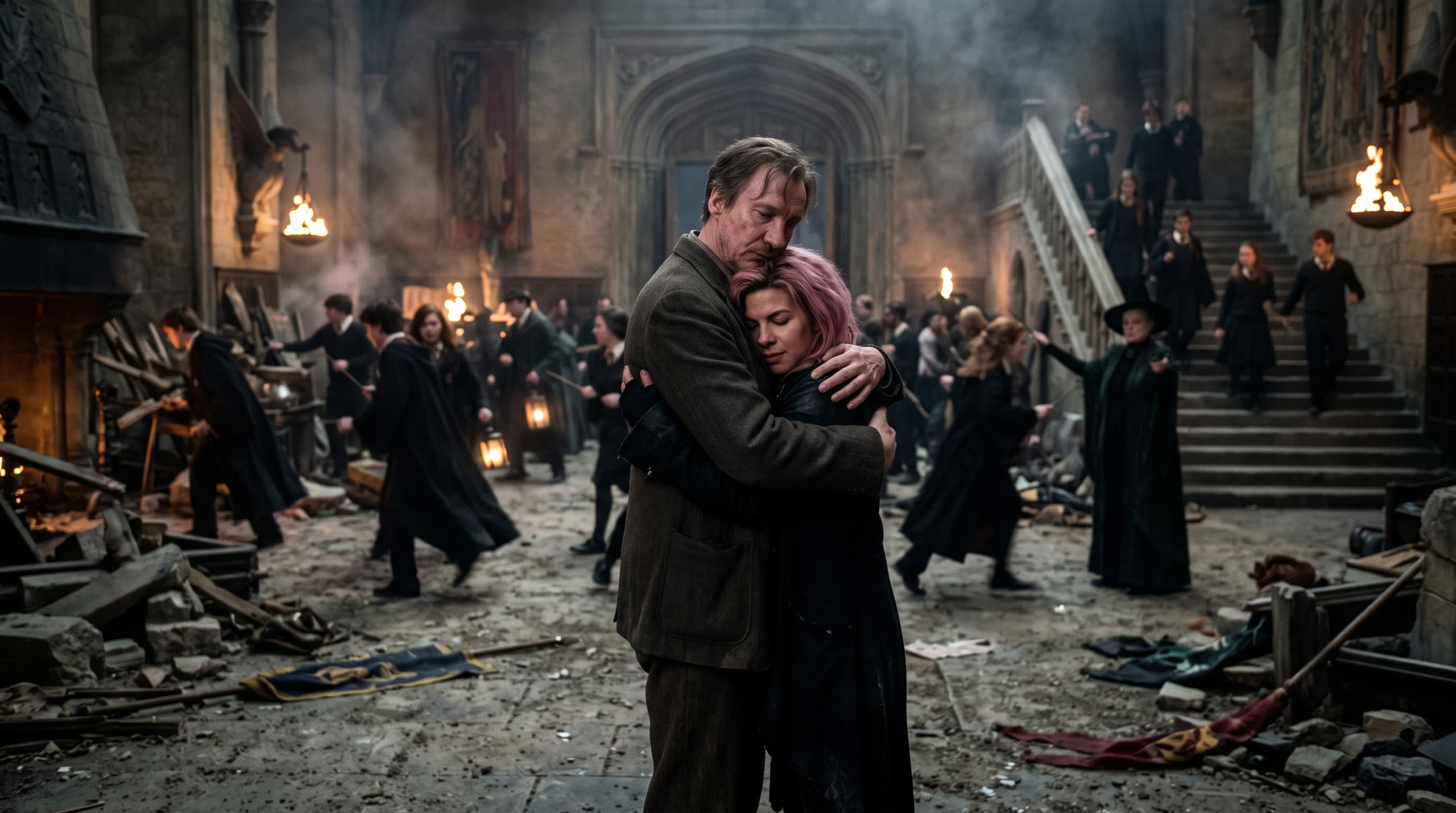
A brief but devastating pre-battle scene was cut that would have given their sacrifice the respect it deserved. In the deleted footage, Tonks runs through the chaotic crowds of students to find Lupin. Surprised, Lupin tells her she shouldn’t be there and should be home with their newborn son, Teddy.
Tonks firmly replies, “It’s you who needs me tonight.”
This final embrace was vital to show the agonizing choice they made. They chose to fight (and ultimately die) to ensure their son would grow up in a world free of Voldemort. Including this scene would have deeply amplified the audience’s empathy. It also provides essential context for later in the film, when Harry uses the Resurrection Stone and sees Lupin’s ghost, who speaks about his sorrow over leaving his son behind.
Bonus Section: Why Do Directors Cut Such Important Scenes?
It is easy for fans to feel frustrated when vital lore is left out, but understanding the filmmaking process provides important context. Why would seasoned directors and editors willingly remove scenes that clearly improve the story?
-
Pacing and Theatrical Runtimes: The most common culprit is time. Studios enforce strict runtime limits to maximize the number of daily screenings in theaters. A slow, character-building scene (like Petunia’s grief) might be sacrificed to get to the action faster.
-
The Rule of “Show, Don’t Tell”: Filmmakers often prefer to imply relationships rather than spell them out. However, as seen with Lupin and Tonks, swinging too far in this direction leaves audiences confused.
-
Shifting Tones: Sometimes a scene is brilliantly acted but clashes with the emotional tone of the surrounding scenes. The “In Noctem” choir scene was likely cut because the producers wanted the Death Eater attack to feel like a sudden, chaotic shock rather than a slow, dread-filled march.
Frequently Asked Questions (FAQs) About Harry Potter Deleted Scenes
Where can I watch all the Harry Potter deleted scenes?
Most deleted scenes are available on the physical DVD and Blu-Ray releases of the films under the “Special Features” section. Alternatively, streaming platforms like Max occasionally feature the Extended Editions of the first two films. You can also easily find compilations of these scenes on YouTube.
Did J.K. Rowling approve the deleted scenes?
J.K. Rowling acted as a creative consultant throughout the production of the eight films. While she didn’t have final say on the editing room floor, the scenes filmed (including Dudley’s redemption and Petunia’s backstory) were heavily based on her original text and lore.
Is the Peeves the Poltergeist footage lost forever?
One of the most famous deleted scenes involves the late, legendary comedian Rik Mayall, who was cast and filmed as Peeves the Poltergeist for Harry Potter and the Sorcerer’s Stone. Director Chris Columbus cut the scenes because he wasn’t satisfied with the CGI design. To this day, the footage has never been released to the public, remaining a holy grail for Potterheads.
Are the deleted scenes considered movie canon?
This is a subject of heavy debate among fans. Generally, if a deleted scene does not explicitly contradict the final theatrical cut (such as Harry tracking Draco on the map), fans readily accept it as “extended cinematic canon.”
The Harry Potter movies are undeniable triumphs of modern cinema, bringing the magic of Hogwarts to life for millions. However, the theatrical cuts are not without their flaws. By looking back at these seven critical deleted scenes, it is clear that the narrative framework of the films was actually much stronger than what made it to the silver screen. From Dudley’s emotional growth to the chilling build-up of the Hogwarts invasion, these missing moments elevate the story from great to structurally complete.