When fans step onto the grounds of Hogwarts in their imagination, they often picture Rubeus Hagrid’s cozy, pumpkin-flanked hut. Inside, past the simmering brass cauldron and the hanging hams, lies one of the wizarding world’s most beloved, drooling companions. Yet, a massive debate exists between readers and moviegoers regarding this iconic pet. If you are wondering exactly what type of dog is Fang in Harry Potter, the answer depends entirely on whether you are flipping through J.K. Rowling’s original novels or watching the Warner Bros. film adaptations.
This deep dive into the lore of the Harry Potter universe will definitively answer the confusion surrounding Hagrid’s dog. We will explore the historical roots of the breed written in the books, the cinematic and practical reasons behind the Hollywood breed switch, and exclusive behind-the-scenes trivia about the real-life canine actors who brought the world’s most cowardly giant dog to life.
Fang in the Harry Potter Books: The Mighty Boarhound
For millions of readers who first experienced the magic of Hogwarts through the written word, Fang was introduced with a very specific, intimidating physical description. In Harry Potter and the Sorcerer’s Stone, J.K. Rowling describes Fang simply as an enormous “Boarhound.”
What Exactly is a Boarhound?
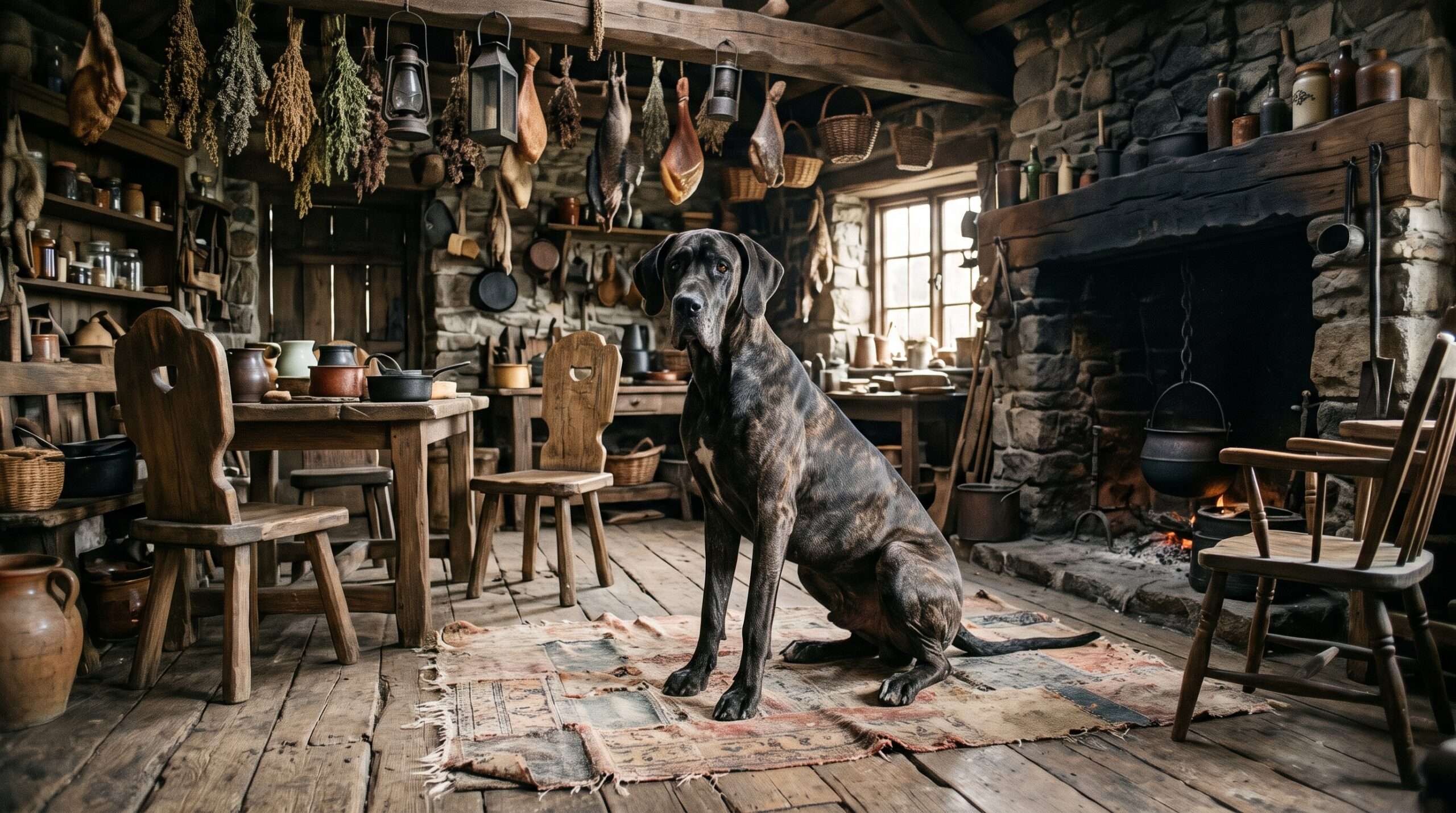
The term “Boarhound” often confuses modern readers, as it is not a breed you will find listed on a standard American Kennel Club (AKC) registry today. However, “Boarhound” is actually the antiquated, historical name for the Great Dane.
Historically, before they were bred down to become the gentle giants that lounge on modern living room sofas, Great Danes were fierce, athletic working dogs. Bred by German nobility in the Middle Ages, these dogs were a mix of Mastiff (for immense muscle and bite force) and Greyhound (for lightning-fast speed and agility). Their primary purpose was exactly what the name suggests: hunting wild boars. European wild boars were incredibly dangerous, aggressive beasts, and it required a dog of monumental size, speed, and courage to track and hold them down until hunters arrived.
A traditional Great Dane (or Boarhound) is characterized by:
-
Towering Height: Standing up to 32 inches at the shoulder. When on their hind legs, they easily tower over most adult humans.
-
Athletic Build: Lean, muscular, and deep-chested, built for explosive sprints.
-
Regal Posture: A sleek coat and a distinctively square, proud head.
 Why a Great Dane Was the Perfect Fit for Book Hagrid
J.K. Rowling’s choice to make Fang a Boarhound was a masterclass in subverting expectations—a literary technique she uses constantly with Rubeus Hagrid. Hagrid is a half-giant whose towering, frightening exterior hides the heart of a gentle, nurturing mother hen. He loves terrifying, lethal creatures like Acromantulas (Aragog), Dragons (Norbert), and three-headed dogs (Fluffy), viewing them as sweet and misunderstood.
Fang represents the exact inverse of this dynamic. By breed definition, a Boarhound is supposed to be a fearless, lethal apex predator. Yet, Fang is famously described by Hagrid as a “bloody coward.” Despite his terrifying lineage and massive size, book Fang is terrified of his own shadow, refuses to go into the Forbidden Forest without whimpering, and would rather lick a visitor’s ear than protect the hut from intruders. The juxtaposition of a sleek, towering hunting dog cowering behind the sofa at the sound of a breaking twig is a brilliant piece of character building that perfectly complements Hagrid’s personality.
Fang in the Harry Potter Movies: The Neapolitan Mastiff
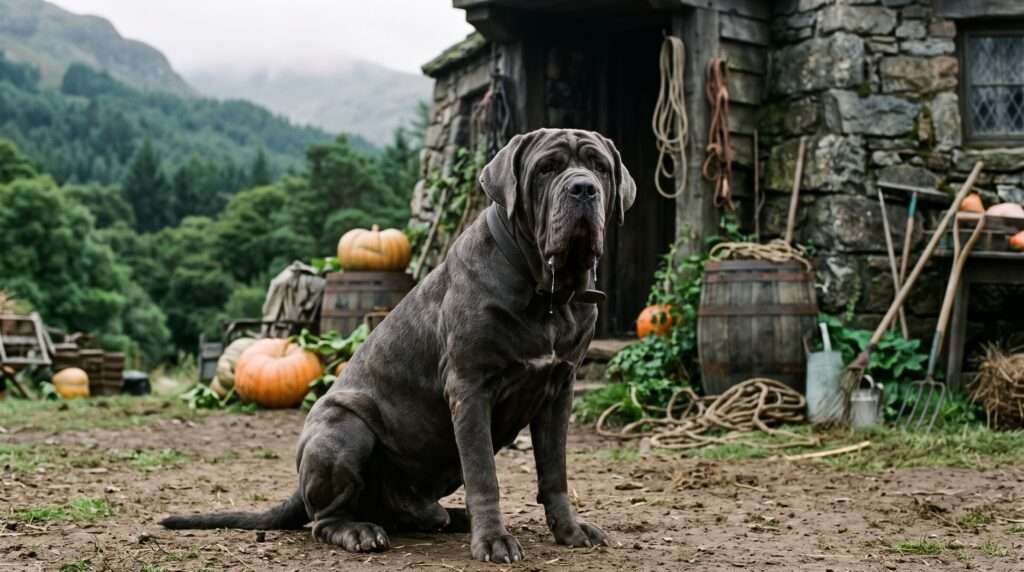
When Warner Bros. began production on the first Harry Potter film in 2000, production designers and director Chris Columbus faced a massive challenge: translating the magical world into a visually cohesive, believable cinematic universe. During this process, a major creative decision was made. Fang would no longer be a Great Dane. Instead, he would be portrayed by a Neapolitan Mastiff.
The Hollywood Switch: Why Warner Bros. Changed the Breed
The decision to change Fang’s breed from a Great Dane to a Neapolitan Mastiff was rooted in visual storytelling and practical set design.
First, consider the scale of Hagrid. Actor Robbie Coltrane stood 6’1″, but through forced perspective, body doubles (Martin Bayfield), and massive animatronic heads, Hagrid was portrayed on screen as being 8 feet, 6 inches tall. If the filmmakers had used a Great Dane, the dog’s lean, leggy physique would have looked too fragile and disproportionately small standing next to the colossal, heavily-robed Hagrid.
The Neapolitan Mastiff provided the exact visual weight the filmmakers needed. Originating in Italy, the Neapolitan Mastiff is an ancient breed known for its staggering bulk, loose, deeply wrinkled skin, and massive, blocky head. While they are slightly shorter than Great Danes, they are vastly wider and heavier, giving them a heavy, prehistoric appearance.
-
Aesthetic Match: The Neapolitan Mastiff’s droopy, weathered face perfectly matched the rustic, unkempt, and earthy vibe of Hagrid’s hut.
-
Cinematic Comedy: The heavy jowls and famously copious amounts of drool provided incredible physical comedy. A Mastiff’s slow, lumbering movements contrasted hilariously with the frantic, fast-paced danger of the wizarding world.
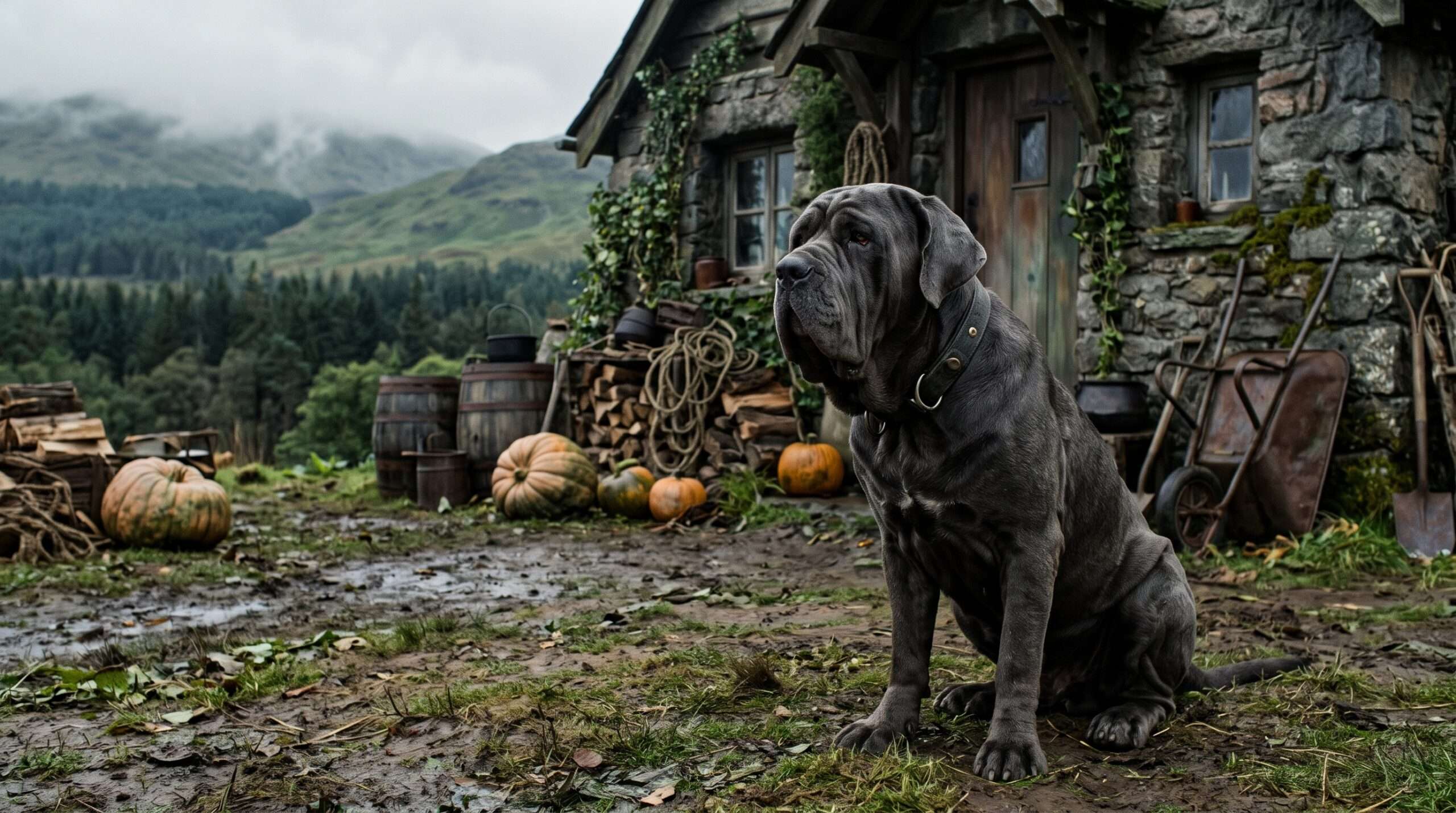 Meet the Real Dogs Who Played Fang
Bringing Fang to the screen was not a one-dog job. Over the course of the eight Harry Potter films, Fang was portrayed by a rotating cast of Neapolitan Mastiffs, primarily led by the legendary animal trainers at Birds & Animals Unlimited.
The most famous canine actors to don the drool included:
-
Hugo: One of the primary dogs used in the early films, known for his excellent ability to sit still and look suitably terrified on command.
-
Bully: A heavier, more lumbering Mastiff who was used for slower, stationary shots where Fang needed to look lazy and imposing.
-
Bella, Vito, and Luigi: These dogs were brought in for later films, each trained for specific physical tasks. Because Neapolitan Mastiffs are notoriously stubborn and have low stamina due to their heavy build, trainers needed multiple dogs on standby. One dog might be trained specifically to run alongside the actors, while another was trained to lick faces, and a third simply excelled at sleeping through chaotic special effects.
Working with these dogs was a labor of love. The trainers rescued several of the Mastiffs used in the production, giving them a glamorous second chance at life on one of the biggest movie sets in history.
Breed Showdown: Great Dane vs. Neapolitan Mastiff
To truly appreciate the duality of Fang’s character across the two mediums, we must examine the real-world breeds that represent him. While both are categorized as giant dog breeds, their physical traits, historical uses, and natural temperaments are vastly different.
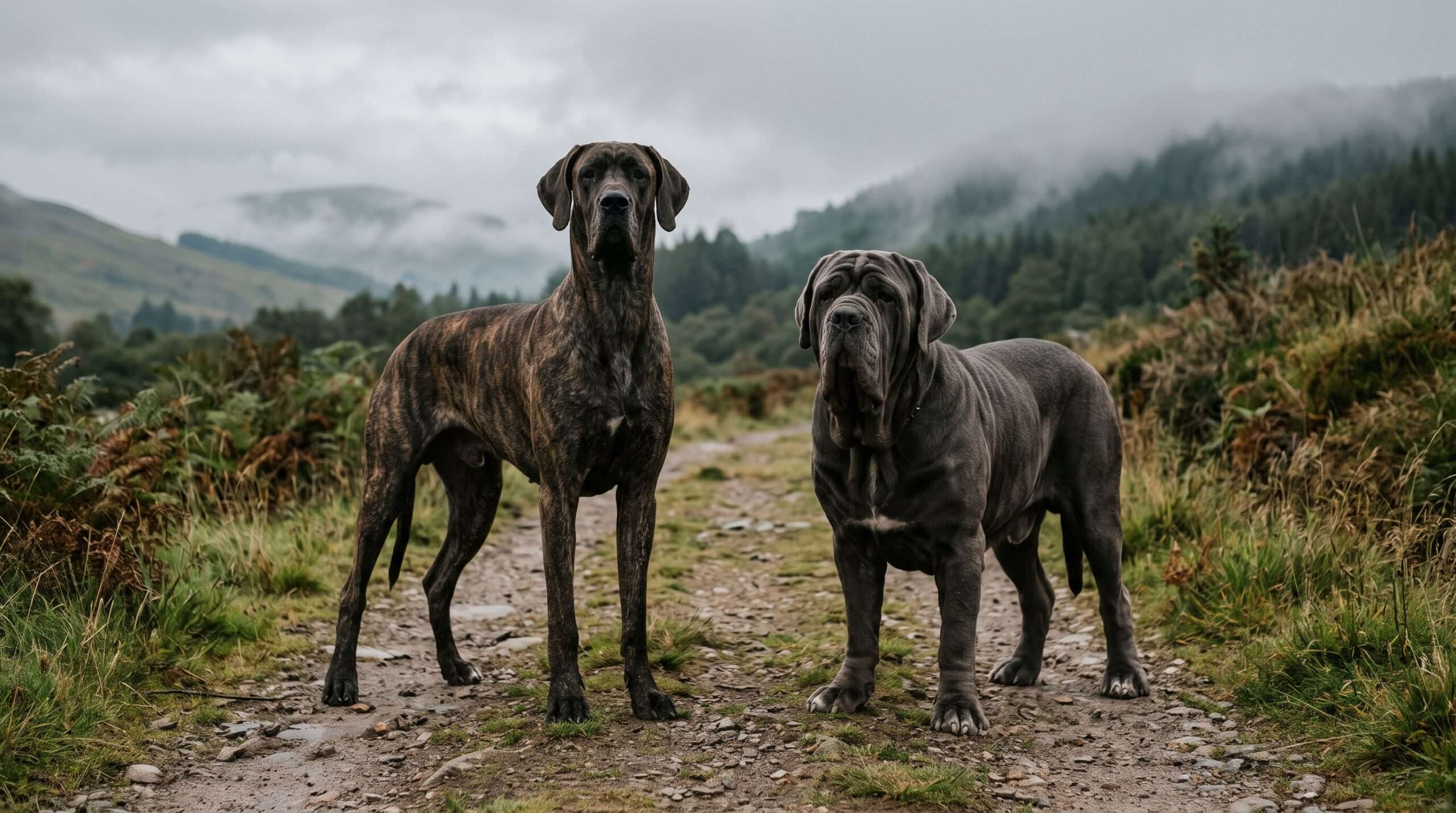 Physical Appearance and Size Comparison
When comparing the Boarhound (Great Dane) of the books to the Neapolitan Mastiff of the movies, the differences in structure and movement are striking. The Great Dane is a model of sleek, towering athleticism, whereas the Neapolitan Mastiff is a triumph of sheer, immovable mass.
Here is a breakdown of how the two giant breeds compare:
| Feature | The Book Fang (Great Dane / Boarhound) | The Movie Fang (Neapolitan Mastiff) |
| Average Height | 28 to 32 inches at the shoulder | 24 to 31 inches at the shoulder |
| Average Weight | 140 to 175+ lbs | 110 to 150+ lbs (often heavier in practice) |
| Physical Build | Tall, lean, deep-chested, athletic, leggy | Extremely bulky, heavy-boned, low center of gravity |
| Skin and Coat | Tight skin, sleek and short coat | Loose, deeply wrinkled skin, heavy jowls, prominent dewlap |
| Historical Purpose | Hunting wild boars and guarding estates | Roman war dogs, estate guardians, gladiator arena combat |
| Energy Level | Moderate to high; capable of explosive sprinting | Low; lumbering, prone to overheating, prefers to patrol slowly |
Which Breed Truly Matches Fang’s Personality?
If we look at the pure temperament of these breeds, the casting of the Neapolitan Mastiff adds an ironic twist to Fang’s on-screen portrayal.
In the real world, Neapolitan Mastiffs are anything but cowards. They are ancient, formidable guard dogs bred specifically by the Romans to protect estates and strike fear into intruders. They are fiercely protective, suspicious of strangers, and possess a booming, terrifying bark. The fact that the animal trainers on the Harry Potter set managed to take a breed known for its stoic, gladiator-like bravery and train it to cower, hide, and act like a giant, frightened baby is a testament to their incredible skill.
Conversely, the modern Great Dane has largely had its fierce hunting instincts bred out of it. Today, Great Danes are affectionately known as “gentle giants” and “Velcro dogs” because they desperately crave human affection, often lean heavily against their owners, and are notoriously easily spooked. In this sense, J.K. Rowling’s original vision of the Boarhound perfectly aligns with the modern Great Dane’s reality: a massive, terrifying-looking animal that would rather sit in your lap than face danger.
Behind the Scenes: Life on Set with the Mastiffs
Filming with live animals always presents unique challenges, but working with a breed as heavy, stubborn, and messy as the Neapolitan Mastiff required true Hollywood magic.
The Drool Factor and Special Effects
One of Fang’s defining characteristics in the movies is the sheer volume of drool he produces. Neapolitan Mastiffs are notoriously heavy droolers; their loose jowls act like buckets, collecting saliva that flies in every direction when they shake their massive heads. Daniel Radcliffe, Emma Watson, and Rupert Grint have all shared fond, albeit grossed-out, memories of being covered in Mastiff slime during scenes in Hagrid’s hut.
However, movie-making relies heavily on continuity. If a dog drools in one take but has a dry face in the next, it ruins the seamless illusion of the film. To solve this, the prop and makeup departments actually created highly realistic fake drool. Before the cameras rolled, trainers would carefully apply this non-toxic, synthetic slime to the Mastiffs’ jowls to ensure Fang looked consistently gross across multiple takes and camera angles.
Training a Giant Breed for the Big Screen
Neapolitan Mastiffs are not Border Collies; they are not known for their eager-to-please obedience or high-energy agility. They are stubborn, independent thinkers who move at their own deliberate pace.
This made filming action sequences incredibly difficult. During the filming of Harry Potter and the Chamber of Secrets, Fang is supposed to accompany Harry and Ron into the Forbidden Forest to meet Aragog, the giant Acromantula. According to behind-the-scenes lore, the giant animatronic spider was so realistic and terrifying that the Neapolitan Mastiff on set was genuinely spooked. The dog refused to stay in the scene and continuously tried to run away from the mechanical monster. The filmmakers had to use a combination of clever camera angles, heavy coaxing with treats, and immense patience to get the footage they needed.
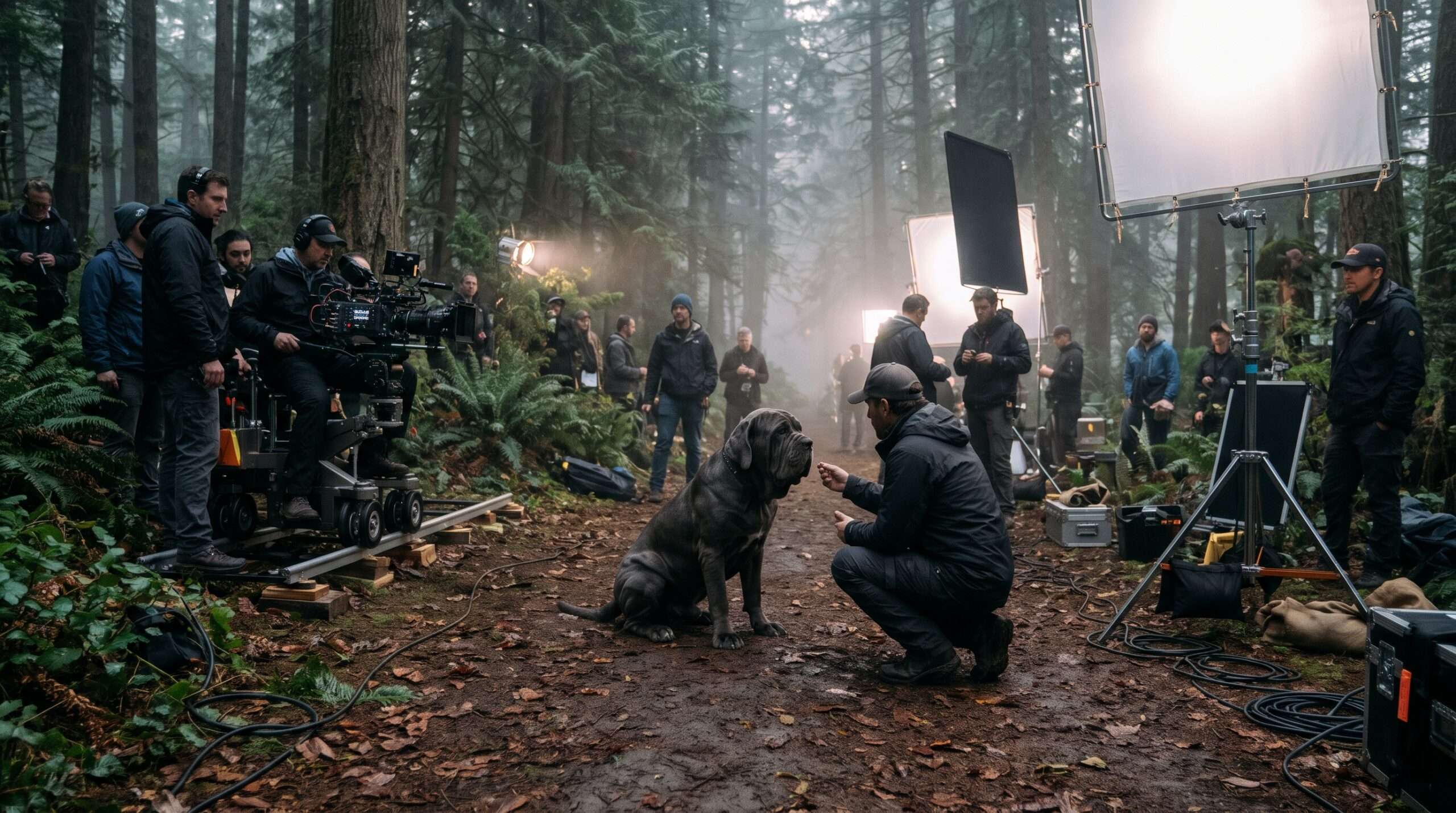 The Bond Between Hagrid and Fang
Beyond the trivia of dog breeds and movie sets, Fang serves a vital narrative purpose in the Harry Potter universe. He is much more than just a background prop in Hagrid’s hut; he is a crucial extension of Hagrid’s character.
A Boy and His Dog: Why Fang is Essential to Hagrid’s Character
Rubeus Hagrid is an outcast. Expelled from Hogwarts in his third year, his wand snapped, and forbidden from practicing magic, he lives on the fringes of wizarding society. He compensates for this isolation by surrounding himself with dangerous magical creatures, acting as a protector for beasts that the rest of the world deems monstrous.
Fang, however, is a wholly non-magical creature. He doesn’t breathe fire, he doesn’t have three heads, and he isn’t a blast-ended abomination. He is just a dog. This grounds Hagrid. Fang represents Hagrid’s domestic, softer side. When the golden trio (Harry, Ron, and Hermione) visit the hut, Fang is there to offer a sense of normalcy and warmth. He is a steadfast companion who loves Hagrid unconditionally, regardless of his half-giant status or his clumsy mistakes.
Despite his renowned cowardice, Fang’s loyalty is absolute when it truly matters. In Harry Potter and the Order of the Phoenix, when Dolores Umbridge and Ministry officials ambush Hagrid in the dead of night, Fang leaps into the fray to defend his master. The dog is hit by a Stunning Spell while trying to protect Hagrid—a heartbreaking moment that proves that even a “bloody coward” can find bravery when the person they love most is in danger.
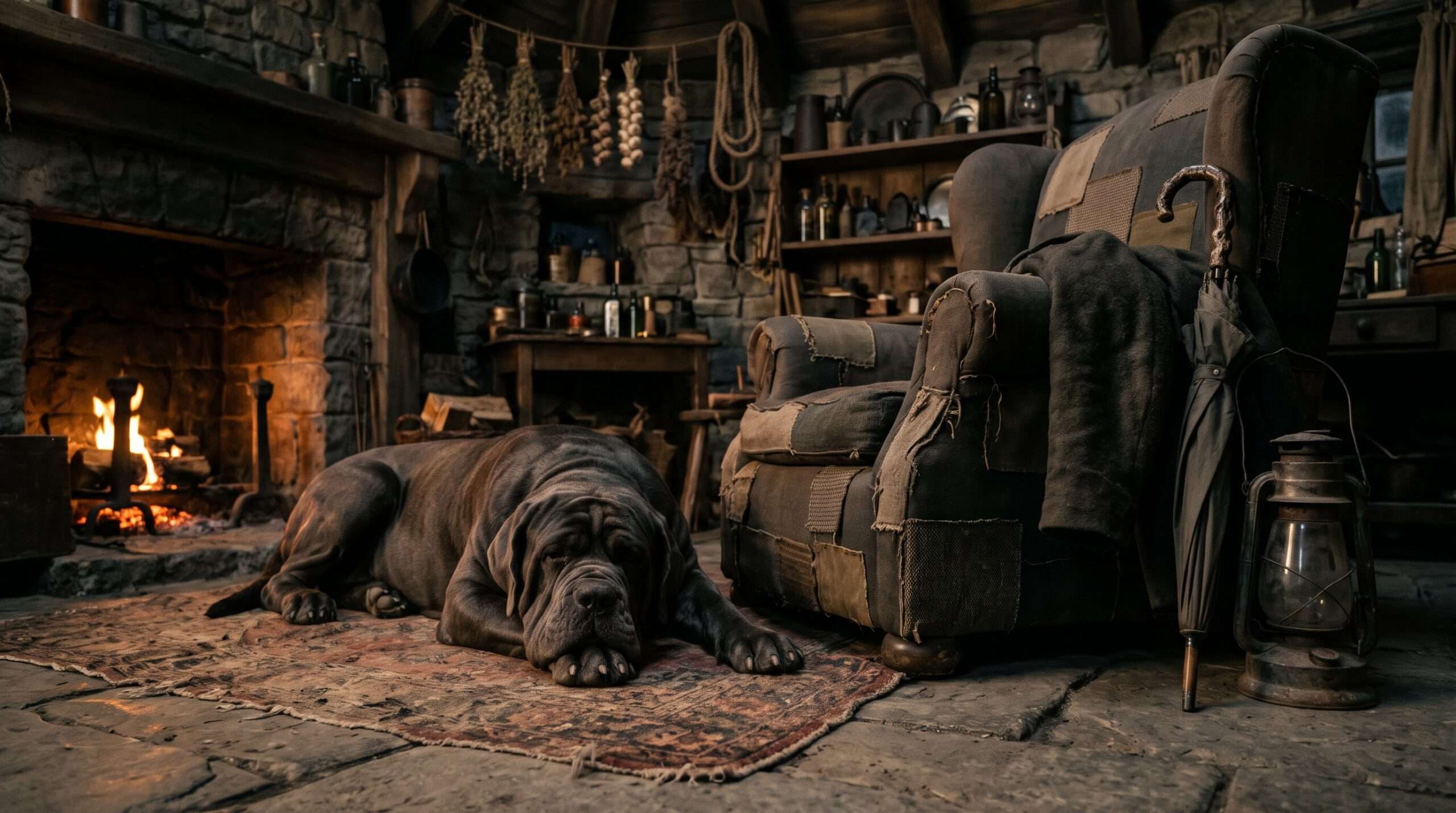 Frequently Asked Questions (FAQs) About Fang
To fully satisfy the curiosity of the Harry Potter fandom, here are the definitive answers to the most common questions regarding Hagrid’s canine companion.
Did Fang survive the Battle of Hogwarts?
Yes, Fang survived the Battle of Hogwarts. During the chaotic climax of Harry Potter and the Deathly Hallows, Fang is present in the castle. True to his character, he is absolutely terrified by the noise and destruction. The text mentions him running away in a panic after a vase shatters nearby. However, it is confirmed that he safely survived the wizarding war and lived out the rest of his days comfortably with Hagrid.
What happened to the dogs who played Fang after filming?
The animal trainers at Birds & Animals Unlimited take exceptional care of their animal actors. The Neapolitan Mastiffs who portrayed Fang—including Hugo, Bully, and Bella—were well cared for during production. Once their acting duties were completed, or when they aged out of the intense filming schedules, they were formally retired. Most were adopted by the trainers themselves or by closely vetted crew members, living out their golden years as beloved, pampered family pets far away from animatronic spiders.
Could a normal person own a Neapolitan Mastiff?
While seeing Fang on screen might inspire fans to want a Neapolitan Mastiff of their own, experts strongly advise caution. They are not dogs for first-time owners. They require extensive socialization, firm and consistent training, and a significant financial commitment. Because of their massive size and heavy wrinkles, they are prone to joint issues (like hip dysplasia), heart conditions, and severe skin and eye infections. Furthermore, their lifespan is tragically short, averaging only 7 to 9 years. They make fiercely loyal companions for the right, experienced family, but they require much more work than Hagrid makes it look.
So, what type of dog is Fang in Harry Potter? The answer is a beautiful compromise between literature and cinema. To purists who have read the books until the spines fell apart, Fang will always be the towering, sleek Great Dane (Boarhound)—a breed whose intimidating history hilariously contrasts with the dog’s timid heart. To millions of movie fans, Fang is permanently cemented as the heavy, lumbering, and endlessly drooly Neapolitan Mastiff—a cinematic marvel that brought unmatched visual weight and physical comedy to Hagrid’s hut.
Ultimately, whether he is a leggy Boarhound or a wrinkly Mastiff, Fang’s legacy remains the same. He is the wizarding world’s most lovable coward, a testament to the fact that you don’t need magical powers to be a fiercely loyal friend.
What do you think? Did you prefer J.K. Rowling’s original vision of a Great Dane, or do you think the movies made the right call by casting the Neapolitan Mastiff? Share your thoughts with fellow Potterheads!