Picture the sprawling, majestic landscape of the Scottish Highlands, where the towering turrets of the most famous magical school in the world pierce the clouds. For millions of readers and viewers, the castle itself is a marvel of enchanted ceilings and shifting staircases. Yet, for Harry Potter, Ron Weasley, and Hermione Granger, the true heart of the school wasn’t found in the cavernous Great Hall or the Gryffindor common room. It was found in the cozy, chaotic charm of Hagrid’s House in Hogwarts.
Most casual fans believe they know everything about the beloved Gamekeeper’s hut. They remember the smell of a crackling wood fire, the slobbering welcome of Fang the boarhound, and the looming, dangerous presence of the Forbidden Forest just steps away from the front door. However, beneath the surface of this seemingly simple shack lies a treasure trove of hidden lore. The physical descriptions in J.K. Rowling’s original novels and the cinematic adaptations differ wildly, creating a fascinating evolution of the location.
This article bridges that gap. Whether you are a hardcore Potterhead looking to test your trivia knowledge or a casual fan curious about the magical world-building, we are taking a deep dive into the architecture, location, and untold secrets of Rubeus Hagrid’s home.
Why Hagrid’s House in Hogwarts is the Heart of the Grounds
Before diving into the hidden details, it is crucial to understand the vital role this humble abode played within the broader context of the wizarding school. Hagrid’s hut was never just a building; it was a sanctuary. Throughout the series, whenever the Golden Trio faced overwhelming academic stress, the terror of dark wizards, or isolation from their peers, they inevitably trekked down the sloping lawns to knock on Hagrid’s massive front door.
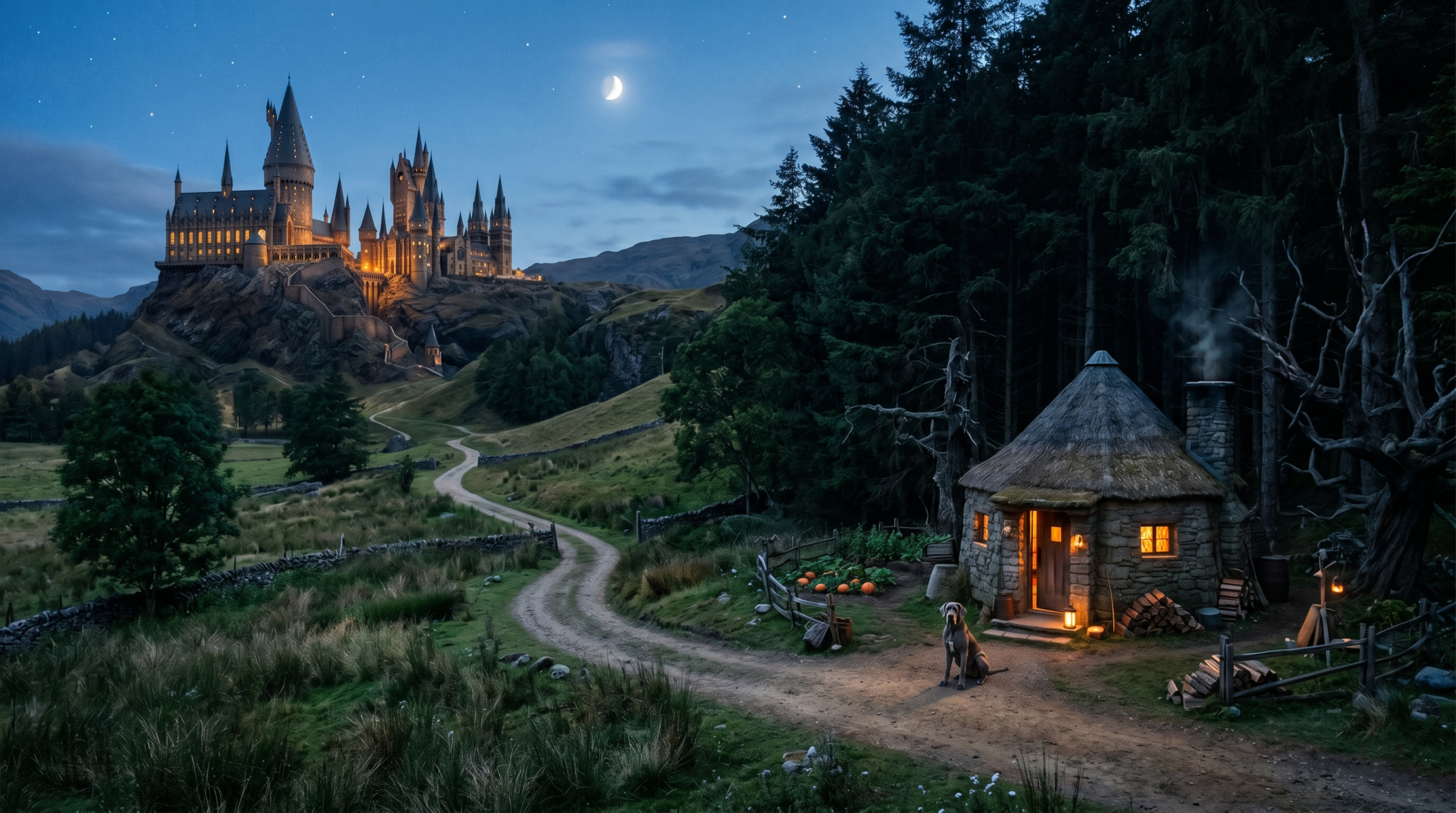 The Strategic Genius of Its Location
Albus Dumbledore was a wizard of immense foresight, and his decision regarding where to place the Gamekeeper’s lodgings was highly strategic. Situated directly on the boundary line between the safety of the manicured castle lawns and the untamed dangers of the Forbidden Forest, the hut served as a critical buffer zone.
Hagrid acted as the unofficial warden of the forest edge. His proximity allowed him to monitor the movements of the Centaur herds, keep an eye on the Acromantula colony (led by Aragog), and ensure that dangerous beasts did not wander up to the castle.
A Haven for the Misunderstood
Furthermore, living outside the castle walls wasn’t a punishment for Hagrid—it was a profound privilege. Having been expelled in his third year, Hagrid was forbidden from doing magic and lived on the fringes of wizarding society. The physical separation of his house from the main castle mirrored his social standing, yet it also gave him the freedom to be entirely himself. Away from the prying eyes of strict disciplinarians like Argus Filch or Severus Snape, Hagrid could pursue his (often highly illegal) creature-rearing hobbies in peace.
7 Hidden Details About Hagrid’s House You Probably Missed
As a piece of fictional real estate, the Gamekeeper’s lodge underwent numerous transformations over the years. Here are seven easily missed details that reveal the true depth of its design.
1. The Great Material Debate: Wood vs. Stone
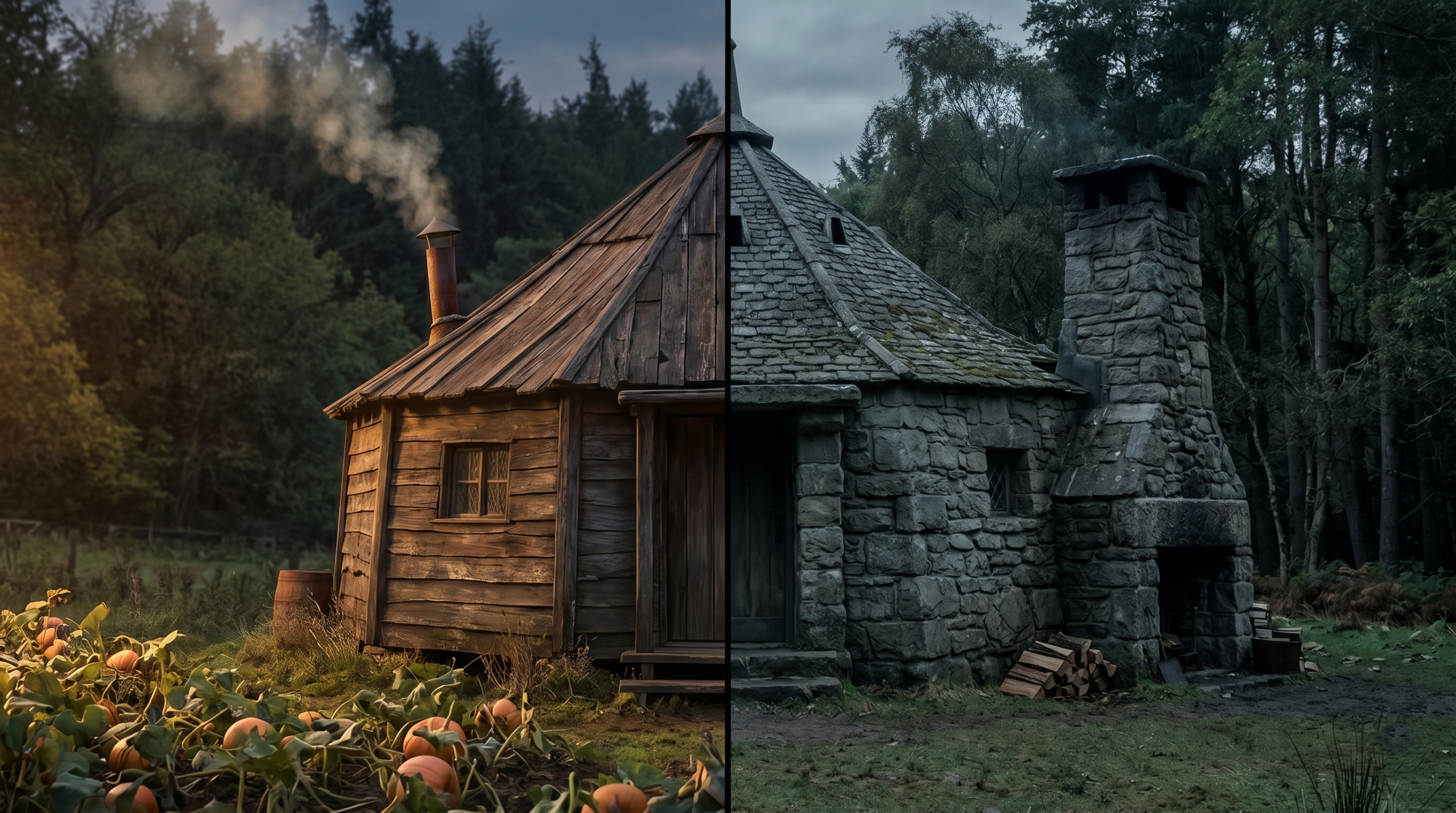
If you grew up exclusively watching the Harry Potter movies, you picture Hagrid’s home as a rugged, circular structure built entirely of heavy Scottish stone. However, book purists know this is a massive departure from the original canon.
In Harry Potter and the Sorcerer’s Stone, J.K. Rowling explicitly describes the dwelling as a small wooden cabin. While a wooden cabin fits the classic archetype of a forest ranger, it presents a glaring, almost comical danger when you consider Hagrid’s obsession with fire-breathing creatures. Rearing Norbert, the Norwegian Ridgeback dragon, inside a highly flammable wooden shack was a disaster waiting to happen.
The film directors and production designers wisely changed the structure to stone. From an architectural and cinematic standpoint, a heavy stone hut makes far more practical sense. It grounds the building in the reality of the damp, harsh, and freezing weather of the Scottish Highlands, providing a more permanent and sturdy aesthetic that fits seamlessly with the main castle’s masonry.
 2. The Mysterious Shifting Location (The Prisoner of Azkaban Change)
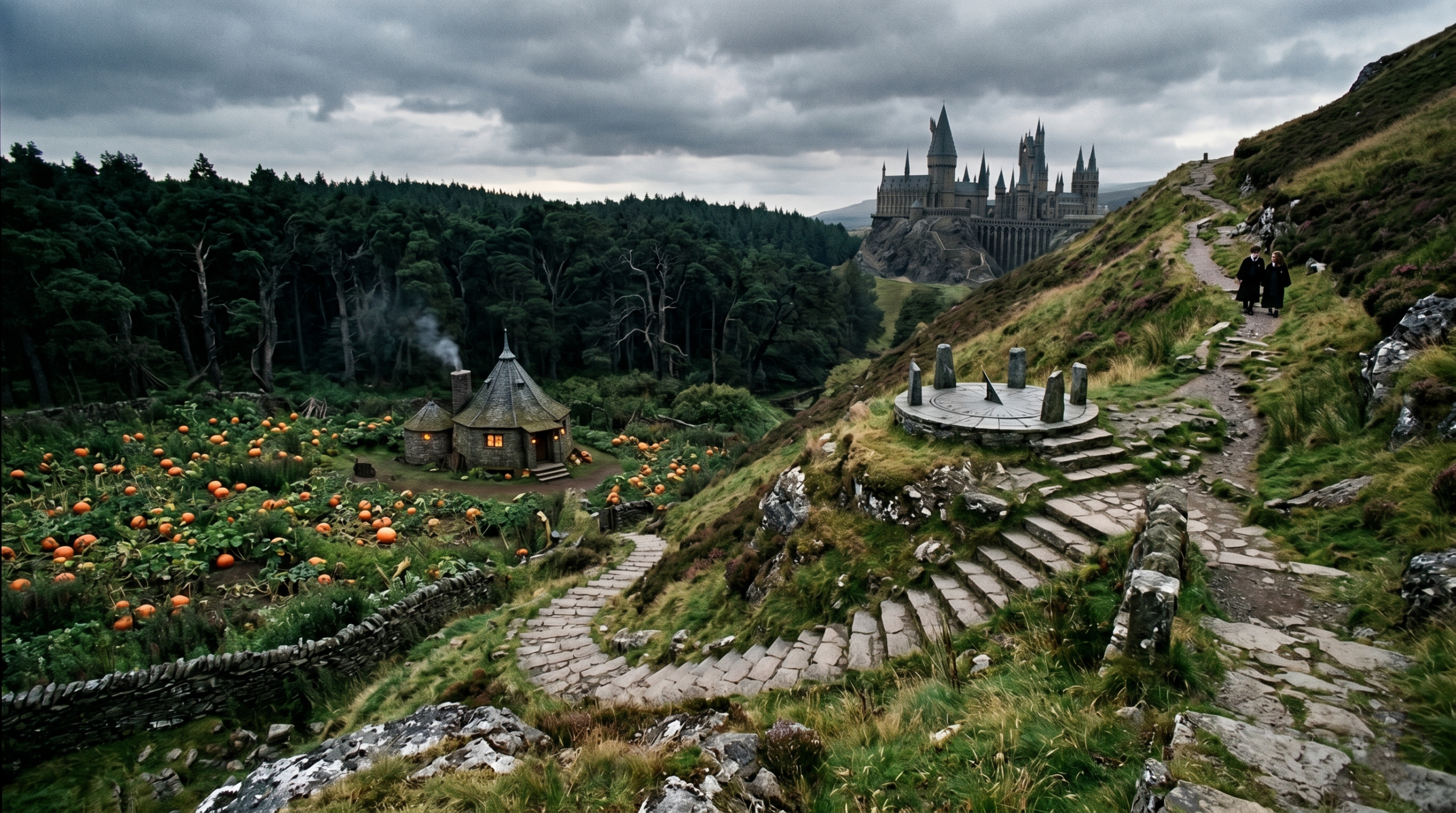
Pay close attention to the geography of the Hogwarts grounds in the first two films (Sorcerer’s Stone and Chamber of Secrets), directed by Chris Columbus. You will notice that Hagrid’s hut is located on a relatively flat, grassy patch of land directly adjacent to the castle’s Bell Towers and the Herbology Greenhouses. It feels like an immediate extension of the school.
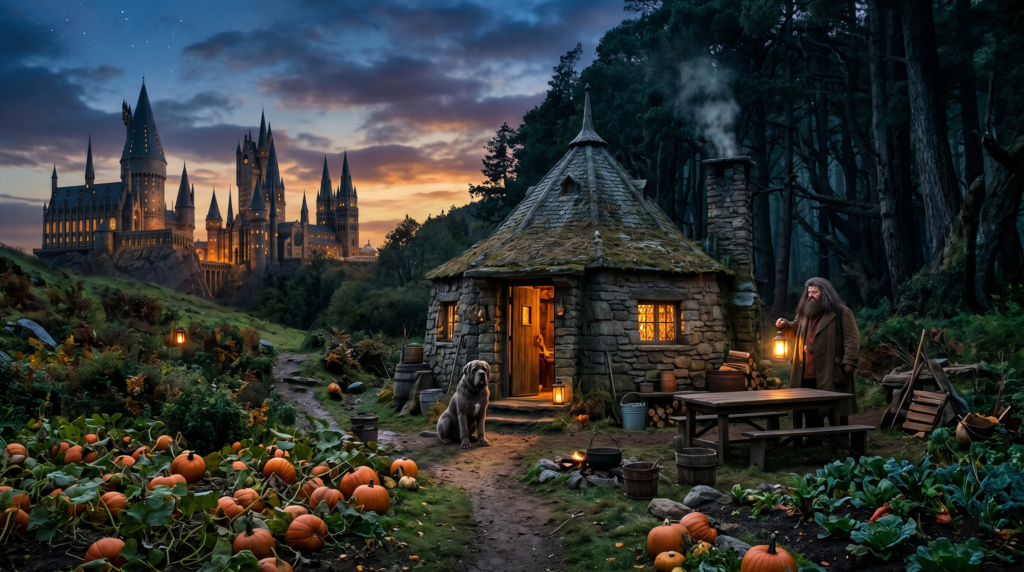
However, when director Alfonso Cuarón took over for Harry Potter and the Prisoner of Azkaban, the geography of Hogwarts was drastically reimagined to feel more isolated and perilous. Production designer Stuart Craig moved the hut entirely. Suddenly, it was situated far down a steep, rugged hillside, accessible only via a long stone staircase past the Sundial Garden, and surrounded by a sprawling pumpkin patch.
The In-Universe Theory: While this was purely a cinematic decision to allow for the dramatic framing of Buckbeak’s execution scene, fans have developed an in-universe theory to explain the shift. Many believe that when Dumbledore promoted Hagrid to the official post of Care of Magical Creatures professor in Harry’s third year, he granted Hagrid a larger, more secluded plot of land to accommodate his new teaching duties and the dangerous animals he would bring for his lessons.
 3. The One-Room vs. Two-Room Expansion
Just as the location shifted, the interior footprint of the house mysteriously expanded as the franchise progressed.
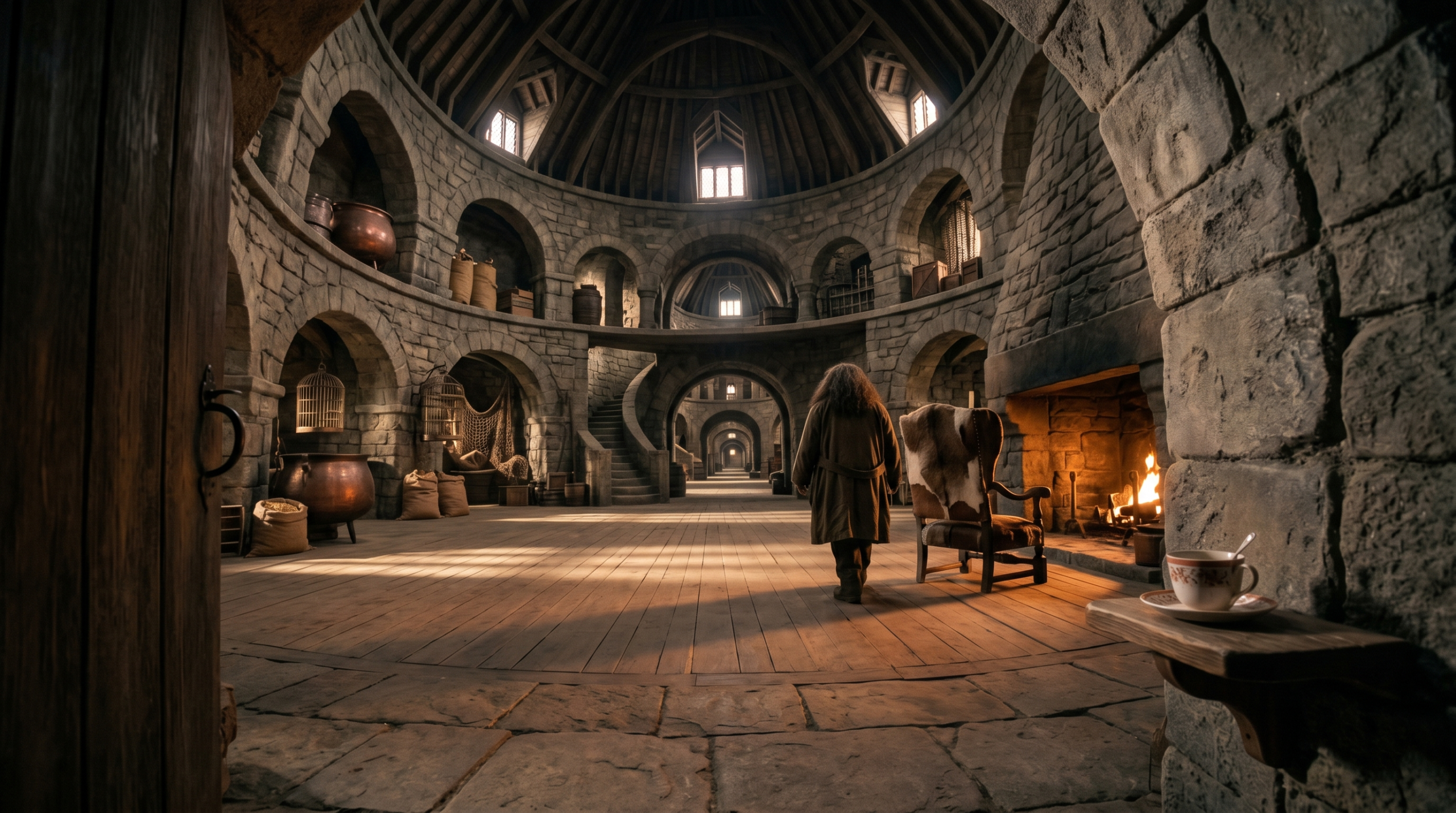
Initially, the dwelling was a single, cramped, circular room. The living area, dining table, fireplace, and Hagrid’s massive bed were all jammed into one space. This claustrophobic setup perfectly communicated Hagrid’s humble, lowly status as a mere groundskeeper.
By the third film, however, a noticeable addition was made to the set: a back room. A doorway was added to the main circular room, leading to a secondary chamber that served as Hagrid’s dedicated sleeping quarters. This subtle architectural upgrade made the space feel less like a temporary shack and more like a functional, permanent home fitting for a Hogwarts professor.
4. The Ceiling’s Bizarre Culinary Decor
When visualizing the interior, fans immediately think of the roaring fire and the giant, patchwork quilt. But a glance upward reveals a much more rugged, and slightly macabre, aesthetic.
The books describe the ceiling of the wooden cabin as being absolutely draped with hanging hams, dead pheasants, and various dried herbs. Hagrid was a true outdoorsman who lived off the land, foraging and hunting in the Forbidden Forest. This bizarre culinary decor served as a stark contrast to the magical, endless feasts magically appearing on the golden plates in the Great Hall. It was a visceral reminder of Hagrid’s survivalist nature.
While the movies toned down the dead animals slightly to maintain a family-friendly rating, the cinematic ceiling remained a cluttered mess of hanging ropes, garlic, root vegetables, and heavy iron cooking tools, reinforcing the chaotic energy of its inhabitant.
5. The Half-Blood Prince Fire: Who Actually Burned It Down?
One of the most heart-wrenching visual moments in the film adaptation of Harry Potter and the Half-Blood Prince is watching Bellatrix Lestrange gleefully set Hagrid’s beloved home ablaze after the tragic death of Albus Dumbledore.
However, book loyalists know that Bellatrix wasn’t the one who destroyed the hut. In the novel, during the chaotic Battle of the Astronomy Tower and the subsequent flight of the Death Eaters across the grounds, it was a hulking, brutish Death Eater named Thorfinn Rowle who yelled “Incendio!” and fired the spell at the cabin.
The cinematic change was made because Bellatrix was a far more established, recognizable, and hated villain for the movie audience. Giving her the destructive action amplified the emotional gut-punch for viewers, even if it strayed from the original text. Thankfully, Hagrid and Harry managed to save Fang from the flames, and the hut was eventually repaired.
6. The “Extension Charm” Theory: Fitting a Half-Giant
A lingering question has bothered analytical fans for years: How does an 11-foot-tall half-giant live comfortably in a dwelling that looks so small from the outside?
While Hagrid had to duck to enter the doorway, the interior always seemed suspiciously spacious enough to host Hagrid, Fang, three growing teenagers, and occasionally massive creatures like a hippogriff or a baby dragon.
This spatial paradox has led to the widely accepted fandom theory that Albus Dumbledore placed an Undetectable Extension Charm (Capacious extremis) on the interior of the hut. This is the exact same advanced spatial magic Arthur Weasley used on his flying Ford Anglia, and that Hermione Granger famously used on her small beaded bag in The Deathly Hallows. Applying this charm to the Gamekeeper’s lodge would perfectly explain how a half-giant could navigate his living room without constantly shattering his furniture.
 7. The Real-Life Replica You Can Actually Visit
For fans whose ultimate dream is to cross the threshold of this iconic location, that dream is a reality. You do not need to find platform nine and three-quarters; you just need a ticket to the Wizarding World of Harry Potter at Universal Studios (in Orlando, Florida, or Hollywood, California).
Nestled in the queue for the Flight of the Hippogriff family roller coaster sits an exact, meticulously crafted, to-scale replica of the stone version of Hagrid’s hut. As guests wind through the outdoor line, they pass through the famous pumpkin patch, see Buckbeak’s tethering post, and can hear the booming voice of Hagrid and the distinct, slobbery barks of Fang coming from inside the locked doors. It is a breathtaking piece of immersive theme park design that perfectly captures the scale and magic of the films.
A Tour of the Interior: Books vs. Movies
To truly appreciate the evolution of Hagrid’s home, we must look at how the written word was translated to the silver screen. Below is a definitive breakdown of the key differences between the original lore and the cinematic adaptation.
| Feature | The Books (Original Lore) | The Films (Cinematic Adaptation) |
| Building Material | Sturdy, heavy wood | Thick Scottish stone |
| Number of Rooms | One single, circular room | Expanded to two rooms (Post-Movie 3) |
| Location on Grounds | Directly on the absolute edge of the forest | Moved down a steep hillside via a stone staircase |
| Key Decor Elements | Oversized wooden table, hams/pheasants on ceiling | Cluttered cages, heavy iron tools, hanging herbs |
| The Fireplace | A large, open, roaring copper fire | A massive stone hearth with a heavy iron grate |
Expert Fan Insights: Why the Hut is a Masterclass in Set Design
Beyond the lore, the actual construction of the physical movie set deserves immense praise. The set designers employed a brilliant technique known as forced perspective to subconsciously tell a story to the audience.
The Power of Scale and Visual Storytelling
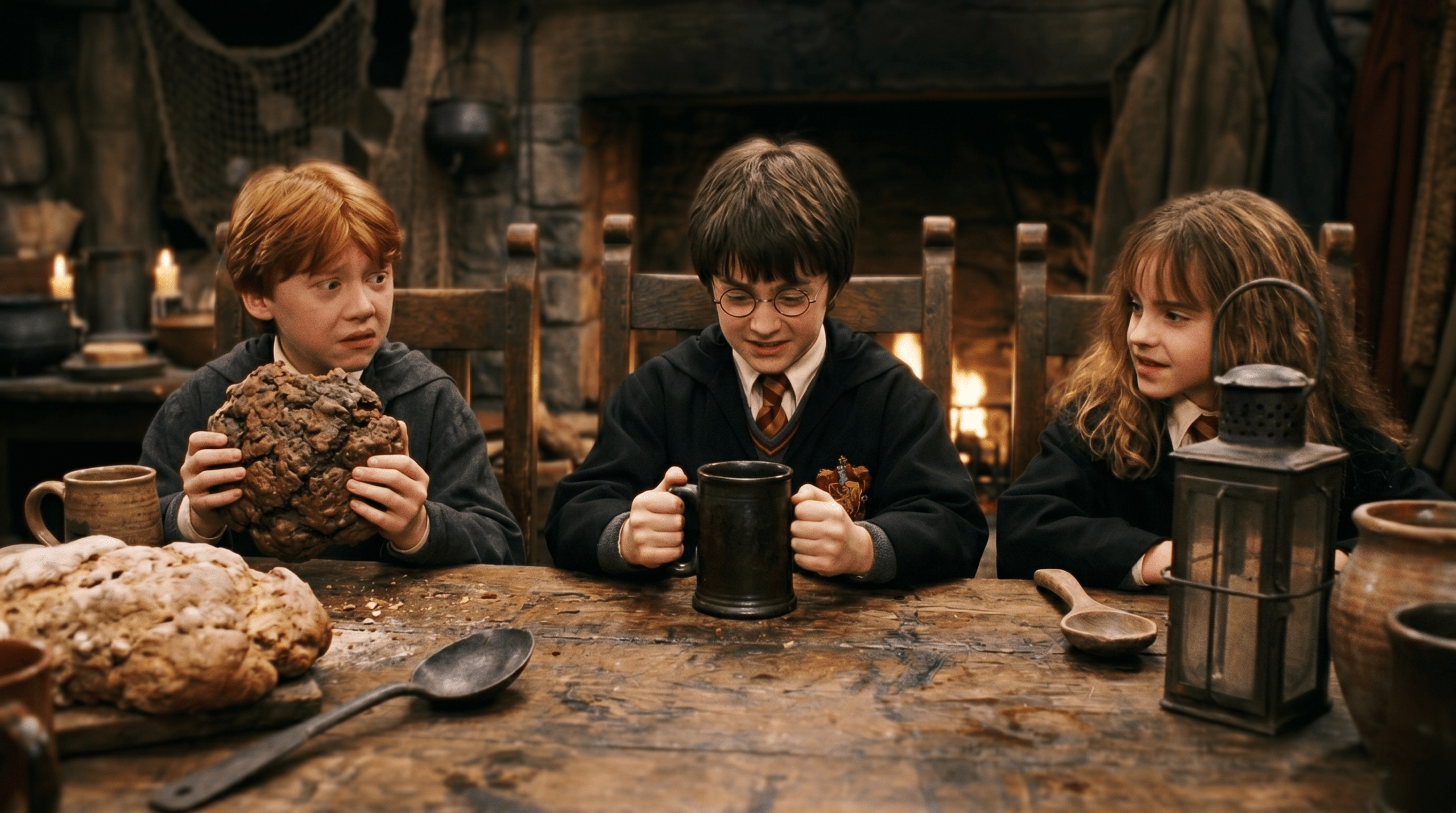
Everything inside the movie set was built in two completely different sizes. There was a set built specifically for actor Robbie Coltrane (Hagrid), where the furniture was sized normally to make him look like a standard human. Then, there was a secondary set built with massively oversized props—giant bucket-shaped mugs, colossal wooden chairs, and huge utensils.
When actors Daniel Radcliffe, Rupert Grint, and Emma Watson sat at the oversized table, they looked incredibly tiny. This wasn’t just a neat trick; it was brilliant visual storytelling. It constantly reminded the viewer that despite their bravery, Harry, Ron, and Hermione were just children navigating an impossibly large, dangerous, and overwhelming magical world.
 A Thematic Symbol of Safety
Thematically, the interior of the house represents a beacon of warmth. Contrast the cozy, glowing amber light of Hagrid’s fireplace with the cold, blue, terrifying mists of the Forbidden Forest looming outside the window. The forest housed Acromantulas, feral centaurs, and pureblood-supremacist dark wizards, yet the hut remained impenetrable to that darkness. It stood as a testament to the idea that love, loyalty, and a strong cup of tea (even if accompanied by a tooth-breaking rock cake) could provide armor against the darkest of forces.
Frequently Asked Questions (FAQs)
Where is Hagrid’s House located in Hogwarts?
It is located on the Hogwarts grounds, specifically situated as a buffer on the very edge of the Forbidden Forest. In the books, it sits on the flat lawns, but in the films (starting with The Prisoner of Azkaban), it sits down a steep, rugged hill past the Bell Towers and the Sundial Garden, surrounded by a large pumpkin patch.
Did Hagrid sleep in his hut?
Yes, the hut served as both his office and his primary residence. In the original books, his massive bed, covered with a heavy patchwork quilt, was tucked into the corner of the main single room. In the later film adaptations, the set was expanded, giving him a separate back room dedicated exclusively to his sleeping quarters.
Why is Hagrid’s hut stone in the movies but wood in the books?
The film’s production designers, led by Stuart Craig, changed the material from wood to stone because it made more architectural and visual sense. A stone structure looks more permanent, matches the aesthetics of the main castle, and practically, would be far better suited to withstand the harsh, freezing, and damp weather of the Scottish Highlands.
Who burned down Hagrid’s house?
This depends on the version of the story. In the Half-Blood Prince book, a Death Eater named Thorfinn Rowle sets it on fire while fleeing the school. In the film adaptation, the act is given to the more recognizable villain, Bellatrix Lestrange, to increase the emotional impact on the audience. In both versions, Hagrid survives and repairs the damage.
Hagrid’s House in Hogwarts is far more than just a background prop or a quirky piece of scenery; it is a dynamically changing piece of wizarding history that evolved alongside the characters who sought refuge within its walls. From the great debate over its building materials to the brilliant cinematic set design that emphasized the vulnerability of our heroes, the Gamekeeper’s lodge remains a masterclass in atmospheric world-building.
While the majestic halls of the castle offered grandeur, Hagrid’s humble home offered unconditional acceptance. It reminds every fan that in the wizarding world—just as in the Muggle world—a true home isn’t defined by its size or its pristine architecture, but by the warmth of the fire and the loyalty of the friend waiting inside to welcome you.