Imagine this: A teenage boy, handsome, charming, and eerily calm, stands in the depths of Hogwarts’ hidden Chamber of Secrets. He smiles at a frightened Harry Potter and calmly rearranges the letters of his own name—”Tom Marvolo Riddle”—to reveal the chilling truth: “I am Lord Voldemort.” In that single moment from Harry Potter and the Chamber of Secrets, J.K. Rowling delivered one of the series’ most shocking reveals, transforming the boy wizard’s adventure into something far darker. Harry Potter and the Chamber of Secrets Tom Riddle isn’t just a plot twist—it’s the first profound glimpse into the origins of the Dark Lord himself, delivered through a seemingly innocent diary that holds terrifying power.
For fans revisiting the series or diving deeper into Voldemort’s backstory, this book marks a pivotal shift. What begins as a mystery involving petrified students and mysterious messages on walls evolves into a chilling exploration of manipulation, immortality, and the choices that define good and evil. The diary isn’t mere backstory—it’s the prototype Horcrux, the first piece of Voldemort’s fractured soul, and the key to understanding why he became the monster who terrorized the wizarding world. In this comprehensive guide, we’ll unpack every layer: Tom Riddle’s tragic origins, the diary’s sinister mechanics, the 1943 Chamber opening, the 1992-1993 events, and how this story foreshadows the entire Horcrux saga. Whether you’re analyzing for the first time or seeking fresh insights after multiple reads, this deep dive reveals why Chamber of Secrets is far more essential—and darker—than many realize.
Who Was Tom Riddle? The Boy Before Voldemort
Tom Marvolo Riddle was born on December 31, 1926, under circumstances steeped in tragedy and dark magic. His mother, Merope Gaunt, was a descendant of Salazar Slytherin through the impoverished, inbred House of Gaunt. Desperate for love and escape from her abusive family, Merope used a love potion to ensnare the wealthy Muggle Tom Riddle Sr. from the village of Little Hangleton. The potion worked—until it wore off. When Riddle Sr. realized the truth, he abandoned his pregnant wife, returning to his Muggle life without a backward glance.
Merope, heartbroken and deprived of the potion’s effects, lost her will to live. She gave birth to her son in a London orphanage, named him Tom after his father, Marvolo after her own father, and Riddle as her surname, then died within the hour. Her dying wish was that her son would resemble his father— a cruel irony, as young Tom grew up looking strikingly like the Muggle who rejected him.
Raised in Wool’s Orphanage, Tom displayed early signs of extraordinary abilities: he could make things move without touching them, speak to animals, and inflict pain on others who crossed him. He hoarded small “trophies” from his victims—symbols of control and power that foreshadowed his later obsession with collecting Horcruxes. When Albus Dumbledore visited the eleven-year-old in 1938, Tom learned he was a wizard. Yet even then, his charm masked a profound lack of empathy; he showed no remorse for his cruelties and viewed magic as a tool for domination.
At Hogwarts, sorted into Slytherin, Tom excelled academically and charmed teachers and peers alike. He uncovered his heritage as Slytherin’s true heir, mastered Parseltongue (the ability to speak to snakes), and began his quest for ultimate power. His hatred of Muggles stemmed from his father’s abandonment and his mother’s weakness, driving him to reject his half-blood status and embrace pure-blood supremacy—despite being half-blood himself.
What makes young Tom so compelling is his duality: outwardly charismatic and brilliant, inwardly cold and manipulative. Unlike the noseless, fear-inducing Voldemort of later books, the teenage Riddle is relatable—handsome, intelligent, and seemingly vulnerable. This contrast makes his descent into darkness all the more tragic and terrifying.
The First Opening of the Chamber of Secrets – 50 Years Before Harry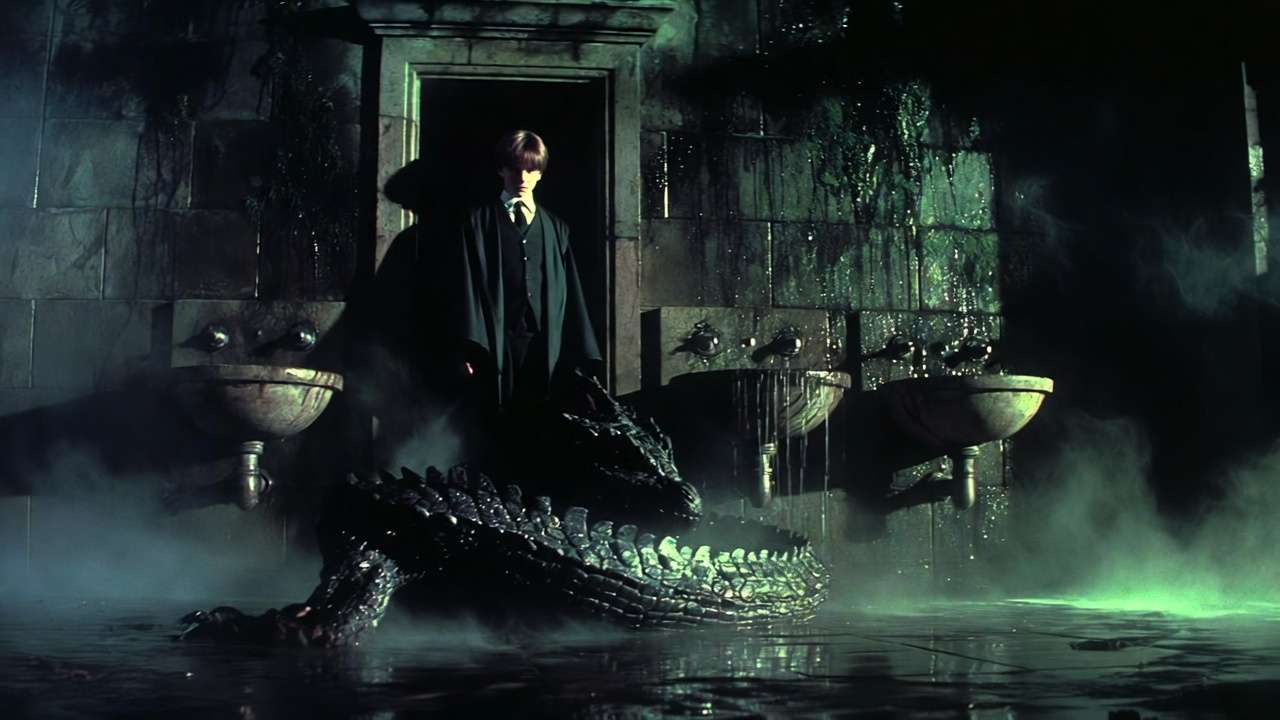
The legend of the Chamber of Secrets dates back to Hogwarts’ founding around 990 AD. Salazar Slytherin, fearing Muggle-born witches and wizards (“Mudbloods”), built a hidden chamber containing a monster to purge the school of those he deemed unworthy. Only his true heir could open it.
Tom Riddle, in his fifth year (1942–1943), located the entrance in a girls’ bathroom haunted by Moaning Myrtle. Using Parseltongue, he commanded the Basilisk—a giant serpent whose gaze kills—to emerge. His goal: cleanse Hogwarts of Muggle-borns, proving his superiority as Slytherin’s heir.
The attacks began subtly. Myrtle Warren, a Muggle-born student, was the first (and only) fatality when the Basilisk petrified her to death in a bathroom stall. Riddle framed Rubeus Hagrid, then a third-year student, whose pet Acromantula (Aragog) was blamed for the attacks. Hagrid was expelled, his wand snapped, preserving the Chamber’s secret and Riddle’s reputation.
Why stop after one murder? Riddle feared exposure under Dumbledore’s watchful eye. Closing the Chamber preserved his future ambitions—he planned to return later, more powerful. He preserved a sixteen-year-old version of himself in a diary, enchanted to reopen the Chamber when the right conditions arose.
This 1943 timeline parallels the 1992–1993 events eerily: petrifications, a Basilisk, Hagrid’s near-expulsion again, and a young hero confronting the same darkness.
Tom Riddle’s Diary – The First Horcrux Explained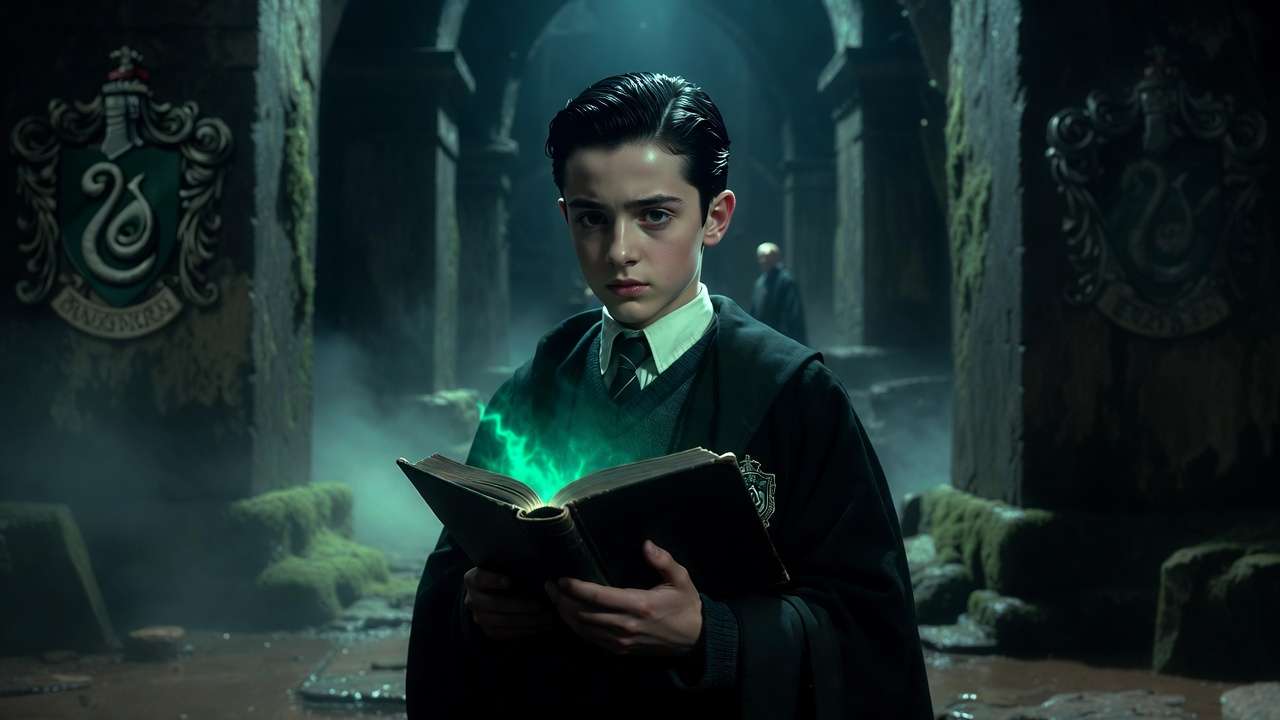
The diary is no ordinary object—it’s Voldemort’s first Horcrux, created in 1943 shortly after Myrtle’s murder. A Horcrux is an object in which a wizard hides a fragment of their soul to achieve immortality; the act requires murder to rip the soul and a spell to encase the piece.
Myrtle’s death provided the necessary murder. Riddle chose a plain, Muggle-made diary—ordinary yet personal, bought from a shop, symbolizing his rejection of Muggle roots while using one as a vessel.
The diary’s unique properties set it apart from later Horcruxes. It absorbs ink and emotions from the writer, growing stronger by feeding on fears, secrets, and life force. It manifests as a lifelike memory of sixteen-year-old Tom Riddle—charming, persuasive, and capable of possession. Ginny Weasley poured her soul into it, allowing the fragment to drain her vitality, possess her body, and control the Basilisk remotely.
Unlike passive Horcruxes (ring, locket, cup), the diary is active and weaponized—designed to reopen the Chamber and potentially resurrect Riddle if it gained enough strength. Basilisk venom, a substance capable of destroying Horcruxes, ultimately dooms it when Harry stabs the book with a fang.
Rowling introduced Horcruxes subtly here; readers miss the full implication on first read, but it retroactively darkens the series. The diary proves Voldemort’s soul was already fractured before his first defeat.
The 1992–1993 Plot – How the Diary Reopens the Chamber
Fifty years after Tom Riddle first opened the Chamber, the diary found its way back into Hogwarts thanks to a calculated act of malice. Lucius Malfoy, a fervent pure-blood supremacist and former Death Eater, slipped the enchanted diary into Ginny Weasley’s cauldron during a chance encounter at Flourish and Blotts in Diagon Alley. His motives were twofold: to discredit Arthur Weasley (whose Muggle Protection Act threatened the Malfoy family’s influence) and to undermine Albus Dumbledore, whose return as Headmaster threatened Lucius’s political maneuvering on the Hogwarts Board of Governors.
Ginny, only eleven and already insecure, began confiding her fears, crushes, and secrets to the diary. Tom Riddle’s memory fragment responded with perfect empathy—mirroring her emotions, offering comfort, and slowly draining her vitality. As Ginny grew weaker and paler, the diary gained strength. Eventually, it possessed her completely, using her body to reopen the Chamber of Secrets and unleash the Basilisk once more.
The attacks unfolded with terrifying precision:
- First victim: Colin Creevey, a first-year Gryffindor and enthusiastic photographer, petrified near the library.
- Second: Justin Finch-Fletchley, a Muggle-born Hufflepuff, found petrified alongside Nearly Headless Nick (a ghost, immune to death but frozen in a state of near-death).
- Third: Hermione Granger and Penelope Clearwater, petrified together while investigating in the library.
- Fourth: Ginny herself, taken into the Chamber as the final sacrifice to fully revive the memory of Tom Riddle.
Harry, Ron, and Hermione pieced together the clues methodically. Hermione’s research identified the creature as a Basilisk (a serpent killed by indirect eye contact or roosters’ crowing) and confirmed the entrance in Moaning Myrtle’s bathroom. The Polyjuice Potion debacle (in which Harry and Ron briefly became Crabbe and Goyle) failed to extract information from Draco Malfoy but highlighted the school’s rising paranoia. Hagrid’s arrest—again—came after Cornelius Fudge and Lucius Malfoy arrived to close the school, with Aragog’s testimony in the Forbidden Forest providing the final confirmation that the monster was not an Acromantula.
The turning point arrived when Harry heard the Basilisk’s hissing voice through the walls, revealing his own Parseltongue ability—a gift he shared with Tom Riddle. This moment deepened Harry’s fear that he might somehow be connected to the heir of Slytherin.
The Climax in the Chamber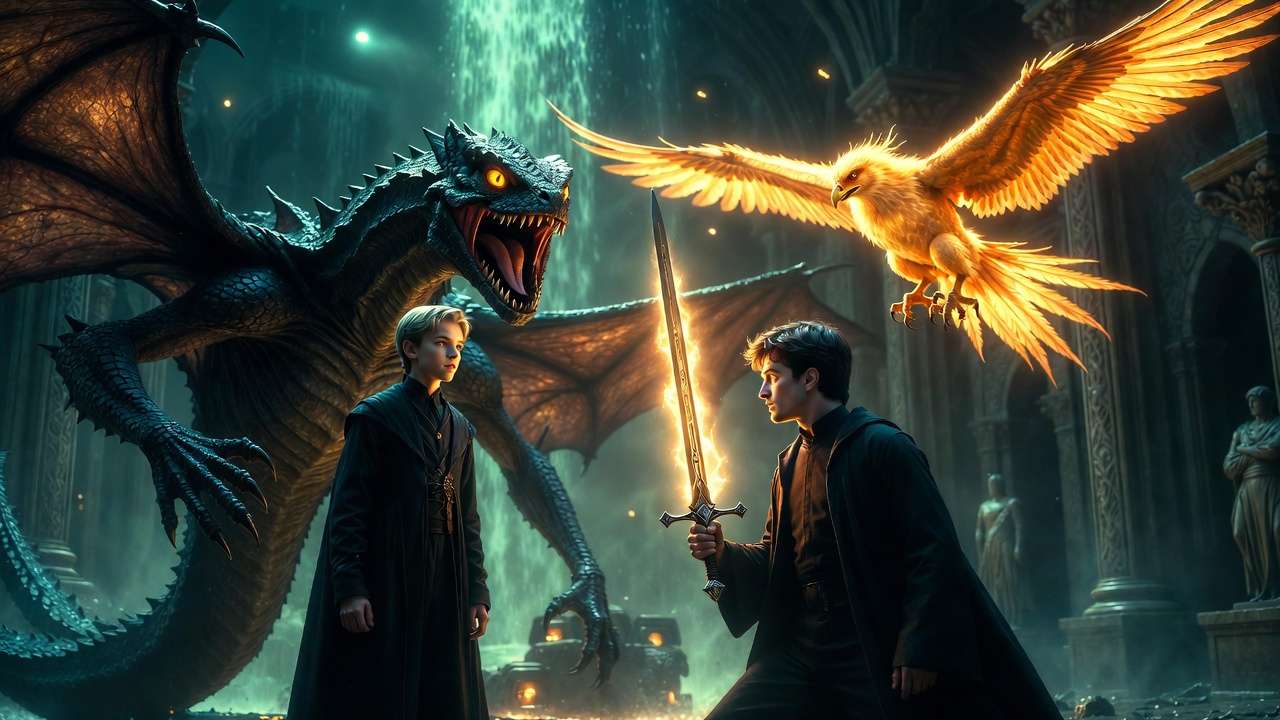
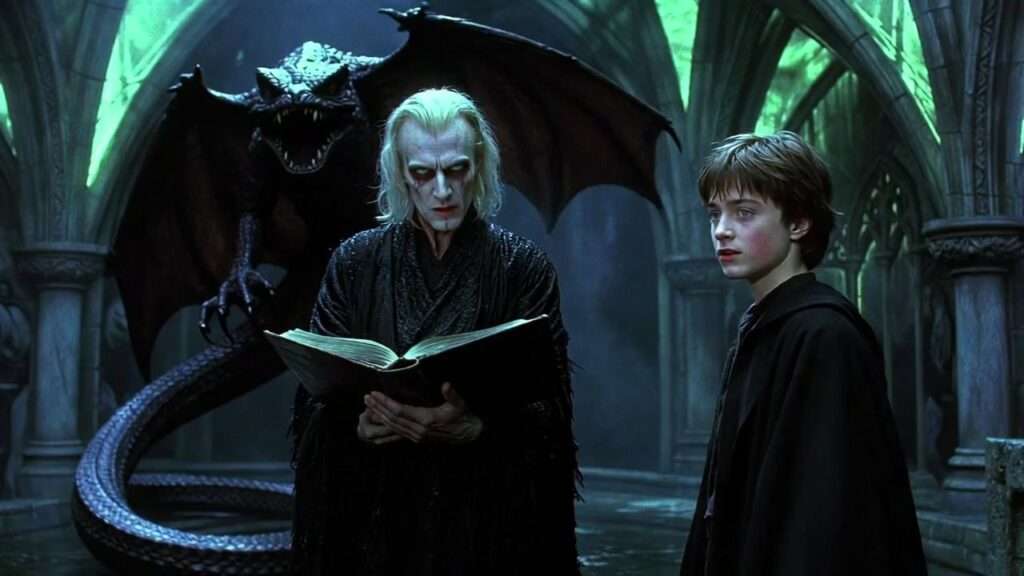
Guided by Fawkes the phoenix and the Sorting Hat (which produced Godric Gryffindor’s sword), Harry descended into the Chamber through the sink in Myrtle’s bathroom. There he found Ginny unconscious, her life force nearly depleted, and Tom Riddle—fully corporeal, handsome, and sixteen years old—standing triumphantly beside the Basilisk.
Riddle revealed his plan: he intended to possess Harry or kill him, using Ginny’s fading life to regain full strength. The confrontation was both physical and psychological:
- The Basilisk attacked; Fawkes blinded it with his tears (whose healing properties later saved Harry from venom).
- Harry, armed with the Sword of Gryffindor, slew the Basilisk by driving the blade through its mouth—only to be bitten himself.
- In a final act of defiance, Harry stabbed the diary with one of the Basilisk’s fangs, destroying the Horcrux and releasing a flood of ink-like soul essence. Riddle’s memory screamed and dissolved, freeing Ginny.
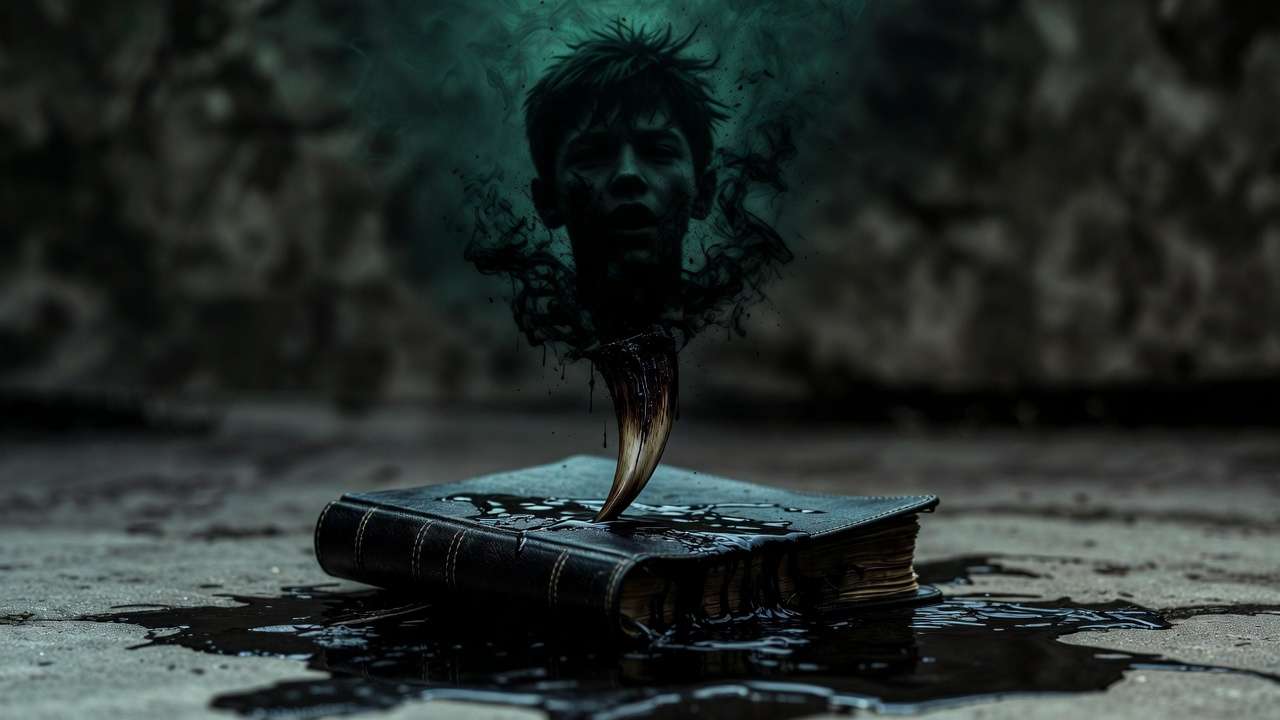 Harry’s survival hinged on several key elements: Fawkes’s tears (a phoenix’s tears heal Basilisk venom), the Sword of Gryffindor (imbued with Basilisk venom, capable of destroying Horcruxes), and—most importantly—Harry’s genuine concern for Ginny, a selfless act of love that echoed Lily Potter’s sacrifice and protected him once again from Voldemort’s malice.
The Shocking Reveal – “I Am Lord Voldemort”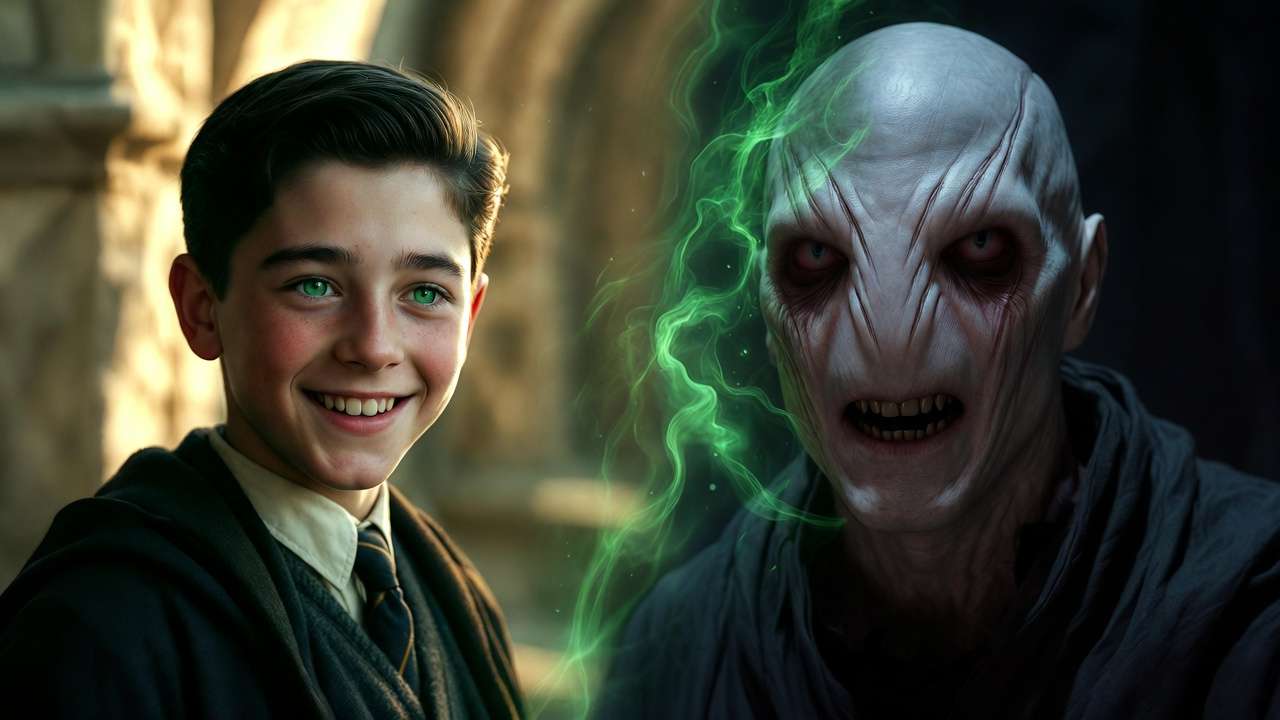
The anagram moment remains one of the most iconic twists in children’s literature. When Harry asked the name of the boy who had tormented Ginny, Riddle rearranged the letters of “Tom Marvolo Riddle” into “I am Lord Voldemort.” The act was symbolic: by discarding “Tom” (his father’s name) and “Marvolo” (his mother’s father), Riddle fully rejected his Muggle and Gaunt heritage, embracing the invented persona of pure-blood supremacy.
Riddle’s arrogance shone through in this scene. He toyed with Harry, curious about the boy who had survived the Killing Curse as an infant. He underestimated Harry’s courage, resourcefulness, and the protective power of love—mistakes that would prove fatal in the final book.
This reveal serves a dual purpose: it humanizes Voldemort by showing his origins as a lonely, brilliant, and deeply damaged child, while simultaneously stripping away any sympathy. His choices—murder, manipulation, rejection of love—made him the monster he became.
Themes and Deeper Analysis – What Chamber of Secrets Reveals About Voldemort
At its core, Chamber of Secrets is a meditation on choice versus destiny. Dumbledore’s famous line to Harry—“It is our choices, Harry, that show what we truly are, far more than our abilities”—directly contrasts Harry and Riddle. Both were orphans, both Parselmouths, both Slytherin material. Yet Harry chose friendship, loyalty, and courage; Riddle chose power, hatred, and immortality at any cost.
The book also explores fear of death. Riddle’s first Horcrux was born from a desperate need to avoid mortality—the same fear that drove him to create six more and ultimately led to his downfall.
Ginny’s possession offers a subtle but powerful metaphor for emotional abuse and gaslighting. Riddle exploited her insecurities, made her doubt herself, and used her body against her will—parallels that resonate far beyond the wizarding world.
Finally, Chamber of Secrets marks the tonal shift in the series. The whimsy of Philosopher’s Stone gives way to genuine horror: petrification, murder, possession, and the realization that evil wears a charming face.
Connections to the Larger Harry Potter Series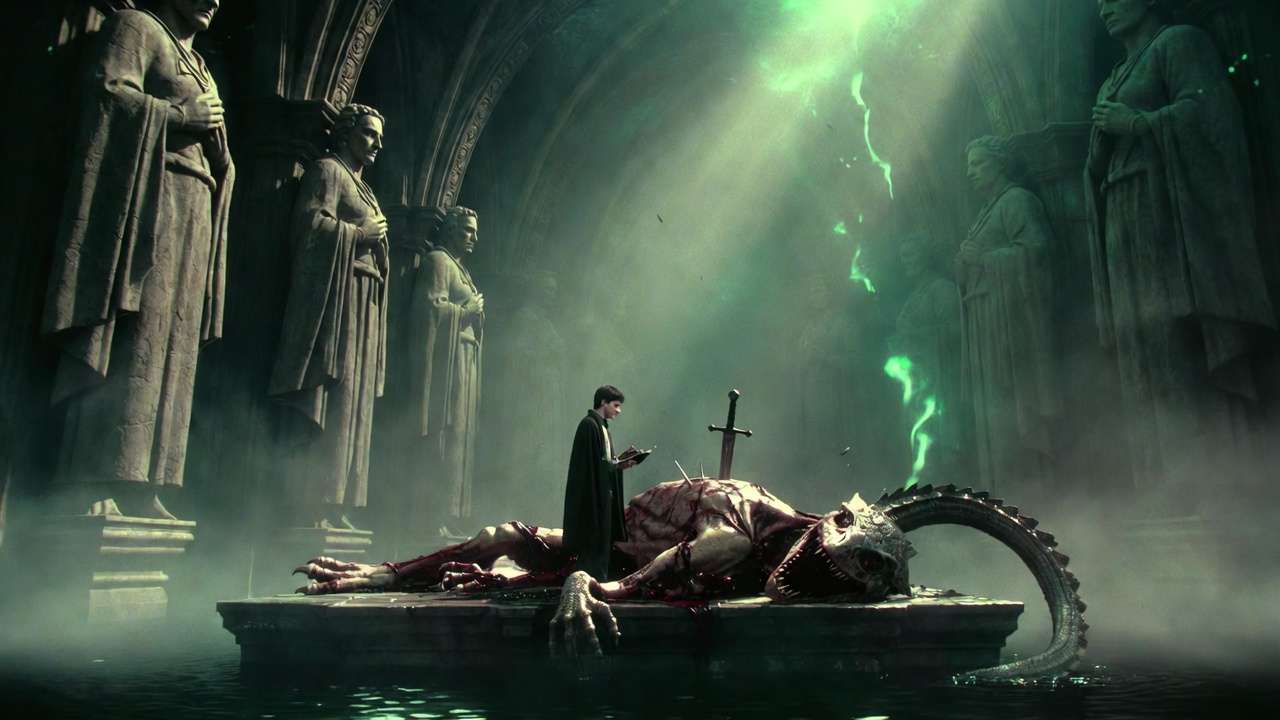
The diary is the roadmap to the Horcrux hunt. Its destruction by Basilisk venom establishes a key vulnerability exploited later with the sword, Nagini, and the cup. Harry’s unintentional status as a Horcrux—created when Voldemort’s curse rebounded—mirrors the diary’s parasitic nature.
Harry’s Parseltongue ability, once a source of fear, becomes a tool for good. His ability to speak to snakes allows him to locate the locket in the cave, open the Chamber again in Deathly Hallows, and ultimately understand Voldemort’s mind.
The Chamber itself reappears in the final book when Harry returns to destroy the final fragments of Voldemort’s soul, closing the circle that began in 1992.
FAQs About Harry Potter and the Chamber of Secrets Tom Riddle
1. How exactly did the diary survive for fifty years without being destroyed? The diary was an exceptionally stable Horcrux. Unlike living beings or fragile objects, it required no external sustenance to preserve the soul fragment inside. Tom Riddle enchanted it with powerful dark magic that allowed it to remain dormant yet potent for decades. It only began to “awaken” and exert influence once someone wrote in it with genuine emotion—Ginny’s fears, guilt, and secrets provided the fuel it needed to regain strength. This dormancy explains why it could sit in Lucius Malfoy’s possession for years without incident until he deliberately planted it.
2. Why didn’t Tom Riddle recognize that Harry was carrying a piece of Voldemort’s soul (an unintentional Horcrux)? At the time of Chamber of Secrets, neither Harry nor Riddle knew about the accidental Horcrux created when Voldemort’s Killing Curse rebounded in 1981. The soul fragment inside Harry was deeply buried and protected by Lily’s sacrificial love magic. Riddle’s memory fragment in the diary was only sixteen years old—frozen before Voldemort’s first major defeat and before he fully understood the complexities of soul-splitting. He sensed a powerful magical connection to Harry (the shared Parseltongue ability and scar link), but he misinterpreted it as mere similarity rather than a literal piece of his own soul.
3. What are the biggest differences between the book and the film regarding Tom Riddle and the Chamber?
- The diary’s possession of Ginny is more gradual and psychologically detailed in the book. We see Ginny’s handwriting changing, her memory gaps, and her terror—elements largely condensed or omitted in the film.
- The confrontation in the Chamber is longer and more dialogue-heavy in the book. Riddle toys with Harry, explains more of his backstory, and attempts to manipulate him further before the fight begins.
- Fawkes’s role is slightly expanded in the book: his tears heal Harry from the Basilisk bite, and he carries both Harry and Ginny out of the Chamber.
- The film omits several petrification victims (e.g., Penelope Clearwater) and simplifies the mystery-solving process.
4. Was Tom Riddle evil from childhood, or did circumstances make him that way? Rowling presents a nuanced picture. Tom displayed cruelty and a lack of remorse even as a young child in the orphanage—stealing, frightening other children, and collecting trophies from his misdeeds. However, his environment (abandonment, institutional neglect, no love or moral guidance) amplified his worst tendencies. Dumbledore notes that Tom was already choosing darkness before Hogwarts. The series ultimately argues that while circumstances shape us, our choices define us—Riddle consistently chose power over empathy.
5. Why did Lucius Malfoy give away such a valuable Dark object? Lucius didn’t fully understand the diary’s true nature. He knew it was a powerful Dark artifact connected to the Chamber of Secrets, but he believed it was simply a tool to embarrass Arthur Weasley and Dumbledore. He never suspected it contained a piece of Voldemort’s soul. Had he known, he likely would have guarded it more carefully—especially since Voldemort’s return would have made Lucius one of the first people held accountable for losing such a precious Horcrux.
6. How does the Chamber of Secrets event connect directly to Harry being a Horcrux? The diary is the only Horcrux Harry destroys before learning what Horcruxes are. Its destruction by Basilisk venom establishes the method that will later destroy the cup, the locket (via the sword), Nagini, and—crucially—the fragment inside Harry himself when Voldemort casts Avada Kedavra for the second time in the Forbidden Forest. The Chamber scene is therefore the first demonstration of how Voldemort can be permanently defeated.
When Harry Potter first opened Tom Riddle’s diary, he had no idea he was holding the key to understanding the greatest Dark wizard of all time. What seemed like a teenage confession became the shocking truth: “I am Lord Voldemort.” In Harry Potter and the Chamber of Secrets, J.K. Rowling masterfully transforms a school mystery into the origin story of pure evil—while simultaneously planting the seeds for Harry’s eventual victory.
Tom Riddle was not born a monster. He was shaped by rejection, ambition, and a profound fear of death, then chose—again and again—to feed that fear by tearing his soul apart. The diary stands as proof that Voldemort’s quest for immortality came at the cost of his humanity long before Harry was even born.
Yet the same book offers hope. Harry’s choices—loyalty to friends, compassion for Ginny, courage in the face of death—mirror the opposite path. Dumbledore’s words ring truer than ever: it is our choices that show what we truly are.
For fans who return to Chamber of Secrets after finishing the series, the story takes on new weight. Every petrification, every whisper in the walls, every drop of ink becomes part of a larger tragedy and triumph. The boy in the diary is no longer just a villain—he is the cautionary tale at the heart of the entire wizarding world.
Re-read it with fresh eyes. Notice the clues Rowling hid in plain sight. And remember: the most shocking truth isn’t that Tom Riddle became Lord Voldemort. It’s that he chose to.