
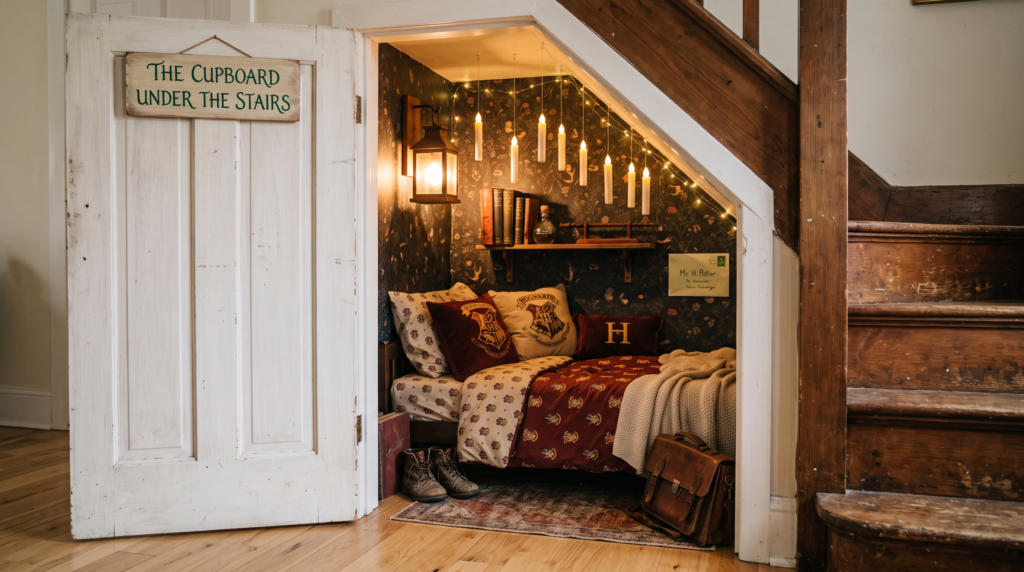
Every Potterhead remembers the iconic address: 4 Privet Drive, Little Whinging, Surrey. But more specifically, fans remember the cramped, dusty cupboard where a young wizard’s journey to Hogwarts began. What was once seen as a dreary punishment in the books has evolved into a massive, highly sought-after interior design trend. If you are tired of using the awkward area beneath your staircase to hoard old winter coats and broken vacuums, we are going to show you exactly how to transform that wasted space. In this comprehensive guide, you will learn how to build a stunning Harry Potter bedroom under stairs.
Drawing on insights from licensed carpenters, interior designers, and die-hard Wizarding World fans, this guide goes beyond basic movie trivia. We will walk you through essential safety protocols, step-by-step construction, and magical design secrets to help you create a cozy, functional nook for your kids, your pets, or even yourself.
Grab your wand (and your tool belt)—it is time to create some magic.
Before You Demolish: Planning and Safety First
When dealing with structural home renovations, enthusiasm must be paired with expertise. Before you grab a sledgehammer to open up your drywall, you must understand the anatomy of your staircase. Treating this project with professional care ensures your new magical space is as safe as it is enchanting.
Assessing Your Staircase Structure
Not all under-stair spaces are created equal. Your first task is to determine what is behind the drywall.
-
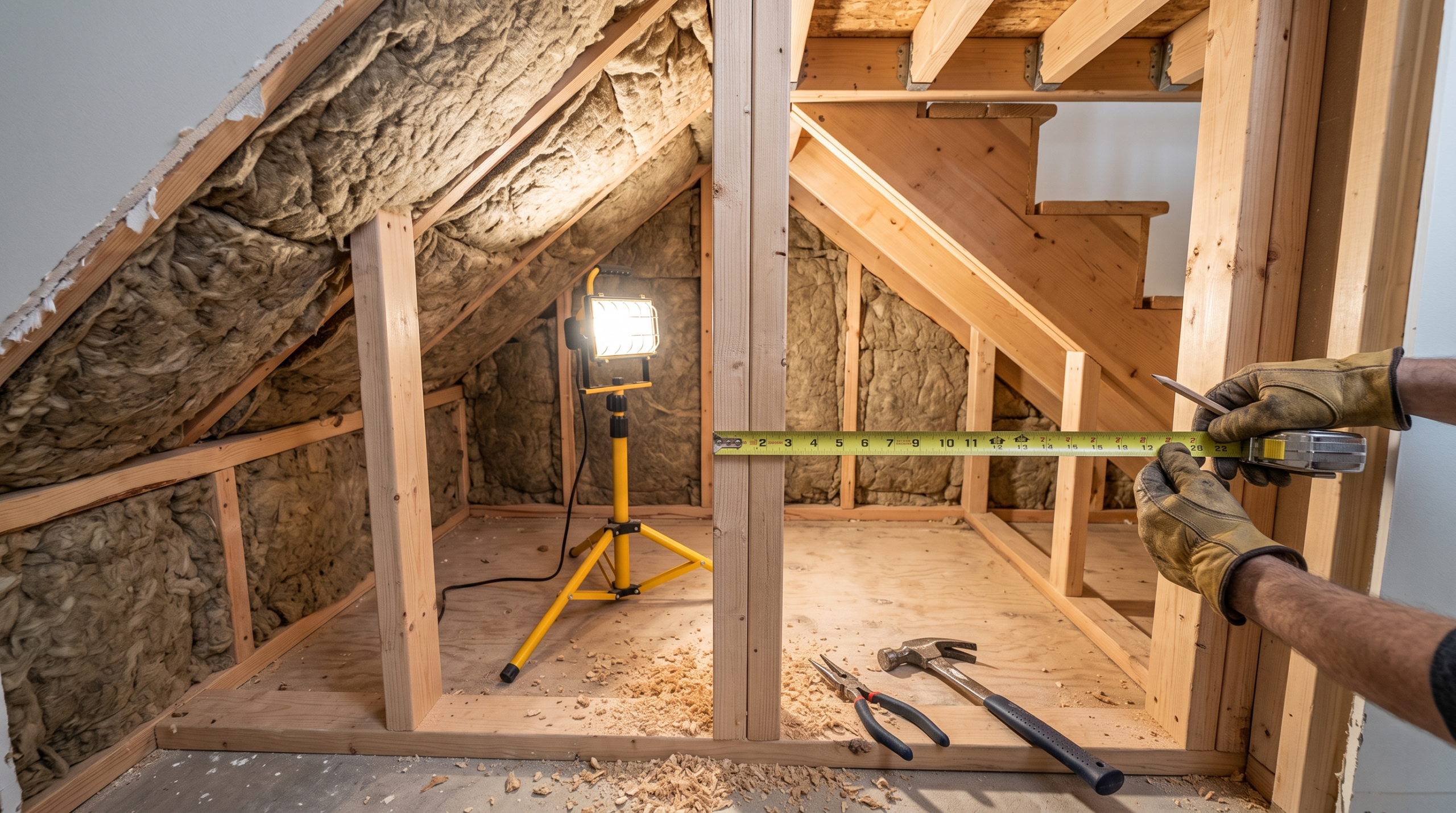
Load-Bearing Elements: A staircase is a heavy, high-traffic structural component of your home. Use a high-quality stud finder to map out the framing behind the drywall. You will likely find vertical studs supporting the stairs above. Never cut or remove load-bearing timber without consulting a structural engineer. Your goal is to work between the structural supports or safely open the non-load-bearing drywall panels.
-
Clearance and Angles: Measure the maximum head clearance at the highest point and the usable floor space at the lowest slope. This will dictate whether the space is best suited for a small child’s bed, a seated reading nook, or a pet bed.
 Essential Safety Considerations
Because a cupboard under the stairs is a highly enclosed space, safety is the ultimate priority.
-
Ventilation is Non-Negotiable: A sealed-off, tiny room will quickly become stuffy and uncomfortable, posing a suffocation or overheating risk, especially for children or pets. You must plan for airflow. We highly recommend installing a louvered door (which features horizontal wooden slats to let air pass through) or cutting in a small, stylish air return vent at the baseboard level.
-
Electrical and Fire Safety: You will want lighting in your Harry Potter bedroom, but under no circumstances should an amateur DIYer attempt to hardwire new electrical outlets into an enclosed space. Improper wiring is a severe fire hazard. Expert advice: Hire a licensed electrician if you want standard wall outlets. Alternatively, you can easily bypass this by relying strictly on high-quality, battery-operated LED lighting, which is perfectly safe and highly effective.
Drafting Your Blueprint
Before buying materials, sketch a to-scale floor plan. Measure the exact length and width of the floor area to determine if a standard toddler mattress will fit, or if you will need to cut a custom piece of high-density memory foam. Having a blueprint prevents material waste and keeps your budget on track.
The Build: Step-by-Step Construction Guide
Once you have verified the structural integrity and mapped out your design, the physical transformation begins.
Step 1: Clearing and Prepping the Space
Begin by scoring the drywall carefully with a utility knife before removing it; this prevents the paper backing from tearing up your exterior walls.
-
Remove the drywall carefully, checking for hidden plumbing pipes or existing electrical wires.
-
Clear out all construction debris, dust, and any stray nails.
-
Insulation: Staircases are notoriously noisy. When people walk up and down, it will echo directly into the cupboard. Pack the exposed ceiling and wall cavities with sound-dampening acoustic insulation (like Roxul or mineral wool) to muffle the footsteps above.
Step 2: Framing and Drywalling the Interior
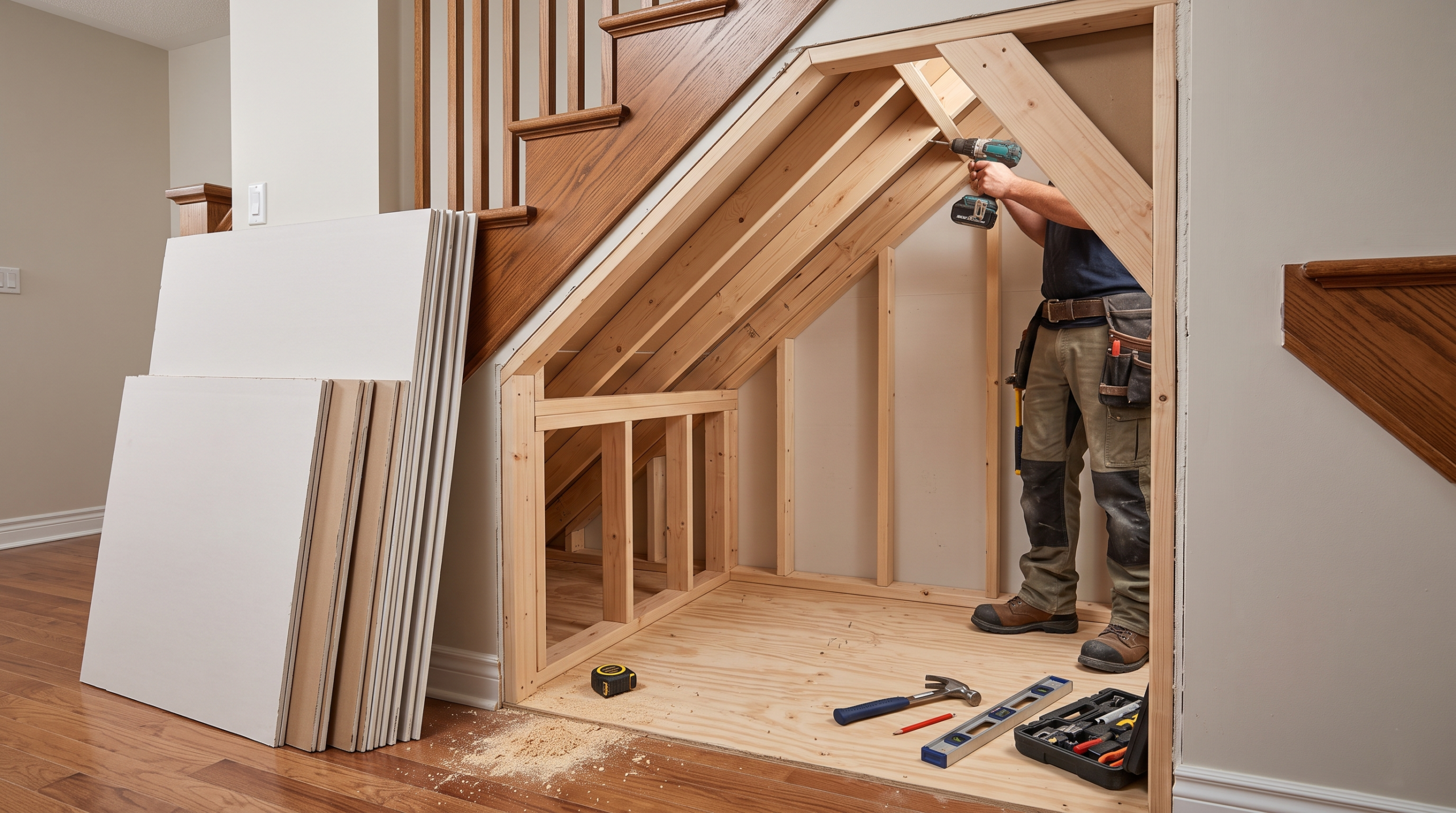
If the interior of your under-stair space is just exposed studs, you will need to finish it to make it a livable room.
-
Measure and cut drywall sheets to fit the awkward, sloped angles of the staircase underside.
-
Screw the drywall into the studs, tape the seams with fiberglass mesh, and apply a smooth layer of joint compound (mud).
-
Once dried, sand the walls completely smooth. Apply a coat of high-quality indoor primer. This is crucial, as enclosed spaces can hold onto musty smells; a good primer seals the walls perfectly.
 Step 3: Installing the Door
The door is the gateway to your magical realm. You have a few fantastic options here depending on your skill level:
-
The Classic Privet Drive Look: Source a traditional, white wooden panel door. You can often find half-sized or custom-cut doors at architectural salvage yards to fit the angled entryway.
-
The Hidden “Room of Requirement” Door: For a more advanced DIY project, install a custom bookshelf that operates on heavy-duty hidden hinges. When closed, it looks like a standard hallway bookcase; when pushed, it reveals the hidden bedroom.
Step 4: Flooring Solutions
Because the square footage is so small, you can afford to use premium flooring off-cuts or remnants.
-
For Kids: Interlocking foam play mats covered by a plush, high-pile area rug offer the safest and most comfortable option.
-
For Aesthetics: Rustic hardwood laminates or luxury vinyl plank (LVP) in a dark oak finish will give the space an old-world, Hogwarts-castle feel.
Magical Interior Design: Decorating Your Harry Potter Nook
With the drywall painted and the floors laid, the real fun begins. Decorating is where you transform a basic closet into a true wizarding sanctuary.
Choosing a Hogwarts-Inspired Color Palette
Move away from basic white and embrace the rich, atmospheric tones of the Wizarding World.
-
House Colors: Dedicate the room to your favorite Hogwarts House. Use deep Gryffindor crimson and gold, earthy Hufflepuff yellow and charcoal, intelligent Ravenclaw bronze and navy, or ambitious Slytherin emerald green and silver.
-
Castle Aesthetics: If you prefer a neutral look, paint the walls a warm, rustic stone gray. You can also apply a high-quality, peel-and-stick brick wallpaper to one accent wall to instantly evoke the feeling of standing in the middle of Diagon Alley or Platform 9 ¾.
 Lighting the Cupboard Without Fire
Lighting is the most crucial element in setting a magical mood. Since you are in a small space, harsh overhead lighting will ruin the ambiance.
-
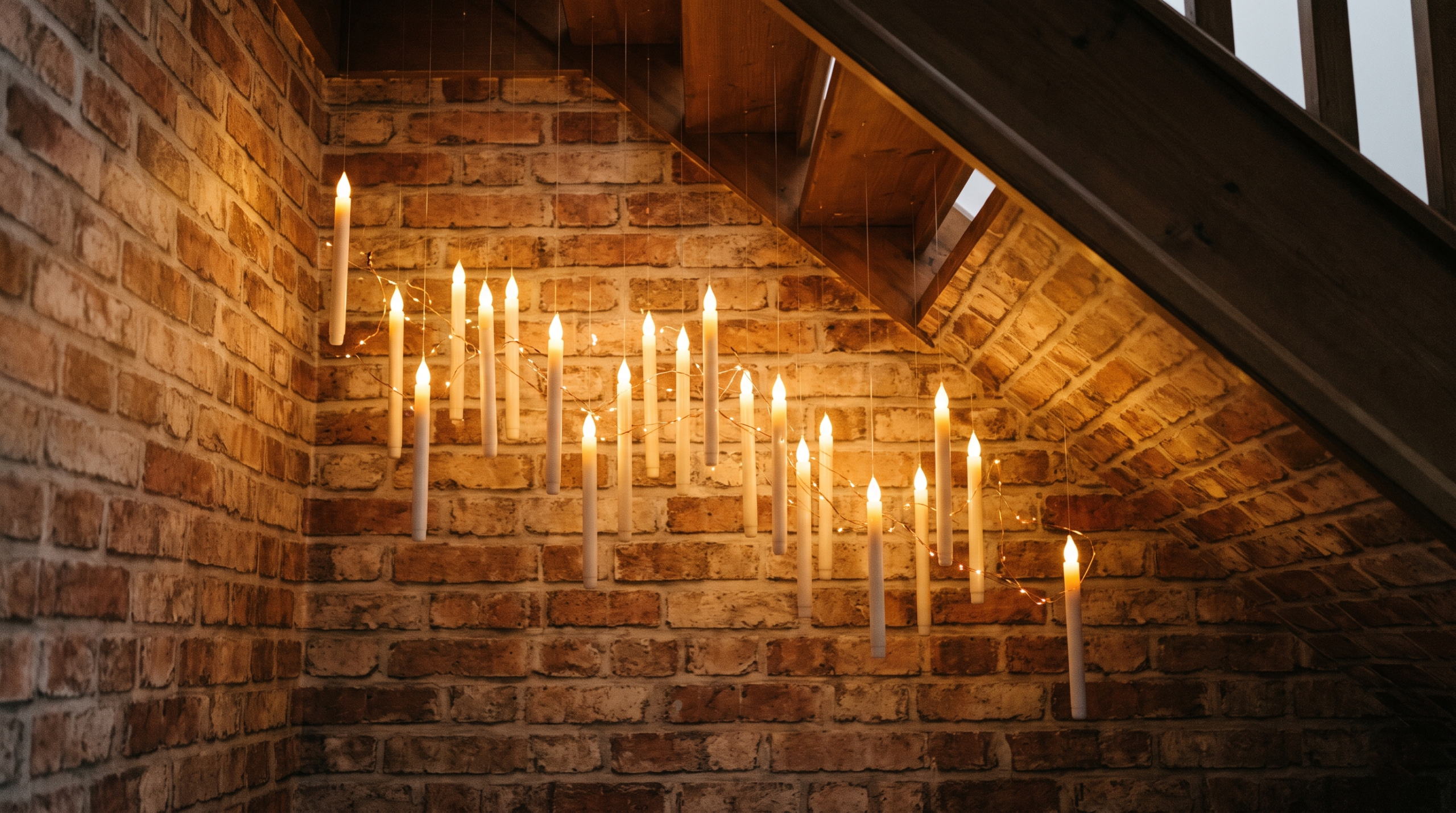
Floating Candle Illusions: This is a fan-favorite DIY. Purchase a set of battery-operated LED taper candles (the kind that come with a remote control). Tie clear fishing line around the “flame” tip of the candles, and use clear thumbtacks or adhesive hooks to hang them at varying lengths from the sloped ceiling. When you hit the remote, it looks exactly like the Great Hall.
-
Lantern Sconces: Mount rustic, wrought-iron style wall sconces. You can purchase battery-powered puck lights and stick them inside the sconces for a wire-free, glowing aesthetic.
Bedding, Seating, and Comfort
Finding a bed to fit an under-stair slope can be tricky.
-
The Mattress: Standard mattresses rarely fit perfectly. The easiest solution is to buy a 6-inch or 8-inch thick memory foam mattress topper online. Using an electric carving knife, you can easily slice the foam to perfectly match the exact triangular footprint of your floor space.
-
The Textiles: Dress the bed in luxurious, comforting fabrics. Think velvet duvet covers, thick knitted throw blankets, and custom throw pillows featuring the Hogwarts crest or the Marauder’s Map.
The Details: Easter Eggs and Authentic Props
To elevate this project from a standard DIY renovation to a Skyscraper-level masterpiece, you must focus on the micro-details. The Easter eggs make the space feel authentic.
The Iconic Signage
No Privet Drive cupboard is complete without the brass lettering on the exterior door. You can purchase adhesive brass letters from a hardware store to spell out “The Cupboard Under the Stairs” or “Room of Requirement” on the outside of the door.
Storage Hacks Disguised as Decor
Small spaces require clever storage solutions.
-
Vintage Luggage: Hunt through local thrift stores or antique shops for vintage steamer trunks. They look exactly like the luggage students take on the Hogwarts Express, and they serve as brilliant, hidden storage for toys, extra blankets, or books.
-
Floating Bookshelves: Install small, rustic wooden floating shelves along the highest wall. Display your hardback Harry Potter book series, faux potion bottles (glass vials filled with colored water and glitter), and a wand stand.
The Hogwarts Letter Explosion
Recreate the famous scene from The Sorcerer’s Stone where Harry’s Hogwarts acceptance letters flood the living room.
-
Print out a few dozen envelopes addressed in green ink to Mr. H. Potter, The Cupboard under the Stairs.
-
Seal them with faux red wax.
-
Suspend them from the ceiling using fishing line and clear tape, creating a frozen-in-time effect of letters flying through the air.
Beyond Kids: Alternative Uses for the Space
While a Harry Potter bedroom under stairs is a dream come true for a child, adults and pet owners can easily adapt this concept for their own needs.
The Ultimate Potterhead Reading Nook
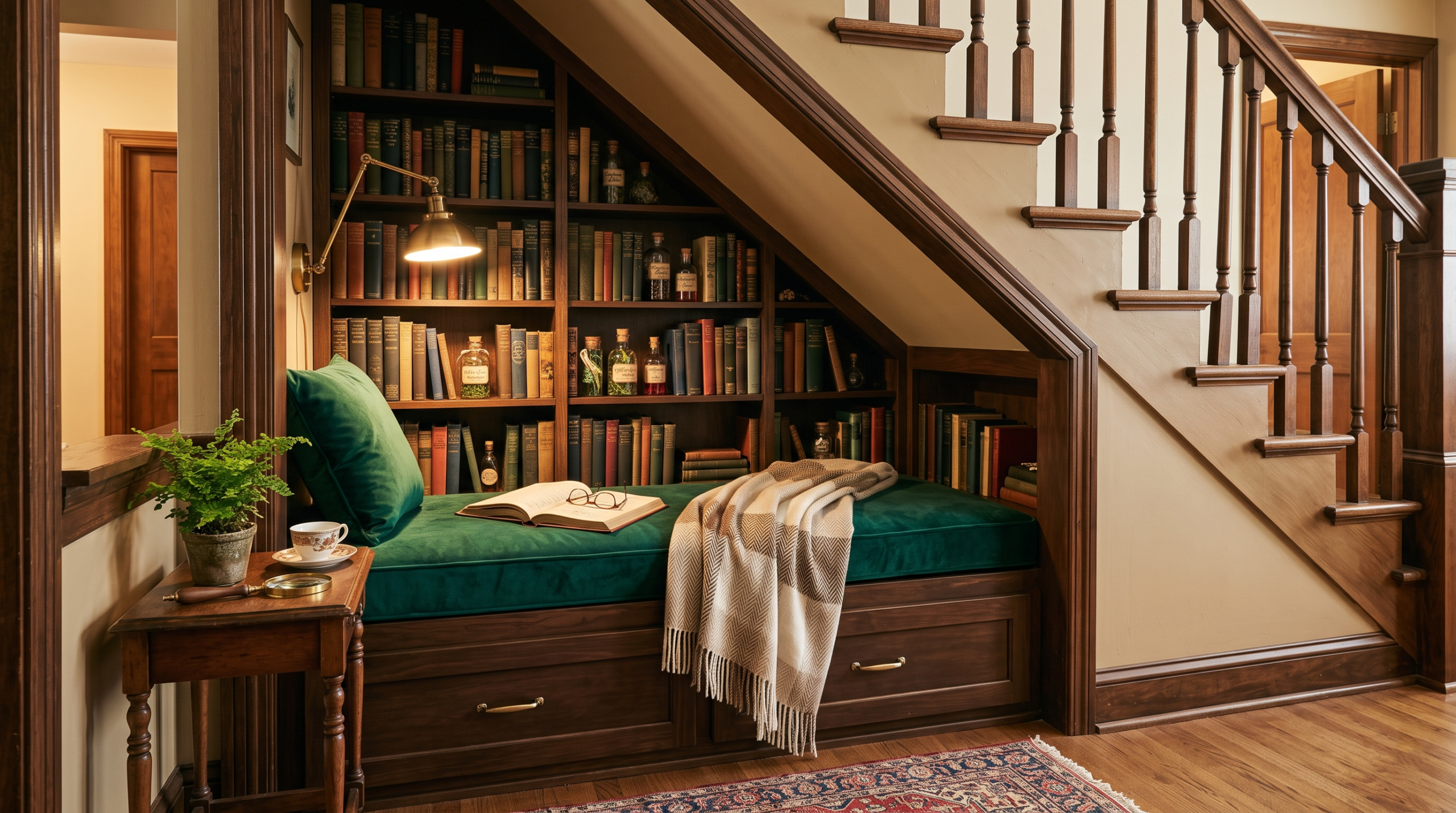
If no one is actually going to sleep in the space, skip the mattress. Instead, build a raised wooden bench seat with built-in storage underneath. Top it with a thick, custom-upholstered cushion, a warm reading lamp, and floor-to-ceiling bookshelves. It becomes a quiet, magical retreat for reading your favorite fantasy novels.
 A Magical Pet Bedroom
Dogs and cats naturally seek out small, enclosed “den” spaces to feel safe.
-
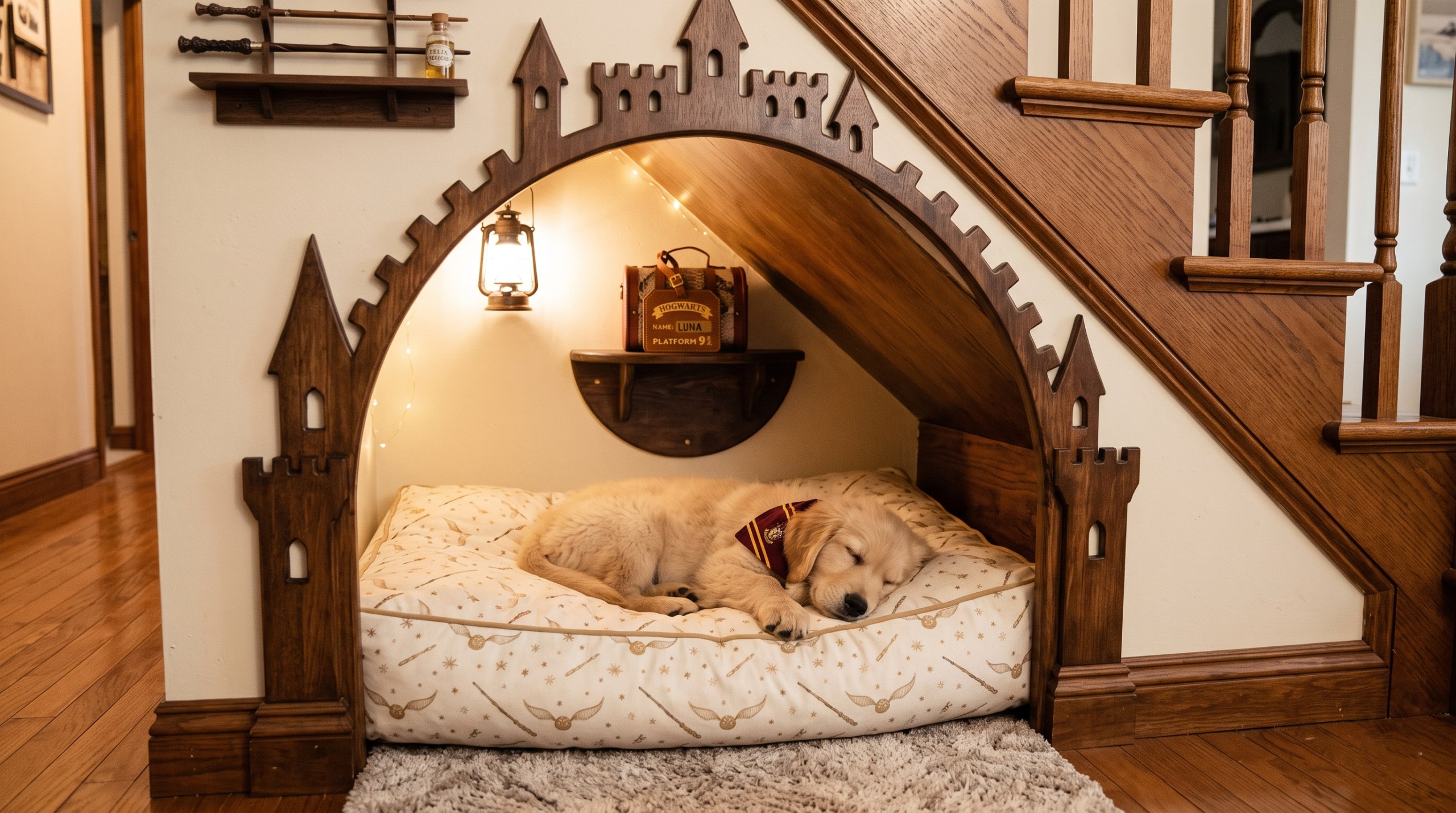
For Dogs: Cut the doorway into the shape of a Hogwarts castle arch. Place a high-quality orthopaedic dog bed inside, and install a built-in feeding station with water and food bowls against the wall.
-
For Cats: Install carpeted “floating stairs” along the interior walls for your cat to climb, leading to a cozy hammock suspended at the top of the cupboard.
 Budgeting for Your DIY Hogwarts Project
A common question homeowners ask is: How much will this actually cost? The beauty of an under-stair project is that it can be adapted to almost any budget.
| Project Tier | Estimated Cost | What is Included |
| The Budget Build | $100 – $250 | Utilizing existing drywall, DIY paint jobs, thrifted decorations, basic foam padding, and battery-operated fairy lights. |
| The Standard Nook | $300 – $600 | Adding new drywall/insulation, purchasing a custom memory foam mattress, buying high-quality peel-and-stick wallpaper, and standard official merchandise. |
| The Premium Transformation | $800 – $1,500+ | Hiring an electrician for hardwired sconces, building custom cabinetry/bookshelves, installing a hidden door, and using luxury fabrics and authentic film replica props. |
Note: Costs will vary based on your local material prices and what tools you already own.
Frequently Asked Questions (FAQ)
Is it legal to put a bed under the stairs?
Building codes vary by municipality. Generally, an under-stair space is not considered a legally “habitable bedroom” because it lacks a standard egress window and minimum square footage. Therefore, it cannot be listed as a bedroom if you sell your house. However, designating it as a “playroom,” “reading nook,” or “temporary resting space” is entirely legal and safe for personal home use, provided there is adequate ventilation.
How do you ventilate a cupboard under the stairs?
The most effective and budget-friendly method is installing a louvered door (a door with wooden slats). If you prefer a solid door for aesthetics, you must cut an opening into the lower drywall and install an air return grille, ideally pulling air from a well-ventilated hallway.
What size mattress fits in an under-stair space?
There is no standard size, as every staircase has a different pitch and depth. A standard toddler mattress (28 inches by 52 inches) often fits nicely in the deeper sections. For a seamless look, purchasing a 6-inch memory foam pad and cutting it to the exact dimensions of your space is highly recommended.
How long does it take to build a Harry Potter room?
If the space is already drywalled and clear, decorating and furnishing can be completed in a single weekend. If you need to demolish walls, insulate, frame, and hang drywall, expect the project to take two to three weekends for an average DIYer.
Creating a Harry Potter bedroom under stairs is more than just a quirky home improvement project; it is a way to breathe life, imagination, and utility into a forgotten corner of your home. By taking the time to plan for safety, utilizing clever construction techniques, and leaning into the rich, magical aesthetics of the Wizarding World, you can transform wasted square footage into the most beloved room in your house.
Whether it becomes a secret hideaway for your children, a quiet reading retreat for yourself, or the ultimate luxury doghouse, the cupboard under the stairs proves that a little bit of DIY effort truly is its own kind of magic.