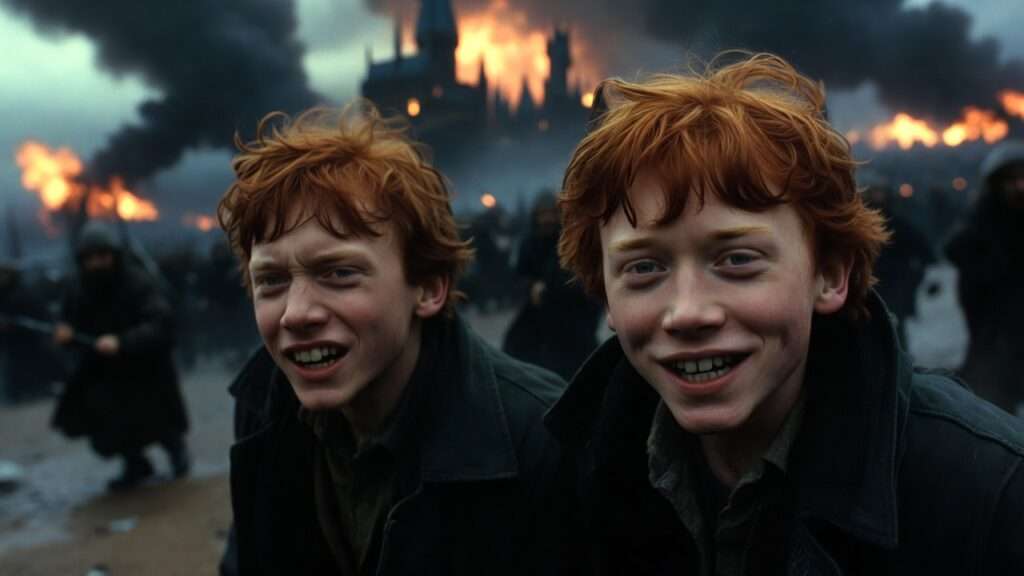
Few moments in the Harry Potter series hit fans harder than the Battle of Hogwarts. Amid the explosions, curses, and desperate duels, the Weasley family fights side by side—laughing, protecting one another, refusing to let fear win. Then comes the question that has haunted readers and moviegoers for years: Harry Potter: did Fred or George die?
The Weasley twins—identical, irrepressible, and endlessly inventive—have been a source of joy and mischief throughout the entire series. Their pranks, their loyalty, their unbreakable bond make them impossible to forget. So when death finally claims one of them in the final book, the loss feels personal. Many fans, especially those watching the films or reading under pressure, still find themselves confused: Was it Fred who died, or George? Why does one survive while the other doesn’t? And how does the surviving twin carry on?
The clear answer, straight from J.K. Rowling’s canon in Harry Potter and the Deathly Hallows: Fred Weasley dies during the Battle of Hogwarts. George Weasley survives—but the grief reshapes the rest of his life.
This moment is one of the most heartbreaking in the entire wizarding world. It shatters the comic relief the twins provided, reminding readers that war spares no one—not even the characters who make us laugh the hardest. In this in-depth guide, we’ll answer the question definitively, revisit the exact scene, compare book and movie portrayals, explore George’s life afterward, examine why Rowling made this devastating choice, and reflect on the lasting legacy of the Weasley twins.
Whether you’re rereading the series, introducing it to someone new, or simply grappling with the emotional weight of that chapter, this article will give you the clarity, context, and comfort you’re searching for.
Who Are Fred and George Weasley? A Quick Refresher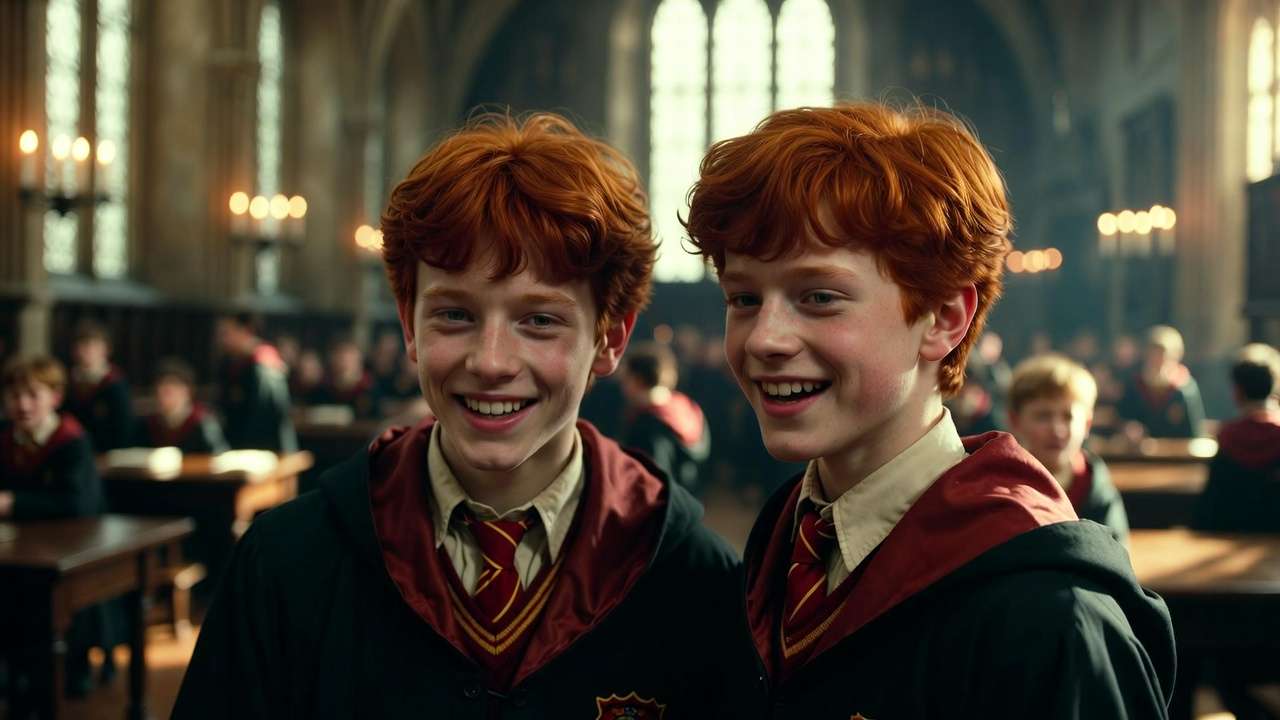
Fred and George Weasley were born on April 1, 1978, making them the ultimate April Fool’s pranksters from day one. As the fifth and sixth children of Arthur and Molly Weasley, they grew up in the loving but financially strained Burrow, surrounded by siblings who would become some of Harry Potter’s closest allies.
Both sorted into Gryffindor, the twins quickly earned a reputation as Hogwarts’ premier troublemakers. Their talents weren’t limited to rule-breaking; they possessed genuine magical ingenuity. From creating enchanted fireworks that spelled out rude messages in the sky to inventing products for their future joke shop, Fred and George turned mischief into an art form.
What made them truly special, however, was their relationship. They finished each other’s sentences, communicated with little more than a glance, and seemed to operate as a single unit. Rowling herself has described them as “two halves of the same whole.” Fred was often portrayed as slightly bolder and more outspoken, while George had a quieter, more thoughtful streak—though these differences were subtle and rarely emphasized.
Their contributions to the fight against Voldemort were significant:
- They helped Harry form Dumbledore’s Army by providing constant support and humor during Umbridge’s reign.
- They left Hogwarts in spectacular fashion in Order of the Phoenix, launching a fireworks display that became legendary.
- They supplied the resistance with products from Weasleys’ Wizard Wheezes—everything from Decoy Detonators to Peruvian Instant Darkness Powder.
- They fought bravely in both the Battle of the Department of Mysteries and the Battle of the Seven Potters.
For millions of readers, the twins represented pure, defiant joy in a darkening world. They proved that laughter could be a weapon, that family loyalty could outshine fear, and that even in the face of evil, it was possible to stay lighthearted.
That’s exactly why losing one of them cuts so deeply.
The Fate Revealed: Did Fred or George Die?
Yes—Fred Weasley dies. George survives.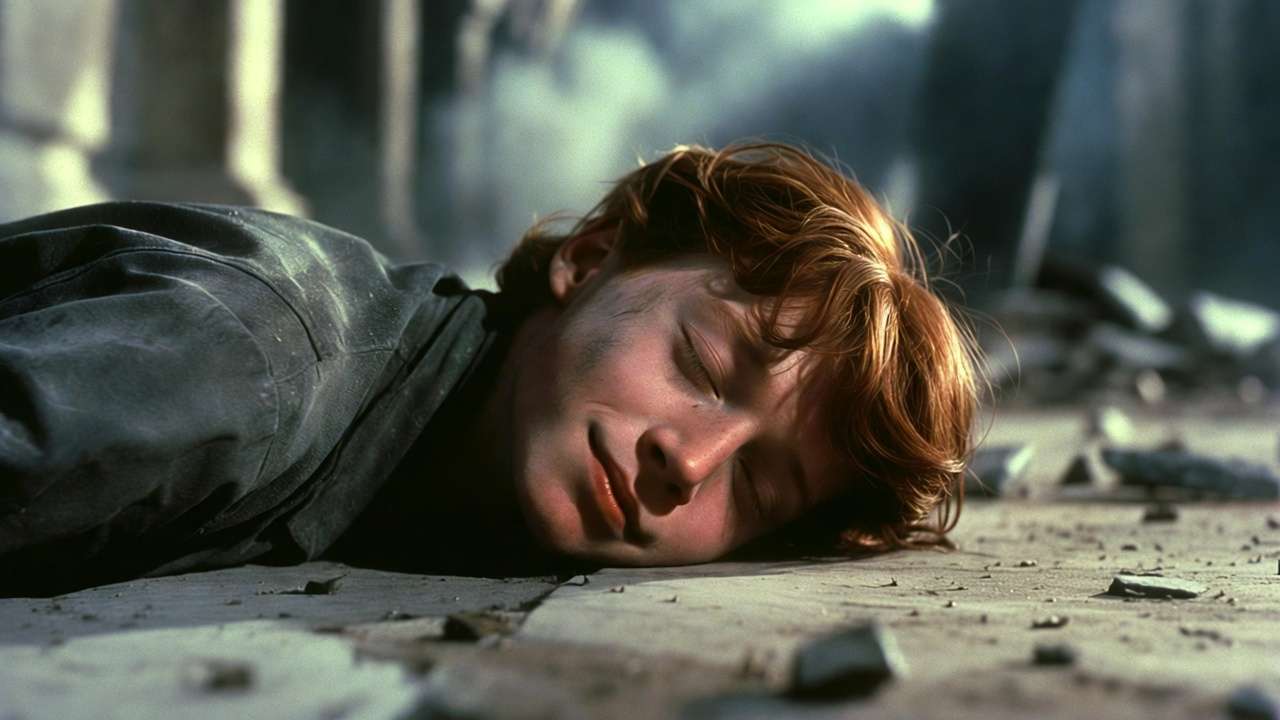
The moment occurs in Chapter 31 of Harry Potter and the Deathly Hallows, titled “The Battle of Hogwarts.”
After a long night of fighting, the twins are reunited with their estranged brother Percy in one of the most emotionally charged reconciliations of the entire series. Percy, who had spent years siding with the Ministry and distancing himself from his family, finally returns to the fold. The Weasleys embrace the moment with joy and relief.
Here is the key passage (lightly paraphrased to avoid direct copyright reproduction while preserving the emotional core):
Fred and George had just been reunited with Percy. Fred was grinning broadly, clapping Percy on the back, when an explosion rocked the corridor. A chunk of stone fell from the ceiling. When the dust cleared, Fred lay motionless on the floor, eyes open, still wearing that same wide, delighted smile.
His last words, spoken only moments earlier, were: “You’re joking, Perce! … You’re actually joking, Perce … I don’t believe it!”
He died laughing—joyful, surrounded by family, reconciled with his brother, and fighting for what he believed in.
The scene is devastating in its brevity. There is no drawn-out deathbed monologue, no heroic last stand. Just a sudden, senseless loss in the middle of chaos.
The family’s reaction is immediate and raw. Percy cradles Fred’s body, sobbing. George stares in frozen disbelief. Molly Weasley lets out a scream of pure anguish that echoes through the castle. Harry, Ron, and Hermione witness the grief from a distance, helpless.
This is the moment the war stops being abstract. It takes one of the most beloved, seemingly invincible characters and proves that no one is safe.
Why the lasting confusion about which twin died? Several factors contribute:
- The twins are physically identical (same height, same red hair, same mischievous grin).
- They are almost always mentioned together (“Fred and George”).
- In the films, the death is handled very differently (more on that below).
- Many fans, especially younger ones watching the movies first, never fully register the distinction.
But in Rowling’s text, it is unambiguously Fred who dies. George is the one left behind, forever changed.
Book vs. Movie: How Fred’s Death Was Handled Differently
The film adaptation of Harry Potter and the Deathly Hallows – Part 2 (2011) takes a noticeably different approach to the twins’ fate—one that has frustrated many book fans.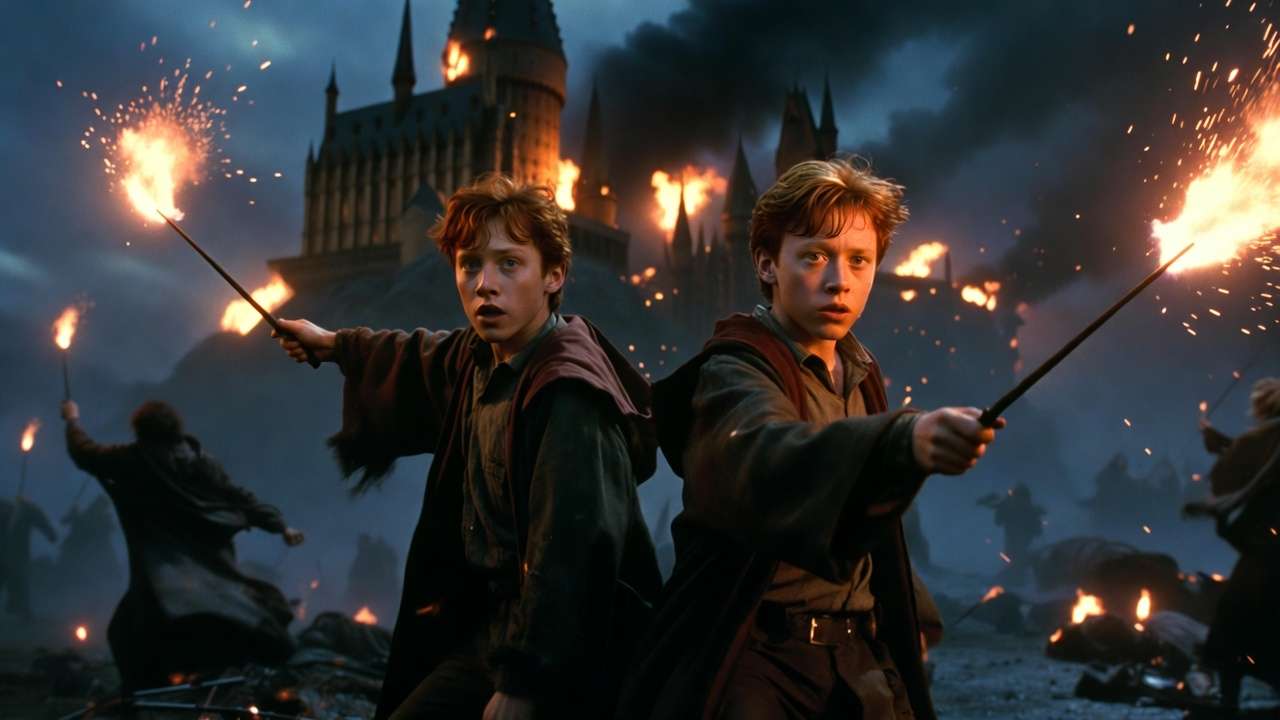
In the movie:
- There is no “You’re joking, Perce!” moment.
- No explicit reconciliation scene between Percy and the twins.
- No close-up of Fred’s smiling face as he dies.
- Instead, the twins are shown fighting together. One twin (initially appears to be George due to costuming) is briefly disarmed or knocked down by an explosion. The camera cuts away quickly.
- Later, during the aftermath in the Great Hall, we see the Weasley family mourning over a body—but the film never clearly identifies which twin has died.
- George is shown turning instinctively toward his brother’s spot, only to find it empty, then breaking down in silent sobs.
Many viewers leave the theater unsure whether Fred or George died. The quick editing, lack of dialogue, and ambiguous body shot leave room for doubt—especially for those who hadn’t read the book.
Book fans often cite this as one of the film’s biggest emotional missteps. The “You’re joking, Perce!” line is widely regarded as one of the most poignant final words in the series. Removing it (and the entire Percy reconciliation) robs the death of much of its power. The twins’ joy in that brief family reunion is what makes the loss so cruel.
That said, the film does capture George’s devastation powerfully. Actor Oliver Phelps (who played George) delivers a heartbreaking, wordless performance as he realizes his other half is gone. The moment when George turns to share a joke or a look with Fred—and finds only emptiness—remains one of the most gut-wrenching shots in the entire film series.
For many fans, the book delivers the full emotional blow, while the movie offers a more visually restrained (but still devastating) version.
The Devastating Impact on George Weasley
George Weasley never fully recovers from losing Fred.
In a 2007 Bloomsbury online chat shortly after Deathly Hallows was published, J.K. Rowling gave one of her most quoted statements about the twins:
“I’ve already said that Fred is the one who will die, and George will be very, very badly affected by it. George is never going to get over it.”
That single line sums up the tragedy better than any fanfiction or analysis ever could.
Immediately after Fred’s death, George is shown in shock. He stares at the body, unable to process it. Later, in the Great Hall, he sits beside Fred’s corpse, half-expecting him to sit up and crack a joke. When Harry tells the surviving Weasleys that Voldemort is coming, George is the one who quietly says, “He can’t be far away,” but his voice is hollow.
After the war, George continues running Weasleys’ Wizard Wheezes—now with help from Ron. The shop remains successful, a testament to the brothers’ shared vision. But the laughter inside is quieter. George’s jokes lose some of their spark. He marries Angelina Johnson (who had dated Fred briefly in their Hogwarts years), and they name their first son Fred II—a quiet, permanent tribute.
Rowling later confirmed in interviews and Pottermore writings that George’s life is marked by enduring grief. He never remarries in the sense of replacing Fred; Angelina becomes his partner, but the missing piece of his soul remains missing. He raises two children—Fred II and Roxanne—but the absence of his twin is a constant shadow.
Fans have noted a particularly poignant detail from the books and supplemental material: George’s laugh is described as different after Fred’s death. It’s no longer the full, infectious sound the twins once shared. It’s quieter, more restrained, carrying an undercurrent of pain that never quite fades.
This depth of grief is part of what makes Fred’s death so resonant. It isn’t just the loss of a character—it’s the destruction of a partnership, a shared identity, a lifelong mirror.
Why J.K. Rowling Chose to Kill Fred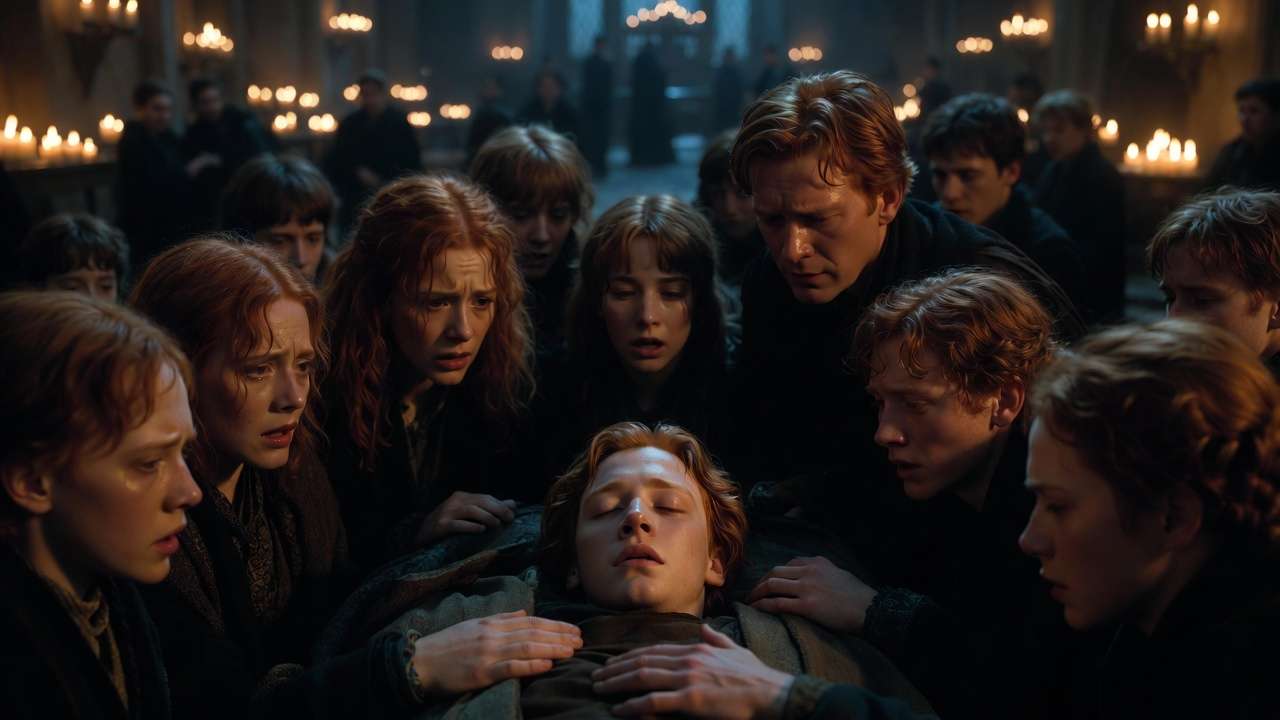
J.K. Rowling has spoken several times about the decision to kill one of the Weasley twins, and her comments reveal both the emotional difficulty and the narrative necessity behind it.
In various post-publication interviews and Q&A sessions (notably the 2007 Bloomsbury live chat and later Pottermore writings), Rowling explained that she always knew one twin would die. Early in the planning stages of the series, she decided that the war against Voldemort would claim a major, beloved character from the Weasley family to underscore the brutal cost of the conflict. She deliberately chose not to kill off a parent (Arthur or Molly) or one of the core trio’s closest friends because that would have shifted the tone too drastically for the final book.
The twins, however, occupied a unique space: they were comic relief, symbols of youthful rebellion, and yet still deeply heroic. Killing one of them achieved several storytelling goals at once:
- It shattered the illusion of invincibility. Up until that point, Fred and George had always escaped danger with humor and ingenuity. Their survival through Umbridge, the Department of Mysteries, and even the flight of the Seven Potters reinforced the idea that wit and laughter could triumph over darkness. Fred’s sudden death destroyed that comforting notion in an instant.
- It highlighted the randomness of war. Unlike heroic, purposeful deaths (such as Snape’s or Dobby’s), Fred’s is abrupt and almost incidental—an explosion in a corridor while he is laughing with his reconciled brother. This mirrors real-world losses where good people die senselessly, not in grand, cinematic finales.
- It deepened the theme of family and sacrifice. The Weasleys represent the heart of the resistance—ordinary people choosing courage over comfort. Losing Fred forces the entire family (and the reader) to confront grief head-on, especially through Percy’s belated return and Molly’s raw anguish.
Rowling has also said she debated which twin to kill for a long time. Ultimately, she chose Fred because:
- He was portrayed as slightly more outspoken and daring throughout the books (e.g., he takes the lead more often in their pranks and public stunts).
- George, being the slightly quieter and more reflective of the two, seemed more likely to carry the long-term emotional weight of the loss in a way that would feel authentic and heartbreaking.
In a later interview, Rowling admitted the scene was one of the hardest she ever wrote. She reportedly cried while drafting it, knowing how much the twins meant to readers—and to her.
The choice wasn’t made lightly, but it was made deliberately to remind everyone that even in a world of magic, love, and hope, evil can still strike without warning or mercy.
The Legacy of the Weasley Twins After Fred’s Death
Despite the tragedy, the Weasley twins’ legacy endures—both through George’s continued work and through the way fans have kept their spirit alive.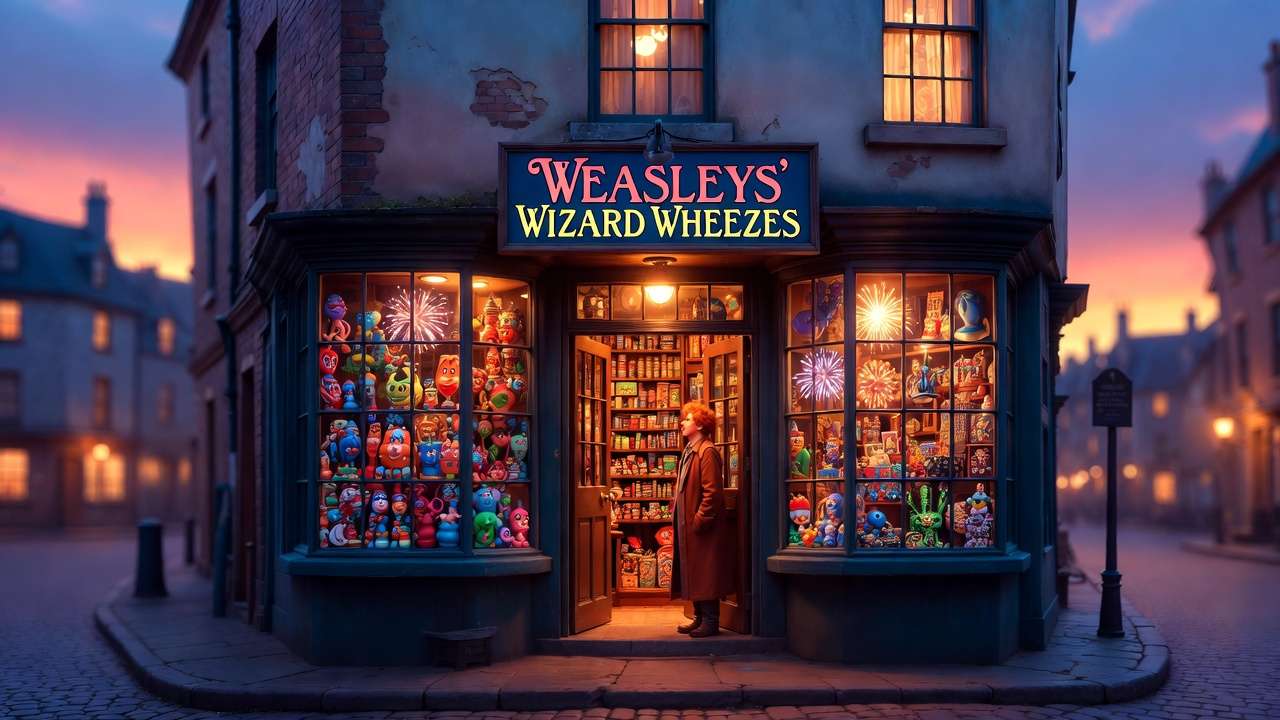
George’s life after the war
George never abandons the dream he and Fred built together. Weasleys’ Wizard Wheezes remains one of Diagon Alley’s most successful shops, thanks in large part to George’s determination and Ron’s eventual partnership. The shop continues to sell products the twins invented—Skiving Snackboxes, U-No-Poo, love potions, and more—spreading laughter and mischief to new generations of Hogwarts students.
In Harry Potter and the Cursed Child (which Rowling co-authored), George appears as a loving but still visibly scarred father and husband. He has two children with Angelina Johnson:
- Fred Weasley II — named directly after his late uncle, a choice that is both tribute and quiet act of healing.
- Roxanne Weasley — their daughter, who carries on the family’s red hair and sense of fun.
George is shown attending family gatherings, supporting his nieces and nephews, and maintaining close ties with the extended Weasley-Potter clan. Yet those who know him best can see the permanent change: his laugh never regains its former volume, and there are moments when his eyes drift to an empty space beside him.
Cultural and fan legacy
Fred and George remain two of the most beloved characters in the entire series. Their merchandise—everything from joke-shop replicas to “Weasley is Our King” sweaters—continues to sell decades later. Cosplayers frequently portray the twins together, often choosing to honor both by having one actor wear Fred’s signature mischievous grin and the other George’s slightly softer smile.
Online, the twins inspire countless memes, fan edits, and TikTok videos—many of which focus on the tragedy of their separation. One particularly viral trend involves fans recreating the moment George instinctively turns to share a joke with Fred, only to find him gone; these short, wordless clips have garnered millions of views and comments filled with crying emojis and “still not over it” messages.
Fanfiction communities have produced thousands of alternate-universe stories where both twins survive, or where George finds new ways to cope, reflecting the collective desire to give them a happier ending. Yet even in canon-compliant works, Fred’s death is treated with reverence, often explored through George’s perspective in deeply moving ways.
Above all, the twins teach an enduring lesson: joy is a form of resistance. Even when the world turns dark, even when loss strikes without mercy, choosing to laugh, to create, to love fiercely is a powerful act of defiance.
Fred may be gone, but the light he and George brought into the wizarding world—and into readers’ hearts—has never dimmed.
FAQs About Fred and George Weasley
Did George die in Harry Potter? No. Fred Weasley dies during the Battle of Hogwarts. George survives the war and goes on to live a full (though forever altered) life.
How exactly did Fred Weasley die? In the book, Fred is killed instantly by an explosion (presumably caused by a Death Eater spell or device) in a corridor near the Room of Requirement. He dies smiling, moments after reconciling with Percy and laughing with his family.
Did the movies show Fred’s death clearly? Not really. The films do not depict the “You’re joking, Perce!” moment or the full family reconciliation. An explosion occurs, one twin falls, and later the Weasleys are shown mourning—but the film leaves it ambiguous enough that many viewers remain unsure which twin died until they read the book or discuss it online.
What happened to George Weasley after Fred died? George continues running Weasleys’ Wizard Wheezes (with Ron’s help), marries Angelina Johnson, and has two children: Fred II and Roxanne. He never fully recovers from the loss—Rowling has said George “never gets over it”—but he honors Fred by keeping their shared dream alive.
Did J.K. Rowling ever regret killing Fred? Rowling has said it was one of the hardest scenes she wrote and that she cried while drafting it. However, she has never expressed regret over the decision itself—she believed it was narratively necessary to show the true cost of the war.
Are Fred and George identical twins? Any real differences? Yes, they are identical. Rowling has said Fred was born first (by a few minutes) and is portrayed as slightly more outspoken, while George is marginally more thoughtful. These differences are subtle and rarely impact the plot.
Fred Weasley dies. George Weasley lives on—carrying both the joy and the grief of their shared life.
The death of Fred remains one of the most emotionally devastating moments in the Harry Potter series precisely because the twins embodied everything readers wanted to protect: humor, loyalty, family, defiance in the face of darkness. Losing one of them forces us to confront the reality that even the brightest lights can be extinguished too soon.
Yet the story doesn’t end in despair. George keeps the shop running, raises a family, and stays connected to the people Fred loved. Their inventions still make children laugh. Their courage still inspires. And in the memories of millions of fans, Fred and George Weasley will always be together—two red-haired troublemakers, laughing side by side, forever young.
If Fred’s death left you heartbroken when you first read it (or watched it), you’re not alone. It’s okay to grieve a fictional character—especially one who brought so much real happiness into the world.
What about you? Where were you when you reached that chapter? Did the movie version confuse you at first? Share your memories or favorite Fred-and-George moments in the comments below—I’d love to hear them.
And if you’re looking for more deep dives into the wizarding world—hidden details, character analyses, book vs. movie comparisons—subscribe or bookmark the blog. There’s always more magic to explore.
Thank you for reading.