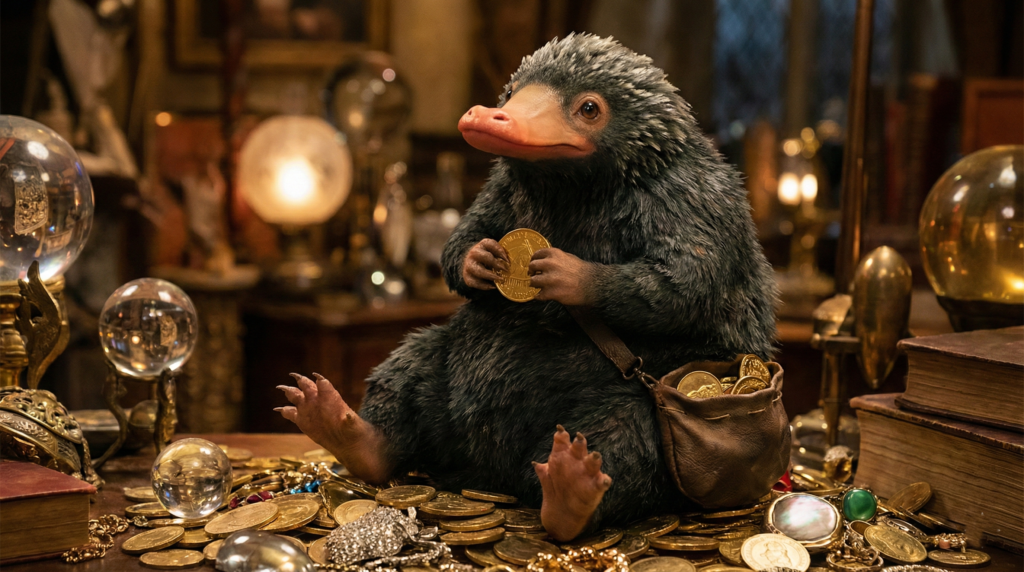
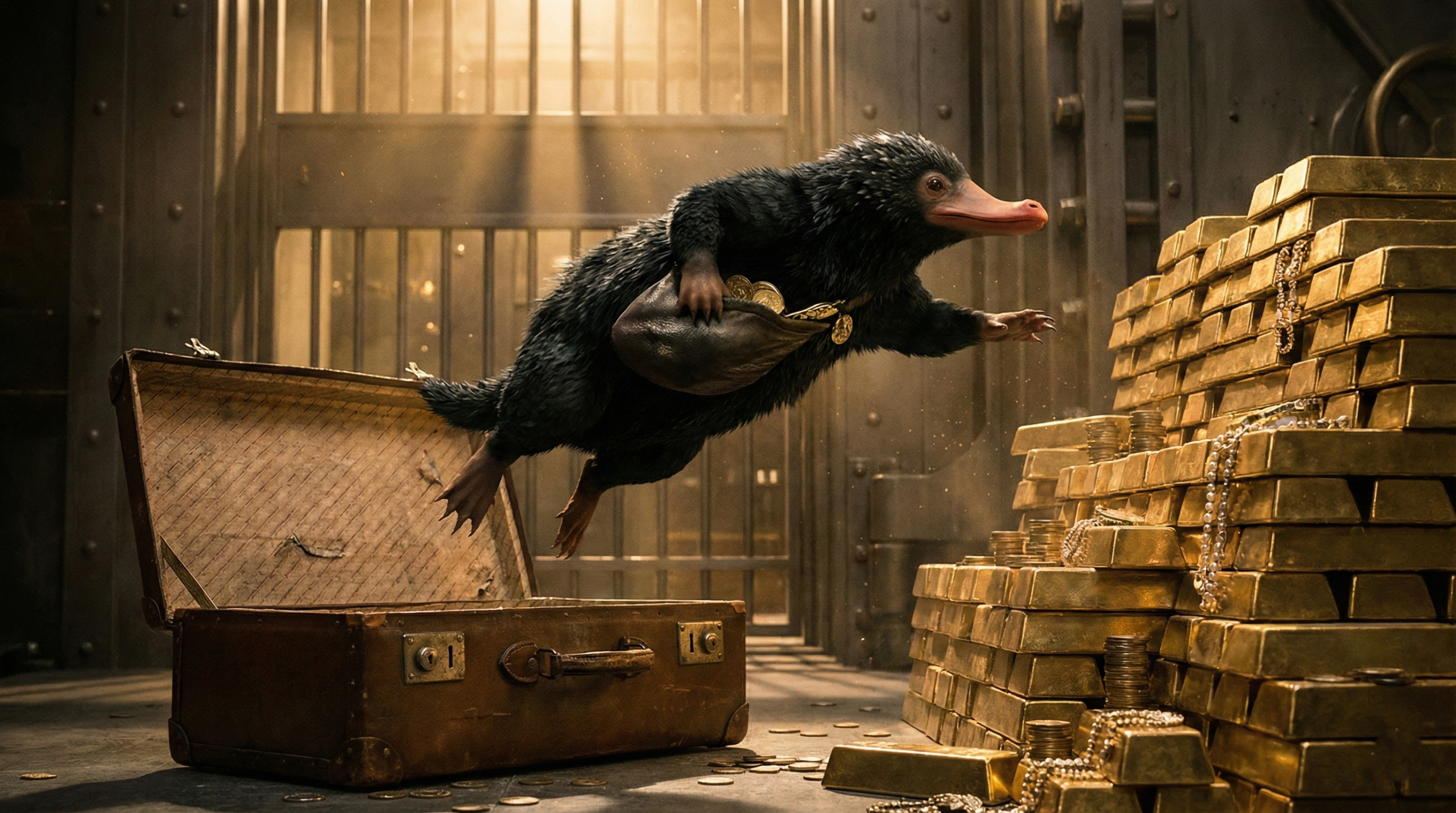
Imagine a tiny, black-furred creature bursting out of a magical suitcase in the middle of a bustling New York bank, its long snout twitching as it dives headfirst into vaults and pockets, stuffing gold bars, coins, and glittering jewels into an impossibly deep pouch—all while looking impossibly cute. This chaotic yet endearing scene from Fantastic Beasts and Where to Find Them introduced millions to the Harry Potter Niffler, a magical beast that quickly became one of the most beloved creatures in the entire Wizarding World. With its platypus-like snout, fluffy coat, and insatiable love for anything shiny, the Niffler combines adorable mischief with pure chaos, stealing hearts (and treasures) wherever it goes.
Whether you’ve watched the films, read the books, or simply stumbled across viral clips of Nifflers causing mayhem, you’re likely here because this little treasure-hunter fascinates you. In this in-depth guide, we’ll explore everything about the Harry Potter Niffler—from its official description and biology to its key appearances, magical abilities, fan-favorite moments, and why it resonates so deeply with fans. Drawing from J.K. Rowling’s original writings, the official Wizarding World encyclopedia, Fantastic Beasts canon, and deeper lore analysis, this comprehensive article goes beyond basic facts to deliver the most complete explanation available.
What Exactly Is a Niffler? (Core Definition and Classification)
The Niffler is classified as a beast by the Ministry of Magic, earning a XXX rating in Fantastic Beasts and Where to Find Them (the in-universe textbook penned by Newt Scamander). This designation means competent wizards can handle them without extreme danger, though their destructive tendencies make them far from ideal pets.
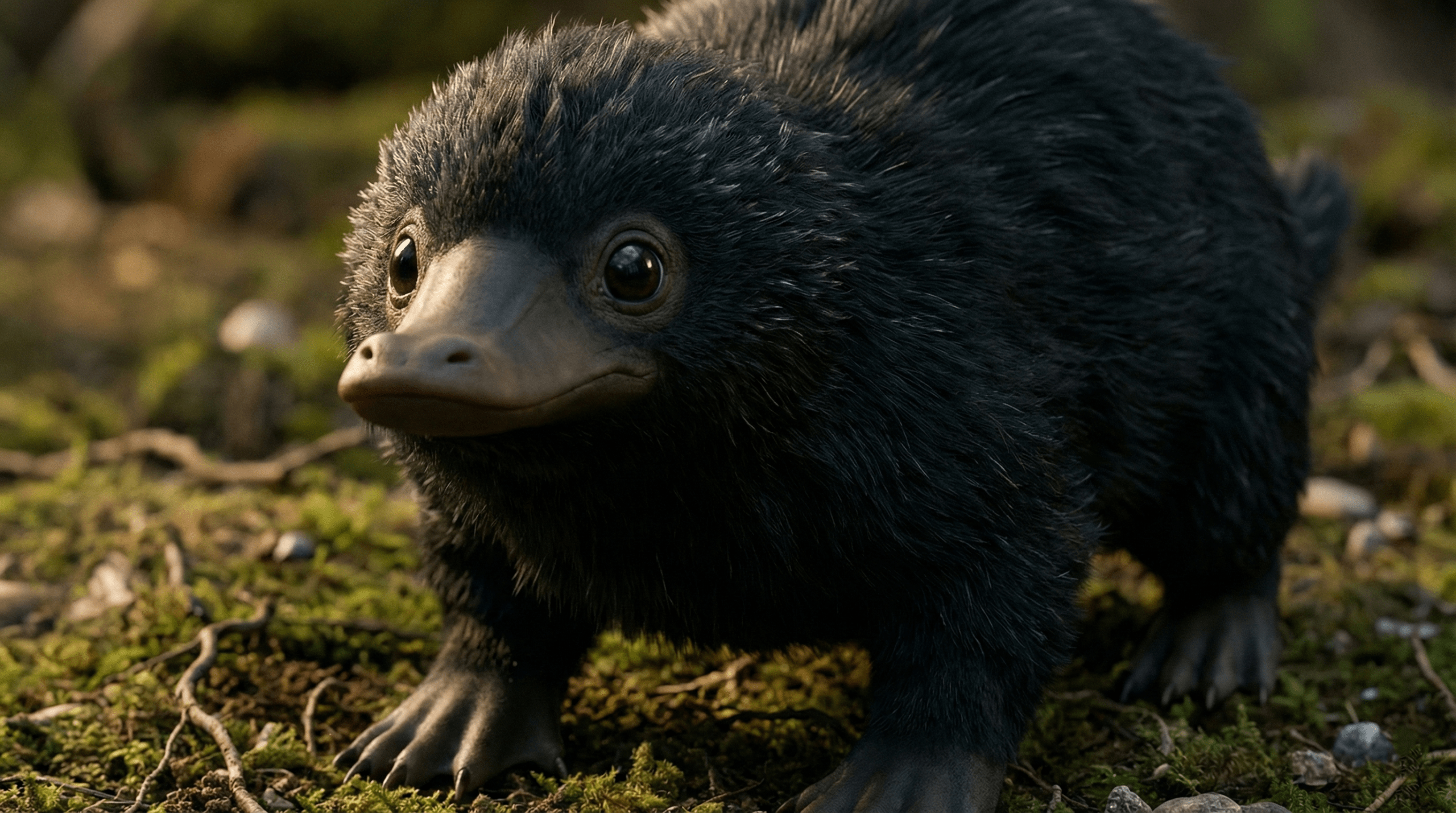
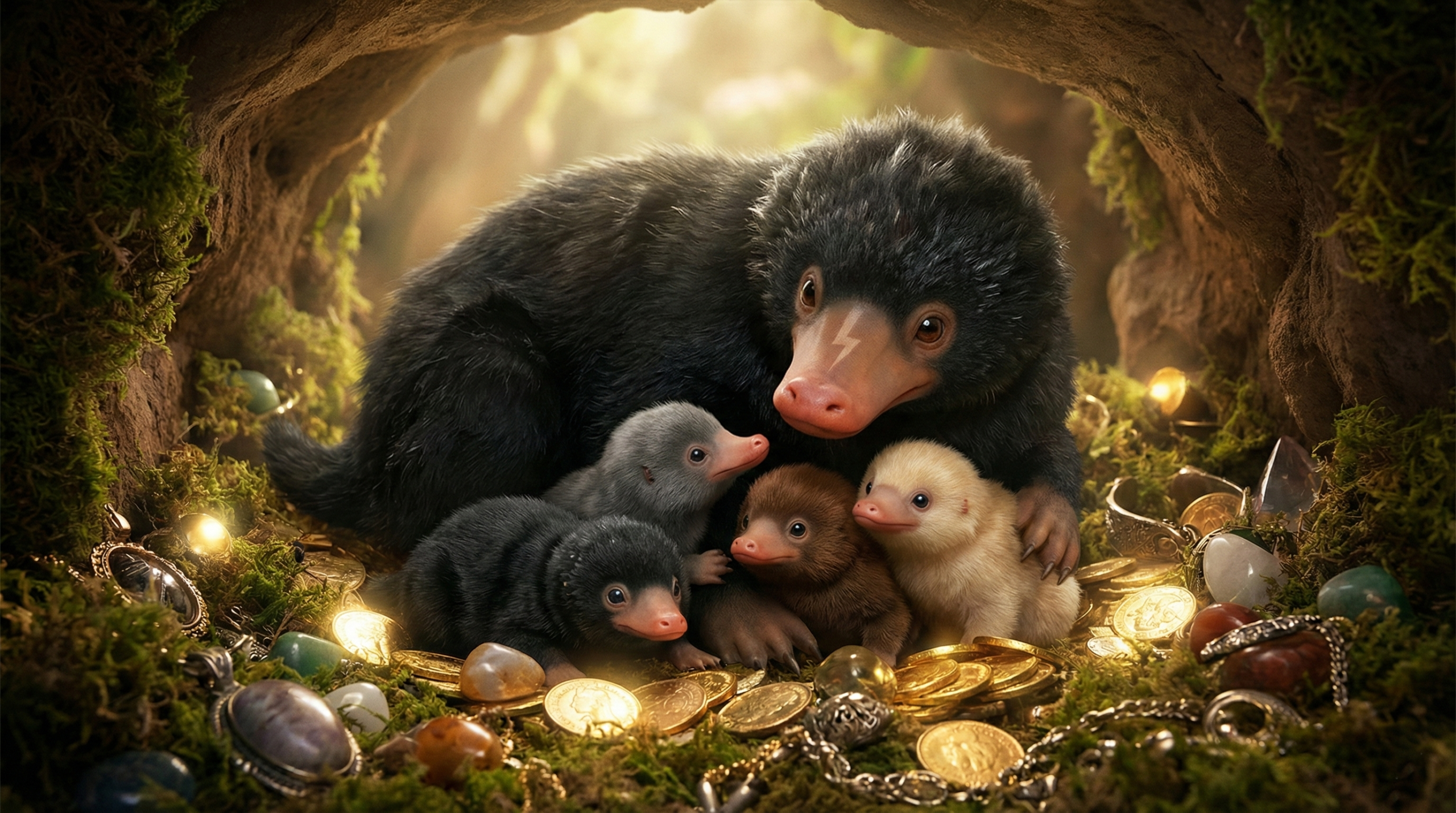
According to official sources like the Wizarding World encyclopedia, Nifflers are described as long-snouted, burrowing creatures native to Britain with a penchant for anything shiny. They resemble a cross between a mole, a platypus, and perhaps a bit of honey badger attitude—small, rodent-like magical beasts covered in black, fluffy fur. Their most distinctive feature is the pouch on their bellies, which appears tiny but functions like a magically expanded space (similar to Newt Scamander’s suitcase), allowing them to hoard vast amounts of treasure without visible bulk.
Physical Appearance and Unique Features
At first glance, a Niffler might be mistaken for an ordinary mole due to its spade-like front paws perfect for digging. However, its elongated snout—reminiscent of a duck-billed platypus—sets it apart, used for snuffling out glittering objects with uncanny precision. The black fur is soft and dense, giving the creature an irresistibly cuddly look that belies its chaotic nature.
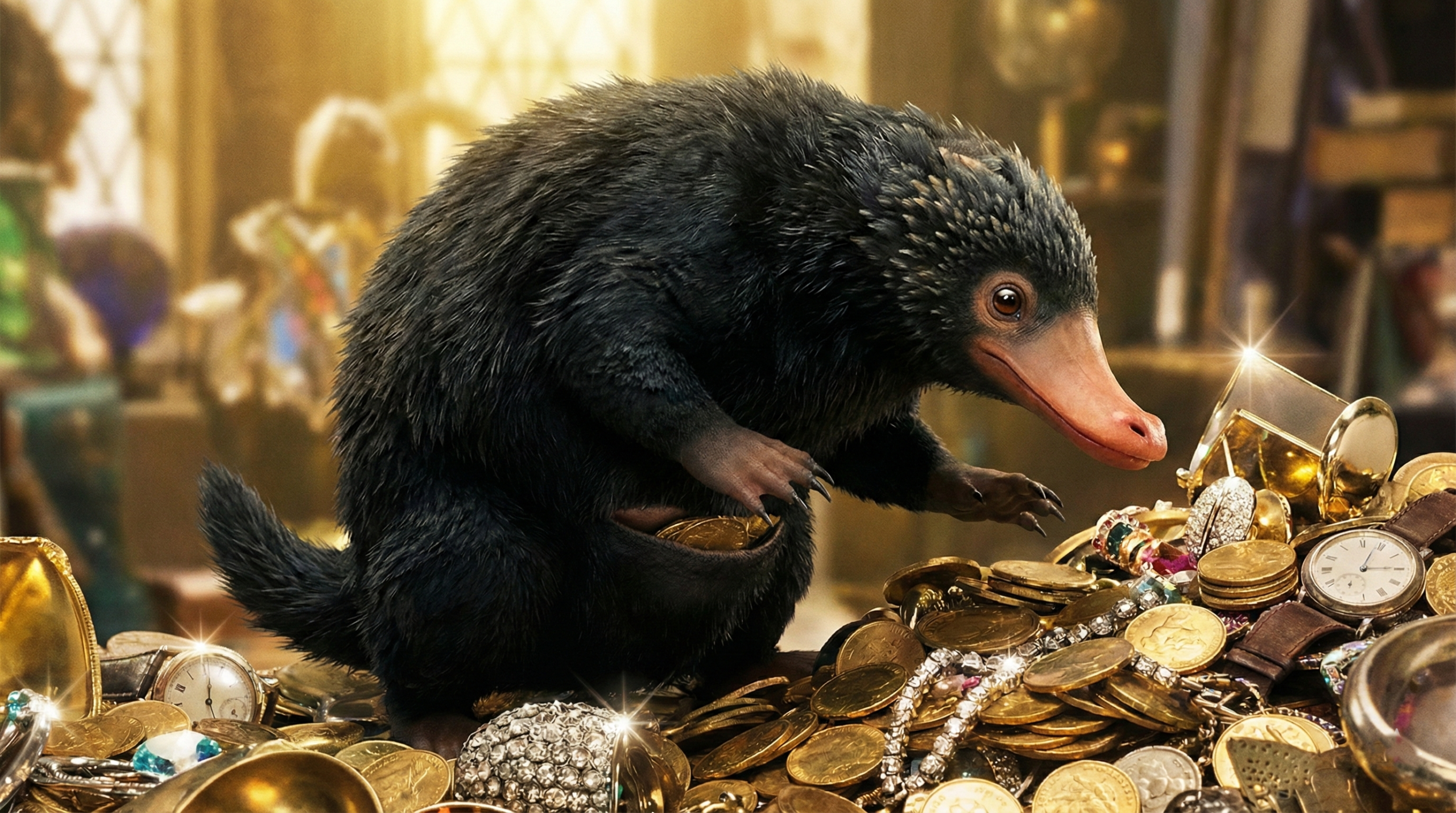
The pouch is truly magical: it can stretch to accommodate enormous hauls, from individual coins to entire bars of gold. This dimensional expansion makes Nifflers exceptional at treasure storage, though it also leads to hilarious overstuffing scenes in the films.
 Habitat and Natural Behavior
Nifflers are native to Great Britain, where they dig extensive burrows reaching up to twenty feet underground. Females produce litters of six to eight young, which are even fluffier and more mischievous than adults—think tiny balls of black fur with oversized snouts.
Despite their sweet, affectionate demeanor toward owners, Nifflers become single-minded destroyers when shiny objects are involved. They burrow through earth like it’s water, using their powerful front paws, and show gentle loyalty to those who care for them. However, official warnings emphasize: never keep a Niffler indoors unless you’re prepared for constant upheaval.
 The Niffler’s Irresistible Obsession: Shiny Objects and Treasure Hunting
At the heart of every Niffler is an almost pathological attraction to glittery items—not just gold or jewels, but anything sparkling, from belt buckles to sequins. This isn’t mere greed; it’s an innate magical instinct that makes them unparalleled treasure detectors.
Goblins frequently employ Nifflers to locate buried riches or hidden vaults, as their keen sense of smell for shinies allows them to sniff out valuables from great distances. In the wizarding economy, this makes them valuable assets, though their tendency to keep what they find (and resist returning it) complicates matters.
This obsession drives much of their on-screen humor and book charm, turning simple pursuits into full-blown escapades.
Nifflers in the Harry Potter Books
The Niffler first appears in Harry Potter and the Goblet of Fire, during Rubeus Hagrid’s Care of Magical Creatures lesson for fourth-years. Hagrid introduces the class to Nifflers to demonstrate their treasure-hunting skills, tasking students with letting the creatures search for leprechaun gold scattered in the grass. This moment helps Ron Weasley realize the “gold” from the Quidditch World Cup was fake and vanishing—highlighting the Niffler’s utility in revealing illusions.
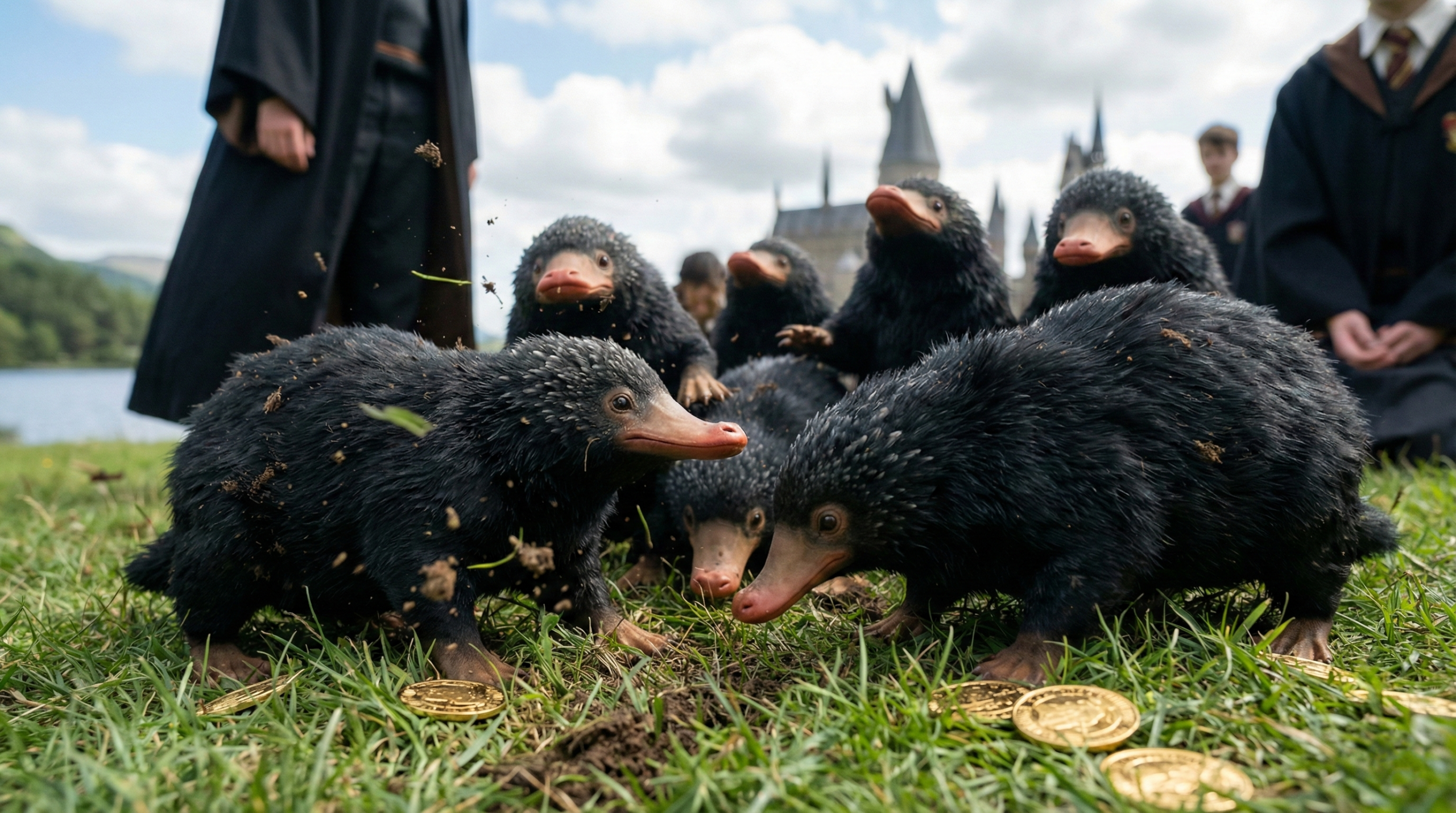 In Harry Potter and the Order of the Phoenix, Nifflers get their most memorable prank moment. Lee Jordan (with help from Fred and George Weasley) releases them into Dolores Umbridge’s office, where the creatures tear through drawers, shelves, and decorations in search of anything shiny. Umbridge’s fury leads her to blame Hagrid, adding to the book’s themes of resistance against authority. These scenes showcase Nifflers as tools of delightful chaos in the hands of mischievous students.
Nifflers Steal the Spotlight in Fantastic Beasts
While book appearances are brief, the Niffler truly becomes a star in the Fantastic Beasts film series. In Fantastic Beasts and Where to Find Them (2016), Newt Scamander’s unnamed Niffler (fan-dubbed “Teddy” in some contexts) escapes his case at Steen National Bank, triggering the story’s central No-Maj/wizard conflict. The creature’s rampage—diving into vaults, stealing rings from fingers, and attempting to hoard an entire safe’s contents—sets off a chain of events involving Newt, Jacob Kowalski, Tina Goldstein, and the Obscurial threat.
 Later scenes show the Niffler causing havoc in a jewelry store and even showing a softer side when reluctantly returning treasures. In Fantastic Beasts: The Crimes of Grindelwald, the Niffler returns with offspring—four colorful baby Nifflers that amplify the cuteness and mischief factor.
The films elevate the Niffler from background creature to breakout character, thanks to its expressive design, comedic timing, and emotional beats.
Behind-the-Scenes: Creating the On-Screen Niffler
The cinematic Niffler blends practical puppetry, animatronics, and CGI for lifelike movement. Creature designers drew inspiration from real animals like honey badgers (for tenacity) and platypuses (for appearance), ensuring the beast felt both fantastical and grounded. Eddie Redmayne has noted how the Niffler’s personality—cheeky yet endearing—made it a favorite on set.
Fun Facts and Trivia About Nifflers
- The name “Niffler” derives from Northern English slang for a “mutual exchange or barter,” a clever nod to their treasure-swapping habits.
- Despite their affection for owners, official Wizarding World advice strongly discourages domestic ownership due to destruction.
- Baby Nifflers are even more irresistible—fluffier, smaller, and equally shiny-obsessed.
- Symbolically, Nifflers represent innocent greed or the universal human pull toward shiny things, adding depth to their comedy.
- They appear in video games like Hogwarts Legacy, where players can interact with them.
- Fan theories speculate Nifflers could theoretically locate lost artifacts like the Resurrection Stone if trained properly.
 Why the Harry Potter Niffler Is So Beloved by Fans
The Niffler’s appeal lies in its perfect balance: utterly adorable visuals paired with gleeful anarchy. Compared to other creatures—like the more aloof Bowtruckle or dangerous Occamy—the Niffler feels relatable in its flaws. Merchandise, memes, and fan art explode with Niffler love, and many call for a dedicated spin-off series following its adventures.
Expert Insight: What Nifflers Teach Us About the Wizarding World
Beyond laughs, Nifflers embody themes of temptation, chaos versus control, and finding joy in small (mischievous) things. In a world of dark magic and high stakes, their lighthearted greed reminds us of innocence amid complexity.
Could You Own a Niffler? Pros, Cons, and Care Tips (Hypothetical Guide)
Pros: Unmatched treasure detection, loyal companionship, endless entertainment. Cons: Furniture destruction, constant escapes, shiny-item hoarding. Tips (if hypothetically possible): Secure valuables in anti-Niffler wards, provide “ethical” shiny hunts (e.g., buried coins), and accept chaos as part of the package.
Frequently Asked Questions (FAQs)
- What does a Niffler eat? Primarily small insects or whatever they find while burrowing; their diet isn’t heavily detailed, but they’re not picky.
- Are Nifflers inspired by real animals? Yes—platypus snout, mole digging, magpie attraction to shiny objects.
- How many Nifflers has Newt owned? At least one primary (Teddy), plus babies in later films.
- Difference between book and movie Nifflers? Books show them in class/prank settings; films make one a central, character-driven companion.
- Will we see more Nifflers in future Wizarding World projects? Likely, given their popularity—fans hope for expanded roles.
The Harry Potter Niffler has evolved from a quirky textbook mention to a cultural icon, capturing the magic of J.K. Rowling’s world in one small, fluffy package. Its blend of cuteness, chaos, and heart reminds us why the Wizarding World endures. Revisit those Fantastic Beasts scenes, share your favorite Niffler moment in the comments, or explore more magical creatures right here on the blog.