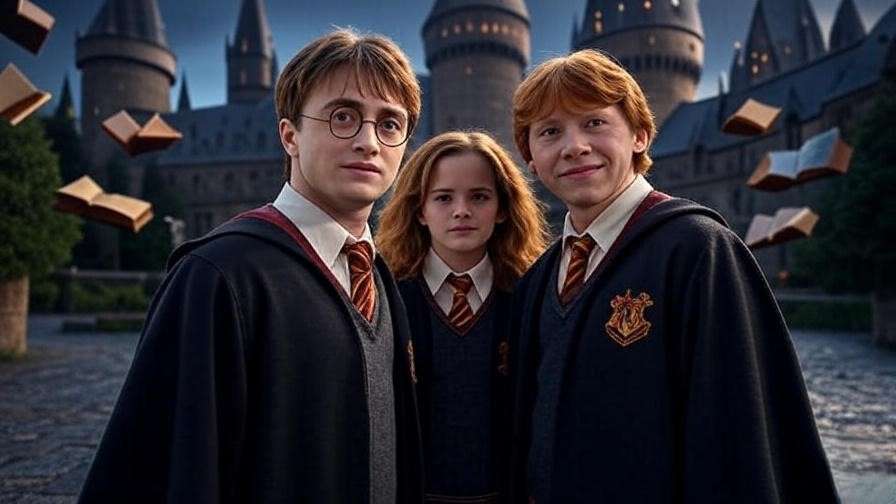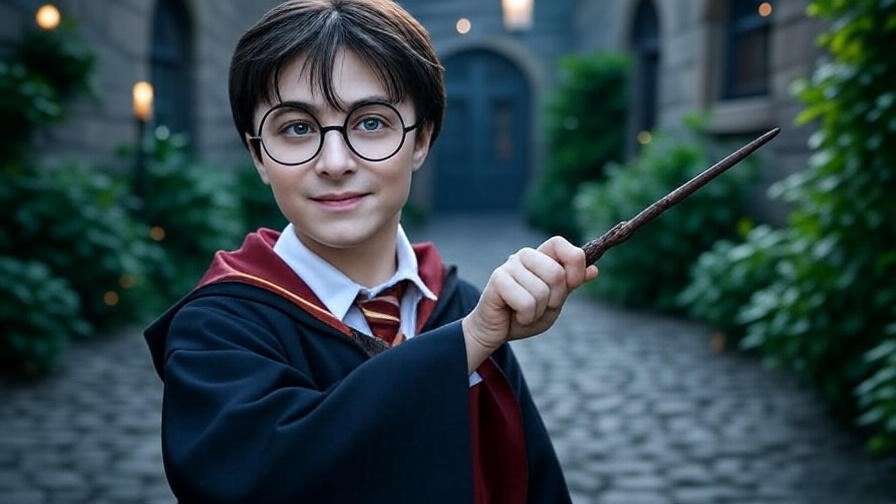
Imagine the moment a small boy with messy black hair and round glasses discovers a letter addressed in emerald-green ink, inviting him to a world of magic he never knew existed. “You’re a wizard, Harry.” Those four words, delivered by a giant of a man bursting through a door on a stormy night, launched one of the most beloved film franchises in history. For millions of fans, reliving that magic means returning not just to the books by J.K. Rowling, but to the Harry Potter script—the screenplays that transformed sprawling novels into cinematic spells.
Whether you’re searching for the full Harry Potter movie scripts to study dialogue, analyze adaptations, download PDFs for personal reference, or simply reread iconic lines like “It does not do to dwell on dreams and forget to live,” this comprehensive guide is for you. As a long-time Harry Potter enthusiast and film adaptation analyst who’s followed the series since the first book’s release and dissected every screenplay, I’ll provide the most reliable, up-to-date resources, legal considerations, and deeper insights than scattered blog posts or single-film pages offer. Here, you’ll find safe access points, film-by-film breakdowns, book-to-script comparisons, and practical tips to make the most of these treasures—all while respecting copyright and fair use principles.
The Harry Potter films (2001–2011) represent masterful adaptations, primarily penned by screenwriter Steve Kloves (with one exception). These scripts condense thousands of pages into visually stunning stories, balancing loyalty to the source material with cinematic necessities like pacing and spectacle. This guide solves the common frustration of unreliable links, outdated sites, or questionable downloads by curating the best options and explaining how to use them responsibly.
Understanding the Harry Potter Scripts – What They Are and Who Wrote Them
The Harry Potter movie scripts are not mere transcripts of spoken dialogue; they are full shooting screenplays, complete with scene headings, action lines, character descriptions, and parentheticals. Most were written by Steve Kloves, who adapted seven of the eight films (all except Order of the Phoenix). J.K. Rowling received screenplay credit on several due to her close involvement, providing notes and ensuring fidelity to her world.
 The Screenwriter Behind the Magic: Steve Kloves’ Role
Steve Kloves brought a deep respect for Rowling’s characters to the page. He met Rowling early, declaring Hermione his favorite, which influenced certain emphases in the adaptations. His style excels at visual storytelling—turning dense exposition into dynamic scenes—and maintaining the emotional core of Harry, Ron, and Hermione’s friendship. Kloves consulted Rowling extensively, even as books were still being written, to plant seeds for future plots without spoiling reveals.
Key Differences – Scripts vs. Books
Adapting 700+ page novels into 2–2.5 hour films required cuts. Here’s a quick overview table of major changes:
- Sorcerer’s Stone: Omitted Snape’s potion riddle challenge; Hermione’s panic in Devil’s Snare shifted to make her more proactive.
- Chamber of Secrets: Reduced Dobby’s appearances; simplified the polyjuice potion subplot.
- Prisoner of Azkaban: Cut large chunks of Marauders’ backstory exposition; emphasized visual time-turner sequences.
- Goblet of Fire: Removed SPEW, house-elf rights arc; condensed Quidditch World Cup and house-elf plotlines.
- Order of the Phoenix (Michael Goldenberg): Kept more book elements like Dumbledore’s Army training; less focus on Ministry politics buildup.
- Half-Blood Prince: Added tender Harry-Hermione moments not in the book; streamlined memory sequences.
- Deathly Hallows Parts 1 & 2: Split for depth; expanded Godric’s Hollow and Battle of Hogwarts visually.
These changes prioritized character arcs and spectacle while sometimes diminishing side characters like Ron (often comic relief) or Hermione (elevated as near-omniscient).
Official vs. Unofficial Sources
No official free movie script PDFs exist from Warner Bros. or Rowling (unlike the published Cursed Child playscript). Most available versions are fan-transcribed, leaked shooting drafts, or educational copies hosted on screenwriting sites under fair use claims. Always prioritize study/educational use over commercial redistribution to stay ethical and legal.
Where to Find Harry Potter Movie Scripts and Transcripts (Safe & Reliable Sources)
Finding trustworthy Harry Potter screenplay PDFs or transcripts can be tricky amid dead links and piracy risks. Here are vetted options as of 2026:
Best Websites for Full Scripts and PDFs
- Script Slug — Excellent for PDFs; hosts Sorcerer’s Stone, Chamber of Secrets, Prisoner of Azkaban, Goblet of Fire, Half-Blood Prince, Deathly Hallows Parts 1 & 2 (Kloves drafts). Clean, downloadable, with previews.
- StudioBinder — Offers Sorcerer’s Stone script PDF download with analysis; great for learning.
- 8FLiX — Curates complete set (2001–2011) for reading/download; FYC-style collection.
- IMSDb (Internet Movie Script Database) — Text versions of Sorcerer’s Stone, Deathly Hallows Part 1; reliable but older transcripts.
- Scripts.com — Readable Sorcerer’s Stone script online.
Avoid torrent sites or shady PDFs—stick to these for safety.
 Transcript Resources for Dialogue Lovers
For exact spoken lines (without stage directions):
- Warner Bros. Fandom / Moviepedia — Scene-by-scene transcripts (e.g., Philosopher’s Stone, Order of the Phoenix).
- Genius.com — Annotated scripts like Goblet of Fire for key moments.
Transcripts focus on dialogue; shooting scripts include visuals.
Download Guide – Free & Legal Options
- Visit Script Slug or StudioBinder.
- Search “Harry Potter” + film title.
- Click PDF link (often requires free account or direct download).
- Use for personal study only—fair use covers criticism, education, research.
Piracy sites risk malware; reputable screenwriting hubs are safer.
Published Screenplay Books & Official Editions
The only fully official published script is Harry Potter and the Cursed Child (special rehearsal edition). No film scripts were released as books, but companion guides like Page to Screen offer excerpts.
Film-by-Film Harry Potter Script Guide
This section dives deep into each film’s screenplay, highlighting key elements, standout scenes, notable adaptations from the book, approximate script length (most hover around 120–140 pages), director, and reliable access points. I’ve focused on the most accessible, high-quality versions available from reputable screenwriting archives as of 2026. For each, I’ll include a short, fair-use excerpt of iconic dialogue to illustrate the writing style.
 Harry Potter and the Sorcerer’s Stone / Philosopher’s Stone Script (2001)
Director: Chris Columbus Screenplay by: Steve Kloves (based on J.K. Rowling’s novel) Script length: ~134 pages (shooting draft) Key highlights: This introductory screenplay masterfully establishes the wizarding world through wonder and discovery. It balances humor, heart, and escalating danger, with the famous Diagon Alley sequence and the Hogwarts arrival serving as visual feasts on screen.
Notable changes from the book: The potion riddle challenge with Snape is omitted (replaced by a simpler logic puzzle for Hermione); the Devil’s Snare scene gives Hermione a more active role; Quidditch is streamlined but retains its excitement.
Best access:
- Script Slug: Full PDF available for download (clean, readable shooting draft).
- StudioBinder: Annotated version with breakdown for screenwriting study.
Famous excerpt (Opening scene – fair use): FADE IN: EXT. PRIVET DRIVE – NIGHT A tabby cat sits on a brick ledge. ALBUS DUMBLEDORE appears, extinguishes street lamps with his Deluminator. DUMBLEDORE: I should have known that you would be here… Professor McGonagall.
This sets the tone of quiet magic and secrecy.
Harry Potter and the Chamber of Secrets Script (2002)
Director: Chris Columbus Screenplay by: Steve Kloves Script length: ~130 pages Key highlights: Introduces darker tones with Dobby’s warnings, the flying car adventure, and the basilisk climax. The script emphasizes friendship and prejudice (e.g., blood status).
Notable changes: Reduced Dobby appearances; simplified polyjuice potion timeline; omitted some house-elf subplots for pacing.
Best access: Script Slug hosts the full PDF (highly recommended for its formatting). Transcripts available on Moviepedia fandom pages for dialogue-only reading.
Iconic line example: Dobby: Harry Potter must say he’s not going back to Hogwarts! HARRY: I’m not going back? But I have to!
Harry Potter and the Prisoner of Azkaban Script (2004)
Director: Alfonso Cuarón Screenplay by: Steve Kloves Script length: ~120 pages Key highlights: The most visually poetic entry, with time-turner mechanics, werewolf transformations, and emotional depth in Sirius and Lupin’s backstory. The script leans into atmosphere over plot density.
Notable changes: Extensive cuts to Marauders’ map explanations and backstory; time-turner sequence is more cinematic and less expository.
Best access: Script Slug PDF; some older drafts on IMSDb.
Standout scene excerpt: LUPIN: The very first time I saw you… Harry, you looked exactly like your father.
This film/script is often praised for its character focus.
 Harry Potter and the Goblet of Fire Script (2005)
Director: Mike Newell Screenplay by: Steve Kloves Script length: ~140 pages Key highlights: Tournament structure drives the plot; introduces Voldemort’s return dramatically. The Yule Ball adds teen romance.
Notable changes: Cut SPEW/house-elf rights arc entirely; Quidditch World Cup shortened; more focus on the three tasks.
Best access: Script Slug and IMSDb (text version available).
Memorable dialogue: Voldemort: Pick up my wand, Wormtail.
Harry Potter and the Order of the Phoenix Script (2007)
Director: David Yates Screenplay by: Michael Goldenberg (only non-Kloves film) Script length: ~130 pages Key highlights: Ministry denial, Dumbledore’s Army, and Umbridge’s tyranny. The script keeps more book elements like prophecy and training montages.
Notable changes: Less emphasis on Ministry politics buildup; added visual flair to DA meetings.
Best access: Script Slug PDF; detailed transcripts on Fandom wiki.
Harry Potter and the Half-Blood Prince Script (2009)
Director: David Yates Screenplay by: Steve Kloves Script length: ~125 pages Key highlights: Emotional depth with Dumbledore’s memories, Snape’s revelations, and Harry’s romance. The cave sequence is haunting.
Notable changes: Added tender Harry-Hermione moments (not in book); streamlined Slughorn’s memories.
Best access: Script Slug hosts the draft.
Excerpt: Dumbledore: It is the unknown we fear when we look upon death and darkness, nothing more.
Harry Potter and the Deathly Hallows – Part 1 & Part 2 Scripts (2010–2011)
Director: David Yates Screenplay by: Steve Kloves Script length: ~130 pages each (split for depth) Key highlights: Epic road trip in Part 1, massive Battle of Hogwarts in Part 2. Themes of sacrifice, loyalty, and love triumph.
Notable changes: Expanded Godric’s Hollow and battles visually; Ron’s insecurities amplified for drama.
Best access: Script Slug for both parts; IMSDb for Part 1.
Iconic final line (Part 2): Harry: All was well.
These scripts showcase Kloves’ skill at condensing epic tales while preserving emotional truth.
How to Use Harry Potter Scripts for Learning & Enjoyment
For Aspiring Screenwriters & Film Students
Study the three-act structure: Setup (introduction to wizarding world), confrontation (rising stakes across films), resolution (climax in Deathly Hallows). Analyze dialogue—Kloves uses subtext effectively (e.g., Hermione’s logic vs. Harry’s intuition). Tips: Break down exposition scenes (Diagon Alley vs. endless info dumps); note how visual descriptions guide directors.
 Comparing Book vs. Script – Deep Dive Examples
Use side-by-side comparisons for key scenes:
- Sorcerer’s Stone: Book’s lengthy train ride → Script’s quick platform reveal + chocolate frogs.
- Prisoner of Azkaban: Detailed time-turner explanation → Visual loop in script.
- Half-Blood Prince: Multiple memories → Condensed, emotionally charged versions.
This helps understand adaptation trade-offs.
Fun Fan Uses
Quote for memes/social media; reenact scenes with friends; incorporate lines into fanfiction or D&D campaigns.
Common Questions About Harry Potter Scripts (FAQs)
Is there an official Harry Potter movie script PDF? No—unlike the Cursed Child play, film scripts aren’t officially published for free. Use fair-use educational copies from sites like Script Slug.
Where can I download the full Harry Potter series scripts? Script Slug offers the most complete set (Sorcerer’s Stone through Deathly Hallows); StudioBinder for select films with analysis.
What is the difference between the Sorcerer’s Stone and Philosopher’s Stone script? Minimal—U.S. title change; script content is identical (some regional dialogue tweaks like “Mum” vs. “Mom”).
Can I read the Harry Potter scripts online for free? Yes—IMSDb and Genius.com for text; Script Slug for PDFs (no login usually required).
Who wrote most of the Harry Potter film scripts? Steve Kloves adapted seven; Michael Goldenberg did Order of the Phoenix.
Are the Fantastic Beasts scripts included? No—this guide focuses on the main series. Check Wizarding World or similar for those.
How long are the Harry Potter shooting scripts? Typically 120–140 pages, standard for 2+ hour films.
Is it legal to download Harry Potter script PDFs? For personal, educational, or research use under fair use—yes from reputable sites. Avoid redistribution or commercial use.
This ultimate guide equips you with everything needed to explore the Harry Potter scripts safely, deeply, and responsibly. From Steve Kloves’ faithful yet cinematic adaptations to practical download links and analysis, these screenplays reveal why the films captured global imaginations for over a decade.
The magic lies not just in spells, but in words that transport us. Bookmark this page, share it with fellow Potterheads, and dive into related posts like “The Best Harry Potter Quotes Ranked” or “How the Hogwarts Houses Shape Character Arcs” here on the blog.
Whether you’re studying screenwriting, reliving childhood wonder, or preparing a fan project, the Harry Potter scripts remain timeless treasures. Accio knowledge—and happy reading!