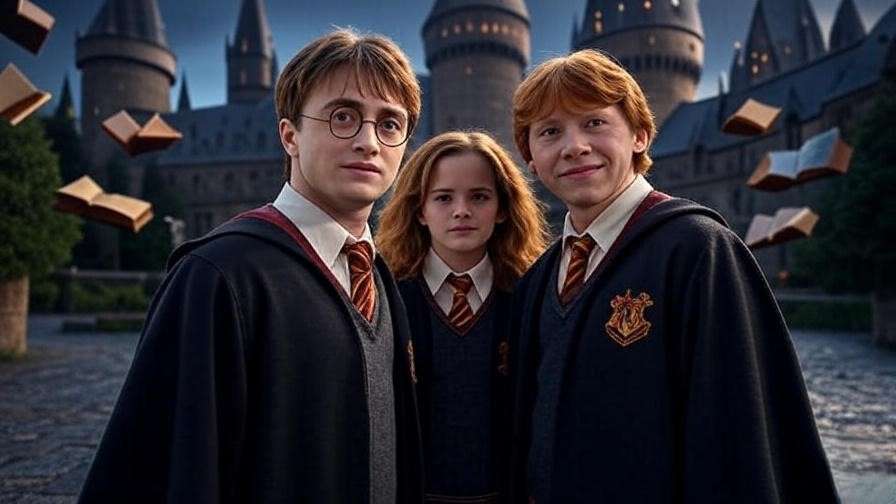
Imagine walking into a room full of fantasy readers and dropping a simple question: Hogwarts or Middle-earth? Within seconds, you would likely ignite a fiery debate that could last for days. The passion surrounding these two monumental franchises is undeniable. But when we strip away the nostalgia and look closely at the craft, how do they really compare? If you are looking to dive into an epic fantasy series, or simply want well-researched ammunition for your next fandom argument, you need a side-by-side analysis. In this definitive guide to Harry Potter vs Lord of the Rings, we will break down the world-building, magic systems, character arcs, and underlying themes of both series to help you finally settle the ultimate fantasy debate.
The Genesis of the Giants (Context & Origins)
To understand why these stories resonate so deeply, we must first look at the architects who built them. J.R.R. Tolkien and J.K. Rowling approached the fantasy genre from vastly different perspectives, informed by different eras and entirely different goals.
J.R.R. Tolkien’s Epic Tapestry
John Ronald Reuel Tolkien did not sit down to write a novel; he sat down to write a mythology. As an Oxford professor, a brilliant philologist (scholar of languages), and a veteran of the trenches of World War I, Tolkien possessed a unique set of tools and traumas. He felt that England lacked a cohesive, ancient mythology comparable to the Norse or Greek traditions, and he set out to create one.
The Lord of the Rings was born from his creation of complex, functional languages (like Quenya and Sindarin, the languages of the Elves). He built the world of Middle-earth to give his languages a place to exist and a people to speak them. The resulting narrative is steeped in historical grandeur, reading less like modern fiction and more like an ancient, translated epic.
J.K. Rowling’s Modern Phenomenon
In stark contrast, Joanne Rowling’s origin story is firmly rooted in the modern, everyday world. The idea for a boy who discovers he is a wizard came to her on a delayed train journey in 1990. While Tolkien wrote from an academic ivory tower and the shadow of global war, Rowling wrote from the perspective of a struggling single mother in cafes, weaving a tale that felt intensely relatable.
Rowling’s approach evolved organically. What began as a whimsical, slightly Dickensian children’s story in The Sorcerer’s Stone matured alongside its audience into a dark, politically charged young adult epic by The Deathly Hallows.
The Fantasy Sub-Genre Divide
High Fantasy (Lord of the Rings): Set entirely in a fictional, secondary world with its own physical laws, geography, and history, entirely separate from our reality.
Low/Urban Fantasy (Harry Potter): Magic and magical beings exist hidden within or parallel to our primary, real world.
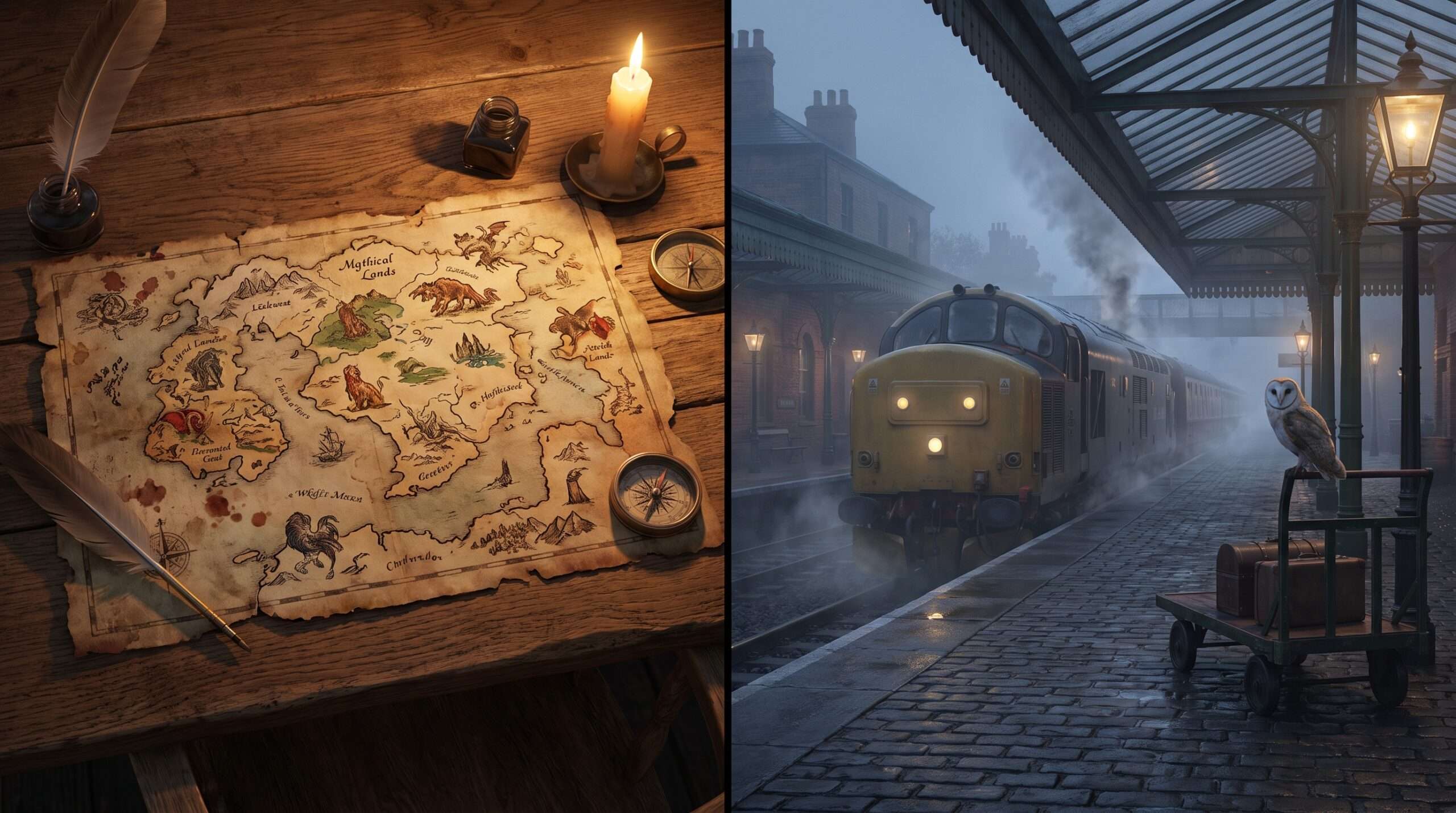 World-Building: Middle-earth vs. The Wizarding World
The strength of any fantasy series rests on the immersion of its world. Both authors are masters of this craft, but they excel in completely different arenas.
Middle-earth: A Masterclass in Mythology and Geography
When we talk about “High Fantasy” world-building, Tolkien is the gold standard. The sheer scale and depth of Middle-earth are staggering.
Tolkien did not just draw a map; he detailed the tectonic shifts of his world over millennia. If you read The Silmarillion (the prequel mythology to LOTR), you discover thousands of years of recorded history, genealogies of kings, the creation of the universe by an angelic choir (the Ainur), and the rise and fall of entire continents.
When Aragorn sings a lament by the campfire, he is referencing a fully realized historical event within that universe. This gives Middle-earth a profound sense of antiquity and weight. The reader constantly feels that the characters are walking through the ruins of a much grander, older world.
The Wizarding World: Magic Hidden in Plain Sight
Rowling’s world-building genius lies in its proximity to the reader. She created a magical society functioning right under the noses of modern-day “Muggles” in 1990s Britain.
Instead of sweeping vistas and ancient ruins, her world-building is intensely detailed and charmingly bureaucratic. The Wizarding World is filled with specific rules for underage magic, a Ministry of Magic with various quirky departments, a specialized banking system (Gringotts), and a transportation network (the Floo Network, Portkeys).
The immersive power of Hogwarts—with its moving staircases, sorting ceremonies, and house points—creates an intense sense of wish fulfillment. Tolkien’s world is one you want to visit; Rowling’s world is one you desperately want to belong to.
The Verdict on World-Building: It depends on what you value. If you value epic scale, linguistic perfection, and deep historical lore, Lord of the Rings is unmatched. If you value charm, relatability, and a world that feels like it could exist just down your street, Harry Potter takes the crown.
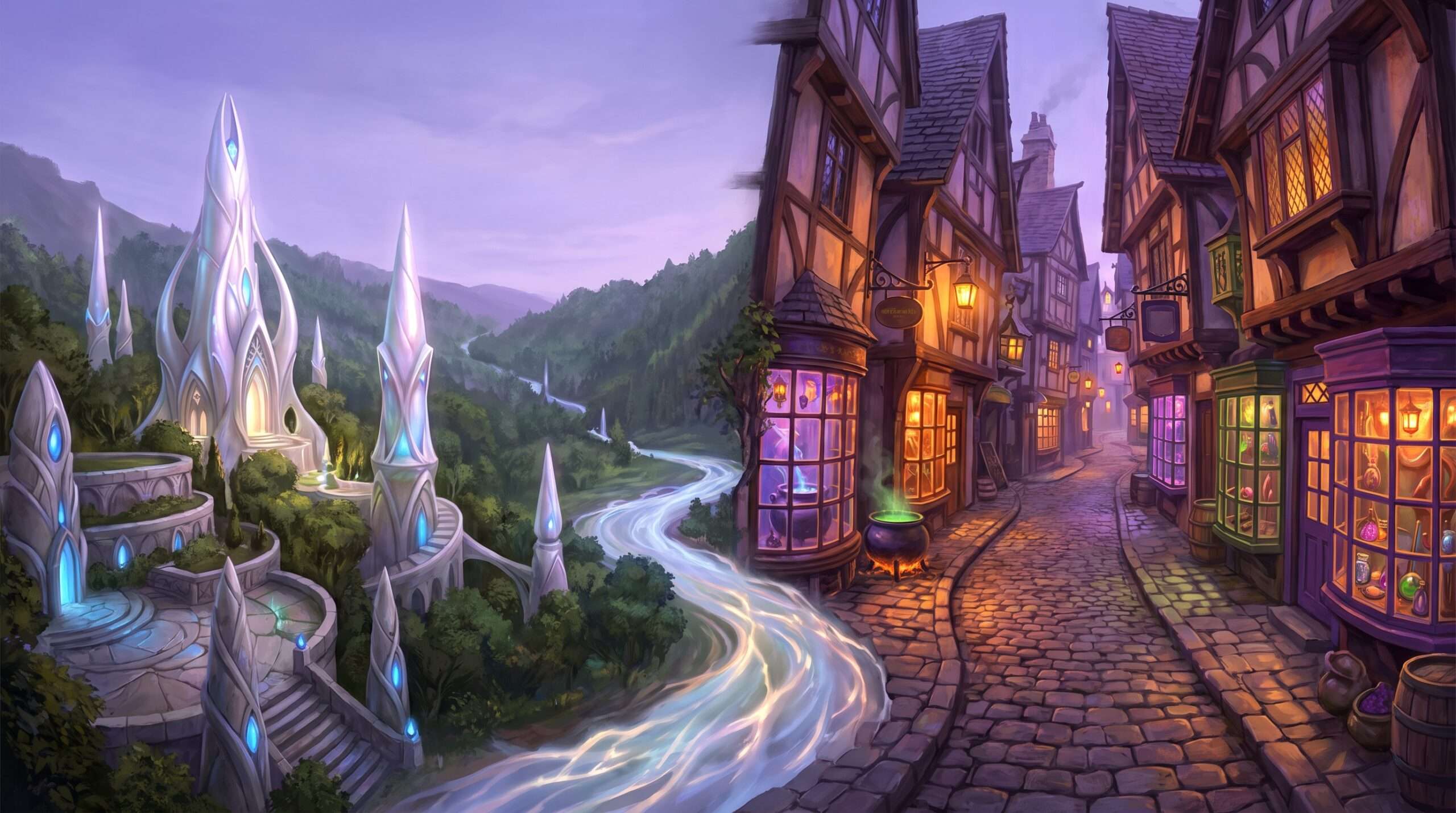 Analyzing the Magic Systems
How magic operates in a fantasy universe dictates the stakes of the story. Here, we see a clear divide between “Hard” and “Soft” magic systems.
The Structured, Scholarly Magic of Harry Potter
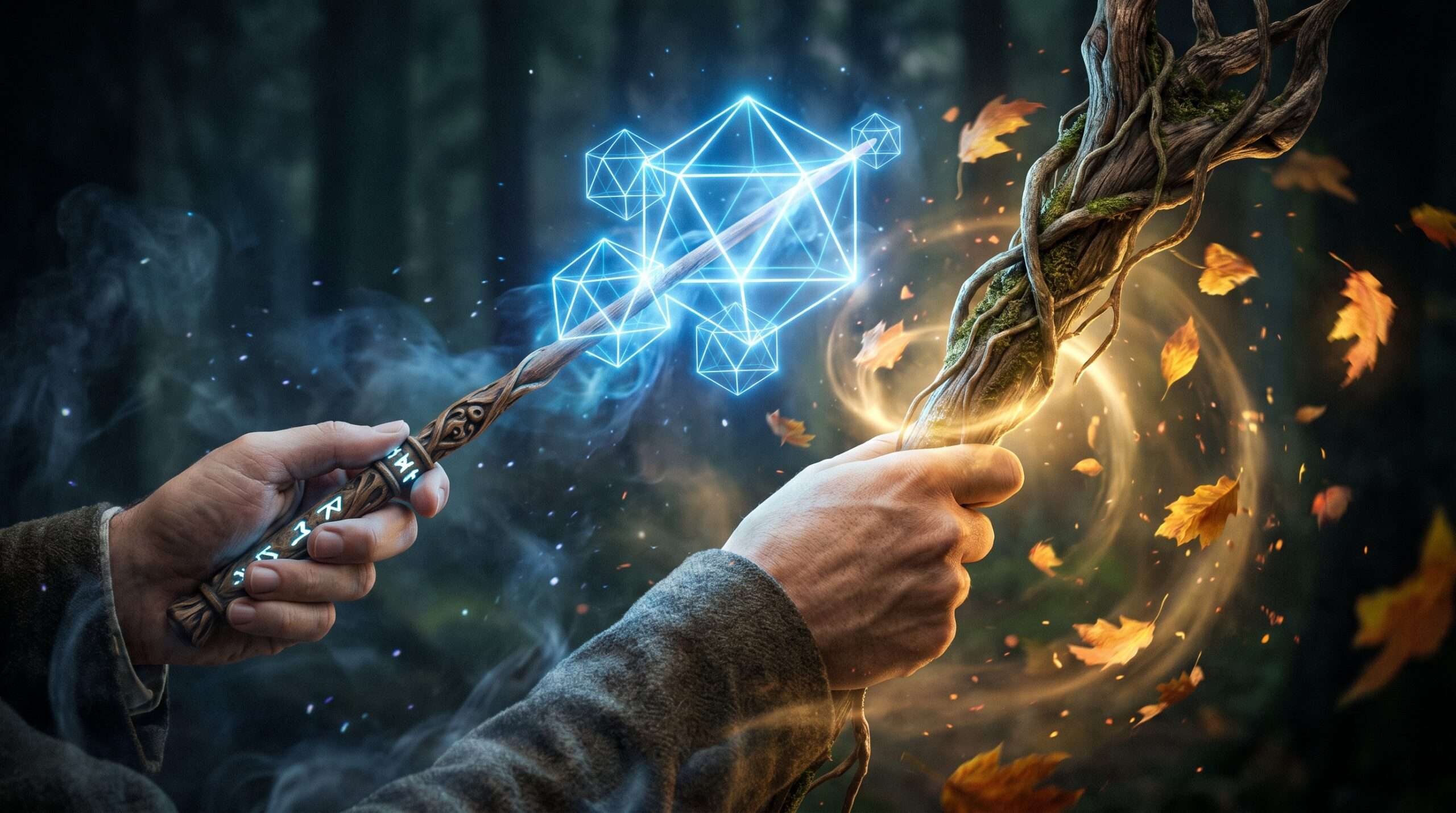
In the Harry Potter universe, magic is a tool and a learnable skill. This is commonly referred to as a “Hard Magic” system—the rules, limitations, and costs of magic are generally clear to the reader.
To cast a spell, a witch or wizard usually requires a wand, specific intent, correct pronunciation of a Latin-based incantation (e.g., Wingardium Leviosa), and a precise wand movement. Because we understand how the magic works, Rowling can use it to solve problems without it feeling like a cheap trick (a Deus Ex Machina). When Hermione solves a puzzle using a specific spell she learned in chapter three, it feels earned.
 The Mystical, Ancient Magic of Lord of the Rings
Tolkien utilizes a “Soft Magic” system. Magic in Middle-earth is rarely about shouting incantations or waving a wand to produce a specific effect. In fact, the word “magic” is often misunderstood by the Hobbits.
In LOTR, magic is inherent to nature, bloodlines, and divine grace. It is deeply mysterious. When Gandalf uses magic, it is often subtle—inspiring courage, creating light, or breaking a bridge. He doesn’t have a spellbook; his power comes from his status as a Maia (an angelic being). The rings of power themselves don’t just shoot fireballs; they preserve time, manipulate minds, and corrupt souls. The lack of defined rules makes the magic of Middle-earth feel truly awe-inspiring and dangerous.
The Heroes, Villains, and Mentors
A compelling fantasy epic requires archetypal characters that resonate with the human experience. Both series provide iconic figures, but their fundamental natures are vastly different.
 The Burden Bearers: Frodo Baggins vs. Harry Potter
The protagonists of both series are unlikely heroes thrust into impossible situations, yet they handle their destinies in contrasting ways.
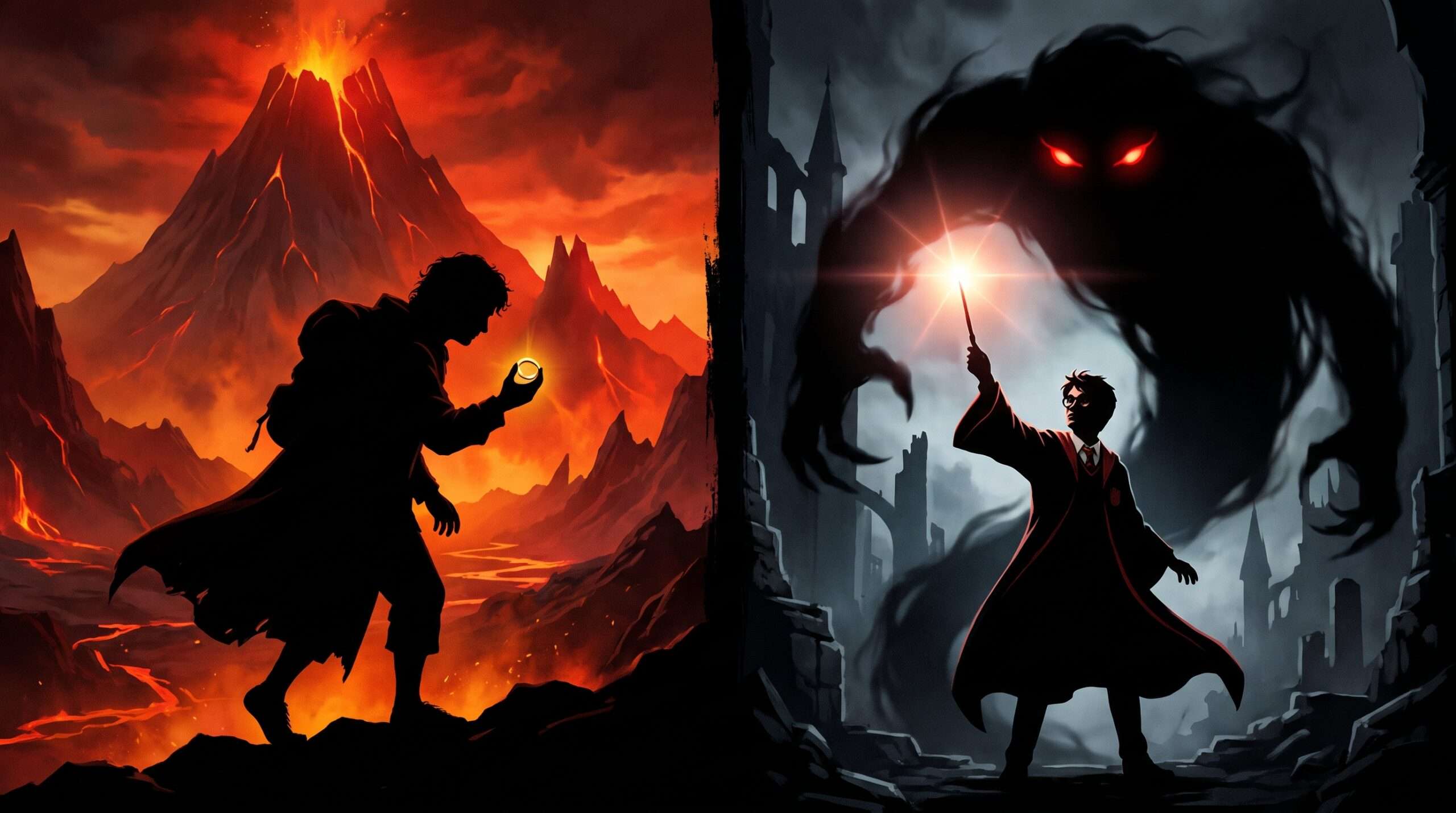
Frodo Baggins is an Everyman (or Every-hobbit). He has no special powers, no magical lineage, and no desire for adventure. His heroism lies entirely in passive endurance. His journey is one of immense physical and psychological suffering as the One Ring slowly corrupts his mind. Frodo is arguably the most tragic hero in modern fantasy; he succeeds in his quest, but he is too broken by the experience to enjoy the world he saved.
Harry Potter, on the other hand, is the “Chosen One.” From the very first chapter, he is famous. Harry is marked by destiny (literally, with his scar). Unlike Frodo, Harry’s journey requires active, combative choices. He must learn to duel, uncover mysteries, and make decisions that put his friends in danger. Harry’s core strength is not just endurance, but his capacity to love despite a lifetime of abuse and loss.
The Dark Lords: Sauron vs. Voldemort
The antagonists define the tone of the conflict in each series.
Sauron is largely an off-screen presence. He is a formless, looming, god-like threat represented by the lidless Eye. Sauron is not a character with whom you can reason; he is the embodiment of absolute, corrupting power and tyranny. He represents an existential threat to all free peoples of Middle-earth.
Lord Voldemort (Tom Riddle) is a deeply flawed, disturbingly human villain. He is a psychological study of narcissism, prejudice, and a sociopathic fear of death. Voldemort doesn’t want to conquer the world just for power; he wants to conquer death itself. His methods are closer to a political terrorist or a cult leader, making him a more intimate and relatable kind of evil.
The Wise Guides: Gandalf vs. Dumbledore
The mentor archetype is crucial in fantasy, and these two are the titans of the trope.
Gandalf the Grey (and White) is less of a headmaster and more of an angelic catalyst. He is an immortal being sent by the gods (the Valar) to unite the free peoples against Sauron. He cannot fight their battles for them, but he acts as the spark that ignites their courage.
Albus Dumbledore is a deeply complex, highly political, and ultimately flawed human being. He serves as a father figure to Harry, but as the series progresses, we realize he is also a general fighting a war, making cold, utilitarian calculations. Dumbledore loves Harry, but he also explicitly raises him to be a sacrifice. This moral ambiguity makes Dumbledore a fascinating, modern mentor.
Core Themes and Underlying Messages
Great fantasy is never just about elves or wizards; it uses the fantastical to explore the human condition.
Sacrifice, Industrialization, and the Fading of Magic
Tolkien’s Lord of the Rings is heavily influenced by his Catholic faith and his experiences in WWI.
-
The Trauma of War: The Shire is forever changed, and Frodo’s PTSD reflects the reality of returning soldiers.
-
Environmentalism vs. Industrialization: The destruction of the Ents’ forest by Saruman’s machines at Isengard is a direct critique of the Industrial Revolution and the mechanization of war.
-
The Fading of the World: LOTR is profoundly melancholic. It is about the transition from the magical Age of Elves to the mundane Age of Men. Magic is leaving the world, and victory comes at the cost of the world’s enchantment.
Coming of Age, Prejudice, and the Power of Love
Rowling’s themes are grounded in social issues and emotional development.
-
The Allegory of Prejudice: The conflict over “blood purity” (Purebloods vs. Muggle-borns) is a direct, accessible allegory for racism and fascism.
-
The Acceptance of Death: While Voldemort tears his soul apart to avoid death, Harry wins by accepting his mortality (the “Master of Death”).
-
The Power of Love: It sounds cliché, but Rowling hardcodes love into the magic system. Lily Potter’s sacrifice is literal, ancient magic that protects Harry. Love, friendship, and loyalty are the only weapons capable of defeating Voldemort’s fear and hatred.
Accessibility, Pacing, and the Reading Experience
When deciding which series to read, the actual experience of turning the pages is just as important as the lore.
The Pacing of a Mystery vs. The Pacing of a Journey
Harry Potter is famous for its readability. Rowling often structured her books as mystery novels wrapped in a boarding school setting. Every chapter introduces a new clue, a new suspect, or a new magical rule. The pacing is rapid, conversational, and highly addictive, making it accessible to readers of all ages.
The Lord of the Rings requires patience. It is a slow-burn travelogue and a historical epic. Tolkien’s prose is highly descriptive, poetic, and sometimes archaic. He takes his time describing the lineage of a sword, the geography of a valley, or the lyrics of an ancient song. It demands a reader who enjoys the journey just as much as the destination.
The Fandom and Cultural Legacy
Both franchises have transcended literature to become cultural juggernauts.
Tolkien essentially codified modern fantasy. Almost every elf, dwarf, and orc in modern gaming (like Dungeons & Dragons or World of Warcraft) and literature owes its existence to Middle-earth. Peter Jackson’s film trilogy redefined cinematic epics and brought Tolkien’s world to a massive global audience.
Rowling, meanwhile, revolutionized children’s publishing, proving that kids would read massive, 700-page books. She defined the modern Young Adult genre and cross-generational marketing. The physical realization of her world through the Wizarding World theme parks offers an interactive, visceral experience that has fundamentally changed the theme park industry.
 Frequently Asked Questions (FAQ)
Did Harry Potter copy Lord of the Rings?
No. While there are similarities (e.g., Dementors resemble Nazgûl, Horcruxes resemble the One Ring, and Dumbledore resembles Gandalf), these are largely due to both authors drawing from the same deep well of European mythology, Arthurian legend, and classic hero archetypes, rather than direct plagiarism.
Which series is longer: Harry Potter or LOTR?
Harry Potter is significantly longer. The seven Harry Potter books total over 1,000,000 words. The Lord of the Rings (which is technically one novel published in three volumes, plus The Hobbit) totals roughly 576,000 words.
Which is more popular globally?
By pure sales metrics, Harry Potter is the best-selling book series in history, with over 600 million copies sold worldwide. The Lord of the Rings is one of the best-selling single novels, with over 150 million copies sold. Both film franchises are multi-billion-dollar titans.
So, who wins the battle of Harry Potter vs Lord of the Rings? The truth is, it depends entirely on what you, the reader, need from your fantasy.
-
Choose Harry Potter if: You want a fast-paced, character-driven story. If you love mysteries, relatable school drama, clear-cut magic systems, and a world you desperately wish you could step into tomorrow, the Wizarding World is waiting for you.
-
Choose Lord of the Rings if: You want a sprawling, mythic epic. If you appreciate deep historical lore, beautiful and poetic writing, monumental battles between absolute good and evil, and a melancholic reflection on the passing of time, Middle-earth is your destination.
Both are masterpieces. One offers a profound, mythic history; the other offers a deeply personal, magical coming-of-age. The best part of this debate? You don’t actually have to choose just one.