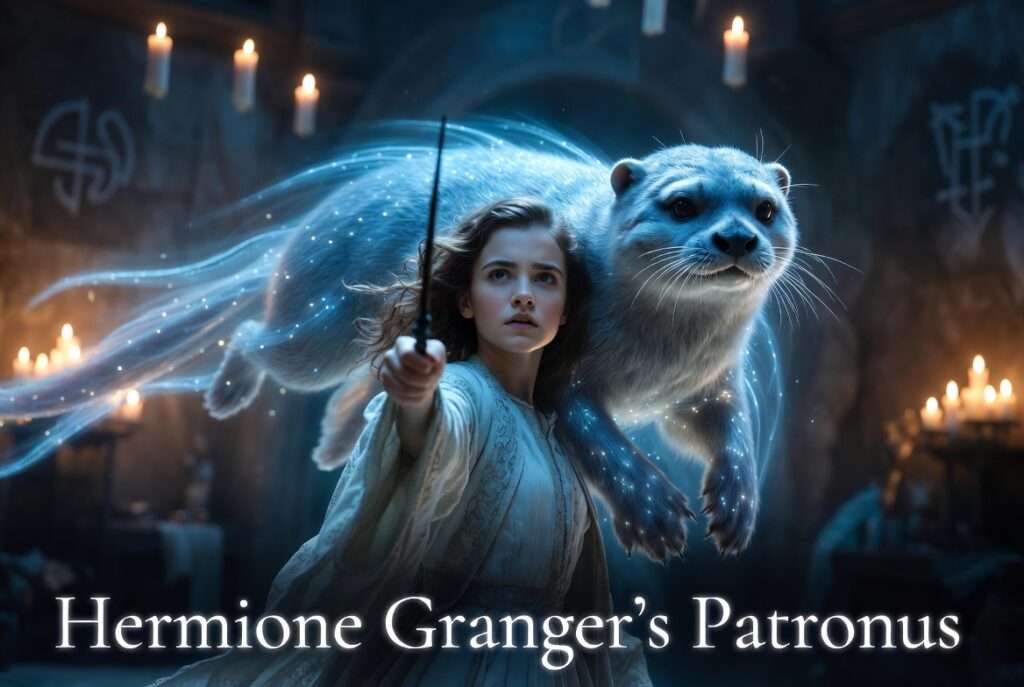
In the flickering light of the Room of Requirement, surrounded by fellow Dumbledore’s Army members, Hermione Granger raised her wand and uttered the powerful incantation: Expecto Patronum. What emerged wasn’t a majestic stag or a fierce guardian beast, but a sleek, silvery otter that darted playfully through the air. For many fans, this moment in Harry Potter and the Order of the Phoenix was surprising—almost understated compared to Harry’s iconic stag. Yet Hermione Granger’s Patronus, an otter, holds profound layers of meaning that reveal the depth of her character, J.K. Rowling’s personal touch, and the intricate symbolism woven into the wizarding world.
If you’ve ever wondered why the brightest witch of her age summons an otter to combat Dementors, you’re not alone. This comprehensive guide dives deep into canon details, symbolic interpretations, real-world parallels, and hidden connections that make Hermione’s Patronus one of the most fascinating in the entire series. Whether you’re a longtime Potterhead seeking deeper insight or a newer fan curious about Expecto Patronum and its personal significance, this article delivers the definitive exploration you’ve been searching for.
What Is a Patronus Charm? Understanding the Magic
Before examining Hermione Granger’s Patronus specifically, it’s essential to understand the Patronus Charm itself—one of the most advanced and emotionally demanding forms of defensive magic in the Harry Potter universe.
The Origins and Purpose of the Patronus Charm
The Patronus Charm dates back centuries in wizarding history. Its primary function is to act as a shield against soul-sucking Dementors, creatures that feed on happiness and leave despair in their wake. A Patronus serves as both a protector and a manifestation of pure, positive energy. In Harry Potter and the Prisoner of Azkaban, Professor Remus Lupin teaches Harry the spell, emphasizing that it requires a powerful happy memory—strong enough to drive away darkness.
Non-corporeal Patronuses appear as misty clouds, useful for basic defense. However, a corporeal Patronus takes a distinct animal form, revealing deeper truths about the caster’s inner self.
How Patronuses Work: Incantation, Memories, and Mastery
The incantation Expecto Patronum translates roughly to “I await a guardian.” Success depends on concentration, emotional authenticity, and the ability to channel joy amid fear. As fans know, this is incredibly difficult. Many witches and wizards never achieve a corporeal form.
Professor Catullus Spangle, an 18th-century Charms expert whose writings appear on Wizarding World, explained that a Patronus “represents that which is hidden, unknown but necessary within the personality.” It awakens a secret self that emerges precisely when needed most.
This principle makes every Patronus deeply personal, explaining why identical twins can have different forms and why love or family connections often influence shapes (such as Snape’s doe mirroring Lily Potter’s).
Why Patronus Forms Reveal Hidden Aspects of the Self
Patronuses are not chosen—they emerge from the subconscious. They reflect core traits, aspirations, and sometimes relationships. For Hermione, mastering this spell represented a significant personal triumph, showcasing her growth from a rule-bound student to a resilient fighter willing to embrace vulnerability.
Hermione Granger’s Patronus Revealed – The Otter
Hermione Granger’s Patronus is an otter.
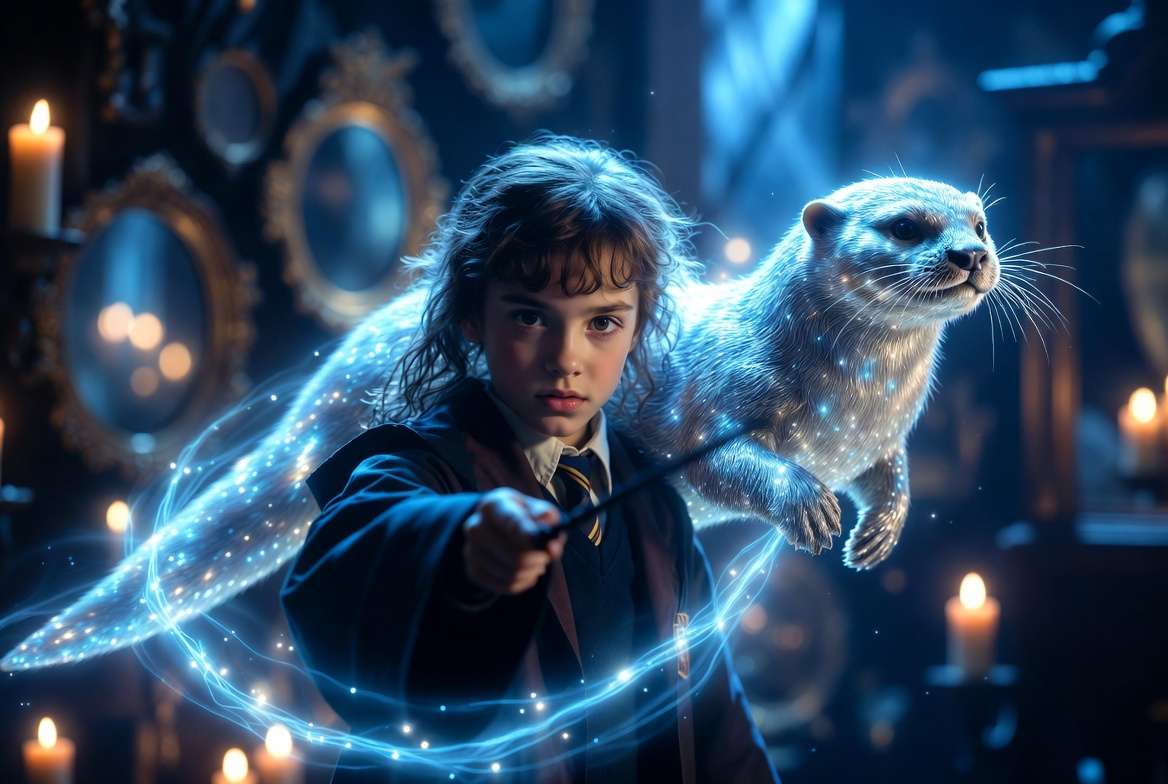
We first witness her successful corporeal Patronus during Dumbledore’s Army training sessions in Order of the Phoenix (Chapter 27, “The Centaur and the Sneak”). In a room filled with determined students, Hermione’s silvery otter bursts forth, swimming gracefully through the air—a moment of quiet excellence amid the group’s efforts.
In the films, the otter appears sleek and energetic, perfectly capturing the playful essence of the animal while maintaining an air of intelligence and purpose. Though the books don’t specify the exact species, fans often imagine a river otter given its agility and common associations.
Hermione later uses her otter Patronus effectively in Deathly Hallows, including during defensive maneuvers and communications, proving its reliability in the most dangerous situations.
 Why an Otter? J.K. Rowling’s Personal Connection
One of the most charming aspects of Hermione Granger’s Patronus is its direct link to J.K. Rowling herself.
J.K. Rowling has publicly stated on multiple occasions that the otter is her favorite animal. She chose this form for Hermione because the character serves as a strong reflection of herself—particularly her younger self, marked by intelligence, insecurity, fear of failure, and a deep love of learning.
This personal touch adds authenticity. Rowling poured much of her own personality into Hermione: the bushy hair, the academic brilliance, the initial social awkwardness, and the fierce loyalty once bonds form. By giving her character her favorite animal as a Patronus, Rowling created a subtle but meaningful bridge between author and creation.
In interviews and tweets, Rowling has shared glimpses of otters, reinforcing this connection. The choice transforms what might seem like a “cute” Patronus into something profoundly intentional.
Symbolic Meaning of the Otter Patronus
The otter is far more than an adorable choice—it perfectly encapsulates Hermione’s multifaceted personality.
Personality Traits Reflected: Intelligence, Dexterity, and Curiosity
Otters rank among the most intelligent mammals. They use tools (such as rocks to crack shells), solve complex problems, and demonstrate remarkable dexterity with their paws. These traits mirror Hermione’s brilliant mind, her problem-solving skills (often the one finding solutions in crises), and her insatiable curiosity that drove her to read every book in the Hogwarts library.

The Hidden Carefree Side of Hermione
Perhaps the most insightful symbolism lies in the otter’s playful nature. Otters are known for sliding, juggling, and frolicking—behaviors that contrast sharply with Hermione’s studious, sometimes stern exterior. As Wizarding World notes, her Patronus highlights the carefree side usually buried beneath homework and responsibilities. It reveals the joy she finds with Harry and Ron, the laughter in the common room, and the girl who could finally relax and be herself.
This “secret self” aligns perfectly with Spangle’s explanation: the Patronus awakens necessary but hidden aspects of the personality.
Loyalty, Adaptability, and Protection
Otters form strong family bonds and are highly adaptable across environments. Hermione’s unwavering loyalty to her friends—risking everything for Harry and standing by Ron despite disagreements—reflects this. Her adaptability shines through as she navigates the Muggle world, pure-blood society, and the dangers of war with equal determination.
Real-world otters also demonstrate strong maternal instincts and protective behaviors, echoing Hermione’s role as the emotional anchor and voice of reason in the Golden Trio.
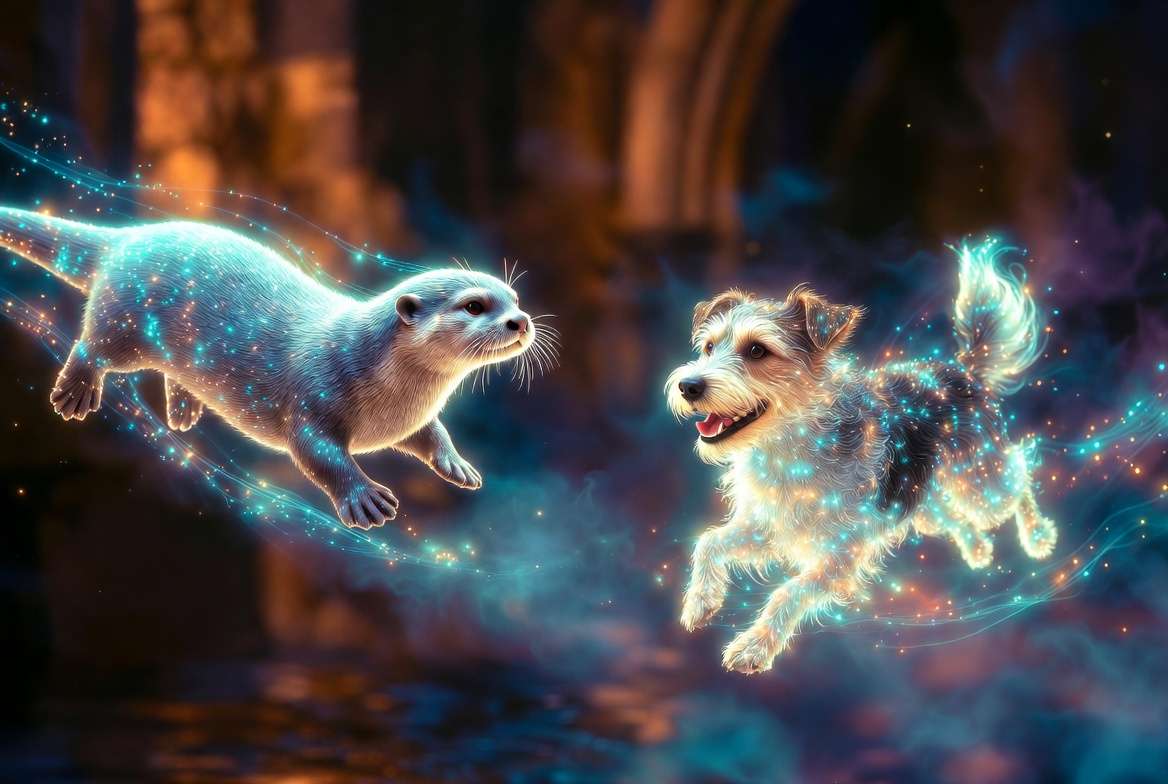
The Ron and Hermione Connection – Otter and Jack Russell Terrier
One of the most delightful canon details involves the pairing of Hermione’s otter with Ron Weasley’s Jack Russell Terrier Patronus.
Ron’s Patronus, a lively terrier, was revealed around the same period in Dumbledore’s Army. In nature, Jack Russell Terriers are known for their energetic hunting instincts and have been observed interacting dynamically with otters. Many fans interpret this as subtle foreshadowing of Ron and Hermione’s romantic relationship—a playful chase that symbolizes their bickering, attraction, and eventual union.
While J.K. Rowling has not explicitly confirmed this as intentional foreshadowing, the symbolic compatibility adds beautiful depth. Their Patronuses complement each other much like the characters do: the loyal, tenacious dog and the clever, agile otter working together.
 Comparing Hermione’s Patronus to Other Major Characters
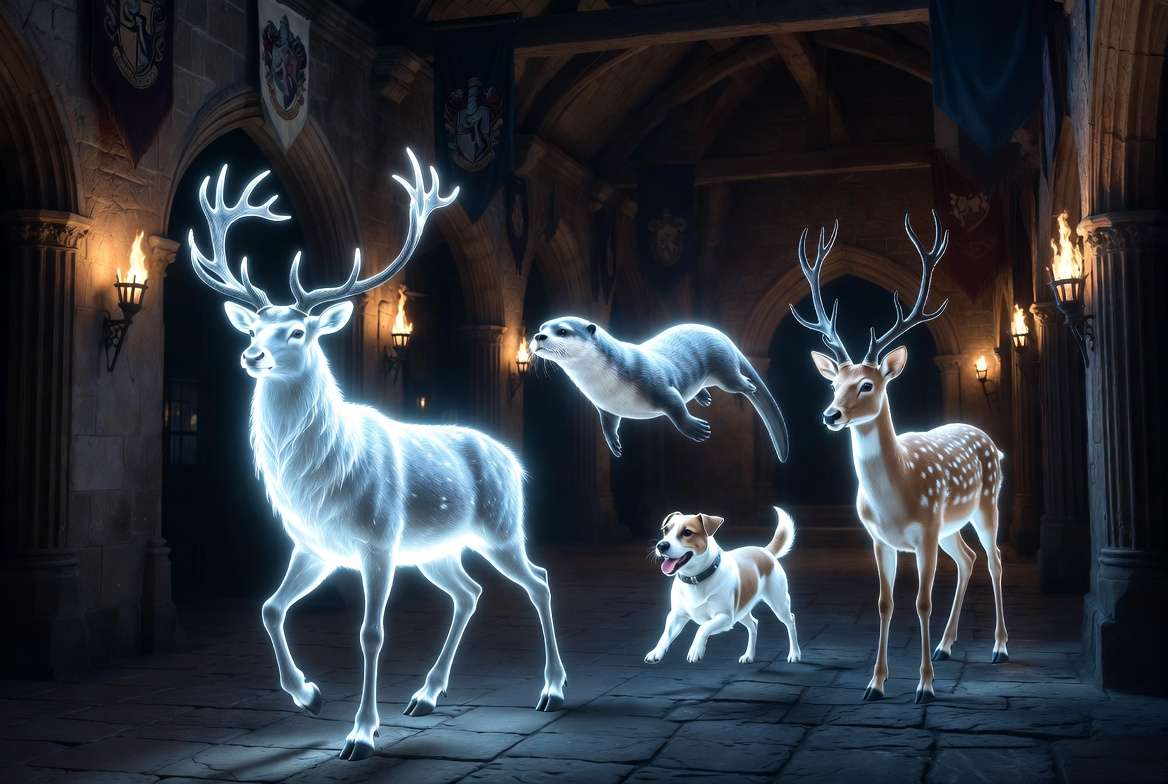
To fully appreciate Hermione’s otter, it helps to view it in context with other notable Patronuses:
- Harry Potter’s Stag: Majestic and protective, mirroring his father James and symbolizing leadership and sacrifice.
- Snape’s Doe: A direct reflection of his undying love for Lily Potter, showcasing Patronuses as markers of deep emotional bonds.
- Ron’s Jack Russell Terrier: Energetic, loyal, and brave—embodying Ron’s growth from insecurity to heroism.
- Luna Lovegood’s Hare: Whimsical and free-spirited, perfectly suiting her unique worldview.
- Cho Chang’s Swan: Graceful and elegant, reflecting her poise amid tragedy.
A key distinction: While many Patronuses tie directly to family (like Harry’s), Hermione’s emphasizes personal traits and chosen family—the friends who became her true home.
Comparison Table (for clarity):
- Character | Patronus | Core Symbolism
- Harry Potter | Stag | Protection, heritage, leadership
- Hermione Granger | Otter | Intelligence, playfulness, adaptability
- Ron Weasley | Jack Russell Terrier | Loyalty, tenacity, courage
This variety underscores how Patronuses celebrate individuality within the shared fight against evil.
 The Power and Rarity of Hermione’s Patronus
Mastering the Patronus Charm at a young age is rare. Hermione achieved a full corporeal form during her fifth year under Harry’s guidance, despite the immense pressure of OWLs, Umbridge’s tyranny, and personal anxieties.
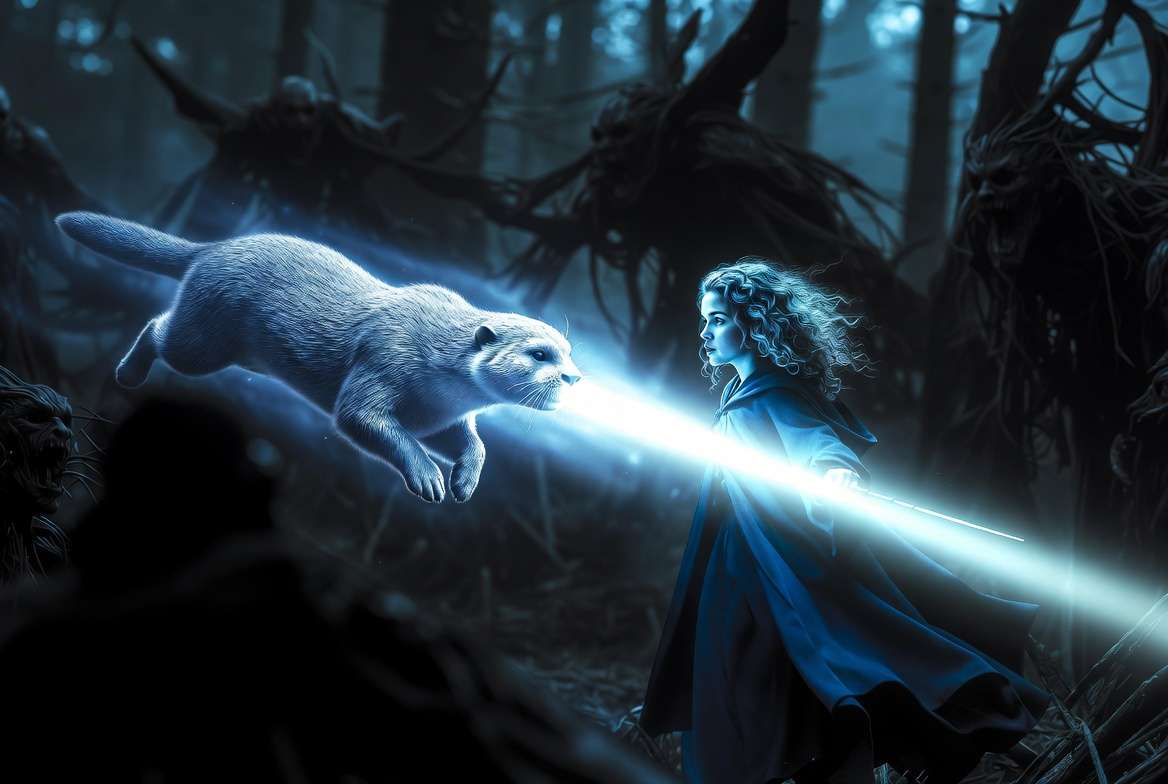
Her otter proves highly effective in battle, providing light, protection, and morale. In Deathly Hallows, members of the Trio rely on Patronuses for communication and defense during their Horcrux hunt. Hermione’s consistent success highlights her emotional intelligence—she can access genuine happiness even in darkness.
Its rarity among witches and wizards further cements Hermione’s exceptional status. Few characters produce such a distinctive and fitting Patronus so early.
What Hermione’s Patronus Teaches Us About Character Growth
Hermione Granger’s otter Patronus offers powerful lessons beyond the books:
- Embracing Your Hidden Self — Strength often lies in qualities we undervalue, like playfulness amid ambition.
- The Power of Happy Memories — In difficult times, deliberately recalling joy becomes a literal superpower.
- Balancing Ambition with Joy — Hermione teaches us that brilliance and lightness can coexist.
- Chosen Family Matters — Her Patronus thrives in connection, reminding us that relationships fuel our greatest strengths.
In today’s world, these insights resonate deeply. Whether facing personal “Dementors” like anxiety or stress, channeling positive memories and embracing all sides of yourself can be transformative.
Common Questions About Hermione Granger’s Patronus (FAQs)
What is Hermione Granger’s Patronus? It is an otter.
Why did J.K. Rowling choose an otter for Hermione? Primarily because it is her own favorite animal, and Hermione reflects many aspects of Rowling’s personality.
Does Hermione’s Patronus ever change? There is no indication in canon that it changes, unlike some theories about other characters.
How does it compare to Ron’s Patronus? The otter and Jack Russell Terrier pairing creates a symbolically compatible and playful dynamic that mirrors their relationship.
Can other wizards have otter Patronuses? Yes, the form is possible for others whose inner traits align, though it remains relatively uncommon.
Fun Facts, Trivia, and Behind-the-Scenes Insights
- Otters are one of the few animals known to hold hands while sleeping to avoid drifting apart—symbolizing connection and loyalty.
- In the films, creating the silvery Patronus effects required innovative visual effects work.
- On Wizarding World (formerly Pottermore), the otter Patronus remains a popular result in the official quiz, delighting fans who identify with Hermione.
- Rowling’s love for otters extends beyond the books, with various social media shares showing her appreciation for these creatures.
This depth of lore makes Hermione Granger’s Patronus far richer than a simple “cute animal” choice.
Hermione Granger’s Patronus is an otter—a silvery, graceful embodiment of intelligence, playfulness, loyalty, and quiet strength. What begins as a surprising reveal in Harry Potter and the Order of the Phoenix evolves into one of the most thematically rich choices in the series. Far from a random or merely “cute” selection, the otter Patronus reflects J.K. Rowling’s deep understanding of her most autobiographical character and delivers profound insight into Hermione’s inner world.
Throughout the books, Hermione transforms from a precocious, rule-following know-it-all into a battle-hardened, compassionate leader who risks everything for what she believes in. Her otter Patronus captures this full spectrum: the brilliant problem-solver who cracks impossible codes, the fiercely loyal friend who holds the Trio together, and the young woman who finally allows herself moments of joy and lightness amid unimaginable darkness.
The contrast with Harry’s powerful stag and Ron’s energetic terrier only enhances its beauty. Together, the three Patronuses symbolize not just individual strengths but the power of their friendship. The otter doesn’t need to be the largest or most imposing guardian—it simply needs to be clever, adaptable, and true to itself. In many ways, this is Hermione’s greatest lesson to readers.