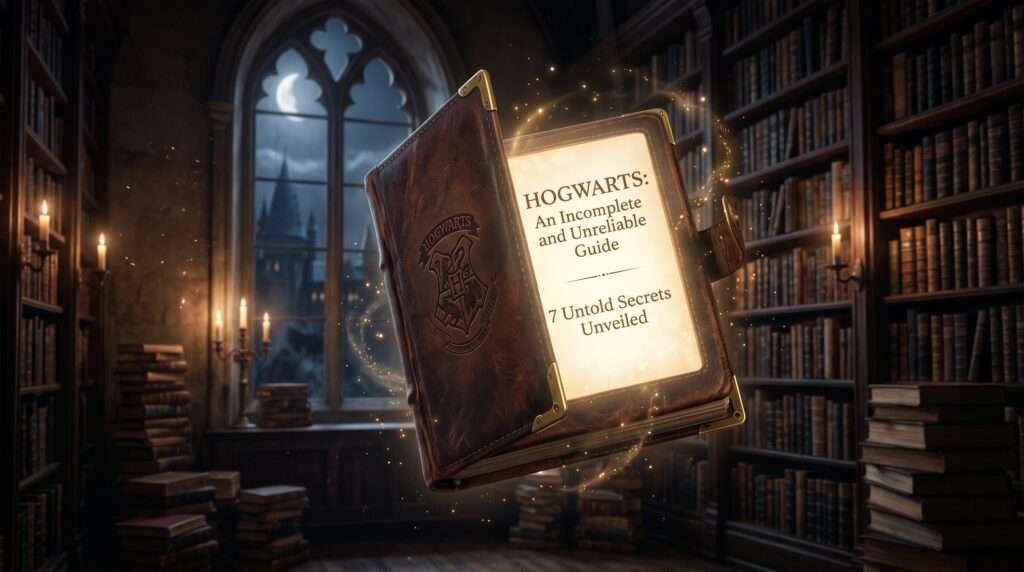
If you think you know every hidden passageway, trick step, and haunted corridor within the wizarding world’s most famous school, you are about to be pleasantly surprised. Millions of fans have devoured the original seven novels, yet the castle still harbors mysteries that never made it onto the printed page. This is exactly where Hogwarts: An Incomplete and Unreliable Guide comes in. As a curated collection of J.K. Rowling’s archival writings, this essential e-book acts as a bridge between the story we saw unfold and the hidden lore that fundamentally shaped the magical universe.
Whether you are a casual fan seeking a quick return to the magic or a dedicated lore-hunter piecing together the ultimate timeline, this guide is a goldmine. It offers a rare, behind-the-scenes glimpse into the creator’s mind, revealing the logistical nightmares, deleted concepts, and tragic backstories that were cut for pacing.
In this comprehensive deep dive, we are going to unlock the 7 most fascinating untold secrets revealed within the guide’s pages.
What Exactly is “Hogwarts: An Incomplete and Unreliable Guide”?
Before we plunge into the hidden secrets of the castle, it is crucial to understand the origins and canonical weight of this text. Released in September 2016, this title is one-third of the Pottermore Presents series—a trio of bite-sized e-books published to neatly package the sprawling, sometimes difficult-to-navigate essays originally scattered across the early Pottermore website.
Rather than presenting a new narrative story, the guide operates as an encyclopedic dossier. It is neatly divided into structural and thematic sections, covering everything from the Hogwarts grounds and its resident ghosts to the complex magical artifacts housed within its walls.
Expert Insight: In the realm of SEO and content authority, understanding the source material is vital. For hardcore fans, Hogwarts: An Incomplete and Unreliable Guide is considered Tier 1 canon. It provides J.K. Rowling’s direct commentary on her world-building mechanics. Just as we previously explored the intricate character nuances of the film adaptations in David Tennant in Harry Potter and the Goblet of Fire Explained, this e-book strips back the cinematic veneer to focus purely on the raw, textual lore that established the universe.
The book is intentionally brief, clocking in at around 80 pages depending on your e-reader settings. However, its value lies in its density. It answers lingering questions about magical education, the British wizarding school’s infrastructure, and the daily lives of its students that the main series simply did not have the word count to explore.
 The 7 Untold Secrets of Hogwarts
For those who want the definitive lore without having to comb through the archives, here are the most compelling revelations and behind-the-scenes secrets detailed in the guide.
Secret 1: The Muggle-Hiding Origins of the Hogwarts Express
We all know the iconic imagery of the gleaming red steam engine waiting at Platform Nine and Three-Quarters, but the guide reveals that the Hogwarts Express was not the original method of student transportation. In fact, it was a relatively modern—and highly controversial—solution to a massive logistical problem.
Before the International Statute of Secrecy was established in 1692, students arrived at the castle using a variety of chaotic methods. Some flew on broomsticks, risking exposure to Muggles; others rode magical creatures, attempted Apparition (often with disastrous, splinching results), or used unauthorized Portkeys.
The guide details the Ministry of Magic’s eventual crackdown. It was Minister for Magic Ottaline Gambol who boldly suggested utilizing Muggle technology—a steam train. The creation of Platform Nine and Three-Quarters at King’s Cross Station was a bureaucratic nightmare, requiring mass Memory Charms and top-secret construction to hide the magically expanded platform from Muggle railway workers. Pure-blood families initially boycotted the train, viewing it as a dirty, Muggle-born invention, until the Ministry mandated that students must ride the train or forfeit their magical education.
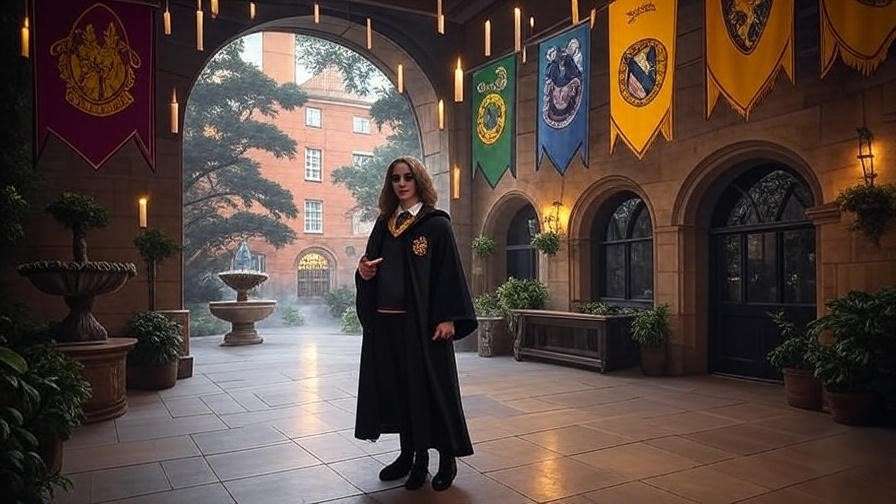
Secret 2: Inside the Elusive Hufflepuff Common Room
Across seven books and eight movies, Harry Potter manages to infiltrate the Slytherin dungeon, scale the heights to the Ravenclaw tower, and, naturally, spend years in the Gryffindor common room. Hufflepuff remains the sole house common room unseen by our protagonist.
Hogwarts: An Incomplete and Unreliable Guide finally pulls back the curtain on this hidden sanctuary.
Located in the same corridor as the Hogwarts kitchens, the Hufflepuff common room requires a highly specific entry method. Instead of a password, students must tap a specific barrel in a stack in the rhythm of “Helga Hufflepuff.” If the rhythm is wrong, or the wrong barrel is tapped, the intruder is violently drenched in vinegar—proving that the badgers do have claws when it comes to security.
Once inside, the aesthetic is described as a cozy, earth-toned badger den. It is remarkably welcoming, featuring low ceilings, circular doors, and copper fixtures bathed in warm, golden light. Plants hang from the ceiling, nurtured by the magical aptitude of the students, making it the most grounded and peaceful common room in the entire castle.
 Secret 3: The Agony of the “Hatstall”
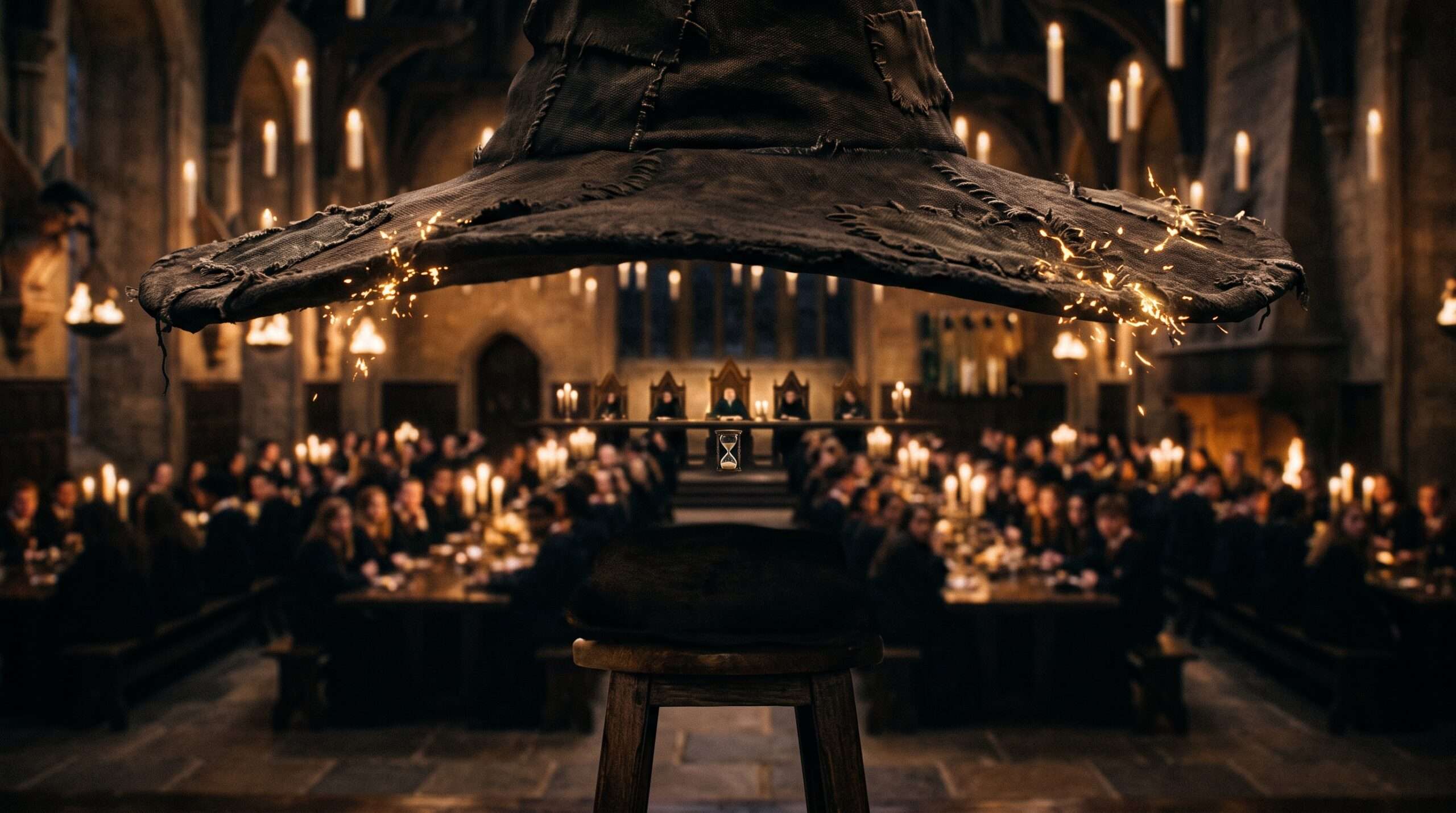
The Sorting Ceremony is a cornerstone of the Hogwarts experience, but what happens when the magical artifact responsible for determining a student’s future cannot make up its mind? The guide introduces us to the concept of a “Hatstall.”
A Hatstall is a highly unusual occurrence where the Sorting Hat takes longer than five minutes to sort a first-year student. The hat, which uses Legilimency to peer into the wearer’s mind and gauge their inherent traits and potential, rarely struggles. Yet, when faced with a student possessing equally strong qualities suited for multiple houses, it stalls.
The e-book reveals a few famous Hatstalls that shaped the wizarding world. Minerva McGonagall caused the hat to agonize between Gryffindor and Ravenclaw for five and a half minutes before ultimately placing her in Gryffindor. Peter Pettigrew was another true Hatstall, with the hat deadlocked between Gryffindor and Slytherin. Interestingly, the guide notes that the Sorting Hat stubbornly refuses to admit it made a mistake with Pettigrew, citing his final, cowardly, yet undeniably momentous choices as proof of its initial assessment.
We also learn of “near-Hatstalls” like Hermione Granger (Gryffindor vs. Ravenclaw) and Neville Longbottom, who actually argued with the hat, begging to be put in Hufflepuff because he felt he wasn’t brave enough for Gryffindor.
 Secret 4: The Truth About the Great Lake’s Giant Squid
The Great Lake, also known as the Black Lake, is a dark, murky body of water teeming with Grindylows, Merpeople, and one surprisingly docile Giant Squid. For years, fan theories ran wild on early internet forums. Was the squid a trapped Animagus? Was it the resurrected founder, Godric Gryffindor, watching over the school?
Hogwarts: An Incomplete and Unreliable Guide puts these theories to rest while establishing the squid’s true, somewhat whimsical nature within the ecosystem. J.K. Rowling’s notes explain that the Giant Squid is not a magical creature in disguise, but rather a rare, highly intelligent specimen that has formed an unspoken bond with the castle’s inhabitants.
Unlike the terrifying krakens of Muggle mythology, this squid acts as an unofficial lifeguard for the school. It rescues students who fall out of the boats during the first-year arrival journey and has even been known to lazily accept toast thrown to it by students relaxing by the shoreline. The guide emphasizes this juxtaposition: Hogwarts is a place of immense danger, yet its most intimidating resident monster is actually a gentle, tentacled guardian.
Secret 5: The Tragic Backstories of the Hogwarts Ghosts
While the ghosts of Hogwarts provide comic relief and atmospheric flavor in the main series, their origins are deeply tragic. The e-book delves into the mechanics of becoming a ghost in the Harry Potter universe, a fate reserved only for wizards and witches who are too afraid to move on to the afterlife, choosing instead to leave a “feeble imprint” of themselves behind.
The guide provides a comprehensive look at the specific lore of Nearly Headless Nick (Sir Nicholas de Mimsy-Porpington). One of the most fascinating inclusions is “The Ballad of Nearly Headless Nick.” This hilariously awful, multi-stanza poem was penned by Rowling detailing Nick’s botched execution (it took forty-five chops with a blunt axe to sever his head, though not completely). The poem was originally intended for Harry Potter and the Chamber of Secrets but was ultimately cut by the editor for pacing. Its restoration in this guide is a massive win for lore enthusiasts.
 Secret 6: The Dangerous Reality of Time-Turners
Time travel is notoriously difficult to write into any fictional universe without creating massive plot holes. The introduction of Time-Turners in Harry Potter and the Prisoner of Azkaban left many fans asking a logical question: Why didn’t they just use a Time-Turner to go back and kill Voldemort?
Hogwarts: An Incomplete and Unreliable Guide directly addresses this. The text breaks down the strict, immutable magical laws governing time travel, explaining that altering major historical events causes catastrophic, timeline-fracturing consequences. Time-Turners are restricted to trivial matters, like managing a heavy class schedule, because wizards who meddle too deeply with time often end up accidentally erasing themselves from existence or causing massive collateral damage.
In a rare moment of authorial confession, the guide details J.K. Rowling’s realization that she had created a narrative trap. To fix this plot hole, she engineered the Battle of the Department of Mysteries in Harry Potter and the Order of the Phoenix specifically to smash the Ministry of Magic’s entire stock of Time-Turners. It is a brilliant, behind-the-scenes look at how a writer manages the sprawling rules of a fantasy universe.
Secret 7: The Uncharted Limits of the Marauder’s Map
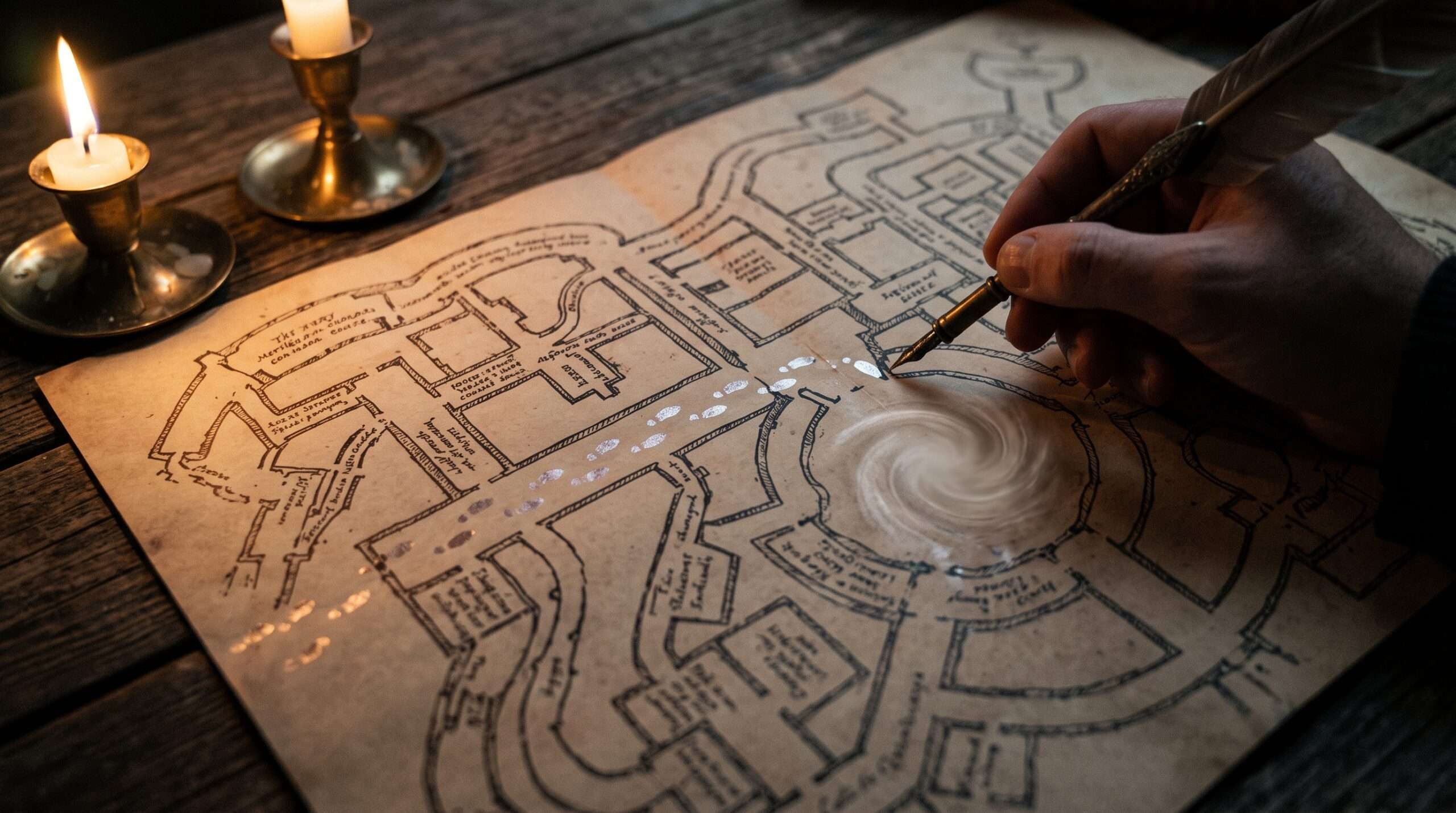
“I solemnly swear that I am up to no good.” The Marauder’s Map is perhaps the most beloved magical artifact in the series, but the guide clarifies that it is far from a simple piece of parchment. It is a masterpiece of advanced magical cartography, requiring deep, complex enchantments (including the Homonculous Charm) to track every person within the castle grounds in real-time.
However, the secret revealed here lies in its limitations. The map was created by Moony, Wormtail, Padfoot, and Prongs during their teenage years, meaning it only displays the areas of the castle they were able to discover. The guide confirms why certain locations, most notably the Room of Requirement, are blind spots. The Room of Requirement is unplottable by its very nature, protected by ancient magic that overrides the enchantments placed on the map.
Furthermore, the map cannot track individuals inside the Chamber of Secrets, as the Marauders never found its entrance. Understanding these limitations adds a layer of vulnerability and realism to the artifact, proving that even the most brilliant magical inventions have their flaws.
 Why is the Guide Called “Incomplete and Unreliable”?
From an SEO and user-intent perspective, readers searching for Hogwarts: An Incomplete and Unreliable Guide often wonder about the peculiar title. Why would an author market their own encyclopedia as unreliable?
The meta-explanation provided within the text is that Hogwarts itself is a sentient, living entity. The staircases move, rooms appear and disappear based on need, and the boundaries of the magic are constantly shifting. Therefore, attempting to create a definitive, 100% accurate map or guidebook of Hogwarts is impossible.
On a deeper level, it reflects J.K. Rowling’s own relationship with her creation. The wizarding world is expansive and fluid. By labeling the guide as “incomplete,” she gives herself the creative freedom to continue expanding the lore in the future without being strictly bound to a singular, rigid text.
Is This E-Book Worth Your Time? (The Review Verdict)
If you are a fan of the wizarding world, weighing whether to invest your time in this e-book is a valid concern. Here is an objective breakdown:
The Pros:
-
Deep Lore: It provides direct, unfiltered access to J.K. Rowling’s world-building mechanics, shedding light on the “how” and “why” of the magical universe.
-
Bite-Sized Format: The editorial style makes it incredibly easy to consume. You can read it in a single afternoon.
-
Authorial Insight: The moments where the author breaks the fourth wall to discuss her writing struggles (like the Time-Turner plot hole) are invaluable for writers and hardcore fans alike.
The Cons:
-
Previously Published Content: If you were an avid user of the original, interactive Pottermore website before its redesign, you may have already read much of this material.
-
Lack of Narrative: It is an encyclopedia, not a novel. Do not expect a traditional story arc with dialogue and character development.
Final Verdict: Hogwarts: An Incomplete and Unreliable Guide is highly recommended. It is a must-read for trivia buffs, fan-fiction writers, and anyone looking to enrich their understanding of the wizarding world beyond the cinematic universe.
Frequently Asked Questions (FAQs)
To ensure this article serves as the ultimate resource, here are answers to the most commonly asked questions surrounding the guide.
How long is Hogwarts: An Incomplete and Unreliable Guide?
The e-book is relatively short, averaging between 79 to 85 pages depending on the formatting of your e-reader. An average reader can easily finish it in 1 to 2 hours.
Is the guide available in physical print?
No. As part of the Pottermore Presents series, this collection was released exclusively in digital formats (e-book and audiobook). There are no official paperback or hardcover editions available.
Does it contain new stories about Harry Potter or his friends?
No. The guide functions as a reference book detailing the history, infrastructure, and secrets of the castle itself. It does not feature new narrative adventures involving the core cast of characters.
Is the information in this guide considered canon?
Yes. Because the text consists of essays and notes directly written by J.K. Rowling regarding her universe, the wizarding community generally accepts the information as Tier 1 canon.
Hogwarts: An Incomplete and Unreliable Guide proves that a fictional setting can be just as compelling as the characters who inhabit it. The castle is not merely a backdrop for Harry Potter’s adventures; it is a breathing, secretive entity with a rich, sometimes dark history. By uncovering these 7 untold secrets—from the agonizing Hatstalls to the tragic ghosts and the logistical nightmares of the Hogwarts Express—we gain a profound appreciation for the sheer depth of this literary universe.
The magic of Hogwarts lies in its mystery. Even after decades of exploration, there are always new corridors to wander down and new secrets waiting in the shadows.
Which of these 7 Hogwarts secrets surprised you the most? Did you already know the truth about the Giant Squid, or the real reason Time-Turners had to be destroyed? Drop a comment below and share your thoughts!