Deep beneath the dark, icy waters of the Black Lake, a hidden society watched Harry Potter with unblinking yellow eyes. When the young wizard plunged into their world during the Triwizard Tournament, readers discovered that Merpeople in the Harry Potter universe were nothing like the enchanting, singing mermaids of Muggle fairy tales. These were fierce, intelligent beings with grey skin, sharp teeth, and a culture as ancient and complex as any in the wizarding world.
Merpeople Harry Potter lore represents one of the most fascinating examples of J.K. Rowling’s world-building. Far from simple mythical creatures, they are proud, independent magical beings who command respect—and sometimes fear—from the wizarding community. This comprehensive guide delves deep into their history, biology, magical abilities, cultural traditions, and lasting impact on the Harry Potter series.
Whether you’re a die-hard Potterhead wanting to understand the second task of the Triwizard Tournament better, a fan researching non-human magical beings, or someone curious about the deeper themes of prejudice and coexistence in the books, this article provides the definitive resource on Merpeople. We’ll explore canon details, subtle lore connections, and the broader significance of these underwater inhabitants.
What Are Merpeople in the Harry Potter Universe?
Merpeople are sentient, magical beings classified by the British Ministry of Magic as “beasts” rather than “beings,” despite their high level of intelligence and organized society. This classification itself reveals much about wizarding attitudes toward non-human magical races.
Official Definition and Ministry Classification
According to Fantastic Beasts and Where to Find Them, Merpeople are defined as creatures with human-like upper bodies and fish-like lower halves, adapted perfectly for aquatic life. The Ministry’s decision to classify them as beasts (alongside Centaurs) was controversial. In 1811, the Merpeople themselves rejected “being” status, preferring independence from wizarding governance and laws.
This choice highlights their pride and desire to maintain sovereignty over their underwater territories.
Beast vs. Being Status – Why They Chose “Beast” Classification
The rejection of being status was not due to lack of civilization but rather a strategic preference for autonomy. By choosing beast classification, Merpeople avoided many wizarding regulations while retaining control over their domains. This decision parallels the Centaurs’ similar stance, reflecting a broader theme in Harry Potter of magical creatures valuing freedom over integration.
Global Distribution and Subspecies
Merpeople are not limited to Hogwarts’ Black Lake. Different varieties exist worldwide:
- Selkies (primarily Scottish waters)
- Merrows (Irish tradition)
- Sirens (Mediterranean regions)
Each subspecies shows distinct physical and cultural adaptations shaped by their local environments, demonstrating the rich diversity within merfolk communities.
Physical Appearance and Biology of Merpeople
The depiction of Merpeople in Harry Potter and the Goblet of Fire starkly contrasts with Disney-style mermaids, creating one of the series’ most memorable visual shocks.
Hogwarts Black Lake Colony Description
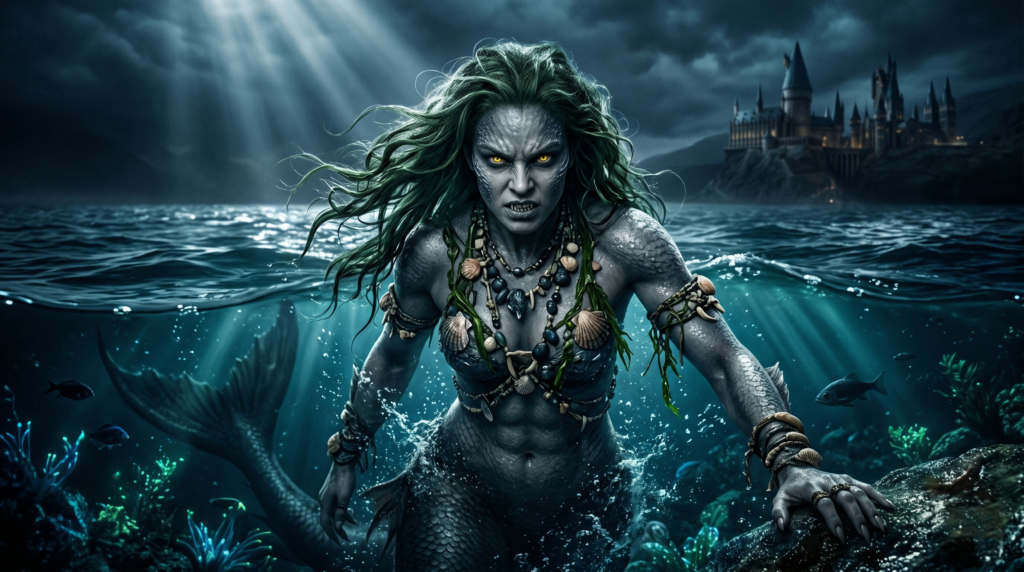
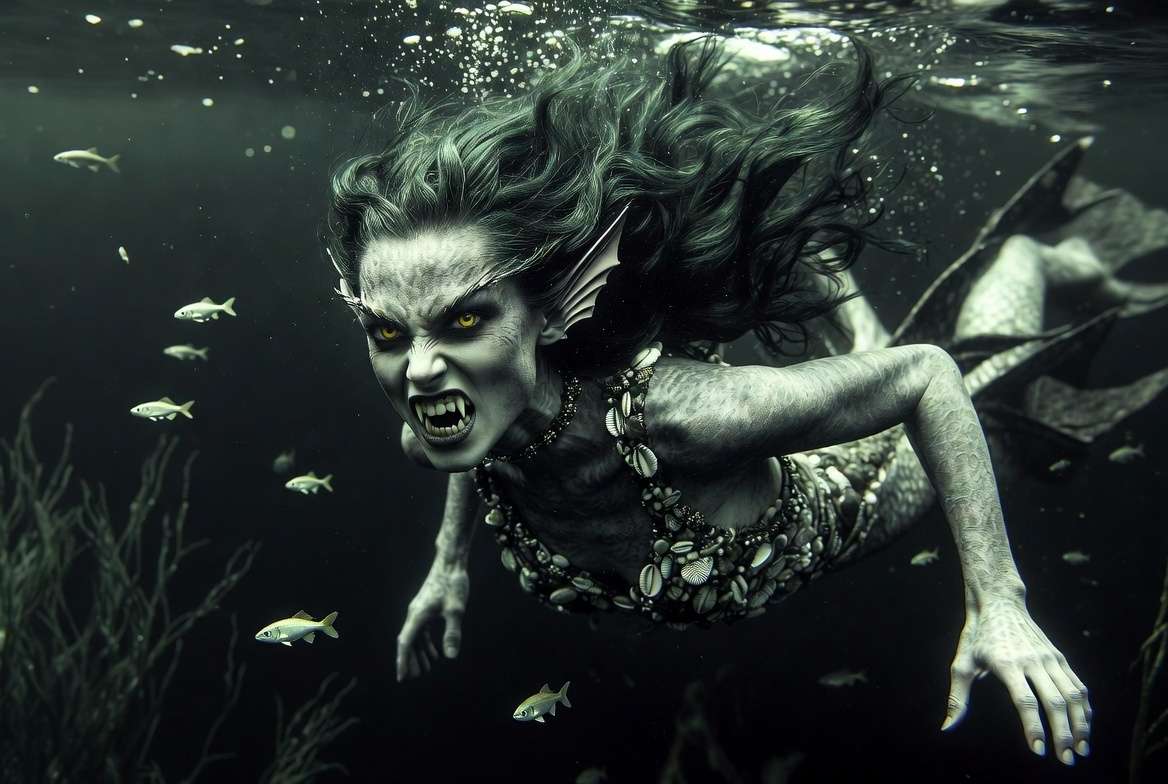
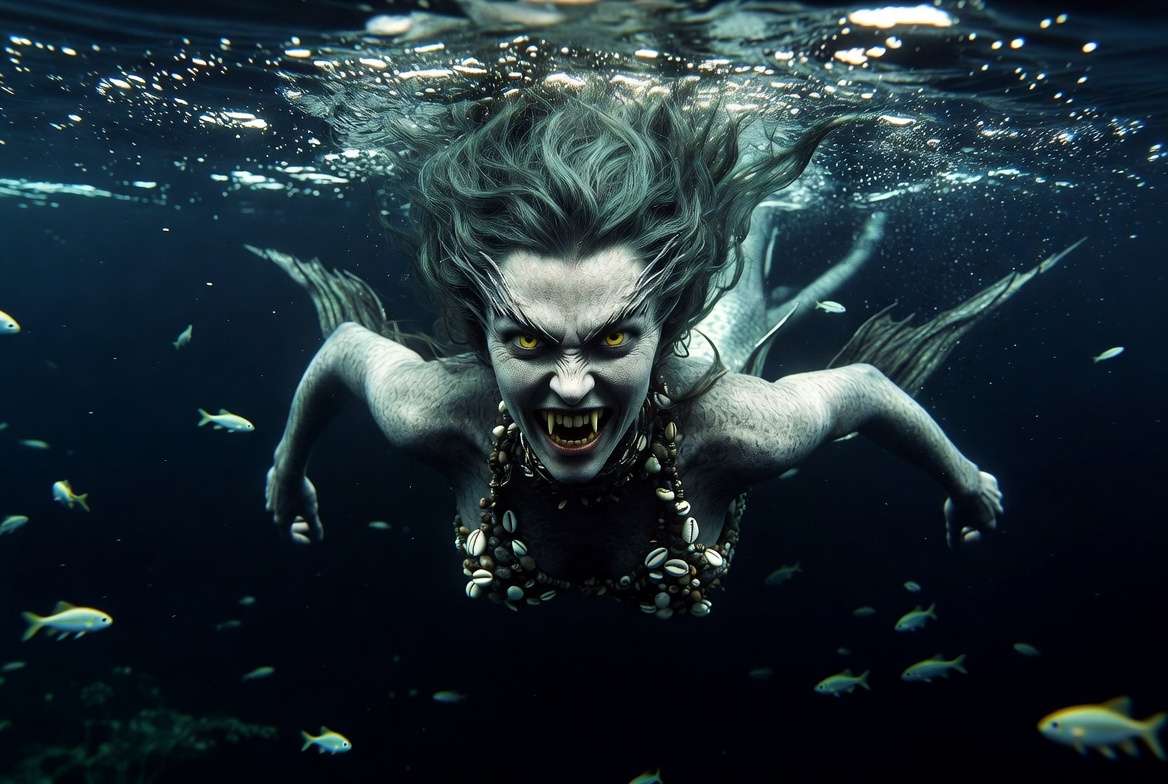
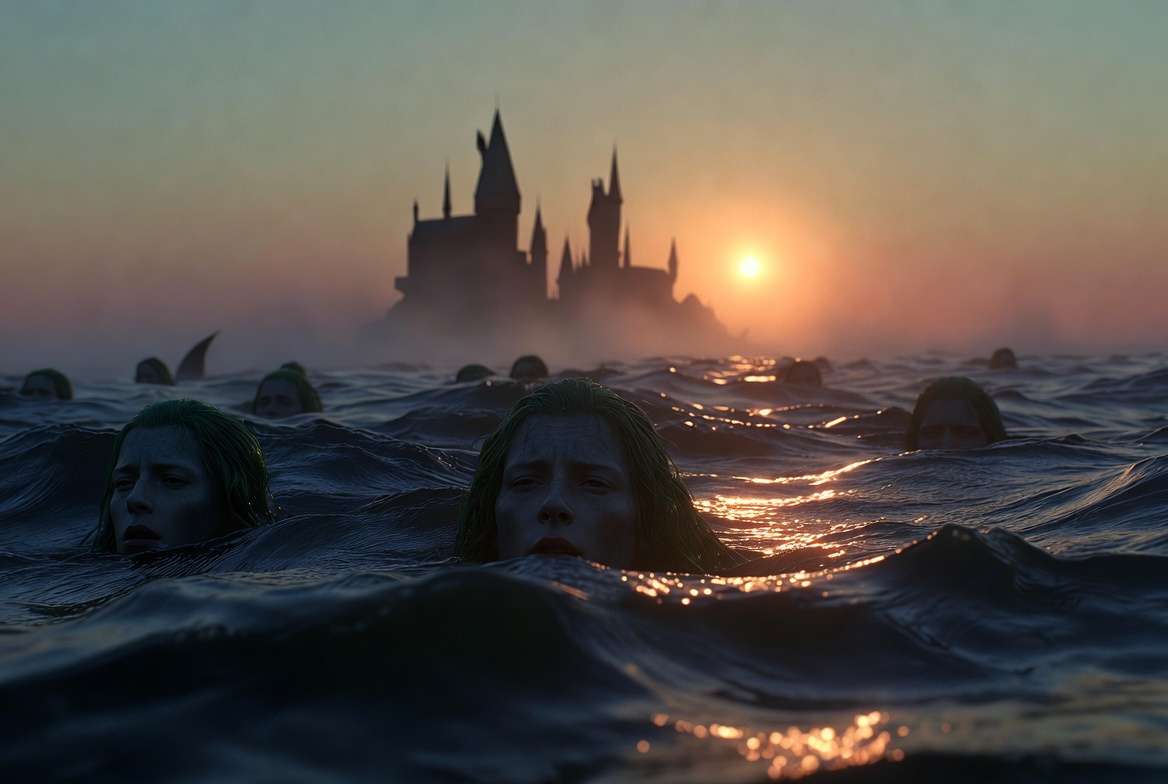
In the Black Lake colony, Merpeople have greyish skin, long, wild dark green hair, and yellow eyes. Their teeth are pointed, and they possess powerful tails that propel them swiftly through water. They wear minimal clothing made from materials like pebbles, shells, and seaweed. The chieftainess, Murcus, stands out with her particularly commanding presence and adorned necklace.
 Regional Variations – Cold vs. Warm Waters
Merpeople in colder British waters tend to be more robust with thicker skin and greyer tones, while those in warmer seas often display brighter colors and slightly different fin structures. This biological diversity mirrors real-world marine life adaptations.
Adaptations for Underwater Life
Merpeople possess remarkable biological features:
- Gills for underwater breathing
- Enhanced underwater vision and hearing
- Exceptional strength and speed in aquatic environments
- Ability to communicate clearly despite water pressure
Their biology allows them to thrive at depths where humans would struggle without magic.
Lifespan, Diet, and Social Structure
Merpeople have notably long lifespans, potentially exceeding 100 years. Their diet consists primarily of fish, seaweed, and other marine life. They live in organized villages with hierarchical structures led by chieftains or chieftainesses, showing advanced social organization that rivals surface wizard communities.
The Ancient History and Origins of Merpeople
The history of Merpeople stretches back thousands of years, intertwining with both Muggle mythology and wizarding records.
Earliest Records – The Sirens of Ancient Greece
Ancient Greek wizards documented encounters with Sirens—dangerous Merpeople whose songs could lure sailors to their deaths. These early accounts established the reputation of Merpeople as powerful and potentially hazardous to humans.
Evolution Across Europe
In the British Isles, legends of Selkies and Merrows emerged from real interactions between coastal wizarding families and Merpeople. Irish Merrows were known for their more approachable nature compared to their Scottish counterparts, while Mediterranean Sirens maintained a fearsome reputation.
Historical Conflicts with Humans and Wizards
Throughout history, tensions arose when wizards or Muggles encroached on merfolk territories. Several documented “Mer-wars” or skirmishes appear in obscure wizarding texts, though the wizarding world largely prefers peaceful (if distant) coexistence.
Key Historical Events and Legends in Wizarding History
Notable moments include alliances during the medieval period when Merpeople provided crucial underwater intelligence and rare aquatic magical ingredients to certain wizarding factions. Their role in preserving ancient magic remains a subject of academic interest among magizoologists.
Merpeople Culture, Society, and Language
One of the most compelling aspects of Merpeople in Harry Potter is their rich, independent culture that exists entirely separate from the surface world.
Mermish – The Language of the Merpeople
Mermish is a guttural, underwater language that sounds harsh and eerie to human ears above water but becomes melodic and expressive beneath the surface. While few wizards can speak it fluently, some (including Albus Dumbledore) have achieved conversational proficiency. Harry famously used the Bubble-Head Charm during the Triwizard Tournament but could not understand Mermish without translation.
 Music, Songs, and Their Magical Properties
Merpeople music carries genuine magical power. Their haunting songs during the Triwizard Tournament served both as a time limit and a cultural expression. Mer-songs can convey complex emotions and have mild hypnotic properties, explaining many Muggle sailor legends.
Village Life and Underwater Settlements
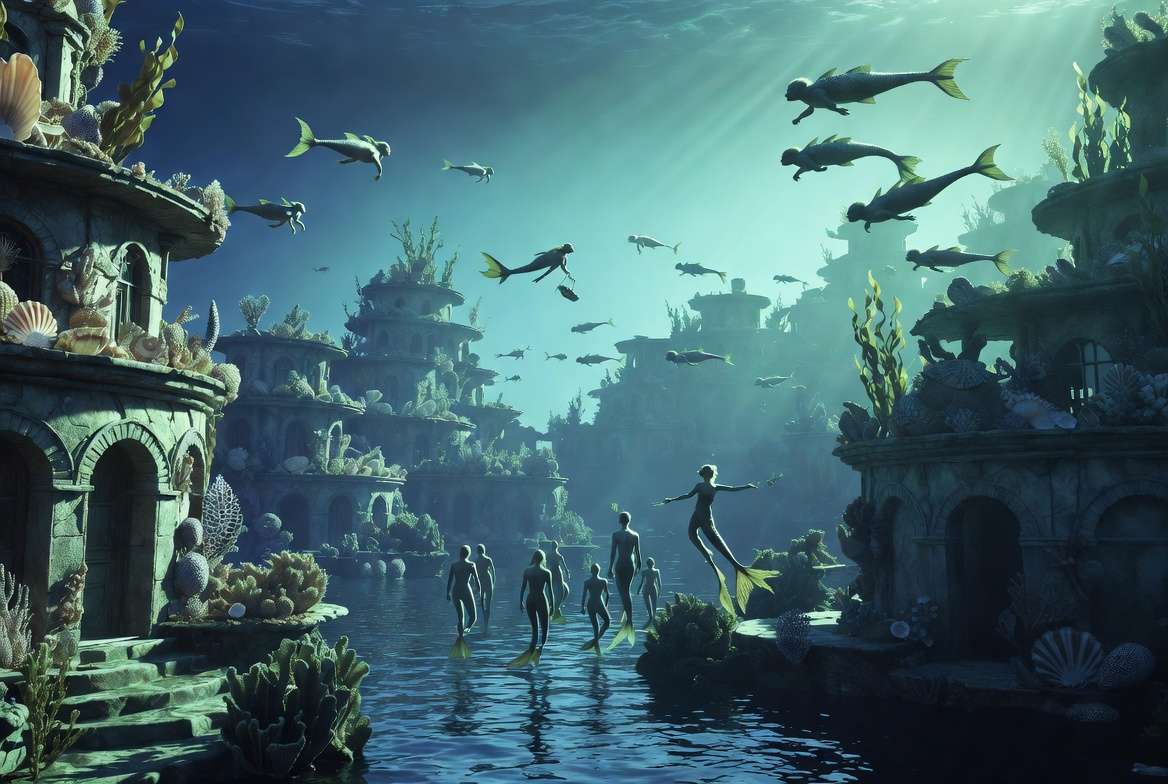
Black Lake Village consisted of organized dwellings made from rocks, coral-like structures, and enchanted seaweed. Merpeople maintain family units, schools for young merchildren, and communal spaces for gatherings and ceremonies.
Art, Tools, Weapons, and Traditions
Merpeople create intricate jewelry from underwater materials and craft spears and tools from enchanted stone and bone. Their artistic traditions include elaborate tattoos and body decorations that signify status and achievements.
Values, Laws, and Views on the Surface World
Merpeople value strength, loyalty to their colony, and respect for the water. They generally view the surface world with suspicion, shaped by centuries of human exploitation of oceans. However, they demonstrate fairness and honor, as evidenced by their treatment of tournament hostages.
Powers and Magical Abilities of Merpeople
Merpeople possess a unique form of magic that is deeply tied to their aquatic environment, making them formidable in their domain and mysterious to surface-dwelling wizards.
Natural Magic vs. Wandless Magic
Unlike human wizards who typically rely on wands, Merpeople practice highly developed wandless magic. Their power flows naturally through their bodies and voices, shaped by thousands of years of underwater evolution. This innate magic allows them to manipulate water currents, create protective barriers around their villages, and enhance their physical capabilities during hunts or conflicts.
 Their Haunting Songs and Hypnotic Effects
The most famous expression of Merpeople magic is their song. During the Triwizard Tournament’s second task, the Merpeople’s singing created an eerie underwater atmosphere that served as both a timer and a psychological challenge. In canon, these songs can have mild hypnotic and disorienting effects on those who hear them above water. In deeper lore, powerful Mer-songs have been known to calm turbulent waters or summon marine creatures for assistance.
Combat Abilities and Underwater Dominance
In their natural habitat, Merpeople are nearly unmatched. They wield spears tipped with enchanted materials and use water manipulation to create powerful currents that can disorient opponents. Their speed and agility underwater give them a massive tactical advantage—something Harry Potter experienced firsthand when navigating the Black Lake.
Interaction with Other Magical Creatures
The Black Lake colony shares its territory with Grindylows and the Giant Squid. Merpeople maintain a complex ecosystem relationship: they command respect from Grindylows and appear to coexist peacefully with the Squid, who even showed protective behavior toward Harry during the tournament. This demonstrates their sophisticated understanding of underwater politics and alliances.
Expert Insight: As a longtime Harry Potter lore researcher, it’s clear that Merpeople magic represents a different branch of magical theory—one based on harmony with nature rather than domination through spells. This contrasts sharply with human wand-based magic and offers deeper insight into why the wizarding world has struggled to fully integrate with merfolk societies.
Merpeople’s Role in the Triwizard Tournament (1994-1995)
The second task of the Triwizard Tournament remains the most significant and detailed appearance of Merpeople in the Harry Potter series, showcasing their culture, values, and authority.
The Second Task – Setup and Rules
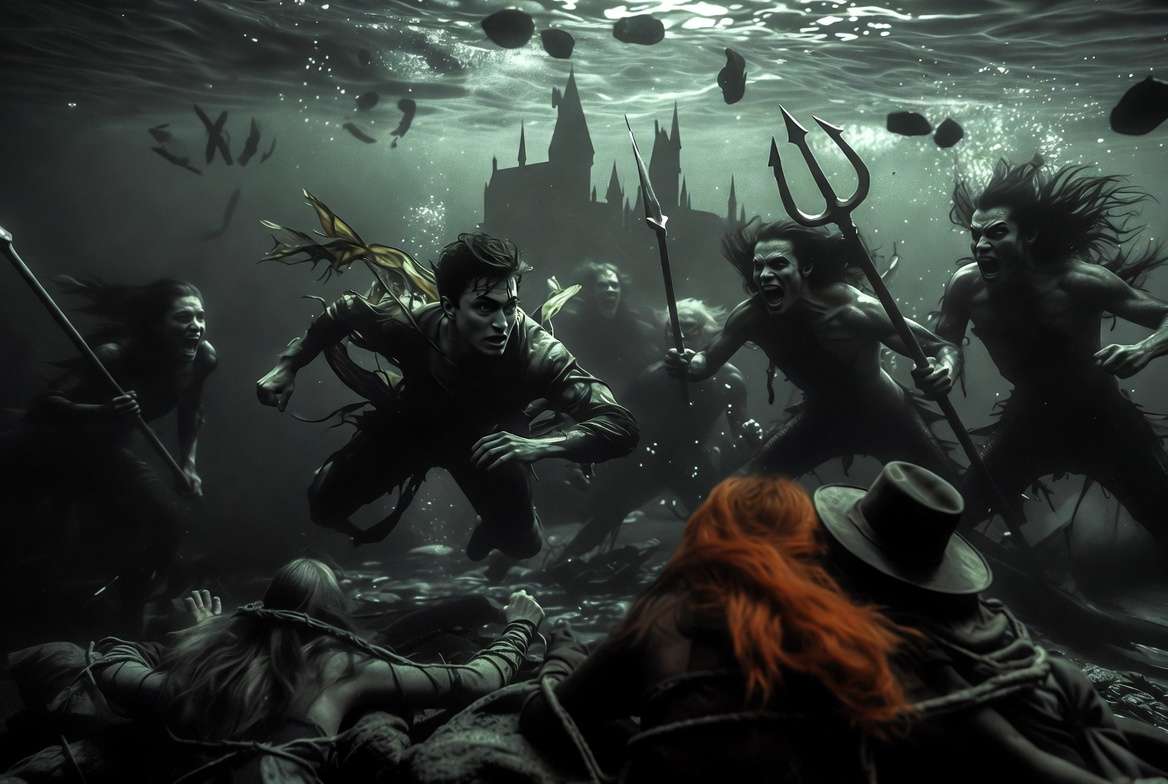
The task required champions to rescue a hostage from the Merpeople village in the Black Lake within one hour. The Merpeople were officially contracted by the tournament organizers, demonstrating that while independent, they occasionally cooperate with wizarding institutions under mutually agreed terms.
Detailed Breakdown of Events in the Black Lake
Harry Potter, using Gillyweed to grow temporary gills, dove into the freezing waters and encountered the full Merpeople settlement. The hostages—Ron Weasley, Hermione Granger, Cho Chang, and Gabrielle Delacour—were tied to rocks and guarded by the merfolk. The haunting Mer-song provided the one-hour countdown.
Champion Performances
- Harry Potter: Showed exceptional moral fibre by attempting to rescue all hostages, not just his own. His actions earned him high marks despite finishing last.
- Cedric Diggory: Used the Bubble-Head Charm successfully and completed the task efficiently.
- Viktor Krum: Partially transfigured into a shark but struggled with control, highlighting the limits of human magic underwater.
- Fleur Delacour: Attacked by Grindylows and forced to withdraw, underscoring the genuine dangers of the Merpeople’s domain.
Mer-chieftainess Murcus and Her Decisions
Murcus, the leader of the Black Lake colony, played a crucial role. She and her people enforced the rules strictly but fairly. Their decision to allow Harry to take extra hostages reflected a sense of justice and recognition of bravery—qualities that aligned with their own cultural values.
Aftermath and Scoring – Moral Fibre Recognition
The judges, particularly Dumbledore, awarded Harry high points specifically for his “moral fibre.” This moment highlighted one of the rare instances of mutual respect between wizards and Merpeople, with Murcus acknowledging the young wizard’s courage.
Key Canon Appearances Beyond the Tournament
While the Triwizard Tournament offers the most detailed look, Merpeople appear in other significant moments in the series.
 Dumbledore’s Relationship with the Black Lake Colony
Albus Dumbledore maintained a long-standing diplomatic relationship with the Black Lake Merpeople. His fluency in Mermish and demonstrated respect earned him their trust—something few wizards achieved.
Merpeople at Dumbledore’s Funeral
In a poignant scene in Harry Potter and the Half-Blood Prince, a large group of Merpeople surfaced to pay respects at Dumbledore’s lakeside funeral, singing a haunting lament. This moment powerfully illustrated the depth of their relationship with the late headmaster and their capacity for emotion and mourning.
Mentions in Other Books and Wizarding World Lore
Merpeople receive brief mentions in Fantastic Beasts and Where to Find Them and various textbooks. Their existence reinforces the series’ theme that the magical world is far more diverse and complex than the Ministry acknowledges.
Books vs. Movies – Visual and Narrative Differences
The film adaptation of Goblet of Fire made Merpeople more monstrous and aggressive than in the books, where they are portrayed as proud and civilized, if intimidating. Book fans often appreciate the nuanced cultural depth that the films simplified for visual impact.
Merpeople and Wizarding Society – A Complex Relationship
The relationship between Merpeople and wizards has always been marked by cautious distance rather than outright hostility.
Tensions, Distrust, and Historical Grievances
Centuries of ocean exploitation, pollution by Muggles, and wizarding encroachment have created legitimate grievances. Many Merpeople view surface dwellers as reckless and untrustworthy.
Moments of Cooperation and Respect
Despite tensions, cooperation occurs when interests align—such as during the Triwizard Tournament and Dumbledore’s personal diplomacy. These moments prove peaceful coexistence is possible when respect is mutual.
Comparison to Other Non-Human Beings
Like Centaurs, House-elves, and Goblins, Merpeople highlight the wizarding world’s struggle with prejudice and equality. Their choice of “beast” status mirrors the Centaurs’ proud independence, making them important symbols in Rowling’s exploration of diversity and tolerance.
Themes of Prejudice and Understanding
Through Merpeople Harry Potter encounters, the series teaches that fear often stems from ignorance. Harry’s growth—from shock at their appearance to respect for their society—mirrors the reader’s own journey toward understanding “the other.”
Merpeople in Popular Culture and Fan Theories
Real-World Mythology Connections
J.K. Rowling masterfully drew from global mermaid folklore while subverting expectations. She transformed the beautiful Sirens and Selkies of legend into more realistic, complex beings.
How J.K. Rowling Subverted Mermaid Tropes
Instead of romanticized Disney versions, Rowling presented Merpeople as proud, dangerous, and culturally rich, challenging readers’ preconceptions.
Popular Fan Theories and Speculation
Fans speculate about undiscovered Merpeople colonies in other lakes (such as Loch Ness connections) and whether Merpeople played hidden roles in major wizarding wars. Some theories suggest their magic could prove vital against future threats to the magical world.
Appearances in Games, LEGO, and Wizarding World Attractions
Merpeople feature prominently in Hogwarts Legacy, Harry Potter LEGO sets, and the Black Lake scenes at Universal Studios, keeping their legacy alive for new generations.
Fun Facts, Lesser-Known Details, and Expert Analysis
- Merpeople can reach speeds of up to 30 knots underwater.
- Their eyes are specially adapted to see in near-darkness at depth.
- The Black Lake colony is believed to number several hundred individuals.
- Merpeople jewelry often contains magical properties unknown to wizards.
- Timeline of Key Events: Ancient Siren encounters (c. 800 BC) → Medieval alliances → 1994 Triwizard Tournament → 1997 Dumbledore’s Funeral.
Book vs. Film Comparison Table:
| Aspect | Books | Films |
|---|---|---|
| Appearance | Grey, fierce but civilized | More monstrous and aggressive |
| Personality | Proud, fair, honorable | More hostile |
| Song | Haunting and meaningful | More threatening |
| Interaction with Harry | Respectful of bravery | More confrontational |
Tips for Fans Visiting the Wizarding World
When visiting Universal Orlando or other Harry Potter attractions, pay special attention to the Black Lake area and Triwizard Tournament exhibits. Listen carefully to the ambient Merpeople sound design—it adds incredible immersion. For deeper study, revisit Goblet of Fire Chapters 25-26 and Fantastic Beasts and Where to Find Them.
FAQ Section
Are Merpeople friendly in Harry Potter? They are not inherently hostile but are protective of their territory and culture. They can be fair and honorable when shown respect.
What is Mermish and can wizards speak it? Mermish is the native language of Merpeople. Very few wizards, including Dumbledore, can speak it fluently.
How did Harry breathe underwater in the Triwizard Tournament? Harry used Gillyweed, which granted him gills and webbed feet temporarily.
What is the difference between Sirens, Selkies, and Merrows? These are regional subspecies of Merpeople with variations in appearance, temperament, and cultural practices.
Did Merpeople appear in other Harry Potter books? Yes, notably at Dumbledore’s funeral in Half-Blood Prince, with additional references in supplementary materials.
Why do Merpeople look scary compared to traditional mermaids? Rowling deliberately subverted romantic myths to create more realistic, complex magical beings that command genuine respect and caution.
Merpeople represent far more than background creatures in the Harry Potter series. They embody the richness, complexity, and occasional tension of a magical world that extends well beyond Hogwarts’ walls. From their ancient origins and unique powers to their pivotal role in the Triwizard Tournament and their quiet presence at Dumbledore’s funeral, these beings add profound depth to J.K. Rowling’s universe.
Understanding Merpeople Harry Potter lore enhances every reader’s appreciation of the series’ central themes: acceptance, courage, and the beauty found in differences. Their story reminds us that true wisdom comes from looking beyond appearances and respecting all forms of intelligent life.
What are your thoughts on the Merpeople? Did the second task change how you viewed these fascinating beings? Share your favorite moment or theory in the comments below—I’d love to discuss more.