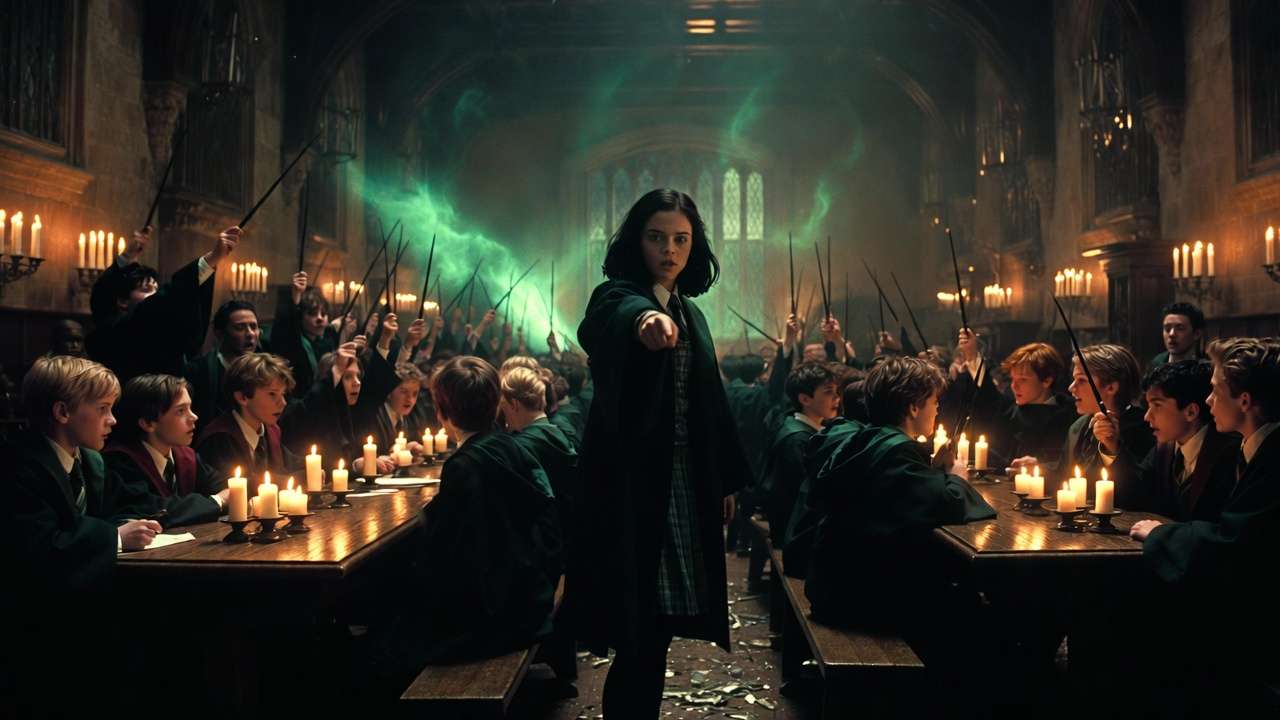
In the tense silence of the Great Hall during the Battle of Hogwarts, as fear gripped every student and staff member, one voice cut through the air with chilling clarity: Pansy Parkinson stood up and demanded that Harry Potter be handed over to Lord Voldemort. Wands immediately rose against her from Gryffindor, Hufflepuff, and Ravenclaw alike, and Professor McGonagall swiftly dismissed the entire Slytherin house. That single moment cemented Pansy Parkinson as one of the most reviled figures in the Harry Potter series—a symbol of unyielding prejudice, loyalty to the wrong cause, and the darker side of Slytherin ambition.
But who exactly is Pansy Parkinson? Often reduced to the “pug-faced” bully in Harry Potter’s biased narration, she represents far more than a one-note antagonist. As a pure-blood Slytherin prefect, Draco Malfoy’s closest female ally, and a member of Dolores Umbridge’s Inquisitorial Squad, Pansy embodies the house’s complex legacy: cunning, resourcefulness, and fierce loyalty, twisted by pure-blood supremacy and personal pettiness. This ultimate guide dives deep into Pansy Parkinson—from her family background and Hogwarts years to her key moments in the books, differences in the films, her complicated dynamic with Draco, surprising facts, and her enduring legacy in the fandom. Whether you’re revisiting the series, debating her redeemability, or simply curious about this underrated Slytherin character, you’ll find fresh insights, canon details, and analysis here that go beyond basic wiki summaries.
Who Is Pansy Parkinson? Basic Profile and Background
Pansy Parkinson is a witch born around 1979 or 1980, making her the same age as Harry Potter, Hermione Granger, Ron Weasley, and Draco Malfoy. She attended Hogwarts School of Witchcraft and Wizardry from 1991 to 1998, the full seven years coinciding with Harry’s time there.
Birth, Family, and Blood Status
Pansy hails from the Parkinson family, one of the “Sacred Twenty-Eight”—the elite list of pure-blood wizarding families outlined in The Pure-Blood Directory. This heritage places her firmly in the upper echelons of wizarding society’s blood-purist circles, alongside families like the Malfoys, Blacks, and Notts. While little is known about her parents or any siblings in canon, her family’s status explains her ingrained prejudice against Muggle-borns and “blood traitors.” An ancestor, Perseus Parkinson, even served as Minister for Magic in the 1930s, adding historical prestige (and perhaps pressure) to her upbringing.
 Sorting and Hogwarts Years
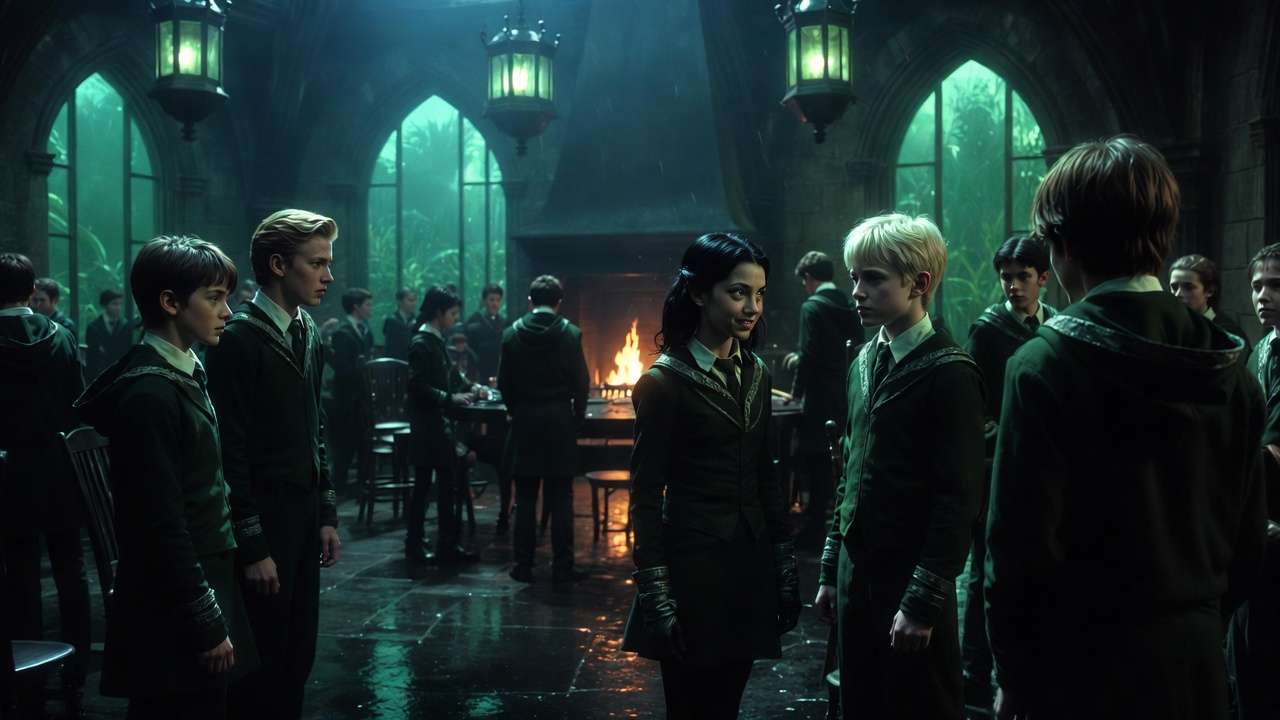
Sorted into Slytherin House in 1991—the same year as Harry—Pansy quickly aligned herself with Draco Malfoy’s inner circle, including Vincent Crabbe and Gregory Goyle. By her fifth year (1995–1996, during Order of the Phoenix), she rose to the position of Slytherin prefect alongside Draco. This authority amplified her bullying tendencies; she became a key member of Umbridge’s Inquisitorial Squad, using her badge to enforce rules selectively and target students like Harry and his friends.
Physical Description in the Books vs. Films
In J.K. Rowling’s books, Pansy’s appearance is filtered through Harry’s unreliable, prejudiced perspective. She’s repeatedly described as “pug-faced,” “hard-faced,” or having a face “like a pug”—terms that reflect Harry’s disdain more than objective fact. Other details are sparse: she has a loud, shrieking laugh often directed at others’ misfortunes.
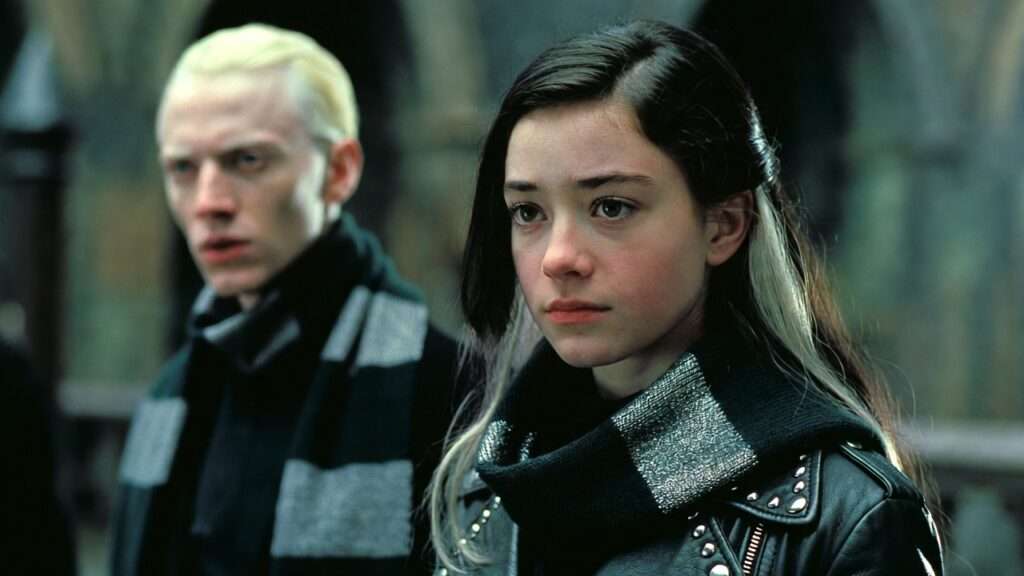
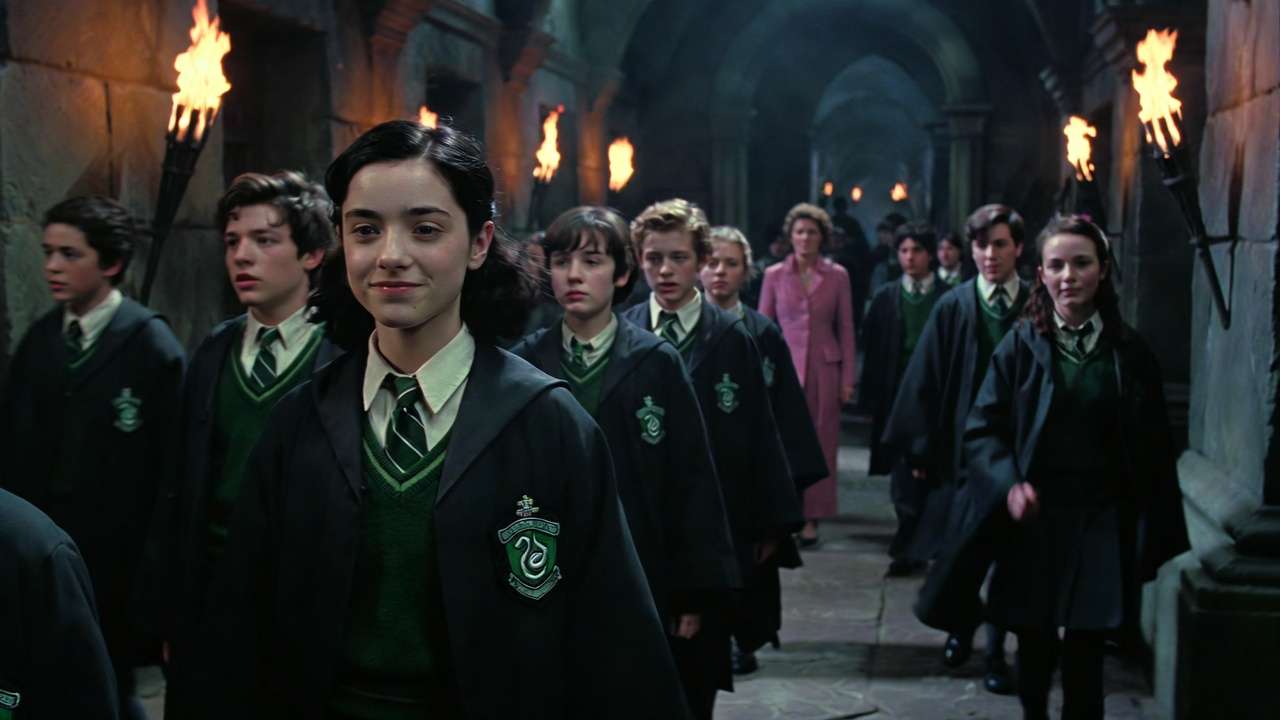
The films take a different approach. Pansy appears in seven of the eight movies but with a reduced role and four different actresses: Katherine Nicholson (Philosopher’s Stone and Chamber of Secrets), Genevieve Gaunt (Prisoner of Azkaban), Lauren Shotton (Order of the Phoenix), and Scarlett Byrne (Half-Blood Prince through Deathly Hallows Parts 1 and 2). The final portrayal by Byrne is notably more polished and attractive, aligning with a glamorous Slytherin aesthetic rather than the books’ harsher description.
Pansy Parkinson’s Personality and Traits – The Classic Slytherin Mean Girl
Pansy Parkinson is the quintessential “mean girl” of the wizarding world—petty, sadistic, and quick to mock vulnerability. As the ringleader of a gang of Slytherin girls, she targets outsiders relentlessly, especially Hermione Granger (whom she calls “Mudblood” and mocks for her Muggle-born status) and Neville Longbottom (whom she belittles as a “fat little crybaby”).
Key Characteristics from Canon
- Bullying and Pettiness: Pansy delights in taunting others, from mocking Parvati Patil’s defense of Neville to shrieking with laughter at Hagrid’s misfortunes.
- Pure-Blood Supremacy: Her worldview mirrors Draco’s; she supports blood purity ideals and aligns with Voldemort’s regime when it suits her.
- Loyalty to Draco and Slytherin: Her devotion to Draco is unwavering—she fawns over him, strokes his hair when he’s injured, and defends him fiercely.
Softer Sides and Contradictions
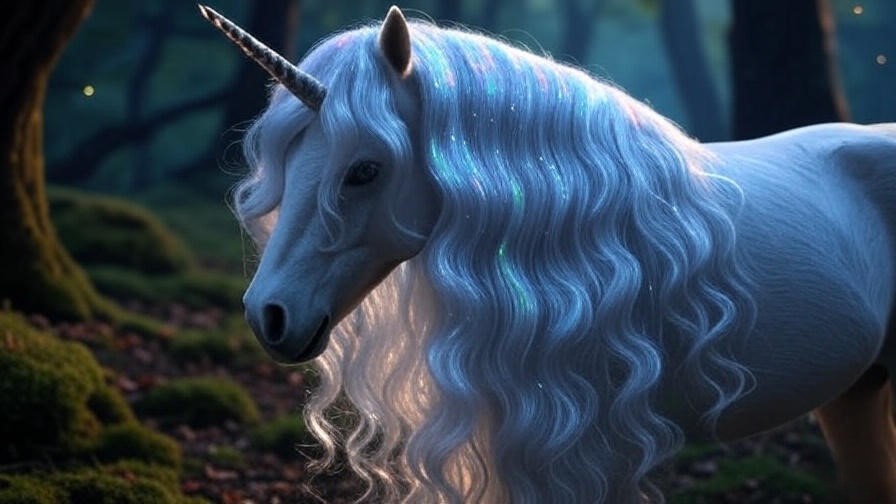
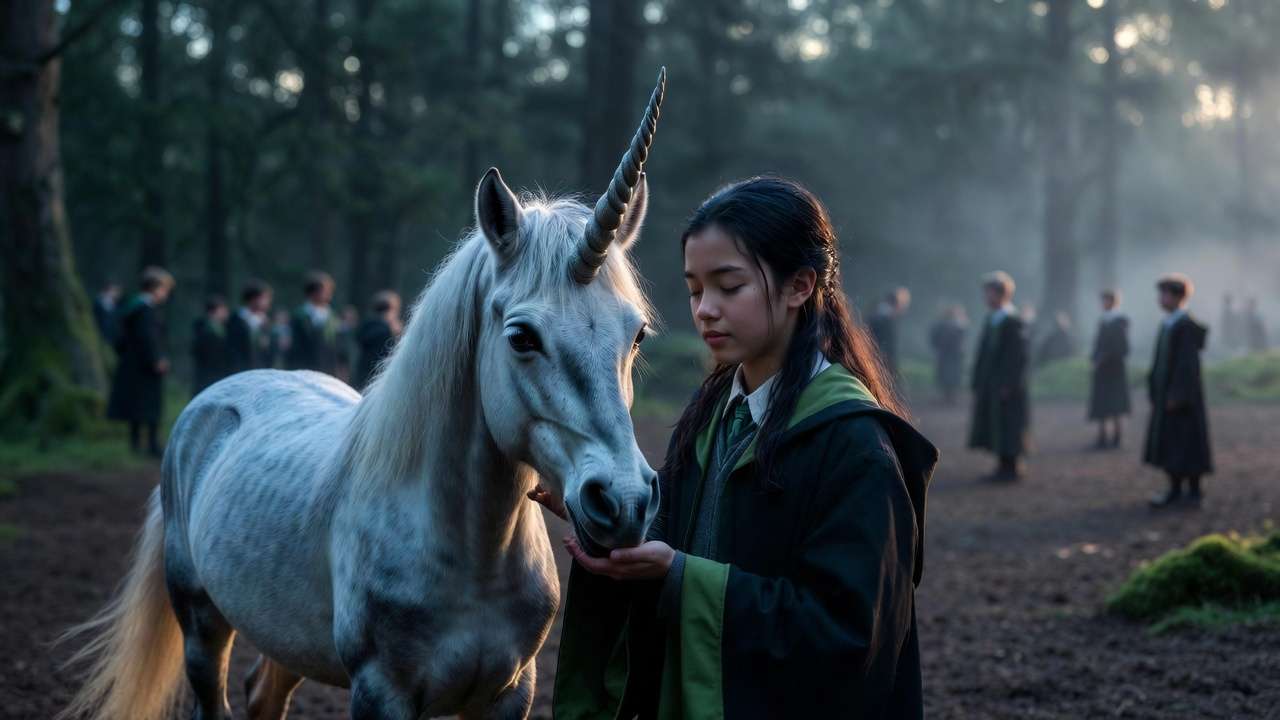
One intriguing detail: Pansy shows genuine fondness for baby unicorns during Care of Magical Creatures lessons. This rare glimpse of gentleness suggests hidden layers—perhaps a capacity for care that never fully develops due to her environment and choices.
 J.K. Rowling’s Inspiration
Rowling has been candid about her dislike for Pansy. In a 2007 PotterCast interview, she called Pansy “every girl who ever teased me at school” and described her as the “Anti-Hermione.” Rowling loathes the character so much that she explicitly ruled out Pansy ending up with Draco, preferring he marry Astoria Greengrass instead. This personal connection makes Pansy a deliberate foil: where Hermione represents intelligence, bravery, and moral growth, Pansy embodies cruelty, conformity, and stagnation.
Pansy Parkinson’s Key Moments and Role in the Harry Potter Series
Pansy Parkinson is not a central character like Draco Malfoy or Severus Snape, but her consistent presence throughout the seven books makes her one of the most persistent antagonists from Slytherin House. Her actions evolve from petty schoolyard bullying to actively supporting a regime built on terror and discrimination. Below is a chronological breakdown of her most significant appearances and contributions to the plot.
Early Years (Philosopher’s Stone to Prisoner of Azkaban)
Pansy first appears in Harry Potter and the Philosopher’s Stone during the Sorting Ceremony, where she is placed in Slytherin amid cheers from her new housemates. From the beginning, she aligns herself with Draco Malfoy, laughing at his insults toward Harry and Ron.
In Chamber of Secrets, she joins the chorus of Slytherins mocking the Gryffindor Quidditch team after they lose to Hufflepuff. She also participates in the general Slytherin jeering when Harry is accused of being the Heir of Slytherin.
 Prisoner of Azkaban gives her one of her more memorable early moments: during Care of Magical Creatures, she shrieks with laughter when Buckbeak attacks Draco, showing her sadistic streak. Yet this is also where we see her softer side—she is one of the few students genuinely delighted by the baby unicorns, cooing over them and stroking their silver manes. This tiny detail stands in stark contrast to her usual cruelty and hints at a capacity for affection that remains largely unexplored.
Peak Antagonism (Goblet of Fire and Order of the Phoenix)
Pansy’s role expands significantly in the fourth and fifth books. In Goblet of Fire, she attends the Yule Ball (though her date is not named in canon), and she is seen laughing at Ron’s awkward dancing with Padma Patil. More importantly, she begins openly supporting Draco’s campaign against Harry during the Triwizard Tournament, spreading rumors and mocking him whenever possible.
Order of the Phoenix marks Pansy’s high point as an antagonist. As a newly appointed Slytherin prefect, she joins Dolores Umbridge’s Inquisitorial Squad—a group of students given special authority to enforce Ministry-approved rules. Pansy uses this power enthusiastically: she patrols corridors looking for rule-breakers, reports students to Umbridge, and takes particular pleasure in targeting Harry, Hermione, and their friends. One memorable scene has her leading a group of Slytherin girls in mocking Hermione’s appearance after she is hit with a jinx that swells her face. Pansy also laughs loudly when Umbridge sacks Professor Trelawney and when Hagrid is attacked by centaurs.
Later Books (Half-Blood Prince and Deathly Hallows)
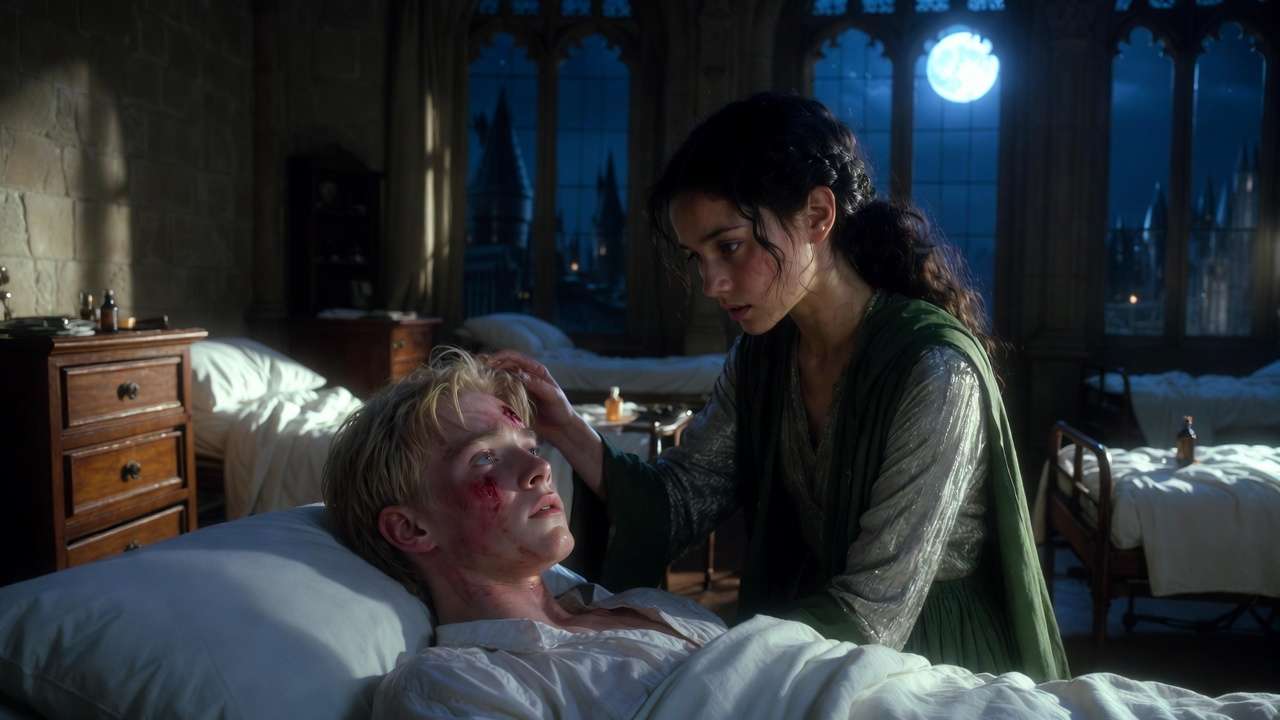
In Half-Blood Prince, Pansy’s devotion to Draco becomes more pronounced. When Draco returns injured from a failed mission, she is seen stroking his hair in the hospital wing and glaring at anyone who approaches him. She openly supports his claim of having been given an important task by Voldemort, bragging about it to other Slytherins.
The most defining—and controversial—moment of Pansy’s entire arc occurs in Deathly Hallows. During the Battle of Hogwarts, as Voldemort’s ultimatum demands Harry’s surrender, Pansy stands up in the Great Hall and shouts, “But he’s there! Potter’s there! Someone grab him!” Her call is met with immediate outrage: wands rise from every table except Slytherin’s, and McGonagall expels the entire Slytherin house from the battle. This scene crystallizes Pansy as the embodiment of Slytherin’s worst stereotypes—cowardice when it comes to standing against evil, and eagerness to curry favor with power.
Post-War Fate
J.K. Rowling has provided no canonical information about what happened to Pansy after the Battle of Hogwarts. She did not appear on any “wanted” lists for Death Eater activity, nor is she mentioned in epilogues or supplementary materials like Cursed Child. Fan theories range from her quietly retreating into pure-blood society to facing minor legal consequences for her actions during the war. Rowling has only said that Pansy “survived” the battle, leaving her ultimate fate open to interpretation.
Pansy Parkinson in the Harry Potter Films – Differences and Recasts Explained
The film adaptations significantly reduced Pansy’s screen time and presence compared to the books. While she appears in seven of the eight films, her role is largely limited to background sneers, group laughter, and a few lines of dialogue.
Why She Was Recast Four Times
The character went through four actresses because of the long production span and the decision to give her a much smaller role:
- Katherine Nicholson (Philosopher’s Stone and Chamber of Secrets)
- Genevieve Gaunt (Prisoner of Azkaban)
- Lauren Shotton (Order of the Phoenix)
- Scarlett Byrne (Half-Blood Prince, Deathly Hallows – Part 1 and Part 2)
By the time Scarlett Byrne took over, the films had shifted toward a more glamorous aesthetic for Slytherin students, making Pansy appear far more conventionally attractive than the “pug-faced” description in the books.
Book vs. Film Portrayal Comparison
| Aspect | Books | Films |
|---|---|---|
| Physical Description | “Pug-faced,” “hard-faced” (Harry’s POV) | Attractive, polished (especially Byrne) |
| Role Size | Recurring bully, prefect, Inquisitorial Squad | Minor background character, few lines |
| Key Scenes Kept | Yule Ball appearance, Battle of Hogwarts call | Mostly reduced or cut (e.g., no prefect badge shown) |
| Personality Emphasis | Sadistic, petty, loyal to Draco | Mostly sneering and giggling in group scenes |
| Baby Unicorn Moment | Present, shows hidden softness | Completely omitted |
 Actresses and Their Impact
Scarlett Byrne’s portrayal in the final films gave Pansy a more sophisticated, almost icy demeanor—closer to a classic “mean girl” archetype seen in teen movies than the shrill, pug-faced bully of the books. This change softened some of the character’s harsher edges for cinematic appeal.
Pansy Parkinson and Draco Malfoy – Relationship and Dynamics
One of the most discussed aspects of Pansy Parkinson’s character is her longstanding connection to Draco Malfoy. While never explicitly confirmed as a romantic couple in canon, their interactions strongly suggest a one-sided (or at best mutual) attraction, deep loyalty, and a shared worldview that sets them apart from other Slytherins.
Canon Evidence of Romance
Pansy’s devotion to Draco appears early and grows steadily:
- In Goblet of Fire, she is frequently seen at his side, laughing at his jokes and supporting his antagonism toward Harry.
- During the Yule Ball, while Draco attends with Pansy in some fan interpretations (though her date is never explicitly named), her presence among his circle is constant.
- The most telling moments come in Half-Blood Prince. When Draco is physically and emotionally battered after failing to repair the Vanishing Cabinet quickly enough, Pansy is the one sitting closest to him in the hospital wing, stroking his hair and glaring protectively at anyone who approaches. She also brags to other students about the “important work” Draco has been given by the Dark Lord, showing pride rather than fear.
- In Deathly Hallows, her desperate plea in the Great Hall to hand over Harry can partly be read as an attempt to protect Draco and the Slytherins from further danger by ending the conflict quickly—though it is framed through Harry’s lens as pure betrayal.
These gestures paint a picture of genuine affection, at least on Pansy’s part. She fawns over Draco in a way that contrasts sharply with her usual cruelty toward others.
 Why They Didn’t End Up Together
J.K. Rowling has been very clear on this point. In post-series interviews and on Pottermore (now Wizarding World), she stated that Draco ultimately marries Astoria Greengrass, a fellow pure-blood Slytherin who holds more moderate views on blood purity. Rowling explicitly said she wanted Draco to break the cycle of prejudice in his family line, and she could not envision Pansy—whom she personally dislikes intensely—being part of that redemption arc.
Pansy’s unwavering loyalty to the old pure-blood ideals and her lack of growth make her an unsuitable match for a post-war Draco who (in Rowling’s vision) slowly distances himself from his father’s ideology.
Fan Shipping and Interpretations
Despite canon, “Drapansy” (Draco/Pansy) remains one of the more popular Slytherin-era ships in fanfiction. Writers often explore:
- A secret romance hidden behind Draco’s public disdain for “weaker” emotions.
- Pansy as the one person who truly understands Draco’s pressures and fears.
- Alternate universes where Pansy shows growth and stands by Draco during his redemption.
On platforms like Archive of Our Own, Wattpad, and Tumblr, Pansy is frequently reimagined with more depth—sometimes as a morally gray anti-heroine who eventually turns against Voldemort, or as a tragic figure trapped by her upbringing.
10 Surprising Facts About Pansy Parkinson You Probably Didn’t Know
Here are ten lesser-known or under-discussed details that add layers to her character:
- Sacred Twenty-Eight Legacy – The Parkinson family is part of the exclusive list of “truly pure-blood” families, giving Pansy automatic social status among pure-blood supremacists.
- Four Actresses in the Films – No other recurring student character was recast as many times, reflecting her diminished role on screen.
- J.K. Rowling’s Most Hated Character – Rowling has repeatedly said Pansy is based on girls who bullied her at school and remains the character she dislikes the most.
- Baby Unicorn Soft Spot – In Prisoner of Azkaban, she shows uncharacteristic tenderness toward the baby unicorns, one of the only moments she isn’t being cruel.
- Prefect Power Trip – As a fifth-year prefect, she abused her authority more openly than most, especially as part of Umbridge’s Inquisitorial Squad.
- No Death Eater Mark – Unlike many Slytherins her age (e.g., Draco), there is no evidence Pansy took the Dark Mark or joined the Death Eaters directly.
- Ancestor as Minister – Her family line includes Perseus Parkinson, who served as Minister for Magic in the 1930s, showing deep-rooted political influence.
- Shrieking Laugh – Her distinctive, loud, mocking laugh is mentioned multiple times and becomes a signature trait of her bullying style.
- No Post-War Canon Fate – Unlike Narcissa Malfoy or even minor characters like Millicent Bulstrode, Pansy receives zero mention in the epilogue, Cursed Child, or Rowling’s supplementary writings.
- Fanfiction Popularity Surge – In recent years (especially post-2020), Pansy has become a fan-favorite for “enemies-to-lovers” and “redemption” stories, particularly paired with Hermione, Harry, or even Neville in “fix-it” AUs.
Why Pansy Parkinson Matters – Themes and Legacy in Harry Potter
Representation of Prejudice and Groupthink
Pansy is one of the purest examples in the series of someone who never questions the ideology she was raised with. Unlike Draco (who shows fear, hesitation, and eventual reluctance) or Snape (who ultimately chooses love over hate), Pansy never wavers. She represents the danger of inherited prejudice when left unchallenged—group loyalty that overrides morality.
Fan Reception and Modern Reappraisals
For years, Pansy was simply “the mean Slytherin girl” and a convenient hate sink. But the rise of nuanced fanfiction, TikTok edits, and deeper character analyses has led to more sympathetic readings. Some fans argue she is a product of her environment, while others maintain she had every opportunity to choose differently and simply didn’t.
On social media and fan forums, debates continue: Is she irredeemable? Could she have been saved with different influences? Her polarizing nature keeps her relevant decades after the series ended.
Lessons from Pansy for Real Life
Pansy’s story serves as a cautionary tale about:
- How unchecked bullying can escalate from schoolyard cruelty to ideological extremism.
- The power (and danger) of loyalty when it is given blindly.
- The importance of questioning inherited beliefs rather than conforming to them.
Frequently Asked Questions (FAQs)
Is Pansy Parkinson pure-blood?
Yes, she comes from the Parkinson family, one of the Sacred Twenty-Eight pure-blood lines.
Did Pansy Parkinson marry Draco Malfoy?
No. J.K. Rowling confirmed that Draco marries Astoria Greengrass. Pansy and Draco never become an official couple in canon.
Why does Harry call Pansy pug-faced?
The description is filtered through Harry’s subjective, hostile point of view. It reflects his dislike rather than an objective fact.
Who played Pansy Parkinson in the movies?
Four actresses portrayed her: Katherine Nicholson, Genevieve Gaunt, Lauren Shotton, and Scarlett Byrne (the final and most prominent portrayal).
What happened to Pansy Parkinson after the Battle of Hogwarts?
There is no canonical information. She survived the battle but is never mentioned again.
Is Pansy Parkinson in Harry Potter and the Cursed Child?
No, she does not appear or get referenced in the play or its script.
Was Pansy ever a Death Eater?
There is no evidence she took the Dark Mark or formally joined the Death Eaters.
Does Pansy show any redeeming qualities?
Her fondness for baby unicorns is the main canon moment suggesting hidden gentleness, but it is never developed further.
Pansy Parkinson remains one of the most consistent and unapologetic antagonists in the Harry Potter series. From her early taunts on the Hogwarts Express to her infamous stand in the Great Hall, she embodies the worst aspects of Slytherin House—prejudice, pettiness, and blind loyalty—without the moments of doubt or growth that humanize characters like Draco or even Severus Snape.
Yet her very lack of redemption makes her valuable. She forces readers to confront uncomfortable truths about conformity, inherited bigotry, and the ease with which cruelty can become habit. Whether you view her as a tragic product of her upbringing or simply an irredeemable bully, Pansy Parkinson is far more than “the pug-faced Slytherin girl.” She is a mirror held up to the darker corners of the wizarding world—and perhaps our own.
What do you think—could Pansy have ever changed, or was she always destined to stand on the wrong side? Share your thoughts in the comments below, and don’t forget to check out our other in-depth guides to Slytherin characters, Draco Malfoy’s redemption arc, and more Harry Potter deep dives.