Last updated: November 18, 2026
Ron Weasley never gets a grand Patronus moment. Harry’s stag lights up a lake at night. Snape’s doe leads Harry through a frozen forest. Ron’s terrier barely registers beside them, and yet it may say more about him than either.
The Patronus of Ron Weasley is a Jack Russell Terrier. On the surface it is a small, scrappy, tail-wagging dog, nothing like the majestic forms of other famous Patronuses. Look closer, and it reflects Ron’s loyalty, his courage under pressure, and the bond with Hermione that runs through the whole series. This guide covers what the Patronus is, what it means, how it connects to Hermione’s otter, and what it reveals about Ron’s growth.
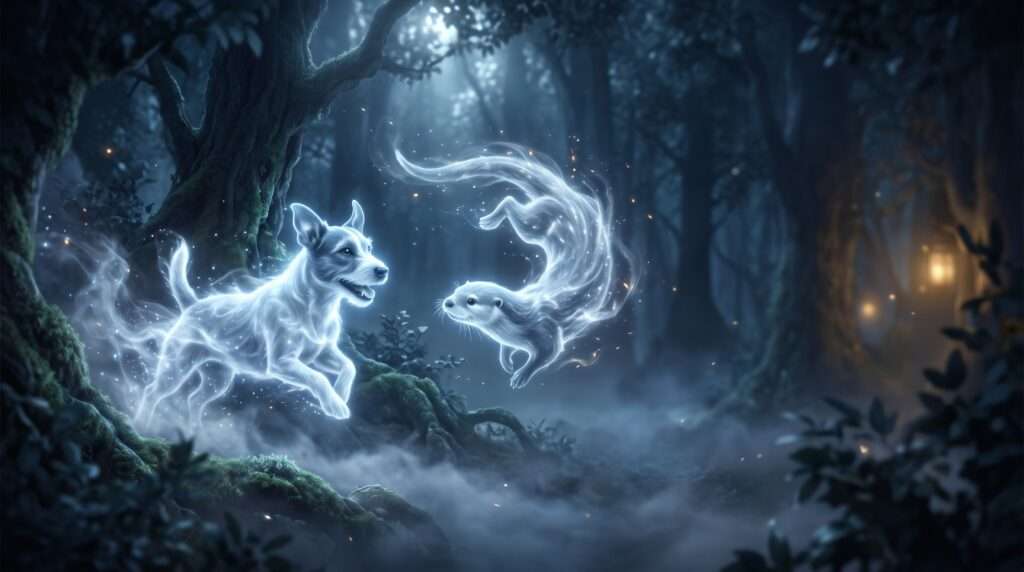
Quick answer: Ron Weasley’s Patronus is a Jack Russell Terrier. It reflects his loyalty and courage, and it pairs with Hermione’s otter Patronus, since terriers have long been associated with chasing otters.
A note on sources: this article draws on the seven books, the film adaptations, and J.K. Rowling’s own statements about the Patronuses. Where I’m offering interpretation rather than confirmed canon, I say so.
What Is the Patronus of Ron Weasley?
Ron Weasley’s Patronus at a Glance
| Detail | Answer |
|---|---|
| Patronus form | Jack Russell Terrier |
| Caster | Ron Weasley |
| Spell | Expecto Patronum |
| Linked character | Hermione Granger (otter Patronus) |
| Source of confirmation | Primarily J.K. Rowling’s statements about the characters, rather than extended scenes in the books |
| Core symbolism | Loyalty, courage, devotion, protectiveness |
A Quick Refresher on How Patronuses Work
A Patronus is a protective magical force conjured with the Patronus Charm, Expecto Patronum. Its main purpose is to repel Dementors, and it is powered by a happy memory. Most wizards can manage only a vague, non-corporeal wisp of silver mist. A corporeal Patronus, one that takes a distinct animal shape, is far more advanced magic, which is why so few characters in the series achieve it.
The animal form is not chosen by the caster. It emerges from who they are, and often from the people and relationships that matter most to them. That is what makes the Patronus of Ron Weasley so interesting: the form says as much about his relationships as about him.
Why Ron Weasley’s Patronus Is a Jack Russell Terrier
The Symbolism of the Jack Russell Terrier
Jack Russell Terriers are small dogs with enormous personalities. They are energetic, tenacious, quick to defend their people, and notoriously unwilling to back down, even from animals many times their size. Now think about Ron:
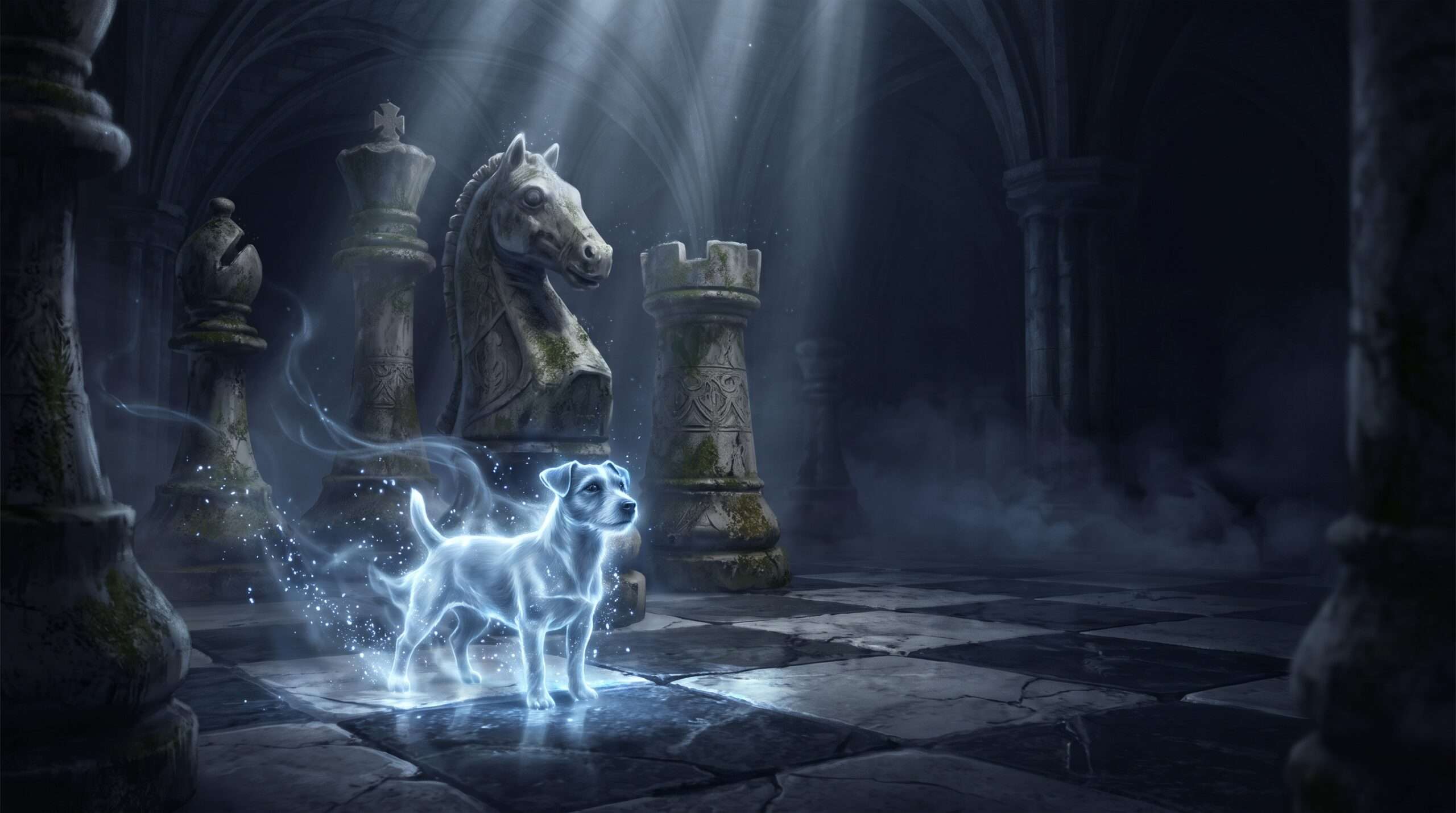
- Small but fearless when it counts. Ron is not the strongest wizard in the trio, but he repeatedly throws himself into danger for his friends. In Philosopher’s Stone, he insists on being the knight who is sacrificed in the giant chess game so Harry can reach the final checkmate.
- Loyal to a fault. From the moment he shares a train compartment with Harry, Ron is the friend who stays, the one who follows Harry into the Forbidden Forest and into Aragog’s nest despite his terror of spiders.
- Protective of the people he loves. A terrier does not hesitate to charge at a threat. Ron’s instinct is similar, whether he’s confronting a troll-sized problem or standing up for Hermione.
The fit is both emotional and literal, which is why this Patronus feels so right on a reread.
 Loyalty Is Ron’s Defining Strength
It’s tempting to describe Ron by his comic moments, but his loyalty is the thread that holds the trio together. That is also why his lowest point in Deathly Hallows matters so much. Worn down by the Horcrux locket’s influence, by hunger, and by his own insecurities, Ron walks away from Harry and Hermione during the hunt.
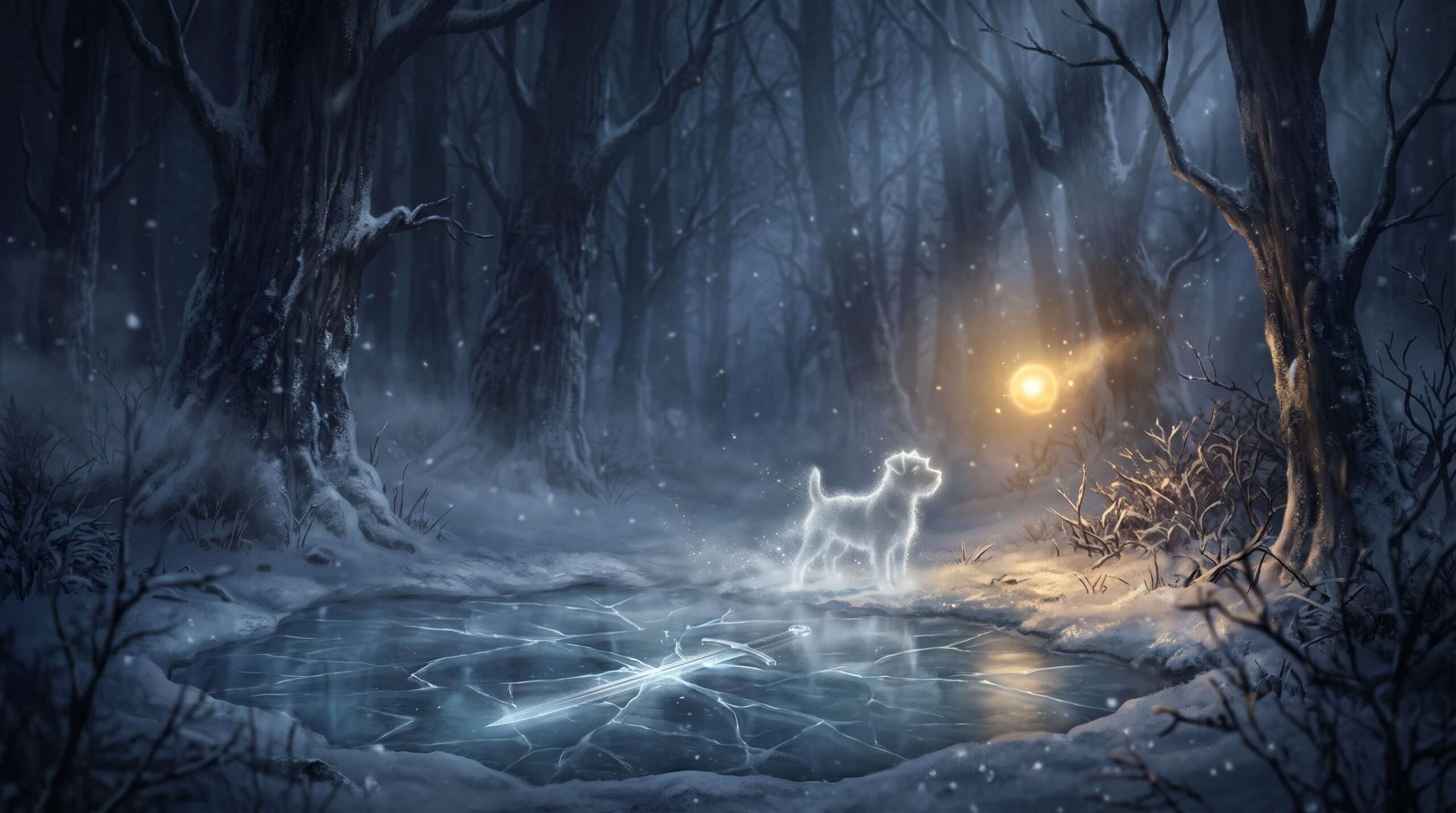
What defines his character is what happens next. Ron returns. Guided by the Deluminator, he finds Harry, pulls him from the frozen pool, and destroys the locket with the Sword of Gryffindor. A terrier doesn’t stay away from its pack forever, and Ron’s return is the clearest demonstration that his loyalty runs deeper than his doubts.
 Why a Terrier Suits a Character Who Doubts Himself
Ron grows up as the sixth of seven children, in the shadow of accomplished older brothers, with the world’s most famous wizard as his best friend. He often feels overlooked, and the books are honest about how much that stings.
A terrier is an interesting emblem for that kind of character. It’s not grand, it’s not mythic, and it won’t win any beauty contests against a stag or a phoenix. But it is brave in a practical, everyday way. Ron’s Patronus suggests that his courage is real even when he doesn’t believe in it.
Expert insight: There is often a gap between how a character sees themselves and what their Patronus reveals. Ron thinks of himself as the sidekick. His Patronus shows what the people who love him already know: he is the one who shows up.
 The Hidden Link Between Ron’s Terrier and Hermione’s Otter
Why Terriers Chase Otters
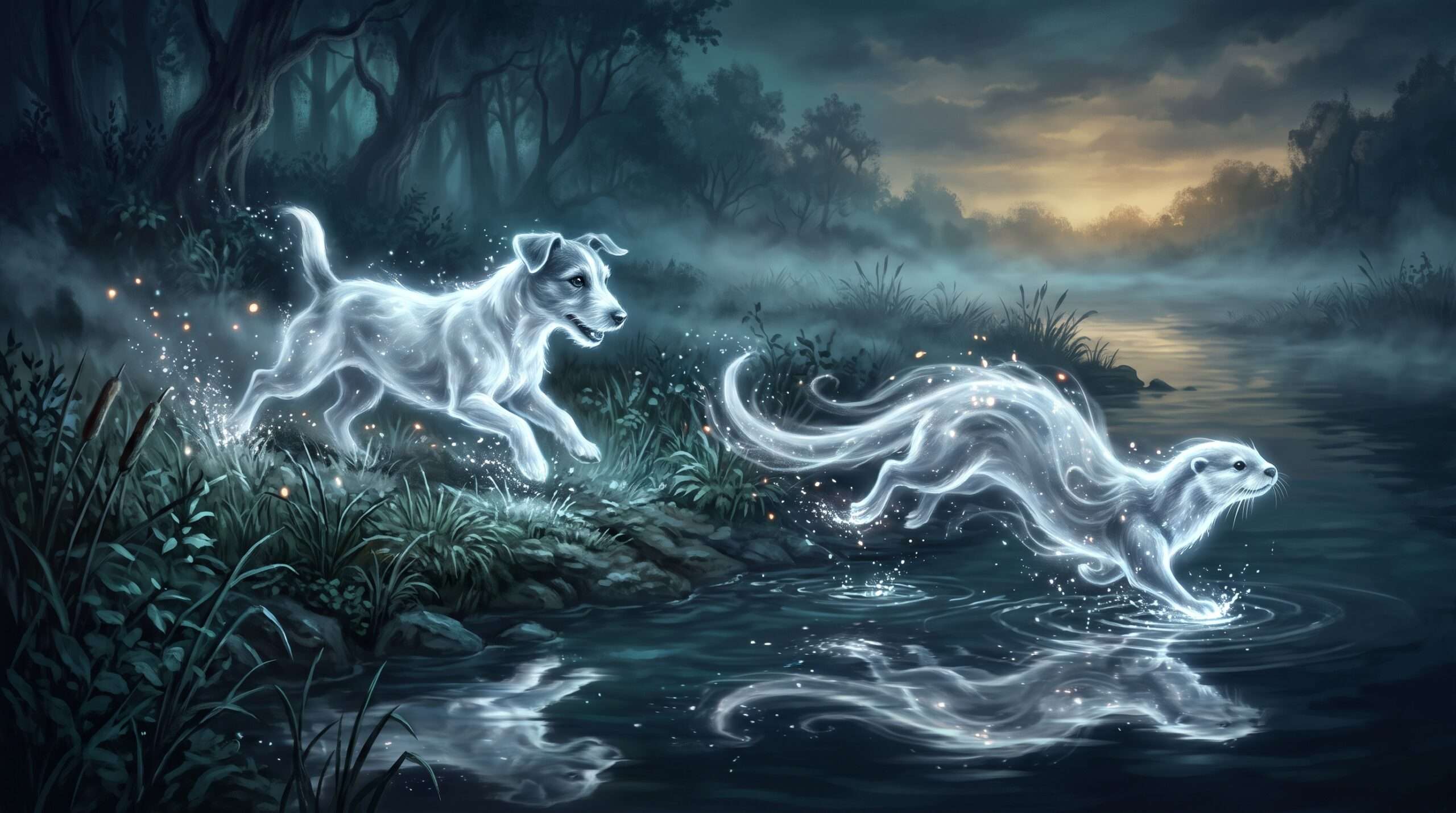
This connection is the most charming detail about the Ron Weasley Patronus, and many casual summaries skip it. Terriers as a group were traditionally bred as working dogs to pursue burrowing and den-dwelling animals. The Jack Russell in particular was developed in 19th-century England, largely to follow foxes underground. Terriers more broadly have a long association with chasing small game, including otters.
So when Rowling paired a terrier with an otter, she wasn’t just picking two cute animals. She was choosing a relationship that is, in nature, a playful pursuit.
What Rowling Has Said
J.K. Rowling has discussed the pairing in her commentary on the characters, noting that the terrier-and-otter relationship mirrors the dynamic between Ron and Hermione. The comments appeared in material connected to Pottermore (now Wizarding World), and I recommend linking directly to the original source when you publish rather than relying on secondhand summaries.
A Patronus Pair That Reflects Their Relationship
Read as a pair, the two Patronuses tell a story:
- They are constantly in motion around each other. Ron and Hermione bicker, tease, and challenge one another from their first year onward.
- The chase is affectionate. Ron’s feelings take years to find words, and Hermione’s patience is tested repeatedly, but the pull between them never disappears.
- The pairing foreshadows the ending. Their Patronuses were, in a sense, a quiet hint that the two belonged together long before they admitted it.
Interpretation note: The idea that the Patronus pairing “foreshadows” their marriage is a fan reading rather than a confirmed authorial intention, but it is a natural one given how the characters develop.
What Ron’s Patronus Reveals About His Character Arc
From Insecurity to Confidence
Ron’s journey is one of the series’ quieter triumphs. Early on, he is hand-me-down robes and sharp comments. By the end, he is a Keeper who has found his confidence on the Quidditch pitch, a strategist who understands the stakes of the war, and a friend who has learned from his worst moment. Conjuring a Patronus is not about being the most powerful wizard. It is about holding on to something good, and Ron’s growth makes that kind of emotional clarity possible.
Ron’s Happiest Memory
The books don’t tell us which memory powers Ron’s Patronus, so any answer is interpretation. Still, there are strong candidates:
- The moment he’s accepted. Becoming a hero at Hogwarts after years in the background, for instance, after the Quidditch triumph that turned the crowd’s mockery into cheers.
- A family moment. The Burrow at its warmest, with the Weasley family all in one room, is the emotional center of the series for many readers.
- A moment with Hermione. Given the terrier-and-otter pairing, it’s not hard to imagine her presence in his happiest memory.
Whichever you choose, the lesson is the same: Ron’s Patronus runs on connection, not on power.
 Why This Matters in the Deathly Hallows
The final book strips the characters of comfort. They are hunted, hungry, and carrying a Horcrux that preys on every insecurity they have. Ron’s vulnerability to the locket is not a character flaw so much as a consequence of how deeply he feels. His eventual triumph over it, by destroying the locket himself, is the culmination of everything his Patronus symbolizes: a small, loyal, determined force that refuses to be driven off.
Ron’s Patronus in the Books vs. the Films vs. Wizarding World
What the Books Say
The seven books give us the Patronus Charm, Harry’s stag, the doe, and more, but Ron’s terrier is not showcased in the same way as the most famous Patronuses. Much of what fans know about it comes from the author’s later confirmations rather than from a major on-page scene.
How the Films Portrayed It
The films, understandably, focus their visual effects on the most dramatic Patronuses: Harry’s stag and, in the later films, the doe. As a result, Ron’s terrier has a much smaller presence on screen. If you are researching this topic, I recommend rewatching the relevant scenes and noting precisely what appears before you cite it.
What Rowling and Official Wizarding World Sources Confirmed
| Question | Book | Film | Author / Wizarding World |
|---|---|---|---|
| Ron’s Patronus form | Limited on-page detail | Limited screen presence | Confirmed: Jack Russell Terrier |
| Hermione’s Patronus | Otter | Otter | Confirmed: otter |
| Terrier-and-otter link | Not explained in text | Not explained | Discussed by Rowling |
Treat this table as a starting point and verify each entry against your own copies before publishing.
How Ron’s Patronus Compares to Other Famous Patronuses
Patronus Comparison Table
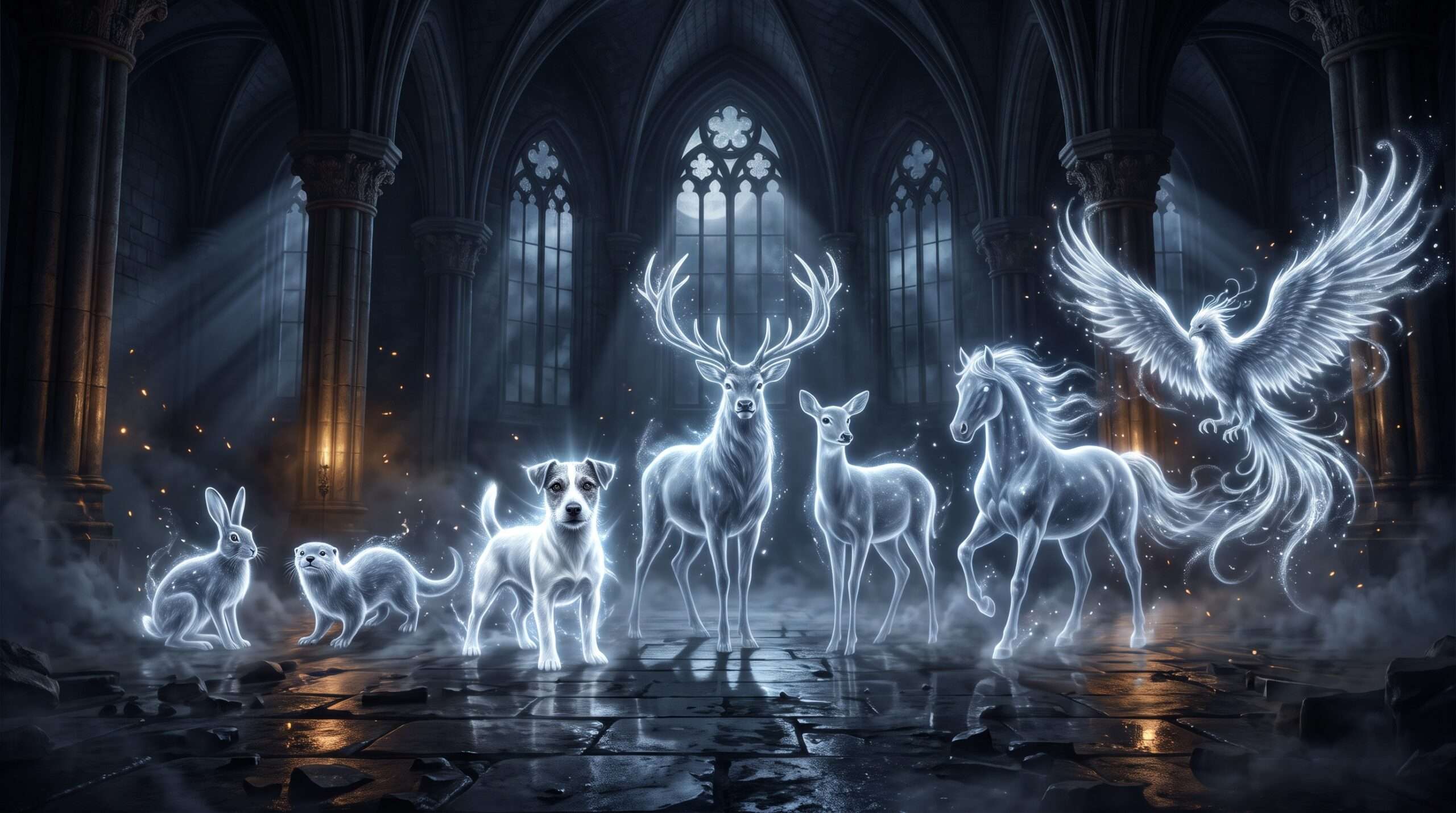
| Character | Patronus | Meaning / Symbolism |
|---|---|---|
| Harry Potter | Stag | Echoes his father’s Animagus form; courage and protection |
| Hermione Granger | Otter | Intelligence, playfulness, and her bond with Ron |
| Ron Weasley | Jack Russell Terrier | Loyalty, tenacity, and devotion |
| Ginny Weasley | Horse | Strength, freedom, and spirit |
| Luna Lovegood | Hare | Individuality and a gentle, unconventional mind |
| Severus Snape | Doe | Lifelong love for Lily Potter |
| Albus Dumbledore | Phoenix | Rebirth, wisdom, and resilience |
 Why Do Patronuses Reflect Personality and Relationships?
Rowling has explained that a Patronus typically reflects something fundamental about the caster. It can also be shaped by love, which is why Snape’s doe mirrors Lily’s. A Patronus can even change after a profound emotional event: Nymphadora Tonks’s Patronus changed to a wolf after her feelings for Remus Lupin deepened, the most famous example in the series.
Ron’s terrier sits at an interesting midpoint. It reflects his own character, and it is linked, by Rowling’s design, to someone else’s.
Related reading: Explore our guides to Harry Potter’s stag Patronus, Snape’s doe Patronus, and Hermione Granger’s otter Patronus.
Ron Weasley Patronus Fan Questions Answered
What is Ron Weasley’s Patronus?
Ron Weasley’s Patronus is a Jack Russell Terrier. It is a small but fearless dog that reflects his loyalty and courage, and it is closely tied to Hermione’s otter Patronus.
Why is Ron’s Patronus a Jack Russell Terrier?
The form suits Ron’s character: small in stature, big in loyalty, and fiercely protective of those he loves. It also forms a deliberate pair with Hermione’s otter, since terriers are traditionally associated with chasing otters.
Is Ron’s Patronus connected to Hermione’s?
Yes. The terrier-and-otter relationship mirrors the playful, pursuing dynamic between Ron and Hermione, and Rowling has discussed the pairing herself.
Can a Patronus change, and could Ron’s have changed?
A Patronus can change after major emotional events, as Tonks’s did. Nothing in the canon suggests Ron’s has changed, and his terrier fits him throughout the series.
What memory would Ron use to cast a Patronus?
The books don’t say. Plausible readings include a moment of acceptance at Hogwarts, a warm family memory at the Burrow, or a moment with Hermione. Any answer is interpretation, not canon.
What is your Patronus?
Wondering what your own would be? The official Wizarding World Patronus quiz is the best place to find out.
Find Your Own Patronus
Ron’s terrier shows that a Patronus doesn’t have to be grand to be meaningful. Take the official Wizarding World quiz and see what yours reveals about you. Do you think it fits? Share your result in the comments, along with which character’s Patronus you think matches their personality best.
 Final Thoughts: What Ron’s Patronus Teaches Us
We began with a puzzle: why would a small, scrappy terrier be the shape of Ron Weasley’s happiest memory? The answer is that Ron’s greatest strength was never flashy. It was loyalty, showing up, and refusing to give up on the people he loved, even after he walked away from them. A terrier is that quality in animal form.
Key takeaways:
- The Patronus of Ron Weasley is a Jack Russell Terrier.
- It symbolizes loyalty, courage, and protectiveness.
- It pairs with Hermione’s otter, reflecting the playful chase at the heart of their relationship.
- It mirrors Ron’s growth from insecurity to confidence across the series.
If you enjoyed this guide, explore our other Patronus breakdowns and character analyses to see how Rowling used these magical guardians to reveal the heart of each character