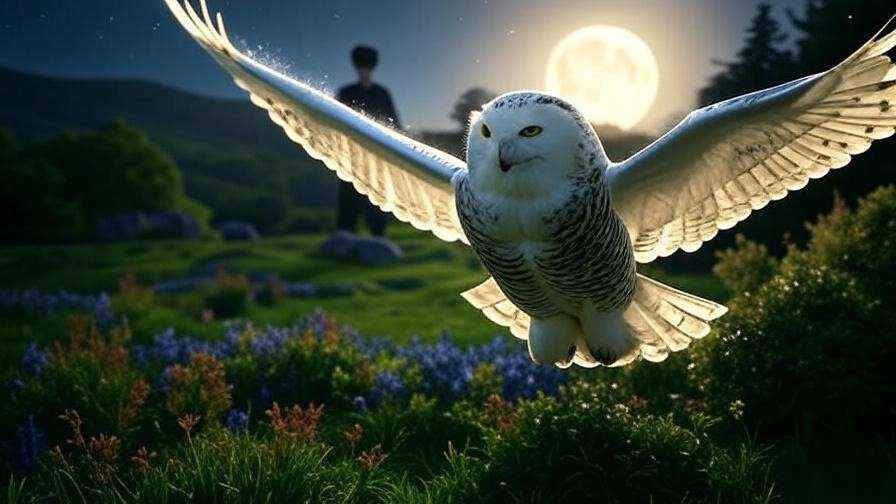
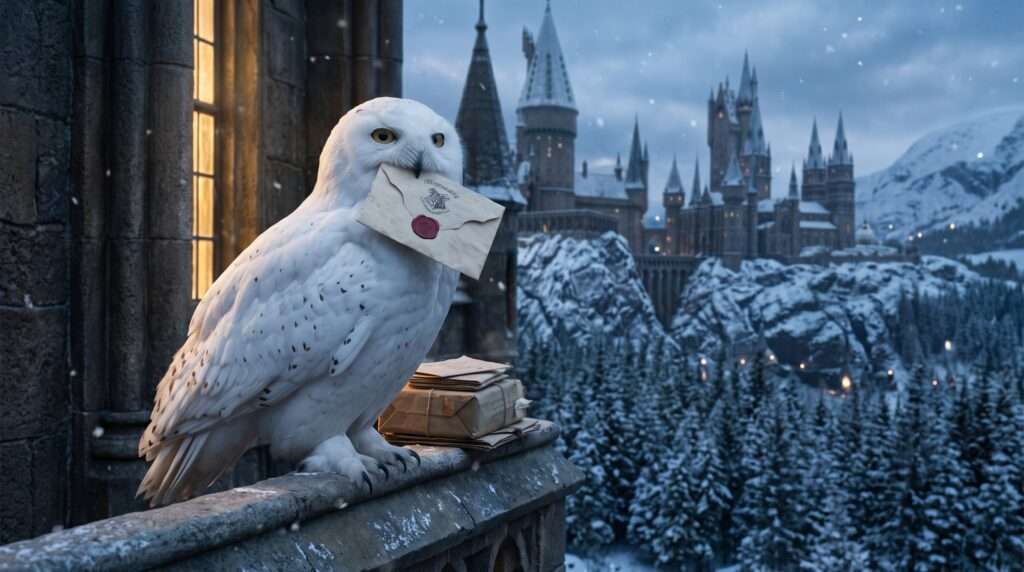
When fans think of the magic of Hogwarts, one of the first images that comes to mind is the majestic flight of Hedwig. The Snowy Owls of Harry Potter are not just iconic cinematic elements; they represent a global cultural phenomenon that forever linked this stunning Arctic raptor to the wizarding world. For an eleven-year-old wizard stepping into Eeylops Owl Emporium, acquiring a snowy owl meant gaining a fiercely loyal companion. For the audience, it ignited a multi-generational fascination with one of nature’s most elusive predators.
However, behind the silver screen’s depiction of mail-delivering, affectionate companions lies a starkly different biological reality. The true Bubo scandiacus (the scientific name for the snowy owl) is an apex predator of the freezing, treeless tundra, possessing complex survival adaptations that are far more intense than Hollywood portrays. While the films captured their visual majesty, they also inadvertently sparked real-world consequences for owl conservation globally.
This comprehensive guide takes you behind the scenes to meet the real avian actors who brought Hedwig to life, explores the vast biological differences between cinematic magic and Arctic reality, and unpacks the unexpected, lasting impact this beloved franchise has had on wildlife conservation.
The Feathered Stars: Meet the Real Owls Who Played Hedwig
In the cinematic universe, Hedwig is presented as a single, fiercely intelligent female owl. In reality, bringing this character to life required a highly coordinated team of animal actors, specialized handlers, and a deep understanding of avian behavior.
Gizmo, Ook, and the “Stunt Double” Owls
Hedwig was not played by a single bird. The demanding schedule of a blockbuster film franchise meant that relying on one animal was impossible, both logistically and ethically. Instead, a primary cast of several owls was assembled, with a bird named Gizmo stepping into the spotlight as the lead actor. Gizmo handled the majority of the prominent on-screen scenes, particularly in Harry Potter and the Sorcerer’s Stone and The Chamber of Secrets.
Interestingly, while Hedwig is famously a female owl in J.K. Rowling’s novels, the birds used to portray her on screen were almost exclusively male. This casting choice came down to biology, specifically sexual dimorphism. In snowy owls, females are noticeably larger, heavier, and covered in heavy dark brown or black barring to help them camouflage while nesting on the ground. Males, conversely, are smaller, lighter, and become almost purely white as they age.
For the filmmakers, male owls presented two massive advantages: their brilliant white plumage popped perfectly on camera against the dark, gothic backdrop of Hogwarts, and their lighter weight made them significantly safer and easier for a young Daniel Radcliffe to handle during long days on set. Alongside Gizmo, several other males including Ook, Kasper, and Swoops operated as highly specialized “stunt doubles.” Ook was often utilized for flying sequences, while others were trained for specific stationary shots or scenes requiring the bird to tolerate unique lighting setups.
 Training the Magic: Behind the Scenes with Gary Gero
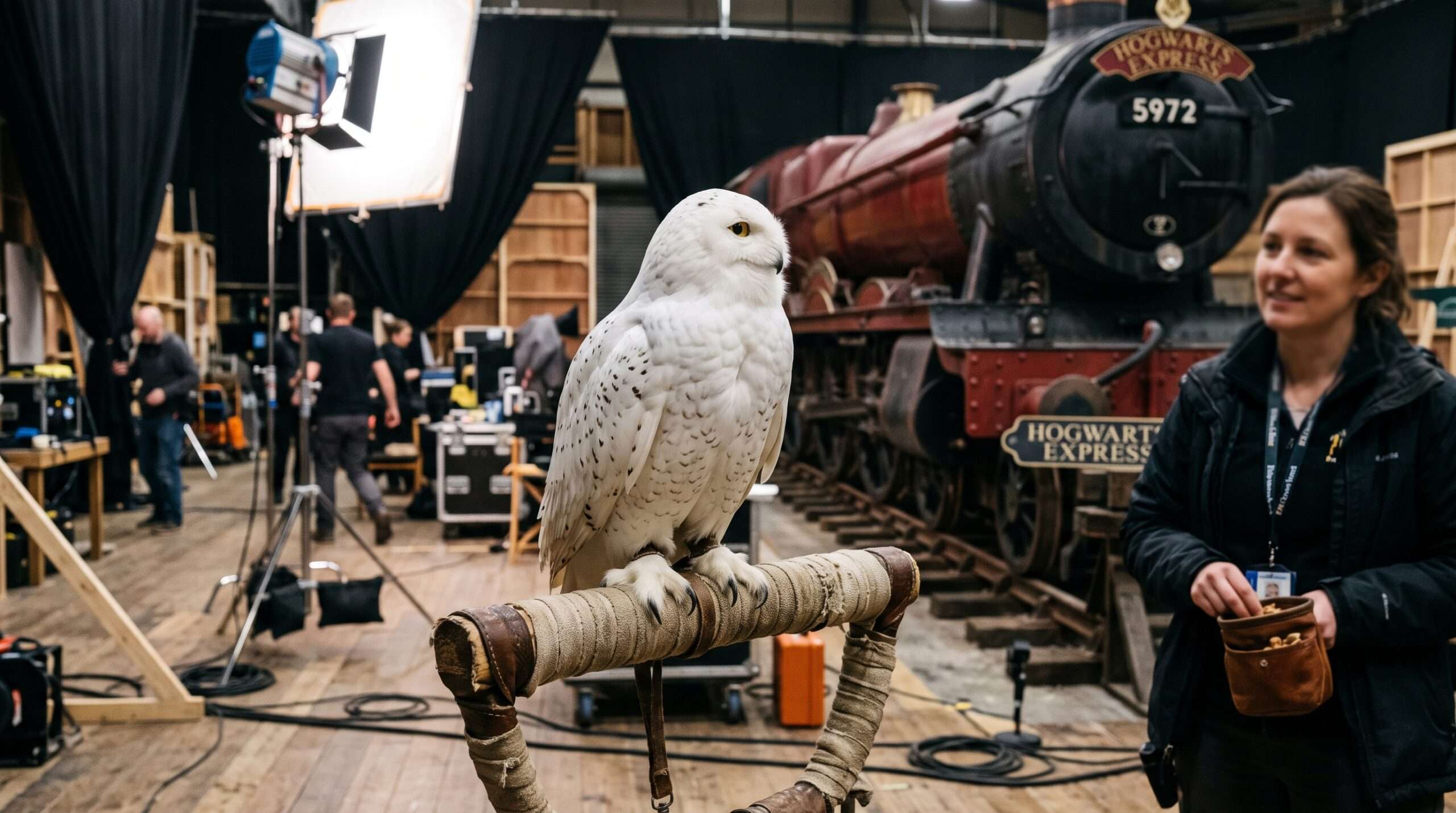
Turning a wild predator into a disciplined on-screen actor requires extraordinary patience. The animal action in the films was overseen by head animal trainer Gary Gero and his team at Birds & Animals Unlimited. Unlike dogs, which have been domesticated for thousands of years to seek human approval, birds of prey are entirely instinct-driven.
Training a snowy owl to carry a letter or land on a specific mark can take upwards of six months. Gero’s team relied strictly on positive reinforcement, associating specific actions with a high-value food reward, typically small pieces of raw meat. The trainers had to carefully acclimatize the owls to the chaotic environment of a film set—which is filled with bright lights, moving boom mics, and dozens of crew members.
One of the most complex behaviors trained was the simple act of holding a Hogwarts letter. Snowy owls do not naturally grasp paper; their talons are designed to crush the spine of a lemming. The props department had to design special, lightweight prop letters that the owls could safely hold in their beaks or talons without tearing them, and the birds were conditioned for weeks just to tolerate the feeling of the parchment.
Snowy Owls (Bubo scandiacus) in the Wild vs. The Wizarding World
The cozy, roaring fires of the Gryffindor common room make for excellent cinema, but they would be a nightmare for a real snowy owl. The divergence between the beloved fictional companion and the wild biological organism is immense.
Habitat and Hunting: The Arctic Tundra Reality
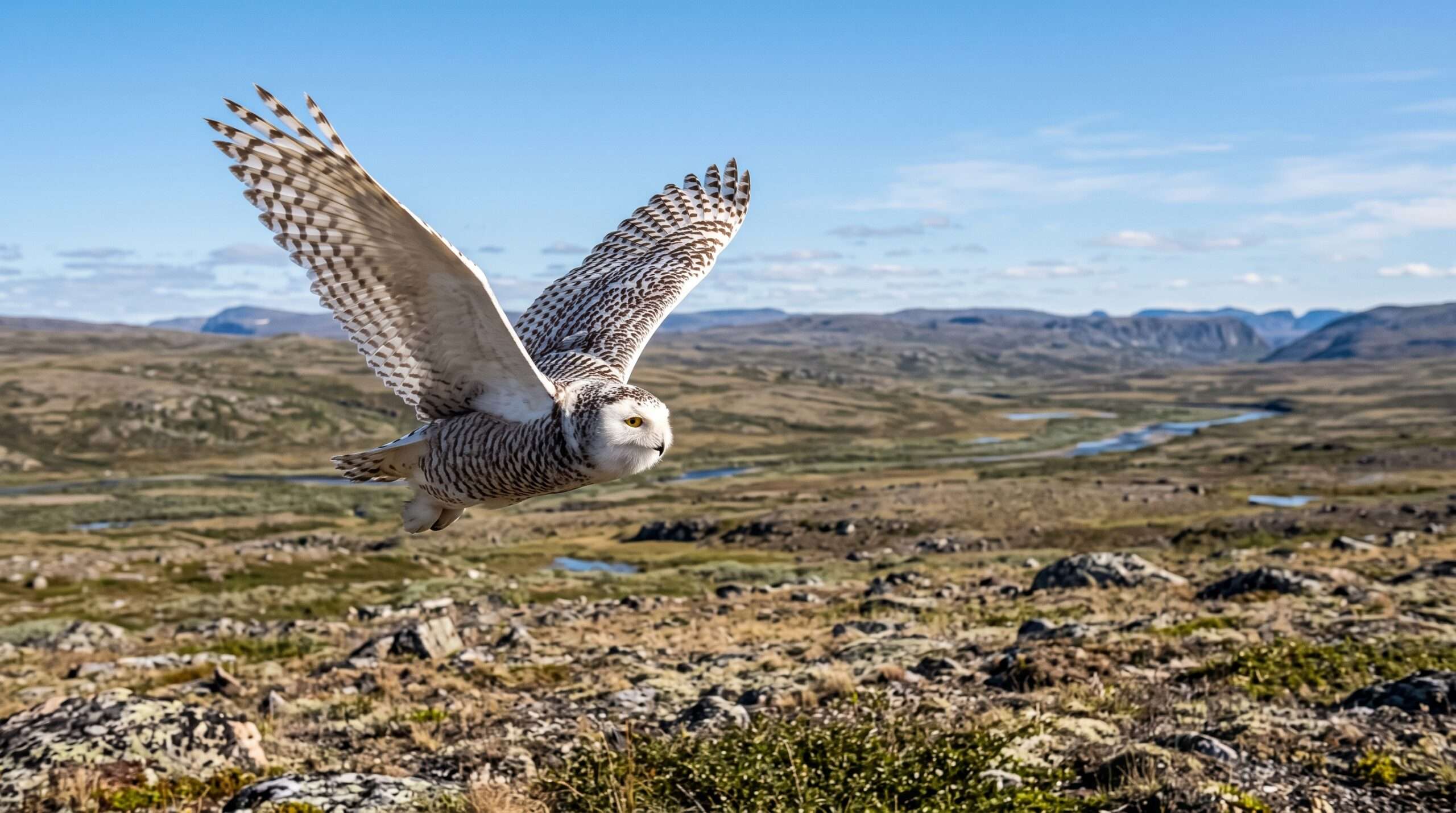
In the wizarding world, owls live in communal stone “owleries” and comfortably navigate the temperate climate of the Scottish Highlands. In reality, the snowy owl is built exclusively for the brutal, unforgiving environment of the Arctic tundra.
These raptors are heavily insulated. Unlike most birds, their legs and toes are completely covered in dense, bristle-like feathers that act as natural snow boots, protecting them from sub-zero temperatures. Their dense plumage makes them incredibly heavy for their size, providing maximum heat retention. If a real snowy owl were kept in a warm British castle, it would suffer from severe heat stress.
Furthermore, snowy owls are unique among owls in their hunting habits. Because they live near the Arctic Circle, where the summer features 24 hours of continuous daylight, they are primarily diurnal (active during the day), unlike the vast majority of owl species which are strictly nocturnal. Their diet in the wild consists almost entirely of lemmings. A single adult snowy owl can consume up to 1,600 lemmings in a single year. When lemming populations crash, snowy owls exhibit a behavior known as “irruption,” flying as far south as the northern United States in search of food.
 Why a Snowy Owl Wouldn’t Actually Deliver Your Mail
The most enchanting aspect of the wizarding world is the owl postal service. Hedwig instinctively knows where Harry’s friends are located, flying across the country to deliver parcels and returning affectionately to nip at his fingers.
Scientifically speaking, using a snowy owl for mail delivery would be disastrous. Snowy owls are fiercely territorial and solitary predators. They are highly nomadic, following food sources rather than returning to a centralized location. They do not build permanent nests or “homes” in the way songbirds do, meaning the concept of returning to a designated owlery goes entirely against their biological programming.
Additionally, owls are not affectionate. They do not seek physical touch or bonding in the mammalian sense. The gentle “nips” of affection shown on screen would, in reality, be warning bites. An owl’s beak is designed to tear flesh, and its talons possess incredible crushing power. Attempting to pet a wild or improperly handled snowy owl would likely result in serious injury.
The “Harry Potter Effect”: Pop Culture’s Impact on Owl Conservation
When a massive pop culture phenomenon romanticizes a wild animal, the real-world consequences for that species are often devastating. Biologists and conservationists refer to this as the “Harry Potter Effect.” Just as the release of Finding Nemo led to a massive depletion of wild clownfish, the cinematic portrayal of Hedwig triggered an unprecedented, and often illegal, global demand for pet owls.
The Spike in the Pet Owl Trade
The most alarming impact of this cultural obsession was seen in the Asian pet trade, most notably in countries like Indonesia, Thailand, and India. Before the release of the films, owls were rarely kept as pets in these regions; they were often associated with bad omens or death in local folklore. However, the immense popularity of the wizarding world completely reversed this cultural perception.
In Indonesian bird markets, the demand skyrocketed to the point where wild-caught owls were openly sold and locally rebranded as “Burung Harry Potter” (Harry Potter birds). Researchers tracking wildlife markets noted that in the early 2000s, owls made up a tiny fraction of the birds sold. By the mid-2010s, that number had surged into the thousands. The vast majority of these birds were poached directly from the wild, causing severe ecological disruption and contributing to the rapid decline of native owl populations.
 The Illegality and Ethical Dilemma of Keeping Owls
The harsh reality is that owls make abysmal household pets, and keeping them is entirely unethical. Unlike domesticated parrots, owls have absolutely no desire for human companionship. The spike in the pet owl trade inevitably led to a spike in mass abandonments. Fans who purchased these birds quickly realized they were entirely unequipped to handle a wild raptor.
Here is why keeping an owl in a home environment is a recipe for disaster:
-
Highly Specialized Diets: You cannot buy “owl kibble” at a local pet store. Owls require a steady diet of whole, raw animals—such as mice, rats, day-old chicks, and quail. They must consume the bones, fur, and organs to get the proper nutrients, and they regurgitate the indigestible parts in the form of “pellets.”
-
Massive Space Requirements: Owls are not meant to sit in a brass cage like Hedwig. They require massive outdoor aviaries (often strictly regulated by size in countries where falconry is legal) to fly and exercise their flight muscles. A life confined to a small cage leads to feather degradation, severe stress, and premature death.
-
Destructive and Noisy Behavior: Owls are equipped with razor-sharp talons capable of shredding furniture, clothing, and skin. Furthermore, many owl species are highly vocal at night, emitting loud screeches, hoots, and barks that make cohabitation with humans incredibly disruptive.
-
Strict Legal Protections: In the United States, the Migratory Bird Treaty Act makes it a federal crime to own, capture, or possess a native owl (including the snowy owl) without highly specialized permits, typically reserved only for licensed wildlife rehabilitators and master falconers. Similar stringent laws exist in the UK and across Europe.
J.K. Rowling’s Plea to Fans
As the crisis in the pet trade escalated, the creator of the wizarding world herself had to step in. J.K. Rowling issued public statements vehemently discouraging her fans from attempting to keep wild birds. She famously stated, “If anybody has been influenced by my books to think an owl would be happiest shut in a small cage and kept in a house, I would like to take this opportunity to say as forcefully as I can: you are wrong.”
Rowling urged fans to understand that the owls in her books were magical creatures of fantasy, and that real-world owls belong entirely in the wild.
How to Experience the Magic Responsibly
If you are captivated by the snowy owls of Harry Potter, you do not have to give up your love for these magnificent creatures. There are many ways to channel your enthusiasm into positive, real-world actions that actually benefit the species.
Supporting Owl Sanctuaries and Wildlife Rehabilitation
One of the most impactful ways to connect with owls is to support the professionals who dedicate their lives to protecting them. Wildlife rehabilitation centers and raptor sanctuaries take in injured, orphaned, or illegally trafficked birds of prey, providing them with medical care and, when possible, releasing them back into the wild.
Many of these organizations offer “symbolic adoptions.” By donating a set amount, you can sponsor the care of a resident snowy owl that cannot be released due to injury. In return, you receive an adoption certificate, photos, and updates on the bird’s well-being. This is the perfect, cruelty-free alternative to owl ownership and makes a fantastic gift for any hardcore Potter fan. Organizations like the World Wildlife Fund (WWF) and local avian rescues are excellent places to start.
 The Best Ways to Encounter Snowy Owls IRL
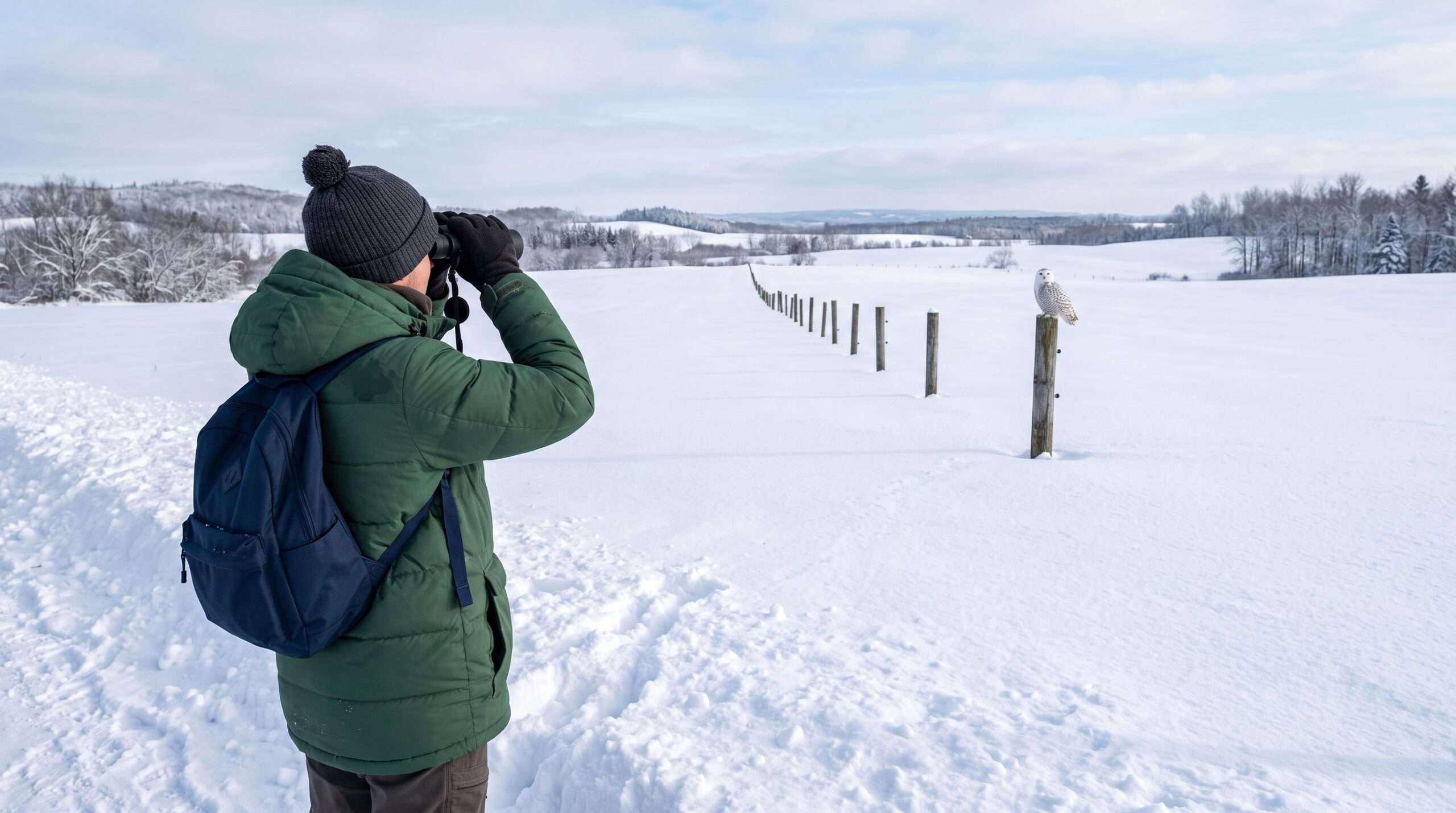
For those who want to see the magic of a snowy owl in person, ethical birdwatching is the ultimate adventure. Because snowy owls are native to the Arctic, seeing them in their natural habitat requires some planning.
During the winter months, when lemming populations drop in the Arctic, snowy owls experience an “irruption.” They fly south into Canada and the northern United States in search of food. They can often be spotted in open, flat areas that mimic the tundra, such as coastal dunes, large agricultural fields, and even airport tarmacs.
If you are lucky enough to encounter a snowy owl in the wild, strict ethical guidelines must be followed:
-
Maintain a Respectful Distance: Use binoculars or a telephoto lens. If the owl is staring directly at you with wide eyes or alters its posture, you are too close and are causing the bird stress.
-
Never Bait an Owl: It is highly unethical to throw store-bought mice or bait to lure a snowy owl in for a photograph. Baiting habituates the birds to humans and draws them dangerously close to roads and traffic, which is a leading cause of snowy owl mortality during winter irruptions.
-
Keep Locations Private: If you spot a snowy owl, avoid posting the exact GPS coordinates on public social media. Crowds of eager photographers can quickly overwhelm a resting bird, exhausting its crucial winter energy reserves.
 Frequently Asked Questions (FAQs)
Are snowy owls good pets?
Absolutely not. Snowy owls are wild apex predators. They require massive flight enclosures, a diet of whole raw rodents, and specialized veterinary care. In most countries, including the US and the UK, it is highly illegal to own a snowy owl without federal wildlife and falconry permits.
How many owls played Hedwig in the Harry Potter movies?
While the exact number fluctuates depending on the specific movie’s demands, at least four different snowy owls were primarily used to portray Hedwig. A male owl named Gizmo was the principal actor, while others like Ook, Swoops, and Kasper served as specialized stand-ins for flying or specific action shots.
Why did J.K. Rowling choose a snowy owl for Harry?
Rowling has stated that she found a picture of a snowy owl while researching the wizarding world and instantly felt it was the perfect fit. Visually, the bright white plumage of the snowy owl serves as a striking symbol of purity, innocence, and light, directly contrasting with the dark, oppressive forces Harry Potter must face throughout the series.
How long do snowy owls live?
In the wild, snowy owls face harsh conditions, predators, and food shortages, giving them an average lifespan of about 9 to 10 years. However, in captivity—such as the professionally trained animal actors used in film, or those living in accredited zoos and sanctuaries—they can live significantly longer, often reaching 25 to 28 years of age due to consistent diets and veterinary care.
The snowy owls of Harry Potter will forever hold a special place in cinematic and literary history. Hedwig brought a sense of loyalty, comfort, and undeniable magic to a generation of fans. However, as we step away from the screen, it is our responsibility to recognize that the true magic of Bubo scandiacus lies in its wildness.
By separating the fictional companion from the real-world apex predator, we can appreciate the snowy owl not as a magical mail carrier, but as an awe-inspiring survivor of the Arctic tundra. Through ethical birdwatching, supporting raptor conservation, and educating others against the illegal pet trade, we can ensure that these magnificent birds continue to thrive in the wild for generations to come.