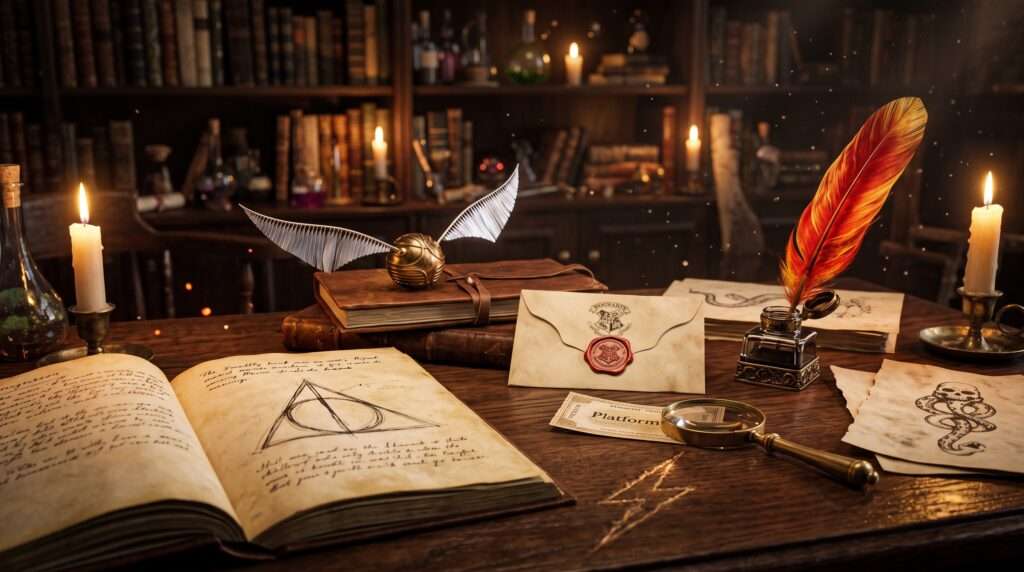
Beyond the wands, robes, and incantations, J.K. Rowling’s Wizarding World is built on an intricate visual language rooted in ancient folklore, medieval heraldry, and Renaissance alchemy. Millions of fans wear these emblems on hoodies or etch them into their skin, yet many only know the surface-level film explanations. If you want to truly understand the most iconic symbols for Harry Potter, you must look past the cinematic visuals and explore the deep philosophical conflicts they represent—from the heavy burden of grief to the dangers of fascism and the path to spiritual transcendence.
By analyzing the canonical origins and real-world inspirations behind the franchise’s seven defining symbols, we can unlock a richer understanding of the series’ central themes: mortality, free will, and the indelible power of sacrificial love.
Quick Reference Guide: The 7 Symbols Explored in This Article
-
The Deathly Hallows
-
The Lightning Bolt Scar
-
The Dark Mark
-
The Hogwarts Crest
-
The Golden Snitch
-
Platform 9 ¾
-
The Phoenix & The Patronus
The Alchemical and Mythological Roots of Potter Lore
The magic system of the Harry Potter universe is not merely a collection of arbitrary spells; it is a meticulously researched tapestry woven from historical esoterica. Rowling drew heavily from medieval bestiaries, the real-world alchemical treatises of figures like Nicolas Flamel, and Celtic mythology to give her world a sense of lived-in authenticity.
In this universe, visual shorthand serves a highly practical purpose. Symbols function in-universe as magical catalysts. Ancient runes anchor protective wards, heraldic crests enforce magical identity, and drawn glyphs can summon dark forces across great distances. Understanding this visual language is the key to understanding the architecture of the story itself.
1. The Sign of the Deathly Hallows: Mastery Over Mortality
Canonical Origin & In-Universe Lore
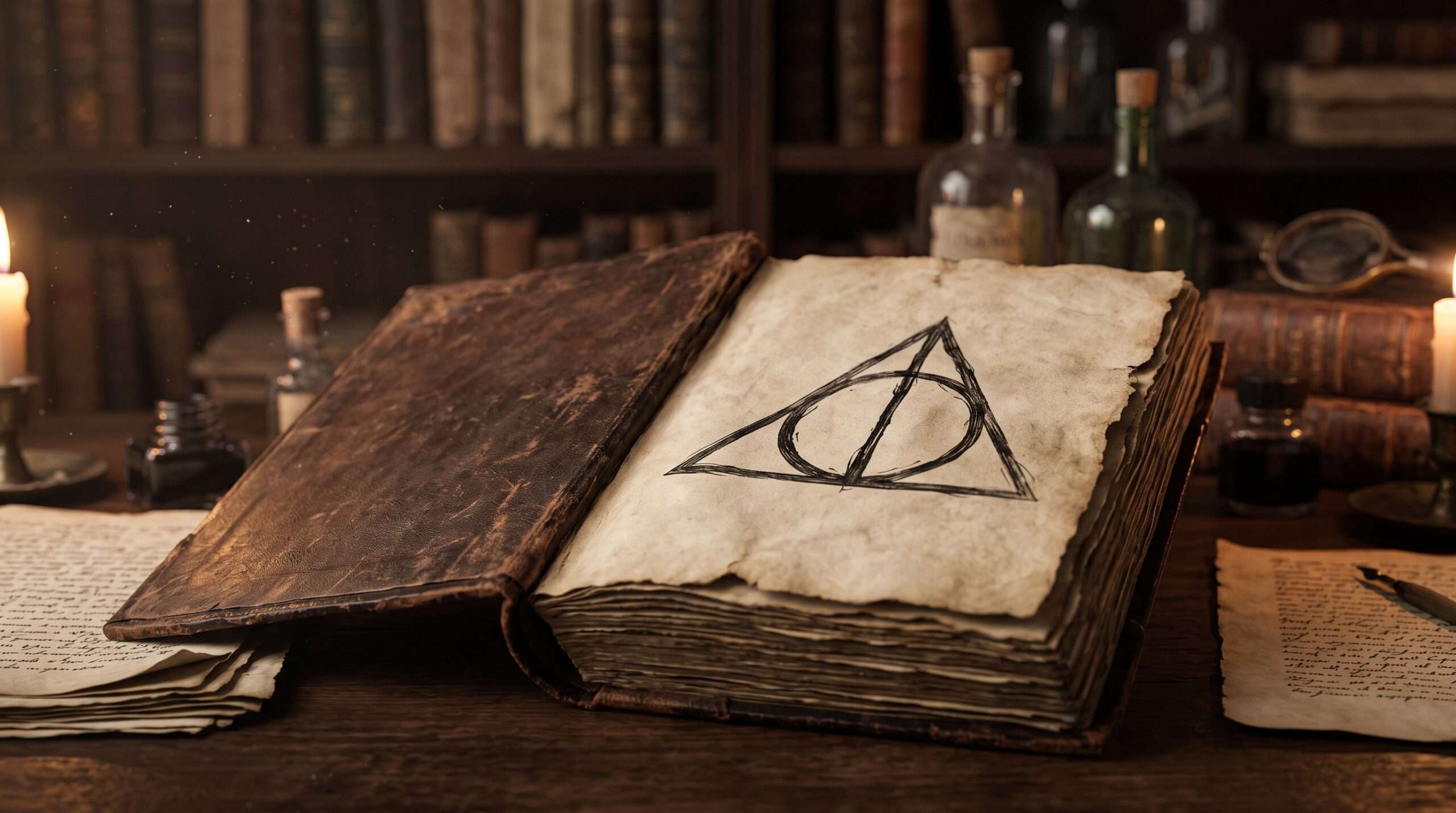
First introduced in Harry Potter and the Deathly Hallows, this geometric glyph is deeply tied to “The Tale of the Three Brothers,” a fable found in The Tales of Beedle the Bard. As explained by Xenophilius Lovegood in Chapter 21, the symbol is an amalgamation of three legendary artifacts created by Death himself. The vertical line represents the Elder Wand (unbeatable in duels), the circle represents the Resurrection Stone (capable of recalling shades of the dead), and the enclosing equilateral triangle represents the Cloak of Invisibility (which shields its wearer from Death’s gaze). While characters like Gellert Grindelwald appropriated the symbol for their own pure-blood supremacy movements, its true purpose was to identify believers in the Hallows’ existence.
 The Hidden Meaning & Alchemical Parallels
Beneath the fairy tale lies a profound commentary on the human condition and historical alchemy. The symbol closely mirrors the alchemical concept of squaring the circle, an esoteric pursuit symbolizing the creation of the Philosopher’s Stone and the harmonious union of the physical and spiritual realms.
More importantly, the Deathly Hallows symbolize the paradox of the “Master of Death.” Lord Voldemort seeks to conquer death through division (Horcruxes) and dominance (the Elder Wand). However, the true Master of Death—a title briefly achieved by Harry Potter—does not seek immortality. True mastery comes from accepting death as the “next great adventure.” By willingly walking into the Forbidden Forest to die, Harry fulfills the symbol’s true meaning: transmuting the base, primal fear of mortality into spiritual transcendence.
2. The Lightning Bolt: Destiny, Rupture, and Ancient Magic
Canonical Origin & In-Universe Lore
On Halloween night in 1981 at Godric’s Hollow, the dark wizard Lord Voldemort attempted to murder infant Harry Potter. The rebounding Killing Curse (Avada Kedavra) left a distinct lightning bolt scar on Harry’s forehead. Throughout the series, this scar is far more than a physical disfigurement; it acts as a metaphysical bridge. It functions as a Horcrux connection, a conduit for unintended Legilimency, and a painful biological alarm system whenever Voldemort experiences intense emotion or proximity.
The Hidden Meaning
A popular, mathematically satisfying fan theory suggests that the lightning bolt is the exact somatic wand movement required to cast the Avada Kedavra curse, permanently etching the spell’s physical motion onto Harry’s skin.
Historically and mythologically, the lightning bolt is the ultimate archetype of divine intervention (associated with deities like Zeus and Thor). It represents a sudden, violent rupture in the natural order. In Harry’s case, the natural order (death by an unblockable curse) was shattered by an ancient, overriding magic: Lily Potter’s sacrificial love. The scar is the physical residue of love violently repelling hatred. It stands as an indelible reminder that deep, self-sacrificing love can literally alter the fabric of magical reality.
3. The Dark Mark: Fear, Totalitarianism, and Alchemical Decay
Canonical Origin & In-Universe Lore
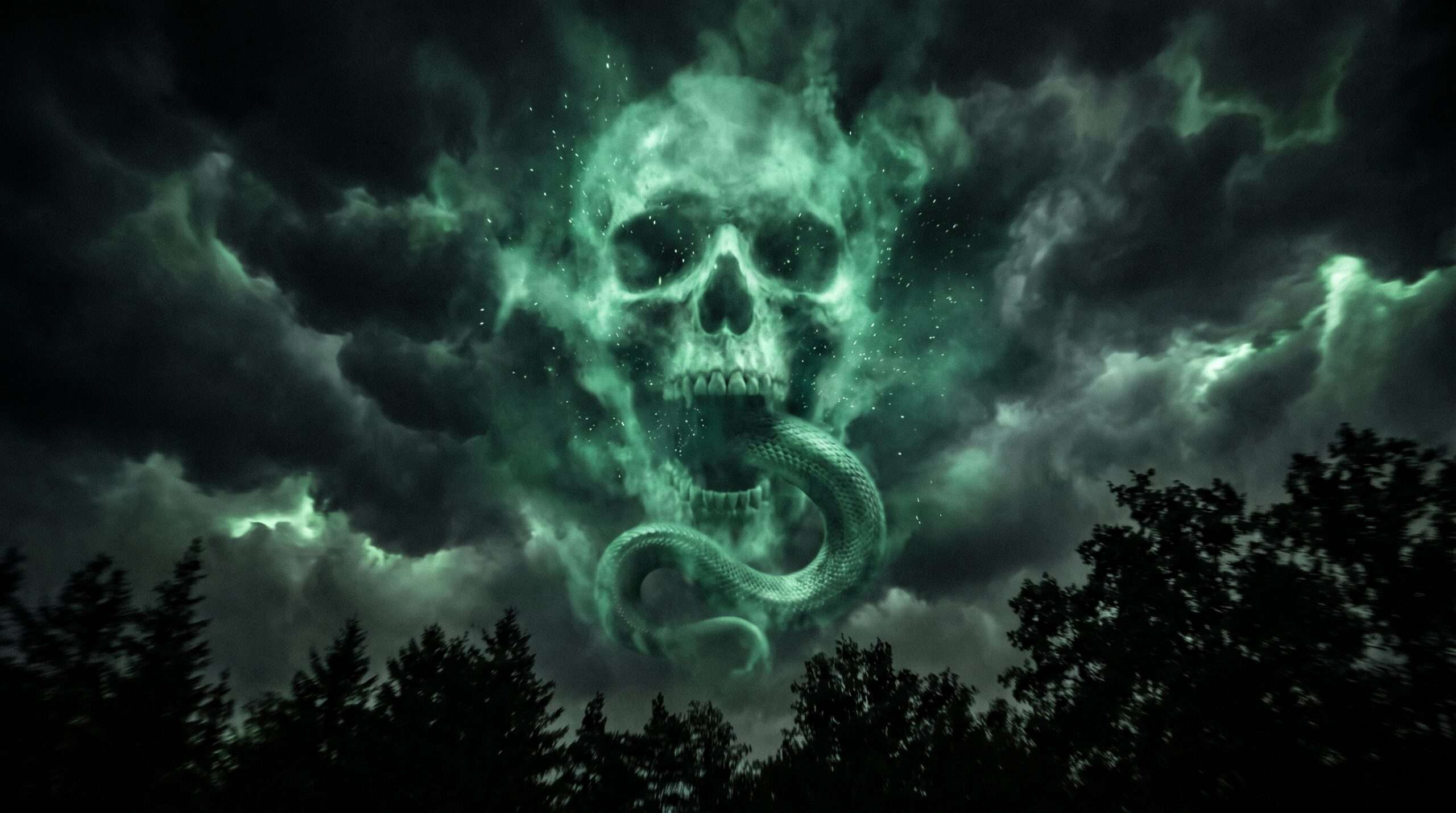
The Dark Mark—a skull with a serpent protruding from its mouth like a tongue—is the sigil of Lord Voldemort and his Death Eaters. Conjured into the sky via the Morsmordre incantation, it is left hovering over scenes of murder as a tool of psychological warfare. Furthermore, the symbol is magically branded onto the left forearms of Voldemort’s inner circle, functioning as a magical tether to summon them or be summoned by their master.
 The Hidden Meaning & Real-World Historical Allusions
The imagery of the Dark Mark is a dark subversion of two classic motifs. In traditional art, the skull represents Memento Mori (“remember you must die”), a reminder of mortality’s inevitability. The serpent often mirrors the Ouroboros, the alchemical snake eating its own tail, symbolizing infinite rebirth. Voldemort perverts both: he rejects the natural end of life (the skull) by utilizing dark magic (the serpent) to cling to a corrupted, physical immortality at any cost.
Historically, the Dark Mark parallels totalitarian branding and fascist badges. It represents blood-purity dogma and the loss of individual autonomy to a violent state machine.
The Tattoo Dilemma: A Fan Culture NoteThe Dark Mark remains one of the most controversial choices for Harry Potter fan tattoos. While many fans view it simply as an appreciation of the series’ villains or a love for dark fantasy aesthetics, others point out its explicit in-universe parallels to hate groups and fascism, sparking ongoing ethical debates within the fandom about reclaiming villain imagery.
4. The Hogwarts Crest: The Synthesis of Medieval Virtues
Canonical Origin & Heraldic Anatomy
The coat of arms for Hogwarts School of Witchcraft and Wizardry features a central shield divided into four quadrants, surrounding a stylized letter “H”. Each quadrant houses the mascot of a foundational house: a lion on a red background (Gryffindor), a snake on green (Slytherin), an eagle on blue (Ravenclaw), and a badger on yellow (Hufflepuff). Beneath the shield rests a scroll bearing the school’s Latin motto: “Draco Dormiens Nunquam Titillandus” (“Never Tickle a Sleeping Dragon”).
 The Hidden Meaning: The Four Humors & Alchemical Elements
Rowling intricately tied the Hogwarts houses to the classical four elements and the ancient medical concept of the four humors.
-
Gryffindor (Fire/Choler): Represents passion, aggression, and bravery.
-
Slytherin (Water/Phlegm): Represents fluidity, ambition, and self-preservation.
-
Ravenclaw (Air/Blood): Represents intellect, elevation, and the mind.
-
Hufflepuff (Earth/Melancholy): Represents groundedness, loyalty, and steadfast labor.
The true hidden meaning of the crest is its insistence on synthesis. The crest visually argues that Hogwarts—and by extension, society—thrives only when all four temperaments cooperate. Isolation of any single trait breeds extremism. Bravery without wisdom becomes fatal recklessness (Gryffindor); ambition without loyalty becomes cruelty (Slytherin); intellect without action becomes arrogance (Ravenclaw); and loyalty without ambition leads to stagnation (Hufflepuff). The crest is a mandate for balance.
5. The Golden Snitch: Fate, Flesh-Memory, and the Final Surrender
Canonical Origin & Sporting Lore
In the wizarding sport of Quidditch, the Golden Snitch is a tiny, walnut-sized golden sphere with silver wings. It flies at lightning speed, and catching it ends the game, awarding the Seeker’s team 150 points. Historically, as noted in Quidditch Through the Ages, it was invented by metal-charmer Bowman Wright to replace the Golden Snidget, a magical bird hunted to near extinction. Crucially, Snitches are endowed with “flesh memory”—they remember the exact touch of the first person to handle them, ensuring disputed catches can be easily resolved.
 The Hidden Meaning: “I Open at the Close”
Alchemically, gold is the ultimate, perfected state of matter and the human soul. The Golden Snitch represents fate and the ultimate realization of one’s destiny.
Its narrative arc is deeply circular and profoundly tied to Harry’s spiritual journey. Harry catches his first Snitch in The Sorcerer’s Stone not with his hands, but by nearly swallowing it. Years later, Dumbledore exploits this flesh memory to hide the Resurrection Stone inside it, inscribed with the phrase, “I open at the close.” The Snitch becomes the physical embodiment of Harry’s ultimate test. He spends his entire athletic career fighting desperately to catch the Snitch to win games; yet, to access the magic hidden within this final Snitch, he must completely relinquish his desire to win. He must surrender his life. The Snitch symbolizes the ultimate paradox of the hero’s journey: victory achieved only through absolute surrender.
6. Platform 9 ¾: The Liminal Gateway Between Worlds
Canonical Origin
Hidden from Muggle eyes between platforms 9 and 10 at London’s King’s Cross Station, Platform 9 ¾ is the boarding point for the Hogwarts Express. To access it, a witch or wizard must walk—or run—directly into the solid brick barrier dividing the platforms. It requires absolute faith and momentum; hesitation results in crashing into solid brick.
The Hidden Meaning: Psychological Transition
Platform 9 ¾ is the ultimate literary representation of a “Liminal Space”—a threshold separating two distinct realities. In coming-of-age literature and global folklore, crossing a threshold is required to leave childhood behind and enter a world of danger and adult responsibility.
The use of a fraction is not just whimsical math; it signifies the unseen spaces that ordinary people (Muggles) deliberately ignore. Because it is a space between spaces, King’s Cross Station takes on a deeply spiritual meaning at the end of the series. When Harry is struck by the Killing Curse in the forest, he awakens in a pristine, ethereal version of King’s Cross. It is a purgatorial bridge, the ultimate crossroads where the soul must choose whether to board a train to the afterlife or turn back to face the physical world.
7. The Phoenix & The Patronus: Light Against Despair
Canonical Origin & Magical Mechanics
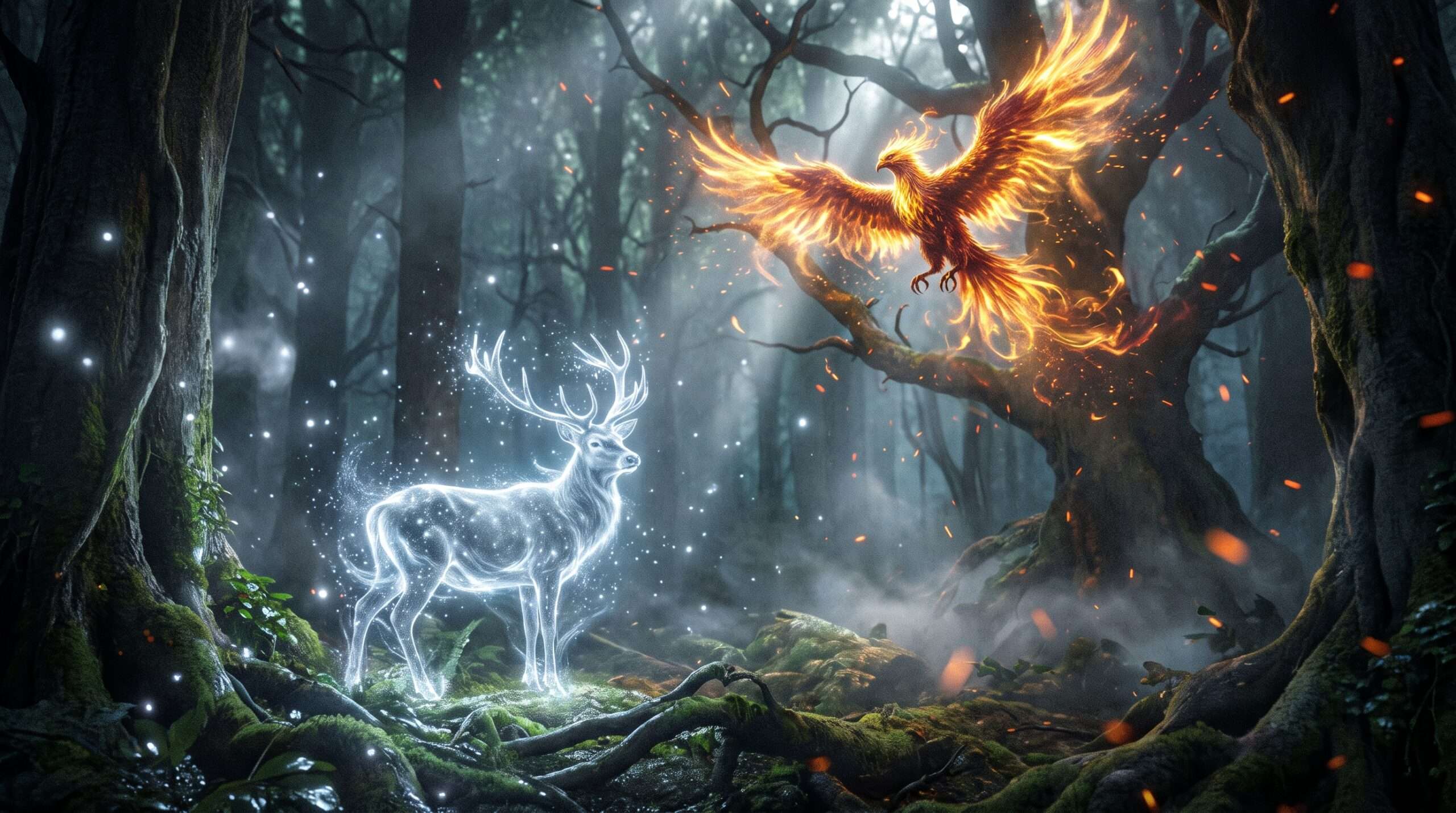
The Phoenix, best represented by Albus Dumbledore’s companion Fawkes, is a majestic red and gold bird capable of carrying immense weight, healing wounds with its tears, and bursting into flame upon death, only to be reborn from the ashes. This imagery is adopted by the resistance group, The Order of the Phoenix.
Similarly, the Patronus Charm (Expecto Patronum) is advanced, ancient magic that conjures a brilliant, silver animal guardian out of sheer positive emotion to fend off Dementors—dark creatures that feed on human happiness and induce localized despair.
 The Hidden Meaning
Both the Phoenix and the Patronus represent the triumph of the soul over inescapable darkness.
The Patronus operates as a stunning allegory for Carl Jung’s concept of the “True Self.” Because Dementors are a widely recognized metaphor for clinical depression, the Patronus is not a weapon of violence, but a shield of cultivated joy. It requires the caster to draw upon their deepest, most authentic positive memories to push back the void.
The Phoenix complements this as the ultimate alchemical and Christian symbol of resurrection. It signifies purification through fire and the immortality of a righteous spirit. Together, the Phoenix and the Patronus argue the series’ final thesis: that hope, nurtured intentionally, can outlast and overpower the deepest psychological and physical darkness.
Quick Reference Matrix: Wizarding Symbology Decoded
| Symbol Name | In-Universe Function | Real-World / Alchemical Root | First Series Appearance |
| Deathly Hallows | Mark of the Master of Death | Squaring the Circle, Masonic motifs | Harry Potter and the Deathly Hallows |
| Lightning Bolt | Curse scar, Horcrux link | Divine intervention, Zeus/Thor mythos | Harry Potter and the Sorcerer’s Stone |
| Dark Mark | Death Eater summons/brand | Memento Mori, corrupted Ouroboros | Harry Potter and the Goblet of Fire |
| Hogwarts Crest | School coat of arms | The Four Humors, elemental alchemy | Harry Potter and the Sorcerer’s Stone |
| Golden Snitch | Quidditch ball / hidden vault | Alchemical Gold (Spiritual Perfection) | Harry Potter and the Sorcerer’s Stone |
| Platform 9 ¾ | Hogwarts Express boarding | The Liminal Space, purgatorial transit | Harry Potter and the Sorcerer’s Stone |
| The Phoenix | Order of the Phoenix sigil | Christian resurrection, fire purification | Harry Potter and the Chamber of Secrets |
Tattoos, Fan Identity, and Visual Legacy
Decades after the publication of the final book, these symbols continue to thrive off the page. The Deathly Hallows triangle, the lightning bolt, and the minimalist “Always” motif (often integrating the Hallows symbol) remain staples in tattoo parlors around the world.
For the fandom, choosing to wear a specific emblem is an exercise in public identity. It operates as a secret handshake across generations. Sporting a Hufflepuff crest on a scarf signals an entirely different set of personal values than bearing a Dark Mark tattoo. Because these designs are geometric and deeply symbolic, they lend themselves perfectly to minimalist art, allowing adults who grew up with the series to carry a piece of their childhood literature in professional settings without it feeling out of place. The visual legacy of Harry Potter proves that when a symbol is tied to profound emotional themes—rather than just marketing—it becomes a permanent part of the cultural lexicon.
Frequently Asked Questions About Harry Potter Symbols
What is the most famous symbol for Harry Potter?
The lightning bolt scar is universally recognized as the most famous symbol for Harry Potter. Paired with round wire-rimmed glasses, it serves as the ultimate visual shorthand for the boy wizard and is instantly recognizable worldwide, even to those who have not read the books.
Is the Dark Mark considered an evil tattoo in the Harry Potter fandom?
The Dark Mark is a subject of debate within the community. In the lore, it is undeniably a symbol of terror, supremacy, and violence used by Death Eaters. While many fans get the tattoo simply to honor the darker, more thrilling elements of the story’s villains, others within the community view it critically due to its strong allegorical ties to real-world hate groups and fascist branding.
Why is the number 7 significant to Harry Potter symbolism?
In the magic system of the Wizarding World, 7 is the most powerfully magical number. This reflects historical Arithmancy and religious traditions (like the 7 days of creation). In the story, there are 7 Harry Potter books, 7 years at Hogwarts, 7 players on a Quidditch team, 7 secret passages out of Hogwarts, and, most crucially, Voldemort splits his soul into 7 pieces (creating Horcruxes) to achieve immortality.
What does the triangle with the circle and line mean?
This geometric design is the symbol of the Deathly Hallows. The vertical line represents the Elder Wand, the circle represents the Resurrection Stone, and the triangle represents the Cloak of Invisibility. Together, they signify a wizard’s mastery over death.
The visual language of the Wizarding World continues to endure precisely because it is built on ancient, universal archetypes. These designs are not merely decorations; they are philosophical arguments drawn in ink and magic. Whether you view them through the lens of medieval alchemy, historical heraldry, or personal psychology, J.K. Rowling’s symbols challenge us to examine our own relationships with ambition, mortality, and love.
Which of these symbols resonates most deeply with your own journey through the Wizarding World? Let us know your thoughts in the comments below, or continue exploring the rich lore of the franchise by diving into the history of the four Hogwarts founders.
Bonus Section: Secondary Magical Motifs & Their Meanings
While the seven primary symbols form the core visual and thematic pillars of the Harry Potter universe, a truly comprehensive understanding of Rowling’s world requires examining the secondary magical motifs. These artifacts and objects function as potent symbols of psychological development and moral choice, adding layers of depth that elevate the series from a simple children’s story to a complex modern myth.
The Mirror of Erised: The Danger of Stagnant Desire
In-Universe Lore:
Discovered by Harry in an abandoned classroom during his first year, the Mirror of Erised is a magnificent, ancient mirror with an ornate gold frame. The inscription carved around the top reads: “Erised stra ehru oyt ube cafru oyt on wohsi.” When read backward, it translates to: “I show not your face but your heart’s desire.”
The Hidden Meaning:
The Mirror of Erised is a cautionary symbol regarding the paralysis of grief and unattainable longing. It reflects the viewer’s deepest, most desperate desires—for Harry, a family he never knew; for Ron, individual recognition and glory overshadowing his brothers. However, as Dumbledore warns, the mirror gives “neither knowledge or truth.” It is a psychological trap. In alchemical and literary traditions, mirrors often represent the soul’s reflection. The Mirror of Erised symbolizes the danger of living in a fantasy of what could be, rather than engaging with the painful but necessary reality of the present. It teaches that one cannot dwell on dreams and forget to live.
The Marauder’s Map: Omniscience, Rebellion, and Legacy
In-Universe Lore:
Created by the four Marauders (Remus Lupin, Peter Pettigrew, Sirius Black, and James Potter), this seemingly blank piece of parchment reveals a complete, magically updated layout of Hogwarts and the real-time locations of everyone within its grounds. It is activated by the phrase, “I solemnly swear that I am up to no good.”
The Hidden Meaning:
The map is the ultimate symbol of youthful rebellion and anti-authoritarianism. However, its deeper meaning lies in its representation of omniscience and legacy. The map gives its user a “God’s-eye view” of the castle, breaking down the barriers of secrets that adults try to keep from children. Thematically, it allows Harry to physically navigate the labyrinth of his father’s past. The map symbolizes how the actions, mischief, and ingenuity of previous generations inevitably pave the way for the next, acting as a literal and metaphorical guide through the dark corridors of adolescence.
The Sorting Hat: Determinism vs. Free Will
In-Universe Lore:
A sentient, frayed, and patched wizard’s hat that belonged to Godric Gryffindor. Through Legilimency, it peers into the minds of first-year students to determine which of the four Hogwarts houses best aligns with their character, potential, and values.
The Hidden Meaning:
The Sorting Hat is the central symbol of the series’ core philosophical debate: Determinism versus Free Will. Initially, the Hat seems to represent a deterministic universe where a person’s fate is pre-ordained by their innate traits (e.g., if you are ambitious, you are destined for Slytherin). However, the Hat’s true symbolic power is revealed when it takes the wearer’s choice into account, as it did when Harry silently begged not to be placed in Slytherin. The Hat underscores the overarching moral of the series, famously articulated by Dumbledore: “It is our choices, Harry, that show what we truly are, far more than our abilities.”
The Symbology of Wand Cores: The Three Supreme Elements
Wandlore is one of the most complex branches of magic in the series, heavily guarded by experts like Garrick Ollivander. While a wand’s wood reflects the personality of its wizard, the core of the wand acts as the magical engine. In British wandlore, there are three “Supreme Cores,” each acting as a symbol for different approaches to magic and life.
-
Phoenix Feather (The Independent Spirit): Phoenix feathers are the rarest wand core. They symbolize immense range, initiative, and an independent, sometimes detached nature. Because the phoenix is a creature of rebirth, these wands are incredibly hard to tame and often act of their own accord. It is highly symbolic that both Harry and Voldemort share twin phoenix cores from the same bird (Fawkes), representing two sides of the same destiny.
-
Dragon Heartstring (The Raw Power): Dragons in mythology represent primal, untamed elemental force. Wands with this core produce the most powerful, flamboyant magic and learn spells faster than any other. Symbolically, they represent raw ambition and power. They are the most prone to accidents and the easiest to turn to the Dark Arts, symbolizing the volatile nature of unchecked power.
-
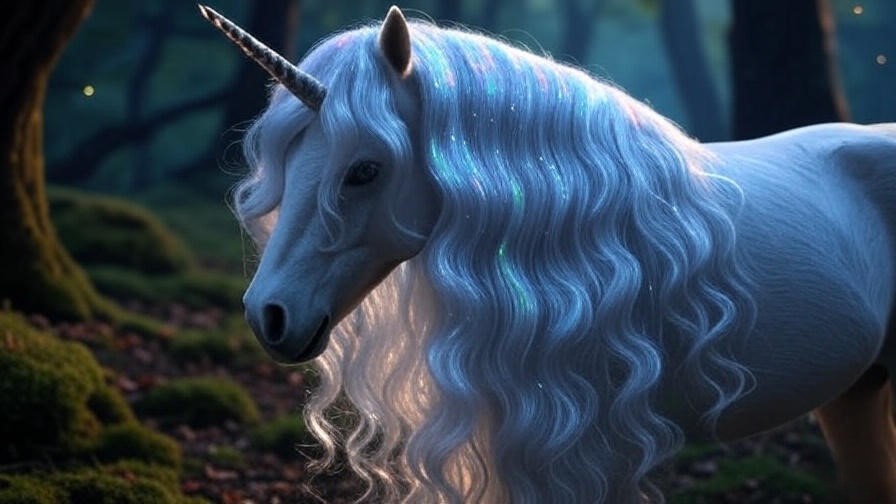
Unicorn Hair (The Pure Intent): The unicorn is a universal symbol of purity, innocence, and healing. Wands with a unicorn hair core are the most faithful and the hardest to turn to the Dark Arts. They symbolize steadfastness, morality, and consistency over raw, explosive power.
Final Thoughts for Fans and Creators
Whether you are writing a piece of fan fiction, planning a comprehensive Harry Potter tattoo sleeve, or simply analyzing the texts for deeper literary value, understanding these symbols transforms the way you experience the Wizarding World. J.K. Rowling’s integration of classical alchemy, mythology, and psychological archetypes ensures that the magic of Harry Potter isn’t just in the spells being cast—it is woven into the very fabric of the universe’s visual identity.
By recognizing the Deathly Hallows as a meditation on mortality, the Hogwarts Crest as a call for societal balance, and the Patronus as the ultimate defense against despair, we see the series for what it truly is: a masterclass in modern myth-making.