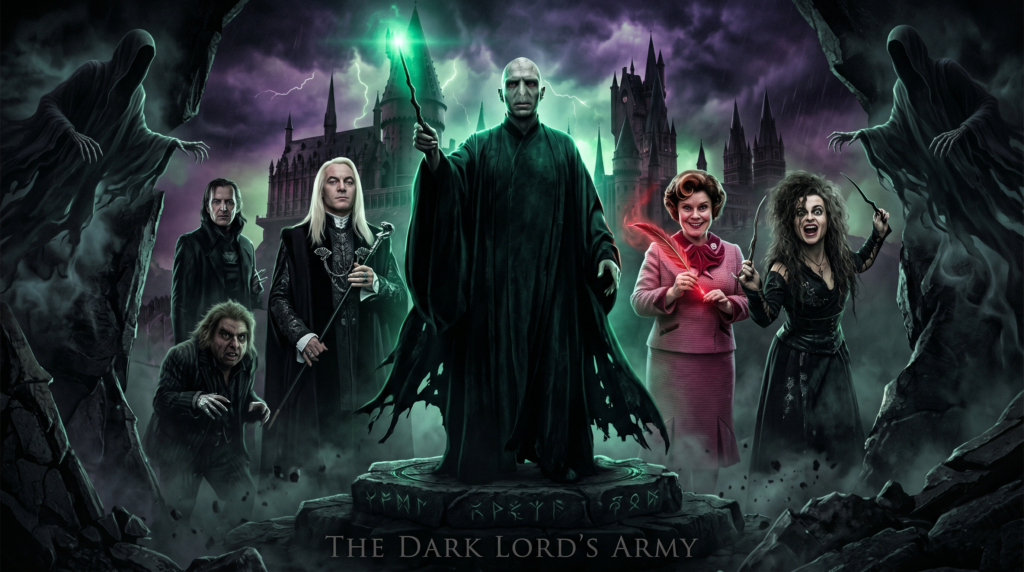
Not all darkness wears a snake-faced mask. Some of Harry Potter’s most terrifying villains smiled warmly, shook hands with Ministers of Magic, and signed educational decrees in pink ink. The wizarding world J.K. Rowling built is populated with a breathtaking spectrum of evil — and understanding the bad guys in Harry Potter means going far deeper than simply pointing at Voldemort and calling it a day.
From genocidal dark lords to bureaucratic sadists, from fanatical devotees to trembling cowards who changed everything, Harry Potter’s villain roster is one of the richest in all of modern fantasy literature. Each antagonist serves a narrative purpose, reflects a real-world truth, and forces readers to confront uncomfortable questions about power, fear, and moral choice.
In this article, we rank every major Harry Potter villain across three carefully chosen dimensions: Power, Cruelty, and Complexity. Whether you’re revisiting the series, settling a fandom debate, or simply want a definitive guide to the wizarding world’s darkest characters, this is the most comprehensive breakdown you’ll find.
Quick Answer: The bad guys in Harry Potter range from Lord Voldemort — the most powerful dark wizard of his age — to institutional villains like Dolores Umbridge, to morally conflicted figures like Draco Malfoy and Severus Snape. The series features over a dozen significant antagonists, each representing a different face of evil.
Table of Contents
- What Makes a “Bad Guy” in Harry Potter?
- The Complete Villain Rankings
- Honourable Mentions
- The Morally Grey Zone — Villains or Victims?
- What the Bad Guys in Harry Potter Teach Us
- Frequently Asked Questions
What Makes a “Bad Guy” in Harry Potter?
Before we dive into the rankings, it’s worth establishing what separates a true villain from a flawed character, a bully from a monster, and a follower from a fanatic. The Harry Potter series is remarkably sophisticated in how it constructs antagonists — very few are evil simply for the sake of plot convenience.
The Three Dimensions We Used to Rank Them
To make this ranking as meaningful as possible, every villain has been assessed across three specific dimensions:
Power refers to a character’s magical ability, political influence, physical threat, and overall capacity to cause harm on a large scale. A villain can be powerful through raw magical force, institutional control, or psychological domination.
Cruelty measures a character’s willingness to inflict suffering — whether physical, emotional, or systemic. This includes direct acts of violence, torture, betrayal, and the deliberate targeting of the innocent and vulnerable.
Complexity evaluates the depth of a villain’s motivation, the richness of their backstory, and the degree of moral ambiguity they introduce. The most complex villains in the series are those who force readers to feel something other than pure hatred — discomfort, understanding, even pity.
Each villain receives a score out of 10 in each category, followed by analysis that goes beyond surface-level description.
Types of Villains in the Wizarding World
The antagonists in Harry Potter fall into several distinct archetypes, which helps explain why the series feels so layered:
Pure evil characters like Voldemort and Bellatrix operate without remorse or moral conflict. They represent the extreme end of the spectrum — dark wizards who have fully committed to destruction and domination.
Ideological followers — the Death Eaters — are dangerous because they outsource their moral responsibility to a leader. They believe in a cause (pure-blood supremacy) and use that belief to justify atrocity.
Cowardly opportunists like Peter Pettigrew and, arguably, certain Ministry officials, represent a different and equally chilling kind of evil: the kind that chooses self-preservation over integrity, with catastrophic consequences for everyone else.
Morally grey characters such as Draco Malfoy and Severus Snape occupy the most intellectually interesting territory in the series — characters who do terrible things but cannot be cleanly categorized as villains.
The Complete List — Bad Guys in Harry Potter Ranked
1. Lord Voldemort — The Dark Lord
There is no more iconic dark wizard in children’s literature. Tom Marvolo Riddle was born to a witch mother and a Muggle father who abandoned his family, raised in a Muggle orphanage where his magical abilities manifested as cruelty and control even in childhood. By the time he arrived at Hogwarts, the seeds of one of history’s most dangerous dark wizards had already taken root.
Power: Voldemort’s magical ability is virtually unmatched within the series. He mastered Legilimency, performed wandless and non-verbal magic with terrifying ease, created seven Horcruxes to achieve functional immortality, and commanded an army of Death Eaters, giants, Dementors, and dark creatures. Even Dumbledore — the only wizard he ever feared — acknowledged that Voldemort had pushed magic further than almost any other practitioner in history.
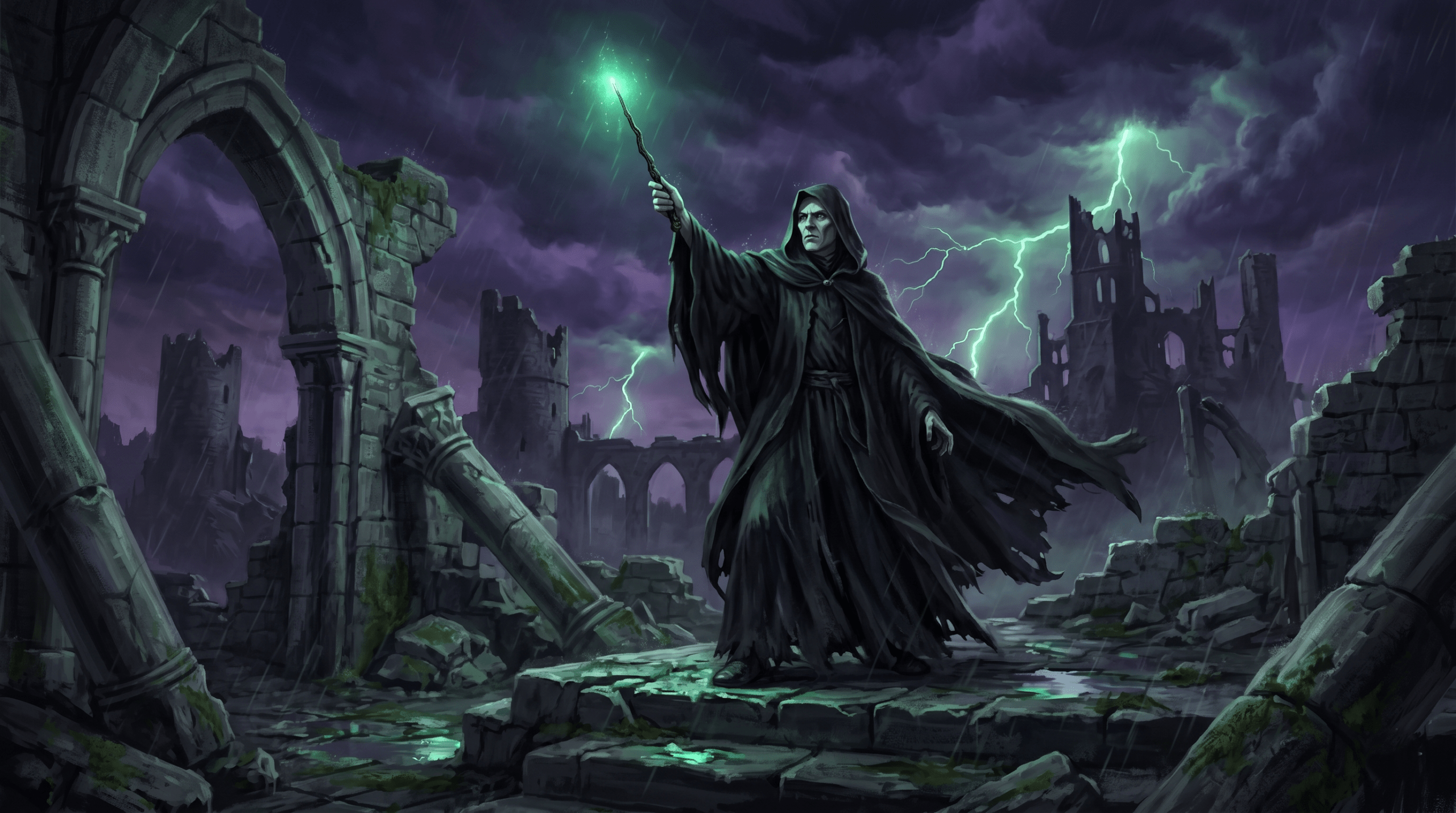 Cruelty: He committed his first murder as a teenager. Throughout the series, he kills without hesitation, tortures for information and for pleasure, and views human life — including the lives of his own followers — as utterly expendable. The murder of Lily and James Potter, the killing of Cedric Diggory as a casual afterthought (“kill the spare”), and the systematic genocide of Muggle-borns during his second rise to power all speak to a cruelty that is total and unwavering.
Complexity: Here is where Voldemort becomes genuinely fascinating rather than simply frightening. His tragic backstory — abandoned child, unloved, unable to understand or feel love himself — does not excuse his choices, but it explains them. Rowling deliberately constructed a villain whose greatest weakness was his inability to comprehend the very force that ultimately defeated him. He is the dark mirror of Harry: same orphaned beginning, radically different choices.
Rating: Power 10/10 | Cruelty 10/10 | Complexity 8/10
2. Dolores Umbridge — The Smiling Sadist
Ask any Harry Potter fan who the most hated villain in the series is, and a significant portion will not say Voldemort. They will say Dolores Umbridge — and they will be correct to feel that way.
Power: Umbridge’s power is entirely institutional. She wields Ministry authority, Educational Decrees, and bureaucratic procedure as weapons more effectively than most wizards wield wands. During her tenure at Hogwarts, she strips Dumbledore of his position, creates an inquisitorial squad of student informants, and establishes a reign of petty, procedural terror that touches every corner of school life. Under the Death Eater-aligned Ministry in Deathly Hallows, she chairs a tribunal that sentences Muggle-born witches and wizards — including mothers and grandmothers — to Azkaban.
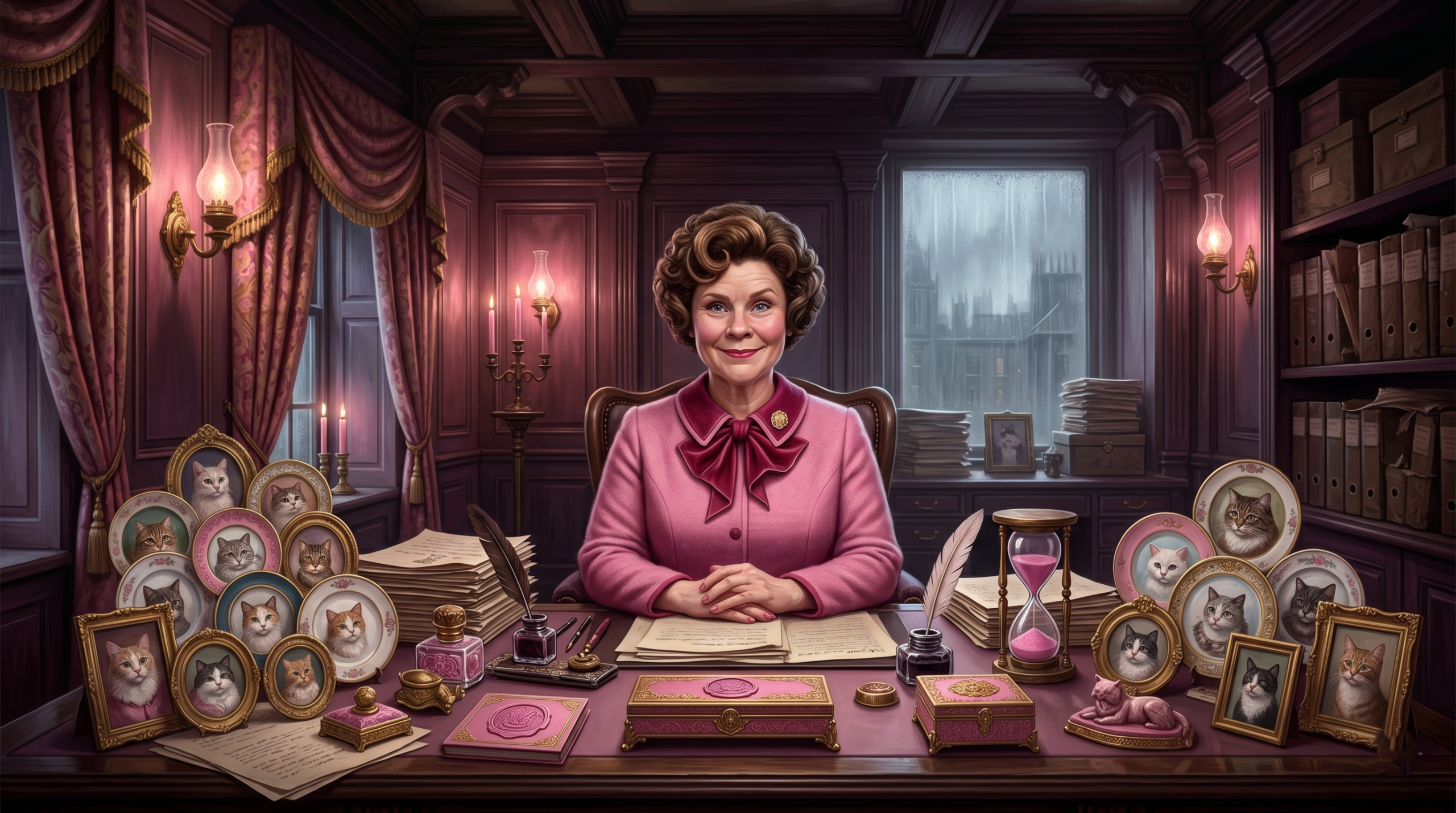 Cruelty: The blood quill. If you’ve read the books, those two words are enough. Umbridge forces Harry — a 15-year-old student — to carve “I must not tell lies” into the back of his own hand repeatedly, until it scars. She also attempted to deploy the Cruciatus Curse on a student during interrogation. She dispatches Dementors to Little Whinging to silence Harry before he can spread the truth about Voldemort’s return. Every act of cruelty is dressed in bureaucratic language and accompanied by a girlish smile and a hem-hem.
Complexity: What makes Umbridge so uniquely disturbing is precisely that she is not a fantasy villain. She is recognizable. She is the petty manager who enforces pointless rules with gleeful precision. She is the ideologue who uses institutional power to harm the marginalized while genuinely believing she is serving order and decency. Rowling has noted that Umbridge is based on a real person she deeply disliked, and that the character represents the particular evil of people who abuse positions of authority.
Voldemort wants to conquer the world. Umbridge just wants to run her corridor — and she’ll draw blood to do it.
Rating: Power 6/10 | Cruelty 9/10 | Complexity 7/10
3. Bellatrix Lestrange — The Fanatic
If Voldemort is cold, calculating evil, Bellatrix Lestrange is evil with the volume turned all the way up. She is chaos in a tattered dress, devotion twisted into something monstrous.
Power: Bellatrix is established as one of the most formidable dark witches of her generation. She is the only Death Eater to routinely hold her own against senior Order of the Phoenix members, and she bests Kingsley Shacklebolt and Sirius Black in duels. Her mastery of the Dark Arts is exceptional — she spent years in Azkaban without breaking, where lesser wizards lost their minds entirely.
Cruelty: She tortured Frank and Alice Longbottom — two Aurors, two trained combat wizards — to insanity using the Cruciatus Curse, and she did it for sport long after they could have provided any useful information. She kills Sirius Black in front of his teenage godson. She participates gleefully in the Battle of Hogwarts. Most chillingly, she tortures Hermione in her own drawing room while the rest of the household listens. There is no mission calculation in Bellatrix’s cruelty — she simply enjoys it.
Complexity: Bellatrix is not without dimension, but her complexity is narrower than some other villains on this list. Her defining characteristic is fanatical devotion to Voldemort — a devotion that reads as something closer to obsessive love than political allegiance. She is the truest of true believers, and that makes her both more dangerous and, in a strange way, more pitiable than followers who simply chose the winning side.
Rating: Power 8/10 | Cruelty 10/10 | Complexity 6/10
4. Peter Pettigrew (Wormtail) — The Coward Who Changed Everything
Peter Pettigrew is, arguably, the most consequential villain in the entire series — and he never wins a single fight.
Power: Wormtail is not a powerful wizard by any objective measure. His value to Voldemort is entirely based on what he knows and what he is willing to do. He is, however, more capable than his cringing persona suggests — he faked his own death convincingly enough to fool the entire wizarding world, spent twelve years living as a rat, and successfully performed the ritual that restored Voldemort’s body.
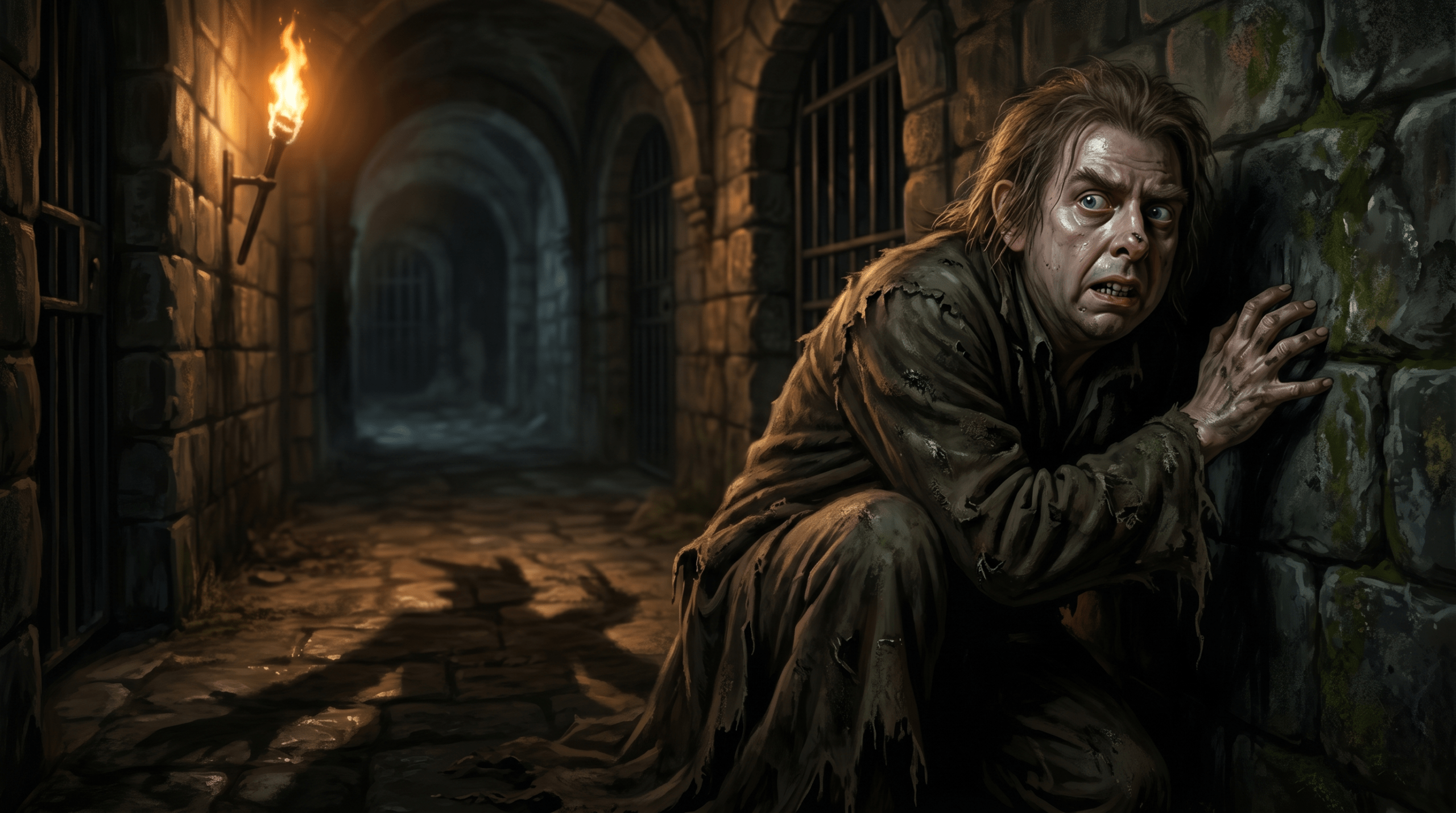 Cruelty: What Pettigrew lacks in raw power, he more than compensates for in the damage his choices cause. He betrayed James and Lily Potter to Voldemort. He framed Sirius Black for his own murder, sending an innocent man to over a decade in Azkaban. He killed twelve Muggles with a single curse. He cut off his own hand to resurrect the most dangerous dark wizard in a century. Each of these acts is made worse by the fact that Peter was once a friend — someone trusted, someone loved.
Complexity: Pettigrew earns the highest complexity score of any supporting villain in the series. His evil is the evil of cowardice — of a weak man making catastrophically selfish choices when tested. He joined Voldemort not out of ideological conviction, but out of fear of being on the losing side. Rowling uses him to argue that cowardice can cause as much devastation as malice — perhaps more, because cowards are everywhere.
The silver hand Voldemort gives him, and the moment that hand turns on its master in Deathly Hallows when Pettigrew hesitates to kill Harry, suggests that even in the most damaged souls, something human remains. It costs him his life, but it matters.
Rating: Power 3/10 | Cruelty 7/10 | Complexity 9/10
5. Draco Malfoy — The Bully Who Blinked
No character in the Harry Potter series generates more heated fandom debate than Draco Malfoy. Is he a villain? An antagonist? A victim of his upbringing? The answer, characteristically for this series, is: all three, in different measures at different times.
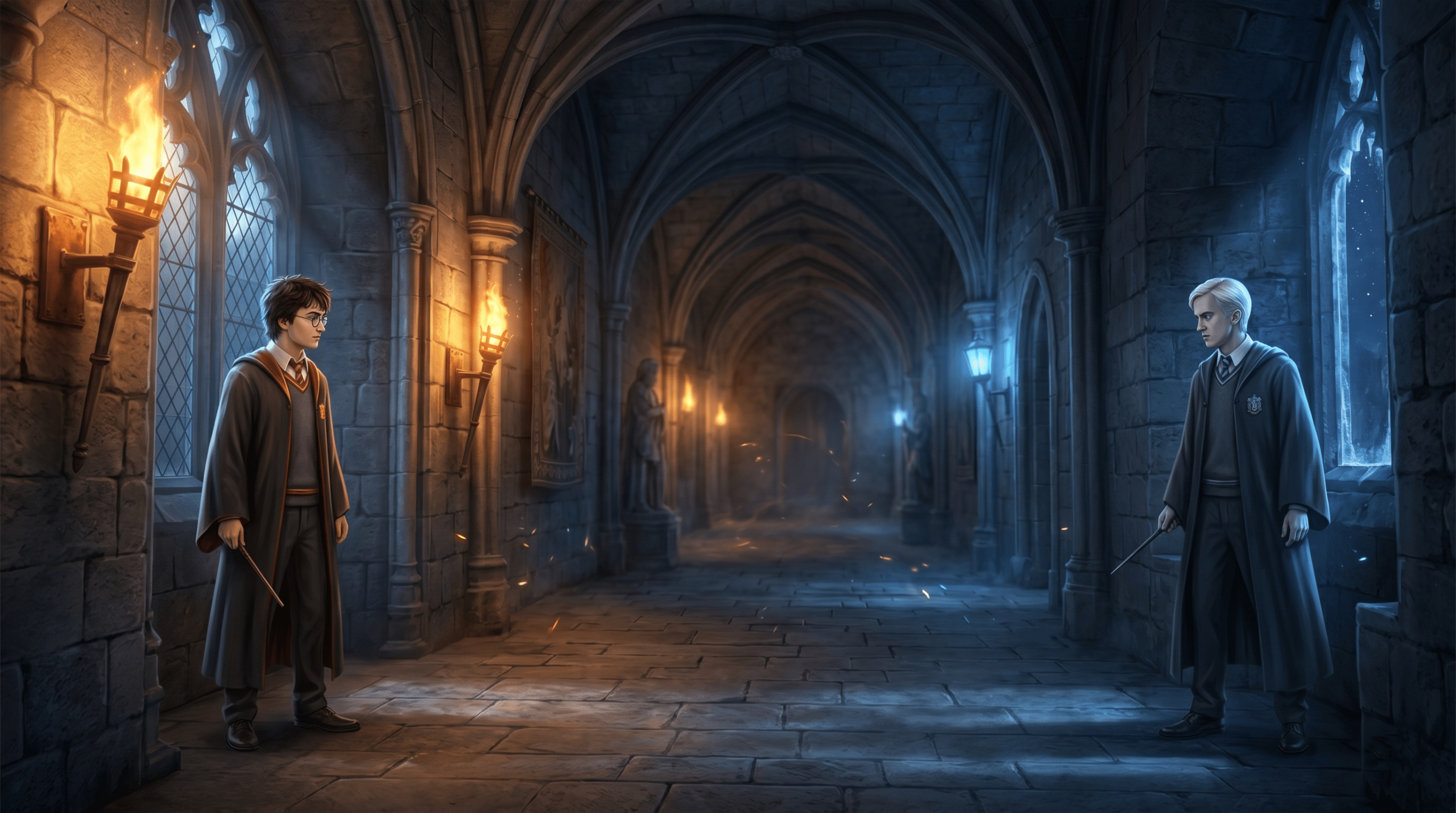 Power: Draco is a skilled wizard — better than most of his peers — with the added advantage of considerable family wealth and social standing in pure-blood circles. In Half-Blood Prince, he demonstrates genuine capability when he manages to fix a Vanishing Cabinet that experienced wizards couldn’t repair, successfully smuggling Death Eaters into Hogwarts.
Cruelty: Throughout the early books, Draco is a bully — targeting Harry, Hermione (whom he calls a Mudblood in front of the entire class in Chamber of Secrets), Neville, and anyone else he perceives as beneath him. In Half-Blood Prince, he is complicit in attacks that nearly kill Katie Bell and Ron Weasley. He is tasked with murdering Dumbledore and very nearly follows through.
Complexity: And then, at the critical moment, he lowers his wand. Draco Malfoy cannot kill. Whether this reflects a remnant of conscience, simple fear, or something more — the story leaves it deliberately ambiguous. What is clear is that Draco is a character shaped almost entirely by his environment. Raised in a household of pure-blood fanaticism, groomed to admire the Dark Lord, and given no meaningful opportunity to develop a moral framework independent of his father’s ideology, he arrives at Hogwarts already corrupted.
The tragedy of Draco Malfoy is that he is, in many ways, what Harry Potter might have become under different circumstances. That parallel is the point.
Rating: Power 5/10 | Cruelty 5/10 | Complexity 10/10
6. Lucius Malfoy — The Establishment Villain
Where Voldemort rules through terror and Umbridge through bureaucracy, Lucius Malfoy rules through respectability. He is the dark wizard who never got his hands dirty — or at least, was never caught getting them dirty.
Power: Lucius is a formidable duelist, but his real power is social and political. His donations to St. Mungo’s, his influence over the Ministry, his connections across the pure-blood establishment — these give him a reach that most Death Eaters could never achieve through magical force alone. He is Voldemort’s most publicly powerful supporter, which makes him uniquely dangerous.
Cruelty: In Chamber of Secrets, Lucius plants Tom Riddle’s diary on an eleven-year-old girl, knowing it will likely kill her and potentially endanger the entire school, as part of a scheme to discredit Arthur Weasley. He keeps Dobby enslaved and abused for years. In the Department of Mysteries, he leads a Death Eater ambush against teenagers.
Complexity: Lucius’s arc is genuinely interesting because his loyalty to Voldemort is ultimately outweighed by his love for his family. When Voldemort takes Draco’s life as collateral, Lucius begins to crack. By Deathly Hallows, the Malfoy family is fighting primarily for each other rather than for the Dark Lord’s victory — a quiet, unspoken rebellion that the narrative treats as meaningful.
Rating: Power 7/10 | Cruelty 7/10 | Complexity 7/10
7. Fenrir Greyback — Pure Predatory Evil
Fenrir Greyback exists in the Harry Potter universe to represent a different register of horror entirely — not political, not ideological, but visceral and predatory.
Power: As a werewolf who attacks even in human form, Greyback is physically formidable in a way that sets him apart from most dark wizards. He is feared not just by ordinary witches and wizards, but by Death Eaters themselves — Voldemort uses him as a weapon rather than an equal, a distinction that says everything about his nature.
Cruelty: Greyback deliberately positions himself near children when the full moon rises. He boasts about infecting them while they are young, robbing them of a normal life — as he did to Remus Lupin when Lupin was just a small child. His targeting of the innocent and vulnerable, combined with his apparent enjoyment of violence even outside transformations, places him among the most straightforwardly monstrous characters in the series.
Complexity: There is very little moral complexity to Fenrir Greyback, and that is almost certainly intentional. In a series that frequently asks readers to understand and even sympathize with its villains, Greyback functions as a reminder that some cruelty genuinely is pure — untempered by backstory or ideology, motivated simply by appetite.
Rating: Power 6/10 | Cruelty 10/10 | Complexity 2/10
8. Bartemius Crouch Jr. — The Method Villain
Bartemius Crouch Jr. is one of the most underrated villains in the entire series — a man who spent an entire school year in plain sight, deceiving everyone around him with extraordinary skill, and whose plan ultimately succeeded in every particular.
Power: Crouch Jr. is a wizard of exceptional ability. Maintaining a Polyjuice Potion disguise for nearly a full year while simultaneously teaching Defence Against the Dark Arts, manipulating the Triwizard Tournament, managing Moody’s creature-filled trunk, and corresponding with Voldemort is a staggering feat of magical multitasking. He fooled Albus Dumbledore — a fact that the novel treats with appropriate gravity.
Cruelty: He is one of the Death Eaters who tortured Frank and Alice Longbottom into insanity alongside Bellatrix Lestrange. He orchestrated the death of Cedric Diggory — an innocent teenage bystander — with clinical detachment. He has no redemptive moments and no hesitation.
Complexity: What gives Crouch Jr. depth is the father-son dynamic at the core of his story. His father, Bartemius Crouch Sr., was a cold, career-obsessed Ministry official who sent his own son to Azkaban and then refused to acknowledge his existence. The son’s fanatical devotion to Voldemort can be read, at least in part, as a reaction to a childhood defined by paternal coldness and public shame. It doesn’t excuse anything — but it explains something.
Rating: Power 8/10 | Cruelty 8/10 | Complexity 7/10
9. Quirinus Quirrell — The Puppet Villain
Professor Quirrell is the Harry Potter series’ first villain — the first dark wizard Harry encounters, the first face of evil the reader sees up close. In retrospect, he is also one of the series’ most quietly disturbing characters.
Power: Quirrell’s own magical abilities are overshadowed entirely by the presence of Voldemort sharing his body. Alone, he is a capable but unremarkable wizard. As Voldemort’s host, he becomes something considerably more threatening — capable of performing dark enchantments, evading detection, and accessing the Mirror of Erised.
Cruelty: He drinks unicorn blood in the Forbidden Forest — an act that Rowling frames as a profound moral violation, a willingness to curse oneself for the sake of prolonging a wretched half-life. He attempts to murder an eleven-year-old child. He is complicit in everything Voldemort does from the moment he accepts possession.
Complexity: Quirrell’s most interesting quality is what he represents thematically: the danger of ambition without backbone. He sought power and knowledge, encountered the most dangerous dark wizard in the world, and proved too weak to resist or escape. He becomes a cautionary tale about the vulnerability of the merely ambitious when they encounter the truly ruthless.
Rating: Power 4/10 | Cruelty 5/10 | Complexity 6/10
10. The Dementors — Evil as an Atmosphere
The Dementors occupy a unique space in this ranking because they are not characters in the conventional sense. They are a force — an environmental expression of despair given physical form.
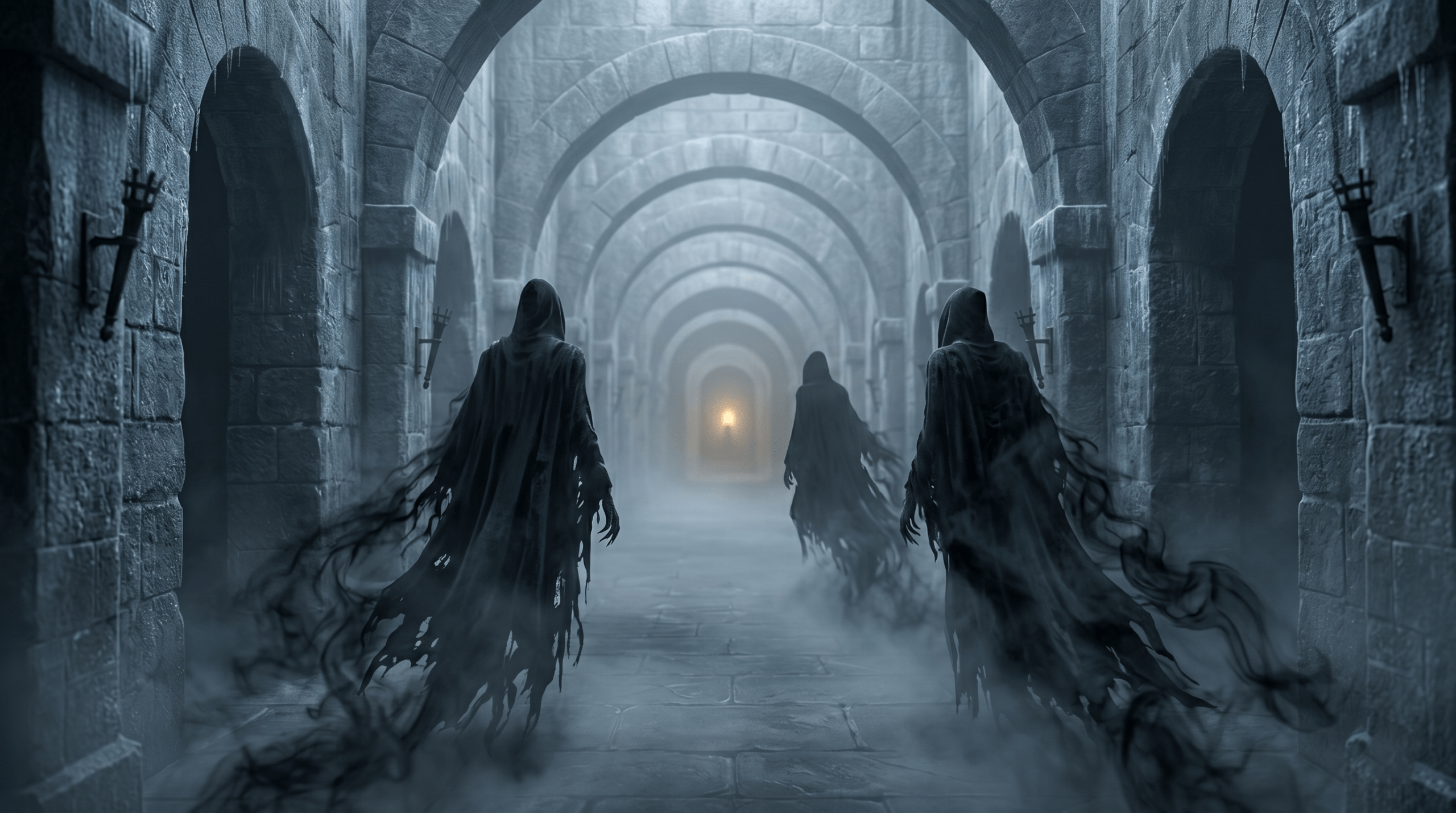 Power: Dementors are among the most feared creatures in the wizarding world. Their ability to consume a person’s happiness and, ultimately, to perform the soul-destroying Kiss makes them a weapon beyond the reach of ordinary magic. They are so powerful that even experienced wizards struggle to repel them for long, and their presence alone begins to erode the psychological resilience of those nearby.
Cruelty: They were employed as prison guards at Azkaban — a deliberate institutional choice to use psychological torture as a punishment system. When Voldemort gains influence over the Ministry, they are deployed on the streets of Britain, attacking civilians indiscriminately. Their use against children — most notably the attack on Harry and Dudley in Order of the Phoenix — is among the most disturbing moments in the series.
Complexity: Rowling has spoken openly about the Dementors as an allegory for clinical depression — the way they drain all warmth, hope, and light from the world, leaving only the worst memories and the conviction that things will never improve. Understanding them this way adds a layer of meaning to Harry’s exceptional vulnerability to them (rooted in genuine trauma) and to the Patronus charm (the ability to summon a happy memory as a shield against despair) that transforms both into something genuinely resonant.
Rating: Power 9/10 | Cruelty 8/10 | Complexity 5/10
Villain Ranking Summary Table
| Villain | Power | Cruelty | Complexity | Total |
|---|---|---|---|---|
| Lord Voldemort | 10 | 10 | 8 | 28 |
| Bellatrix Lestrange | 8 | 10 | 6 | 24 |
| The Dementors | 9 | 8 | 5 | 22 |
| Bartemius Crouch Jr. | 8 | 8 | 7 | 23 |
| Lucius Malfoy | 7 | 7 | 7 | 21 |
| Dolores Umbridge | 6 | 9 | 7 | 22 |
| Fenrir Greyback | 6 | 10 | 2 | 18 |
| Draco Malfoy | 5 | 5 | 10 | 20 |
| Peter Pettigrew | 3 | 7 | 9 | 19 |
| Quirinus Quirrell | 4 | 5 | 6 | 15 |
Honourable Mentions — Bad Guys in Harry Potter Worth Noting
Not every significant antagonist in the series warrants a full breakdown, but several deserve recognition for the role they play in building the wizarding world’s portrait of evil.
Nagini — Voldemort’s serpentine familiar and one of his Horcruxes. Nagini kills Charity Burbage and Severus Snape, and her existence as a living piece of her master’s soul gives her a unique place in the mythology. The Fantastic Beasts films add a tragic dimension to her origins as a Maledictus.
Gellert Grindelwald — Voldemort’s predecessor as the most dangerous dark wizard in the world, and the man who briefly held the Elder Wand. His relationship with a young Albus Dumbledore adds enormous complexity to both characters and suggests that even the greatest wizards are not immune to the seduction of ideological evil.
Crabbe and Goyle — More enforcers than villains in their own right, they function as extensions of Draco’s cruelty through most of the series. Crabbe’s decision to cast Fiendfyre in the Room of Requirement — a spell he cannot control — results in his own death and the destruction of a Horcrux.
Pius Thicknesse — The Imperioused Minister of Magic whose takeover of the Ministry represents something the series takes seriously: the corruption and capture of governing institutions by authoritarian forces. His presence in Deathly Hallows is brief but thematically significant.
The Morally Grey Zone — Villains or Victims?
Severus Snape — The Greatest Debate in HP Fandom
No character in the Harry Potter series is more argued over, more defended, and more complicated than Severus Snape. For six and a half books, he functions as a villain — cold, contemptuous, cruel to students, and apparently loyal to Voldemort. In the final pages of Deathly Hallows, the narrative inverts nearly everything the reader believed about him.
Snape’s cruelty to his students is real and is not erased by his eventual sacrifice. His treatment of Neville Longbottom — whom he reduced to a state of genuine terror — and his decade of contempt for Harry are not softened by the revelation of his motivations. What his story adds is not a retraction of his villainy but an explanation of it: a man consumed by grief, guilt, and a love he could never express, performing a role that required him to be hated in order to be effective.
Whether Snape is a hero, a villain, or something in between remains one of the most genuinely open questions in the series. Rowling has said he is definitively a hero. Many readers — particularly those who remember what it felt like to be bullied by someone in a position of authority — respectfully disagree.
Kreacher, the Dursleys, and Systemic Evil
Not every bad actor in Harry Potter is a Death Eater or a dark wizard. The Dursleys represent the harm that casual cruelty and deliberate neglect can do to a child. Kreacher’s bitterness and prejudice are shown, in Order of the Phoenix and Deathly Hallows, to be the product of a lifetime of servitude and a desperate need to be valued. The house-elf’s eventual redemption is one of the series’ quieter but more meaningful arcs.
The wizarding world itself — with its institutionalized speciesism toward house-elves, goblins, and werewolves — functions as a systemic villain that the series never fully resolves, a deliberate narrative choice that rewards re-reading with adult eyes.
What the Bad Guys in Harry Potter Teach Us
The Harry Potter series is, at its most foundational level, a story about the nature of evil and the power of choices. What makes it endure — and what makes its villains so memorable — is that Rowling refuses to make evil simple.
The most dangerous villains in the series are not the ones with the most powerful spells. They are the ones who abuse systems of authority (Umbridge), who choose self-preservation over integrity (Pettigrew), and who follow ideology without question (the Death Eaters). These are not fantasy archetypes — they are mirrors.
Voldemort’s inability to understand love is not presented as an innate quality but as the consequence of a childhood devoid of it — a pointed suggestion that cruelty is frequently learned rather than born. Draco Malfoy, raised in pure-blood supremacist ideology from birth, nearly becomes a murderer — and the series asks us to hold him responsible while also understanding how he got there.
The bad guys in Harry Potter teach us that evil is rarely cartoonish, that cowardice is its own category of moral failure, that institutions can become instruments of oppression, and that the line between villain and victim is sometimes drawn by circumstances rather than character.
These are not comfortable lessons. They are necessary ones.
Frequently Asked Questions — Bad Guys in Harry Potter
Who is the most powerful bad guy in Harry Potter?
Lord Voldemort is the most powerful villain in the series by virtually every measure — raw magical ability, strategic intelligence, breadth of influence, and capacity for destruction. Gellert Grindelwald is considered his nearest historical equivalent, while Bellatrix Lestrange is the most powerful dark wizard among his active followers.
Who is the scariest villain in Harry Potter?
This depends entirely on what kind of fear you mean. Voldemort represents existential, large-scale terror — the threat of death and subjugation on a civilizational scale. Dolores Umbridge, however, is widely considered more personally frightening because she is so recognizable — the petty authority figure who inflicts pain with a smile and institutional cover. Many readers find Umbridge more unsettling than the Dark Lord himself.
Is Draco Malfoy a bad guy in Harry Potter?
Draco is most accurately described as an antagonist rather than a pure villain. He does genuinely harmful things throughout the series, and his prejudices are real and damaging. However, his inability to commit to the worst acts demanded of him — and the evidence that his cruelty was largely shaped by his upbringing — make him one of the series’ most morally complex figures rather than a straightforward bad guy.
Who are the Death Eaters in Harry Potter?
The Death Eaters are Voldemort’s inner circle of dark wizards and witches — followers devoted to his ideology of pure-blood supremacy and the subjugation or elimination of Muggle-born witches and wizards. Key members include Bellatrix Lestrange, Lucius Malfoy, Bartemius Crouch Jr., Peter Pettigrew, and Severus Snape (as a double agent). At their height, the Death Eaters control both the Ministry of Magic and Hogwarts.
Is Snape a villain or a hero in Harry Potter?
Snape is deliberately written to be both. For the majority of the series, he functions as a villain — cruel, contemptuous, and apparently loyal to Voldemort. The final revelation of his true allegiance reframes much of his behavior as the performance of a deeply conflicted double agent. However, his genuine cruelty to students — particularly Neville Longbottom — is not negated by his sacrifice. Rowling considers him a hero; many readers consider him a flawed, damaged person who did heroic things without ever being a good man. Both readings are textually supportable.
The bad guys in Harry Potter are not a monolith. They are a spectrum — from the terrifyingly powerful to the institutionally dangerous, from the fanatically devoted to the cowardly self-serving, from the purely monstrous to the heartbreakingly understandable.
What makes this villain roster one of the finest in modern fantasy is not any single antagonist but the way they collectively illuminate different truths about how evil actually works in the world. Voldemort shows us the darkness that comes from a total absence of love. Umbridge shows us how bureaucracy can become a weapon. Pettigrew shows us the devastation that cowardice can cause. Draco shows us the tragedy of ideology inherited in childhood.
Revisiting these characters is not just an exercise in nostalgia or fandom ranking — it is an encounter with some genuinely important ideas about power, choice, complicity, and the very ordinary ways that ordinary people enable extraordinary harm.
So — who do you think is the most terrifying bad guy in Harry Potter? Does Voldemort still top your list, or has Umbridge quietly claimed that title? Share your ranking in the comments, and explore our related articles for more deep dives into the wizarding world’s most compelling characters.