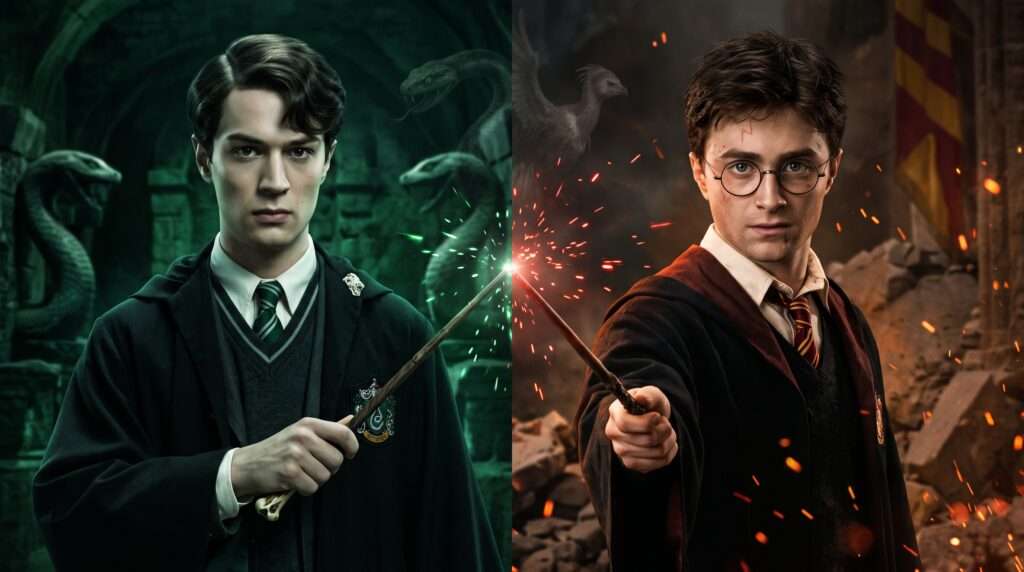
Deep beneath Hogwarts in the damp, echoing expanse of the Chamber of Secrets, a sixteen-year-old memory wields a stolen wand and spells out a terrifying anagram in fiery letters: I am Lord Voldemort. It is in this exact moment that the true thematic core of J.K. Rowling’s magical universe is laid bare. For both canonical lore enthusiasts and the dedicated community of fan writers, exploring the Tom Riddle x Harry Potter dynamic reveals the most intricately designed and fiercely debated duality in modern fantasy storytelling.
What happens when the ultimate hero and the ultimate villain are essentially cut from the exact same cloth?
Moving beyond basic character summaries, this comprehensive analysis dissects the psychological, magical, and fandom-driven layers of their intertwined destinies. Whether you are navigating the immense lore of their shared wand cores or exploring the rich “what if” scenarios that dominate alternate universe storytelling, understanding the parallels between the boy who lived and the boy who became a monster is essential. This is the definitive guide to why their dark, unbreakable connection remains the gold standard for hero-villain dynamics.
The Canonical Foundation: Two Sides of the Same Sickle
To understand the complexity of their relationship, one must first look at the remarkably similar foundations upon which both characters were built. Dumbledore himself noted that Voldemort was more closely tethered to Harry than any two wizards in history. This tether was not merely forged by a prophecy; it was cemented by shared trauma, isolation, and an undeniable magical resonance.
 Orphaned Beginnings and the Hogwarts Sanctuary
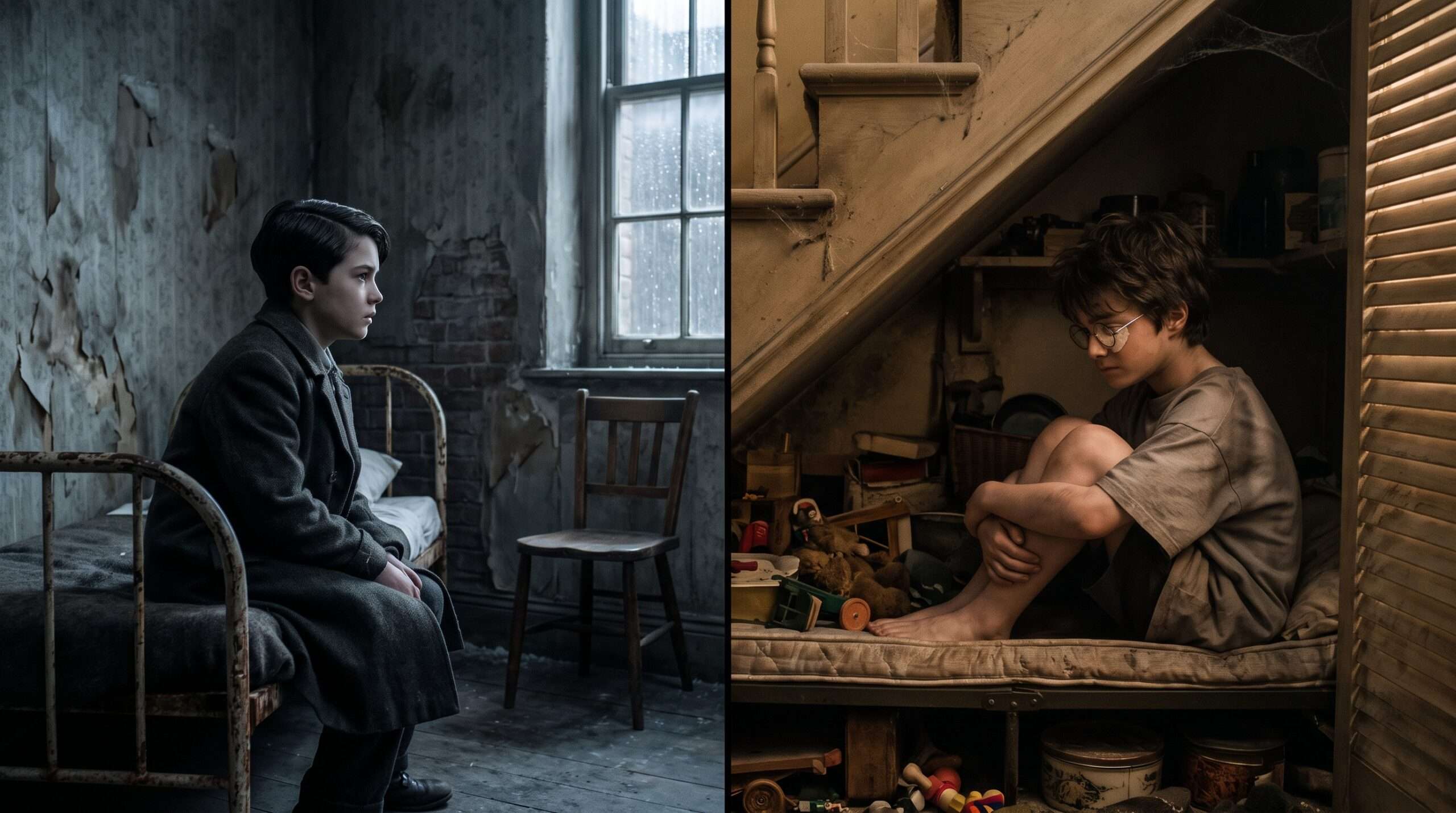
Long before they were the Chosen One and the Dark Lord, they were simply unwanted children living in the Muggle world. Tom Marvolo Riddle was raised in the bleak, austere environment of Wool’s Orphanage in 1930s London, devoid of warmth, explanation for his strange abilities, or familial love. Decades later, Harry Potter grew up in the suffocatingly normal, emotionally abusive household of the Dursleys, relegated to a cupboard under the stairs.
For both boys, the revelation of their magical heritage was a lifeline. Hogwarts School of Witchcraft and Wizardry did not just serve as a place of education; it was their first true sanctuary. However, their divergent responses to this sanctuary perfectly encapsulate their opposing natures. Riddle viewed Hogwarts as a kingdom to be conquered, using his charm and intellect to cultivate a power base among pure-blood heirs while meticulously hiding his half-blood status. He manipulated the school’s resources—from the Restricted Section to the Chamber of Secrets—to serve his own elevation.
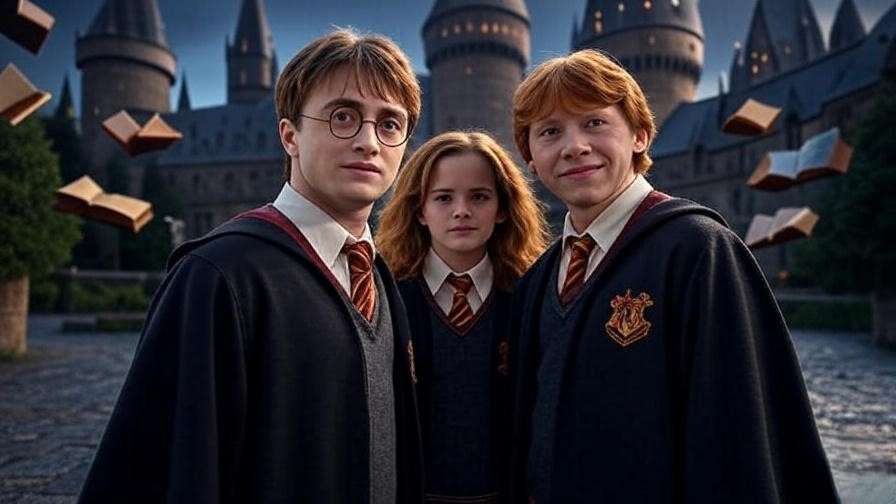
Conversely, Harry viewed Hogwarts as a home and a family. He did not seek to rule the school; he sought to belong to it. Where Riddle collected useful followers, Harry forged unbreakable friendships with Ron Weasley and Hermione Granger, valuing loyalty and courage over pedigree or utility.
The Twin Cores and the Wand Connection (Priori Incantatem)
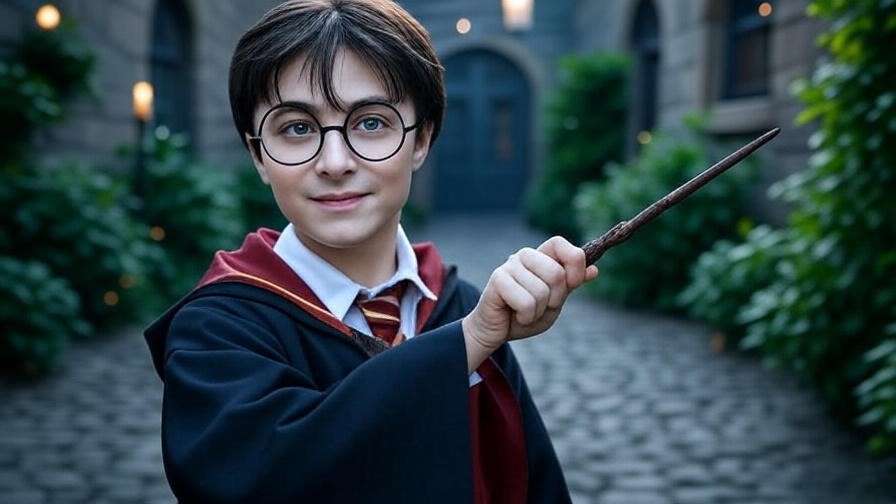
The physical manifestation of their shared destiny is found in their wands. When eleven-year-old Harry stepped into Ollivanders, he was chosen by a wand made of holly with a phoenix feather core. The wandmaker’s chilling revelation—that the only other feather given by that specific phoenix (Fawkes) resided in the yew wand that gave Harry his lightning-bolt scar—set the stage for a unique magical limitation.
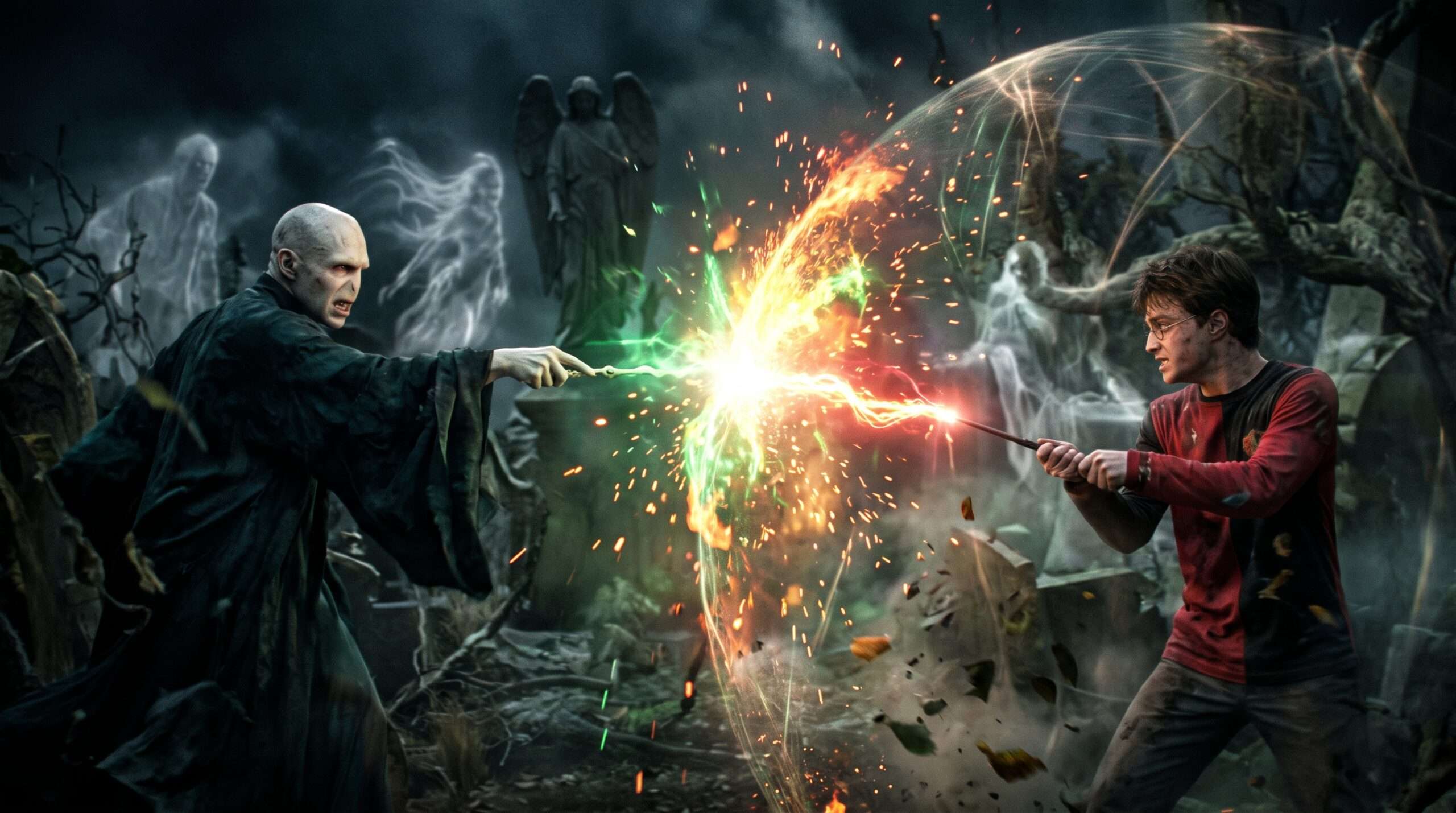
This twin-core phenomenon meant that their wands recognized each other as brothers. When forced into combat in the graveyard of Little Hangleton during Goblet of Fire, the wands refused to perform mortally wounding spells against one another. Instead, they locked in the rare magical effect known as Priori Incantatem.
This wand connection is a brilliant narrative device. By neutralizing their ability to simply blast each other out of existence, the lore forces their conflict to become deeply psychological and strategic. It forces Voldemort to seek alternative, deadlier wands (the Elder Wand), and it forces Harry to rely on internal strength, evasive tactics, and ultimately, a mastery of soul magic rather than raw dueling power.
 The Slytherin Connection: Why the Sorting Hat Hesitated
One of the most fascinating aspects of the Tom Riddle x Harry Potter parallel is the undeniable presence of Slytherin traits within the Gryffindor hero. Harry possesses a fierce determination, a distinct resourcefulness, a certain disregard for the rules when they impede his goals, and, most notably, the ability to speak Parseltongue.
During Harry’s Sorting ceremony, the Sorting Hat strongly considered placing him in Slytherin, noting his thirst to prove himself and the latent darkness residing within him—a darkness we later learn was the accidental soul fragment left behind by Voldemort on that fateful Halloween night in Godric’s Hollow.
Yet, the divergence lies in the power of choice. Tom Riddle was the Heir of Slytherin by blood, naturally drawn to the house’s elitism and obsession with greatness. Harry, despite possessing the attributes and even the literal soul-fragment of Slytherin’s heir, actively chose otherwise. He famously begged the Hat, “Not Slytherin.” This moment perfectly encapsulates Albus Dumbledore’s enduring wisdom: “It is our choices, Harry, that show what we truly are, far more than our abilities.”
The Psychological Duality: Choices vs. Circumstances
If their origins and magical signatures are the framework of their connection, their psychological development is the architecture. Both characters are driven by deep-seated fears instilled during their vulnerable childhoods, but they process and project those fears in diametrically opposed ways.
The Need for Power vs. The Desire for Connection
Tom Riddle’s entire existence is defined by a frantic need for control. Having grown up powerless in a Muggle orphanage, he associated love and dependency with weakness—specifically the weakness of his mother, Merope Gaunt, who chose to die rather than use magic to survive for her son. To Riddle, power is the only true currency. He operates exclusively through transactions, fear, and intimidation. The Death Eaters are not friends; they are branded servants.
Harry, having been starved of affection by the Dursleys, craves connection above all else. His greatest strength is his capacity to love, a magic that Voldemort fatally underestimates. When forming Dumbledore’s Army, Harry does not demand subservience. He empowers his peers, teaching them to protect themselves. Harry’s leadership is born of necessity and shared struggle, whereas Riddle’s is born of megalomania.
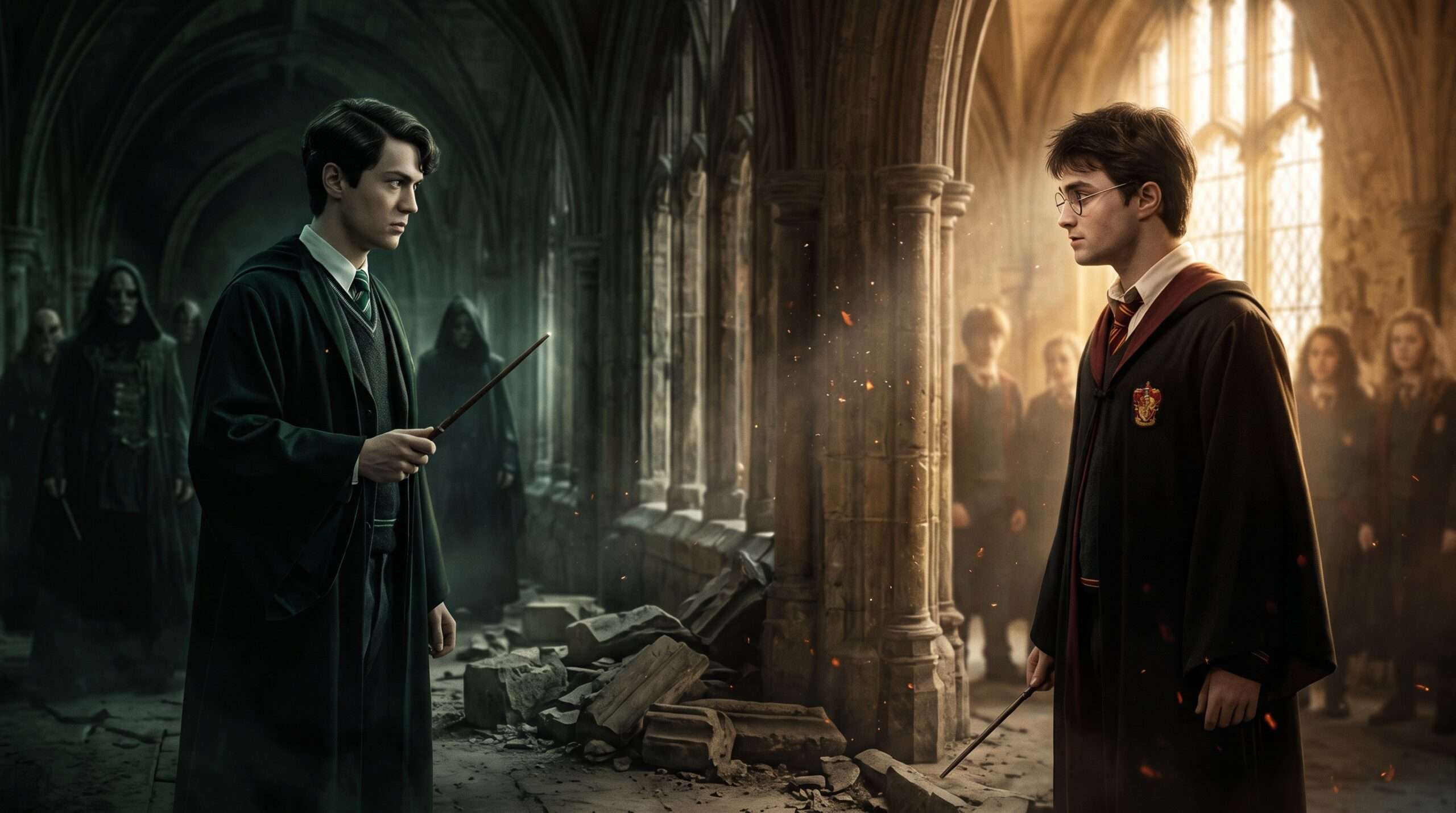 Fear of Death vs. Acceptance of the Inevitable
The most profound thematic conflict in the series is their respective relationships with mortality. Tom Riddle’s greatest fear is death. He views it as a shameful human weakness and goes to abhorrent lengths—murdering innocents to fracture his own soul into Horcruxes—to achieve immortality. The very name he adopts, “Voldemort,” translates loosely from French as “flight from death.”
Harry Potter, however, is constantly surrounded by death. He loses his parents, his godfather, his mentor, and his friends. Yet, he does not run from it. When the ultimate test arrives, Harry willingly drops his wand and walks into the Forbidden Forest to face his own execution. He accepts death to save the people he loves. By embracing his mortality, Harry becomes the true Master of Death, succeeding exactly where Tom Riddle’s terrified, mutilated soul failed.
The Horcrux Bond: Sharing a Soul
While the wand cores represent a physical magical link and their childhoods represent a psychological parallel, the most literal connection between Tom Riddle and Harry Potter is the soul fragment itself. On the night Voldemort’s killing curse rebounded in Godric’s Hollow, his already unstable soul splintered. A piece of it sought out the only living thing in the room, latching onto baby Harry and turning him into an accidental Horcrux. This profound violation of natural magic bound their minds together in ways that neither fully understood until years later.
Parseltongue and Shared Visions
The most immediate and obvious symptom of this soul-sharing was Harry’s ability to speak Parseltongue, the language of snakes. This rare trait, famously associated with Salazar Slytherin and his descendants, was not genetically inherited by Harry; it was a parasitic ability transferred from the Dark Lord. It served as a constant, lingering reminder that a piece of Tom Riddle lived within him.
As Voldemort regained a physical body and his power grew, the Horcrux bond evolved into a volatile psychic bridge. By Harry Potter and the Order of the Phoenix, this connection became a weapon of psychological warfare. Voldemort used Legilimency to breach Harry’s mind, planting false visions to lure him to the Department of Mysteries. Harry’s struggle with Occlumency—the art of closing one’s mind—highlights a crucial difference between the two characters. Harry’s mind is inherently open, driven by emotion, empathy, and instinct, making it incredibly vulnerable to Voldemort’s cold, calculated mental intrusions. Yet, it is precisely this uncontrollable surge of raw emotion, specifically Harry’s devastating grief over Sirius Black, that ultimately forces Voldemort to break the possession. The Dark Lord’s mutilated soul cannot withstand the sheer force of human agony and love.
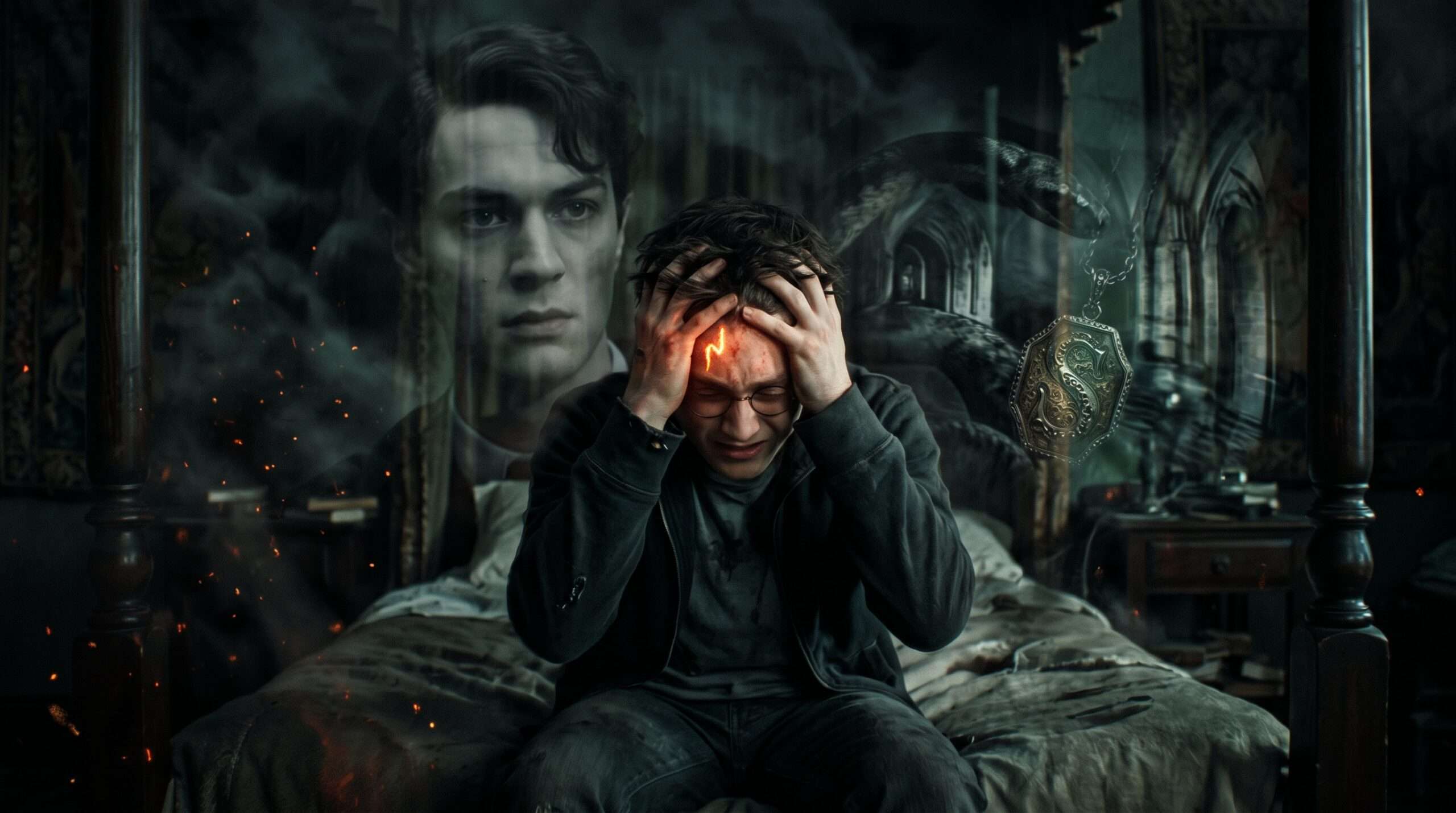 The King’s Cross Station Vision: The Final Severance
The climax of their shared soul narrative occurs in the ethereal limbo of King’s Cross Station in Harry Potter and the Deathly Hallows. When Voldemort strikes Harry with the Killing Curse in the Forbidden Forest, he fails to kill the boy. Instead, he destroys the piece of his own soul residing within Harry.
In this limbo space, Harry encounters the true essence of Tom Riddle: a flayed, whimpering, stunted creature trapped beneath a bench. This pathetic manifestation strips away the terrifying facade of Lord Voldemort. It reveals the ultimate consequence of Riddle’s choices. By obsessively chasing immortality and sacrificing his humanity, he reduced his soul to something weak and wretched. Harry, whole and unburdened, looks upon the remnant of his lifelong tormentor not with fear, but with pity. This definitive severance allows Harry to return to the living realm, completely his own master, ready to defeat a severely diminished Voldemort whose ultimate anchor to life—the piece inside Harry—is gone.
Unpacking the “Tom Riddle x Harry Potter” Fandom Phenomenon
Outside of canonical analysis, the search term “Tom Riddle x Harry Potter” taps directly into one of the most vibrant, creative, and highly debated spaces on the internet: the Harry Potter fandom community. Fan writers and artists have spent decades unpacking this complex dynamic, recognizing that the intense narrative gravity between the hero and the villain offers an unparalleled sandbox for Alternate Universe (AU) storytelling.
Why the “What If?” Fascinates the Community
The core appeal of exploring this dynamic lies in the razor-thin margin of circumstances that separates them. Fans are captivated by the “what if” scenarios: What if Tom Riddle had experienced love? What if Harry had been sorted into Slytherin? Because they are established as two sides of the same coin, altering even a single variable in their timelines can yield massive narrative ripples.
Fandom creators use these characters to explore complex moral philosophies, the nature of destiny, and the mechanics of soul magic in ways that the original children’s-to-YA books only hinted at. The tension of two incredibly powerful wizards, fundamentally tethered to one another by magic and prophecy, provides a natural, high-stakes engine for creative fiction.
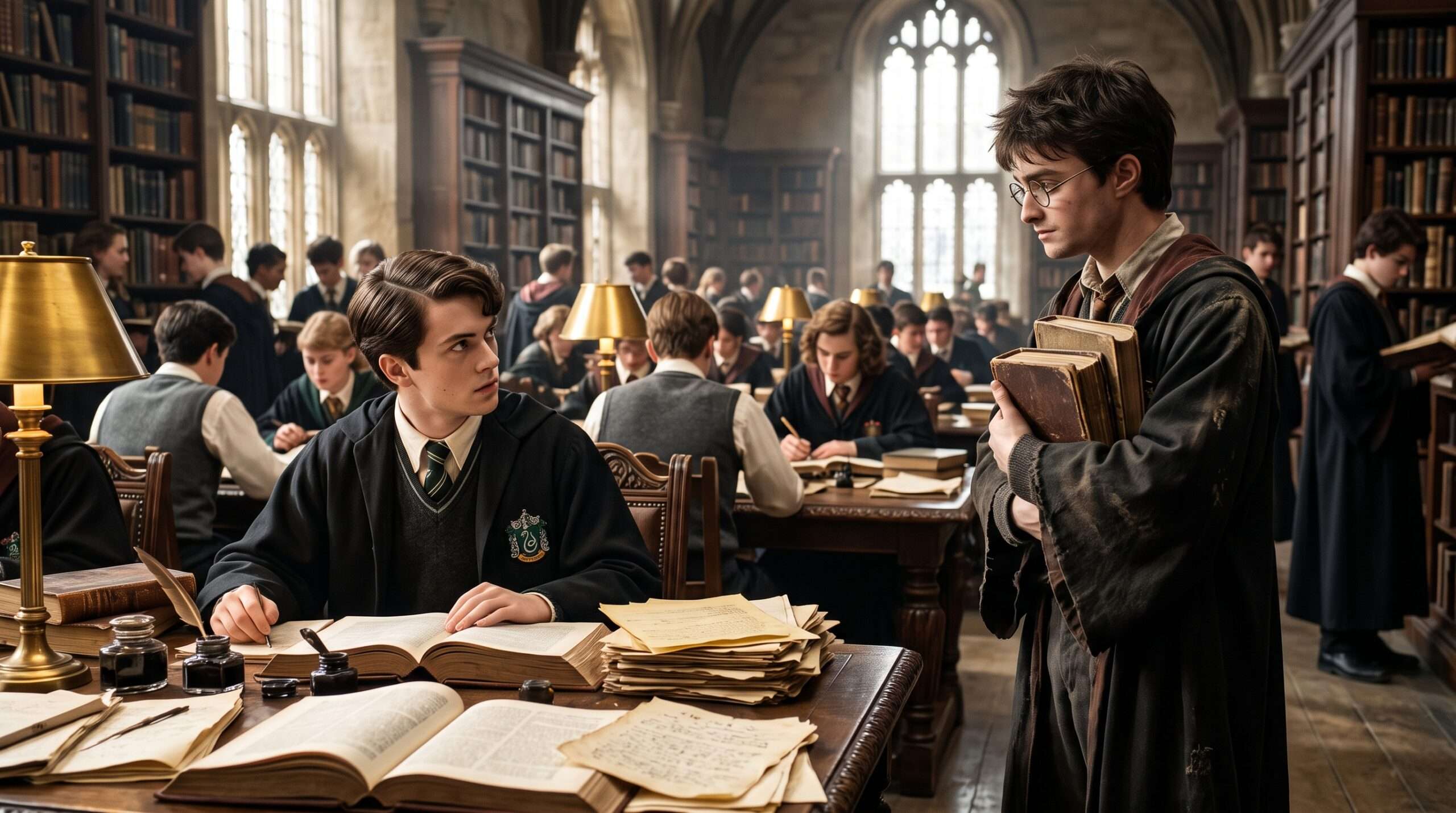 Popular Narrative Tropes (Family-Friendly AU Concepts)
Within the expansive realm of fanfiction and digital fandom content, several high-quality narrative tropes have emerged that focus strictly on the intricate lore and psychological tension between the two characters, offering compelling stories that maintain a strong, plot-driven focus.
-
Time Travel Fix-Its: One of the most popular genres involves an older, battle-hardened Harry Potter traveling back in time to the 1940s. Forced to attend Hogwarts alongside a teenage Tom Riddle, Harry must navigate the ethical dilemma of dealing with a boy who has not yet committed his greatest atrocities. These narratives are rich in suspense, magical theory, and character study.
-
Mentor and Rival Dynamics: Some of the most highly praised AU stories strip away the prophecy entirely, placing Riddle as a brilliant, manipulative Hogwarts professor and Harry as a prodigy student. These stories focus on intense academic rivalries, the exploration of obscure magic, and the battle for moral high ground without resorting to the explicit romance or multi-pairing tropes that can distract from the core character arcs.
-
The Master of Death Explorations: Utilizing the lore of the Deathly Hallows, creators frequently explore scenarios where Harry, as the immortal Master of Death, serves as a dark foil or an eternal observer to Tom Riddle’s ascent, flipping the traditional power dynamic on its head.
Why Their Rivalry Remains the Gold Standard in Fantasy
The Tom Riddle and Harry Potter dynamic transcends the boundaries of Young Adult fiction, cementing its place alongside legendary literary dualities like Luke Skywalker and Darth Vader, or Frodo Baggins and Sauron. However, what sets the Potter/Riddle rivalry apart is its profound intimacy.
Voldemort is not merely a distant, dark warlord sitting on a dark throne; he is inextricably linked to Harry’s mind, his wand, his blood, and his soul. The conflict is not just physical; it is an internal battle of ideologies. J.K. Rowling crafted a narrative where the ultimate victory could not be won through superior spell-casting, but through a superior understanding of the human condition. It is a timeless reminder that while circumstances may forge our beginnings, it is our choices that define our ends.
Frequently Asked Questions (FAQ)
Why did the wands of Harry Potter and Voldemort share a core? Their wands were made using feathers from the exact same magical bird: Albus Dumbledore’s phoenix, Fawkes. In wand lore, when two wands share a core from the same creature, they recognize each other as “brothers.” This rare connection prevents them from functioning properly against each other in a duel, leading to the Priori Incantatem effect seen in the graveyard.
Did Harry have some of Voldemort’s powers? Yes. When Voldemort accidentally turned Harry into a Horcrux on Halloween 1981, he transferred a fragment of his soul and some of his abilities to the infant. The most notable transferred power was the ability to speak Parseltongue (the language of snakes). Harry lost this ability entirely after Voldemort’s soul fragment within him was destroyed.
Why is the “Tom Riddle x Harry Potter” dynamic so popular in fanfiction? The dynamic is popular because it presents the ultimate “two sides of the same coin” narrative. The characters share parallel backgrounds, immense magical power, and a direct soul connection, allowing fan creators to explore intense psychological tension, morality, and complex “what if” scenarios (such as time travel) that push the boundaries of the established canonical lore.
Ultimately, the tragedy of Tom Riddle and the triumph of Harry Potter represent the beating heart of the wizarding world. Their connection—born of dark, unnatural magic but resolved through ultimate, willing self-sacrifice—proves that even the deepest darkness can be dismantled by the quiet courage to accept one’s own mortality.
Whether you are rereading the canon texts, exploring deep-dive lore analysis, or engaging with rich Alternate Universe narratives, the shadow that Tom Riddle casts over Harry Potter remains one of literature’s most compelling explorations of destiny, power, and love.
What are your favorite parallels between Harry and Voldemort? Do you have a favorite AU concept or theory about their shared magical connection? Let us know your thoughts in the comments below!
Would you like some suggestions for high-performing, SEO-optimized meta descriptions and URL slugs for this article to help it rank better on Google Discover?