
Last updated: November 2026
The first time Hogwarts appears on screen, with the first-years gliding across the lake in little boats as the castle lights up the dark, it feels like a place you could walk into. You can walk into pieces of it, just not in one place.
If you’ve ever typed “where was Harry Potter filmed castle” into a search bar and found a messy list of places with no clear answer, this guide is for you. The short answer: Alnwick Castle in Northumberland was the main exterior for the first two films. The corridors, classrooms, libraries, and staircases come from a handful of cathedrals and Oxford colleges, and the rest was built by hand at a studio outside London. Below you’ll find every real location, what was filmed there, and how to visit it. [Add a line here about your own visits, e.g. “I’ve visited X of these locations myself.”]
Quick answer: Hogwarts was filmed at several real places. Alnwick Castle (Northumberland) served as the main exterior in the first two films. Gloucester Cathedral and Durham Cathedral supplied the cloisters and corridors, Lacock Abbey provided classrooms, and Christ Church and the Bodleian Library in Oxford provided the staircase, hospital wing, and library.
Is Hogwarts a Real Castle?
No single castle is Hogwarts. Hogwarts on screen is a composite of real locations, purpose-built studio sets, miniatures, and digital effects. Knowing this makes your planning much easier, because you’ll know which places to visit for which “Hogwarts moment.”
Hogwarts Is a Composite, Not a Single Building
The production team never wanted one real castle to carry the whole story. A real castle can’t supply a Great Hall with floating candles, a moving staircase hall, and a dormitory tower, and filming in historic buildings comes with strict limits. So the filmmakers combined three approaches: real locations for atmosphere, studio sets for control, and scale models and visual effects for the castle’s sweeping exterior.
How the Films Built Hogwarts
The Great Hall, the Gryffindor common room, the Potions classroom, and most of the interiors fans remember were built as sets at Leavesden Studios in Hertfordshire. The castle’s exterior in later films was largely a detailed scale model, extended with digital effects and placed against real Scottish landscapes. That’s why Alnwick Castle, so prominent in the first two films, almost disappears from the exterior shots after that. The series moved toward a larger, more fantastical castle than any real building could provide.
Filming Locations vs. Inspiration Locations
Don’t confuse where the films were shot with what inspired the books. Edinburgh, where J.K. Rowling wrote much of the early series, is full of places fans link to Hogwarts and the wizarding world, such as Greyfriars Kirkyard and the streets around Victoria Street. Those are literary inspirations, not filming sites. Everything in this guide is a place where cameras actually rolled (with one clearly labelled exception), so your trip will match what you see on screen.
Alnwick Castle: The Main Hogwarts Castle Location
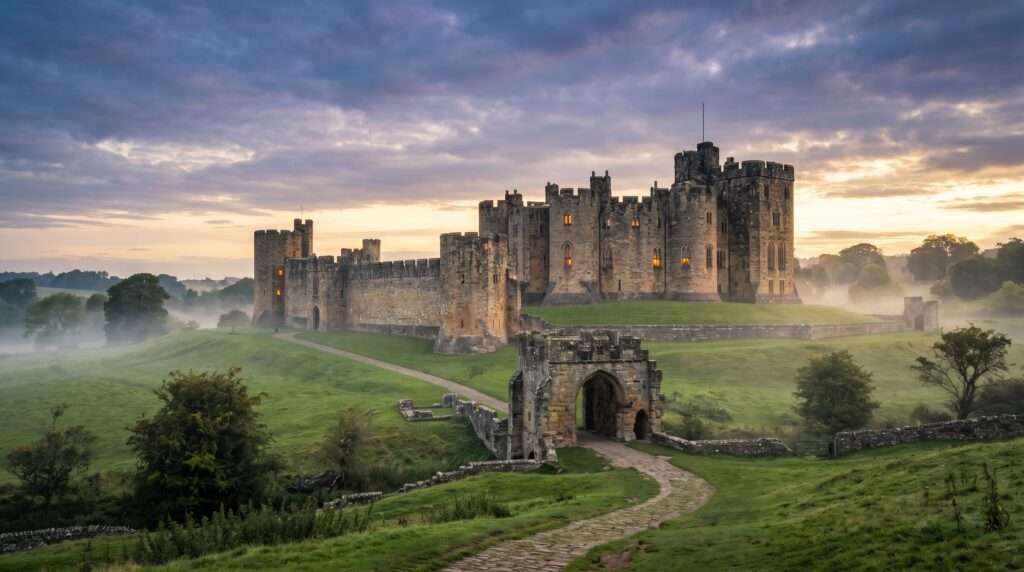
If you only have time for one stop, make it Alnwick. Located in Northumberland in northeast England, Alnwick Castle is the real Hogwarts castle fans most often mean when they ask where Harry Potter was filmed. It has Norman origins, has been home to the Percy family since the 14th century, and is the second-largest inhabited castle in England after Windsor. That scale and silhouette are why the filmmakers chose it.
What Was Filmed Here
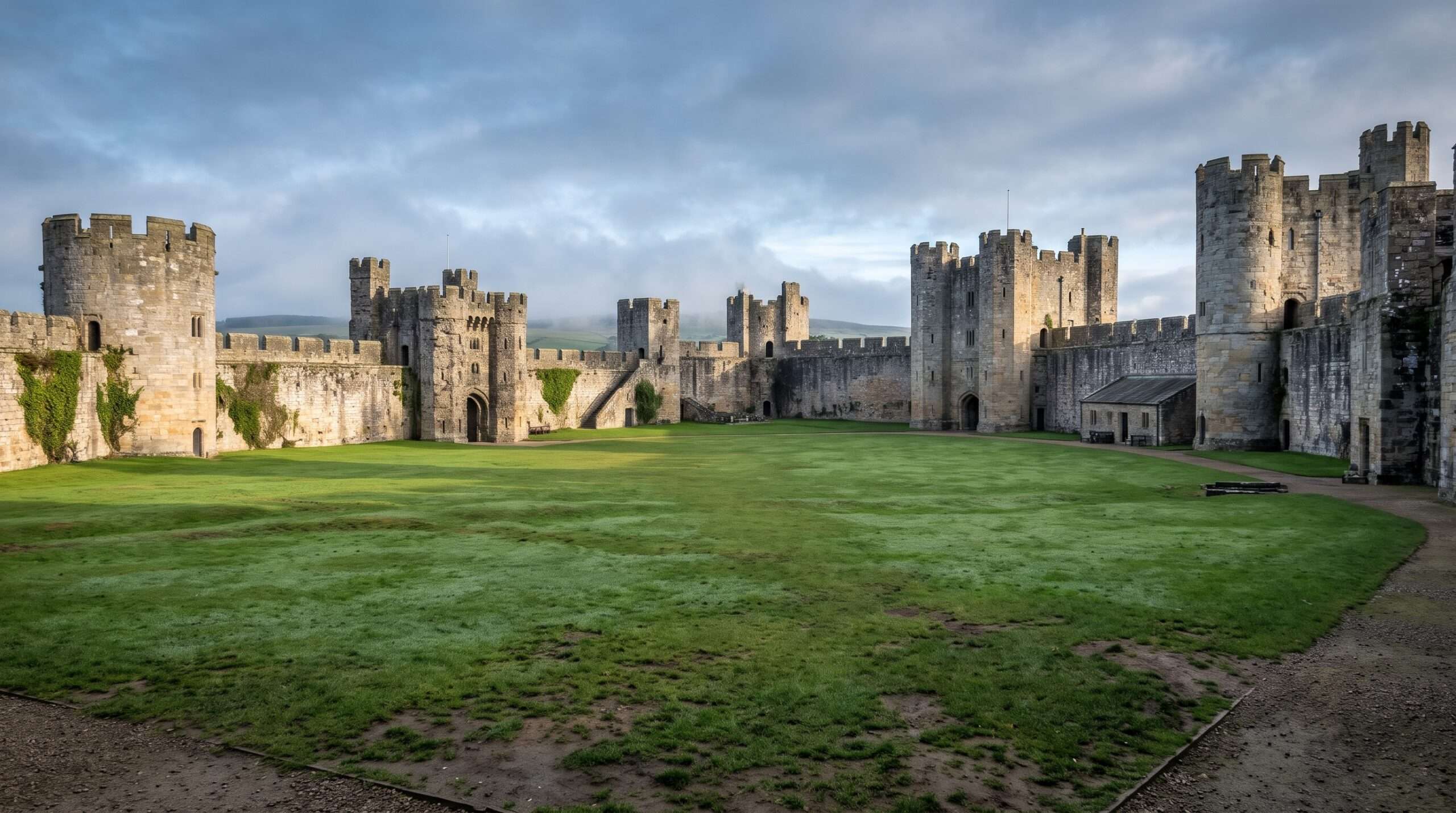
Alnwick’s exteriors appear in Harry Potter and the Philosopher’s Stone and Harry Potter and the Chamber of Secrets. Its best-known moment is the first flying lesson in the outer bailey, where Madam Hooch teaches the Gryffindor and Slytherin first-years to fly. If you’ve ever pictured Neville losing control of his broomstick and Harry catching the Remembrall, this is the courtyard you’re picturing.
 What You Can Do as a Visitor
Alnwick has leaned into its Harry Potter connection with broomstick training sessions held in the same outer bailey where the flying lesson was filmed. They’re fun for all ages, and you leave with some very Instagrammable photos (check the current schedule, as sessions run at set times). Beyond the Potter experience, you can explore the lavish state rooms, the castle grounds, and the exhibitions on the Percy family and the castle’s long history. The neighbouring Alnwick Garden is a good add-on if you have time.
Visitor Tips
- When to go: The castle is typically open seasonally, from spring through autumn. Summer is busiest, so late spring and early autumn are a good balance of weather and crowds.
- How long to allow: Plan on three to four hours for the castle, longer if you add the garden and the town.
- Getting there: Alnwick has no railway station. The nearest is Alnmouth, a short bus or taxi ride away, on the East Coast Main Line. Driving is easier if you’re combining it with other Northumberland sites.
- Before you go: Opening days, hours, and prices change from season to season, so confirm them on the castle’s official website.
Expert insight: Alnwick worked for the first two films because its outer bailey is a large, open courtyard with a dramatic, towered backdrop, ideal for establishing shots and group scenes with child actors. By the later films the story required a more elaborate, fantastical castle, and the production relied on its scale model and digital extensions instead.
Other Real Castles and Cathedrals Used as Hogwarts
Alnwick answers the exterior question. For the places that feel most like Hogwarts from the inside, medieval cloisters, vaulted halls, and wood-panelled libraries, you need the cathedrals and colleges below.
Gloucester Cathedral (Gloucestershire)
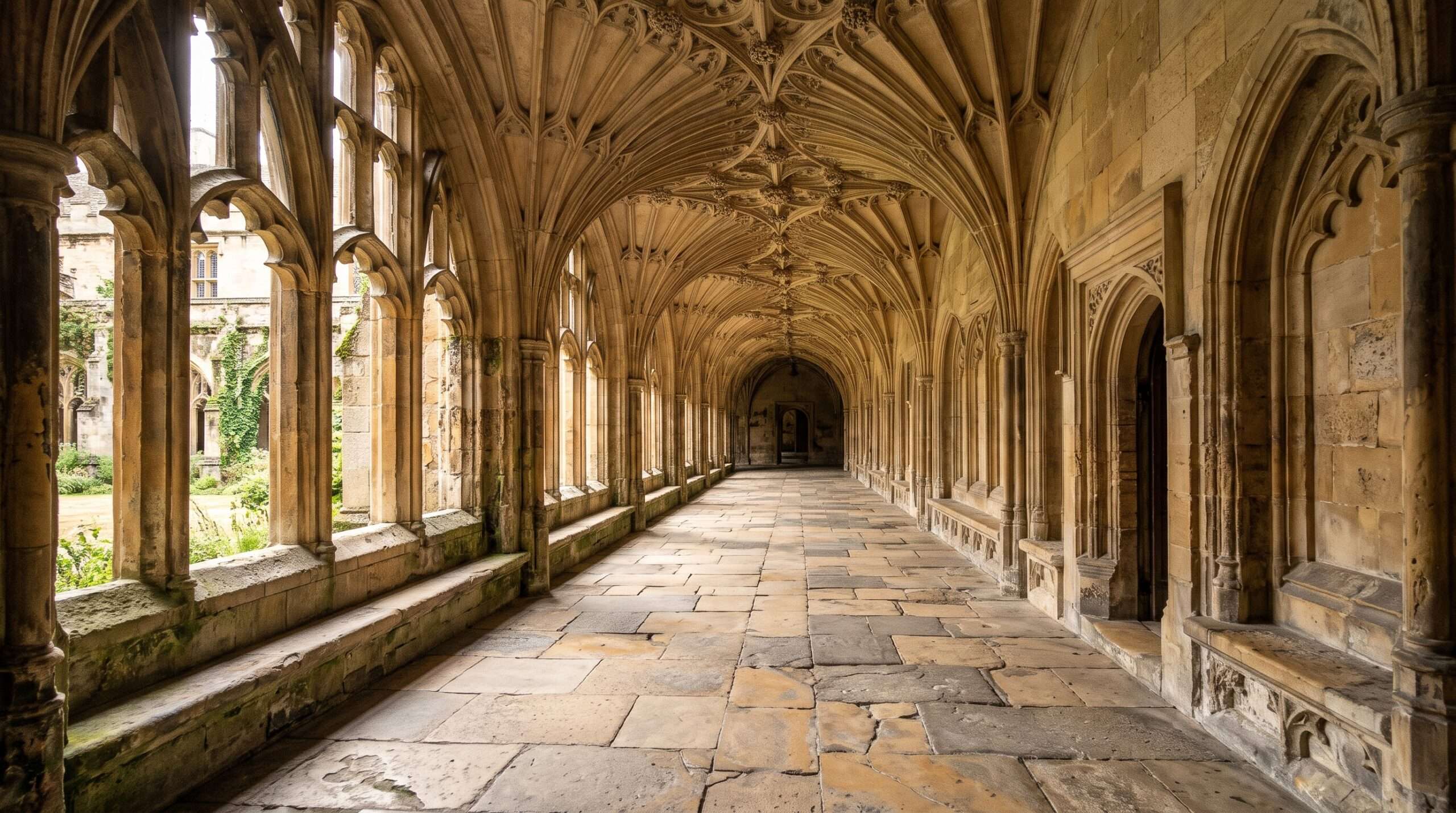
Gloucester’s cloisters, with their fan-vaulted ceilings, are among the most recognisable Hogwarts corridors. They appear in Philosopher’s Stone, Chamber of Secrets, and Half-Blood Prince, and walking them feels like stepping into the castle’s hallways. The cathedral is a working place of worship, so some areas may be closed during services.
Insider tip: Look up. The fan vaulting is the detail that makes these corridors look like nowhere else.
 Durham Cathedral (County Durham)
A UNESCO World Heritage Site, Durham Cathedral offers one of Britain’s best examples of Norman architecture. Its cloisters were used in Philosopher’s Stone and Chamber of Secrets, including the snowy courtyard scene where Harry is with Hedwig. The Chapter House was used as Professor McGonagall’s classroom in the first film.
Insider tip: Combine it with Durham Castle and the riverside walks. The city is compact and very walkable, and it’s a natural stop on a northern route that ends at Alnwick.
Lacock Abbey (Wiltshire)
Run by the National Trust, Lacock Abbey is a medieval abbey turned country house. Its rooms stood in for Professor Snape’s Potions classroom and the room where Harry discovers the Mirror of Erised in Philosopher’s Stone. Lacock village outside the abbey was also used in later films, including as the location of Harry’s parents’ house in Godric’s Hollow in Deathly Hallows – Part 1. The abbey also has a significant place in photographic history, as the home of pioneer William Henry Fox Talbot.
Insider tip: Allow time for the village itself. It’s one of the best-preserved in England and looks like a film set even without the Potter connection.
Christ Church, Oxford
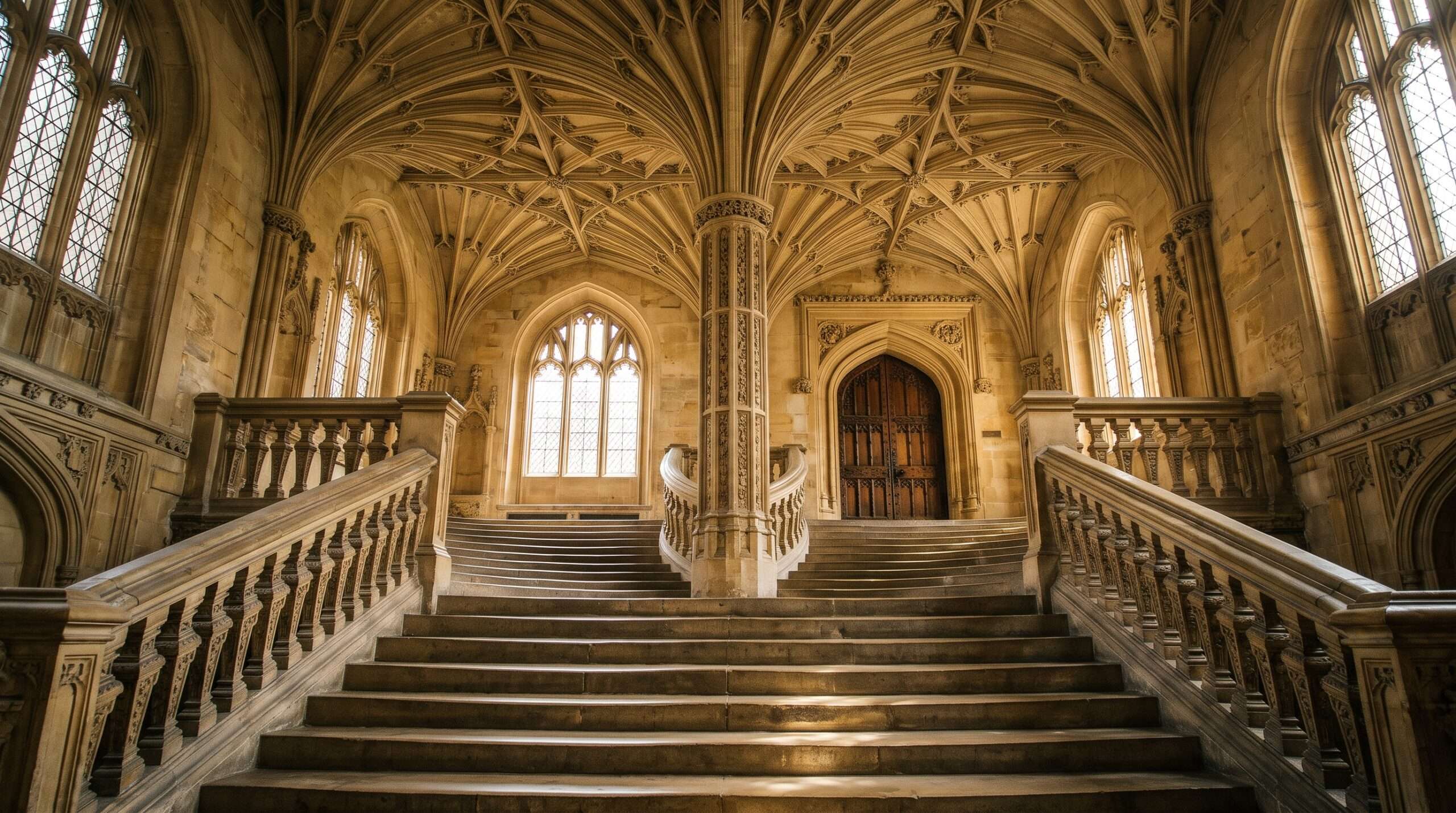
Christ Church is among Oxford’s grandest colleges. Its Tudor staircase leading up to the hall is where Professor McGonagall greets the first-years in Philosopher’s Stone. Christ Church’s own dining hall also inspired the design of the Great Hall, although the Great Hall seen on screen was built at the studio.
Insider tip: Visiting hours and entry arrangements vary, and parts of the college close for college events and meal times. Book a timed ticket where possible, and check the photography rules for each area.
 The Bodleian Library, Oxford
Two spaces in the Bodleian appear in the films. The medieval Divinity School served as the Hogwarts hospital wing, and Duke Humfrey’s Library, the university’s oldest reading room, was used for the Hogwarts library, including the Restricted Section scenes. The Divinity School also appears in Goblet of Fire, as the setting for McGonagall’s dance lessons before the Yule Ball.
Insider tip: Some spaces can only be seen on a guided tour, so check the Bodleian’s official tour booking page before you travel.
At a Glance: Hogwarts Castle and Interior Locations
| Location | County/City | Key Scenes | Open to Visitors? | Best For |
|---|---|---|---|---|
| Alnwick Castle | Northumberland | Exteriors, flying lesson | Yes, seasonal | The “real Hogwarts” castle |
| Gloucester Cathedral | Gloucester | Cloisters and corridors | Yes (working cathedral) | Hogwarts corridors |
| Durham Cathedral | Durham | Cloisters, McGonagall’s classroom | Yes (working cathedral) | Architecture and atmosphere |
| Lacock Abbey | Wiltshire | Snape’s classroom, Mirror of Erised room | Yes (National Trust) | Classroom scenes and village |
| Christ Church | Oxford | Staircase scene | Yes, with limits | The first-years’ arrival |
| Bodleian Library | Oxford | Hospital wing, library | Yes, mostly by tour | Hogwarts library |
Beyond the Castles: Other Hogwarts-Related Filming Locations
A trip built around the films doesn’t stop at the castle walls. These locations bring the world around Hogwarts to life.
Glenfinnan Viaduct, Scotland
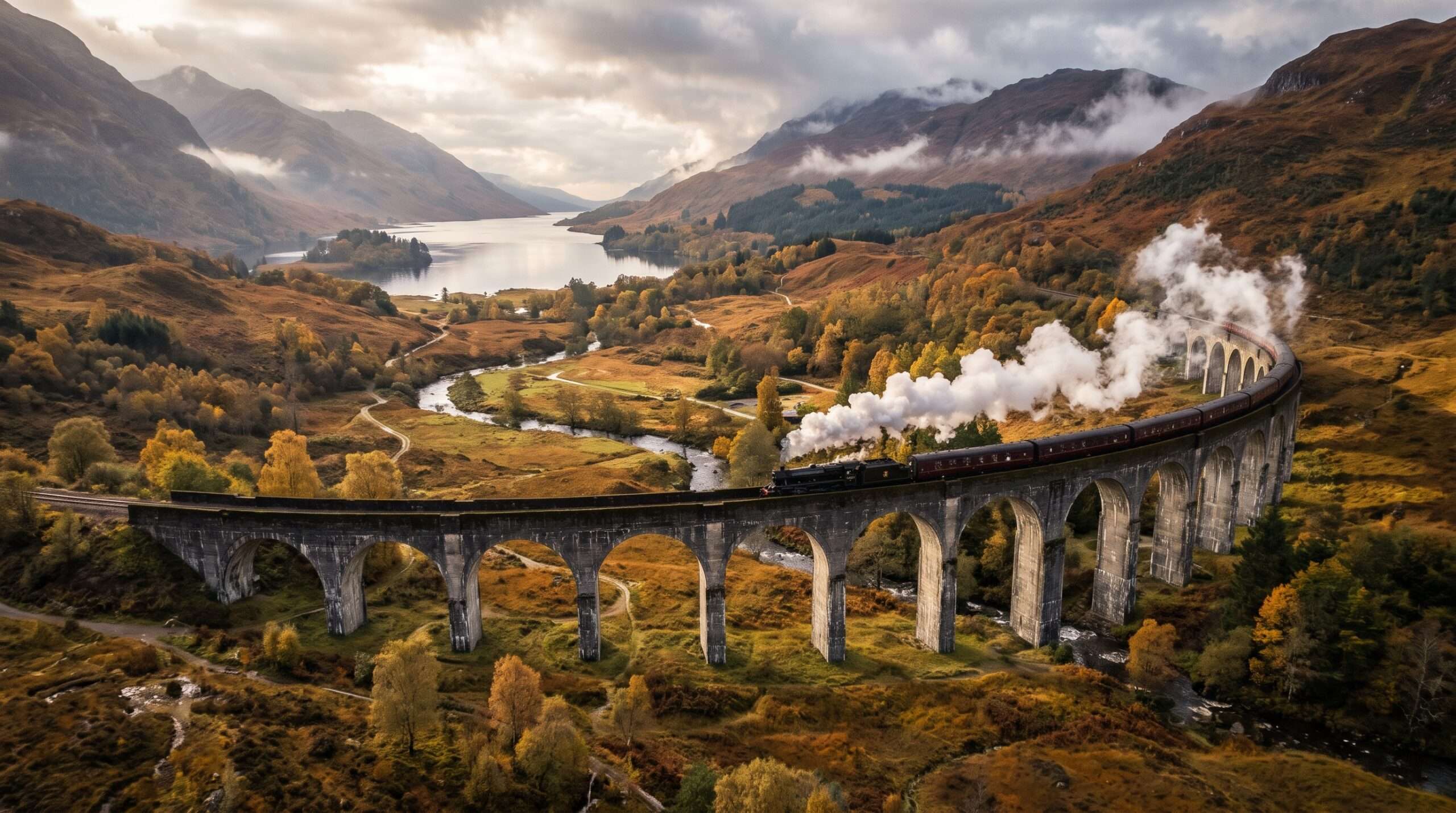
This curving viaduct in the Scottish Highlands is where the Hogwarts Express crosses on its way to school, and it’s the image most fans associate with the train. It appears in several films, including Chamber of Secrets, where Harry and Ron chase the train in the flying Ford Anglia. You can watch the Jacobite steam train cross the viaduct during its season (check the operator’s timetable). Arrive early for the viewpoint, which gets crowded when the train is due.
 Goathland Station, North Yorkshire
This small, beautifully preserved station on the North Yorkshire Moors Railway appears as Hogsmeade Station in Philosopher’s Stone. The railway runs heritage trains, so you can arrive by steam, which makes the visit feel like part of the experience.
Glencoe and the Scottish Highlands
The mountains around Glencoe, Glen Nevis, and Loch Shiel gave the films their dramatic landscapes around Hogwarts, from Hagrid’s hut in Prisoner of Azkaban to scenes around the Black Lake. This is a trip for scenery lovers, and the Highlands are worth it even if you’ve never seen a Harry Potter film.
Leadenhall Market, London
The covered Victorian market in the City of London was used for the entrance to the Leaky Cauldron in Philosopher’s Stone. Note that Diagon Alley itself was a studio build, so Leadenhall is the doorway, not the alley. It’s worth a short visit if you’re in London, especially on a weekday, when the market is busiest and most atmospheric.
Warner Bros. Studio Tour London: Where Hogwarts Was Actually Built
If the question behind “where was Harry Potter filmed castle” is really “where can I see Hogwarts itself?”, the answer is the Warner Bros. Studio Tour London – The Making of Harry Potter, at Leavesden, near Watford. This is where the films’ sets, props, and models were created and where most interior scenes were shot. It’s a studio, not a filming location in the sense of the places above, but for many fans it’s the closest thing to walking into Hogwarts.
The Great Hall and the Hogwarts Castle Model
The tour includes the Great Hall set, built with real stone flagstones, and the enormous scale model of Hogwarts castle used for the exterior shots. Seeing the model in person explains something the real locations can’t: how the filmmakers created a castle that no single building could provide.
Is It Worth Visiting Alongside the Real Locations?
Pros: It’s the only place to see the sets, costumes, and creatures up close, it’s easy to reach from London, and it works in any weather.
Cons: It’s more expensive than most other stops on this list, and it can feel less like “real Hogwarts” than a cathedral cloister you can touch.
Verdict: The real locations show you where the films were shot, and the studio shows you how the magic was made. For a full picture, do both.
Booking Tips
Tickets must be booked in advance, because walk-up entry isn’t available and popular dates sell out well ahead. The studio is reached by train from London Euston to Watford Junction, followed by a dedicated shuttle bus. Check the official site for current prices, times, and seasonal events.
How to Plan a Harry Potter Filming Locations Trip
Most guides stop at a list of places. These routes show how to fit them together.
Suggested Itineraries
Oxford and the Cotswolds (2 to 3 days) Start in Oxford with Christ Church and the Bodleian Library, then head west to Gloucester Cathedral and Lacock Abbey. This is the best route for classrooms, corridors, and libraries. A car makes the second half much easier.
Northern England (3 to 4 days) Begin in Durham for the cathedral and cloisters, continue north to Alnwick Castle for the broomstick training, and then, if time allows, head south to Goathland for a steam train ride. This is the route for the “real Hogwarts castle.”
Scotland (2 to 3 days) Base yourself near Fort William for Glenfinnan Viaduct, Loch Shiel, and Glen Nevis, and add Glencoe for the dramatic landscapes. Time your visit with the Jacobite steam train if you want the classic Hogwarts Express photograph.
 Best Time of Year to Visit
Spring and early autumn are usually the best balance of mild weather, open sites, and manageable crowds. Summer brings the longest days and the Jacobite steam train, but also the biggest crowds. Winter has charm, especially in Oxford and Durham, but Alnwick Castle and some other sites close or reduce their hours.
Getting Around
Trains connect Oxford, Durham, and Alnmouth well. Lacock, Alnwick, and the Scottish sites are far easier with a car, or at least a taxi or local bus from the nearest station. If you’re not driving, plan your route around the rail network and book connections early.
Budget and Booking Checklist
- Confirm opening days and hours on each official website before you travel
- Book timed entry for Christ Church and any Bodleian tours
- Pre-book the Warner Bros. Studio Tour
- Check the Jacobite steam train timetable if Glenfinnan is on your list
- Leave a buffer day in case of weather or a site closure
Insider Tips for Visiting Harry Potter Filming Locations
A few lessons apply across nearly every stop:
- Cathedrals and colleges are working places. Services, college events, and exams can close areas at short notice. Check each site’s official notices the week you travel.
- Go early. Cloisters, staircases, and the Glenfinnan viewpoint look best and feel calmest first thing in the morning.
- Respect the rules. Photography and filming restrictions vary, especially in Oxford colleges, so check before you shoot.
- Look beyond the scenes. Many of these buildings have histories as fascinating as the films: Durham’s Norman architecture, Lacock’s place in photography, Oxford’s centuries of scholarship.
[Add one or two personal notes here, such as the location that surprised you most or a mistake you’d avoid next time. Readers and Google both value first-hand detail.]
Frequently Asked Questions
Is Hogwarts a real castle?
No. Hogwarts is a composite of several real locations, studio sets, and a large scale model. Alnwick Castle gave the first two films their exteriors, while cathedrals and Oxford buildings provided corridors, classrooms, and libraries.
Which castle is used as Hogwarts in Harry Potter?
Alnwick Castle in Northumberland is the castle most associated with Hogwarts. It was used for exterior shots in Philosopher’s Stone and Chamber of Secrets, including the first flying lesson in the outer bailey. Later films relied mainly on a studio model and digital effects.
Can you visit the real Hogwarts castle?
Yes, you can visit the real locations. Alnwick Castle is open seasonally and offers broomstick training sessions. Gloucester and Durham cathedrals, Lacock Abbey, Christ Church, and the Bodleian Library also welcome visitors, though some areas have limited access, so check each site’s official website.
Where was the Great Hall filmed?
The Great Hall was a set built at Leavesden Studios, not a real room. Christ Church’s dining hall in Oxford inspired its design, and you can see the actual set, with its real stone flagstones, at the Warner Bros. Studio Tour London.
Was Harry Potter filmed in Scotland or England?
Both, plus a studio in Hertfordshire. Most of the castle, cathedral, and college locations are in England, while Scotland supplied the Highland landscapes, including Glenfinnan Viaduct, Glencoe, and Glen Nevis.
Is Alnwick Castle worth visiting for Harry Potter fans?
Yes. It’s the best answer to “where is the real Hogwarts castle,” it hosts broomstick training in the same courtyard as the film’s flying lesson, and the castle is worth visiting for its history alone. Allow a few hours and check seasonal opening times.
Which Harry Potter filming location is best for a day trip from London?
Oxford is the best choice. It’s roughly an hour by train from London Paddington and has Christ Church and the Bodleian Library. The Warner Bros. Studio Tour is also an easy trip from London, though you should book tickets in advance. Alnwick is too far for a comfortable day trip, at roughly three and a half hours by train to Alnmouth.
So, where was Harry Potter filmed castle by castle? Alnwick Castle gave Hogwarts its first exterior, Gloucester and Durham cathedrals gave it its corridors, Lacock Abbey and the Oxford colleges gave it classrooms and libraries, and a studio in Hertfordshire built the rest. No single place is Hogwarts, but together they make a trip that’s as rich as the films themselves.
If you’re not sure where to begin, start with Alnwick Castle for the “real Hogwarts” moment, or Oxford if you want the most film locations in the least travel time. Whichever you choose, check each site’s official website before you go, since hours and access change.
If you enjoyed this guide, subscribe for more Harry Potter travel guides, trivia, and behind-the-scenes features.
Sources and Further Reading
- Official websites: Alnwick Castle, Gloucester Cathedral, Durham Cathedral, Lacock Abbey (National Trust), Christ Church Oxford, Bodleian Libraries, Warner Bros. Studio Tour London
- Jacobite steam train and North Yorkshire Moors Railway timetables


