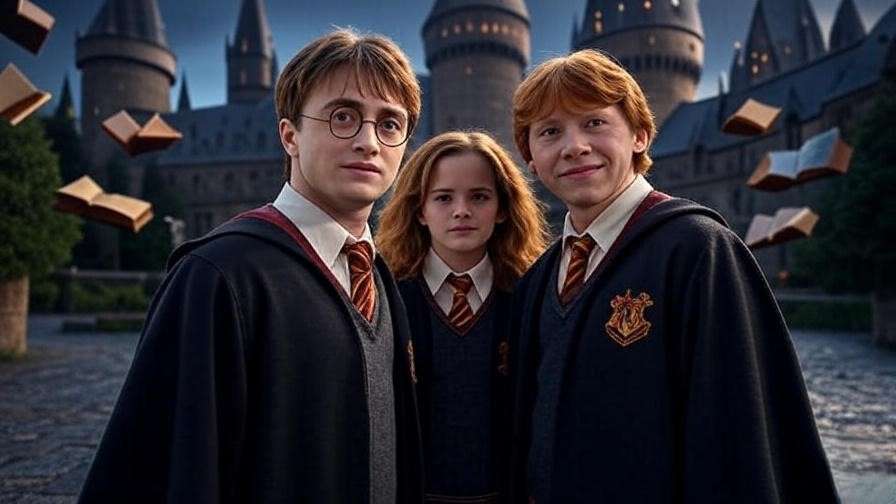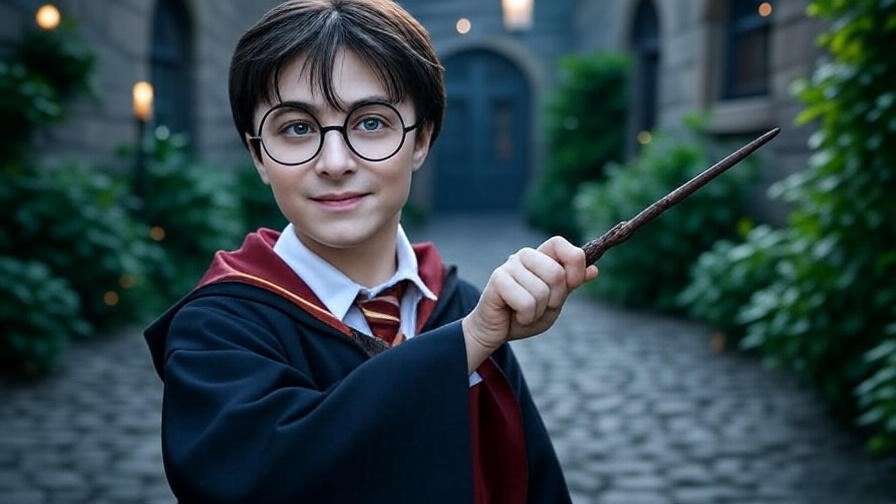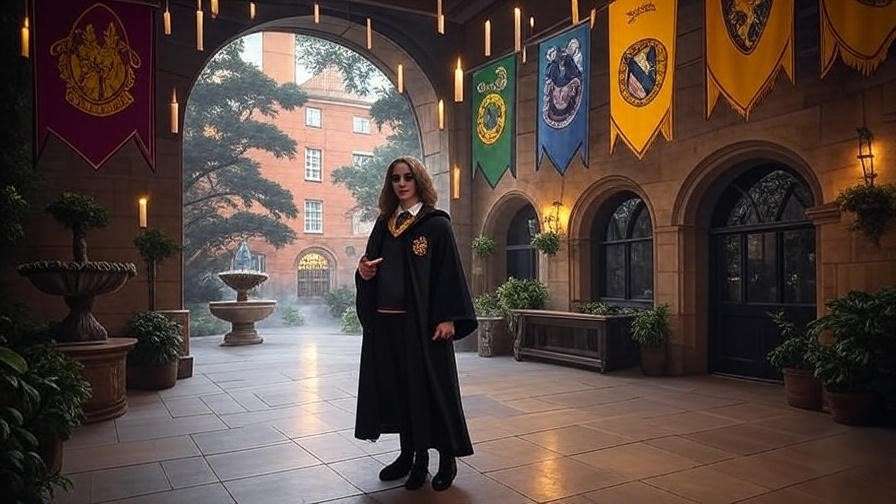
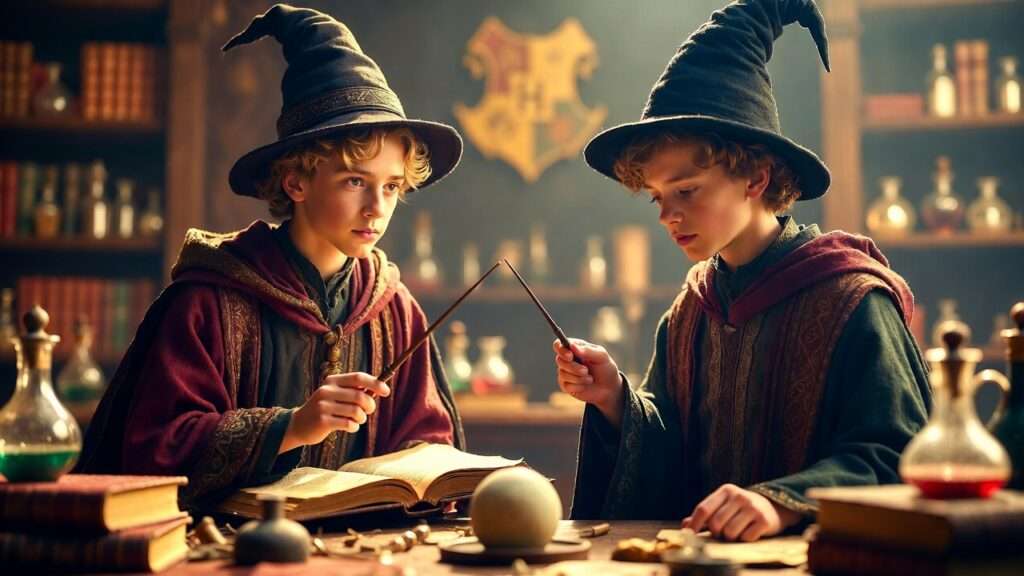
If you’ve ever picked up Harry Potter and the Sorcerer’s Stone (or, depending on where you’re reading from, Harry Potter and the Philosopher’s Stone) and wondered why the title uses “sorcerer” while the rest of the series sticks almost exclusively to “wizard,” you’re not alone. This single word swap has sparked countless debates among fans, from casual readers to dedicated lore enthusiasts. Many assume there must be a deeper distinction in J.K. Rowling’s Wizarding World—perhaps “sorcerers” wield innate, chaotic power while “wizards” rely on study and discipline, much like the classic divide in Dungeons & Dragons. Others question if the term “sorcerer” hints at something darker or more ancient.
The truth, drawn straight from the books, official Wizarding World lore, and Rowling’s own statements, is simpler yet more fascinating: in the Harry Potter universe, wizard and sorcerer are essentially synonyms. There is no canonical mechanical, power-source, or class-based difference between them. The confusion stems largely from cultural marketing choices, etymological nuances, and the bleed-over from other fantasy traditions. Understanding this clears up a persistent fan question, deepens appreciation for Rowling’s cohesive magic system, and highlights how subtle word choices shape our perception of the Wizarding World.
This comprehensive guide will explore the terms in canon, unpack the famous title change, compare Harry Potter’s magic users to broader fantasy archetypes, analyze key characters and examples, debunk common myths, and dive into deeper lore connections. By the end, you’ll have the definitive answer to “wizard vs sorcerer in Harry Potter”—and perhaps a fresh perspective on why the series’ magic feels so uniquely grounded.
Understanding the Terms in Harry Potter Canon
At its core, the Wizarding World uses “wizard” as the standard, everyday term for magical humans. Rowling consistently refers to the magical community as “wizards and witches,” “wizardkind,” and the “wizarding world.” This phrasing appears thousands of times across the seven books.
How J.K. Rowling Uses “Wizard”
- Primary and consistent terminology: From the very first chapter of Harry Potter and the Philosopher’s Stone (or Sorcerer’s Stone), characters like Albus Dumbledore, Minerva McGonagall, and Rubeus Hagrid are introduced as “wizards” or part of the “wizarding community.” Hogwarts School of Witchcraft and Wizardry trains “young witches and wizards.” The Ministry of Magic governs “wizarding law,” and terms like “wizard duels,” “wizard chess,” and “wizard robes” dominate.
- Gender-specific but inclusive: “Wizard” typically denotes males, while “witch” refers to females. Together, they encompass all magical humans. There is no third category like “sorcerer” for a separate type of practitioner.
- Power and skill descriptors: Exceptional individuals are called the “greatest wizard of the age” (Dumbledore) or “the most powerful dark wizard” (Voldemort). Magic ability stems from innate magical core (present from birth in most cases) combined with training, wand use, and study—no split between “learned” and “innate” casters.
 Where “Sorcerer” Appears in the Books and Films
The word “sorcerer” is remarkably rare in the original texts. A close reading reveals it appears sparingly, often in formal, archaic, or descriptive contexts rather than as a title or class.
- Limited mentions: In the main series, “sorcerer” shows up in passing phrases, such as references to historical or legendary figures, but never to define a distinct group. For example, Voldemort boasts in Harry Potter and the Chamber of Secrets about fashioning himself as “the greatest sorcerer in the world,” using it as a grandiose synonym for “wizard.” In Harry Potter and the Deathly Hallows, similar hyperbolic language appears, but it’s not systematic.
- The title exception: The most prominent use is in the American edition’s title, Harry Potter and the Sorcerer’s Stone. Inside the book, the object is still called the “Philosopher’s Stone” in most contexts, with “Sorcerer’s Stone” used interchangeably in the US version for consistency.
- Film adaptations: The first movie retains “Sorcerer’s Stone” in dialogue and title, but subsequent films align with “wizard” dominance. No character is ever classified solely as a “sorcerer” to the exclusion of “wizard.”
Official Canon Confirmation – No Real Difference
Official sources from WizardingWorld.com (formerly Pottermore) and Rowling’s interviews treat the terms interchangeably. There is no entry or article delineating separate categories for wizards and sorcerers. Rowling’s magic system is egalitarian in structure: nearly all human magic users channel power through wands, attend similar education (if they choose), and draw from an innate magical ability refined by practice. Unlike systems with rigid classes, Harry Potter magic emphasizes personal talent, willpower, and knowledge over birthright sources or spontaneous casting.
This synonymy reflects Rowling’s inspiration from British folklore, where “wizard” (from Old English “wīs” meaning wise) and “sorcerer” (from Latin “sortiarius,” one who casts lots or fate) overlap as labels for magic practitioners. In her world, the distinction is stylistic, not substantive.
The Famous Title Change: Why “Sorcerer’s Stone” in the US?
The single most significant reason the word “sorcerer” is associated with Harry Potter at all is the American publication of the first book. This change has become one of the most discussed editorial decisions in modern children’s literature.
The Original Concept – The Philosopher’s Stone
J.K. Rowling’s first novel was published in the United Kingdom in 1997 under the title Harry Potter and the Philosopher’s Stone. The name is deeply rooted in real-world history and mythology.
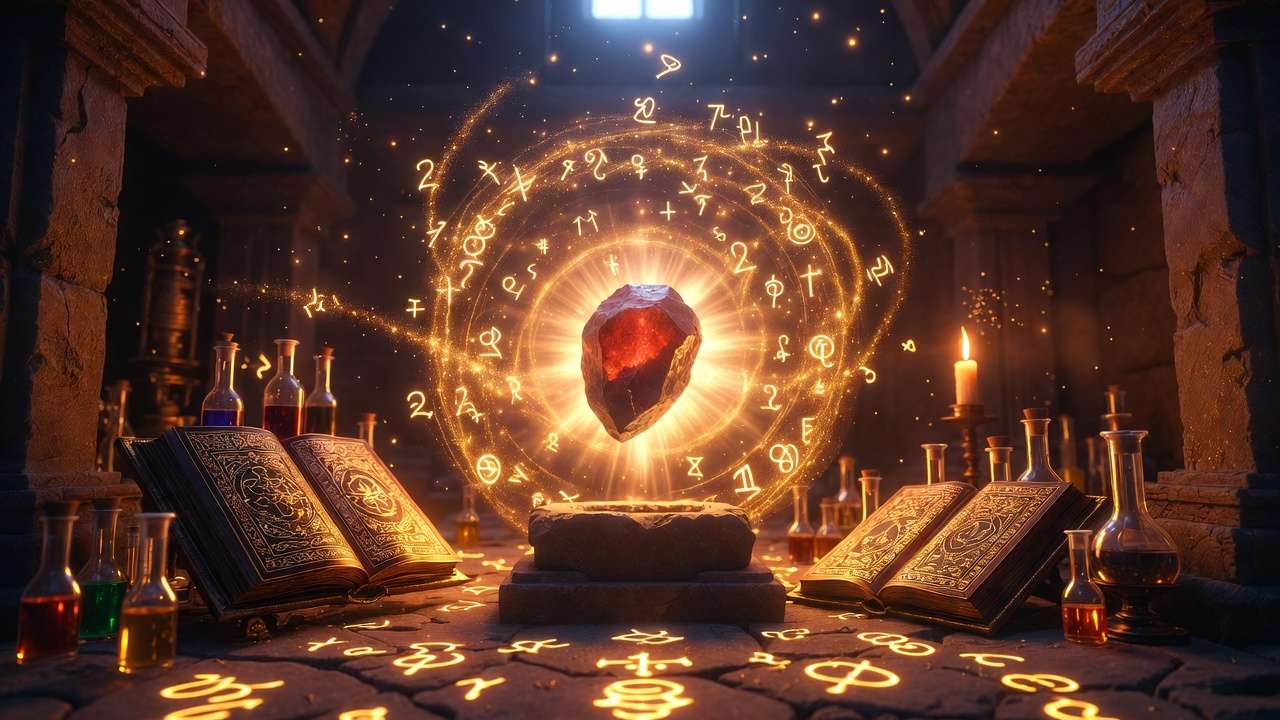
- Alchemical origins: The Philosopher’s Stone is a legendary substance said to turn base metals into gold, produce the Elixir of Life (granting immortality), and serve as the ultimate goal of medieval alchemy. Nicolas Flamel, the historical figure featured in the story, was a real 14th-century scribe and reputed alchemist believed by some to have discovered the stone.
- Thematic resonance: Rowling deliberately chose this title to signal intellectual depth, historical mystery, and the pursuit of forbidden knowledge. The stone in the book is not merely a powerful magical artifact; it ties directly into themes of immortality, greed, and the dangers of tampering with nature—ideas that echo throughout the entire series.
The British title preserves this scholarly and alchemical flavor, appealing to readers familiar with European folklore and history.
 Scholastic’s Marketing Decision
When Scholastic acquired the U.S. rights, the publisher feared that “Philosopher’s Stone” would sound too obscure, academic, or even pretentious to American children and their parents. Executive editor Arthur Levine famously explained that the word “philosopher” did not immediately scream “magic” or “adventure” to the target audience.
- The proposed solution: Scholastic wanted a title that more overtly conveyed fantasy and enchantment. After discussions with Rowling, “Sorcerer’s Stone” was selected as a strong alternative.
- Rowling’s compromise: J.K. Rowling has stated in interviews (including a 2000 appearance on The Oprah Winfrey Show and later Wizarding World commentary) that she suggested “Sorcerer’s Stone” herself. She viewed it as a reasonable substitute that still evoked powerful magic while being more immediately accessible to young American readers.
- Additional context: The change was not made lightly. Scholastic also altered some spelling (e.g., “Mum” to “Mom,” “crisps” to “chips”) and a few phrases to better suit American English. However, the title change remains the most visible and debated alteration.
Impact on Fans and Legacy
The decision created a permanent transatlantic divide in how fans refer to the first book.
- Ongoing confusion: Readers who encounter both versions often wonder if the story itself differs. (It doesn’t—the text is identical aside from minor localization.)
- Cultural critique: Many British and international fans argue the change sacrificed nuance for marketability. The loss of the alchemical reference weakens the book’s intellectual foundation in the eyes of some purists.
- Modern reevaluation: Today, a significant portion of the fandom—especially younger readers who grew up with both editions via streaming and digital releases—prefers the original Philosopher’s Stone title. The 20th-anniversary editions and illustrated versions have helped restore the UK title globally.
- Positive side: The “Sorcerer’s Stone” branding undeniably helped launch the series in the massive U.S. market. It gave the book an instantly recognizable magical hook that contributed to its explosive popularity.
In short, the title change is marketing pragmatism, not lore. It explains why “sorcerer” feels like a Harry Potter word to millions of readers, even though the canon itself barely uses it.
Wizard vs Sorcerer in Broader Fantasy – Why the Confusion Arises
The reason so many fans instinctively look for a difference between wizard and sorcerer in Harry Potter is the powerful influence of other fantasy franchises—especially tabletop role-playing games.
The Classic Fantasy Distinction (D&D and Beyond)
In Dungeons & Dragons (D&D), the most influential fantasy system since the 1970s, the wizard and sorcerer are two entirely separate classes with distinct mechanics:
- Wizards: Intelligence-based spellcasters who learn magic through rigorous study. They prepare spells daily from spellbooks, representing years of academic training and arcane research.
- Sorcerers: Charisma-based casters who possess innate magical talent, often due to bloodlines (dragon ancestry, demonic heritage, wild magic surges). They cast spontaneously without preparation but have fewer spells known and rely on metamagic to twist their innate power.
- Popular culture bleed: This distinction has permeated video games (Baldur’s Gate, Dragon Age), TV shows (Stranger Things references D&D classes), novels, and even casual conversation. When people hear “sorcerer,” many automatically picture someone with raw, unpredictable, hereditary magic.
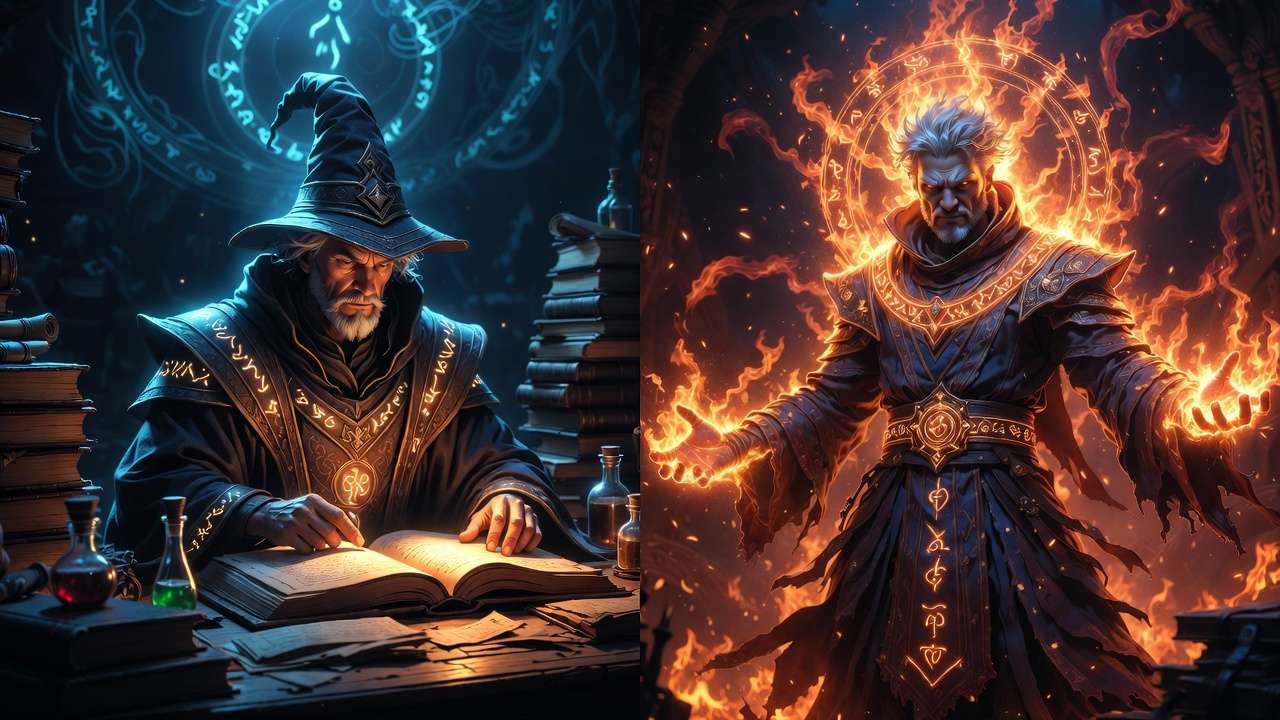 Other fantasy settings reinforce similar tropes:
- Warlocks in D&D and The Witcher often gain power through pacts.
- Mages in The Wheel of Time channel a gendered force (saidin/saidar).
- Innate vs. learned magic appears in countless stories.
How Harry Potter Differs from These Tropes
Rowling’s magic system is deliberately unified and egalitarian:
- Universal source: All witches and wizards possess an innate magical core from birth (with rare squib exceptions). This ability is hereditary but can appear in Muggle-born children due to recessive genes or distant magical ancestry.
- Education matters: Hogwarts refines and channels that innate power through structured learning, wand technique, spell theory, and practice. Hermione Granger, a Muggle-born, becomes one of the most skilled witches through study—not because she lacks innate talent, but because she masters it.
- No separate innate class: There is no group of “sorcerers” who cast without wands, preparation, or study while “wizards” must rely on books. Wandless magic exists (Dumbledore, Voldemort, and powerful adults demonstrate it), but it is an advanced skill, not a separate category.
- Blood status vs. power: Pure-blood ideology claims superiority, but the series repeatedly proves talent is not tied to lineage (Harry, Hermione, Lily Potter). This contrasts sharply with bloodline-based sorcerers in other settings.
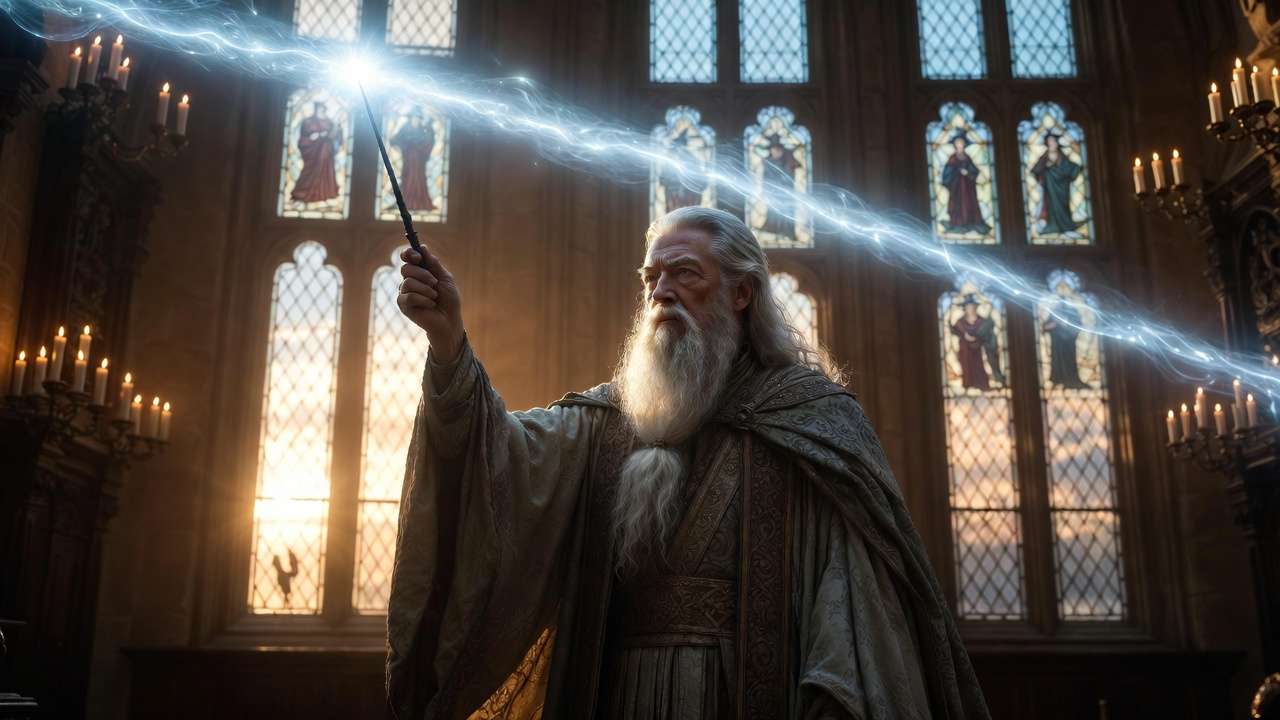 Rowling’s system emphasizes choice, hard work, and moral application of power over birthright destiny—a thematic cornerstone of the books.
Why Fans Mix the Two Up
Several factors fuel the persistent confusion:
- The Sorcerer’s Stone title primes American readers to expect “sorcerer” to mean something specific.
- Online discussions frequently import D&D terminology into Harry Potter debates.
- Fanfiction and role-playing communities often create house rules or alternate magic systems that introduce wizard/sorcerer distinctions.
- Pop-culture osmosis makes the D&D model feel like the “default” fantasy framework.
Key Examples and Character Analysis
To truly understand why there is no meaningful wizard vs sorcerer distinction in Harry Potter, it helps to examine how magic is portrayed through the series’ most iconic characters. Their abilities consistently demonstrate the same underlying rules: innate magical potential + training + wand mastery + willpower.
Iconic “Wizards” in the Series
- Harry Potter Harry is repeatedly called a wizard from the moment Hagrid delivers the famous line: “You’re a wizard, Harry.” His magic is a classic blend of natural talent (surviving the Killing Curse as a baby, producing a corporeal Patronus at thirteen) and dedicated practice (especially Defense Against the Dark Arts and dueling). He never exhibits spontaneous, wandless casting as a default state—his most impressive feats still rely on focus, intent, and often a wand.
- Hermione Granger As a Muggle-born, Hermione proves that magical ability is not strictly hereditary in the way some fantasy bloodline sorcerers are. Her extraordinary skill comes almost entirely from voracious study, perfect spell pronunciation, and logical application of theory. If there were a “sorcerer” class defined by raw power without effort, Hermione would contradict it entirely—she out-performs many pure-bloods through hard work alone.
- Albus Dumbledore Widely regarded as the greatest wizard of modern times, Dumbledore demonstrates near-limitless mastery: wandless and non-verbal magic, advanced transfiguration, Legilimency, and the creation of complex magical devices (the Deluminator, the Pensieve). Yet even he is never called a “sorcerer” in any official capacity. His power is the pinnacle of what a wizard can achieve through genius, experience, and study—not a separate category.
- Lord Voldemort (Tom Riddle) Voldemort is described as “the most dangerous Dark wizard of all time.” His prodigious talent was evident early (manipulating objects at the orphanage, speaking Parseltongue innately), but he still pursued formal education at Hogwarts, created Horcruxes through advanced Dark magic study, and relied heavily on his wand until its destruction. His “innate” gifts (Parseltongue, flight without support) are rare racial or magical traits, not evidence of a separate sorcerer class.
Any “Sorcerer-Like” Figures?
Some fans point to characters with unusually raw or ancient power and wonder if they fit a “sorcerer” archetype:
- Gellert Grindelwald — Another prodigy whose charisma and magical strength feel almost otherworldly, yet he is consistently labeled a wizard/dark wizard.
- Ancient or legendary figures — Merlin is referenced in passing as a great wizard; no separate sorcerer lineage exists in canon.
- Obscurials (from Fantastic Beasts) — The closest thing to uncontrolled, innate magical power. An Obscurial is a wizard or witch whose magic has been suppressed, causing it to manifest chaotically and destructively. However, this is portrayed as a tragic affliction, not a desirable or separate class of caster.
In every case, the label remains “wizard” (or “witch”). The series never carves out a sorcerer subcategory.
Magical Creatures and Exceptions
It’s worth contrasting human magic users with non-human magical beings to highlight how Rowling reserves “wizard/sorcerer” for humans:
- House-elves (innate apparition, powerful household magic without wands)
- Goblins (metalwork and banking magic)
- Veela (alluring charm magic)
- Dragons, phoenixes, thestrals (inherent magical properties)
These beings possess magic by nature, but they are never called wizards or sorcerers. The terms are reserved exclusively for wand-wielding human magical folk—further evidence that “wizard” and “sorcerer” describe the same group.
Common Myths and Misconceptions Debunked
Here are the most persistent misunderstandings that keep the wizard vs sorcerer debate alive:
- Myth: Sorcerers in Harry Potter don’t need wands.Reality: Wandless magic is rare, difficult, and usually limited to very powerful adult wizards (Dumbledore drying clothes, Voldemort performing feats in the Little Hangleton graveyard). It is an advanced technique, not a default state for any class.
- Myth: “Sorcerer” implies dark or evil magic.Reality: The word appears neutrally or positively in the rare instances it’s used (e.g., Voldemort’s self-aggrandizing boasts). Dark magic is a choice and a practice, not tied to the label “sorcerer.”
- Myth: The title change secretly altered the book’s lore or meaning.Reality: Only superficial wording was adjusted for localization. The Philosopher’s Stone remains an alchemical artifact tied to Nicolas Flamel; the story, themes, and mechanics are unchanged.
- Myth: Powerful characters like Dumbledore or Voldemort are “really” sorcerers.Reality: This is a retroactive projection from D&D-style thinking. Canon never supports it.
- Myth: Muggle-borns are more like sorcerers because their magic is “unexpected.”Reality: Muggle-borns have the same innate magical core as anyone else; their parents simply lack the gene expression. Magic is magic.
Expert Insights and Deeper Lore Connections
- Etymology matters “Wizard” derives from Middle English “wys” (wise), emphasizing knowledge and skill—perfect for Rowling’s portrayal of magic as something refined through education. “Sorcerer” comes from Latin “sortiarius” (one who casts lots, diviner), carrying connotations of fate, mystery, or raw power. The American title leans into this more primal, evocative sense to hook readers.
- Alchemy as the hidden backbone The first book’s curriculum includes rudimentary alchemy, and the Philosopher’s Stone is explicitly alchemical. This ties the series to real historical occult traditions where “philosopher” and “sorcerer” sometimes overlapped but were not synonymous.
- Rowling’s thematic intent By making magic accessible yet requiring discipline, Rowling subverts the “chosen one with raw power” trope common in chosen-hero fantasy. Harry succeeds because of love, friendship, courage, and practice—not because he belongs to a superior innate-caster class.
- Wizarding World website confirmation Articles on WizardingWorld.com (especially those covering magic basics, Hogwarts curriculum, and blood status) never distinguish between wizards and sorcerers. They are used as interchangeable synonyms when the latter appears at all.
 FAQs
FAQs
Is Harry a wizard or a sorcerer? Harry is a wizard. So is everyone else with a wand and magical ability in the series.
Why do some fans call powerful characters “sorcerers”? It’s usually a carry-over from D&D terminology or dramatic flair in fanfiction/roleplay. Canon does not support it.
Does the difference matter for fanfiction or roleplay? Absolutely—if you’re writing or playing in a Harry Potter-inspired setting and want to import D&D-style classes, that’s creative freedom. Just know it’s an addition, not canon.
Will future Wizarding World content (films, games, series) clarify this? Unlikely. The franchise has consistently treated the terms as synonyms since 1997.
Where can I read more official lore? Start with the original books, then WizardingWorld.com’s archives, Fantastic Beasts screenplays (for expanded magic), and Rowling’s old Pottermore writings (many still accessible).
In the Harry Potter series, the question “wizard vs sorcerer” ultimately has a clear answer: there is no versus. They are two words for the same thing—magical humans who channel their innate ability through wands, education, and intent. The perception of a difference arises almost entirely from:
- The American title Harry Potter and the Sorcerer’s Stone
- Cross-pollination with D&D and other fantasy systems
- The natural human desire to categorize and find hidden rules
Understanding this distinction (or lack thereof) not only resolves a long-standing point of confusion but also highlights one of J.K. Rowling’s greatest strengths as a world-builder: a magic system that feels ancient and mysterious yet fundamentally fair, merit-based, and human. Magic in Harry Potter is not about who you were born as—it’s about who you choose to become.
Next time you reread the series or debate lore with friends, you can confidently explain why “sorcerer” is just another word for “wizard” in this world—and why that choice makes the Wizarding World feel so uniquely cohesive.
Thank you for reading this deep dive. If this cleared up your questions—or sparked new ones—feel free to share your thoughts in the comments. Which part of the magic system fascinates you most?