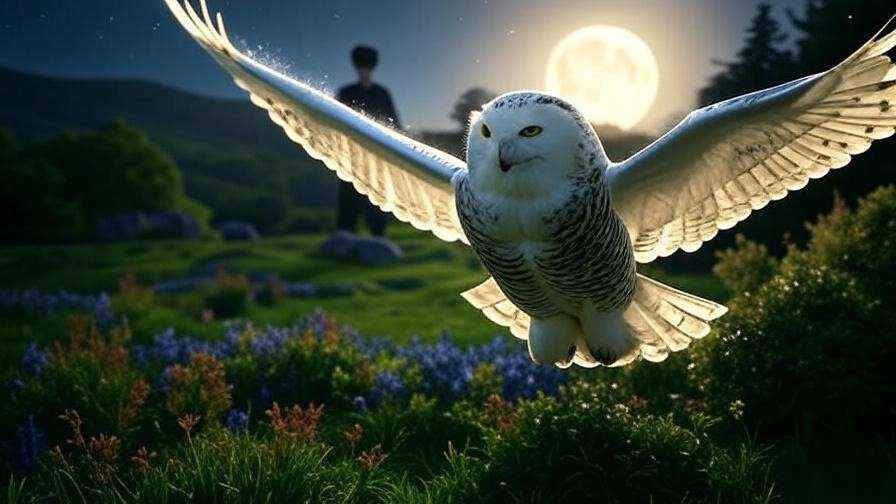
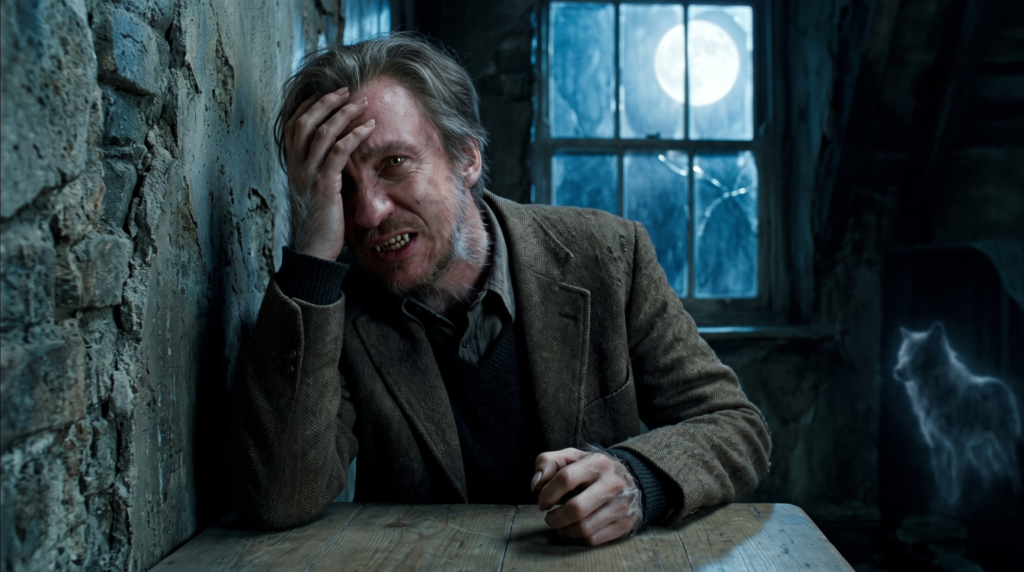
Picture the scene in Harry Potter and the Prisoner of Azkaban: a seemingly shabby, exhausted teacher steps in front of a terrified student to face a Boggart. With a crack, the shape-shifting creature turns into a glowing, silvery orb. To the untrained eye, it is just a strange sphere. But to him, it is the full moon—the source of a lifelong curse.
If you are diving back into the lore and searching for the wolfman from Harry Potter, you are looking for Remus John Lupin. While some casual viewers might confuse him with the vicious Fenrir Greyback (the werewolf who actually bit him), Remus is entirely different. He is one of the most beloved, complex, and tragic figures in the entire wizarding world.
For any true Harry Potter insider, understanding Remus Lupin requires looking far beyond his time as the Defense Against the Dark Arts professor. His story is a masterclass in resilience, a heartbreaking tale of isolation, and a testament to the power of friendship. Let’s dive deep into the tragic backstory of the monster with a golden heart.
The Origin of the Curse: How Did Remus Lupin Become a Werewolf?
To understand the man, we must first understand the curse. Remus Lupin was not born a werewolf. His affliction was the direct result of prejudice, politics, and a fatal mistake made by his father.
Lyall Lupin’s Fatal Mistake at the Ministry
Remus was the only child of Lyall Lupin, an authority on non-human spiritous apparitions, and Hope Howell, a Muggle. Lyall worked at the Ministry of Magic in the Department for the Regulation and Control of Magical Creatures. During the rise of Lord Voldemort in the 1970s, the Ministry brought in a suspected werewolf for questioning. That werewolf was Fenrir Greyback.
Greyback masqueraded as a Muggle tramp, playing the part perfectly. Most of the committee was fooled, but Lyall Lupin was not. Frustrated by the committee’s gullibility, Lyall lost his temper and stated that werewolves were “soulless, evil, deserving nothing but death.” This profound bigotry would cost him dearly. Greyback, deeply offended and inherently vicious, vowed revenge against Lyall.
 Fenrir Greyback’s Brutal Revenge
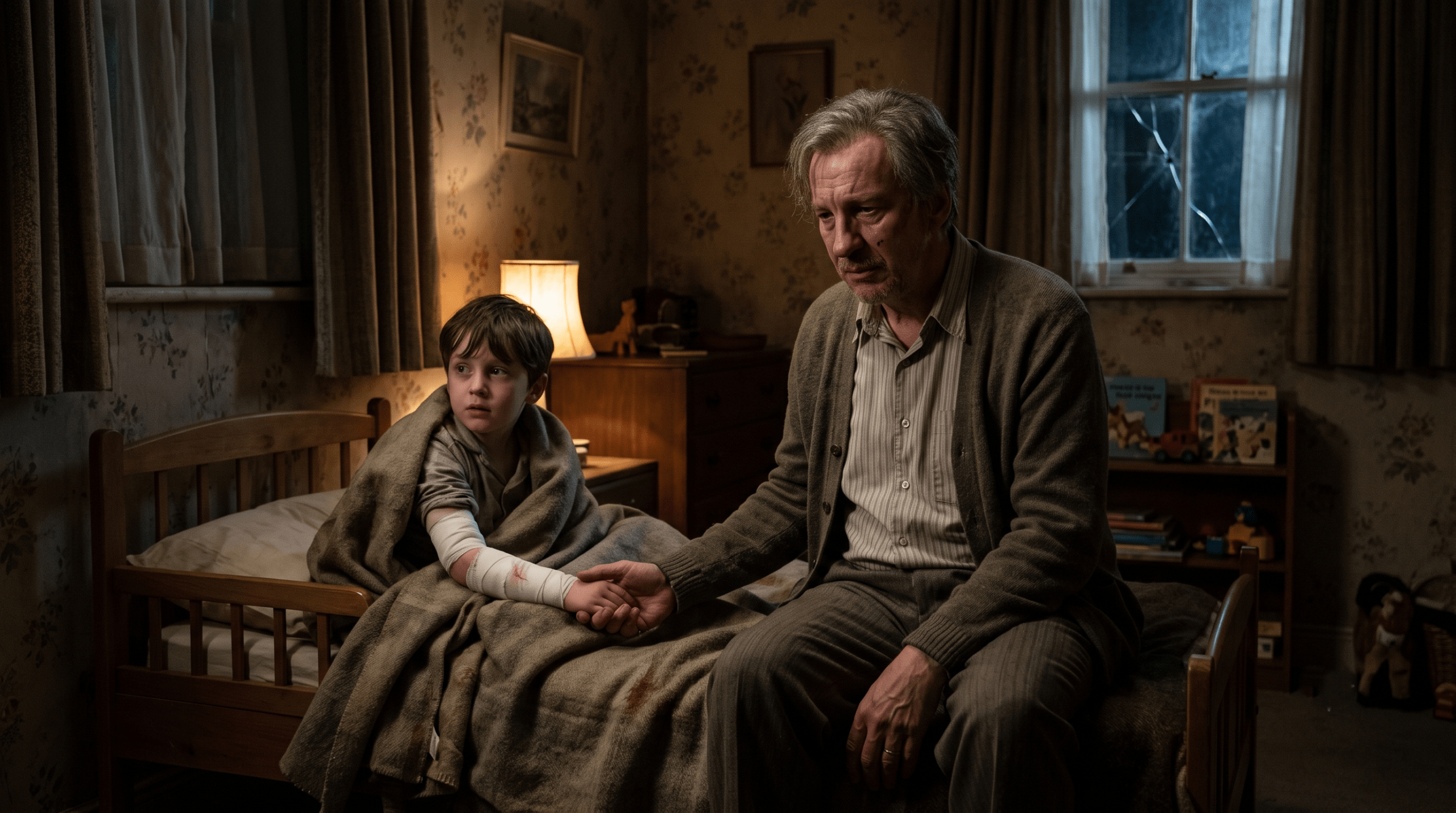
Greyback did not target Lyall directly; he targeted what Lyall loved most. Just before Remus’s fifth birthday, as the boy slept peacefully in his bed, Greyback forced his way through the bedroom window. The attack was swift and brutal. Though Lyall burst into the room in time to save his son’s life by driving Greyback away with powerful curses, the damage was irreversible.
Remus was infected with lycanthropy. In the span of a single night, an innocent boy was condemned to a life of agonizing monthly transformations and societal exile.
The Hidden Etymology of “Remus Lupin”
Did You Know? J.K. Rowling is famous for hiding character destinies within their names, and Remus is no exception.
Remus: In Roman mythology, Remus and his twin brother Romulus were abandoned as infants and raised by a she-wolf.
Lupin: Derived from the Latin word lupus, meaning wolf.
Lyall: Even his father’s name stems from an Old Norse word meaning “wolf.” His fate was quite literally written into his name.
Growing Up with Lycanthropy: The Hogwarts Years
In the wizarding world, a werewolf bite was a social death sentence. Lyall and Hope Lupin moved constantly, hiding their son’s condition as his monthly transformations grew more violent. They believed Remus would never be able to attend Hogwarts School of Witchcraft and Wizardry, destined to remain uneducated and isolated.
Dumbledore’s Secret Accommodations
Enter Albus Dumbledore. When he became Headmaster, Dumbledore approached the Lupin family with an unprecedented offer of compassion: Remus would be allowed to attend Hogwarts.
To ensure the safety of the other students, Dumbledore arranged strict accommodations. He planted the Whomping Willow on the school grounds to guard a secret underground tunnel. This tunnel led to a derelict house in the neighboring village of Hogsmeade. Once a month, Remus was escorted to this house to transform alone. The agony of his transformations was so severe that the young werewolf would bite and scratch himself in frustration. The villagers heard the terrifying howls and assumed the house was filled with violent spirits. Thus, the Shrieking Shack was born.
 The Birth of the Marauders and “Moony”
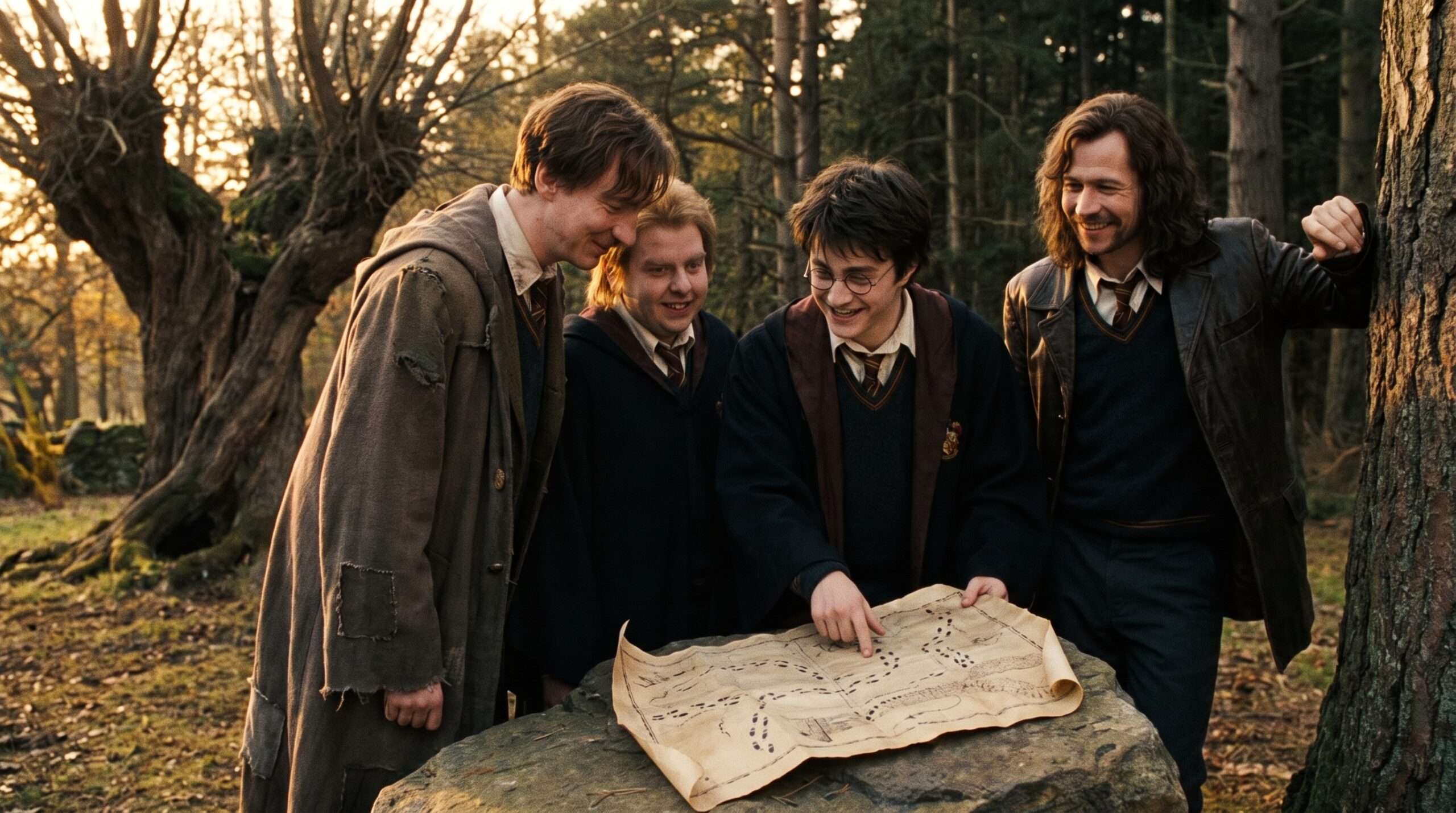
Despite his secret, Remus found something he never thought possible: friends. James Potter, Sirius Black, and Peter Pettigrew were drawn to Remus’s quiet intelligence and gentle nature. However, they soon noticed his recurring disappearances.
By their second year, the trio discovered the truth. Instead of rejecting him—as wizarding society dictated—they performed an extraordinary act of solidarity. Over the next three years, James, Sirius, and Peter secretly taught themselves the incredibly difficult and dangerous magic required to become Animagi (witches or wizards who can turn into animals at will).
Because werewolves are only a danger to humans, they could safely keep Remus company during the full moon as animals. They roamed the Hogwarts grounds together, completely transforming Remus’s most agonizing nights into the best experiences of his life. In honor of his affliction, they gave him the nickname “Moony,” and together, the four friends created the legendary Marauder’s Map.
The Metaphor Behind the Monster
To fully appreciate the depth of Remus Lupin’s character, we must look at the real-world parallels his story represents. His struggles went far beyond the physical pain of a full moon.
The Stigma of Lycanthropy in the Wizarding World
Throughout the Harry Potter series, lycanthropy is used as a powerful metaphor for stigmatized illnesses, specifically blood-borne diseases like HIV/AIDS. Wizarding society treated werewolves with utter disgust and fear. They were unemployable, shunned by the Ministry of Magic, and forced to live on the fringes of society in poverty.
Remus’s shabby robes and premature gray hair were not just stylistic choices; they were the direct result of systemic discrimination. He spent most of his adult life living in squalor, unable to hold down a job once his employers inevitably discovered his condition. Despite facing intense prejudice, Remus chose kindness, contrasting sharply with Fenrir Greyback, who embraced the monster society believed him to be.
A Life of Loss: Why Remus Lupin’s Story is the Most Tragic
While many characters in the Harry Potter universe endure hardship, Remus Lupin’s narrative is uniquely steeped in unrelenting loss. Just as he found a semblance of normalcy and happiness, it was violently ripped away.
Twelve Years of Isolation
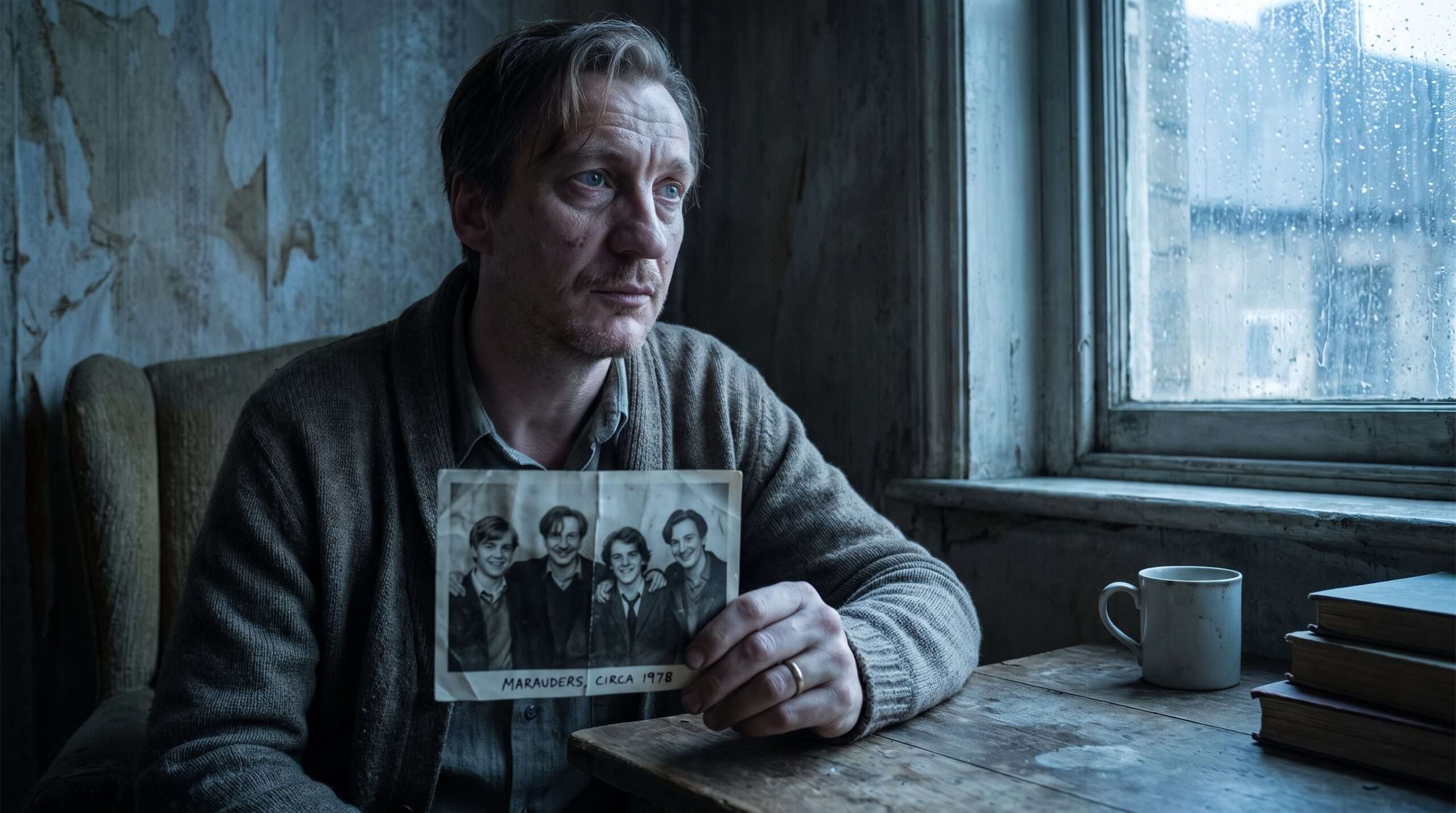
The tragedy of Halloween 1981 is primarily remembered as the night Harry Potter lost his parents. However, for Remus, the fallout was absolute devastation. In the span of a mere 24 hours, Remus lost every single one of his best friends—his entire support system. James Potter was murdered by Voldemort, Sirius Black was framed and sentenced to a lifetime in Azkaban, and Peter Pettigrew was presumed dead (seemingly murdered by Sirius).
Because the Marauders had kept their Animagus identities a secret, Remus was the only one who truly understood the depth of their bond, making his grief profoundly isolating. Furthermore, with the First Wizarding War concluded, the Order of the Phoenix disbanded. Remus spent the next twelve years wandering the country alone, struggling in poverty, and mourning the brothers he had lost, firmly believing one of them was a traitor.
 The Resignation and Snape’s Betrayal
Remus finally caught a break in 1993 when Albus Dumbledore tracked him down—living in a ramshackle cottage in Yorkshire—and offered him the post of Defense Against the Dark Arts professor. Fans widely regard Lupin as the best teacher to ever hold the position. He was deeply empathetic, practical, and empowered his students, most notably teaching Harry how to cast the Patronus Charm.
However, his tenure was short-lived. Following the dramatic events in the Shrieking Shack where Sirius Black’s innocence was proven and Peter Pettigrew escaped, Severus Snape—driven by a bitter, childhood grudge against the Marauders—deliberately leaked Remus’s lycanthropy to the Slytherin students. By the next morning, owls were flying from panicked parents to the Ministry. Rather than subject Dumbledore to a public scandal, Remus resigned, packing up his meager belongings and returning to his life as an outcast.
The Internal Battle: Pushing Tonks Away
During the Second Wizarding War, Remus was reunited with the reformed Order of the Phoenix, where he met the vibrant, pink-haired Metamorphmagus, Nymphadora Tonks. Despite their age difference and his worn-down demeanor, Tonks fell deeply in love with him.
For Remus, this love felt like a terrible burden. Internalizing the wizarding world’s hatred of werewolves, he believed he was “too old, too poor, and too dangerous” for her. He vehemently pushed her away, convinced that marrying a werewolf would ruin her life and that he could pass his curse onto a child. It took the tragic death of Albus Dumbledore—and the fierce intervention of his friends—for Remus to finally accept that he was worthy of being loved.
The Wolfsbane Potion and the Patronus Secret
Magic in the Harry Potter universe rarely provides a perfect cure, and lycanthropy is no exception. However, there were ways to manage the beast, requiring immense skill and sacrifice.
Managing the Beast with Potion-Making
The invention of the Wolfsbane Potion in the late 20th century by Damocles Belby was a revolutionary, albeit deeply flawed, medical advancement for werewolves. It did not cure the affliction; rather, it allowed the drinker to retain their human mind during the transformation. Instead of a bloodthirsty monster, a werewolf on Wolfsbane would simply become a sleepy wolf, waiting out the full moon safely.
The tragedy of the potion lay in its accessibility. The ingredients were exorbitantly expensive, and the brewing process was incredibly complex—so complex that only a Potions Master could brew it correctly. Because werewolves were kept in systemic poverty, almost none could afford it. Remus only had access to it during his year at Hogwarts because Dumbledore required Severus Snape to brew it for him monthly.
Why Remus Hated His Own Patronus
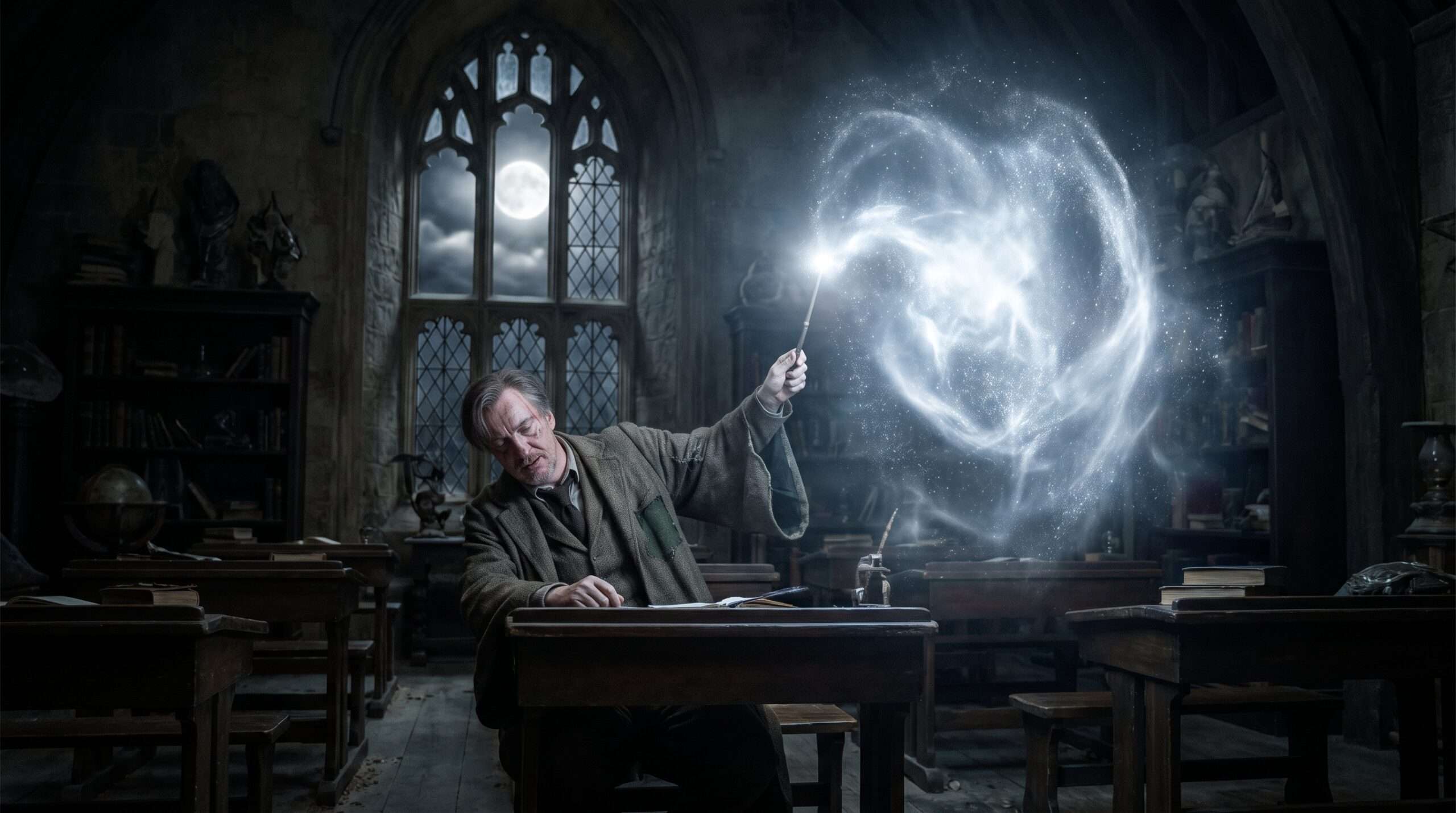
The Patronus Charm is meant to be a wizard’s ultimate defense, a manifestation of pure, positive energy. Yet, Remus Lupin despised his own.
According to expanded lore from J.K. Rowling, Remus’s corporeal Patronus took the form of a normal, non-magical wolf. For Remus, the wolf was a constant, glaring reminder of his affliction, his trauma, and the monster he feared he was. Because of this deep-seated self-hatred, Remus deliberately chose to cast non-corporeal Patronuses—shapeless, silvery shields of light—whenever he was around others. He only allowed his true Patronus to take shape when he was completely alone, hiding his inner turmoil from the world.
 A Hero’s End: The Battle of Hogwarts and His Legacy
The climax of Remus Lupin’s story is as heroic as it is heartbreaking. When Voldemort’s forces laid siege to the school, Remus did not hesitate to answer the call, proving once and for all that a werewolf is capable of immense bravery and loyalty.
The Ultimate Sacrifice
During the Battle of Hogwarts on May 2, 1998, Remus Lupin took command of the school grounds, leading the defenders against the invading Death Eaters. His wife, Tonks, who had initially stayed behind with their newborn son, Teddy, could not bear to let him fight alone and joined him in the fray.
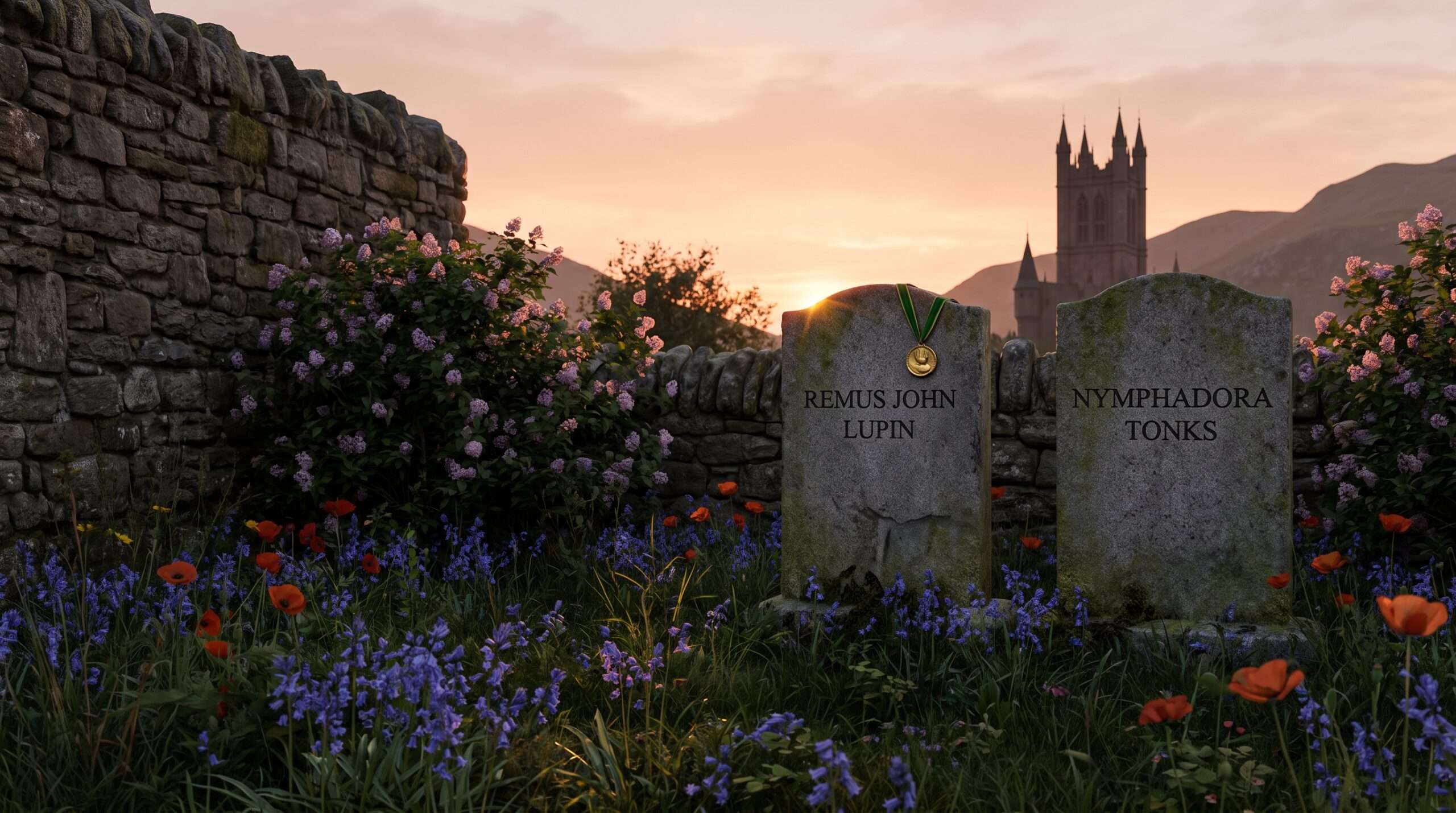
Tragically, they did not survive the night. In the chaotic heat of battle, Remus was killed in a duel by the brutal Death Eater Antonin Dolohov, while Tonks fell to her aunt, Bellatrix Lestrange. Their bodies were laid side-by-side in the Great Hall, a devastating visual that echoed the loss of James and Lily Potter years prior. They died ensuring that their son would grow up in a world free of Voldemort’s tyranny.
Breaking the Cycle
If there is a silver lining to the tragedy of the wolfman from Harry Potter, it is found in his legacy. Remus’s greatest fear was that he would pass his lycanthropy onto his son. Thankfully, the curse was not hereditary. Teddy Lupin inherited his mother’s Metamorphmagus abilities (often sporting bright blue hair) and absolutely none of his father’s lycanthropy.
Teddy was raised by his grandmother, Andromeda Tonks, and his godfather, Harry Potter. Unlike Remus, who grew up fearing rejection, Teddy grew up surrounded by a massive, loving extended family.
Furthermore, Remus Lupin’s sacrifice changed wizarding society forever. Following the war, he became the first werewolf in history to be posthumously awarded the Order of Merlin, First Class. This unprecedented honor shattered centuries of stigma, proving to the wizarding world that being a werewolf did not make one a monster, paving the way for better treatment of those afflicted by the curse.
 Frequently Asked Questions (FAQs)
Who bit the wolfman in Harry Potter?
Remus Lupin was bitten by Fenrir Greyback, a vicious werewolf known for deliberately targeting young children. Greyback attacked Remus just before his fifth birthday as revenge against Remus’s father, Lyall, who had insulted werewolves at the Ministry of Magic.
What is Remus Lupin’s Boggart?
Remus Lupin’s Boggart takes the form of a silvery orb, which represents the full moon. This reflects his deepest, darkest fear of his monthly transformations and the monster he becomes when the moon rises.
Did Teddy Lupin become a werewolf?
No. Lycanthropy in the Harry Potter universe is transmitted exclusively through the bite of a transformed werewolf, not through genetics. Teddy Lupin did not inherit the curse, though he did inherit his mother’s magical ability to change his physical appearance at will (Metamorphmagus).
Why is Remus Lupin called Moony?
“Moony” was a nickname given to Remus by his best friends at Hogwarts—James Potter, Sirius Black, and Peter Pettigrew. The name is an affectionate nod to his lycanthropy and the fact that his transformations were triggered by the full moon. Together, they were known as the Marauders.
Which movie reveals Lupin is a werewolf?
The revelation that Remus Lupin is a werewolf occurs in the third installment of the series, Harry Potter and the Prisoner of Azkaban. The truth comes to light during the tense confrontation in the Shrieking Shack involving Harry, Sirius Black, and Severus Snape.
When people search for the “wolfman from Harry Potter,” they are often just looking to put a name to a nostalgic face. But Remus Lupin is so much more than a creature of the night. He is the quiet strength of the Marauders, a symbol of marginalized communities fighting for dignity, and a tragically flawed hero who always tried to do the right thing, even when the world offered him nothing but cruelty in return.
From the terrifying bite of Fenrir Greyback to his final, valiant stand at the Battle of Hogwarts, Remus’s journey reminds us that our circumstances do not define us. As his closest friend Sirius Black once said, “We’ve all got both light and dark inside us. What matters is the part we choose to act on.” Remus Lupin, despite the literal monster hiding within him, always chose the light.