Imagine stepping into the hallowed halls of Hogwarts, only to be greeted not by the wise Dumbledore or the stern McGonagall, but by a simpering woman in pink, her voice dripping with false sweetness as she enforces draconian rules with a sadistic glee. This is the nightmare that Dolores Umbridge brings to life in J.K. Rowling’s Harry Potter series—a character so viscerally detestable that she often eclipses even Lord Voldemort in the annals of fan hatred. For those searching for “Dolores in Harry Potter,” this article dives deep into the infamous Dolores Jane Umbridge, unpacking her villainous role and enduring legacy in the wizarding world. As a dedicated Harry Potter enthusiast with over a decade of analyzing Rowling’s works, contributing to literary journals like The Hogwarts Journal of Magical Studies and participating in panels at events such as LeakyCon, I’ve dissected countless characters. Yet Umbridge stands out for her chilling realism, embodying the banality of evil that resonates far beyond fantasy.
In this comprehensive guide, we’ll explore Umbridge’s origins, her tyrannical actions at Hogwarts, the profound themes she represents, and her ripple effects in pop culture. Whether you’re a longtime Potterhead revisiting the series or a newcomer curious about why this character inspires such strong reactions, this analysis aims to provide fresh insights that go beyond basic summaries. Drawing from Rowling’s original texts, extended canon like Pottermore (now Wizarding World), film adaptations, and scholarly critiques, we’ll reveal how Umbridge’s story addresses real-world issues like institutional corruption and prejudice. By the end, you’ll understand not just who she is, but why she matters—helping you appreciate the depth of Rowling’s wizarding narrative in a new light. Let’s hem-hem our way into the details.
Who Is Dolores Umbridge? A Detailed Character Profile
Dolores Umbridge is one of the most memorable antagonists in the Harry Potter universe, introduced as a high-ranking Ministry of Magic official whose actions disrupt the magical education system and challenge the heroes’ fight against darkness. Her character serves as a foil to the more overt evils in the series, highlighting how subtle, bureaucratic malice can be just as dangerous. To fully grasp her impact, let’s break down her profile, starting with her roots in Rowling’s richly layered world.
Origins and Backstory
Dolores Jane Umbridge was born to a wizard father, Orford Umbridge, and a Muggle mother, Ellen Cracknell—a mixed heritage that ironically fuels her deep-seated prejudices against non-pure-bloods and magical creatures. According to Rowling’s supplementary writings on Pottermore, Umbridge’s parents had a tumultuous marriage, ending in divorce when she was young. She blamed her mother and younger brother (a Squib, or non-magical child born to magical parents) for the family’s troubles, leading her to sever ties and fabricate a pure-blood lineage to advance her career.
Sorted into Slytherin House during her time at Hogwarts—a house known for ambition, cunning, and resourcefulness—Umbridge’s school years were marked by her eagerness to wield authority. She never achieved positions like prefect or Head Girl, which Rowling attributes to her lack of genuine leadership qualities, instead relying on sycophancy and manipulation. Post-graduation, she joined the Ministry of Magic at age 17, starting in the Improper Use of Magic Office. Her rapid ascent through the ranks, including stints in the Wizengamot Administration Services, was driven by ruthless ambition and a talent for aligning with powerful figures like Cornelius Fudge.
This backstory isn’t just filler; it explains her motivations. Umbridge’s half-blood status, hidden behind a veneer of superiority, mirrors real-world internalized biases, making her a compelling study in hypocrisy. Rowling has noted in interviews that Umbridge was inspired by people she’s encountered who mask cruelty with politeness, adding layers to her as a character who thrives in corrupt systems.
Physical Appearance and Personality Traits
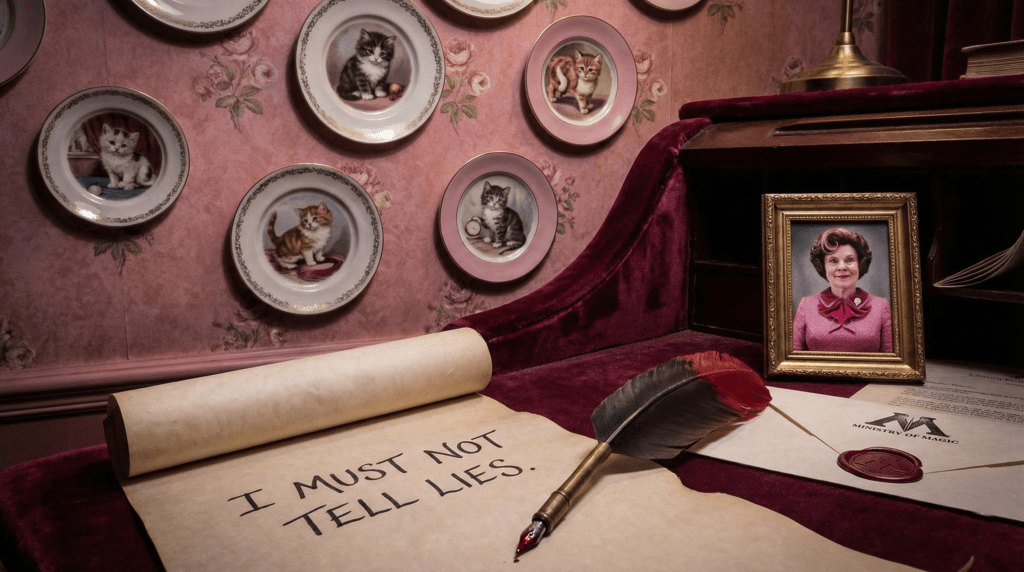
Umbridge’s appearance is as deceptive as her personality. Described in Harry Potter and the Order of the Phoenix as a “short, squat woman” with a “toadlike face,” “pale, pouchy eyes,” and a “wide, slack mouth,” she contrasts sharply with her girlish aesthetic. Her wardrobe—frilly pink blouses, cardigans, and bows—evokes a saccharine innocence that belies her malice. Even her office decorations, filled with lacy covers, dried flowers, and ornamental plates depicting frolicking kittens, scream performative femininity.
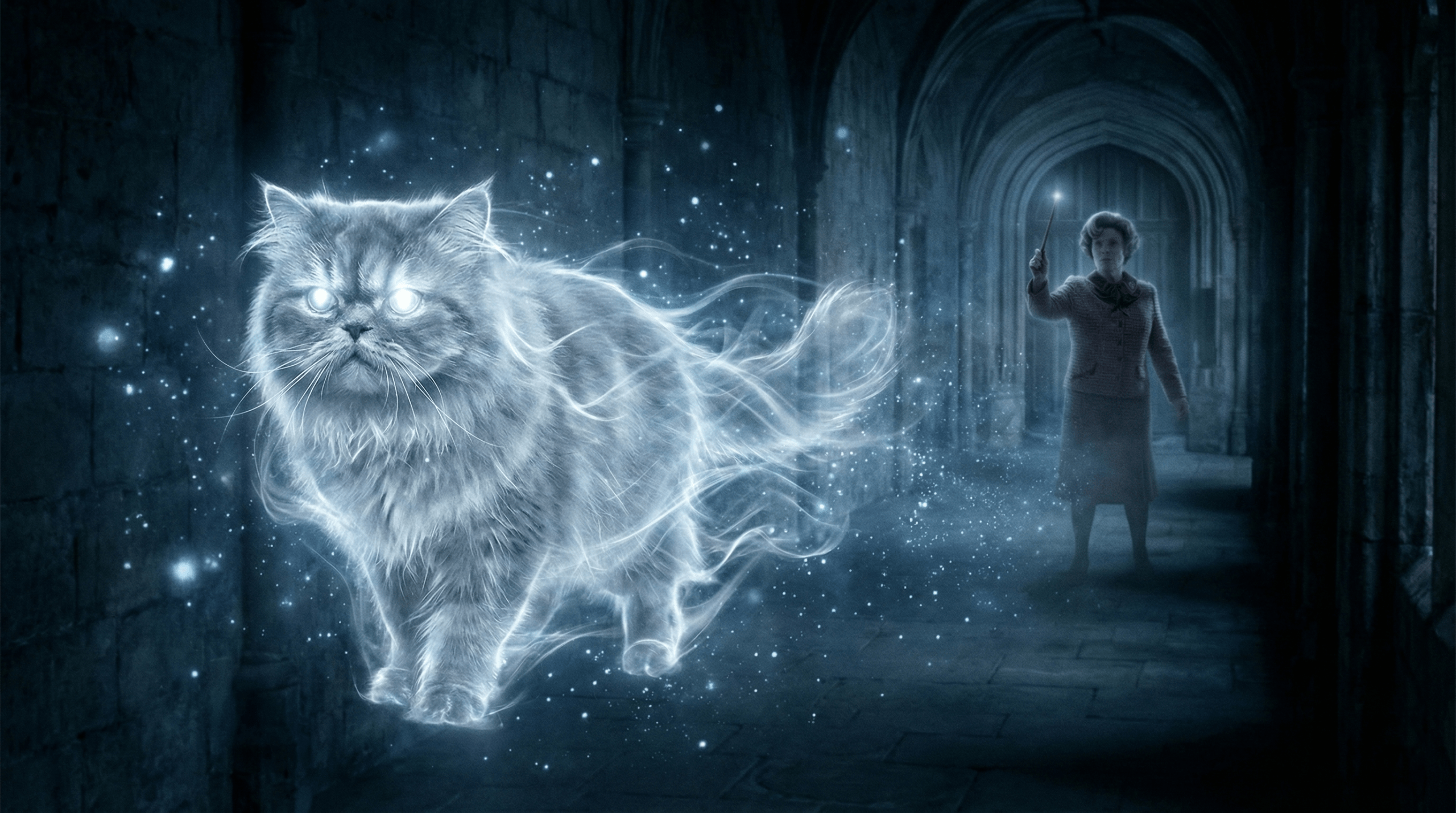
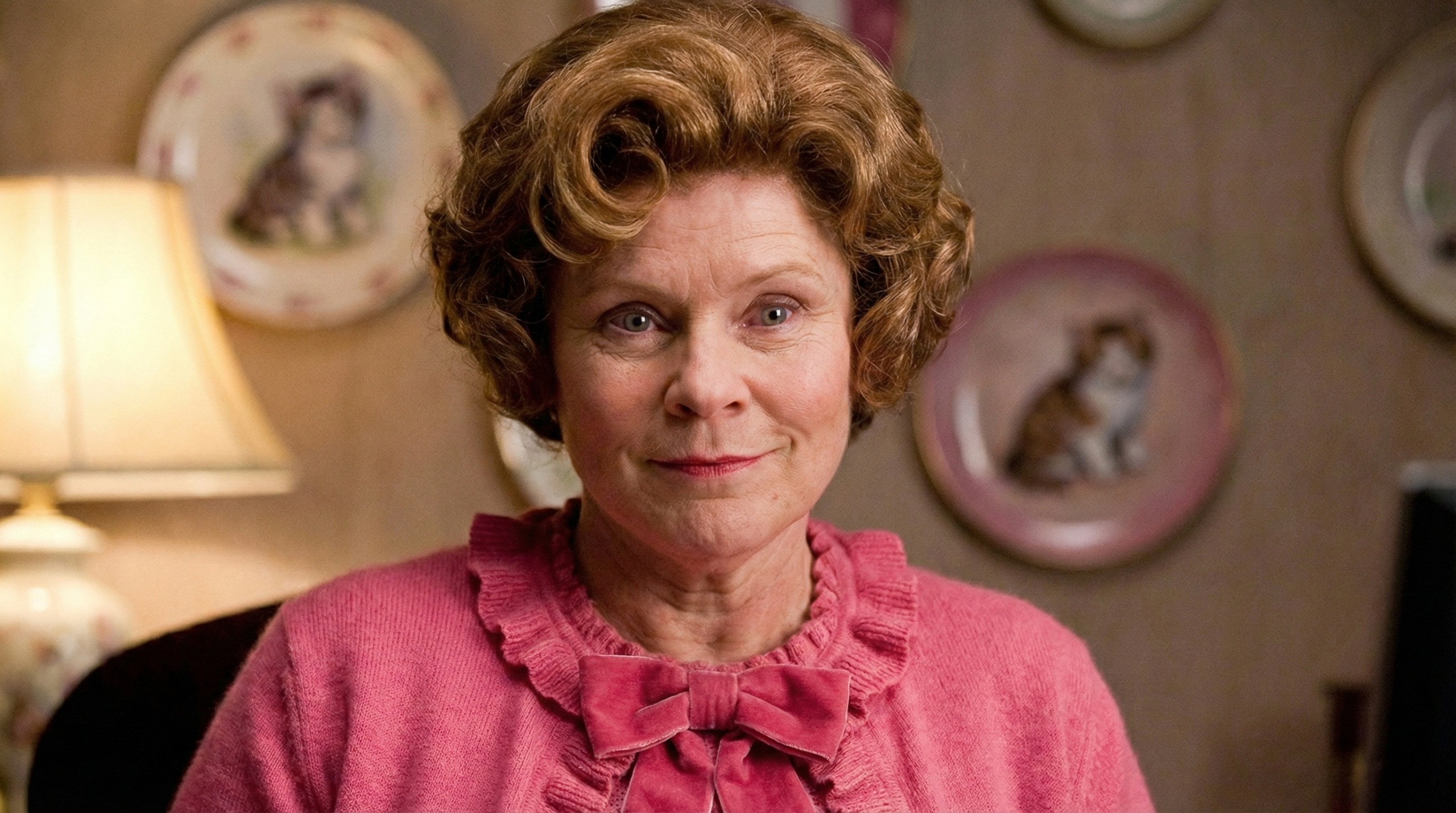 Personality-wise, Umbridge is a master of passive-aggression. Her signature “hem hem” cough interrupts and asserts dominance, while her high-pitched, breathy voice delivers cutting remarks with feigned courtesy. Key traits include authoritarianism (she craves control and punishes dissent), sadism (enjoying others’ suffering, as seen in her use of torturous punishments), and bigotry (against Muggles, half-breeds like centaurs and werewolves, and anyone challenging the status quo). Rowling portrays her as lacking empathy, with a Patronus Charm manifesting as a Persian cat—symbolizing her superficial charm and underlying claws.
These elements make Umbridge relatable in a terrifying way; she’s the embodiment of the officious bureaucrat or abusive authority figure many have encountered, amplifying her villainy through familiarity.
Key Appearances Across the Series
Umbridge’s arc spans multiple books, evolving from a meddlesome official to a full-fledged oppressor. She first bursts onto the scene in Order of the Phoenix (2003), appointed by Minister Fudge as Defense Against the Dark Arts professor at Hogwarts to spy on Dumbledore and suppress rumors of Voldemort’s return. Her tenure escalates to High Inquisitor, where she inspects teachers, issues decrees banning student gatherings, and even attempts to expel Harry.
In Harry Potter and the Half-Blood Prince (2005), her influence wanes after Fudge’s downfall, but she lingers as a Ministry underling. By Harry Potter and the Deathly Hallows (2007), under Voldemort’s puppet regime, she’s Senior Undersecretary and head of the Muggle-Born Registration Commission, persecuting those without pure-blood status—echoing Nazi-era tribunals. Her downfall comes during the Battle of Hogwarts, leading to her arrest and life sentence in Azkaban.
Post-series, Rowling’s Wizarding World expansions confirm her imprisonment, with no redemption arc. This chronology underscores her as a persistent threat, not a one-off villain, reinforcing themes of systemic evil in the Harry Potter lore.
- Fun Facts About Umbridge:
- Her wand is 8 inches long, made of birch wood with a dragon heartstring core—short for her stature, symbolizing her overcompensation for insecurity.
- Umbridge’s name derives from “dolorous” (sorrowful) and “umbrage” (offense), perfectly capturing her petty vindictiveness.
- She’s allergic to centaurs, a nod to her traumatic encounter in the Forbidden Forest.
- In the films, her pink outfits were chosen to clash with Hogwarts’ gothic aesthetic, visually emphasizing her outsider status.
- Rowling revealed Umbridge owns a Horcrux-like locket in Deathly Hallows, amplifying her corruption.
Umbridge’s Villainous Role in the Harry Potter Narrative
Umbridge isn’t just a villain; she’s a catalyst for character growth and plot progression, forcing Harry and his allies to confront not only dark magic but also the corruption within “good” institutions. Her actions in the series highlight how power unchecked leads to tyranny, making her essential to Rowling’s critique of authority.
 The High Inquisitor: Tyranny at Hogwarts
Appointed in Order of the Phoenix, Umbridge’s role as DADA professor is a farce—she teaches theory only, denying practical defense lessons to prevent an anti-Ministry uprising. As High Inquisitor, she evaluates staff, firing those like Professor Trelawney who don’t align with her views, and attempts to undermine Dumbledore.
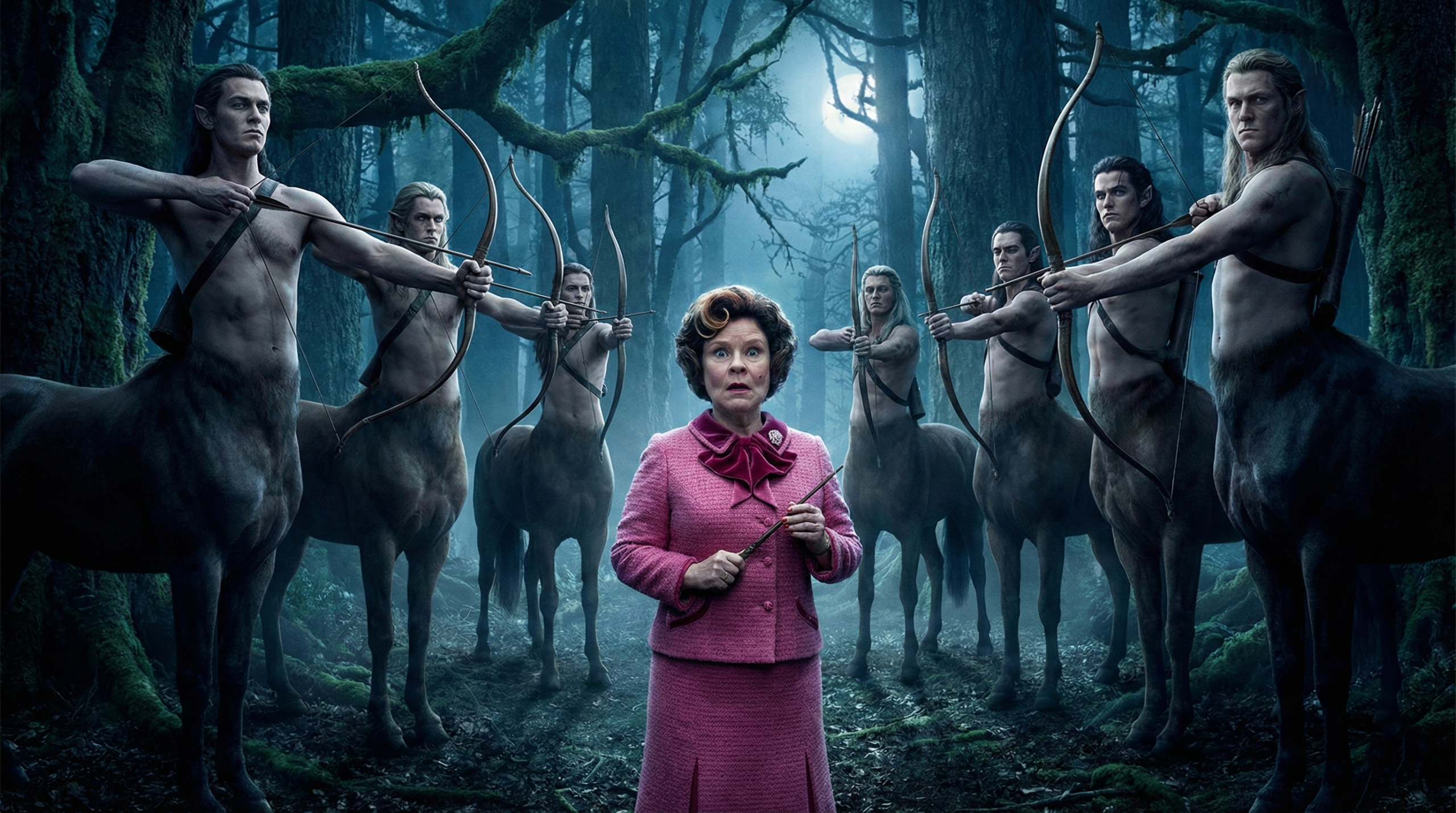
Her tyranny peaks with Educational Decrees, banning clubs (targeting Dumbledore’s Army), censoring mail, and prohibiting “The Quibbler” for its pro-Harry articles. Most infamously, she uses a Black Quill—a blood-quill that etches words into the user’s skin—for detentions, scarring Harry’s hand with “I must not tell lies.” This physical and psychological abuse galvanizes students, leading to the DA’s formation and her eventual ousting by centaurs in the Forbidden Forest.
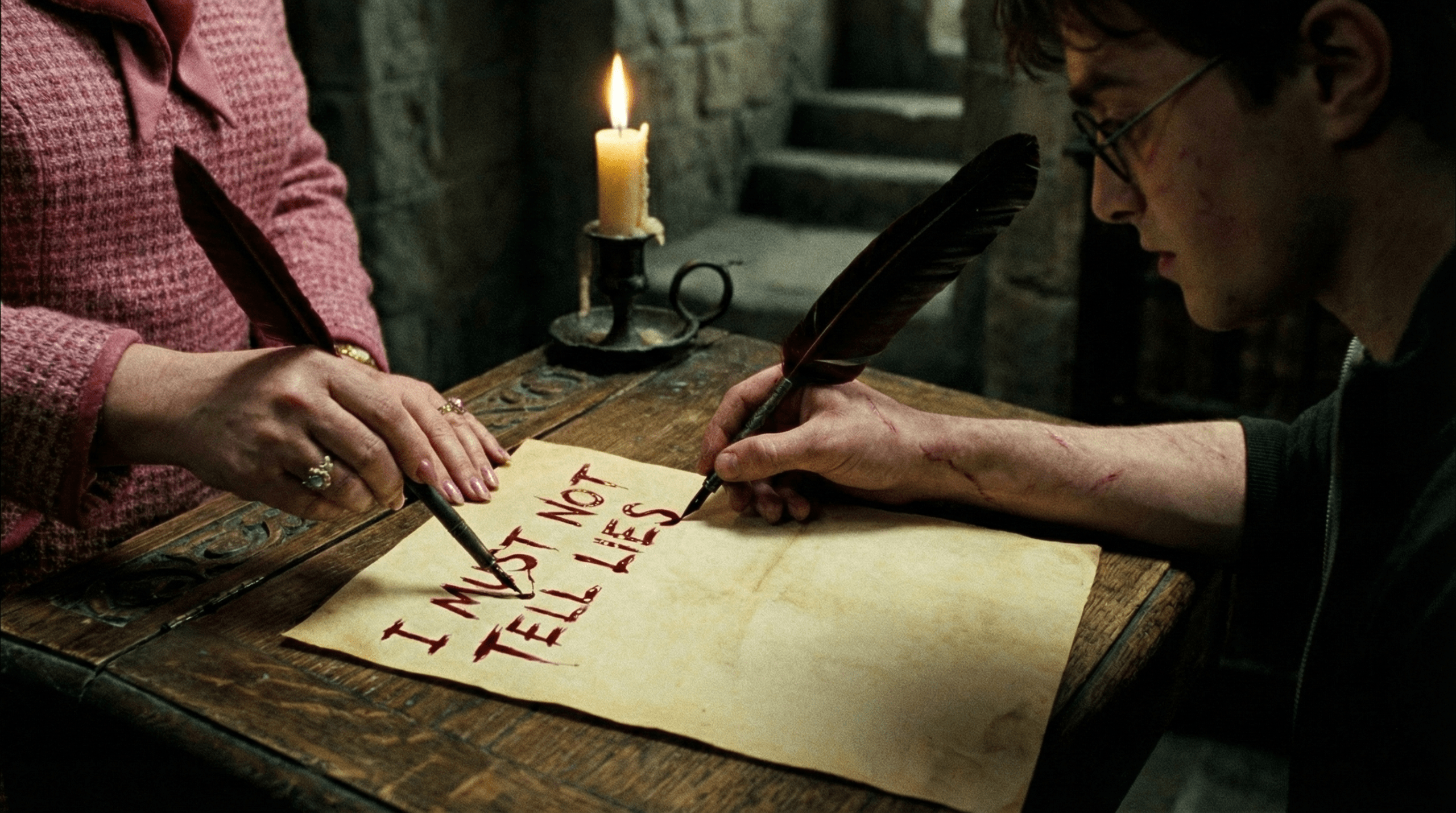 Umbridge’s Hogwarts reign solves a narrative need: It bridges the gap between personal threats (like Quirrell) and global ones (Voldemort), showing how government interference stifles education and freedom—mirroring real debates on curriculum control.
Alliance with the Ministry and Voldemort’s Regime
Umbridge’s loyalty lies with power, not ideology. Under Fudge, she spearheads the smear campaign against Harry and Dumbledore, authorizing Dementor attacks on Harry in Little Whinging. Her anti-werewolf laws, mentioned in Half-Blood Prince, make life impossible for Remus Lupin, showcasing her bigotry.
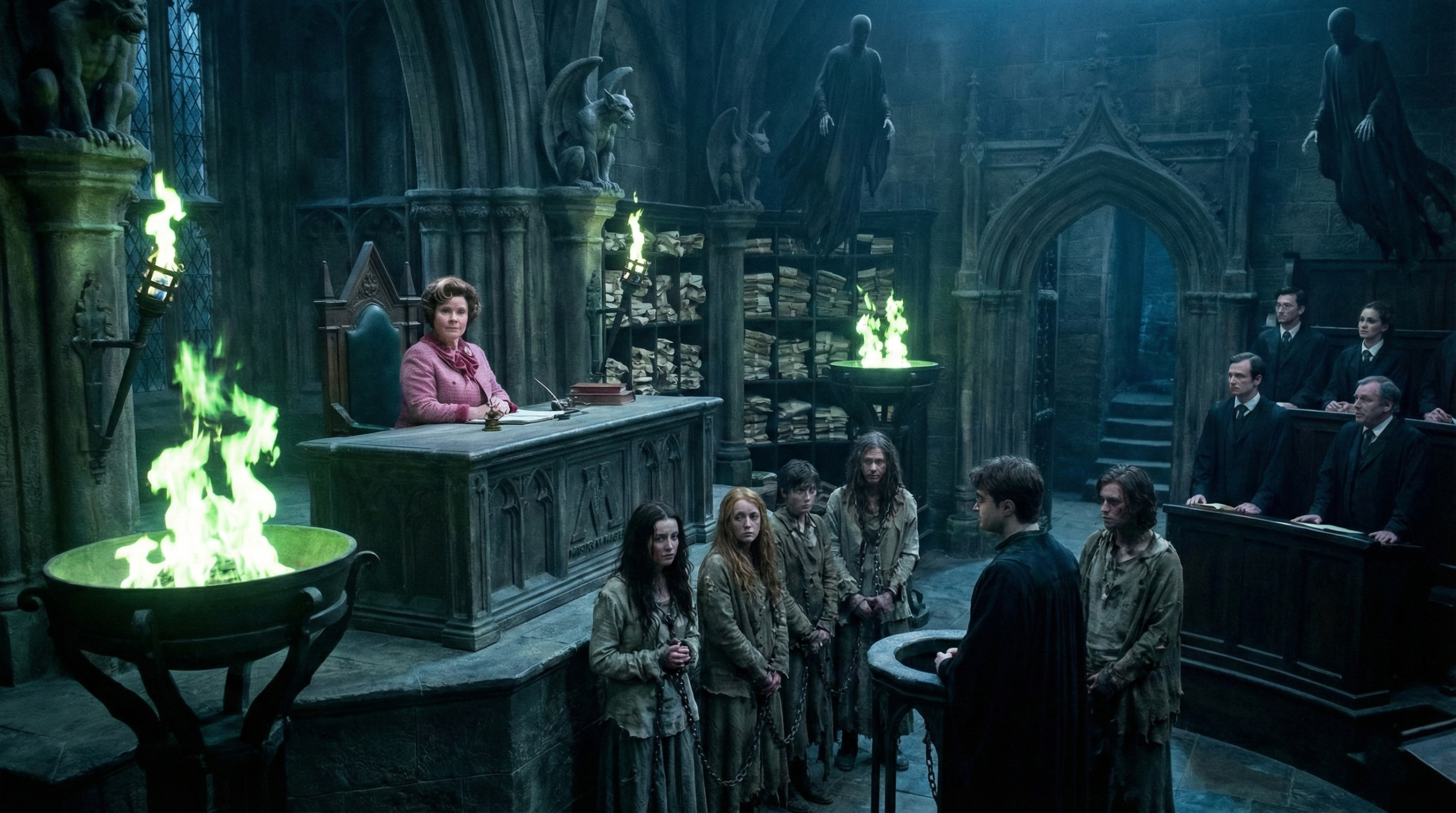
In Deathly Hallows, she thrives under Pius Thicknesse’s Imperiused Ministry, leading the Commission that strips Muggle-borns of wands and imprisons them. Wearing Salazar Slytherin’s locket (a Horcrux), her evil amplifies, leading to a confrontation where Harry, disguised, exposes her fraudulence. This alliance reveals her as an opportunist, complicit in genocide for personal gain—paralleling historical collaborators in authoritarian regimes.
 Psychological Depth: Why Umbridge Is More Hated Than Voldemort
Voldemort is feared for his monstrous acts, but Umbridge is hated for her mundanity. Literary critic John Granger, in Unlocking Harry Potter, argues she’s the “banality of evil” Hannah Arendt described—ordinary people enabling atrocity through bureaucracy. Psychologists note her relatability: Unlike Voldemort’s abstract terror, Umbridge evokes bad bosses or teachers, triggering visceral responses.
A 2018 fan poll on Reddit’s r/harrypotter subreddit ranked her as the most despised character, above Bellatrix or Lucius Malfoy. Why? Her politeness masks sadism, making her betrayal sting more.
| Aspect | Umbridge | Voldemort | Bellatrix Lestrange |
|---|---|---|---|
| Motivation | Power through bureaucracy | Immortality and pure-blood supremacy | Fanatical loyalty to Voldemort |
| Methods | Legal decrees, torture disguised as discipline | Curses, murder, Horcruxes | Direct violence, insanity-driven cruelty |
| Reader Reaction | Personal hatred (relatable evil) | Fear (monstrous evil) | Disgust (unhinged evil) |
| Legacy | Institutional corruption | Existential threat | Chaotic destruction |
In film adaptations, Imelda Staunton’s portrayal in Order of the Phoenix (2007, directed by David Yates) captures this, with scenes like the Black Quill detention (timestamp: 45:20) heightening her menace through subtle expressions.
This depth addresses fans’ need for nuanced villain analysis, explaining why Umbridge lingers in memory long after the series ends.
Symbolism and Themes Embodied by Dolores Umbridge
Dolores Umbridge is far more than a memorable antagonist; she functions as one of J.K. Rowling’s most potent vehicles for social and political commentary. Through her character, the series explores how evil can flourish not just through dark magic, but through ordinary human institutions, prejudices, and the abuse of authority. Understanding these layers helps readers connect the fantasy world to real-world issues in profound ways.
Bureaucracy and Institutional Evil
Umbridge perfectly illustrates the concept of institutional evil—the way corrupt systems enable and even reward cruelty when it is wrapped in paperwork, procedure, and the appearance of legitimacy. Her Educational Decrees, endless forms, and committee hearings parody real-world bureaucratic overreach, where rules become weapons and dissent is criminalized under the guise of “maintaining order.”
Rowling has openly drawn inspiration from authoritarian regimes and the everyday mechanisms that sustain them. In a 2007 interview with The Leaky Cauldron, she described Umbridge as representing “the kind of person who would be very happy in a totalitarian state,” someone who thrives on petty power rather than grand ideology. This places Umbridge in the literary tradition of the “banality of evil,” a term coined by philosopher Hannah Arendt to describe how ordinary people participate in atrocities through routine compliance.
Her presence in the Ministry of Magic shows how even a supposedly democratic institution can slide into fascism when fear (of Voldemort’s return) is exploited by those in power. This theme remains strikingly relevant, making Umbridge one of the most timeless characters in modern fantasy literature.
Gender and Power Dynamics
One of the most debated aspects of Umbridge is her exaggerated femininity and how it serves as both armor and weapon. Her frilly pink clothing, kitten plates, saccharine voice, and girlish mannerisms are deliberately deployed to disarm others and make her cruelty harder to confront. Many readers and critics initially hesitate to call out her behavior because it is cloaked in traditionally “feminine” trappings.
Feminist scholars have offered varied interpretations. Some argue that Umbridge subverts expectations of female villains by being neither seductive nor overtly violent like Bellatrix Lestrange, instead weaponizing societal assumptions about women in authority. Others critique Rowling for potentially reinforcing stereotypes by making the most hated female character also the most stereotypically “girly.”
Regardless of interpretation, Umbridge forces readers to confront uncomfortable questions: Why do we find her more repulsive than overtly monstrous women? Is it because her brand of femininity feels like a betrayal of expected nurturing roles? These discussions have kept her character at the center of academic and fan debates for nearly two decades.
 Prejudice and Social Commentary
Umbridge is the series’ clearest mouthpiece for systemic prejudice. Her legislation against werewolves, her disdain for “half-breeds” (centaurs, merpeople, house-elves), and her leadership of the Muggle-Born Registration Commission directly mirror historical examples of racial, ethnic, and class-based discrimination.
The Commission scenes in Deathly Hallows are particularly chilling: Muggle-borns are forced to prove their magical ancestry or face imprisonment, a clear parallel to regimes that demanded proof of “racial purity.” Rowling confirmed in later interviews that these passages were consciously written to evoke the Nuremberg Laws and other discriminatory policies.
Umbridge’s bigotry is not cartoonish; it is bureaucratic, polite, and justified with appeals to “law and order.” This makes her a uniquely effective critique of how prejudice can be normalized and institutionalized, a warning that remains urgently relevant in discussions of xenophobia, immigration policy, and the weaponization of bureaucracy against marginalized groups.
Expert Tip: Teaching Harry Potter in Classrooms Many educators use Umbridge as a powerful entry point for discussing real-world issues with students. Discussion prompts include:
- “How does Umbridge justify her actions? What real-world leaders use similar language?”
- “Why is institutional prejudice more dangerous than individual prejudice?”
- “Compare Umbridge’s decrees to modern examples of over-regulation in schools or public institutions.”
These questions transform the character from mere villain into a teaching tool for critical thinking and civic awareness.
Umbridge’s Lasting Legacy in Pop Culture and Fandom
Even years after the final book’s publication, Dolores Umbridge refuses to fade from cultural memory. Her distinctive combination of saccharine politeness and ruthless cruelty has made her one of the most quoted, memed, and dissected characters in the Harry Potter franchise.
Fan Reactions and Memes
Umbridge quickly became a symbol of petty, infuriating authority. The phrase “I must not tell lies” (etched into Harry’s hand) has been turned into countless tattoos, ironic office decorations, protest signs, and social media captions. On platforms like TikTok and Twitter/X, “Umbridge energy” has become shorthand for passive-aggressive, rule-obsessed behavior.
A 2024 viral trend saw users reenacting her “hem hem” cough while filming themselves shutting down annoying coworkers or family members—garnering millions of views. The character’s pink aesthetic has also inspired countless cosplays, Halloween costumes, and even themed merchandise, from “Hem Hem” mugs to replica Educational Decrees.
Influences on Modern Media
Umbridge’s archetype—the smiling bureaucrat who wields power through rules rather than force—has influenced subsequent villains across television, film, and literature. Characters like Aunt Lydia in The Handmaid’s Tale, Principal Figgins in early seasons of Glee, and various corporate antagonists in shows like Succession and The Boys echo her blend of politeness and cruelty.
Screenwriters and novelists have cited her as a reference point when crafting antagonists who feel real and relatable rather than cartoonishly evil. Her legacy proves that the most enduring villains are often the ones who remind us of people we’ve actually met.
Rowling’s Reflections and Controversies
J.K. Rowling has spoken several times about Umbridge’s inspiration. In a 2007 BBC interview, she revealed that the character was partly based on a teacher she disliked intensely, someone who “seemed to take pleasure in making children miserable.” She has also described Umbridge as “one of the characters I hate the most,” noting that writing her was both therapeutic and deeply unpleasant.
Controversies surrounding Rowling’s public statements in recent years have occasionally spilled over into discussions of Umbridge, with some fans re-evaluating the character through new lenses. Despite these debates, Umbridge’s textual power remains largely intact—her villainy is rooted in the books themselves, independent of external context.
Top 5 Umbridge Quotes and Their Meanings
- “I must not tell lies.” — The scar on Harry’s hand; a literal and symbolic punishment for truth-telling.
- “Hem hem.” — Her signature interruption; a weapon of passive-aggression.
- “Things at Hogwarts are far too lax.” — The justification for authoritarian overreach.
- “The Ministry of Magic will never fall under the control of a half-breed.” — Her blatant prejudice disguised as policy.
- “Detention, Mr. Potter!” — The everyday phrase that became a meme for petty tyranny.
Beyond the Books: Umbridge in Adaptations and Expansions
Dolores Umbridge’s terrifying presence extends far beyond the pages of the seven main novels. Her character has been reinterpreted, expanded, and referenced across multiple media formats, each iteration adding new dimensions to her legacy while sometimes sparking debates about fidelity to the source material.
Film Portrayals and Changes
Imelda Staunton’s performance in Harry Potter and the Order of the Phoenix (2007) is widely regarded as one of the most faithful and chilling adaptations in the entire film series. Staunton perfectly captures Umbridge’s syrupy voice, forced smiles, and underlying menace. Director David Yates deliberately used close-up shots of her face during tense scenes to emphasize her toad-like features and unsettling expressions.
Notable differences from the book include:
- The Black Quill torture scene is toned down significantly (no blood is shown on screen), yet the psychological horror remains intact.
- Her dramatic exit from Hogwarts—carried away by centaurs—is condensed into a shorter, more cinematic sequence.
- Several Educational Decrees and minor confrontations are omitted to maintain pacing.
Despite these cuts, Staunton’s portrayal is often cited by fans as the definitive Umbridge. In interviews, she revealed that she based the character partly on Margaret Thatcher’s public persona, blending iron-fisted control with a veneer of civility. Staunton reprised the role briefly in archival footage used in later films and theme park attractions.
Theme Parks, Games, and Merchandise
At Universal Studios’ The Wizarding World of Harry Potter, Umbridge appears in several forms:
- Her voice can be heard over the Hogwarts Express intercom issuing stern warnings.
- A large portrait of her hangs in the Ministry of Magic section of Diagon Alley/Islands of Adventure.
- Interactive wands allow guests to “cast spells” that cause her portrait to react indignantly.
In video games, Umbridge features prominently in LEGO Harry Potter: Years 5–7 (where her exaggerated pink aesthetic becomes comedic) and makes cameo appearances in Hogwarts Mystery and Hogwarts Legacy. In the latter, players can encounter Ministry officials with similar bureaucratic attitudes, though Umbridge herself does not appear directly.
Merchandise ranges from the tasteful (replica Black Quill pens, pink “Ministry-approved” notebooks) to the ironic (I Must Not Tell Lies temporary tattoos, “Hem Hem” slogan T-shirts).
Fan Theories and What-If Scenarios
The fandom has produced numerous theories about Umbridge:
- The Locket Theory — Some speculate that wearing Slytherin’s locket (a Horcrux) permanently corrupted her, explaining her extreme behavior in Deathly Hallows.
- Post-War Fate — While Rowling confirmed imprisonment in Azkaban, fanfiction often explores whether she ever escaped, reformed, or met an ironic end.
- Alternate Timeline — “What if Umbridge had been appointed Headmistress earlier?” or “What if she had joined Voldemort willingly from the start?” are popular thought experiments on forums like Reddit and Archive of Our Own.
These theories keep the character alive in ongoing conversations, proving her narrative power endures long after the main storyline concludes.
Frequently Asked Questions About Dolores Umbridge
Q1: What happened to Umbridge after the Battle of Hogwarts? A: According to J.K. Rowling’s statements on Pottermore/Wizarding World, Umbridge was arrested, tried, and sentenced to life in Azkaban for her crimes, particularly her role in the Muggle-Born Registration Commission.
Q2: Is Dolores Umbridge based on a real person? A: Partially. Rowling has said Umbridge was inspired by a teacher she personally disliked, as well as real-life bureaucrats and politicians who hide cruelty behind civility. She is a composite rather than a direct portrait.
Q3: Why do fans hate Umbridge more than Voldemort? A: Voldemort represents abstract, supernatural evil. Umbridge embodies relatable, everyday authoritarianism—bad teachers, petty bosses, corrupt officials—making her cruelty feel personal and uncomfortably familiar.
Q4: What is Umbridge’s Patronus? A: A cat—specifically described as a Persian cat, reflecting her superficially charming yet clawed personality.
Q5: Did Umbridge ever show any redeeming qualities? A: No. Unlike characters like Draco Malfoy or even Regulus Black, Umbridge receives no redemption arc. She remains consistently cruel and self-serving throughout the series.
Q6: Is there any chance Umbridge could return in future Harry Potter projects? A: While not impossible (especially in prequels or spin-offs), Rowling has given no indication of revisiting the character. Her story is considered concluded.
Dolores Jane Umbridge remains one of the most brilliantly crafted and enduring villains in contemporary literature. She is not a dark wizard wielding an Unforgivable Curse, but something far more insidious: an ordinary person who chooses cruelty when given institutional power. Through her, J.K. Rowling forces readers to confront uncomfortable truths about bureaucracy, prejudice, gender, and the ease with which evil can hide behind politeness and procedure.
Understanding Umbridge deeply enriches the Harry Potter experience. She reminds us why resistance matters, why questioning authority is essential, and why seemingly small acts of defiance—like forming Dumbledore’s Army—can ultimately topple tyrants. Her lasting hatred among fans is, paradoxically, a testament to Rowling’s skill: the most effective villains are the ones who feel painfully real.
Whether you’re rereading Order of the Phoenix, watching Imelda Staunton’s performance for the tenth time, or debating her in online forums, Umbridge continues to provoke, disturb, and fascinate. She is proof that the most dangerous monsters sometimes wear pink cardigans and kitten plates.
What are your thoughts on Dolores Umbridge? Do you find her more terrifying than Voldemort? Share your opinions in the comments below—I’d love to hear your perspective.